宝马

Search documents
传三星SDI斩获特斯拉(TSLA.US)大单!未来三年供应逾21亿美元储能系统电池
Zhi Tong Cai Jing· 2025-11-03 10:44
Group 1 - Samsung SDI has reached an agreement with Tesla to supply energy storage system (ESS) batteries worth over 3 trillion KRW (approximately 2.11 billion USD) over three years, although Samsung SDI stated that no final decision has been made [1] - Samsung SDI has formed a strategic partnership with Solid Power and BMW to develop and validate a demonstration vehicle using all-solid-state battery technology, with Solid Power providing sulfide-based solid electrolytes [1] - The company is diversifying its revenue sources by negotiating battery supply collaborations with humanoid robot manufacturers to mitigate the impact of U.S. tariffs and declining global electric vehicle demand [1] Group 2 - Samsung SDI is actively expanding in the U.S. market, planning to collaborate with General Motors to build a battery factory in Indiana and considering converting some facilities to produce lithium iron phosphate batteries [2] - The company reported an unexpected operating loss in the third quarter, attributing it to tariffs and declining electric vehicle demand, particularly in North America [2] - Samsung SDI's management expects a "significant improvement" in fourth-quarter earnings due to the growth of its energy storage system business in the U.S., a recovery in European electric vehicle demand, and new opportunities in robotics and artificial intelligence [2]
美锦能源(000723.SZ):公司在氢燃料电池领域已形成较为完整的产业链布局
Ge Long Hui· 2025-11-03 07:49
Core Viewpoint - Meijin Energy has established a comprehensive industrial chain layout in the hydrogen fuel cell sector, covering key equipment such as gas diffusion layers, membrane electrodes, fuel cell stacks and systems, and vehicle manufacturing [1] Group 1: Industrial Chain and Capabilities - The company has formed a complete industrial chain in the hydrogen fuel cell field, which includes gas diffusion layers, membrane electrodes, fuel cell stacks and systems, and vehicle manufacturing [1] - Meijin Energy collaborates with multiple manufacturers in the fuel cell system area, allowing for flexible and customized solutions based on customer needs [1] Group 2: Market and Technology Focus - The company will continue to monitor the technological routes and market applications related to BMW's third-generation hydrogen fuel cell system [1]

理想MEGA惊魂爆燃后,三元锂电池天塌了?
3 6 Ke· 2025-11-03 06:06
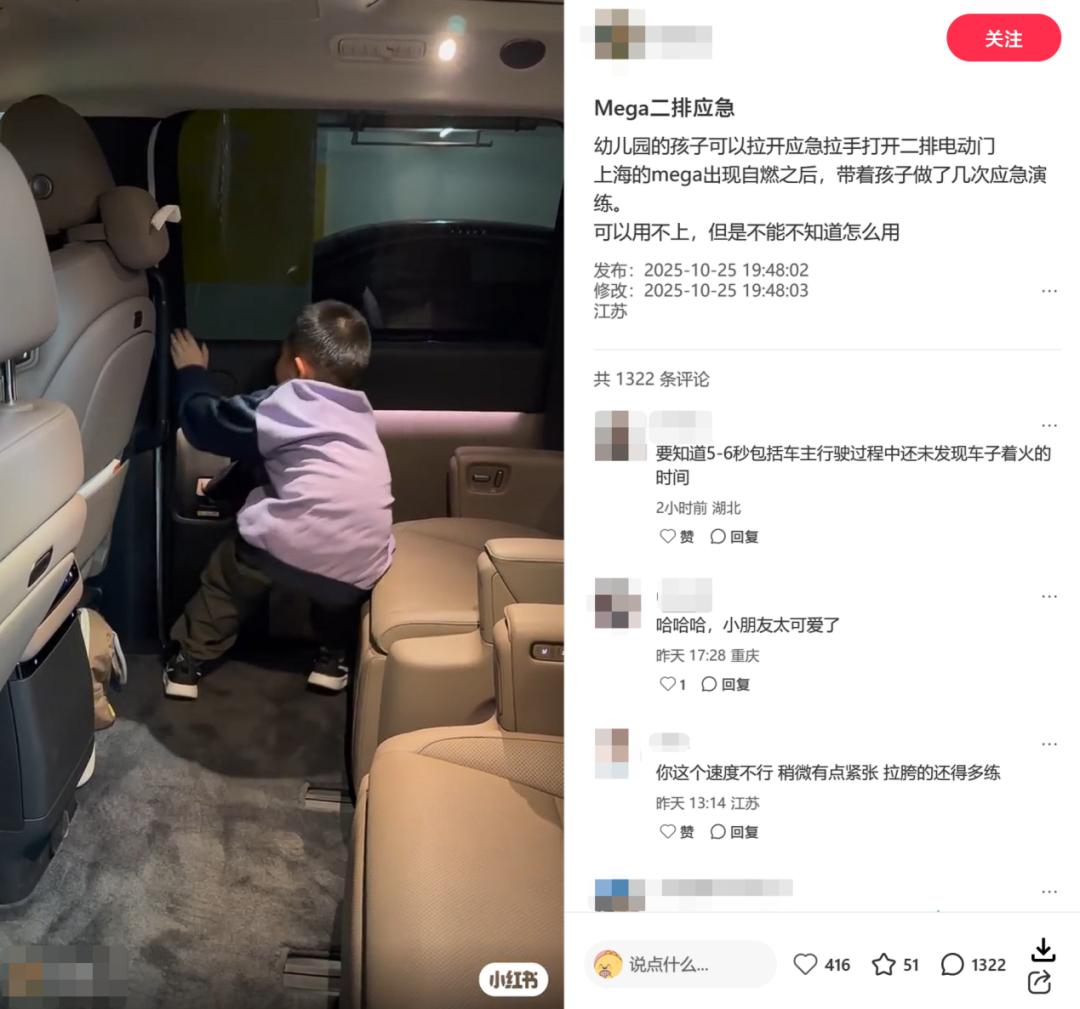
Core Viewpoint - The incident involving the Ideal MEGA electric vehicle, which caught fire within 10 seconds, has sparked significant discussions about battery safety in the electric vehicle industry, particularly regarding the risks associated with high-performance lithium-ion batteries [1][2]. Group 1: Incident and Immediate Reactions - The Ideal MEGA fire incident has led to widespread concern among middle-class parents who purchased the vehicle, prompting discussions on "electric vehicle escape" for children [1]. - Following the incident, Ideal officially apologized and acknowledged a defect in the coolant of the MEGA 2024 model, which could lead to thermal runaway of the battery under extreme conditions [2]. Group 2: Battery Technology Debate - The incident has reignited the long-standing debate between the safety of lithium iron phosphate (LFP) batteries and the performance of ternary lithium batteries, with the former being seen as safer but less powerful [2][5]. - Ideal's MEGA uses the Kirin ternary lithium battery, which was previously marketed as having superior safety features, including a low failure rate and advanced battery management systems [3][5]. Group 3: Battery Characteristics and Safety - Ternary lithium batteries have lower thermal stability, with decomposition reactions potentially starting at around 200°C, while LFP batteries require much higher temperatures (500-800°C) to decompose, making LFP inherently safer [5]. - Experimental data shows that ternary lithium cells can reach peak temperatures of 400-600°C within 10 seconds during short-circuit tests, whereas LFP cells take about 2 minutes to reach 300°C, highlighting a critical safety difference [5]. Group 4: Market Dynamics and Battery Choices - The shift in the market dynamics began in 2016 when subsidies for electric vehicles were linked to battery energy density, favoring ternary lithium batteries, which led to a significant market share increase for them [8][10]. - However, by 2021, LFP batteries began to regain market share, surpassing 70% in 2023, driven by cost-effectiveness and the growing demand for affordable electric vehicles [10][11]. Group 5: Future of Battery Technologies - The future of battery technology may not be a straightforward choice between LFP and ternary lithium, as both have distinct advantages and are likely to coexist based on market demands [24]. - Ternary lithium batteries are seen as a key pathway to next-generation solid-state batteries, which promise improved safety and energy density, while also being suitable for high-performance applications like flying cars and robotics [22][24].


星宇股份20251031
2025-11-03 02:36
Summary of Xingyu Co., Ltd. Conference Call Company Overview - **Company**: Xingyu Co., Ltd. - **Industry**: Automotive Lighting Key Financial Performance - **Revenue Growth**: In the first three quarters of 2025, revenue increased by 19.9% year-on-year, driven by new project implementations [2][3] - **Q3 Performance**: Q3 revenue reached 39.5 billion CNY, a 12.7% year-on-year increase and an 8% quarter-on-quarter increase. Net profit was 4.3 billion CNY, up 9% year-on-year and 13.5% quarter-on-quarter. Gross margin improved to 19.9%, nearly a 1% increase year-on-year [3][26] Customer Structure - **Top Clients**: The top five clients are Chery, Seres, FAW-Volkswagen, FAW Hongqi, and Li Auto. Chery and Seres account for approximately 20% of revenue, while FAW-Volkswagen contributes around 14-15% [4][12] - **New Energy Clients**: New energy clients represent about 45% of total revenue, indicating potential for growth compared to the domestic new energy vehicle sales ratio of 52-53% [4][12] New Energy Sector - **Collaboration with Seres**: Close cooperation with Seres in the new energy sector, with stable sales of the M9 model exceeding 10,000 units per month. The M8 model's average selling price is around 5,000 CNY [5][12] - **Monthly Shipments**: Monthly shipments are stable at approximately 55,000 to 58,000 units [5] International Market Expansion - **Southeast Asia Exports**: The Shanghai factory exports over 55,000 units monthly to Southeast Asia, with expectations for overseas revenue to reach 600-700 million CNY by 2026 [6][13] - **North America Market**: Currently in the assessment phase for the North American market, with plans to accelerate internationalization [13][22] Product Structure and Margins - **High-Value Products**: High-value products, such as smart headlights, account for over 30% of total lighting revenue. The proportion is expected to increase with the mass production of DRP and HD projects [2][7] - **Gross Margin Improvement**: Gross margin improved due to product structure optimization, increased high-value product ratios, cost reductions, and scale effects [4][26] Smart Headlight Technology - **Competitive Advantage**: Smart headlights have significantly enhanced the company's competitiveness, with collaborations with brands like Huawei, Li Auto, Xiaomi, and Zeekr. The company has established a strong moat due to its delivery experience and rapid mass production capabilities [8] HD and DLP Technology Promotion - **International Application**: Actively promoting HD and DLP technology internationally, with plans for 8 to 10 front light projects in 2026 [9] Robotics Sector - **Research and Development**: The company is exploring opportunities in the robotics field, focusing on display, lighting, laser, and projection applications [10][25] Future Projections - **New Projects**: Anticipated new projects include the Xiaomi project expected to start mass production in Q4 2025, and several models from Li Auto and NIO adopting advanced lighting technologies [27][28] - **R&D Investment**: Future R&D expenses are planned to increase as new projects are acquired, with a focus on core technologies [29] Challenges and Strategies - **Management Issues**: The main challenge in overseas expansion is management efficiency, which is being addressed by reducing the number of domestic staff and employing local management [22] - **Market Strategy**: The company plans to adopt a strategy of local production for local markets and collaborate with domestic brands for international exports [23][24] Conclusion Xingyu Co., Ltd. is positioned for growth in the automotive lighting industry, with strong revenue performance, a focus on new energy vehicles, and strategic international expansion. The company is leveraging advanced technologies and partnerships to enhance its competitive edge while navigating challenges in management and market entry strategies.

新锂程:锂电固态电池设备的新变化
2025-11-03 02:35
新锂程:锂电固态电池设备的新变化 20251102 摘要 2025 年头部锂电设备公司业绩显著改善,先导智能利润逐季增长,全 年业绩符合预期,预计四季度收入和利润将继续环比上升,毛利率也将 有所提升。 锂电设备行业订单显著改善,核心公司订单增速从 2023-2024 年的负 增长转为 2025 年三季度末的约 40%,预计全年行业订单增速在 30- 40%之间,龙头公司先导智能前三季度订单增速约为 50%。 2026 年市场前景总体乐观,但增速可能减缓,动力电池需求仍占主导, 储能需求增长迅速,国内政策支持和海外市场需求增加将推动储能市场 发展。 固态电池领域取得重要进展,宝马、三星与 Solid Power 合作开展全固 态电池验证项目,标志着全固态电池技术向商业化应用迈出重要一步。 全球固态电池技术发展迅速,大众参股的 QuantumScape 计划在 2030 年前实现量产,先导智能上半年新增固态电池订单超预期,中科 院在离子调控技术方面取得突破。 Q&A 今年锂电设备行业的三季度报告显示了哪些主要变化和趋势? 今年锂电设备行业的三季度报告显示出显著的增速变化和盈利增长。自 2023 年下半年开始,锂电 ...

贸易流重构欧洲塑料市场格局
Zhong Guo Hua Gong Bao· 2025-11-03 02:16
Group 1 - The European thermoplastic plastic market is undergoing a trade restructuring due to global demand changes and tariff policy adjustments since 2025, with a complex global trade environment exacerbated by tariffs imposed by the US on various sectors [2] - The surge in imports from East Asia, particularly in the ABS market, has led European producers to file anti-dumping complaints, resulting in temporary anti-dumping measures against Korean imports with tariffs ranging from 3.7% to 5.8% [2] - Despite the temporary measures, imports continue to flood the European market as East Asian producers shift their focus to Europe to compensate for losses in the US market [2] Group 2 - Following the imposition of final anti-dumping duties of 58% to 100.1% on PVC from the US and Egypt, European PVC consumers are increasingly sourcing from Northeast Asia, although Asian imports have not fully compensated for the shortfall from the US and Egypt [3] - The European polycarbonate (PC) market is facing oversupply and downward price pressure due to abundant Asian imports, with Chinese PC products now available in European warehouses, alleviating previous logistical constraints [3] - The entry of Chinese electric vehicles into the European market is squeezing local automotive demand, contributing to a decline in sales for major European car manufacturers such as Mercedes-Benz, BMW, and Volkswagen in the first half of 2025 [3]
被安世风波卡了一整月“脖子”的全球车企,终于能缓一口气了
2 1 Shi Ji Jing Ji Bao Dao· 2025-11-02 09:13
Core Viewpoint - The global automotive industry is facing a significant chip shortage exacerbated by the Dutch government's intervention in the semiconductor company Nexperia, which has led to supply chain disruptions and production halts among major automakers [1][2][3]. Group 1: Supply Chain Disruptions - The Dutch government took control of Nexperia, which has triggered a global chip shortage impacting major automotive manufacturers like Volkswagen and Honda, leading to production halts and financial losses [2][3]. - Nexperia's Chinese subsidiary has reported a significant debt of 1 billion RMB to its packaging and testing factory in Dongguan, indicating financial strain and potential supply issues [1][4]. - Major automakers, including Ford and BMW, are facing imminent production cuts if the chip supply issue is not resolved within weeks [7][9]. Group 2: Impact on Automotive Manufacturers - Volkswagen reported its first quarterly loss in five years, attributing it to the ongoing chip shortage, while Honda has announced production halts at key facilities in North America [2][5]. - The European Automobile Manufacturers Association warned of potential production interruptions across the continent if Nexperia's supply does not stabilize soon [2][7]. - The automotive industry relies heavily on Nexperia's components, which are critical for various vehicle functions, making the shortage particularly acute [5][6]. Group 3: Market Dynamics and Alternatives - Automakers are scrambling to find alternative suppliers, but the transition is complicated by lengthy certification processes that can take 18 to 24 months, making immediate solutions difficult [10][11]. - The cost of sourcing components from alternative suppliers is expected to rise by 20-30%, further straining manufacturers already facing financial pressures [11][12]. - The geopolitical landscape is influencing supply chain decisions, with companies urged to mitigate risks by diversifying suppliers and considering local production options [13]. Group 4: Future Implications - The current crisis may accelerate the push for domestic semiconductor production capabilities in China, as companies seek to reduce reliance on foreign suppliers [13]. - The situation highlights the need for the automotive industry to adapt to geopolitical risks and enhance supply chain resilience [13].

有多少年轻人,被新能源甩晕在通勤路上?
虎嗅APP· 2025-11-02 02:22
以下文章来源于三联电子厂Pro ,作者森赛 三联电子厂Pro . 有限解释车间 本文来自微信公众号: 三联电子厂Pro ,作者:森赛,题图来自:AI生成 在城市里打车,有时候不是在赶路,是在闯一个副本。 社交平台上出现了"新能源晕车互助区",里面的人互相分享经验。有人说自己以前在大巴上都能吃泡 面,现在坐电车打个快车就想下车换人生。也有人试图冷静分析,说自己不是矫情,是三半规管不太 争气,还有人直接把司机当成对手,在心里暗暗祈求大哥,稳点,别带节奏。 即使是老司机,也开始扛不住,有些人开了十几年油车,换到电车后,突然对自己产生怀疑。原来方 向盘握得再稳,也救不了那种突然被推一把的加速。更不用说下班高峰去接小孩,小孩上车第一句话 不是问吃什么,而是说想吐。 越来越多人发现,坐新能源车的快车,容易晕。尤其是那种"加一下、刹一下、再加一下"的通勤路 段,红绿灯像是专门为折磨人设计的节奏点。你坐在后排,本来想趁这十几分钟刷会手机,结果五分 钟后鼻子发酸、胃里翻浪,手机界面开始像梦里一样漂移。 图源:@Amy 有人形容那感觉:脑袋在做点头机,身体像摆在烧烤架上被翻面。车窗外城市一片文明,车窗内灵魂 已经开始躺平。以前晕 ...

寒武纪回应原CTO索赔42.87亿元;泰州队夺得首届苏超冠军;王腾称将离开手机行业;段永平回应向一高校捐赠1万股茅台股票丨邦早报
创业邦· 2025-11-02 01:35
Group 1: New Energy Vehicle Deliveries - Xiaopeng Motors delivered 42,013 vehicles in October, setting a new monthly record and achieving a total of 355,209 deliveries from January to October, a year-on-year increase of 190% [1] - NIO delivered 40,397 vehicles in October, a year-on-year increase of 92.6%, with a total of 241,618 vehicles delivered year-to-date, up 41.9% [1] - Leap Motor delivered 17,342 vehicles in October, marking a year-on-year increase of 301.5% and a month-on-month increase of 13.7% [1] - Li Auto delivered 31,767 vehicles in October, with a cumulative total of 1,462,788 vehicles delivered as of October 31, 2025 [1] - Xiaomi Motors continued to deliver over 40,000 vehicles in October [1] - Zero Run delivered 70,289 vehicles in October, a year-on-year increase of over 84% [1] - Zeekr delivered 61,636 vehicles in October, a year-on-year increase of 9.8% [1] - BAIC New Energy sold 30,542 vehicles in October, with Arcfox sales exceeding 23,000 vehicles, a year-on-year increase of 110% [1] - Lantu delivered 17,218 vehicles in October, with a year-on-year increase of 82% for the January-October period [1] - Avita sold 13,506 vehicles in October [2] - Zhijie Motors surpassed 10,000 vehicle deliveries in October [2] Group 2: Xiaomi Automotive Developments - Xiaomi's vehicle delivery cycle has been shortened again, with the YU7 model expected to be delivered in 35-38 weeks, a reduction of 10 weeks from the original timeline [4][5] - The YU7 Pro is expected to be delivered in 34-37 weeks, shortened by 8 weeks, while the YU7 Max is expected in 32-35 weeks, shortened by 4 weeks [5] Group 3: Global Automotive Market Insights - By September 2025, China's share of the global automotive market is projected to reach 38%, with a total global sales volume of 8.55 million vehicles, a year-on-year increase of 10% [23] - From January to September 2025, global automotive sales reached 70.53 million units, a year-on-year increase of 6%, with China contributing 24.32 million units, up 13% [23] - The U.S. automotive market saw sales of 12.58 million units, an increase of 4%, while the Indian market grew by 2% to 4 million units [23]



中美关税交锋,欧洲终于明白自己才是最大输家,荷兰已经变小丑
Sou Hu Cai Jing· 2025-11-01 04:16
Group 1 - The Dutch government took over ASML, a semiconductor company, which primarily operates in China, aiming to show a tough stance against China to the US [1][6] - Following the takeover, a temporary trade agreement was reached between the US and China, leaving the Netherlands in a difficult position as it had to pay employee salaries while facing a backlog of unsellable chips [1][3][6] - The semiconductor sector in the Netherlands experienced a significant decline, with the stock market losing over 10 billion euros in value within three days due to the fallout from the takeover [8][11] Group 2 - The EU faced internal divisions regarding its approach to China, with some countries advocating for a softer stance while others pushed for stricter measures, leading to inefficiencies in crisis response [8][11] - The shortage of rare earth materials, crucial for industries like automotive and defense, has caused significant disruptions in production, particularly for major car manufacturers like Volkswagen [5][10][13] - European companies are increasingly anxious as they find themselves in a reactive position in the global trade landscape, often having to monitor US-China relations to inform their production decisions [11][13]