
布鲁可

Search documents
“左手永辉,右手潮玩” 叶国富的资本赌局
Xin Jing Bao· 2025-06-13 14:03
Core Viewpoint - The founder of MINISO, Ye Guofu, is targeting the booming IP economy and toy market by planning to raise approximately $300 million through the potential spin-off listing of its toy brand TOP TOY in Hong Kong, aiming to optimize shareholder value [2] Company Overview - TOP TOY, established under MINISO, has rapidly expanded its store count to nearly 300 within five years, positioning itself as a trendy toy collection store [2][3] - As of the end of 2024, TOP TOY plans to launch around 11,000 SKUs, covering various toy categories [3] Financial Performance - TOP TOY reported a revenue of 984 million yuan in 2024, a year-on-year increase of approximately 45%, with a GMV of 1.148 billion yuan, also up 41% [4] - In Q1 2025, TOP TOY's revenue reached 340 million yuan, marking a year-on-year growth of 58.9% [4] - Despite revenue growth, the average transaction price decreased from 121.3 yuan to 109.5 yuan, and the average product price fell to 57.8 yuan, down about 9% [4] Market Position and Strategy - The domestic IP toy market is projected to grow significantly, with a GMV of 756 billion yuan in 2024, expected to reach 1.675 trillion yuan by 2029 [6] - TOP TOY's reliance on external IPs for product offerings poses a risk, as it primarily collaborates with major IPs like Disney and Marvel, which may limit its ability to develop proprietary IPs [7] Expansion Plans - TOP TOY aims to open over 1,000 stores globally within five years, leveraging the extensive channel advantages of MINISO, which has over 7,780 stores worldwide [5][6] Challenges - MINISO's recent overseas expansion has increased costs, leading to a situation where revenue growth does not translate into profit, with Q1 2025 showing a decline in adjusted net profit [9] - The acquisition of Yonghui Supermarket has resulted in significant losses, with Yonghui's revenue declining by 14.07% in 2024 and continuing to face operational challenges [10]




天风证券晨会集萃-20250613
Tianfeng Securities· 2025-06-13 00:14
Group 1: Fixed Income - The report indicates that the U.S. Treasury bond market seems to have reached an inflection point, with the term premium rising since the second half of 2023 due to concerns over worsening fiscal issues and trade policy uncertainties [2][19] - The 10-year U.S. Treasury yield is expected to fluctuate between 4.2% and 4.6% in the second half of the year, with risks of further increases in the third quarter due to ongoing tariff and fiscal issues [2][20] - Key factors to watch include the expiration of the tariff "pause" on July 9 and the potential final stages of bipartisan negotiations on fiscal legislation in August [2][20] Group 2: Energy Sector - U.S. shale oil companies have been disciplined in capital expenditure, with many lowering their guidance for capital spending in 2025 Q1 due to the impact of U.S. government tariff policies and OPEC's accelerated production increase [3][25] - The breakeven price for shale oil companies has been calculated at a maximum of $62 per barrel, with an average of $54 per barrel, indicating a slight decrease compared to 2024 [3][26] - The willingness to increase production is contingent on oil prices exceeding $65-$70 per barrel, while prices below $50 may lead to significant production cuts [3][26] Group 3: Medical Sector - The report on the medical company indicates a decline in revenue and net profit for 2024, with total revenue of 2.014 billion yuan, down 5.02% year-on-year, and a net profit of 142 million yuan, down 68.67% [22][24] - The company is focusing on high-end and international markets, with significant advancements in AI technology for prenatal ultrasound screening, which has received domestic certification [23][24] - Future revenue projections for 2025-2027 are estimated at 2.416 billion, 2.852 billion, and 3.382 billion yuan, respectively, reflecting a downward adjustment due to domestic policy impacts on medical equipment procurement [24][22] Group 4: Technology Sector - The report highlights that the commercialization of AI agents is expected to begin around 2025-2026, with a total addressable market (TAM) estimated at approximately 3.61 trillion yuan [8] - The application of AI agents is anticipated to significantly enhance productivity and investment returns across various sectors, including data analysis and enterprise operations [8] - The report cites McKinsey's prediction that generative AI could add between $2.6 trillion and $4.4 trillion to the global economy annually [8]
如何看潮玩卡牌行业近期市场方向?
2025-06-12 15:07
Summary of Conference Call on the Toy Card Industry Industry Overview - The toy card industry has been significantly impacted by the entry of Japanese brands into the Chinese market, which has altered the sales model and led to the closure of many low-quality stores [1][3][4]. Key Points Company Performance - 卡游 (Kawoo) has successfully adapted to market changes by enhancing its product line and expanding distribution channels, resulting in a dramatic sales increase in 2024 [1][4]. - 凯钰 (Kaiyu) has a competitive edge in IP procurement, allowing for rapid selection of popular international IPs and quick product updates, leading to high revenue [1][6]. Market Dynamics - The influx of Japanese brands like 宝可梦 (Pokémon) has educated consumers in China about card games, but many small, poorly managed stores failed to meet consumer needs, leading to a market shakeout [2][3]. - The overall market evolution has improved consumer awareness and acceptance of card games, benefiting companies like 卡游 [4]. Distribution Strategies - 卡游 focuses on high-quality first-level distributors, while 布鲁可 (Blucor) employs a traditional toy industry model that includes multiple levels of distributors [7][8]. - The differing strategies affect how each company gathers market feedback and manages pricing [9]. Product Lifecycle Management - Both 卡游 and 布鲁可 rely on established IPs for product development, facing challenges in creating original IPs due to the high investment required [11][12]. - Continuous product updates and innovative collaborations are essential for extending the lifecycle of their offerings [13][14]. Supply Chain Considerations - 卡游 benefits from owning its production facilities, allowing for better control over production timelines and market responsiveness [16]. - 布鲁可's reluctance to invest in a complete supply chain is attributed to high costs and the nature of its product offerings [17]. Competitive Landscape - The domestic derivative product market is growing slowly, with companies like 卡游, 布鲁可, and 泡泡玛特 (Pop Mart) competing closely, often mirroring Japanese market leaders [10][24]. - 泡泡玛特 has differentiated itself through original content and collaborations with well-known brands, while 卡游 and 布鲁可 leverage rich storytelling from their IPs [10][11]. Future Outlook - 卡游 plans to expand into international markets, particularly in Japan and Thailand, while facing challenges in the competitive Japanese market [18][19]. - 布鲁可 is accelerating its product launch pace to maximize revenue from newly acquired IPs [27]. Additional Insights - The choice of IP and product form must align with the company's strengths and market demands, considering factors like target demographics and cultural relevance [22][23]. - The ability to manage production costs and maintain quality is critical, especially in the printing and manufacturing processes [25][26].
5月日本IP零售线下调研反馈
2025-06-12 15:07
Summary of Key Points from Conference Call Records Industry Overview - The Japanese content IP industry utilizes a production committee model to distribute investment risks, ensuring exclusive rights during core window periods and maintaining long-term operations for popular IPs, contrasting with the single-company risk model prevalent in domestic markets [1][5][3]. Company Insights: Sanrio - Sanrio has experienced multiple business fluctuations but has achieved growth through international strategies and overseas licensing, particularly in North America. However, it faced challenges due to increased competition and operational issues until the new president's reforms [1][7]. - Under the new president, Sanrio implemented a multi-IP strategy, introduced a younger management team, established performance-oriented incentives, and adopted digital operations, resulting in an annual revenue growth rate of 30% to 40% [1][9][8]. - Sanrio employs a decision-making committee to select key characters for operation and promotes secondary characters through a "senior mentoring junior" approach, enhancing IP diversification [1][10]. Market Characteristics - The Japanese IP consumer market is characterized by its universality and wide penetration, with products sold across various retail formats, appealing to all age groups [2]. Key Success Factors - The unique production committee model in Japan is a critical success factor, allowing risk distribution among multiple stakeholders and creating a closed-loop ecosystem [3][4]. - Sanrio's historical growth trajectory includes significant international expansion, particularly in the 2010-2015 period, driven by cultural influences and strategic partnerships [6][7]. Competitive Landscape - Sanrio's overseas revenue became a major profit source by 2014, but from 2015 to 2021, it faced operational difficulties and increased competition in North America, leading to a decline in market position [8]. - The new president's leadership marked a turning point, with a focus on multi-IP strategies and operational reforms leading to a resurgence in performance [9][8]. Comparison with Pop Mart - Both Sanrio and Pop Mart emphasize diversification strategies, with Sanrio focusing on IP diversification and Pop Mart expanding product categories [11]. - Pop Mart's future growth potential is significant, with estimates suggesting a market value of 400 billion to 600 billion RMB, driven by its strong operational capabilities and social attributes [24][25]. Membership and Consumer Engagement - Sanrio has a robust membership operation, with approximately 2.5 million registered fans in Japan, while Pop Mart boasts over 50 million fans, indicating a deeper engagement strategy [21][22]. North American Market Performance - Sanrio has seen a recovery in North America, with operating profits turning positive in 2022 and revenue growth approaching 80-90% annually, attributed to increased IP consumption demand and strategic adjustments [23]. Future Outlook for Pop Mart - Pop Mart's market potential is vast, with projections indicating it could achieve annual revenues of 100 billion USD and profits of around 20 billion RMB, contingent on effective IP management and social engagement strategies [26][24]. Conclusion - The Japanese IP industry showcases a successful model of risk distribution and long-term engagement, with companies like Sanrio and Pop Mart exemplifying diverse strategies for growth and consumer loyalty. The ongoing evolution in management and operational strategies will be crucial for sustaining competitive advantages in both domestic and international markets [1][3][11].
弘则研究 - 头部积木人品牌近况调研
2025-06-12 15:07
Summary of Key Points from the Conference Call Industry Overview - The conference call discusses the toy industry, specifically focusing on brands like Ultraman, Transformers, and others under the company’s portfolio. The overall market dynamics and competition from both domestic and international brands are highlighted. Core Insights and Arguments - **Ultraman Sales Performance**: The sales target for Ultraman in 2025 is set between 1.6 billion to 1.8 billion yuan. The market share has decreased to 40%-50% in Q1, but sales improved in April due to new product launches [2][5][12]. - **Transformers Market Share**: Transformers currently holds a sales share of approximately 20%, with a target to reach 28%-31% this year, aiming for total sales of around 1 billion yuan [6][12]. - **Hero Infinite Sales Fluctuation**: Hero Infinite experienced significant sales fluctuations, with March sales at 60 million yuan (18% of total sales) and a drop to 40 million yuan in April. The annual target is set at 2 billion yuan [12][16]. - **Kamen Rider Performance**: Kamen Rider, as a new IP, generated 200 million yuan last year but has underperformed in the current year, with expected sales not exceeding 30 million yuan in May [13][14]. - **EVA and Hatsune Miku Sales**: Despite supply chain issues, EVA and Hatsune Miku IPs have monthly sales exceeding 10 million yuan, contributing nearly 10% to overall sales [18][19]. - **New Product Launches**: The company plans to launch 14 to 17 new products this year, including collectible models priced at 799 yuan and 1,299 yuan [4][30]. Competitive Landscape - **Brand Competition**: The company faces competition from domestic brands like Qimiao and Senbao, which offer lower-priced products. Internationally, Bandai's low-priced offerings pose a significant threat [36][38]. - **Market Positioning**: The company emphasizes its unique 4-micron mold precision technology, which sets its products apart in terms of quality compared to competitors [39][40]. Additional Important Insights - **Inventory Management**: The average inventory cycle for stores is about 45 days, with significant improvements in inventory pressure compared to the beginning of the year [33][34]. - **Expansion Goals**: The company aims to increase its terminal network from 180,000 to 300,000 by focusing on lower-tier markets [29]. - **Consumer Trends**: There is a noted shift in consumer preferences, with lower-priced products attracting younger demographics, while adult consumers tend to prefer higher-priced items [10][11]. This summary encapsulates the key points discussed in the conference call, providing insights into the company's performance, market dynamics, and strategic direction.
52TOYS 流血赴港上市:三年累亏2亿,难阻CEO陈威等高管递表前套现近6000万,9亿对赌高悬持续拖累盈利
Jin Rong Jie· 2025-06-12 12:23
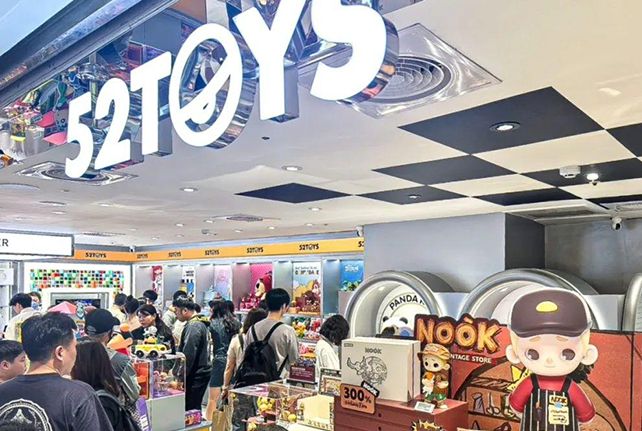
Core Viewpoint - 52TOYS has initiated its IPO process, marking its entry into the capital market after nearly a decade of operation, but faces significant challenges in profitability and market position compared to competitors like Pop Mart and Blok. [1][3][7] Financial Performance - 52TOYS reported revenues of 463 million, 482 million, and 630 million RMB for 2022, 2023, and 2024 respectively, with growth rates of 4.10% and 30.70% in 2023 and 2024 [9] - The company has incurred net losses of 1.7 million, 71.9 million, and 122 million RMB from 2022 to 2024, totaling approximately 200 million RMB in losses [3][9] - Adjusted net profits are projected to turn positive in 2023 and increase in 2024, but remain significantly lower than leading competitors [3][9] Market Position - 52TOYS claims to be the "third largest IP toy company" in China, with a GMV of 930 million RMB and a market share of 1.2% in 2024, but is far behind Pop Mart's GMV of 8.72 billion RMB and market share of 11.5% [7][8] - The company relies heavily on licensed IPs, with 50.2%, 59.3%, and 64.5% of its revenue coming from licensed IPs over the past three years, indicating increasing dependency [10] Management and Ownership - CEO Chen Wei and other executives cashed out nearly 60 million RMB before the IPO, exceeding the company's annual profit [4][5] - The company has undergone multiple financing rounds since 2018, raising its valuation from 200 million to over 4.2 billion RMB [5] Operational Efficiency - 52TOYS has faced challenges in operational efficiency, with high inventory levels and accounts receivable impacting cash flow [13][14] - The company's inventory turnover days have improved but still lag behind competitors, indicating potential issues with product movement [14][16] Future Prospects - The company plans to allocate 20% of IPO proceeds to diversify its IP matrix and enhance product design, aiming to develop its own IPs [20] - 52TOYS is expanding into overseas markets, with international revenue growing from 35.36 million RMB in 2022 to 147 million RMB in 2024, but faces stiff competition [23][24] Challenges Ahead - The reliance on licensed IPs poses risks, especially with key contracts nearing expiration, which could affect future revenue [11][10] - The company must navigate a competitive landscape in overseas markets, where established brands like Pop Mart already have a strong presence [24][25]
港股新消费明星企业,卖空数据显著攀升
财联社· 2025-06-12 10:59
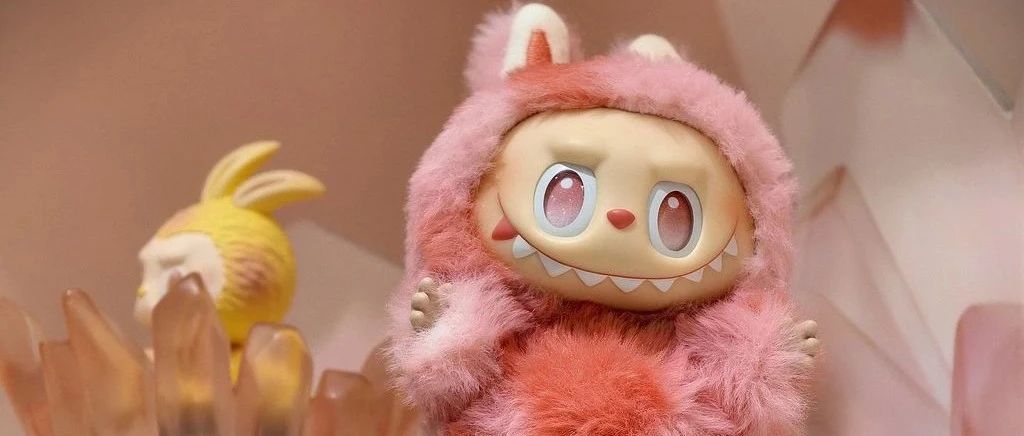
Core Viewpoint - The significant increase in short-selling data for Pop Mart and Blok is contrasted with their high market valuations and strong performance, indicating potential concerns about future growth and sustainability in the new consumption sector [1][3][9]. Group 1: Short-Selling Trends - Pop Mart's short-selling shares rose from 563,600 in early May to 1,707,000 by June 11, an increase of over 200% [1]. - Blok's short-selling shares increased from 71,400 on May 16 to 256,800 on June 11, marking a 260% rise [3]. - In contrast, other companies in the new consumption sector, such as Guming and Maogeping, experienced a decline in short-selling volumes [5]. Group 2: Performance and Valuation Concerns - Despite strong performance, the stock price increases for Pop Mart and Blok have potentially overstretched future growth expectations [9]. - The Labubu series from Pop Mart has a secondary market premium exceeding 10 times, raising concerns about valuation fragility [9]. Group 3: IP Dependency Risks - Blok relies on the Ultraman IP for 48.9% of its revenue, with the copyright expiring in 2027, leading to uncertainties regarding renewal costs and alternative IPs [9]. - Pop Mart's Labubu series contributes 23.3% of its revenue, with projected income of 3.04 billion in 2024, but faces challenges in managing the IP lifecycle [9]. Group 4: Market Sentiment and Consumer Behavior - On June 9, the day Blok was included in the Hong Kong Stock Connect, short-selling volume surged by 459%, indicating potential short-term arbitrage opportunities [9]. - Research shows that about 30% of blind box consumers are reducing purchases due to waning novelty, raising concerns about the sustainability of emotional consumption among Generation Z [9].
AI软件股集体爆发,大摩开始高调唱多中国资产
3 6 Ke· 2025-06-12 10:10
Group 1 - The Hong Kong stock market experienced a decline, but this is viewed as a buying opportunity, with hopes for further drops to around 23,800 points [1] - Morgan Stanley has expressed a bullish outlook on Chinese assets, noting that international investors are reconsidering the prospects of Chinese stocks due to recent advancements in AI and technology [1][2] - Despite the overall market decline, certain AI software stocks, such as Ping An Good Doctor and Kingsoft, saw significant gains, indicating a strong performance in this sector [1] Group 2 - The decline in the Hong Kong market was attributed to the poor performance of major companies like Alibaba and JD.com, as well as profit-taking following the results of US-China negotiations [3] - The market is currently in a consolidation phase, which is seen as a healthy correction before a potential upward movement, as long as the Hang Seng Index does not fall below 23,800 [4] Group 3 - Chinese biopharmaceuticals are on the verge of significant breakthroughs, with multiple out-licensing deals expected to be finalized, indicating a growing interest in China's innovative drug sector [5] - The stock prices of Pop Mart and Blokus have seen a dramatic increase, but there is a notable rise in short-selling activity, suggesting potential concerns about overvaluation [6][7] Group 4 - SF Express has reached a new high in its stock price, driven by the anticipated growth in unmanned logistics vehicles and an overall positive outlook for the company's performance over the next two years [8]


泡泡玛特劲敌,要IPO了
投中网· 2025-06-12 06:33
Core Viewpoint - 52TOYS aims to become the "Chinese version of Bandai" and is preparing for an IPO in Hong Kong, focusing on a diverse range of IP toys and self-developed products [1][9]. Company Background - Founded in May 2015 by Chen Wei and Huang Jin, 52TOYS started as a collectibles company, initially focusing on derivative products from international brands [3]. - The company has developed over 100 self-owned and licensed IPs, including popular franchises like Crayon Shin-chan and Tom and Jerry, and has expanded its product lines to include various toy categories [4]. Market Position and Growth - 52TOYS has successfully penetrated both domestic and international markets, with plans to open over 100 brand stores in China and expand into Southeast Asia, Japan, Korea, and North America by the end of 2024 [4]. - The company has seen significant revenue growth, with income increasing from 463 million yuan in 2022 to 630 million yuan in 2024, representing a compound annual growth rate (CAGR) of 16.7% [13]. Investment and Valuation - 52TOYS has raised multiple rounds of funding, with its valuation exceeding 4.2 billion yuan as of the latest funding round [5][8]. - Notable investors include Qiming Venture Partners and China International Capital Corporation, who recognize the potential of the IP derivative market in China [7][6]. Competitive Landscape - The company is often compared to Pop Mart, which has achieved significant market success, but 52TOYS differentiates itself by focusing on collectible toys rather than trendy toys [12]. - As of 2024, 52TOYS ranks second among multi-category IP toy companies in China, while Pop Mart's revenue reached over 13 billion yuan with a net profit of 3.4 billion yuan [13]. Future Outlook - 52TOYS is committed to enhancing its overseas presence, with overseas revenue growing from 35.4 million yuan in 2022 to 147 million yuan in 2024, achieving a CAGR of over 100% [14]. - The company aims to create a culture of collecting toys and make collectible toys a beloved lifestyle choice for more people [14].

弘则研究- 头部积木人品牌近况调研
2025-06-11 15:49
Summary of Company and Industry Insights Company: 布鲁可 (Bluco) Sales Performance - In Q2 2025, sales slightly exceeded 600 million yuan, showing significant growth compared to the same period last year, primarily due to an increase in retail outlets and accelerated distribution by dealers [1][6][3] - Sales in April 2025 were approximately 320 million yuan, while May sales slightly exceeded 500 million yuan [2][6] - Q1 2025 sales were 600 million yuan, up from 430 million yuan in Q1 2024, indicating a high year-on-year growth rate [3] Product Performance and IP Distribution - In April and May 2025, the sales distribution of major IP products was as follows: Ultraman series accounted for 50%-55%, Transformers for 15%-20%, Detective Conan and Kamen Rider each for 8%-10%, and original series also for 8%-10% [9][1] - The Ultraman series saw a decline of approximately 10 percentage points in its sales share, with the company aiming to reduce reliance on this IP and balance its business structure through other IPs [10][1] - The 14th product line performed better than expected, with a significant demand compared to the 12th and 13th lines [11][1] Pricing Strategy - The Ultraman series has a wide price range from 9.9 yuan to 39 yuan, with a trend towards higher pricing expected in the coming months, including new figurines priced between 499 to 1,299 yuan [15][1] Inventory and Market Expansion - As of early 2025, channel inventory was healthy, but increased after the launch of the Ultraman series in late April. By early June, inventory remained controllable [5][37] - The expansion of retail outlets has been slow, with a completion rate of less than 5% of the target of 250,000 new outlets for the year [38][1] Overseas Market Insights - In Q1 2025, overseas sales were approximately 80 million yuan, but dropped to over 20 million yuan in April due to tariff issues affecting the European and American markets [5][40] - The Southeast Asian market accounted for about 70% of overseas sales, while the company aims for over 500 million yuan in overseas sales for the year to alleviate domestic pressure [42][43] Challenges and Future Plans - The company faces challenges in achieving its sales targets for Q2 2025, with expectations of lower sales post Children's Day [39] - The Detective Conan series has been impacted by negative public sentiment, leading to lower-than-expected sales and potential delays in new product launches [31][32] IP Development and Consumer Trends - The company is exploring new IPs, including a partnership with 王者荣耀 (Honor of Kings), which is expected to attract a female consumer base [35][36] - Current IPs like Pokémon and Kamen Rider have shown varying performance, with Kamen Rider being less stable due to its dependency on the Ultraman ecosystem [21][22] Market Feedback and Product Improvement - Feedback collection for product improvement is conducted through order rates, online complaint data, and membership system feedback [27][24] This summary encapsulates the key insights from the conference call regarding the company's performance, product strategies, market challenges, and future directions.