蜜雪冰城

Search documents
9块9成过去时,咖啡价格战卷到2块9
凤凰网财经· 2025-10-12 12:36
Core Viewpoint - The coffee industry is experiencing a significant price war, with prices dropping to as low as 2.9 yuan, leading to intense competition among brands and a redefinition of coffee's market value [3][4][18]. Group 1: Price War Dynamics - Two years ago, brands like Luckin Coffee and Kudi initiated a price war, setting coffee prices at 9.9 yuan, which has now evolved into a new phase where brands like Guming and Cha Baidao are offering coffee for 4 yuan and above [3][5][6]. - In 2025, a second wave of price competition was ignited by new tea brands, with Guming launching a campaign offering coffee starting at 4.9 yuan, effectively halving the previous price point [6][7]. - The price war has led to a situation where high-end brands like Starbucks have also reduced prices, with average reductions of around 5 yuan per product [3][4][18]. Group 2: Impact on Brands - The aggressive pricing strategies have forced traditional coffee brands to adapt, with Luckin Coffee and Kudi responding to the new low-price entrants by launching their own promotions, such as 5.9 yuan coffee [10][12]. - The entry of new players like Lucky Coffee, which offers coffee as low as 2.9 yuan, has further intensified the competition, leading to a significant increase in order volumes for some stores [15][16]. - The overall market has seen a decline, with over 50,000 coffee shops closing in the past year, indicating that the price war is unsustainable for many players [18][19]. Group 3: Consumer Behavior and Market Trends - Consumer expectations for coffee pricing have shifted dramatically, with many now viewing 4 yuan as a reasonable price point for coffee [6][10]. - The blurring lines between coffee and tea products have led to increased competition, with brands like Cha Baidao also entering the low-price coffee market [8][12]. - The industry is becoming increasingly segmented, with different price points catering to diverse consumer preferences, highlighting the need for brands to innovate and invest in their supply chains to remain competitive [19].




9块9成过去时,咖啡价格战卷到2块9
3 6 Ke· 2025-10-12 00:11
Core Viewpoint - The coffee price war continues, with brands like Luckin and Kudi initiating aggressive pricing strategies, leading to a significant drop in coffee prices across the industry, now entering the 4 yuan+ era [1][2][10]. Group 1: Price War Dynamics - The coffee industry has seen a shift from a 9.9 yuan pricing model to a new low of 4.9 yuan initiated by new tea drink brands like Guming [2][3]. - Guming's promotional campaign offers coffee starting at 4.9 yuan, significantly undercutting previous prices and positioning itself as a "price butcher" in the market [2][3]. - The competition has intensified with established brands like Starbucks and Kudi also reducing prices, with Starbucks implementing its first price cuts in 26 years in the Chinese market [1][2]. Group 2: Market Impact and Consumer Behavior - The aggressive pricing strategies have led to a blurring of lines between coffee and tea beverages, with increased order volumes reported by various brands [5][10]. - The introduction of low-priced coffee options has altered consumer expectations, with many now perceiving 4 yuan as a reasonable price for coffee [2][10]. - The rise of brands like Lucky Coffee, offering prices as low as 2.9 yuan, has further intensified the competition, leading to a significant increase in order volumes at certain locations [7][9]. Group 3: Industry Challenges - The ongoing price war has resulted in over 50,000 coffee shops closing in the past year, indicating a challenging environment for many players in the market [10]. - High-end brands are not only participating in the price war but are also facing operational challenges, including layoffs and acquisitions, as seen with Starbucks and Piye Coffee [10]. - The industry is becoming increasingly segmented, with various price points catering to different consumer groups, highlighting the need for long-term strategies in supply chain and investment [10].
近3亿元并购!蜜雪冰城准备卖啤酒了
Shen Zhen Shang Bao· 2025-10-11 10:03
Group 1 - Mijiu Group announced plans to acquire 53% of the fresh beer brand "Fulu Family" for 297 million yuan, making it a subsidiary of the listed company [1] - The actual controller of Fulu Family, Tian Haixia, is the wife of Mijiu Ice City's CEO, Zhang Hongfu, raising concerns about the high transaction price and valuation metrics [1][2] - The acquisition involves a two-step process: an initial capital increase of 286 million yuan for 51% ownership, followed by a purchase of 2% from a natural person shareholder for 11.2 million yuan [1] Group 2 - Fulu Family was established in 2018 and launched its "Fresh Beer Fulu Family" brand in 2021, with plans to expand to approximately 1,200 stores across 28 provinces by August 2025 [1] - The company reported a loss of 1.53 million yuan in 2023, with a projected profit of 1.07 million yuan in 2024, and its net assets were approximately 19.52 million yuan [1] - The transaction values Fulu Family at 560 million yuan, with a price-to-earnings ratio of about 523 times and a price-to-book ratio of approximately 29 times, significantly higher than industry averages [1] Group 3 - The independent valuation of Fulu Family was conducted using a revenue multiple method, resulting in a fair value range of 240 million to 280 million yuan, while the final payment was slightly above this range [2] - Prior to the transaction, Tian Haixia held over 80% of Fulu Family, and after the deal, her direct stake decreased to 29.43%, maintaining her position as the second-largest shareholder [2] - Fulu Family's headquarters is located in the same facility as Mijiu Ice City, and they utilize the same cold chain logistics system, indicating a close operational relationship [3]
从“郭丽芳”到千万销量:果立方如何用河南法则改写新消费剧本
Sou Hu Cai Jing· 2025-10-11 09:13
Core Viewpoint - The article highlights the transformation of Henan from a traditional agricultural province to a new consumption hub, emphasizing that brands can now validate their market presence in Henan rather than just in first-tier cities like Beijing, Shanghai, Guangzhou, and Shenzhen [2][4][5]. Group 1: New Consumption Landscape - Henan has emerged as a fertile ground for new consumer brands, with successful examples including Mixue Ice City, Weilong, and Guoquan [2][5]. - The province's large population and numerous educational institutions provide a significant labor pool and a youthful consumer base, making it an ideal testing ground for brands [5][10]. - The local supply chain, including food processing and logistics, supports the growth of these brands by ensuring low costs and high quality [7][8]. Group 2: Brand Success Stories - Mixue Ice City sources its ingredients locally, allowing it to keep production costs low, exemplifying the advantages of Henan's supply chain [7]. - Guoquan, a brand that has successfully integrated "mixing drinks" into its offerings, has seen significant sales growth in Zhengzhou, indicating the city's role as a critical market for brand validation [13][15]. - The success of Guoquan in Zhengzhou has led to a broader acceptance of its products across China, demonstrating the city's importance as a "MVP battlefield" for consumer brands [20][21]. Group 3: Market Dynamics - The article notes that brands that succeed in Zhengzhou can quickly adapt and thrive in other regions of China, as the city reflects the broader consumer market dynamics [11][20]. - The "Central Plains Law" has become a key strategy for brands to grow from zero to one, emphasizing the importance of understanding local consumer needs [21][22]. - The new consumption wave in Henan is characterized by a deep response to real consumer demands, showcasing the agility of brands in capturing market opportunities [21][24].
她把公司卖给蜜雪冰城
投资界· 2025-10-11 07:26
Core Viewpoint - The article discusses the strategic acquisition of a craft beer brand, "Xianpi Fulujia," by Mixue Ice City, marking its entry into the fresh beer market with an investment of nearly 300 million RMB [2][3][5]. Group 1: Acquisition Details - Mixue Group will invest 285.6 million RMB to acquire a 53% stake in Fulujia, making it the largest shareholder [5]. - The acquisition consists of two parts: a cash subscription for new registered capital and a purchase of existing shares from the original shareholders [5]. - The valuation of Fulujia was based on a market assessment, with a range between 244.7 million RMB and 276.6 million RMB as of August 31, 2025 [5]. Group 2: Background of Fulujia - Fulujia was established in 2021 and operates the "Xianpi Fulujia" brand, focusing on craft beer priced between 6 to 10 RMB per 500ml cup [5]. - As of August 31, 2025, Fulujia plans to have around 1,200 stores across 28 provinces in China, primarily through a franchise model [5]. - In 2023, Fulujia reported a net loss of 1.53 million RMB but is projected to turn a profit of 1.07 million RMB in 2024 [6]. Group 3: Strategic Implications - This investment is seen as a significant move for Mixue to expand into the fresh beer category, leveraging Fulujia's existing market presence [7]. - The acquisition aligns with Mixue's broader strategy of diversifying its product offerings beyond tea and coffee into the beer segment [12]. Group 4: Market Trends - The craft beer market in China is expected to grow significantly, with projections indicating a market size of 130 billion RMB by 2025 and a penetration rate of 6.3% [14]. - The shift in consumer behavior, particularly among younger generations, is driving demand for diverse and flavorful craft beers, which are increasingly seen as lifestyle products [14][15]. Group 5: Competitive Landscape - Major players in the beverage industry, including traditional liquor companies, are entering the craft beer market, indicating a competitive environment [15]. - The article highlights the challenges faced by new entrants in the alcohol market, particularly in maintaining consumer engagement and loyalty compared to established beverage categories like tea [16].

2025上半年全球独角兽新增42家,AI赛道领跑,港股成中国独角兽IPO热土
创业邦· 2025-10-11 03:19
Core Insights - The number of new unicorns globally in H1 2025 decreased to 42, representing a year-on-year decline of 12.50% compared to 48 in H1 2024 and a quarter-on-quarter decline of 6.67% from 45 in H2 2024 [6][8] - The average valuation of new unicorns in H1 2025 was $1.785 billion, down 11.02% year-on-year from $2.006 billion in H1 2024 and down 20.13% from $2.235 billion in H2 2024 [8] - The majority of new unicorns were concentrated in sectors such as artificial intelligence (16), enterprise services (7), healthcare (4), and big data (4) [6][13] Unicorn Distribution - In H1 2025, the United States led with 26 new unicorns, accounting for 61.90% of the total, while China contributed 7 new unicorns, making up 16.67% [10] - Other countries with new unicorns included Switzerland and Germany (2 each), and Ireland, Mexico, Canada, New Zealand, and Israel (1 each) [10] Financing Overview - The total disclosed financing amount for the 42 new unicorns reached $75.117 billion, with the highest funding in artificial intelligence ($36.4 billion), followed by enterprise services ($7.7 billion) and big data ($6.5 billion) [13] - A total of 475 investment institutions participated in financing new unicorns, with 418 institutions investing in one unicorn and 57 institutions investing in two or more [14] Existing Unicorn Financing - The most active sectors for existing unicorn financing in H1 2025 were artificial intelligence (49 events), enterprise services (37 events), and finance (31 events) [18] - The total disclosed financing for existing unicorns was highest in artificial intelligence ($65.298 billion), followed by enterprise services ($5.830 billion) and finance ($4.494 billion) [18] Unicorn Exits - In H1 2025, 10 unicorns exited through IPOs or SPACs, with 8 unicorns exiting via mergers and acquisitions, and 1 unicorn exiting due to a valuation drop [23] - Notably, 8 Chinese unicorns listed on the Hong Kong Stock Exchange, Shanghai Stock Exchange, and NASDAQ [23]

蜜雪冰城“连载小说”火上热搜,小票文学又翻红
3 6 Ke· 2025-10-11 01:32
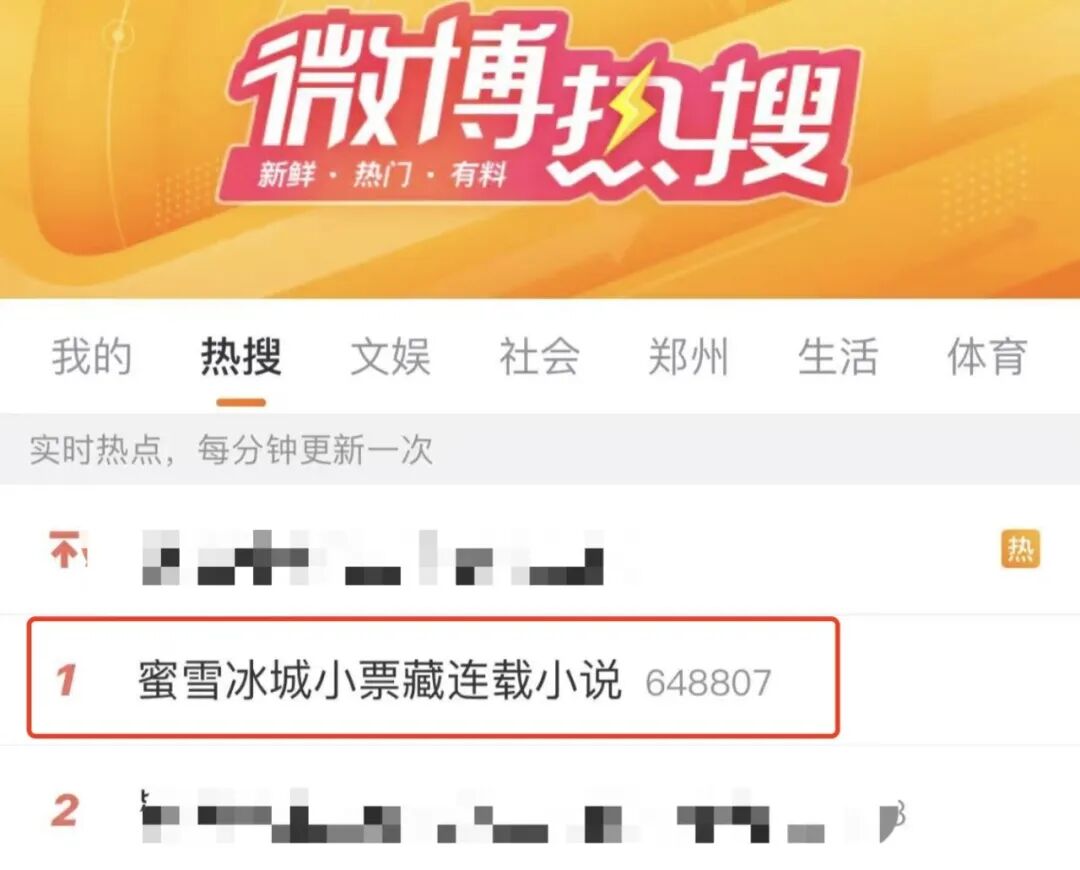
Core Insights - The recent popularity of "small ticket serialized novels" by Mixue Ice City has sparked consumer engagement, leading to a trend of "plot swapping" and continuous purchases to follow the story [1][5][6] Marketing Strategy - The initiative involves the brand's original IP story "The Snow King Selling Coffee in Ancient Times," divided into 20 chapters printed randomly on receipts, encouraging customers to collect them by purchasing drinks [3][5] - The first update cycle ran from September 17 to October 6, with plans for ongoing updates [3][6] Consumer Engagement - The appeal of wanting to know the story's direction has transformed receipts from disposable items into sought-after "story cards," prompting some consumers to visit stores for a week straight [5][6] - Social media platforms have seen users forming "chapter exchange stations" to swap duplicate or missing chapters, indicating a strong community engagement [5] Brand Interaction - Mixue Ice City has stated that the serialized novel is a fun interactive activity aligned with the brand's identity, with daily chapter updates rolled out in stores since September [6] - Other brands like Jasmine Milk White, Shanghai Auntie, and CoCo都可 have also adopted similar strategies, indicating a broader trend in the tea beverage industry [9] New Marketing Trends - The resurgence of small ticket marketing can be attributed to two main factors: the low cost of integrating creative content into existing receipts and the strong situational advantage that encourages spontaneous sharing on social media [11] - Brands are increasingly focusing on interactive storytelling, with some allowing consumers to write story endings, enhancing engagement and brand reach [11][12] Emotional Connection - Brands are using receipts to convey relatable messages and emotional support, resonating with younger consumers [16][18] - The approach of using low-cost, creative content for marketing demonstrates that effective engagement does not always require significant investment [19][21]
奋进的河南 决胜“十四五”·郑州篇丨 文旅深融合,催生几多新景
He Nan Ri Bao· 2025-10-10 02:10
Core Insights - Zhengzhou is enhancing its cultural tourism and aiming to become an international consumption center, with a target of receiving 170 million domestic and international tourists and achieving over 200 billion yuan in tourism revenue by 2024 [11] - The city is focusing on integrating culture and tourism, leveraging its historical significance and modern attractions to create a vibrant tourism ecosystem [19] Cultural Tourism Development - Zhengzhou has been recognized for its cultural tourism initiatives, including the establishment of national-level tourist attractions and the promotion of cultural events [11][12] - The city has developed a comprehensive exhibition system showcasing its rich cultural heritage, with 116 museums contributing to its identity as a "City of Museums" [12][13] Modern Attractions and Youth Engagement - New urban developments like the "Bohdu New Symbol" commercial district are designed to attract younger audiences, blending historical elements with modern consumer experiences [15][16] - The city is fostering a vibrant cultural scene with various theme parks and entertainment venues, enhancing its appeal to both domestic and international tourists [16][20] Integration of Technology and Culture - Zhengzhou is utilizing digital technologies in cultural presentations, such as the Dahu Village Archaeological Museum, which employs advanced techniques to create immersive experiences [12][13] - The rise of micro-dramas as a new form of cultural expression is being supported by local government initiatives, promoting the integration of storytelling with tourism [17][18] Performing Arts and Events - The city is positioning itself as a hub for performing arts, with numerous concerts and theatrical performances attracting large audiences and boosting local consumption [20][21] - Major events and performances, such as the "Only Henan: Drama Wonderland," are recognized as benchmarks for cultural tourism integration, drawing significant visitor numbers [21]

奋进的河南 决胜“十四五”·郑州篇丨 融入大市场,有多少条新路
He Nan Ri Bao· 2025-10-10 02:10
郑州机场。 货运繁忙的中铁联集郑州中心站。 今年1月—8月,郑州市外贸进出口累计完成3634.9亿元,总量、增速均领跑中部城市。 站在中国开放的新坐标上眺望,一个生动的景象正在显现:不沿边、不靠海的郑州,正从传统意义上的陆地 深处,大步走向新时代的开放前沿。 从高空俯瞰郑州—— 这里是承东启西的"中国十字路口"、汇通全球的"世界会客厅"——来自五大洲的货物在此集散,全球先进要 素在此交融,一条条国际物流大通道让不沿边不靠海的内陆城市,一跃成为服务全国、链接全球的开放新潮 地。 这里也是"空中丝绸之路"的重要枢纽,与卢森堡携手打造的"双枢纽"模式,让每一条航迹都是跨越山海的握 手,每一次起降都是联通世界的约定。条条"丝路"拧成一股开放的绳,拉起郑州与世界对话的手。 今,郑卢航线网络覆盖欧美亚三大洲24个国家200多个城市,带动郑州机场年货运量突破80万吨……豫卢相隔 万里,但依托一条"天路",使各自的市场成为彼此的机遇。这一模式还落地马来西亚,正式搭建起郑州与吉 隆坡之间稳定、高效的货运桥梁。 陆上丝路,经贸纽带扎得更深更牢。截至目前,中欧班列(郑州)已累计开行近1.6万列,构建起"26个境外 直达站点、9个出 ...

奋进的河南 决胜“十四五”·郑州篇丨 高质量发展,靠什么硬支撑
He Nan Ri Bao· 2025-10-10 02:10
Core Insights - Zhengzhou is positioning itself as a key player in the modern industrial system, focusing on high-quality development and the creation of new competitive advantages in response to technological revolutions and industrial transformations [5][6]. Industrial Development - Zhengzhou has seen a cumulative growth of 38.1% in industrial added value since the 14th Five-Year Plan, with total industrial output surpassing 1.9 trillion yuan [6]. - The city is enhancing traditional industries through modernization, with significant advancements in equipment manufacturing, particularly in shield tunneling machines, which have set records in size and capability [7][8]. Emerging Industries - Strategic emerging industries are becoming vital for high-quality development, with Zhengzhou's electronic information sector, led by companies like Foxconn and Super Fusion, achieving substantial growth [12][15]. - Super Fusion's revenue has increased from over 10 billion yuan in 2022 to over 28 billion yuan in 2023, with projections exceeding 40 billion yuan in 2024 [14]. Future Industries - Zhengzhou is actively developing future industries, including artificial intelligence, quantum technology, and low-altitude economy, with initiatives like the establishment of the "Quantum Valley" and the promotion of low-altitude economic zones [19][25][26]. - The city has created several national and provincial pilot zones for future industries, enhancing its reputation as a hub for innovation and technology [19]. Key Achievements - Zhengzhou has become the largest production base for Apple smartphones and intelligent connected buses, as well as the leading producer of gas sensors and superhard materials in China [11]. - The city is also home to significant automotive manufacturing, with companies like BYD and SAIC producing over 1 million new energy vehicles annually [17][18].