饿了么

Search documents
美团将开超1万家外卖卫星店;KKR公司收购大窑汽水相关交易获批
Sou Hu Cai Jing· 2025-07-17 00:28
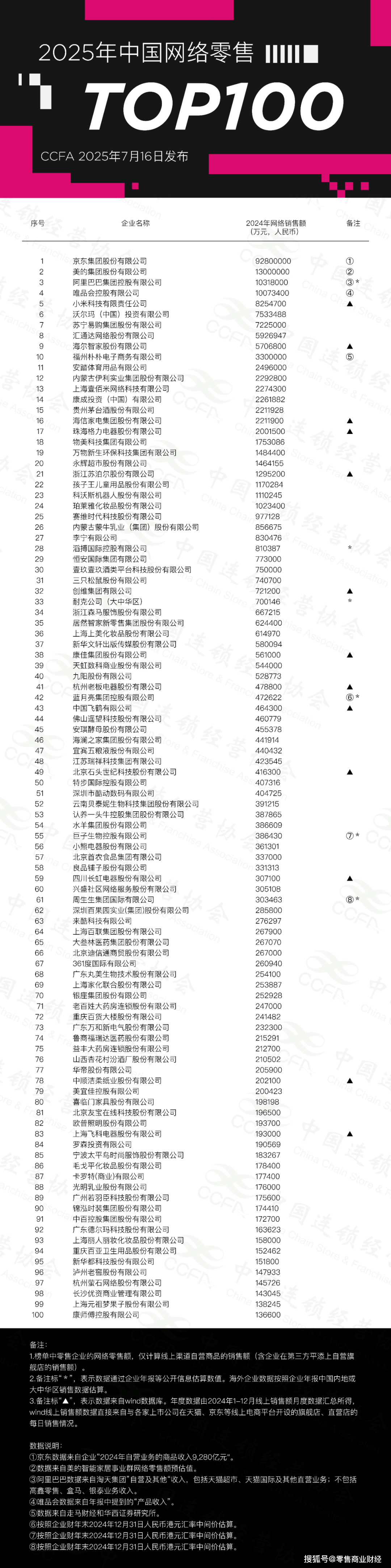
Group 1 - The core viewpoint of the article highlights the release of the "2025 China Online Retail TOP 100" list, with JD.com ranking first with a network sales amount of 928 billion yuan, marking a year-on-year growth of 13.6% in total online sales for the listed companies [1][2][3] - The total online sales of the top 100 companies reached 2.17 trillion yuan, with 63 consumer goods companies, 24 physical retail companies, and 13 e-commerce companies contributing to the trillion-level market [1] - Four companies, including JD.com, Midea, Alibaba, and Vipshop, are part of the "billion-dollar club," while 20 companies are in the "hundred-million camp," forming the backbone of the market [1][2] Group 2 - The announcement from Guoquan indicates an expected net profit of approximately 180 million to 210 million yuan for the first half of 2025, representing a year-on-year increase of about 111% to 146% [7] - KKR's acquisition of Dayao Soda has been approved, with KKR set to acquire 85% of the shares, aligning with previous media reports [8] - Meituan plans to open over 10,000 satellite stores by the end of this year, having already established over 5,500 stores in collaboration with more than 800 major restaurant brands [13]





美团王莆中:饿了么去年天天搞免单,成本太高无法持续
Xin Lang Ke Ji· 2025-07-16 14:07
Core Viewpoint - The CEO of Meituan's core local business segment, Wang Puzhong, criticized Ele.me's unsustainable promotional strategy of offering free meals, indicating that such high costs cannot be maintained in the long term [1] Group 1: Competitive Landscape - Wang Puzhong highlighted that Meituan's system capabilities surpass those of its competitors, allowing for targeted promotions and efficient user engagement [1] - He pointed out that other platforms are facing issues with "negative orders" and extremely low-income orders, which he attributes to a lack of operational precision and risk control in extreme marketing strategies [1] Group 2: Business Strategy - Meituan did not initially intend to engage in aggressive competition but felt compelled to respond to market dynamics [1] - The company claims that, with its system capabilities, it could easily increase order volumes if it chose to adopt a similar subsidy strategy as its competitors, stating it could scale from 150 million to 160 million or even 200 million orders if desired [2]
南城香创始人汪国玉:平台补贴以来,收入利润均两位数提升
Sou Hu Cai Jing· 2025-07-16 13:13
Group 1 - The core viewpoint of the articles highlights the significant growth in order volume and sales driven by promotional activities such as consumption vouchers on platforms like Taobao Flash Sale and Ele.me, with daily order volume exceeding 80 million [1] - The overall profit for restaurant businesses has increased by approximately 15% since the introduction of consumption vouchers, indicating a positive impact on the online penetration rate of these businesses [1] - In the first week of the consumption voucher launch, 4,124 restaurant chain brands reached historical peak sales, with 95% of these brands being urban regional chains, showcasing the revitalization of urban consumption [1] Group 2 - The new "National Subsidy" policy has led to a significant increase in sales for consumer goods through trade-in programs, surpassing last year's total sales, and is recognized for its role in stimulating consumption potential and economic circulation [2] - Platform companies are responding to the "National Subsidy" policy by investing in consumption vouchers for the restaurant and service industries, which has injected new growth into the market and is considered an important multiplier effect of the policy [2]
外卖商战烽烟起,餐饮行业迎新机,南王科技供应链优势凸显
Quan Jing Wang· 2025-07-16 11:02
Group 1: Market Overview - The online food delivery market in China is projected to reach 1.64 trillion yuan in 2024 and 1.7469 trillion yuan in 2025, indicating strong growth momentum and unprecedented development opportunities for the restaurant industry [1][2] - Major food delivery platforms like Meituan, Taobao Flash Sale, and JD have intensified competition, with Taobao Flash Sale reporting daily order volumes exceeding 80 million and Meituan surpassing 150 million [1] Group 2: Industry Dynamics - The ongoing competition in the food delivery sector has led to significant income growth for delivery riders, with average monthly earnings reported at over 12,500 yuan for active riders on Taobao Flash Sale and 9,793 yuan for Meituan's riders [1] - The integration of digital products in restaurant operations is increasing, with 94.2% of restaurants using ordering/cash register systems and 89.3% utilizing external traffic platforms [2] Group 3: Company Spotlight - Nanwang Technology - Nanwang Technology, established in 2010, specializes in environmentally friendly packaging and has rapidly responded to the booming food delivery market by expanding its product offerings [3][4] - The company has invested in a new smart industrial park in Fujian, capable of producing over 2.247 billion paper packaging products annually, to meet the surging demand for food delivery packaging [4][5] Group 4: Supply Chain and Innovation - Nanwang Technology has established long-term partnerships with major paper manufacturers to ensure stable supply and quality of raw materials, enhancing its supply chain management capabilities [5][6] - The company employs over 400 advanced production machines for flexible printing and automated bag-making, achieving a high level of production efficiency and quality control [6][7] Group 5: Environmental Initiatives - Nanwang Technology has developed fluorine-free oil-resistant paper to address environmental concerns associated with traditional fluorinated agents, contributing to the industry's green transformation [7] - The company is actively involved in setting industry standards for food contact materials, promoting sustainable practices within the packaging sector [6][7]
没有一个互联网平台是靠补贴打下来的(一)
Hu Xiu· 2025-07-16 06:49
Core Viewpoint - The current competition in the food delivery market is intense, with major players like Meituan and Taobao Shanguo achieving significant order volumes, indicating a resurgence in the sector [1][46]. Group 1: Market Dynamics - The food delivery market is experiencing a surge, with Meituan announcing over 120 million orders in a single day and Taobao Shanguo surpassing 80 million orders [1]. - The situation mirrors the community group buying boom of 2020, with both similarities and differences in operational models and subsidy strategies [2][3]. - The essence of the competition revolves around four key topics: the effectiveness of subsidies, the viability of food delivery business models, the areas of operational efficiency, and the significance of market penetration rates [5]. Group 2: Business Models - The food delivery sector is primarily divided into restaurant delivery and retail delivery, with the former being more established and profitable [6][21]. - Restaurant delivery has a higher gross margin (60%-80%) compared to retail delivery, which struggles with lower margins and higher inventory costs [25][26]. - The challenges faced by retail delivery include the difficulty in controlling product quality and costs, making it less profitable than restaurant delivery [30][31]. Group 3: Competition and Efficiency - The current food delivery competition is fundamentally a battle in restaurant delivery, while retail delivery remains an unresolved question in terms of business model viability [46][71]. - The success of food delivery platforms is not solely dependent on subsidies; rather, it hinges on operational efficiency and the ability to innovate beyond existing frameworks [50][72]. - The market dynamics suggest that achieving a market share of over 30% for competitors is essential for a balanced competitive landscape, with Meituan's share needing to drop below 60% for effective competition [64][69]. Group 4: Future Outlook - The ongoing subsidy wars in the food delivery sector are primarily focused on restaurant delivery, with the potential for retail delivery to disrupt the market remaining uncertain [78][79]. - Companies like Taobao Shanguo and JD's food delivery service must identify structural issues and provide innovative solutions to succeed in the competitive landscape [80][81]. - The future of the food delivery market will depend on whether new entrants can uncover and address these structural challenges effectively [88][99].

2025年6月餐饮月报:全国餐饮景气指数稳中有跌,当季水果与山野食材引领新品创新
东京烘焙职业人· 2025-07-16 05:21
Group 1 - The overall restaurant industry prosperity index in June 2025 slightly decreased to 104.1, down 0.1% from May's 104.2 [5][3] - The decline in the index was influenced by various factors, including seasonal changes and consumer behavior adjustments [8][4] - The index for third-tier and below cities saw the largest decline at 5.4%, followed by second-tier cities at 4.6%, while first-tier cities experienced a slight increase of 1.2% [12] Group 2 - The "Red Restaurant Index Top 100" for June 2025 saw 36 brands rise in rankings, 33 fall, and 30 remain unchanged, with one new entry [18] - The top three brands in the index were Haidilao, KFC (China), and Luckin Coffee, followed closely by McDonald's (China) and others [20][18] Group 3 - In June 2025, the snack fast food category showed significant growth, with its prosperity index rising to 103.7, an increase of 5.4% [16] - Conversely, the beverage category's index fell to 116.5, down 2.2%, while the index for hot pot and barbecue categories were 93.5 and 81.9, respectively, both showing declines [16] Group 4 - The restaurant industry saw active financing events in June 2025, with a total of 10 financing occurrences, marking a significant increase from the previous month [59] - Notable IPO movements included the submission of a prospectus by Banu International Holdings for a main board listing and the listing of Haitian Flavoring and Food Company on the Hong Kong Stock Exchange [62][58] Group 5 - The restaurant industry is witnessing a trend of local brand expansion and international market penetration, with brands innovating through unique store formats and digital models [55] - Significant industry events included the opening of Haidilao's first fresh-cut beef theme store in Guangzhou and Luckin Coffee's first stores in the U.S. [61][62]





即时零售大战,盒马呢?
3 6 Ke· 2025-07-16 01:25
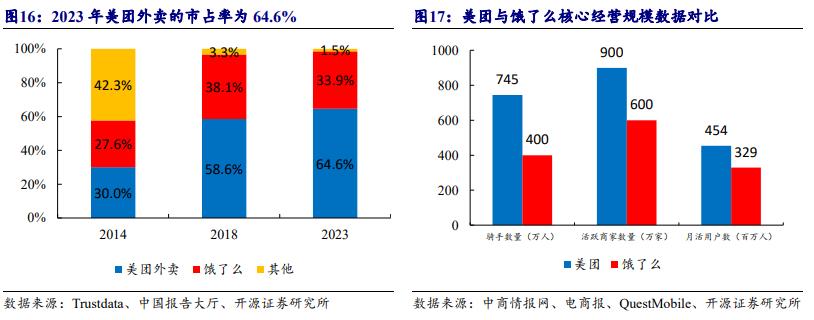
Core Insights - Hema X membership stores in Beijing will cease operations starting July 31, marking the complete closure of Hema X stores in the city [1][2] - Hema X, which aimed to compete with Sam's Club by offering high-quality products and bulk purchasing, has seen over half of its stores shut down nationwide since early last year [2] - Despite achieving profitability for nine consecutive months and a customer growth of over 50%, Hema's strategic value within Alibaba has diminished, leading to a need for self-sufficiency [2][3] Financial Performance - Hema reported overall profitability for nine months, with a customer base increase exceeding 50% [2] - The closure of Hema X stores reflects a broader trend of strategic shifts within Alibaba, where Hema has been required to be self-sustaining since 2021 [3][12] Strategic Positioning - Hema's decline in strategic importance within Alibaba contrasts with the continued support for Ele.me, which is seen as having high strategic value due to its logistics infrastructure [3][10] - The competitive landscape has intensified with Alibaba's entry into the instant retail market, where Ele.me has been actively engaged against rivals like JD and Meituan [4][5][6] Market Dynamics - Meituan maintains a dominant position in the food delivery market, with a market share of 64.6% in 2023, projected to rise to 65% in 2024 [9] - Hema's inability to effectively participate in the instant retail battle has led to its strategic sidelining, as it lacks the logistics capabilities that Ele.me possesses [11][12] Historical Context - Hema was established to capture the grocery market, but its various business models have struggled to achieve sustainable profitability [20][24] - The shift in Alibaba's strategy in 2021, which emphasized independent profit and loss responsibility for its business units, has left Hema in a precarious position [12][14][17] Competitive Landscape - Hema's attempts to innovate and capture market share have been met with challenges, as evidenced by the struggles of similar models like Meituan's "Little Elephant" fresh food stores [23][24] - The high costs associated with fresh food logistics and the need for a robust supply chain have made the grocery business particularly difficult [23][24] Leadership and Future Outlook - The retirement of former CEO Hou Yi and the subsequent lack of strategic direction have contributed to Hema's decline [30][36] - The relationship between Hou Yi and Alibaba's leadership has been pivotal in Hema's history, but the current environment suggests a shift away from its original innovative spirit [36][37]
上海推进“建设者之家”项目建设的成效与启示
Shang Hai Zheng Quan Bao· 2025-07-15 18:26
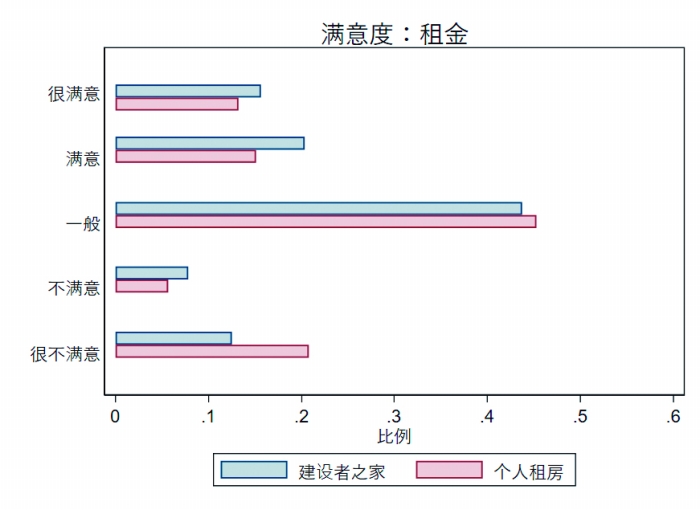
Core Insights - The "Builder's Home" project significantly enhances the living conditions, rental affordability, and social integration of delivery workers in Shanghai, addressing their housing needs and improving their work stability [6][12][16]. Group 1: Project Overview - The "Builder's Home" initiative, launched in 2020, aims to provide affordable rental housing for frontline workers such as delivery riders, sanitation workers, and new job seekers in Shanghai [6][8]. - The project offers a range of housing options, including shared dormitories and private rooms, with a focus on affordability and quality [7][10]. - As of now, over 40,000 beds have been constructed, with plans to add more than 25,000 beds in key areas by 2024 [7][9]. Group 2: Impact on Workers - The project has led to a notable increase in job stability and work performance among residents, with a 10% reduction in turnover rates for those living in "Builder's Home" compared to those who do not [12][13]. - Residents report a significant increase in their weekly working hours, with some riders delivering 60 to 70 more orders per week, resulting in higher income that offsets housing costs [13][14]. - The living conditions have improved, with over 50% of residents expressing satisfaction with their living space, facilities, and community relationships, compared to only 30% satisfaction among those renting privately [15] . Group 3: Challenges and Recommendations - The project faces challenges such as a mismatch between supply and demand, with existing housing options insufficient to meet the needs of all workers [16][17]. - There is a lack of awareness regarding supportive policies, such as residence permits, which could benefit residents [17][19]. - Recommendations include expanding housing supply, improving policy communication, and adopting innovative management practices to enhance operational efficiency [18][19].
外卖补贴大战不停 餐饮人能赢得什么
Bei Jing Shang Bao· 2025-07-15 13:22
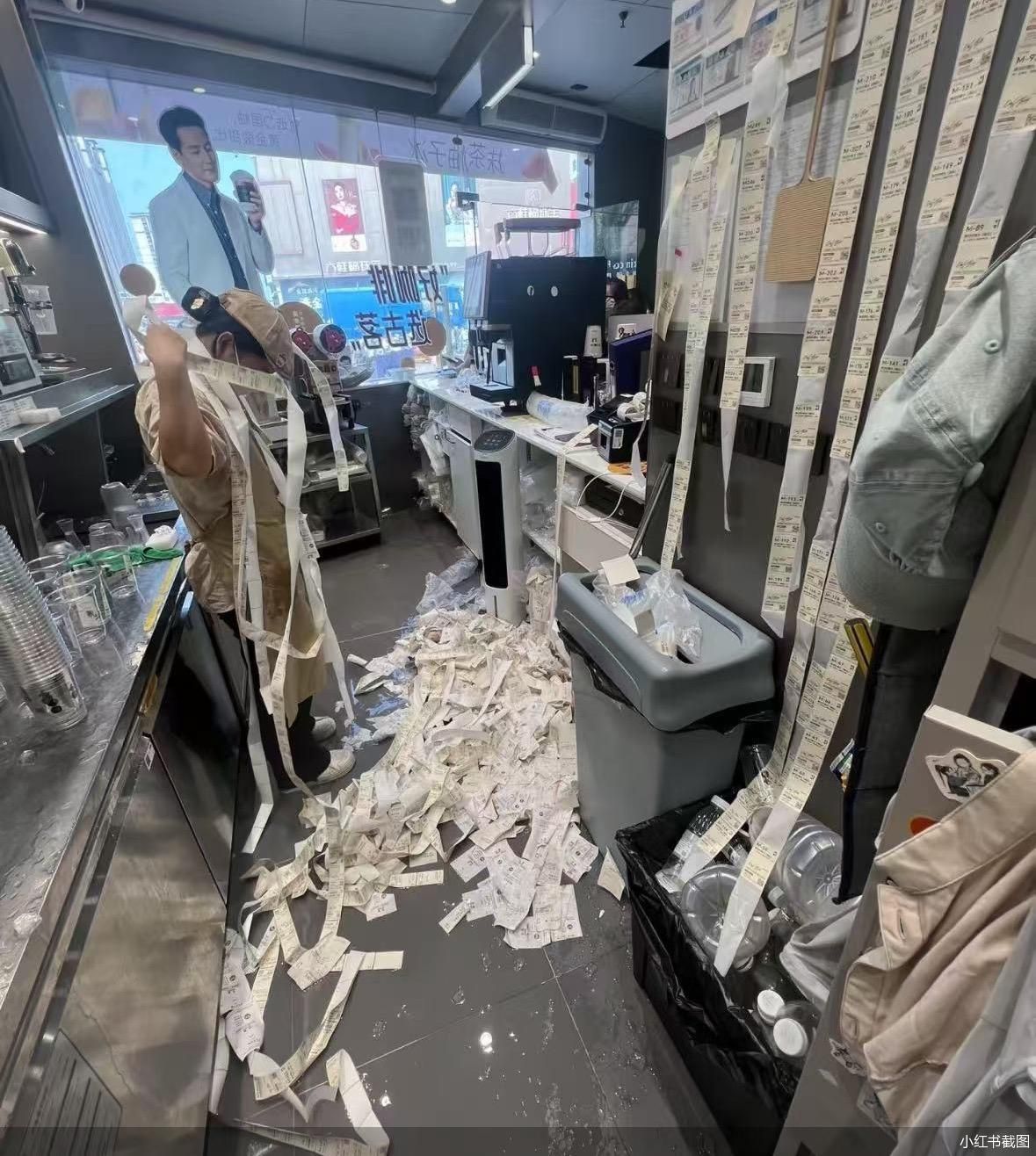
Core Viewpoint - The ongoing competition among food delivery platforms has led to a surge in order volumes, but this has not translated into significant profits for merchants, raising concerns about the sustainability of the current business model [1][7][10]. Group 1: Order Volume and Platform Performance - Food delivery platforms have reported record-breaking order volumes, with Meituan exceeding 1.5 billion daily orders and Taobao Flash Sale and Ele.me surpassing 80 million daily orders [5][10]. - The number of orders at some beverage stores has doubled, with weekend orders reaching over a thousand, creating chaotic scenes in stores [3][4]. - Delivery riders have seen significant income increases, with average daily earnings rising by 111% and some riders earning over 12,500 yuan monthly [5][8]. Group 2: Merchant Challenges and Profitability - Despite the surge in orders, merchants are struggling with profitability, often experiencing only thin margins and increased operational pressures [7][8]. - The influx of orders has led to a rise in negative customer experiences, with complaint rates increasing by 10% due to delays and order mismanagement [8][9]. - Merchants are facing a dilemma: participating in subsidy programs to gain visibility on platforms or risking reduced order volumes and exposure [9][12]. Group 3: Industry Concerns and Future Outlook - Industry experts warn that the current subsidy-driven competition may harm traditional dining businesses and create a challenging environment for sustainable growth [9][10]. - The reliance on heavy subsidies to drive sales could lead to long-term consumer behavior changes that undermine the viability of the restaurant industry [11][12]. - There is a call for platforms to adopt more balanced practices, reducing unreasonable fees and supporting merchants in improving service quality to foster a healthier market ecosystem [12].
外卖大战,终非“免费的午餐”
Bei Jing Wan Bao· 2025-07-15 06:48
Core Viewpoint - The takeaway from the articles is that the food delivery industry is experiencing an intense subsidy war driven by new entrants, leading to increased competition among platforms and significant benefits for consumers, riders, and merchants, but also raising concerns about sustainability and service quality in the long term [3][4][5]. Group 1: Subsidy War Dynamics - The subsidy competition has intensified with new players entering the market, prompting established giants to follow suit in order to retain and attract users [3]. - Recent reports indicate that the subsidy war has led to a surge in order volumes, with Meituan surpassing 100 million daily orders and Ele.me exceeding 80 million, while JD's delivery service has seen rapid growth in brand sales [3]. - The short-term effects of the subsidy war include increased consumer spending, higher earnings for delivery riders, and booming business for merchants, contributing to a significant boost in urban consumption [3][4]. Group 2: Consumer and Merchant Concerns - Despite the apparent benefits, there are underlying concerns regarding consumer expectations for low prices, with some users expressing that their loyalty may diminish if subsidies are withdrawn [4]. - The intense competition is leading to reduced profit margins for merchants, who are forced to lower prices while facing rising operational costs [4]. - Delivery riders are experiencing increased workloads and pressure, with some working excessively long hours, raising concerns about their health and well-being [4]. Group 3: Long-term Sustainability and Industry Outlook - The current "money-splashing" competition is seen as a temporary strategy, with industry experts warning that relying solely on subsidies is not sustainable [5]. - Regulatory bodies have begun to address the issue of "involution" in competition, signaling a need for platforms to focus on quality, service, and innovation rather than just price wars [5]. - The food delivery market has significant potential for growth, and companies are encouraged to shift their focus from merely increasing sales to ensuring long-term viability and quality service [5].