
淘宝

Search documents
科技周报|董明珠连任董事长、京东美团起争执、“仅退款”落幕
Di Yi Cai Jing· 2025-04-27 07:08
Group 1: Gree Electric - Dong Mingzhu re-elected as chairman, Zhang Wei appointed as president, indicating a stable management transition and preparation for future leadership development [1] - The new board includes professionals like former vice president Shu Lizhi and chief engineer Zhong Chengbao, enhancing the company's governance [1] Group 2: JD and Meituan - JD accuses competitors of enforcing a "choose one" policy, impacting delivery riders' ability to accept orders from JD [2] - JD offers to waive delivery fees for orders delayed by over 20 minutes, highlighting the competitive pressure in the instant delivery market [2] Group 3: E-commerce Refund Policy - Major platforms like Taobao and Douyin announce the cancellation of the "refund only" policy, reflecting a shift towards empowering merchants [3] - The adjustment aims to balance the interests of consumers and businesses amid regulatory encouragement for improved business environments [3] Group 4: Xiaohongshu's Employee Policy Changes - Xiaohongshu cancels the "big and small week" work schedule and competitive agreements, promoting a trust-based relationship with employees [4] - The changes align with broader industry trends against "involution" and excessive work hours [4] Group 5: Tesla's Optimus Recruitment - Tesla's Optimus team initiates large-scale recruitment, focusing on R&D positions primarily in California [5] - The company aims to ramp up production of Optimus robots, with plans for significant output by the end of the year [6] Group 6: Midea's Humanoid Robot - Midea announces its humanoid robot will start operations in May, marking a significant step in the domestic humanoid robot industry [7] - The robot is expected to serve as a commercial guide in stores later this year [7] Group 7: Hisense's Q1 Performance - Hisense reports Q1 revenue of 13.375 billion yuan, a 5.31% increase, and a net profit of 554 million yuan, up 18.61% [8] - The introduction of new technologies and AI integration in TVs contributes to the growth [8] Group 8: Ecovacs' Recovery - Ecovacs reports a 6.7% increase in revenue to 16.542 billion yuan for 2024, with a net profit growth of 31.69% [9] - The company benefits from government incentives and new product launches in the cleaning appliance sector [9] Group 9: Vanward's Export Growth - Vanward Electric reports a 20.29% revenue increase to 7.342 billion yuan in 2024, with a 41.43% rise in export revenue [10] - The company focuses on smart and energy-efficient products while expanding its global market presence [10] Group 10: OPPO's Management Change - OPPO's China president Liu Bo steps down for a learning program, with senior vice president Duan Yaohui taking over [11][12] - The leadership change comes amid competitive pressures from Huawei and Apple, necessitating a proactive market strategy [12] Group 11: Domestic Smartphone Market Surge - Domestic smartphone shipments in February reach 19.662 million units, a 37.9% year-on-year increase, driven by government subsidies [13] - Local brands see a 43.8% increase in shipments, with many manufacturers lowering prices to capitalize on subsidy benefits [13] Group 12: Gaming Industry and Traditional Culture - Game companies like Youzu Network report revenue growth driven by themes from Chinese classical culture [14] - The integration of traditional cultural elements into games is gaining global popularity, enhancing market performance [14] Group 13: 360's AI Tool Launch - 360's Nano AI launches the "MCP Universal Toolbox," integrating over 110 tools for various applications [15] - The MCP protocol is expected to enhance AI capabilities, benefiting platforms with rich data and business experience [15] Group 14: Investment Trends - The biopharmaceutical sector sees a decrease in financing events, while the semiconductor and AI sectors maintain stable activity levels [16] - Notable financing includes a significant round for Shenzhen Zean Biopharmaceuticals and Nanjing Renxin Technology [16]




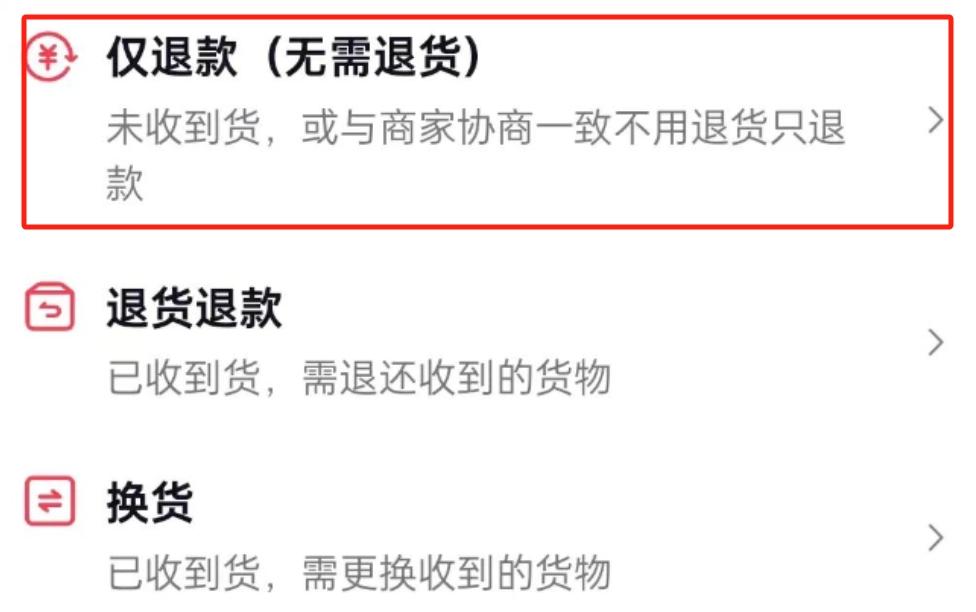
“ 仅退款 ” 凉凉,电商变天了!
3 6 Ke· 2025-04-27 05:35
Core Viewpoint - Major e-commerce platforms in China have announced the cancellation of the "refund only" policy, which was initially aimed at protecting consumer rights but has led to significant issues for merchants [1][12][15] Group 1: Background of "Refund Only" Policy - The "refund only" policy was introduced by Pinduoduo in 2021, inspired by Amazon, primarily to address issues with perishable goods [2][4] - Initially, the policy was beneficial for both consumers and merchants, allowing for a more convenient transaction process without the need for returns [2][4] Group 2: Expansion and Impact of the Policy - The policy quickly became standard across major platforms like Taobao, JD.com, Douyin, and Kuaishou, leading to a competitive advantage for those offering it [4][5] - Pinduoduo saw a 135% increase in repurchase rates after implementing the policy, demonstrating its initial effectiveness in attracting consumers [5] Group 3: Issues Arising from the Policy - The policy has been exploited by some consumers, leading to a rise in fraudulent activities and significant losses for merchants, with some reporting losses exceeding 600,000 yuan [9][10][11] - A black market emerged, with individuals taking advantage of the policy to profit from "zero-cost purchases" [9][11] Group 4: Cancellation of the Policy - Platforms like JD.com and Taobao have begun to phase out the "refund only" policy, with JD.com starting on April 30 and Taobao planning to follow in July [1][12] - The cancellation aims to restore fairness for merchants, allowing them to negotiate refunds directly with consumers [13][15] Group 5: Future of E-commerce - The industry is expected to evolve, focusing on balancing consumer and merchant rights while improving product quality and service [15][17] - Regulatory bodies have shown interest in addressing the misuse of the "refund only" policy, indicating a shift towards more equitable practices in the e-commerce sector [15][17]



砍价背后的真相,拼多多如何一步步让人产生依赖?
Sou Hu Cai Jing· 2025-04-27 03:25
我们都知道,自从电商风气蔓延开来,实体店就逐渐消亡了许多,然而随着时间的流逝,电商越来越多,有正规,有大型,有小型,有搅局者,反正这些电 商平台的出现,只有一个目标,吸引大量消费者的眼球! ▲于我而言,着实有些厌烦那些同事总让我帮忙"砍一刀"的行为,记得当时,我发现拼多多这款软件极难卸载,心中便隐隐担忧它是否藏有病毒,因此,每 当有同事或者亲戚来找我"砍一刀"时,说实话,我都会不由自主地感到头皮发麻,不过,这仅仅是我个人的看法,并不能代表拼多多整体的购物体验 ※不管是拼多多还是京东,还是其他电商品牌,想要快速崛起都会有以下三个方面的麻烦要多多注意"质量、售后和价格欺诈" 而今天,我想讲一下"拼多多购物是否欺骗消费者",一个基本宗旨,本座不存在任何批评想法,一切都从客观、公正与理智 讲实话拼多多肯定可以给消费者带来不错的购物体验,但是呢?在背后同样有不好一面,我们绝对不能因为不好而认为在批评,就像京东虽然购物体验不 错,但是如果站在综合层面依然有"二手东"的舆论,万事万物均存在辩证现象,这是固定不变的私我。 ※看似搅局者,实则确实为老百姓提供了购物良好的优惠! 提起这个拼多多,讲实话在大多数人脑海中"砍一刀"或 ...
女生网购避孕套被骑手骚扰,饿了么回应
程序员的那些事· 2025-04-26 15:13
最近京东和美团频频上热搜,貌似一直没饿了么啥事。 事情经过 4 月 25 日,有一位成都小姐姐网购后遇到了一个奇葩配送员。(小程程也遇到过奇葩的骑手,我写在最后 了) 这位小姐姐是在淘宝买了一盒消毒液及避孕套,卖家是同城的一个实体店,卖家在饿了么下单送货上门。 小姐姐表示,配送员送到门口就意味深长地看着自己,后来还发短信骚扰。 不过今天它终于上热搜了! 在被骚扰后,小姐姐很纳闷,明明东西用黑色塑料袋包装,而且小票上信息也是隐藏了,但配送员仍知晓具体 物品信息,怀疑东西被拆或系统信息泄露了,于是她投诉了。 商家 饿了么客服回应 后续:骑手道歉,当事人原谅 小程程在小红书找到当事人发的后续了: Bonus:我遇到的奇葩骑手 刷到这个热搜时,小程程就想起前几年遇到一个某团的骑手,他给邻居送东西后,然后居然把我家买的东西 (送货到门口的)给偷走,正好被可视门铃监控拍下来了。 商家拒绝退货退款,但平台介入后承诺保护用户隐私 门店目前也已拉黑了这名骑手,不让他再接门店的订单 我给了他改正机会(找邻居帮忙电联让其送回),但他拒不承认偷窃,只能报警处理 + 曝光。(我用是个人 小号曝光,不是大号 )。 最后是外卖站点的站长带 ...
十问十答:刘强东送外卖!京东葫芦里卖什么药?
海豚投研· 2025-04-26 11:18
京东近期在外卖领域的布局,与其当前所面临的业务困境密切相关。国内电商市场目前主要由七大平台主导,包括淘宝、京东、拼多多、 抖音、快手、小红书以 及微信视频号。这些平台之间竞争激烈,流量增量获取难度显著加大。 京东在这一格局中的短板在于流量较少,且DAU远远小于MAU,意味着它的工具属性更强, 目前现有用户和流量更多依赖存量运营,消费需求也就更容易被其 他产品形态的竞对截流。 作者:长桥社区@ 戴某DEMO 海豚君授权发布 混长桥社区的桥友们应该多多少少都听过长桥社区大佬戴某DEMO,一个在互联网行业摸爬滚打多年,从电商、到外卖、到视频……,是中国互联网起伏的一线 弄潮人,也是与海豚君把酒狂侃的好兄弟。面对外卖市场风云再起,互联网老兵不吐不快,海豚君有幸独家发布戴兄的万字长文。 由于文章过长,海豚君把这篇外卖的分析雄文分成了上下两篇,第一篇重在通过一问一答的分析,先全景性理解外卖市场和京东做外卖的背景。第二篇重点做竞 争分析。 要和戴兄交流的同仁,可加他个人微信" iamdaijia ",加好友备注" 京东外卖交流 "。 废话不多,直接上正文: 一、京东进入外卖等新领域的战略意图是怎样的? 为了应对这一问题,京 ...
“仅退款”即将退出舞台,电商平台为何按下暂停键?
Sou Hu Cai Jing· 2025-04-24 14:06
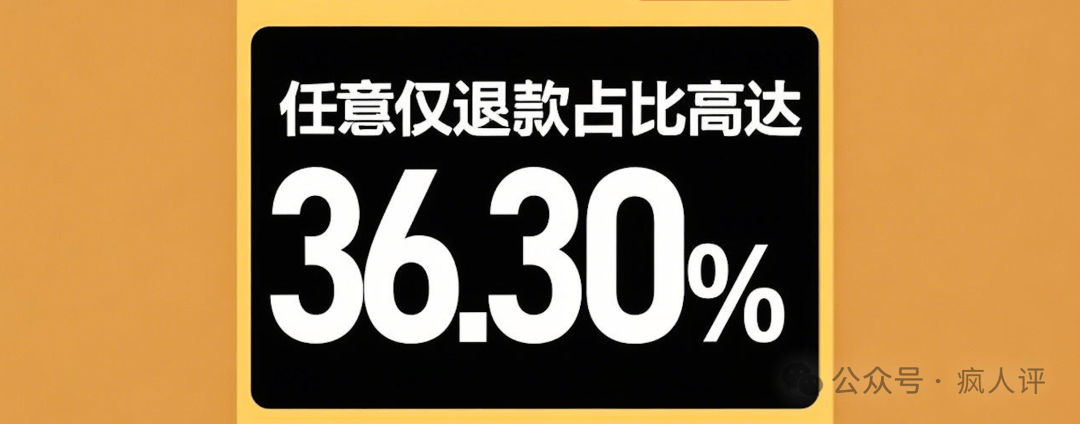
Core Viewpoint - Major e-commerce platforms in China, including Pinduoduo, Taobao, Douyin, Kuaishou, and JD, will abolish the "refund without return" policy, allowing merchants to handle refund requests independently after consumers receive their goods [1][8]. Group 1: Reasons for Policy Change - The "refund without return" policy has led to significant abuse, with one in three orders requesting such refunds, often using frivolous reasons [2][5]. - Reports indicate that some consumers have exploited this policy to obtain products without payment, while merchants have engaged in fraudulent activities to exploit platform subsidies [5][7]. - The decision to cancel this policy is a response to a growing imbalance in the e-commerce ecosystem, aiming to correct the situation rather than undermine consumer rights [8][10]. Group 2: Impact on Stakeholders - The cancellation of the policy will significantly affect "wool party" exploiters and gray market operations, which will face severe challenges [9]. - Consumers may initially find the refund process more complicated and may resist the change due to disrupted habits [10]. - Small and medium-sized merchants will need to enhance service and after-sales quality to remain competitive, as poor service could lead to exclusion from the market [11]. Group 3: Long-term Implications - The change is expected to lead to a reconstruction of trust mechanisms, where malicious refund seekers will be deterred, and honest consumers' rights will be better protected [13]. - Consumer rights will still be safeguarded under existing laws, promoting a more standardized approach to rights protection [14]. - The e-commerce landscape is anticipated to shift from price competition to a focus on service quality, with platforms evolving from rule enforcers to ecosystem managers [15][16].
当“仅退款”成为历史
36氪未来消费· 2025-04-24 13:01
在大众的印象里,"仅退款"这一售后政策属于国内平台原创,而真正的祖师爷是亚马逊,于2017年推出该政策,直到2021年,拼多多也上线了"仅退 款"。 "仅退款"的出现是为了减少售后流程、优化用户体验、惩戒不良商家,当消费者购买到问题商品时,顾客可发起"仅退款",面对产品质量差、差评过多 的商品,系统会给予支持。 如《人民网》评价 "仅退款"的设计初衷有其积极意义,「一来可有效维护消费者的合法权益;二来可有力震慑一些商家,使得他们不敢以次充好。有 了"仅退款",消费者少了后顾之忧,在平台购物更趋积极,无疑可提升平台的人气。」 在此后的两年时间里,关于"仅退款"的讨论并无多大声量,直到2023年底,淘宝、抖音、京东、快手等也相继加入阵营,随后"仅退款"开始进化为一场 飓风,掀起滔天骇浪。 从"二选一"到"仅退款",电商平台间的竞争或多或少都损害了商家的利益。 作者 | 李小霞 编辑 | 乔芊 "仅退款"将要成为历史。 据澎湃新闻报道,拼多多、淘宝、抖音、快手、京东等多个电商平台将全面取消"仅退款",消费者收到货后的退款不退货申请,将由商家自主处理。 实际上,早在去年就有消息传出,而今靴子触地, 标志着这场始于20 ...
为什么日本出不来DeepSeek?
Hu Xiu· 2025-04-24 03:32
上世纪90年代,日本曾是全球科技经济的核心:全球市值前十的公司中有一半来自日本——NTT、住友银行、东京电力、松下、日立……而今 天的AI时代,主角却几乎都来自中美两国。 能跑出一家DeepSeek,本就是小概率事件;但对于曾经的创新中心日本来说,为什么连这样的希望都看不见?日本的AI企业,都跑哪儿去 了? 提起这个话题,常见的回答有几种套路: 中美如火如荼的AI 战局之中,日本几乎是AI 荒漠,没几个能拿得出手的产品; 日本犄角旮旯的小创新源源不断,却没有一个ChatGPT或DeepSeek这种世界级的2C爆款; 听说小日子程序员短缺,AI人才就更不够了; 日系VC 保守,烧不起大模型的钱…… 如此这般,对日本科技商业的"奚落"甚至可以写成一篇爽文。但今天我想换个问法:日本,需要DeepSeek吗? 还有,日本这片土壤,非得长出个DeepSeek吗? 听起来像句废话:哪个国家不需要明星企业呢?况且是如此突破性的企业,为国家增光,带动整个AI行业的发展,引导资金流入,推动技术 渗透到制造、医疗、金融等传统行业,帮助企业提效降本、实现自动化……这不正是很多AI企业的"终极使命"吗? 制造业的数据预测、医疗的自动 ...


“仅退款”没了?拼多多、淘宝、京东等集体出手,网友:不同意!
Sou Hu Cai Jing· 2025-04-24 02:51
Core Viewpoint - The cancellation of the "refund only" feature by major e-commerce platforms has sparked significant debate among consumers and merchants, highlighting the balance between consumer protection and merchant rights [3][5][7]. Group 1: Consumer Perspective - The "refund only" feature was seen as a tool for consumers to monitor and regulate e-commerce platforms against counterfeit goods and false advertising [2]. - Some consumers oppose the cancellation of "refund only," viewing it as a concession to fraudulent merchants, while others support it, believing that reputable sellers should not fear such regulations [5][8]. - The debate reflects a divide where consumers who have faced issues with merchants prefer the protection of "refund only," while those with higher trust in sellers see it as unnecessary [5][8]. Group 2: Merchant Perspective - Merchants argue that the "refund only" feature severely harms their interests, with reports indicating that some merchants face significant financial losses due to unmanageable refund requests [2][3]. - There is a concern that the feature encourages a race to the bottom in pricing and quality among merchants, which is detrimental to the industry [7]. Group 3: Regulatory and Platform Response - The cancellation of the "refund only" feature is currently in negotiation, with discussions between e-commerce platforms and regulatory bodies ongoing [6]. - Regulatory authorities have previously indicated the need for stricter oversight to prevent the misuse of the "refund only" feature by consumers, which can lead to financial losses for merchants [7]. - Suggestions for a more balanced approach include setting price limits for the "refund only" feature or allowing unconditional returns with shipping insurance, which could address concerns from both consumers and merchants [10].
取消“仅退款” 电商平台用行动反内卷
Zheng Quan Shi Bao· 2025-04-23 18:12
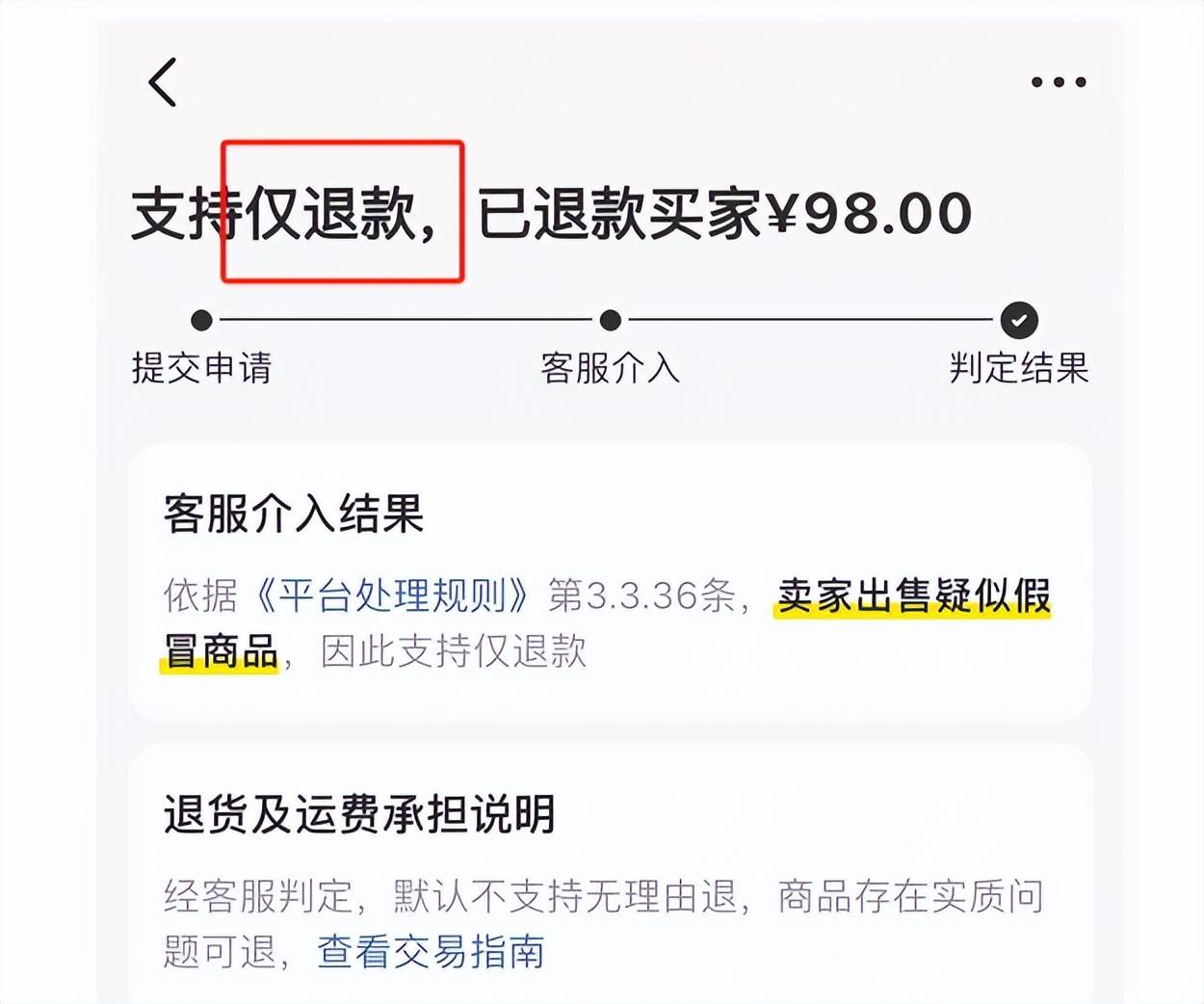
Core Viewpoint - The e-commerce industry is undergoing a significant transformation as major platforms like Pinduoduo, Taobao, JD.com, Douyin, and Kuaishou announce adjustments to the "refund without return" policy, marking its exit from the industry and signaling a return to basic commercial logic for sustainable development [1][2] Group 1: Policy Changes - The "refund without return" policy, initially introduced by Pinduoduo in 2021, became a standard feature across major e-commerce platforms as a means to attract consumers amid declining e-commerce dividends [1] - The recent cancellation of this policy aligns with national directives aimed at promoting a healthy and sustainable platform economy, creating a healthier competitive environment [2] Group 2: Implications for Stakeholders - For merchants, the platforms are reducing their role as referees, granting more autonomy to negotiate with consumers, which helps mitigate unreasonable refund requests and fosters a positive cycle in the e-commerce industry [2] - Consumers' rights will still be protected as platforms will maintain return and refund mechanisms and enhance credit systems to safeguard honest consumers and merchants while penalizing malicious behaviors [2] Group 3: Ongoing Challenges - Despite the cancellation of the "refund without return" policy, challenges remain in e-commerce rule governance, such as "automatic price matching" and "lowest price guarantees," which are criticized by merchants for compressing profit margins and promoting low-quality competition [2] - The industry should focus on long-term development by establishing merchant credibility systems and improving product quality to shift from price competition to value competition, thereby creating a healthier industry ecosystem [2]