高盛

Search documents
深夜!减肥药巨头大涨!
Sou Hu Cai Jing· 2026-02-09 15:27
Group 1 - Novo Nordisk's stock rose over 6% and Eli Lilly's stock increased nearly 4% due to a lawsuit against Hims & Hers for infringing on the patent of semaglutide [3][4] - Hims & Hers' stock plummeted over 26% after the announcement of the lawsuit, which claimed that their competing product could pose potential dangers to consumers [3][4] - The FDA has indicated it will restrict the use of GLP-1 active ingredients in unapproved compounded drugs, which has been widely sold as alternatives to original drugs [3][4] Group 2 - Analyst Soren Lontoft Hansen from Sydbank noted that the rise in Novo Nordisk's stock reflects investor optimism regarding the FDA's crackdown on the compounded pharmaceutical industry [4] - The FDA's actions are seen as a direct challenge not only to Hims & Hers' compounded oral medication but also to the entire GLP-1 drug sector, benefiting both Novo Nordisk and Eli Lilly [4] - Since peaking in June 2024, Novo Nordisk's market value has evaporated by nearly two-thirds, with a cumulative decline of almost 50% over the past year [4]
突然,飙涨90%!芯片,利好突袭!
券商中国· 2026-02-09 12:13
Core Viewpoint - The storage price surge is ongoing, with memory prices expected to rise by 80%-90% by Q1 2026, driven by significant demand in the server DRAM market and a broader increase across all memory categories [1][2]. Group 1: Price Trends - According to Counterpoint, memory prices are projected to increase by 80%-90% by Q1 2026, with server DRAM prices being a major contributor [2]. - The price of 64GB RDIMM has surged from $450 in Q4 2022 to over $900 in Q1 2023, with expectations to exceed $1,000 in Q2 2023 [2]. - TrendForce has revised its forecast for Q1 2023, predicting a 90%-95% increase in Conventional DRAM contract prices, up from an earlier estimate of 55%-60% [3]. Group 2: Supply and Demand Dynamics - Goldman Sachs has significantly raised its forecast for the supply-demand gap in the memory chip market, predicting a shortage of 4.9% for DRAM in 2026 and 2.5% in 2027, marking the most severe shortage in 15 years [4]. - The demand for server DRAM is expected to grow by 39% in 2026 and 22% in 2027, with servers becoming the primary driver of DRAM demand [4]. - The NAND market is also tightening, with Goldman Sachs forecasting a 4.2% shortage in 2026 and 2.1% in 2027, driven by strong enterprise SSD demand [5]. Group 3: Market Drivers - The current memory cycle is driven by AI demand, which is leading to a more comprehensive shortage compared to previous cycles, with cloud service providers (CSPs) driving the demand [3]. - The shift in customer demand from end-users to CSPs has resulted in exponential growth in procurement volumes, with less sensitivity to price increases [3]. - The AI industry's focus on real-time response and data access efficiency is increasing the demand for high-capacity, high-bandwidth DRAM [3]. Group 4: Future Outlook - The storage industry is expected to see significant revenue growth, with the market projected to reach $551.6 billion by 2026, driven by supply constraints and price surges [2]. - The current price and demand dynamics suggest that 2026 will be a year of substantial performance releases for storage companies, with a focus on the sustainability of price trends and company performance [6].

48小时万亿蒸发,高盛用Claude「杀死」人类会计,亲手埋葬软件帝国
3 6 Ke· 2026-02-09 01:08
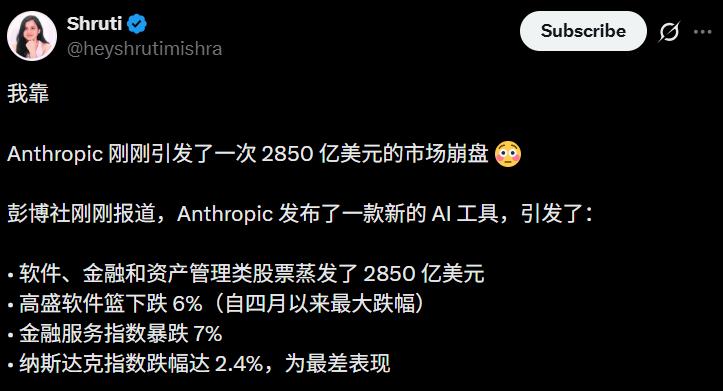
Core Insights - The software industry is experiencing a significant downturn, with major companies facing massive sell-offs and a loss of nearly $300 billion in market value, approaching a trillion dollars when including losses in Europe and Asia [6][7][8] - The panic in the market is driven by the realization that traditional software may no longer be necessary, as AI technologies are emerging that can automate tasks previously performed by software [9][12][36] - Goldman Sachs is at the forefront of this shift, utilizing AI to automate accounting processes, which raises concerns about job losses in the finance sector [13][14] Group 1: Market Impact - Major software companies like Salesforce, Adobe, and Oracle are being heavily sold off, indicating a loss of confidence in their future profitability [6][7] - The term "SaaSpocalypse" has been coined to describe the potential collapse of the SaaS business model as AI agents can perform tasks without the need for traditional software [36][39] - The market is reacting to the fear that AI could replace many entry-level positions in accounting and compliance, leading to a significant restructuring in the workforce [14][36] Group 2: AI Integration - Goldman Sachs has developed AI systems that can handle complex tasks in accounting and compliance, which traditionally required significant human labor [13][14] - OpenAI is also rapidly advancing its AI capabilities, with tools like Codex taking over substantial coding responsibilities, indicating a shift in how software development is approached [17][20] - The integration of AI into business processes is expected to create a new paradigm where software is not just a tool but an integral part of operational workflows [39][41] Group 3: Future Outlook - Experts predict that while not all software will disappear, many superficial applications will lose their value as AI becomes capable of performing their functions [38][39] - The future of software may involve a combination of robust data systems and flexible AI agents, transforming the role of humans from operators to overseers [39][41] - The current upheaval in the software industry is seen as a necessary evolution rather than an end, with potential for new opportunities and innovations to emerge [41][45]




48小时万亿蒸发,高盛用Claude「杀死」人类会计
36氪· 2026-02-09 00:10
Core Viewpoint - The software industry is undergoing a significant upheaval, with AI technologies threatening traditional software roles and business models, leading to massive sell-offs in the market and a potential "SaaS apocalypse" [4][9][60]. Group 1: Market Impact - Nearly $300 billion in wealth has evaporated, with the total cost approaching $1 trillion when including losses in Europe and Asia [9]. - Major software companies like Salesforce, Adobe, and Oracle are experiencing drastic declines in stock prices due to fears of obsolescence [8][61]. - The market is reacting to the realization that AI could replace many software functions, leading to a reevaluation of the value of traditional software [10][60]. Group 2: AI's Role in the Transformation - Goldman Sachs has announced the automation of accounting tasks using AI, indicating a shift in how financial services operate [12][20]. - AI agents are being developed to handle complex tasks traditionally performed by humans, such as compliance and transaction processing, which could lead to significant job losses in these sectors [22][24][26]. - The emergence of AI tools like Claude and Codex is seen as a pivotal moment, with the potential to redefine software development and operational workflows [34][38][49]. Group 3: Future of Software - The traditional SaaS model, which relies on user licenses, is under threat as AI can perform tasks without the need for multiple software accounts [56][66]. - Not all software will disappear; however, those that are shallow and do not integrate deeply into workflows are at risk of being rendered obsolete [66][71]. - The future software landscape may consist of robust data systems supported by flexible AI agents, shifting the role of humans from operators to overseers [72][78]. Group 4: Industry Perspectives - Investors are cautioned that no competitive advantage is permanent, and companies that were once seen as cash cows may quickly lose value [89]. - Historical patterns suggest that while some companies may fail, new giants will emerge, and the software industry will continue to evolve rather than collapse [79][81].
风高浪急,更见定力——中国经济稳健前行的世界坐标
Xin Hua Wang· 2026-02-07 01:10
"我们正经历一个极其动荡的时代。"美国麻省理工学院教授、诺贝尔经济学奖得主达龙·阿杰姆奥卢近 日接受媒体采访时表示。 动荡,来自地缘紧张局势延宕,来自保护主义和单边主义冲击贸易秩序,来自大宗商品价格剧烈波动, 来自全球产业链和供应链"碎片化"风险…… 今年1月,世界经济论坛发布的《2026年全球风险报告》显示,不确定性是2026年全球面临的确定性风 险。报告编制过程中开展的问卷调查显示,50%的受访专家认为,今后两年全球局势的动荡将持续,甚 至有可能进一步升级。 国际形势风高浪急,中国经济不因风雨易其行,为世界经济注入宝贵的稳定性与确定性。2025年,中国 经济总量跃上140万亿元新台阶,比上年增长5%,对世界经济增长贡献率保持在30%左右,继续成为全 球增长引擎。 以世界为坐标来观察,中国2025年经济发展成绩单尤为亮眼,成为全球经济增长最稳定、最可靠的动力 源。亚洲开发银行驻中国代表处首席代表阿西夫·奇马表示,尽管面临复杂严峻的内外部环境,中国经 济仍展现出强大韧性和活力。 中国经济稳健前行,不仅源于坚实基本面,也来自持续推进的结构优化与动能转换。2025年,高技术制 造业、装备制造业等增速显著高于工业平 ...
道指收盘首次站上5万点,芯片股集体反弹,金龙指数涨3.7%
Di Yi Cai Jing Zi Xun· 2026-02-07 00:55
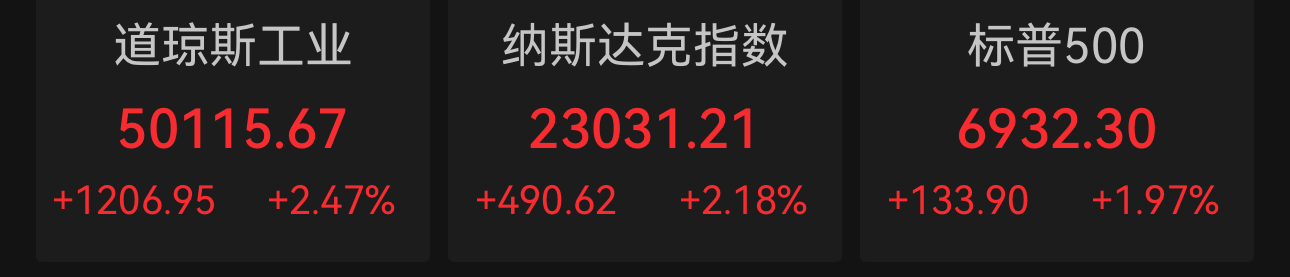
Market Overview - The US stock market experienced a significant rebound on Friday, with the S&P 500 and Nasdaq indices recovering from three consecutive days of decline, while the Dow Jones Industrial Average closed above 50,000 points for the first time in history [2][3] - The Dow Jones Industrial Average rose by 2.47% to close at 50,115.67 points, marking a record high; the S&P 500 increased by 1.97% to 6,932.30 points; and the Nasdaq Composite gained 2.18% to 23,031.21 points [2][3] - The Russell 2000 index, which reflects small-cap stock performance, surged by 3.6% [2] Sector Performance - Among the 11 sectors in the S&P 500, 9 sectors saw gains, with the Information Technology sector leading with a 4.1% increase, followed by the Industrial sector at 2.84% [3] - The Energy, Industrial, and Consumer Staples sectors reached new historical highs, with the S&P 500 Energy Index also setting a record [3] Weekly Performance - For the week, the Dow Jones rose by 2.5%, while the S&P 500 was nearly flat with a slight decline of 0.1%, and the Nasdaq fell by 1.9% [3] Notable Stock Movements - Nvidia saw a significant increase of 7.87% after a prior decline of 10.72% over five consecutive days; Tesla rose by 3.50%, Apple by 0.80%, and Microsoft by 1.90% [4][5] - Conversely, Amazon's stock dropped by 5.6%, impacting the overall gains of the three major indices due to investor concerns over a projected 50% increase in capital expenditures for the year [4][5] - Chip stocks collectively strengthened, with expectations of benefiting from increased capital investments in AI data centers by Amazon and Google [4] Chinese Stocks Performance - The Nasdaq Golden Dragon China Index rose by 3.71%, with notable increases in Alibaba (3.01%), Pinduoduo (3.65%), NIO (7.23%), Baidu (5.02%), JD.com (2.75%), and Tencent (2.33%) [6] Economic Indicators - The upcoming non-farm payroll report for January has been postponed due to a government shutdown, with economists predicting an addition of approximately 70,000 jobs and an unemployment rate of 4.4% [8] - Federal Reserve Vice Chairman Jefferson expressed a cautiously optimistic outlook for the economy in 2026, anticipating growth slightly above trend levels and a gradual return of inflation to the 2% target [8] Bond Market - The two-year US Treasury yield rose by 1.5 basis points to 3.498%, while the ten-year yield remained stable at 4.21% [9] Commodity Market - Oil prices increased, with Brent crude closing at $68.05 per barrel and US crude at $63.55 per barrel [10] - Gold prices rebounded, with spot gold rising by 3.9% to $4,954.92 per ounce, while silver saw an 8.6% increase [10]

道指收盘首次站上5万点 英伟达大涨近8% 芯片股集体反弹 金龙指数涨3.7%
Di Yi Cai Jing· 2026-02-07 00:31
*科技与芯片股领涨,英伟达放量反弹 *中小盘股和价值板块同步走强 美国股市周五收盘大幅走高,标普500指数和纳斯达克指数强劲反弹,分别终结了此前连续三个交易日的下滑走势;道琼斯工业平均指数则在金融与周期股 带动下强势上行,史上首次收于50000点上方。 截至收盘,道琼斯工业平均指数上涨2.47%,报50115.67点,创历史新高收盘纪录;标普500指数上涨1.97%,报6932.30点;纳斯达克综合指数上涨2.18%, 报23031.21点;反映小盘股市场表现的罗素2000指数大涨3.6%。标普500指数距离上周创下的历史最高收盘点位不足1%,纳斯达克指数仍较去年10月高点低 约4%。 *美股强劲反弹,道指首次站上5万点 Baird投资策略分析师罗斯·梅菲尔德表示,围绕人工智能的交易一直波动较大,但市场已经积累了足够证据,表明人工智能产品确实存在真实需求。"这些应 用需要大量资本投入,因此每当出现类似抛售,总会有一部分投资者选择逢低介入。" 随着股市反弹,华尔街"恐慌指数"芝加哥期权交易所波动率指数结束此前连涨走势,三日来首次回落。 从板块表现看,标普500指数11个板块中有9个上涨,其中信息技术板块涨幅居首 ...
道指收盘首次站上5万点,英伟达大涨近8%,芯片股集体反弹,金龙指数涨3.7%
Di Yi Cai Jing· 2026-02-07 00:24
Core Viewpoint - The U.S. stock market experienced a strong rebound, with the Dow Jones Industrial Average surpassing 50,000 points for the first time, driven by gains in financial and cyclical stocks [1][2]. Market Performance - The Dow Jones Industrial Average closed up 2.47% at 50,115.67 points, marking a historic high; the S&P 500 rose 1.97% to 6,932.30 points; and the Nasdaq Composite increased by 2.18% to 23,031.21 points [1]. - The Russell 2000 index, which reflects small-cap stocks, surged by 3.6% [1]. - The S&P 500 index saw 9 out of its 11 sectors rise, with the Information Technology sector leading with a 4.1% increase [2]. Sector Highlights - The Energy, Industrial, and Consumer Staples sectors reached new historical highs, with the S&P 500 Energy Index also setting a record [2]. - Chip stocks collectively strengthened, with Nvidia rebounding by 7.87% after a previous decline, and other semiconductor companies like AMD and Broadcom also showing significant gains [3][4]. Notable Stock Movements - Nvidia's stock rose significantly after a five-day decline, while Amazon's stock fell by 5.6% due to concerns over a projected 50% increase in capital expenditures [3][4]. - Other major tech stocks like Tesla and Microsoft also saw gains, while Google and Meta experienced declines [3][4]. Broader Market Trends - The market breadth improved as funds shifted from previously high-performing tech stocks to underperforming sectors [6]. - Caterpillar was a key driver in the Dow's performance, with its stock up over 26% year-to-date, benefiting from expectations of lower borrowing costs and fiscal stimulus [6][7]. Economic Indicators - Over 80% of S&P 500 companies that reported quarterly earnings exceeded analyst expectations, indicating strong corporate performance [7]. - The upcoming non-farm payroll report is anticipated to show an increase of approximately 70,000 jobs, with the unemployment rate expected to remain at 4.4% [7].
金价一夜大反转!国际金价单日波动超200美元,国内金店价格为何稳居1500元高位?
Sou Hu Cai Jing· 2026-02-06 23:15
2026年2月5日凌晨,伦敦金现价格上演了一场惊心动魄的"过山车":盘中一度冲破5090美元/盎司,创下近期新 高,随后迅速跳水至4890美元附近,单日波动幅度超过200美元。 同一时间,国内黄金T D价格同步下探,最低触 及1092.72元/克,但周大福、老凤祥等品牌金店的足金饰品标价却稳稳站在1566-1576元/克的高位。 国际市场的狂 风暴雨,似乎被一道无形的玻璃墙挡在了金店柜台之外。 北京房山区一家黄金回收门店的工作人员称"忙得无暇用餐",有顾客卖出50多克金手镯获利4万多元;而十几公里 外的商场黄金柜台前,消费者为购买金葫芦项链宁愿排队三小时。 一位连续两天排队的钟女士表示:"马上过年 了,买黄金首饰既保值又体面。 " 价差背后的三重世界 国际金价的剧烈波动直接体现在交易数据上。 2月5日,伦敦金现开盘报4946.22美元/盎司,最高冲至5091.13美 元,最低下探4846.53美元,最终收于4901.26美元,日线留下一根长达240美元的上影线。 国内上海黄金交易所的 Au9999价格报1107.46元/克,较前一日上涨5.41%,但振幅明显小于国际市场。 品牌金店的定价体系却展现出惊人韧性。 ...

金银市场遭遇黑色星期三,白银价格暴跌近15%,黄金也跌超3%,黄金股多股跌停,一些投资者却开始疯狂扫货
Sou Hu Cai Jing· 2026-02-06 17:08
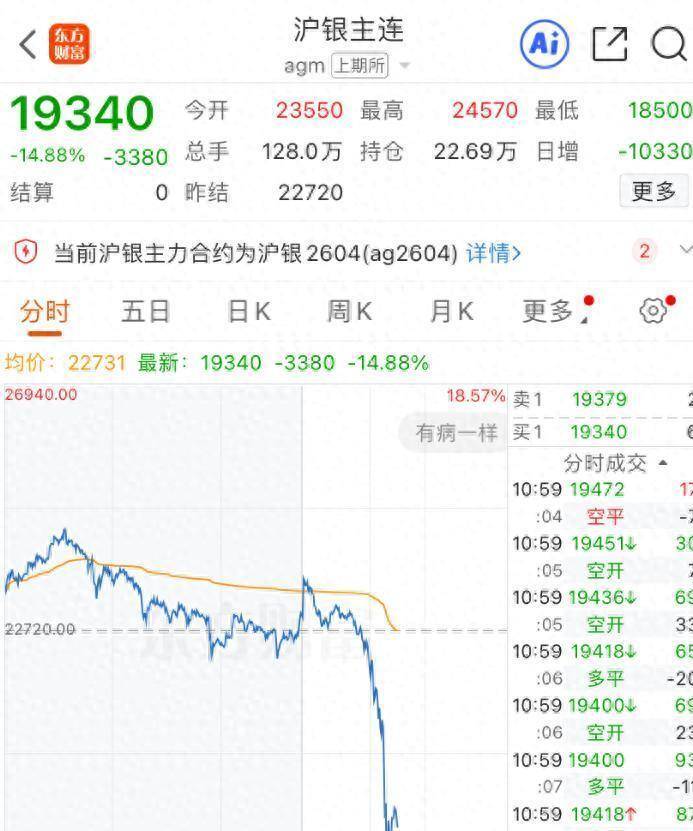
Core Viewpoint - The precious metals market experienced a dramatic decline on February 5, 2026, with silver prices plummeting over 14% and gold dropping more than 3%, leading to significant losses in related stocks and a stark contrast between capital market panic and physical market demand [1][3][4]. Market Performance - On February 5, silver prices fell to a low of $75.83 per ounce, while the Shanghai Futures Exchange saw silver contracts drop nearly 15% to 19,340 yuan per kilogram. Gold prices fell below the critical psychological level of $4,800 [1][4]. - A significant number of stocks related to gold and silver, such as Hunan Gold and Sichuan Gold, hit their daily limit down, reflecting a widespread sell-off in the sector [1][4][5]. Market Dynamics - The decline was preceded by a strong performance in January, where gold prices reached nearly $5,600 per ounce and silver exceeded $120 per ounce, resulting in gains of over 25% for gold and 60% for silver in just a month [3][4]. - The sell-off on February 5 was characterized by a lack of liquidity and a surge in stop-loss orders, creating a downward spiral in prices [4][6]. Regulatory Changes - Prior to the crash, exchanges raised margin requirements for silver contracts, which forced leveraged traders to either add funds or face forced liquidation, exacerbating the price decline [6][12]. - Major banks issued risk warnings to clients regarding the heightened volatility in the precious metals market, advising caution and stricter trading rules [12]. Institutional Behavior - Large investment institutions began to adjust their portfolios, with noticeable outflows from major gold ETFs during the price drop, indicating a shift in institutional sentiment [7][12]. - Analysts noted that the market's reaction was influenced by macroeconomic factors, including potential changes in U.S. Federal Reserve leadership and interest rate expectations, which could strengthen the dollar and negatively impact gold and silver prices [6][12]. Physical Market Response - Despite the turmoil in the capital markets, physical gold and silver demand surged in places like Shenzhen, where customers flocked to purchase gold bars, viewing the price drop as an opportunity [9][10]. - Retail gold prices adjusted downward in response to falling wholesale prices, making gold jewelry more attractive to consumers [10]. Analyst Perspectives - Analysts from various firms expressed differing views on the causes of the market decline, with some attributing it to technical adjustments and profit-taking, while others pointed to macroeconomic uncertainties stemming from U.S. Federal Reserve personnel changes [12][13]. - The overall sentiment in the market shifted from extreme optimism to fear, with many investors now closely monitoring support levels and physical demand to gauge future price stability [13].