Deepseek

Search documents
这家国产大模型公司年收入破10 亿了?
Hu Xiu· 2025-07-26 13:56
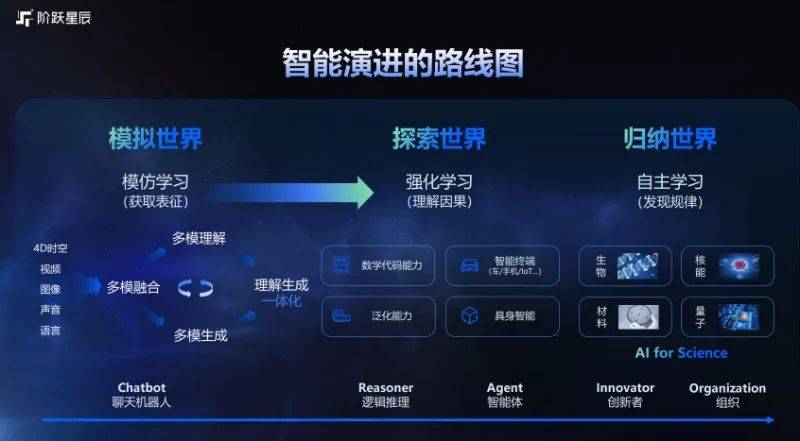
Core Viewpoint - The rapid revenue growth of domestic AI model company Jiyue Xingchen, which is projected to reach nearly 1 billion in 2025, indicates a significant shift in the commercialization capabilities of domestic large models, potentially marking a new threshold for revenue in the industry [5][12][52]. Group 1: Event Overview - The WAIC World Artificial Intelligence Conference is a major annual event in the AI industry, attracting significant attention from both the industry and investment circles, with high-profile attendees including the Prime Minister [2]. - The conference serves as a platform for many important announcements from AI companies [4]. Group 2: Company Performance - Jiyue Xingchen, established only two years ago, has shown remarkable revenue growth, with last year's figures reportedly only in the tens of millions [7]. - The company focuses on foundational model research rather than easily monetizable AI applications, which makes its revenue growth even more impressive [8]. Group 3: Market Comparison - Other domestic large model companies have not disclosed revenue figures, but it is noted that Zhiyu's revenue was around 200-300 million last year, primarily from customized private sector services [9]. - The previous generation of AI companies typically took 3-4 years to surpass 1 billion in revenue, often leveraging rapid adoption in sectors like security and finance [11]. Group 4: Technological Advancements - Jiyue Xingchen has positioned itself as a leader in multi-modal capabilities, with its latest model, Step 3, achieving state-of-the-art results across various benchmarks [24]. - The Step series encompasses a wide range of functionalities, including text, speech, image, video generation, and more, making it versatile for numerous applications [25]. Group 5: Industry Collaboration - The company has formed a "Model and Chip Ecological Innovation Alliance" with nearly ten chip and infrastructure manufacturers, enhancing collaboration and technology sharing [35]. - This collaboration aims to optimize the performance of domestic chips in supporting large models, addressing the current gap between domestic and international chip capabilities [38]. Group 6: Market Applications - Jiyue Xingchen's technology is being integrated into various sectors, including automotive, mobile devices, and smart consumer electronics, with notable partnerships with major manufacturers [42][43]. - The demand for multi-modal capabilities is increasing, as evidenced by an 800% increase in model calls from smart terminals in the first half of the year compared to the previous half [48].

劝君不做孙正义
远川投资评论· 2025-07-23 07:08
Core Viewpoint - The article discusses the investment journey of Masayoshi Son, highlighting his significant financial losses and gains, and his unique approach to investing in technology and startups, particularly in the context of Japan's economic landscape and the global tech industry. Group 1: Masayoshi Son's Investment Philosophy - Masayoshi Son is characterized as a figure who oscillates between massive financial gains and losses, often taking bold risks that others might avoid [3][46]. - His investment strategy is marked by a willingness to invest heavily in emerging technologies and companies, such as Alibaba and ARM, demonstrating a belief in the potential of innovation [54][79]. - Son's approach contrasts with more conservative investors, as he embraces volatility and seeks opportunities in uncertain environments [6][66]. Group 2: Key Milestones in Son's Career - Son's career is punctuated by critical moments, including his early investments in Yahoo and the subsequent rise and fall of the dot-com bubble, which shaped his reputation as a high-risk investor [32][34]. - The acquisition of ARM and the investment in Nvidia are highlighted as significant moves that positioned SoftBank favorably in the tech landscape, especially in the context of AI [79][82]. - His role in bringing the iPhone to Japan is noted as a pivotal moment that helped stabilize SoftBank during the financial crisis, showcasing his ability to capitalize on emerging trends [56][61]. Group 3: Challenges and Setbacks - The article details Son's substantial losses, particularly from investments like WeWork, which have led to criticism and questions about his investment acumen [69][80]. - Despite setbacks, Son's resilience is emphasized, as he continues to pursue ambitious projects, such as the $500 billion Starlink initiative and investments in AI [8][90]. - The narrative also reflects on the broader challenges faced by Japan in the tech industry, particularly in AI talent acquisition, which Son identifies as a critical issue for future growth [91][92]. Group 4: Future Outlook - The article suggests that Son's future endeavors, particularly in AI, will be crucial for both his personal legacy and Japan's position in the global tech landscape [90][93]. - The potential collaboration with OpenAI is presented as a strategic move to bolster Japan's AI capabilities, indicating Son's ongoing commitment to innovation [93][94]. - The competitive landscape in AI, particularly between the US and China, is highlighted as a significant factor that will influence Son's strategies moving forward [98][99].


What Nvidia H20s mean for China’s AI ambitions
CNBC Television· 2025-07-18 16:28
Shares of Nvidia up about 5% since announcing that it does expect to be able to resume selling those H20 chips in China. A move that could add some fresh fuel for China's AI ambitions. For that, we'll turn to Dear Dosa today in today's Tech Check.Happy Friday, De. Hey, happy Friday. Good morning, Carl.So, the plus side for the US of this development is that the momentum will still run on American rails. With the H20s return, Nvidia, it remains the backbone of Chinese AI, not just through hardware, but throu ...


融资135亿亏损20亿,智谱冲刺IPO
Sou Hu Cai Jing· 2025-07-16 10:40
Core Viewpoint - The company Zhiyuan is considering shifting its IPO from A-shares to Hong Kong, aiming to raise approximately $300 million (around 2.34 billion HKD) to enhance its capital channels and financing capabilities [2][3]. Group 1: IPO and Financing - Zhiyuan submitted its IPO guidance to the Beijing Securities Regulatory Bureau in April, becoming the first among the "six small dragons" of large models to initiate the A-share IPO process [2]. - The company has raised over 13.5 billion CNY in financing as of July, indicating a high frequency of technological updates driven by substantial capital investment [3][10]. - Despite ongoing financing efforts, the company is under pressure to balance technology development and commercialization, as the path to profitability remains challenging [3][12]. Group 2: Technological Developments - Zhiyuan has launched over 50 models, including the GLM-4.1V-Thinking series and the experimental model GLM-Experimental, showcasing rapid iteration in technology [3][10]. - The GLM-Experimental model allows users to generate PowerPoint presentations based on simple prompts, demonstrating advancements in user interface and functionality [4][9]. - However, the model's performance in design and content quality requires further optimization compared to competitors like Kimi [6][9]. Group 3: Market Position and Competition - The AI market is experiencing a trend of differentiation, with various business models emerging, including subscription-based and mixed advertising models [16]. - Zhiyuan's commercialization efforts are perceived as weaker compared to larger companies, which have more established organizational structures and marketing capabilities [14][15]. - The competitive landscape is intensifying, making it increasingly difficult for AI companies to achieve effective monetization [13][14]. Group 4: Future Outlook - Starting in 2025, Zhiyuan plans to define the year as "open-source year," with significant investments directed towards research and ecosystem subsidies [12]. - The company aims to find a balance between technology development, commercialization, and funding control to support its long-term goals of achieving general artificial intelligence (AGI) [15][18]. - As the market continues to evolve, Zhiyuan must accurately position itself and establish competitive advantages to optimize its commercialization strategy [18].
宝马合作Momenta,驾控之王要如何做智能辅助驾驶?
36氪· 2025-07-15 10:14
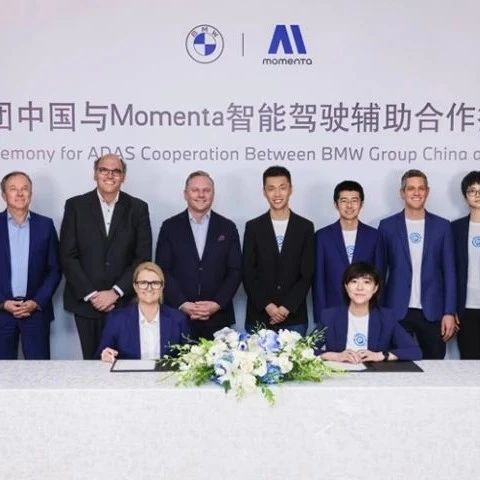
Core Viewpoint - BMW is integrating AI technology into its driving experience, focusing on local Chinese market needs through partnerships with leading tech companies like Momenta, Huawei, and Alibaba to enhance its smart driving capabilities [3][10][12]. Group 1: AI Strategy and Collaborations - BMW announced a partnership with Momenta to develop AI-driven driving assistance software tailored for the Chinese market, leveraging local user demands and scenarios [3][5]. - The collaboration aims to create a comprehensive driving assistance system that covers various driving environments, including highways and urban areas [5][6]. - BMW's AI strategy includes a 360-degree approach, enhancing digital production and user experience while promoting open innovation in R&D [13][20]. Group 2: Technological Advancements - The new AI-driven system will utilize a "perception-planning-control" integrated architecture, allowing vehicles to adapt to complex driving conditions and improve decision-making capabilities [17][18]. - BMW's AI applications span from production to quality control, enhancing efficiency and safety through advanced algorithms and real-time data analysis [19][20]. - The introduction of a new generation of electric vehicles will feature advanced battery technology, improving energy density by 20%, range by 30%, and charging speed by 30% [32][31]. Group 3: Driving Experience and User Interaction - BMW emphasizes a holistic driving experience that integrates interaction, control, and assistance, ensuring seamless transitions between manual and assisted driving [24][28]. - The new iDrive system showcases advanced user interfaces that maintain driver focus while providing essential information [30]. - The company aims to balance smart convenience, driving pleasure, and safety in its vehicle designs, setting it apart from competitors [31][33]. Group 4: Safety and Compliance - Safety remains a top priority for BMW, with the new driving assistance system inheriting over 20 years of safety technology development [38][39]. - The collaboration will ensure compliance with Chinese laws regarding data security and user privacy, embedding these principles into the product design [39][40]. - BMW's integration of local smart technologies with its established quality systems positions it well for future market competition and transformation [40].
X @Yuyue
Yuyue· 2025-07-13 09:13
AI Model Performance - AI model performance is often attributed to dataset differences, with examples like Tencent Yuanbao outperforming Deepseek due to access to WeChat's database [1] - High-quality data is crucial for AI, but AI's creative abilities are still limited compared to humans [1] Data Crisis - Tiger Research highlights a data crisis due to the proliferation of AI-generated content, potentially leading to the depletion of quality data resources [1] - The unauthorized use of user-generated content for AI training raises concerns about recognition and compensation for original creators [1] Cryptocurrency - There is speculation about @campnetworkxyz launching a cryptocurrency, potentially a new version of $IP [1]
Grok4智能指数超OpenAI的o3
news flash· 2025-07-10 05:44
Core Insights - Grok4's intelligence index surpasses OpenAI's o3 model, scoring 73 compared to OpenAI's 70 [1] - Other models such as Google's Gemini 2.5 Pro and DeepseekR1-0528 also scored 70 and 68 respectively, while Anthropic Claude 4 Opus scored 64 [1] Model Comparisons - Grok4: 73 [1] - OpenAI o3: 70 [1] - Google Gemini 2.5 Pro: 70 [1] - DeepseekR1-0528: 68 [1] - Anthropic Claude 4 Opus: 64 [1]

X @0xLIZ
0xLIZ· 2025-06-30 01:42
Emerging Technologies & Concepts - The document mentions several emerging technologies and philosophical concepts, including data sovereignty, Real World Assets (RWA), stablecoins, and InfoFi [1] - The document references AI and Deepseek, indicating a focus on artificial intelligence technologies [1] Philosophical & Ethical Considerations - The document touches upon philosophical discussions, referencing figures like Socrates, Plato, Lao Tzu, and Zhuangzi [1] - The document explores concepts of morality, law, and the nature of humanity, including the idea of inherent evil and the Pareto principle (80/20 rule) [1] Humorous AI Response - The AI's response "Server busy, please try again later" to the question "What is love?" highlights the limitations and current state of AI in understanding complex human emotions [1]
AI应用爆发前夜,唱吧陈华呼吁:别傻坚持,用户2周不喊哇塞,请立刻放弃
3 6 Ke· 2025-06-27 01:30
Core Insights - The founder of Changba, Chen Hua, expresses anxiety about the upcoming opportunities in AI applications, likening the current situation to the pre-explosion phase of mobile internet around 2011 [2][3] - Chen believes that the AI wave represents a rewriting of the script compared to the mobile internet era, with distinct differences in commercialization paths and driving factors [3][4] Group 1: Historical Context and Development - Changba was founded in 2011 and launched its app in May 2012, quickly becoming a leader in mobile karaoke [2] - The company has evolved through various stages, including significant product launches and brand upgrades, with a new AI ToC app expected in 2025 [2] Group 2: Comparison of AI and Mobile Internet - Both AI and mobile internet share similar industry development cycles, with significant breakthroughs occurring years after initial technology releases [3][4] - The commercialization paths differ: mobile internet saw a To C explosion first, while AI applications are primarily To B at this stage [4][5] Group 3: Driving Factors and Commercialization - The mobile internet was driven by hardware revolutions, while AI is propelled by breakthroughs in underlying technologies [5][6] - AI applications focus on efficiency and cost-saving for businesses, contrasting with the user-scale monetization seen in mobile internet [7][8] Group 4: Competitive Landscape - The competitive landscape for mobile internet allowed early startups to create platforms, whereas AI applications face a more closed ecosystem dominated by large companies [9][10] - Despite challenges, Chen sees promising opportunities in To B efficiency tools and high-frequency To C tools in vertical fields [11][12] Group 5: Future Opportunities and Challenges - Chen emphasizes the importance of user feedback within two weeks of product launch as a critical measure of success [13][75] - The AI application landscape is still maturing, with many startups struggling to find viable paths due to competition and market saturation [14][36] Group 6: Investment and Market Dynamics - The investment landscape for AI applications is shifting, with a preference for dollar funds over RMB funds due to the latter's complexity [79] - The government is more focused on strategic investments in foundational technologies rather than direct AI application ventures [80]
吴清按下“重启键”恰逢其时 | 经观社论
Sou Hu Cai Jing· 2025-06-21 07:36
Group 1 - The China Securities Regulatory Commission (CSRC) has proposed the establishment of a growth tier on the Sci-Tech Innovation Board (STAR Market) and the reintroduction of the fifth listing standard for unprofitable companies [2][3] - The fifth standard allows technology companies that meet national strategic goals and have high market recognition to go public with a minimum expected market value of 4 billion yuan, even if they are not profitable [2][3] - Currently, 39 hard-tech companies have opted for the fifth standard to apply for listing, with 20 of them being innovative biopharmaceutical firms that have raised substantial funds for new drug development [2][3] Group 2 - The emergence of companies like Deepseek and Yushu Technology signifies China's breakthroughs in key technologies across various sectors, including AI, low-altitude economy, biotechnology, quantum computing, commercial aerospace, and chip development [3] - These companies typically have long investment periods and may struggle to achieve profitability initially, necessitating continuous high-intensity funding to maintain their exploratory capabilities and competitive edge [3][4] - The reintroduction of the fifth listing standard is timely, as it allows these companies to access capital markets and avoid missing critical development opportunities [3][4] Group 3 - Listing not only serves the purpose of financing but also opens new avenues for technology companies, enabling them to leverage various capital market tools for exponential growth [4] - The CSRC's initiative to support high-quality unprofitable innovative companies is a necessary step to enhance the attractiveness of the capital market for investors [4][5] - The introduction of index products linked to a basket of quality technology growth tier stocks is recommended to diversify investment risks and attract long-term capital to support the growth of China's technology industry [4] Group 4 - The global competition in capital markets means that if these companies cannot list in A-shares, they may seek opportunities elsewhere, which could deprive Chinese investors of growth dividends from domestic quality firms [5] - A comprehensive deepening of capital market reforms and an increase in institutional inclusivity and adaptability are essential to support innovation and face global competition effectively [5]