Rapidus

Search documents
谁拥有最多的EUV光刻机?台积电遥遥领先
半导体芯闻· 2025-11-11 10:17
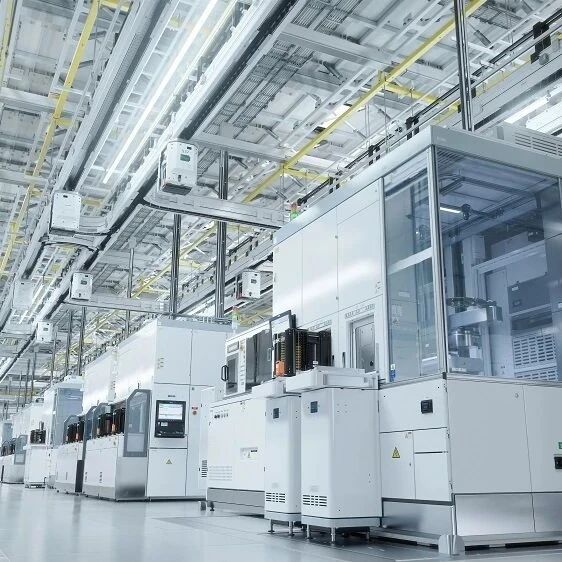
Core Viewpoint - TSMC reported record financial performance for Q3 2025, with sales reaching $33.1 billion and operating profit at $16.75 billion, marking a significant recovery in operating margin to over 50% from a previous low of around 40% [2][4]. Financial Performance - TSMC's Q3 2025 sales of $33.1 billion positioned it as the second-largest semiconductor company, trailing only NVIDIA at $46.7 billion, and outperforming competitors like Samsung ($23.2 billion) and Intel ($13.7 billion) [4]. - The quarterly wafer shipments reached a record high of 4.09 million pieces in Q3 2025, demonstrating a V-shaped recovery from a low of 2.9 million pieces in Q3 2023 [8]. Technology and Production Nodes - TSMC's strong performance is attributed to the rapid growth in wafer input for advanced 3nm and 5nm nodes, while contributions from older nodes like 7nm are declining due to a shift in focus among Chinese manufacturers towards mature process nodes [6][12]. - The application of extreme ultraviolet (EUV) lithography technology has been pivotal, with TSMC operating over 150 EUV machines, significantly enhancing its competitive edge [6][11]. Market Dynamics - The semiconductor market is witnessing a shift from smartphone-centric production to a focus on artificial intelligence (AI) and high-performance computing (HPC), with TSMC's HPC business expected to surpass smartphone sales by Q3 2025 [26][31]. - The market share of TSMC's mature nodes is being eroded by Chinese competitors, as they pivot towards these nodes due to U.S. restrictions on advanced technology exports to China [16][17]. Customer Base Evolution - TSMC's top customers are shifting, with NVIDIA projected to account for 22-25% of revenue by 2025, overtaking Apple, which is expected to drop to 20-23% [28][30]. - The dominance of AI semiconductor companies in TSMC's customer base reflects a significant transformation in the company's revenue structure, moving away from reliance on smartphone manufacturers [30][32]. Competitive Landscape - TSMC's lead in advanced semiconductor manufacturing is reinforced by its substantial investment in EUV technology, making it difficult for competitors like Samsung and Intel to catch up [36]. - The ability to supply advanced nodes has become a critical asset, positioning TSMC as a central player in the global semiconductor supply chain, akin to a "central bank" for computing resources [36].


马斯克建晶圆厂,黄仁勋:没那么容易
半导体行业观察· 2025-11-09 03:14
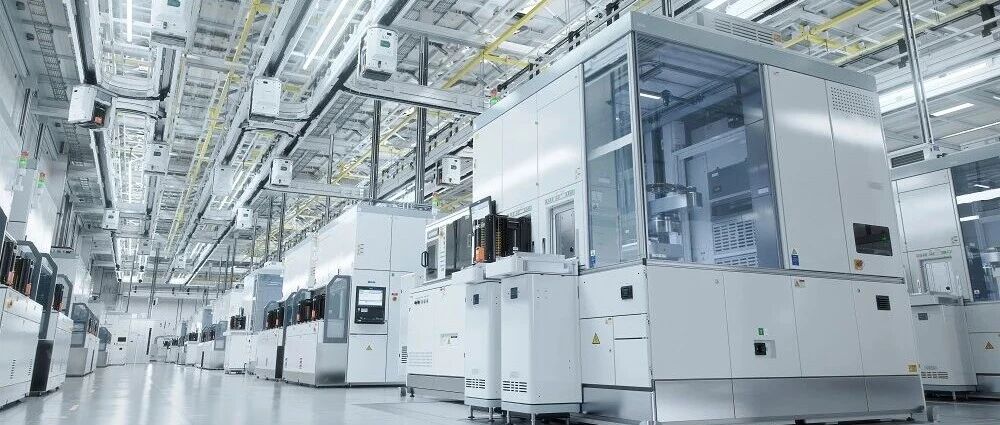
Core Viewpoint - Tesla's CEO Elon Musk is considering building a chip manufacturing facility named "TeraFab" to meet the growing demand for AI chips, aiming for a scale larger than TSMC's "Gigafab" [2][4]. Group 1: Tesla's Chip Manufacturing Plans - Musk indicated that Tesla may directly invest in chip production to address the substantial semiconductor needs for AI applications, suggesting that TeraFab would have a monthly capacity exceeding 100,000 wafers [2][4]. - Currently, TSMC's facilities producing 30,000 to 100,000 wafers per month are classified as "Megafab," while those exceeding 100,000 wafers are termed "Gigafab" [2]. - If TeraFab is realized, it could position Tesla among the largest chip manufacturers globally, surpassing current mainstream wafer manufacturers [2]. Group 2: Challenges in Chip Manufacturing - Nvidia's CEO Jensen Huang emphasized the complexity of establishing advanced chip manufacturing capabilities, noting that it requires significant engineering expertise, scientific research, and process experience [3][6]. - The investment required for a facility capable of producing approximately 20,000 wafers per month can reach several billion dollars, excluding ongoing development and production tuning costs [6]. - The example of the Japanese startup Rapidus, which aims to establish 2nm process capabilities by 2027 with an estimated expenditure of around $32 billion, illustrates the high stakes and challenges in entering advanced semiconductor manufacturing [6][7]. Group 3: Tesla's Current Supply Chain Strategy - To ensure a stable supply of chips, Tesla is currently utilizing a dual-sourcing strategy with TSMC and Samsung, and is considering Intel as a potential partner, although no agreements have been finalized [4][5]. - Musk stated that as Tesla's AI applications expand, reliance on external suppliers will become insufficient, necessitating a shift towards becoming a vertically integrated manufacturer similar to TSMC and Samsung [4].


日本工程师,点出台积电致命弱点!
半导体芯闻· 2025-11-03 10:37
Core Viewpoint - The article discusses TSMC's potential vulnerabilities as highlighted by an experienced semiconductor engineer, suggesting that Japan's Rapidus could find opportunities by focusing on niche markets and customized demands rather than competing directly with TSMC and Samsung [2]. Group 1 - The engineer points out that TSMC's new leadership may be losing the customer-centric approach that characterized its previous management, raising concerns about their ability to meet seemingly minor but critical customer needs [2]. - Rapidus's success hinges not only on technological breakthroughs but also on establishing stable, long-term customer relationships, as technology alone is insufficient for survival without adoption [2]. - TSMC's competitive edge is attributed to its flexible cost management strategy, where automation is selectively implemented in cost-effective areas while relying on human labor in others, gradually scaling automation as technology and labor costs rise [2]. Group 2 - TSMC maintains a cautious approach when adopting new technologies, such as the expensive EUV lithography machines, which cost hundreds of billions of yen and are exclusively produced by ASML in the Netherlands. TSMC evaluates cost-effectiveness before making such investments [3].
日媒:台积电的最大风险
半导体行业观察· 2025-11-03 00:39
Core Viewpoint - The article emphasizes the strategic importance of semiconductors, highlighting Taiwan's critical role in the global semiconductor supply chain, particularly through TSMC's dominance in chip manufacturing [2][3]. Group 1: Semiconductor Industry Dynamics - A semiconductor world war is emerging among Taiwan, South Korea, the US, Japan, and mainland China, with TSMC's management transition raising concerns about its responsiveness to smaller client demands, potentially benefiting Japan's Rapidus [2][6]. - Japan's semiconductor revival is driven by a 2020 semiconductor shortage, leading to government-led initiatives after years of reliance on imports [3][4]. - TSMC's cost advantages stem from a balanced approach to automation, selectively automating profitable processes while retaining manual labor where cost-effective, unlike Japan's previous all-or-nothing automation attempts [3][4]. Group 2: Competitive Landscape - TSMC has become the most automated semiconductor company globally, carefully timing its investments in cutting-edge technology, such as EUV lithography equipment, which can cost hundreds of billions of yen [4]. - The article notes that while South Korean manufacturers also focus on cost control, Japan's corporate culture often hinders frontline decision-making, impacting competitiveness [4][5]. - The US faces challenges in revitalizing its semiconductor industry due to high labor costs and immigration restrictions limiting the influx of skilled engineers [4][5]. Group 3: China's Semiconductor Aspirations - China is making significant strides in its semiconductor industry, with government support aimed at reducing reliance on foreign technology, with predictions suggesting it could lead the sector by 2050 [5][6]. - Despite US regulations prohibiting the sale of advanced semiconductor equipment to China, these measures are expected to slow but not halt China's semiconductor development [5][6]. - The article highlights that possessing manufacturing equipment alone is insufficient for success; technical know-how is crucial, as evidenced by Intel and Samsung's struggles to match TSMC's yield rates despite having similar equipment [5][6]. Group 4: Future of Japan's Semiconductor Industry - Japan's success in the semiconductor sector hinges on attracting buyers, as competing directly with giants like TSMC and Samsung is deemed impractical [6]. - The generational shift in TSMC's management may lead to a less accommodating approach to smaller demands, presenting an opportunity for Rapidus to fill the gap if it can secure Japanese clients [6]. - The article concludes that without collaboration among Japanese companies, Rapidus's efforts may be futile, emphasizing the need for unity in the industry [6].
日本发力1.4nm光刻胶
半导体行业观察· 2025-11-01 01:07
Core Viewpoint - Japanese semiconductor material developers are increasing capital expenditures to support clients preparing for large-scale production of advanced 2-nanometer chips [3] Group 1: Investment and Production Plans - Tokyo Ohka Kogyo Co., Ltd. will invest 20 billion yen (approximately 130 million USD) to build a photoresist factory in South Korea, expected to start production in 2030, increasing its capacity three to four times [3] - Adeka plans to invest 3.2 billion yen to install mass production facilities for new photoresist materials in Ibaraki Prefecture, with operations expected to begin in April 2028 or later [4] - Nitto Denko will build a 15 billion yen factory in Fukushima Prefecture, expected to triple the production capacity of specialty glass materials by 2027 [5] Group 2: Market Trends and Demand - The global semiconductor materials market is projected to reach 97 billion USD by 2030, a 35% increase from 72 billion USD in 2024, driven by strong demand in the artificial intelligence sector [4] - Concerns over raw material shortages are rising as chip demand surges, prompting manufacturers to invest to ensure stable supply [5] Group 3: Technological Advancements - The new metal oxide photoresist (MOR) technology, which utilizes metal-containing compounds for higher resolution, is being developed to support advanced chip manufacturing [4] - JSR is also constructing an MOR factory in South Korea, expected to begin production by the end of next year [4] Group 4: Key Partnerships - Samsung and SK Hynix have signed procurement agreements with OpenAI for data center server memory chips, indicating a strategic collaboration in the semiconductor supply chain [3]
1566亿,光掩模赛道,第二大IPO来了
3 6 Ke· 2025-10-13 09:14
Core Viewpoint - Tekscend Photomask, a leading semiconductor photomask manufacturer, has successfully launched an IPO in Japan, raising 156.6 billion yen, marking it as the second-largest IPO in Japan this year, and positioning the company as a key player in the global semiconductor industry [1][2][5]. Company Overview - Tekscend Photomask, headquartered in Tokyo, was formerly a division of Toppan Holdings and became independent in late 2021. The company is primarily owned by Toppan (50.1%) and Integral Corp. (49.9%) [3]. - The company specializes in semiconductor photomasks for process nodes ranging from 90nm to 1nm, including advanced specifications like EUV, and operates eight factories across Japan, the U.S., and Europe [4][5]. IPO Details - The IPO was priced at 3,000 yen per share, at the upper limit of the pricing range, and attracted significant interest from institutional investors, including the Qatar Investment Authority [2][3]. - The funds raised will be used for R&D in 1nm EUV masks, expanding production capacity in Dresden and Tokyo, and repaying acquisition loans [5][15]. Market Position and Strategy - Tekscend holds approximately 25% market share in the advanced photomask market for 3nm and below, making it the only company in Japan capable of mass-producing EUV masks [5][15]. - The company aims to achieve mass production of 2nm masks by the 2026 fiscal year and 1nm masks by 2030, with a roadmap that includes significant technological advancements and collaborations with IBM and imec [4][14]. Industry Context - Japan's semiconductor industry is experiencing a resurgence, supported by government policies and investments aimed at reclaiming 10% of global production capacity [7][10]. - The establishment of companies like Rapidus, backed by major corporations, aims to enhance Japan's position in the semiconductor supply chain, particularly in advanced logic chips [8][10]. Financial Performance - Tekscend's projected revenue for the 2024 fiscal year is approximately 175 billion yen, with an operating profit margin of 18%. The company plans to increase the revenue share from high-end masks to 55% by 2028 [5][15]. - The IPO proceeds are expected to significantly enhance the company's financial position, allowing for strategic investments in high-margin segments of the semiconductor supply chain [15][16].
2nm,大战打响
半导体行业观察· 2025-09-21 02:59
Core Viewpoint - The semiconductor industry is engaged in a continuous and evolving competition, particularly focused on the advancement of process nodes, with the 2nm node being the latest battleground that will reshape the industry's landscape [2][19]. Foundry Competition - The competition among foundries is characterized by the need to secure advanced process orders by being the first to achieve mass production, with the risk of falling back to price wars for those lagging behind [2][3]. - TSMC is recognized as the leader in advanced processes, having established a stronghold since the 7nm node and is now focusing on the 2nm node, which is expected to significantly enhance performance and reduce power consumption [3][4]. - Samsung aims to reclaim its position by introducing its 2nm process earlier than TSMC, despite facing challenges with yield issues in previous nodes [6][8]. - Intel is attempting to regain its competitive edge with its IDM 2.0 strategy, planning to launch its 2nm process by the end of 2025, leveraging new technologies like RibbonFET and PowerVia [8][9]. Emerging Players - Rapidus, a new entrant backed by the Japanese government, aims to focus on advanced processes rather than competing on scale, with plans to start 2nm trial production in 2025 [10][11]. Fabless Companies Dynamics - Fabless companies are cautious about adopting new technologies due to high costs, but many are shifting towards more aggressive strategies to maintain competitiveness in the rapidly evolving market [11][12]. - Apple is positioned as a key player, securing early access to TSMC's 2nm capacity for its upcoming products, which is crucial for its AI strategy [12][13]. - Qualcomm is aligning with TSMC for its 2nm process to maintain competitiveness in the Android ecosystem, while AMD plans to utilize TSMC's 2nm for its high-performance computing products [14][15]. - NVIDIA is strategically waiting for stable yields before committing to 2nm, focusing on maximizing performance and efficiency for AI applications [16][17]. - MediaTek is also planning to adopt 2nm technology for its flagship products, aiming to enhance its market position against competitors [17][18]. Industry Outlook - The 2nm node is seen as a critical juncture that will determine the future landscape of the semiconductor industry, with companies racing to achieve stable production to secure their market positions [19][20].


美国正在扰乱全球芯片
半导体行业观察· 2025-09-16 01:39
Core Viewpoint - The article discusses the U.S. government's plan to acquire a 9.9% stake in Intel to revitalize the semiconductor industry, which is seen as strategically important for national security and economic stability [3][4][7]. Group 1: U.S. Government's Involvement - The U.S. government aims to reverse Intel's decline by investing in the company, hoping to replicate the successful public-private partnership model seen with Taiwan's TSMC [3][4]. - The investment is intended to keep semiconductor manufacturing within the U.S. and enhance domestic production capabilities to meet the industrial demand for semiconductors [4][7]. - The government intervention may lead to pressure on companies like Nvidia and AMD to source chips from Intel, complicating the global semiconductor supply chain [1][4]. Group 2: Intel's Current Challenges - Intel is facing significant delays in launching its semiconductor factory in Ohio, with production now expected to start in 2030 or later due to a lack of customer orders [3][7]. - The company's struggles in the foundry business are a major reason for its financial losses, leading to considerations of divesting this segment [3][7]. - Despite the government's support, Intel's management is cautious about selling its foundry business, as they believe retaining operational control is crucial for future success [3][7]. Group 3: Market Dynamics and Risks - Fitch Ratings warns that the U.S. government's stake in Intel could distort capital investments in the semiconductor industry, potentially leading to inefficiencies in resource allocation among chip manufacturers [1]. - The geopolitical risks associated with semiconductor supply chains, particularly concerning Taiwan and China, heighten the importance of a strong domestic player like Intel [4][7]. - Intel's reliance on overseas markets for 76% of its revenue poses risks, especially if government interventions lead to a decline in its business in countries perceived as adversarial [7].
4亿美元的光刻机,开抢!
半导体芯闻· 2025-09-05 10:29
Core Viewpoint - ASML emphasizes the importance of High NA EUV technology for the future of semiconductor manufacturing, with significant advancements already being reported by major clients like Intel and Samsung [1][2]. Group 1: ASML and High NA EUV Technology - ASML confirmed revenue from a High NA EUV machine, which slightly lowered its gross margin but still achieved a strong overall gross margin of 53.7% [1]. - Intel reported using High NA equipment to expose over 30,000 wafers in a single quarter, significantly improving process efficiency by reducing the number of steps from 40 to below 10 [1]. - Samsung noted a 60% reduction in cycle time for a specific layer using High NA technology, indicating its faster maturity compared to earlier low NA EUV devices [1]. Group 2: Samsung's Strategy - Samsung is aggressively purchasing next-generation lithography machines to enhance its wafer foundry business, aiming to improve yield and reduce losses [2][4]. - The company has confirmed that its Exynos 2600 will be the first 2nm GAA chip, with High NA EUV machines expected to play a crucial role in achieving the necessary yield for mass production [2][4]. Group 3: SK Hynix's Developments - SK Hynix has assembled the industry's first Twinscan NXE:5200B High NA EUV lithography system, which will initially serve as a development platform for next-generation DRAM production [7][9]. - This new system is expected to enhance productivity and product performance by allowing for more complex patterns on wafers, thus increasing chip density and efficiency [7][9]. Group 4: Industry Adoption and Future Outlook - ASML anticipates that widespread adoption of High NA EUV technology in mass production will not begin until after 2027 [4][10]. - TSMC has stated that its next-generation processes do not require High NA EUV systems, indicating a cautious approach to adopting this technology [11]. - Micron is also taking a conservative stance, planning to introduce EUV lithography in DRAM production by 2025, with High NA EUV adoption remaining uncertain [12]. Group 5: Cost and Technological Considerations - The high cost of High NA EUV machines, estimated at $400 million each, is a significant barrier to adoption, leading companies to explore alternative technologies [14][15]. - Emerging transistor architectures like GAAFET and CFET may reduce reliance on advanced lithography tools, shifting focus towards etching technologies [14][15].

4亿美元的光刻机,开抢!
半导体行业观察· 2025-09-04 01:24
Core Viewpoint - ASML emphasizes the importance of High NA EUV technology for the future of semiconductor manufacturing, with significant advancements already being reported by major clients like Intel and Samsung [2][4]. Group 1: ASML and High NA EUV Technology - ASML confirmed revenue from a High NA EUV machine, which slightly lowered its gross margin but still resulted in a strong overall gross margin of 53.7% [2]. - Intel reported using High NA EUV equipment to expose over 30,000 wafers in a single quarter, significantly improving its process flow by reducing the number of steps from 40 to below 10 [2]. - Samsung noted a 60% reduction in cycle time for a specific layer using High NA EUV technology, indicating its faster maturity compared to earlier low NA EUV devices [2]. Group 2: Samsung's Investment in Next-Gen Lithography - Samsung is increasing its procurement of High NA EUV lithography machines to enhance its competitive edge in the 2nm GAA process, despite the high costs of these machines [4][5]. - The yield for Samsung's Exynos 2600 chip using this technology was reported at 30%, with a target of at least 70% for financial viability in mass production [5]. - Samsung aims to achieve mass production of 1.4nm nodes by 2027, actively evaluating the use of High NA EUV tools in its manufacturing processes [5]. Group 3: SK Hynix's Adoption of High NA EUV - SK Hynix has assembled the industry's first Twinscan NXE:5200B High NA EUV lithography system, which will initially serve as a development platform for next-gen DRAM technology [8][9]. - The new system is expected to enhance productivity and product performance by enabling more complex patterns on wafers, thus increasing chip density and power efficiency [8]. - SK Hynix plans to simplify existing EUV processes and accelerate the development of next-gen memory products, aiming to solidify its technological leadership in the market [9]. Group 4: Industry Perspectives on High NA EUV - Intel's future procurement of High NA EUV machines will depend on its wafer manufacturing strategy, with no immediate changes expected due to current challenges [12]. - TSMC has reiterated that its next-generation processes do not require High NA EUV systems, indicating a cautious approach towards adopting this technology [12][13]. - Micron plans to introduce EUV technology into DRAM production by 2025, with the timeline for High NA EUV adoption remaining uncertain [14]. Group 5: Future Considerations - Despite the high costs associated with High NA EUV machines, there is a growing recognition of their potential benefits in advanced chip manufacturing [16]. - Emerging transistor architectures like GAAFET and CFET may reduce reliance on advanced lithography tools, shifting focus towards etching technologies [16][17]. - The semiconductor industry is at a crossroads, with companies evaluating the balance between lithography and other critical manufacturing processes as they advance towards more complex chip designs [17].