吉利汽车

Search documents
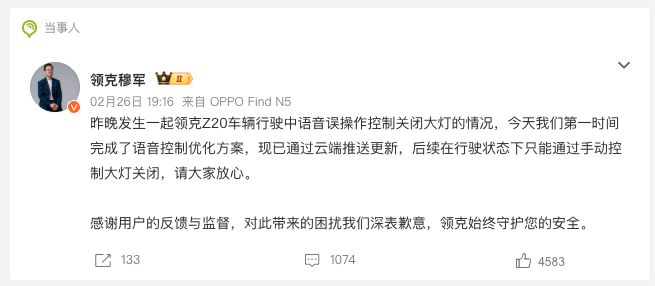
夜间高速上语音误关大灯致车祸,领克致歉
Xin Lang Cai Jing· 2026-02-27 04:58
Core Viewpoint - The incident involving the Lynk & Co Z20 vehicle highlights significant concerns regarding the safety and reliability of voice recognition technology in smart cars, prompting discussions about industry standards and safety measures [1][2]. Group 1: Incident Details - On February 26, a Lynk & Co Z20 experienced a critical failure when the vehicle's headlights were turned off due to a voice command error while driving at night on the highway [1]. - The vehicle's owner attempted to turn off the interior "reading light" but the command was misinterpreted, resulting in all vehicle lights being extinguished, leading to a collision with a highway guardrail [1]. - The company's response indicated that a voice control optimization plan was implemented immediately, restricting headlight control to manual operation while driving [1]. Group 2: Industry Context - There have been multiple incidents in recent years where smart vehicle voice recognition systems have failed, leading to dangerous situations, such as unintended window openings and trunk openings while driving [2]. - Experts, including a professor from Beijing Institute of Technology, have called for automotive companies to enhance the safety and reliability of voice recognition technologies and to establish industry standards for smart driving systems [2]. - Lynk & Co, founded in 2016 by Geely Holding Group, reported a total sales volume of 350,000 units in 2025, marking a year-on-year increase of 22.8%, with January 2023 sales reaching 28,900 units, up 12% year-on-year [2].
雷军曾青睐的魅族手机为何“停摆”?
Jing Ji Guan Cha Wang· 2026-02-27 04:55
Core Viewpoint - Meizu's mobile business is facing a significant decline, with plans to cease operations by March 2026, marking a dramatic shift for a once-prominent brand in the smartphone market [1][2]. Group 1: Business Status - Meizu's mobile business has effectively entered a state of suspension, with the planned launch of the Meizu 23 series halted and a team-wide layoff implemented [1]. - The company announced a pause on domestic new product hardware development while seeking third-party hardware partnerships, claiming existing operations remain unaffected [1]. - In 2025, Meizu's market share in China is projected to fall below 1%, indicating a severe loss of presence in the competitive landscape [5]. Group 2: Historical Context - Founded in 2003, Meizu initially thrived in the music player market before transitioning to smartphones with the launch of the M8 in 2007, which gained significant consumer traction [2]. - The brand's decline began after failing to capitalize on critical market opportunities during the smartphone industry's evolution, leading to a series of strategic missteps [3]. - Meizu's attempts to reposition itself through various strategies, including the launch of the Meilan brand and a focus on high-end products, did not yield the desired results [3][4]. Group 3: Financial and Operational Challenges - The company has faced increasing financial losses, prompting its parent company, Geely, to halt further investments due to unsustainable losses [5]. - Reports indicate that Meizu has struggled with supplier payments, leading to significant outstanding debts and contributing to its potential bankruptcy [5]. Group 4: Future Prospects - Despite the impending closure of its mobile division, Meizu's FlymeAuto vehicle system will continue to operate independently, with existing partnerships and potential future collaborations with automotive brands [6]. - The Meizu brand may persist within Geely's ecosystem, with some employees transitioning to roles in Geely's Zeekr automotive brand [6]. Group 5: Industry Insights - The decline of Meizu serves as a cautionary tale about the necessity for continuous innovation and strategic planning in a highly competitive market [7].
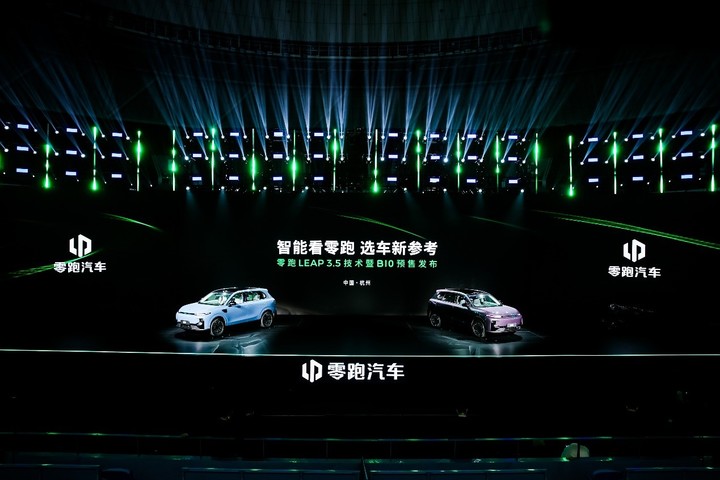
10 万级的小车,Model Y 的空间,零跑 A10 也玩起了「魔术座椅」
Xin Lang Cai Jing· 2026-02-27 04:23
Core Insights - Leapmotor has set an ambitious sales target of 1.05 million vehicles for 2026, a 5% increase from the previous target of 1 million, requiring significant growth from last year's delivery of 596,000 units, which was a 103% year-on-year increase [1][27] - The company aims to penetrate the competitive 100,000 yuan market segment, which is dominated by established players like BYD, Geely, and Wuling, making it essential for Leapmotor to differentiate itself beyond just price-performance ratio [3][4][21] Group 1: Product Strategy - The launch of the Leapmotor A10, a compact SUV, is critical for achieving the sales target, designed to be more than just a basic vehicle but a cornerstone of the company's sales strategy [6][27] - The A10 features a 14.6-inch 2.5K display powered by a Qualcomm 8295 chip, which is a significant upgrade compared to competitors that typically use lower-resolution displays [8][10] - The vehicle includes a high-quality audio system with 12 speakers and a 540W output, as well as advanced features like a laser radar for urban driving assistance, all while maintaining a price point below 100,000 yuan [10][19] Group 2: Cost Management - Leapmotor's strategy involves a high degree of self-manufacturing, with 65% of components produced in-house, allowing for greater pricing flexibility and cost control [17][19] - The company has invested in a robust supply chain with 17 component factories, which helps to eliminate middleman costs and enhance profit margins [19][21] - This approach creates a competitive advantage in a price-sensitive market, enabling Leapmotor to offer advanced technology at lower prices compared to competitors [21][27] Group 3: Market Positioning - Leapmotor aims to position itself as the "Toyota of the new energy sector," focusing on mass-market appeal through high value-for-money offerings rather than premium pricing [21][28] - The A10 is designed to meet stringent European safety and environmental standards, which not only enhances its marketability but also ensures quality and compliance for potential exports [23][27] - The company’s vision includes breaking down the barriers of high brand premiums, making advanced technology accessible to a broader consumer base [28][29]


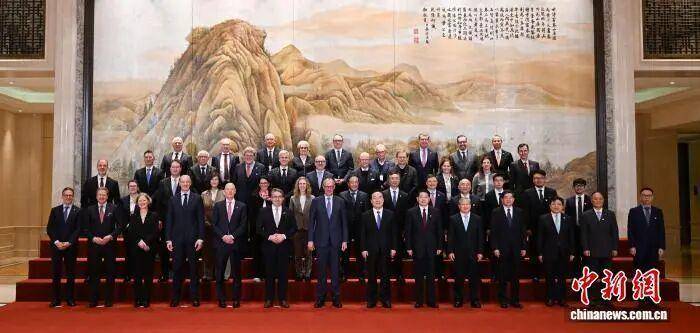
默茨访华大合影公布,哪些中德企业出镜?
Sou Hu Cai Jing· 2026-02-27 04:07
Group 1 - DHL Group's CEO expressed strong willingness to deepen practical cooperation with China, highlighting the active e-commerce sector in Hangzhou [1] - The visit of German Chancellor Merz to Hangzhou included nearly 30 representatives from German businesses, showcasing a significant moment in Sino-German economic cooperation [3] - The group photo taken at West Lake symbolizes the shift from macro consensus to micro implementation in Sino-German industrial cooperation [3] Group 2 - The collaboration between German automotive giants like BMW and Mercedes-Benz with Chinese companies such as Geely and Leap Motor demonstrates a multi-dimensional partnership in the automotive sector [4] - German car manufacturers are recognizing the operational efficiency and cost advantages of China's new energy industry, indicating a promising future for collaboration [5] - The partnership extends beyond automotive to traditional sectors like chemicals, with calls for reinventing cooperation methods to adapt to a rapidly changing world [5] Group 3 - Innovative companies from Hangzhou, such as Yushutech and Qiangbrain Technology, are establishing connections with German industrial giants, indicating a new direction in Sino-German cooperation towards future industries [6] - The visit of Chancellor Merz is seen as an opportunity to broaden cooperation in the global smart robotics industry, with significant involvement from German academic institutions and companies [6] - The alignment of China's 14th Five-Year Plan with Germany's new development strategy emphasizes the mutual expectation for pragmatic cooperation to achieve win-win outcomes [7] Group 4 - Companies like Lingban Technology are leveraging Germany's industrial strengths while focusing on digital innovation and artificial intelligence, fostering a relationship of mutual empowerment rather than competition [8] - Zhejiang enterprises, such as Chint Group, are committed to deepening localized development and promoting green cooperation between China and Germany [8] - The visit concluded with Merz expressing the importance of the trip in enhancing economic cooperation, reflecting a meaningful engagement between the two nations [9]
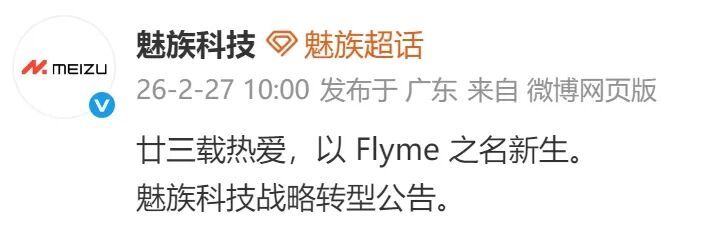
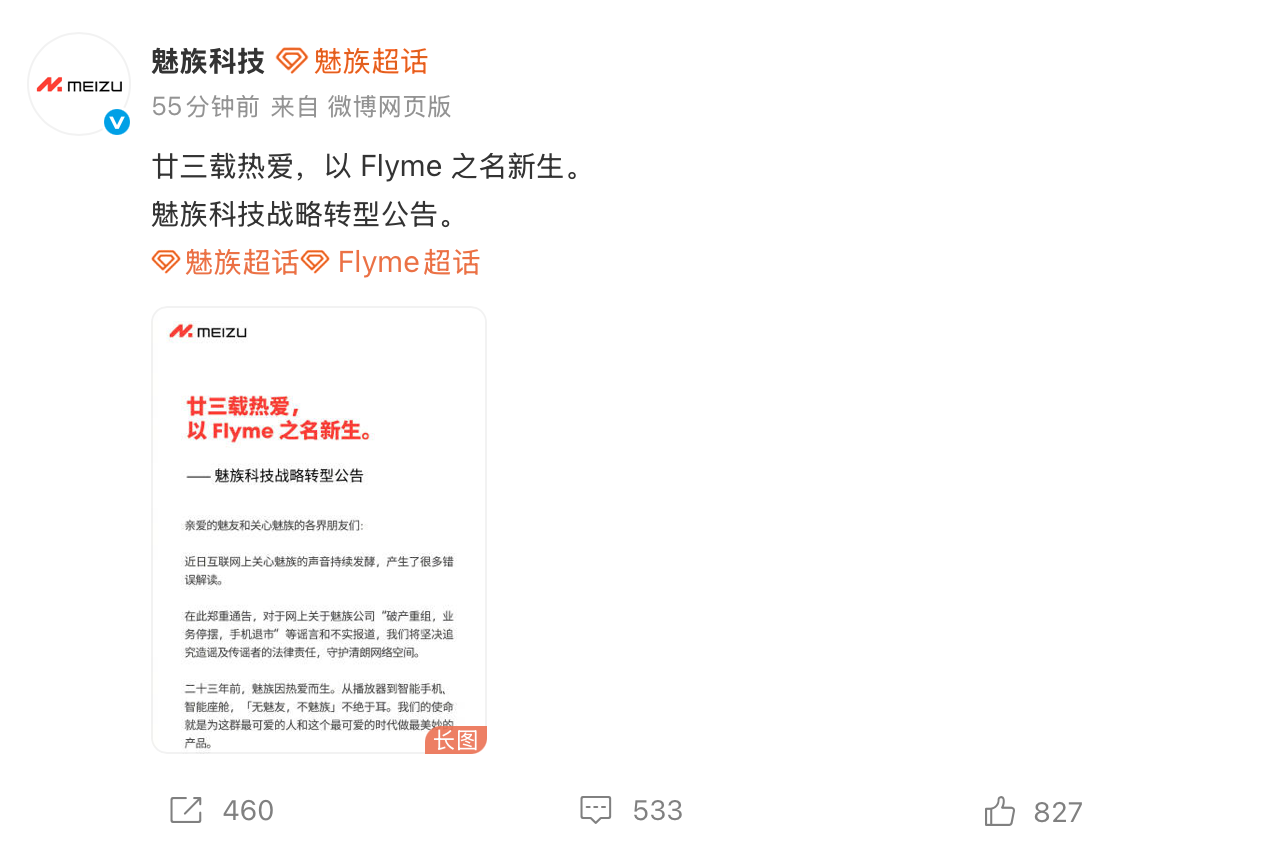
魅族回应破产退市传闻
Xin Lang Cai Jing· 2026-02-27 03:58
Core Viewpoint - Meizu officially announced a strategic transformation, pausing the development of new domestic smartphone hardware projects while maintaining existing business operations [1][4]. Group 1: Strategic Shift - Meizu will suspend the self-research hardware projects for new domestic smartphones and is actively seeking third-party hardware partners [1]. - The company emphasizes that this pause is a strategic choice to focus resources on enhancing the Flyme software ecosystem, aiming to provide system ecological empowerment for various smart devices [4][6]. Group 2: Market Context - The domestic smartphone market has become increasingly competitive, leading many brands to opt for strategic contraction [4]. - Rising memory prices have made the commercialization of new products challenging, prompting Meizu to reconsider its approach [4][6]. Group 3: Future Directions - Meizu plans to transition from a hardware-driven model to one focused on AI-driven software products, with the goal of creating a robust Flyme ecosystem [4]. - The Flyme Auto business is expected to maintain independent operations and integrate more deeply into Geely's smart automotive landscape, with a target of 3 million units by 2026 [5]. Group 4: Historical Context - Meizu was one of the early smartphone brands, launching its first model in 2009, but has struggled to compete with larger brands like Huawei and Xiaomi [5]. - The company previously sought strategic partnerships, including a collaboration with Alibaba in 2015, but did not achieve the anticipated growth [5]. Group 5: Recent Developments - In February 2024, Meizu announced an "All in AI" strategy, aiming to build AI terminals and reconstruct the Flyme system [6]. - The cancellation of the Meizu 22 Air due to rising memory costs indicates ongoing challenges in the smartphone segment [6].
魅族官宣暂停国内手机新产品自研硬件项目,多个平台官方渠道手机已无货
Xin Lang Cai Jing· 2026-02-27 03:36
Core Viewpoint - Meizu is pausing the development of new hardware projects for domestic smartphones and is actively seeking third-party hardware partners, while existing operations will remain unaffected. The company aims to strategically transform from a hardware-centric model to an AI-driven software product focus, establishing a sustainable enterprise based on the Flyme open ecosystem [2]. Group 1: Strategic Shift - Meizu is transitioning from a hardware-led approach to an AI-driven software product strategy in response to intense competition in the domestic smartphone market [2]. - The company plans to build a sustainable enterprise centered around the Flyme open ecosystem [2]. Group 2: Market Challenges - The ongoing surge in memory prices has made the commercial viability of new products increasingly difficult, prompting Meizu to reconsider its product development strategy [2]. - Many brands in the domestic smartphone market have opted for strategic contraction due to fierce competition [2]. Group 3: Current Product Availability - Meizu's official flagship stores on platforms like Tmall and Pinduoduo currently show no smartphones for sale, indicating that products are sold out [5]. - The Meizu official website also displays messages indicating that products are "restocking" or "sold out," with customer service confirming that the company is working on replenishing stock [8]. Group 4: Historical Context - Founded in 2003, Meizu was a leader in the domestic music player market and gained a foothold in the smartphone market with the release of its first smartphone, the M8, in 2007 [8]. - In 2014, Meizu achieved over 20 million units sold in a year, marking a 350% year-on-year growth and entering the top 10 of domestic smartphone brands [8]. - In July 2022, Geely Holding Group acquired a 79.09% stake in Meizu, aiming to integrate mobile and automotive software technologies [8]. Group 5: Future Plans - Meizu's "All in AI" strategy announced in February 2024 aims to develop AI terminals, restructure the Flyme system, and build an AI ecosystem [8]. - The Flyme Auto system is projected to exceed 2.26 million units in vehicle installations by 2025, with a target of 3 million units in collaboration with Geely Group by 2026 [9].
超6亿和解金,欣旺达亏了还是赚了?
Xin Lang Cai Jing· 2026-02-27 03:36
Core Viewpoint - The settlement between XWDA and Geely's subsidiary, which involves a compensation payment of 608 million yuan, is seen as a strategic move to clear legal obstacles for XWDA's potential IPO, despite the ongoing concerns regarding product quality and brand reputation [1][5]. Group 1: Settlement Details - XWDA will pay 608 million yuan in compensation to Geely's subsidiary over five years, with an estimated impact on XWDA's net profit for 2025 ranging from 500 million to 800 million yuan [1][5]. - The initial claim from Geely was 2.314 billion yuan, indicating a reduction of nearly 75% in the settlement amount [1][4]. - The settlement allows XWDA to retain ownership of the battery packs involved, which may help mitigate some losses [5]. Group 2: Product Quality Concerns - The dispute arose from safety concerns regarding the 86kWh high-voltage batteries supplied to the Zeekr 001 WE86 model, which were reported to have performance issues and potential safety risks [1][2]. - Following the settlement, Zeekr announced a recall of 38,277 vehicles produced between July 2021 and March 2024 due to these battery issues [2][5]. - The estimated cost for Zeekr to replace the battery packs for affected vehicles could exceed 2 billion yuan, reflecting the significant financial implications of the battery quality concerns [4][6]. Group 3: Market Reaction and Brand Impact - Following the lawsuit announcement, XWDA's stock price dropped by 11.39%, and its market value decreased by over 23%, resulting in a loss of more than 10 billion yuan [2]. - Despite the settlement, XWDA's market value has not returned to pre-controversy levels, indicating ongoing trust issues with investors and consumers [2][6]. - The incident has led to a shift in consumer preference, with some Zeekr owners opting for batteries from CATL instead of XWDA, highlighting the impact on brand reputation [6][8]. Group 4: Industry Context - The battery market is characterized by a significant concentration of market share, with CATL holding 41.6% and BYD 25.6%, while XWDA's market share is only 2.5% [10]. - The challenges faced by second-tier battery manufacturers like XWDA are exacerbated by the dominance of leading players, making it difficult to compete on quality and brand trust [10][11]. - The ongoing quality issues and market dynamics suggest that second-tier suppliers may struggle to maintain relevance as automakers increasingly invest in in-house battery development [13].

领克致歉语音误关大灯后,极氪车主发现有同样缺陷
Guan Cha Zhe Wang· 2026-02-27 03:23
Core Viewpoint - A safety defect in the voice control system of Lynk & Co vehicles has raised concerns among owners of other brands under Geely Group, prompting them to test their own vehicles for similar issues [2][7]. Group 1: Incident Details - On February 25, a Lynk & Co owner reported that the voice assistant mistakenly turned off the vehicle's headlights when instructed to "turn off all reading lights" [4]. - The driver experienced multiple failures in the system to recognize commands, ultimately leading to a collision with a barrier [5]. - Lynk & Co's Vice President Mu Jun publicly apologized and announced that a fix had been implemented via a cloud update, restricting headlight control to manual operation while driving [2][4]. Group 2: Reactions from Other Brands - Following the incident, owners of Zeekr and Galaxy vehicles began testing their own cars for similar voice control issues, with mixed results reported [7]. - Some Zeekr owners confirmed that their vehicles also turned off the headlights with the same command, while Galaxy owners reported that the command did not have the same effect [7]. - As of now, Geely Group and Zeekr have not issued any official comments regarding the situation [1][7].

传统燃油车的挣扎还是回春?
3 6 Ke· 2026-02-27 03:13
Core Viewpoint - The relationship between fuel vehicles and electric vehicles is shifting from a competitive replacement to a parallel coexistence, with fuel vehicles finding a new positioning in the market [1][9]. Group 1: Industry Trends - Stellantis Group has written down €22.2 billion in assets due to overestimating the speed of electrification, leading to an expected operating loss of over €20 billion in the second half of the year [1]. - Ford has acknowledged a $19.5 billion accounting loss from terminating multiple electric vehicle projects, while General Motors has withdrawn some electrification investments and recorded a $6 billion charge [1]. - The combined asset impairment of approximately $55 billion from these three major automakers, along with slowing electric vehicle demand in the U.S., subsidy reductions in Europe, and price wars in China, has made the calibration of electrification a core industry topic [1]. Group 2: Market Dynamics - In the U.S. market, demand for fuel and hybrid vehicles is returning due to a significant drop in demand following a surge before the expiration of a $7,500 tax credit in 2025, compounded by high-interest rates and tightened credit [3]. - In Europe, the slow construction of charging infrastructure and fluctuating electricity prices have hindered consumer acceptance of electric vehicles, leading to a resurgence in demand for plug-in hybrids and hybrid models [3]. - In China, while the penetration rate of new energy vehicles approaches 50%, many brands are struggling with profitability, indicating a complex market landscape [3]. Group 3: Technological Developments - Major automakers are investing in upgrading fuel vehicle technology to bridge the gap with electric vehicles, addressing previous issues such as power supply, heat dissipation, and response delays [2]. - Companies like Mercedes-Benz and Volkswagen are reallocating investment budgets to enhance fuel vehicle platforms rather than focusing solely on electric platforms, recognizing the ongoing demand for fuel vehicles [4]. - The transition to intelligent fuel vehicles is being facilitated by advancements in technology, with companies like Bosch and Geely implementing smart driving systems in their fuel models [7][8]. Group 4: Policy Environment - The EU's new carbon emission regulations for new vehicles from 2025 to 2027 provide a transitional mechanism for automakers, allowing them to adjust their strategies [5]. - In China, the focus has shifted from accelerating electrification to stabilizing fuel vehicle consumption, reflecting a recognition of the complexity of the automotive industry [6].


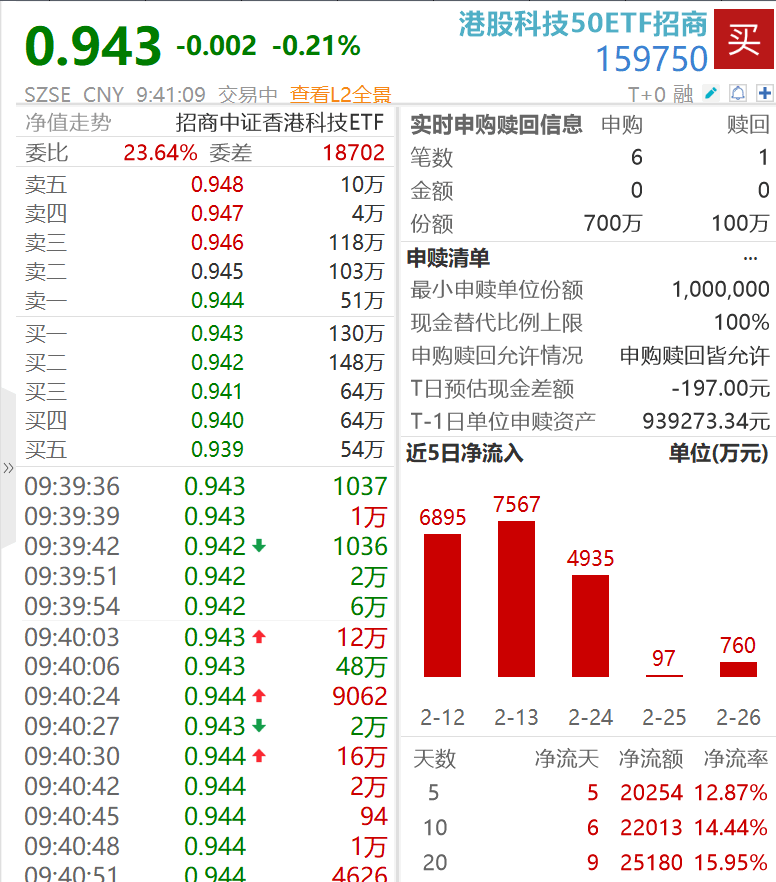
“HALO交易”冲击港股?ETF获逆势布局,港股科技50ETF招商(159750)5日净申购超2亿元
Sou Hu Cai Jing· 2026-02-27 02:48
自去年10月触及阶段高点以来,港股科技股持续走弱,截至最新收盘日,恒生科技指数累计跌幅超23%。 事实上,这一交易逻辑此前已在美股市场引发连锁反应,软件及相关板块个股遭遇大幅杀跌。由于恒生科技指 数的权重股以互联网平台公司为主,其商业模式恰好处于本轮资金撤离的风口浪尖,因而难以避免地受到波 及。 从资金面看,港股市场的悲观情绪正逐步向机构端扩散。据媒体报道,部分原本长期持仓的机构筹码已出现松 动迹象。南向资金最近两个交易日连续净卖出,累计金额超过110亿港元。作为长线资金重要配置标的的盈富 基金,近日亦连续遭遇南向资金减持,昨日单日净卖出额更是超过44亿港元,反映出长线资本对互联网平台前 景的谨慎态度正在升温。 浦银国际分析指出,受外部市场扰动,乐观情绪冲高回落,部分交易型指标动能转弱。估值端看,恒指仍位于 过去五年一倍标准差以上,但恒生科技指数仍偏低,位于过去五年均值附近。盈利端,A股和港股指数盈利预 期出现企稳回升的迹象,若本次业绩期公司普遍上调今明两年业绩指引,盈利有望成为市场向上的关键驱动 力。 部分代表中国新经济的核心科技资产,其估值已经回调至更具吸引力的区间。港股科技50ETF招商(159750) ...