宝马

Search documents
又菜又爱玩的荷兰人,在安世半导体上翻车了。。。
芯世相· 2025-10-24 10:33
Core Viewpoint - The article discusses the geopolitical tensions surrounding the semiconductor industry, particularly focusing on the conflict involving Dutch company Nexperia (formerly part of Philips and NXP) and its Chinese parent company, Wingtech Technology, amid U.S. export controls and Dutch government intervention [5][28][36]. Group 1: Background of Nexperia - Nexperia originated as a core semiconductor division of Philips and later became a part of NXP, which has shifted its focus to high-profit sectors like IoT and automotive chips, leading to Nexperia being spun off due to its lower profit margins in power semiconductors [15][16]. - Nexperia specializes in power semiconductors, which include diodes and transistors, and has established itself as a leader in automotive-grade chips, holding significant market shares in various segments, including 40% of the global inverter chip market for electric vehicles [18][20][25]. Group 2: Acquisition and Growth - In 2019, Wingtech Technology acquired Nexperia for over 34 billion yuan, transforming it into a Chinese subsidiary, which subsequently experienced significant growth, with revenue increasing by 60% and net profits multiplying since the acquisition [23][25]. - Nexperia's success has been bolstered by the rise of China's new energy vehicle market, with 40% of its shipments directed to Chinese automakers, contributing to substantial tax revenues and job creation in Europe [25]. Group 3: Geopolitical Tensions - In December 2022, Wingtech was placed on the U.S. export control entity list, which was later expanded to include Nexperia, prompting the Dutch government to intervene and take control of the company, citing national security concerns [28][31]. - The Dutch government's actions included freezing Wingtech's global subsidiaries and replacing its management, which has been criticized as a capitulation to U.S. pressure and a move to seize valuable assets [31][34]. Group 4: Impact on the Semiconductor Supply Chain - Following the Dutch government's intervention, China responded with export controls on Nexperia's products, halting shipments from its critical manufacturing facilities in Dongguan and Huizhou, which are essential for the global supply chain [36][37]. - The European automotive industry expressed alarm over potential chip shortages, with major manufacturers warning that their production lines could face immediate disruptions due to the lack of semiconductor supplies [41][42]. Group 5: Future Implications - The situation highlights the fragility of global supply chains in the semiconductor industry, where geopolitical tensions can rapidly escalate into significant operational challenges for companies [46]. - The article suggests that the era of easily seizing foreign assets through legal means is over, emphasizing the need for careful consideration before leveraging such strategies in a globalized economy [47][48].


锐新科技:公司生产的汽车部品及部件主要应用于丰田、比亚迪等传统燃油车及新能源车
Ge Long Hui· 2025-10-24 08:21
Core Viewpoint - Rui Xin Technology (300828.SZ) is focusing on expanding its market presence and aims to attract more high-end clients in the automotive parts sector, currently serving major brands like Toyota, Honda, Geely, Volvo, Audi, BMW, and BYD, but not yet Chery [1] Group 1 - The company produces automotive parts primarily for traditional fuel vehicles and new energy vehicles [1] - Current clients include well-known automotive brands, indicating a strong market position [1] - Future plans involve enhancing market expansion efforts to secure additional high-end customers [1]


锐新科技(300828.SZ):公司生产的汽车部品及部件主要应用于丰田、比亚迪等传统燃油车及新能源车
Ge Long Hui· 2025-10-24 08:15
Group 1 - The core viewpoint of the article is that Ruixin Technology (300828.SZ) is actively expanding its market presence and aims to attract more high-end clients in the automotive parts sector [1] Group 2 - The company produces automotive parts and components primarily used in traditional fuel vehicles and new energy vehicles from brands such as Toyota, Honda, Geely, Volvo, Audi, BMW, and BYD [1] - Currently, the company's products have not been applied to Chery Automobile [1] - The company plans to strengthen its market expansion efforts in the future [1]
信用利差周报2025年第39期:上交所明确绿色金融四大发展方向,熊猫债累计发行规模突破万亿-20251024
Zhong Cheng Xin Guo Ji· 2025-10-24 02:07
1. Report Industry Investment Rating There is no information about the report industry investment rating provided in the content. 2. Core Viewpoints of the Report - The Shanghai Stock Exchange clarifies four development directions to promote the standardized development of green finance, aiming to optimize the policy environment and guide capital to the green - low - carbon field. China's green bond market is in a rapid development stage, but still faces challenges such as term mismatch and insufficient participation of small and medium - sized enterprises [3][11]. - The cumulative issuance scale of panda bonds has exceeded one trillion yuan, with continuous enrichment of issuers and optimization of the institutional environment. Although the market has expanded, there is still room for improvement in market scale, secondary - market liquidity, and foreign - institution participation [4][15]. - In the third quarter, GDP growth slowed down slightly, while import and export data in September exceeded expectations. The central bank net - withdrew funds last week, and the money market maintained a balanced state. The primary market of credit bonds saw a significant recovery in issuance scale and a decline in most issuance costs. The secondary market of credit bonds had significantly increased trading activity, with bond yields showing a mixed trend [5][20][24]. 3. Summary According to the Table of Contents Market Hotspots - **Shanghai Stock Exchange Promotes Green Finance**: On October 16, the Shanghai Stock Exchange announced four directions for green finance development, including supporting green enterprises' equity and bond financing, strengthening sustainable information disclosure of listed companies, enhancing investment - end construction in the sustainable field, and deepening international cooperation. China's green bond market has the largest scale globally, and the exchange is promoting standardized construction in multiple aspects. However, challenges such as term mismatch and insufficient SME participation remain [3][11][12]. - **Panda Bonds' Scale Exceeds One Trillion**: As of October 17, the cumulative issuance scale of panda bonds has exceeded one trillion yuan. The market has grown rapidly since 2023, with diversified issuers. The expansion is driven by low domestic interest rates and optimized regulatory policies. Although it has enhanced the market's depth and internationalization, there is still room for improvement in market scale, liquidity, and foreign - institution participation [4][15][16]. Macroeconomic Data - **GDP Growth**: The year - on - year GDP growth rate in the third quarter was 4.8%, slightly higher than the annual target. The growth rate of the secondary industry slowed down, while that of the primary industry increased [20]. - **Import and Export**: In September, the export volume was $328.57 billion, with a year - on - year growth of 8.3%, and the import volume was $238.12 billion, with a year - on - year growth of 7.4%, both showing significant improvements compared to August [5][20]. - **Social Financing Scale**: The stock of social financing scale in September was 424 trillion yuan, with a year - on - year growth of 8.7%. The new - added social financing scale decreased year - on - year, mainly due to weak credit demand and a slowdown in government - bond issuance [20][21]. - **Money Supply**: In September, M1 reached 7.2%, and M2 was 8.7%. The "scissors gap" between M1 and M2 narrowed to a new low for the year [5][21]. Money Market - The central bank net - withdrew 813.9 billion yuan through open - market operations last week. Although funds were withdrawn, the money market remained balanced, with fluctuating capital prices. The pledged - repo rates of various tenors had both increases and decreases, and the spread between the 3 - month and 1 - year Shibor narrowed to 9bp [6][24]. Primary Market of Credit Bonds - The issuance scale of credit bonds last week was 339.359 billion yuan, a significant recovery compared to the previous period. The issuance scale of each bond type and industry increased. The infrastructure investment and financing industry had a net outflow of 6.067 billion yuan in financing, while half of the industrial bonds had a net inflow. Most of the average issuance costs of credit bonds decreased, with a range of 6bp - 49bp, except for a 5bp increase in the issuance rates of 5 - year AA + and 3 - year AA bonds [7][29]. Secondary Market of Credit Bonds - The secondary - market trading volume of bonds last week was 9.166734 trillion yuan, with the average daily trading volume increasing by 88.1725 billion yuan to 183.3347 billion yuan, indicating a significant increase in trading activity. Bond yields showed a mixed trend. Interest - rate bond yields mostly increased, while credit - bond yields mostly decreased. Credit spreads generally showed a short - term decline and long - term increase, and rating spreads fluctuated within a narrow range of 3bp [37][39][41].
奔驰“天价”补偿鼓励员工离职,此计划不涉及中国市场
Hu Xiu· 2025-10-23 23:22
Group 1 - Mercedes-Benz is implementing its largest layoff plan in history, with approximately 4,000 employees having accepted severance packages, which are designed with a gradient compensation structure linked to job level and tenure, with the highest compensation reaching "N+11" and senior management receiving up to €500,000 (approximately 4.1 million RMB) [1] - The layoff plan is not related to the Chinese market, and the company aims to encourage around 30,000 employees to voluntarily leave by offering generous severance packages [1] - The company expects to save approximately €5 billion annually by 2027 through outsourcing decisions, not filling vacant positions, and severance payments [1] Group 2 - In the first half of 2025, Mercedes-Benz's net profit declined by 55.8% due to deep industry transformation, intensified market competition, and tariffs, prompting the company to streamline operations [2] - Mercedes-Benz is accelerating its electrification and digital transformation efforts, planning to launch a series of new models over the next two years, covering all market segments from entry-level to high-end [2] - The company is focusing on the Chinese market, with plans to introduce multiple exclusive products from 2025 to 2027, developed locally and featuring unique applications and vehicle content [2] Group 3 - The German automotive industry is experiencing a wave of layoffs, with Volkswagen planning to cut over 35,000 jobs in Germany by 2030 and Bosch announcing a reduction of approximately 13,000 positions by the end of 2030 [3] - ZF Friedrichshafen has also stated it will cut around 7,600 jobs in its powertrain division before 2030 [3]
高线数激光雷达重塑高端车竞争格局
Zhong Guo Zheng Quan Bao· 2025-10-23 20:12
Core Insights - The adoption of 500-line and above LiDAR technology is becoming the new standard for high-end flagship vehicles, with companies like Lantu Motors planning to equip their new model, Taishan, with such advanced sensors [1][2] - The competition in the smart electric vehicle market is shifting from traditional luxury features to a focus on safety, intelligence, and perception accuracy, particularly as L3-level autonomous driving becomes more viable by 2025 [1][2] Industry Trends - High-performance sensors, particularly those with over 500 lines, are now essential for flagship models, enhancing perception systems and ensuring redundancy in case of module failures [2] - The digitalization of LiDAR technology is key to achieving high line counts, with companies like Suyuan Ju Chuang leading the way in integrating these systems into various markets, including automotive and robotics [2] Competitive Landscape - The competition among high-end electric vehicles is intensifying, with domestic brands significantly increasing their market share in the 300,000 yuan and above segment, challenging traditional luxury brands [3][4] - Brands like Lantu and Zeekr are entering the market with advanced features and technology, directly competing with established players like Aion and NIO [3][4] Consumer Behavior - Consumer preferences are shifting from brand prestige to actual user experience, focusing on the functionality of in-car systems and overall driving experience [4] - The introduction of new models like Lantu Taishan and Zeekr 9X is expected to further diversify the high-end electric vehicle market, emphasizing the importance of system integration and user experience [6] Product Innovations - Lantu Taishan will feature Huawei's latest ADS4Ultra, which meets the requirements for high-speed L3 autonomous driving, while other models are also incorporating advanced smart cockpit technologies [3] - The differentiation strategy of new entrants like Leap Motor D19, which offers a unique combination of three motors and extended range capabilities, aims to address consumer concerns about range anxiety [5]
奔驰“天价”补偿鼓励员工离职 此计划不涉及中国市场
经济观察报· 2025-10-23 15:15
Core Viewpoint - Mercedes-Benz is undergoing significant restructuring, including a large-scale layoff plan aimed at optimizing capacity, supply chain, and personnel, with a focus on voluntary departures and cost savings [3][4]. Group 1: Layoff Plan - Mercedes-Benz is implementing its largest layoff plan in history, with approximately 4,000 employees already accepting severance packages [3]. - The severance compensation is designed with a gradient structure based on job level and years of service, with the highest compensation reaching "N+11" and senior management receiving up to €500,000 (approximately 4.1 million RMB) [3]. - The CEO, Ola Källenius, aims to encourage around 30,000 employees to voluntarily leave by 2027, targeting annual savings of approximately €5 billion through outsourcing, not filling vacant positions, and severance packages [3]. Group 2: Industry Context - The automotive industry is experiencing performance fluctuations due to deep industry transformation, intensified market competition, and tariffs, leading to a "slimming down" trend among major automakers [4]. - In the first half of 2025, Mercedes-Benz's net profit is projected to decline by 55.8% [4]. - Other major automakers, including Volkswagen and Bosch, are also announcing significant layoffs and capacity reductions, with Volkswagen planning to cut over 35,000 jobs in Germany by 2030 [5].
从德国到日本,芯片短缺正波及全球汽车供应链
Hua Er Jie Jian Wen· 2025-10-23 13:24
Group 1 - The semiconductor crisis is spreading from Europe to Asia, impacting the global automotive production system, with major automakers like Volkswagen, Toyota, Nissan, and Honda seeking solutions [1] - The Japan Automobile Manufacturers Association (JAMA) reported that its member companies, including Toyota, Nissan, and Honda, have received warnings regarding chip supply issues and are working closely with parts manufacturers to resolve the problem [1] - JAMA emphasized that this situation will severely impact the global production of its member companies [1] Group 2 - A report indicated that Volkswagen has suspended production of the Golf model at its Wolfsburg plant due to a halt in chip supply, marking a clear signal of the disruption in the global automotive supply chain [1] - The production halt may affect tens of thousands of employees in Europe's largest economy, with other automakers like BMW, Mercedes, and Daimler closely monitoring the situation, although their production continues for now [1]
安世半导体事件引发全球汽车供应链危机
Ju Chao Zi Xun· 2025-10-23 13:09
Core Viewpoint - The Dutch government's decision to freeze the operational rights of Nexperia, a subsidiary of Wingtech Technology, has triggered a significant disruption in the global automotive supply chain, raising concerns about a potential chip supply crisis in Europe and beyond [1][5]. Company Summary - Nexperia, headquartered in the Netherlands, is a well-known semiconductor manufacturer with a product range that includes semiconductor technology, integrated circuits, system-level packaging, and electronic components [3]. - Wingtech Technology acquired a 79.98% stake in Nexperia for 26.854 billion yuan in 2019, later achieving full ownership, marking it as the first Chinese company to control a leading international semiconductor enterprise [3]. - Since Wingtech's acquisition, Nexperia's revenue has significantly increased from over 1 billion euros in 2018 to 2.36 billion euros in 2022, with gross margins rising from 25% to 42.4% and a market share exceeding 30% in automotive power chips [4]. Industry Summary - The Dutch government's intervention, which includes freezing the operations of Nexperia's 30 global subsidiaries and appointing foreign directors, is aimed at preventing excessive reliance on foreign entities and asset outflow in the European chip industry [3]. - The European Automobile Manufacturers Association (ACEA) has warned that this situation could lead to a disruption in the global automotive supply chain, with major car manufacturers like Volkswagen, BMW, and Mercedes facing parts shortages [4]. - The incident highlights the geopolitical pressures affecting the global semiconductor supply chain, serving as a stress test for the industry amid rising supply risks for European automakers [5].
荷兰“强抢”中资半导体企业引发芯片断供,美欧日车企无一幸免
Guan Cha Zhe Wang· 2025-10-23 08:14
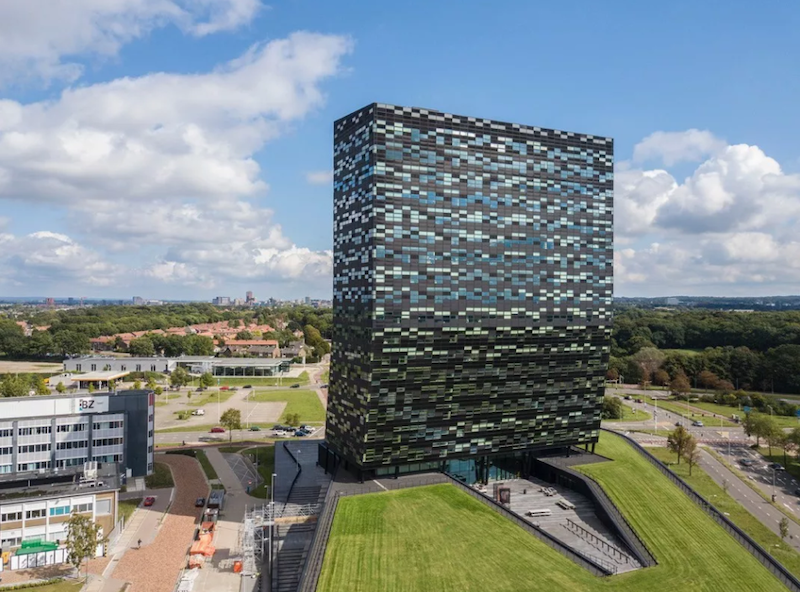
Core Viewpoint - The Dutch government's intervention in the operations of the Chinese-controlled company Nexperia has led to significant disruptions in the global automotive supply chain, affecting major automakers in the US, Europe, and Japan [1][9]. Group 1: Impact on Automotive Industry - Nexperia's factory in Dongguan has restricted shipments, leading to semiconductor supply shortages that could impact production for major automakers like General Motors, Toyota, Ford, Volkswagen, and Hyundai [1][2]. - General Motors' CEO Mary Barra warned that the semiconductor supply shortage could affect production, and the company has formed an internal team to mitigate potential disruptions [1][2]. - The American Automotive Innovation Alliance (AAI) has urged for a swift resolution to the supply chain issues, emphasizing the severe impact on automotive production in the US and other countries [2]. Group 2: Responses from Automakers - The German Automotive Industry Association (VDA) reported that German manufacturers received notifications from Nexperia about the inability to ensure chip supply, warning of potential production limitations [4]. - Volkswagen has informed employees about the possibility of production halts due to supply chain issues, which could be catastrophic given the company's declining sales in key markets [5]. - BMW and Mercedes-Benz are working with suppliers to ensure production continues, while Renault has established a monitoring team to communicate daily with suppliers [7]. Group 3: Broader Implications - The semiconductor crisis is not limited to the automotive sector, as the chips produced by Nexperia are also used in various consumer electronics, indicating a wider impact across multiple industries [8]. - The European Automobile Manufacturers Association (ACEA) has warned that current chip inventories are expected to last only a few weeks, and finding alternative suppliers could take months [4]. Group 4: Government and Regulatory Actions - The Dutch government has imposed restrictions on Nexperia, including a ban on any adjustments to assets or management, which has been criticized for violating market principles and damaging the business environment [9][15]. - The Chinese government has expressed strong opposition to the Dutch intervention, emphasizing the need for a stable global supply chain and urging the Netherlands to resolve the issue amicably [15].