腾讯

Search documents
蚂蚁阿福的火,ChatGPT Health的势,都指向讯飞医疗的“慢功夫”
Xin Lang Cai Jing· 2026-01-11 10:23
Core Insights - The Hong Kong stock market is experiencing a surge in AI company listings, with notable examples including Zhiyu and MiniMax, which have seen record oversubscription rates and significant market valuations [1][2] - The competitive landscape for medical AI has evolved, with major players like Ant Group's Aifu and OpenAI's ChatGPT Health entering the market, indicating a shift towards health management as a high-frequency AI usage scenario [2][5] - The focus of competition has shifted from whether AI can perform tasks to who can deliver deeper, longer-lasting, and verifiable solutions in the medical AI space [7][20] Market Dynamics - The entry of major tech companies into the health AI sector is driven by the value of establishing a vertical entry point in a competitive AI landscape, where health data integration presents a unique opportunity [8][9] - The medical health sector is characterized by a data flywheel effect, where collaboration among government, institutions, and users can create a sustainable business model [9] - The competition is not just about functionality but also about building trust and compliance in data handling, which is crucial for long-term success [17] Company Strategies - iFlytek Medical has taken a different approach by focusing on the grassroots medical system, emphasizing compliance, delivery, and scalability over creating a viral consumer product [12][14] - The company has secured a significant project with the National AI Application Pilot Base, which positions it to define standards and operational frameworks in the medical AI sector [14][20] - iFlytek Medical's strategy involves enhancing its health management capabilities while maintaining a focus on professional boundaries and sustainability, contrasting with the more rapid growth strategies of its competitors [15][18] Competitive Landscape - The competition between iFlytek Medical and Ant Group's Aifu represents two distinct approaches: an "entry-type" model focused on consumer engagement versus a "system-type" model aimed at embedding AI within existing medical frameworks [15][20] - The future of competition will hinge on who can establish a true data feedback loop and integrate AI capabilities into real-world medical processes, ensuring compliance and operational sustainability [16][18] - The market is witnessing a shift in value perception, where sustainable revenue structures and replicable delivery capabilities are becoming more critical than mere product popularity [19][20]


姚顺雨对着唐杰杨植麟林俊旸贴大脸开讲!基模四杰中关村论英雄
Xin Lang Cai Jing· 2026-01-10 14:39
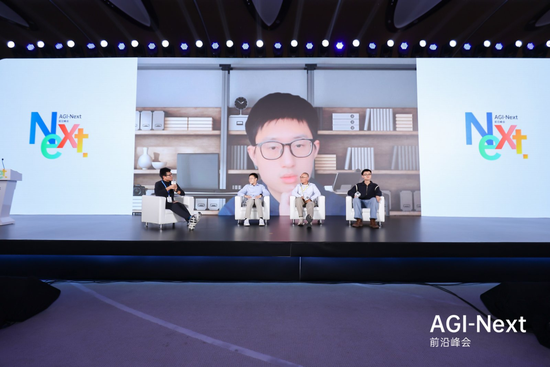
Core Insights - The AGI-Next summit organized by Tsinghua University gathered key figures in the AI industry, showcasing high-density technical discussions and insights into the future of AI development [1][3]. Group 1: AI Development Trends - The evolution of large models has transitioned from simple tasks to complex reasoning and real-world applications, with expectations for significant advancements by 2025 [8][10]. - The current trajectory of AI models reflects a growth pattern similar to human cognitive development, moving from basic tasks to more sophisticated reasoning and real-world problem-solving [9][12]. - The introduction of Reinforcement Learning with Verified Rewards (RLVR) aims to enhance model capabilities by allowing autonomous exploration and feedback acquisition [15][16]. Group 2: Challenges and Opportunities - The challenge of generalization remains a core issue, with models needing to improve their ability to apply learned knowledge to new, unseen problems [11][13]. - The integration of coding and reasoning capabilities into AI models represents a significant shift from conversational AI to task-oriented AI, marking a pivotal change in the industry [19][20]. - The need for a hybrid approach combining API and GUI interactions is emphasized to enhance AI's operational capabilities in real-world environments [25][26]. Group 3: Future Directions - The focus on multi-modal capabilities, memory structures, and self-reflective abilities in AI models is seen as essential for achieving higher levels of intelligence and functionality [31][34][36]. - The exploration of new paradigms for scaling AI capabilities beyond traditional methods is crucial for future advancements in the field [49][50]. - The development of models that can autonomously define their learning tasks and reward functions is highlighted as a potential breakthrough in AI research [49][50]. Group 4: Competitive Landscape - Chinese open-source models are gaining significant traction and influence in the global AI landscape, with expectations for continued growth and leadership in the field [28][73]. - The advancements in AI capabilities, particularly in coding and reasoning, position Chinese models competitively against leading international counterparts [72][73].

TA们扎堆赴港上市,拼的是什么?
Sou Hu Cai Jing· 2026-01-10 01:18
Group 1 - Hunan Mingming Henmang Commercial Chain Co., Ltd. is set to become the first "bulk snack stock" in Hong Kong after passing the listing hearing [2] - The snack industry has seen a surge in companies seeking to list in Hong Kong since 2025, with major players focusing on expanding store networks, supply chains, and product offerings [2] - Three squirrels experienced a significant decline in stock price, dropping over 30% in 2025, with a reported 52.9% year-on-year decrease in net profit attributable to shareholders for the first three quarters of 2025 [2] Group 2 - The book "Corporate Culture Landing: Building Core Competitiveness Across Cycles" offers insights into overcoming challenges in corporate culture implementation [8] - The author proposes a three-stage model for corporate culture implementation, emphasizing the need for a well-structured cultural system and practical methods for effective execution [8] - The book includes case studies from companies like Huawei and Alibaba, providing a systematic approach to translating abstract cultural concepts into actionable practices [8]

华尔街见闻早餐FM-Radio | 2026年1月10日
Hua Er Jie Jian Wen· 2026-01-09 23:25
Market Overview - The U.S. Supreme Court has not yet announced its ruling on Trump's tariffs, with the next decision expected on January 14 [8] - Non-farm payroll data showed mixed results, with an increase of 50,000 jobs in December, below the expected 65,000, and the unemployment rate dropping to 4.4%, the lowest annual increase since 2020 [19] - The S&P 500 rose by 0.6%, reaching a new high, while the Nasdaq 100 increased by 1% [2] - The two-year U.S. Treasury yield rose by 4.39 basis points, reflecting market expectations for the Federal Reserve to maintain interest rates in January [2] Cryptocurrency and Commodities - Bitcoin fell below $90,000 after a strong start to the week, ending the week roughly flat [3] - Spot gold prices increased by 0.7%, surpassing $4,500, with a weekly gain of over 4% [3] - WTI crude oil saw a brief increase of 2.3% before settling at a 0.6% gain due to geopolitical tensions [3] Chinese Economic Indicators - China's December CPI rose by 0.8% year-on-year, marking a 34-month high, driven by increased food prices, particularly fresh vegetables, which rose by 18.2% [5][17] - The PPI has seen a continuous increase for three months, indicating rising industrial prices [17] - The Chinese Ministry of Finance announced the cancellation of VAT export rebates for 249 products, including solar energy products, starting in April [7][18] Company News - Intel's stock surged over 10% following a meeting between its CEO and Trump, with the U.S. government’s investment in Intel now valued at approximately $19.74 billion [33] - Minimax's debut on the Hong Kong stock market saw its shares soar by 109%, with significant backing from major investors like Alibaba and Tencent [11][23] - TSMC reported a 20.4% year-on-year increase in December revenue, driven by strong demand for AI chips and iPhone 17, alleviating market concerns about a potential bubble [28] Regulatory Developments - The State Council's Anti-Monopoly Committee announced an investigation into the food delivery service industry due to issues related to subsidies and pricing competition [6][18] - The U.S. is expected to release the results of its Section 232 tariff investigation, which could significantly impact the prices of silver, platinum, and palladium [19]

深圳2025年存贷款规模居全国前三,债市科技板领跑全国
Nan Fang Du Shi Bao· 2026-01-09 14:57
Core Insights - The People's Bank of China and Shenzhen Foreign Exchange Bureau have outlined significant achievements in Shenzhen's financial sector for 2025, focusing on monetary policy implementation, financial reform, and support for technological innovation and green development [1] Group 1: Financial Metrics - By the end of 2025, Shenzhen's loan balance is projected to approach 10 trillion yuan, with deposits exceeding 14 trillion yuan, ranking third among Chinese cities [2] - The balance of technology loans is expected to reach 2.26 trillion yuan, while inclusive small and micro loans will be around 1.97 trillion yuan, both showing growth rates above the average for all loans [2] Group 2: Debt Market and Innovation - Shenzhen has led the nation in the issuance of technology bonds, with a total issuance of 441.5 billion yuan, ranking second among Chinese cities [3] - The city has introduced three service models that have collectively supported over 5,100 tech startups with loans exceeding 16 billion yuan [3] Group 3: Payment Services and Cross-Border Transactions - Shenzhen has enhanced payment services, resulting in a 30% year-on-year increase in inbound consumption, with 1.89 billion transactions totaling 26.4 billion yuan [4] - The city has pioneered a special work plan for RMB settlement in goods trade, achieving a total of 1.23 trillion yuan in cross-border RMB receipts, a year-on-year increase of 187.8 billion yuan, with the settlement ratio reaching 30.8% [5] Group 4: E-commerce and Trade Support - Cross-border e-commerce exports have reached 65.86 billion USD, helping 253,000 enterprises save over 580 million yuan in settlement fees [6] - The "micro trade loan" product has supported 9,070 foreign trade enterprises with a loan balance of 1.07 trillion yuan, with nearly 80% being small and micro enterprises [7] Group 5: Integrated Financial Services - The integrated currency pool for multinational companies has been upgraded to version 3.0, benefiting nearly 2,000 domestic and foreign enterprises, with a total business scale of 3.8 trillion USD [8] - The digital currency cross-border payment system has processed over 24.8 billion yuan, serving more than 2.8 million customers [9] Group 6: Green Finance Initiatives - Shenzhen has signed green foreign debt agreements totaling 170 million yuan and issued carbon reduction loans exceeding 20 billion yuan, expected to facilitate a carbon reduction of 4.2 million tons [11] Group 7: Tax Refunds and Public Awareness - The city processed 5.78 million personal income tax refunds amounting to 9.05 billion yuan, benefiting nearly 5.6 million individuals [12]
同程旅行(00780):下沉市场OTA龙头,用户价值提升驱动增长
GOLDEN SUN SECURITIES· 2026-01-09 14:27
Investment Rating - The report initiates coverage with a "Buy" rating for the company [3][6]. Core Viewpoints - The company is positioned as a leading OTA in the lower-tier market, benefiting from the release of pent-up demand and the enhancement of user value, which drives growth [3][11]. - The online travel market is characterized by strong certainty, with a stable competitive landscape allowing major players to release profits comfortably [2][11]. - The company has shown significant revenue growth, with a projected increase in revenue and net profit over the next few years, driven by the release of demand in the lower-tier market and refined operations [3][11]. Summary by Relevant Sections Company Overview - The company, Tongcheng Travel, was formed by the merger of Tongcheng Network and Elong in 2018, leveraging strengths in transportation ticketing and hotel bookings [1][14]. - It has over 250 million annual paying users, primarily in the lower-tier market, and has seen a significant recovery in performance post-pandemic [1][15]. Market Analysis - The domestic tourism market has rebounded, with tourist numbers and revenue recovering to 109% and 111% of 2019 levels, respectively, indicating a strong recovery trajectory [2][38]. - The OTA market is dominated by a few key players, with Ctrip holding over 50% market share and Tongcheng around 15%, suggesting a stable competitive environment [2][11]. Financial Performance - For the first three quarters of 2025, the company reported revenues of 145.6 billion RMB, a year-on-year increase of 11%, with net profit rising by 41% to 22.9 billion RMB [1][24]. - The adjusted profit margin improved from 16.2% in Q1-Q3 2024 to 18.0% in the same period of 2025, reflecting operational efficiency [1][24]. Growth Drivers - The company is focusing on the lower-tier market, where there is significant potential for growth and increased online penetration in travel services [3][11]. - It is expanding its app and multi-channel traffic strategies, leading to a rise in average revenue per user and overall user engagement [3][11]. Financial Projections - Revenue projections for 2025-2027 are 193.0 billion RMB, 220.6 billion RMB, and 251.2 billion RMB, respectively, with net profits expected to reach 28.5 billion RMB, 33.4 billion RMB, and 39.0 billion RMB [3][5].
Minimax登陆港股首日暴涨109%,阿里、米哈游们赚翻了!
硬AI· 2026-01-09 12:29
Core Viewpoint - MiniMax has set a record for the fastest IPO of an AI company globally, with its stock price soaring 109% on the first day, leading to a market capitalization exceeding HKD 100 billion [2][3]. Group 1: IPO Details - MiniMax was listed on the Hong Kong Stock Exchange on January 9, with an IPO price of HKD 165, at the upper limit of the offering range [5][7]. - The public offering was oversubscribed by 1837 times, raising approximately HKD 55.4 billion, with significant backing from major investors like Alibaba and Tencent [5][8]. - The stock's first-day performance resulted in a market cap of HKD 1,054 million (approximately USD 135 billion) [7]. Group 2: Investor Returns - Early investors, including Alibaba, MiHoYo, and Tencent, saw substantial returns, with Alibaba's shares valued at around HKD 103 billion on the first day [8]. - MiHoYo and Tencent also reported significant increases in their investment values, with MiHoYo's stake worth approximately HKD 48 billion and Tencent's around HKD 20 billion [8]. Group 3: Revenue Growth and Market Position - MiniMax reported a revenue of USD 53.4 million (approximately RMB 380 million) for the first three quarters of 2025, reflecting a year-on-year growth of 174.7% [10]. - The company generates over 70% of its revenue from international markets, with popular products like the Talkie chatbot and the video generation platform Hai Luo AI contributing significantly [10]. - MiniMax plans to use the IPO proceeds for model upgrades, product development, and international expansion, indicating a strong growth trajectory despite potential profitability challenges [10].


MiniMax对决智谱,谁才算“六小虎”领军者?
3 6 Ke· 2026-01-09 12:27
Core Insights - The large model market is experiencing significant activity with the IPOs of Zhipu and MiniMax, highlighting a shift in market dynamics towards consumer-oriented models [1][3] - MiniMax's stock surged by 109.09% on its first trading day, outperforming Zhipu, which indicates a market preference for consumer-facing applications [1][3] - The current competitive landscape shows a divergence from previous AI companies focused on B2B, with MiniMax representing a new wave of consumer engagement [1][3] Company Performance - MiniMax's revenue for the first nine months of the previous year exceeded $50 million, indicating a willingness among overseas consumers to pay for its services [10] - The company has a small team of over 400 employees, with only about 20 working overseas, yet it has managed to innovate and reach international markets [6][7] - MiniMax's business model includes enterprise services and consumer applications, with a focus on balancing profitability across its offerings [20] Market Trends - The shift towards consumer applications is evident as MiniMax embraces new market opportunities, contrasting with previous AI companies that primarily targeted B2B [5][15] - The competitive environment is intensifying, with rising costs leading to potential price increases for AI services, as seen with ChatGPT's Pro version pricing [13] - The market is witnessing a bifurcation where companies are either focusing on B2B or C2D models, with MiniMax preparing to target Southeast Asian enterprise clients [15][19] Legal and Regulatory Challenges - MiniMax faces legal challenges, including lawsuits from major entertainment companies over copyright issues, which could impact its financial stability [23][25] - The company must navigate a complex landscape of content regulation and copyright enforcement, which poses risks to its business model [25] Financial Outlook - The financial performance of MiniMax and Zhipu is under scrutiny, with concerns about their ability to sustain growth amidst rising operational costs and competitive pressures [19][27] - The IPOs of both companies have attracted significant investment, but there are questions about whether their stock performance will mirror that of previous AI companies like SenseTime [27]
押中千亿MiniMax,米哈游的“VC帝国”藏不住了
Huan Qiu Lao Hu Cai Jing· 2026-01-09 12:17
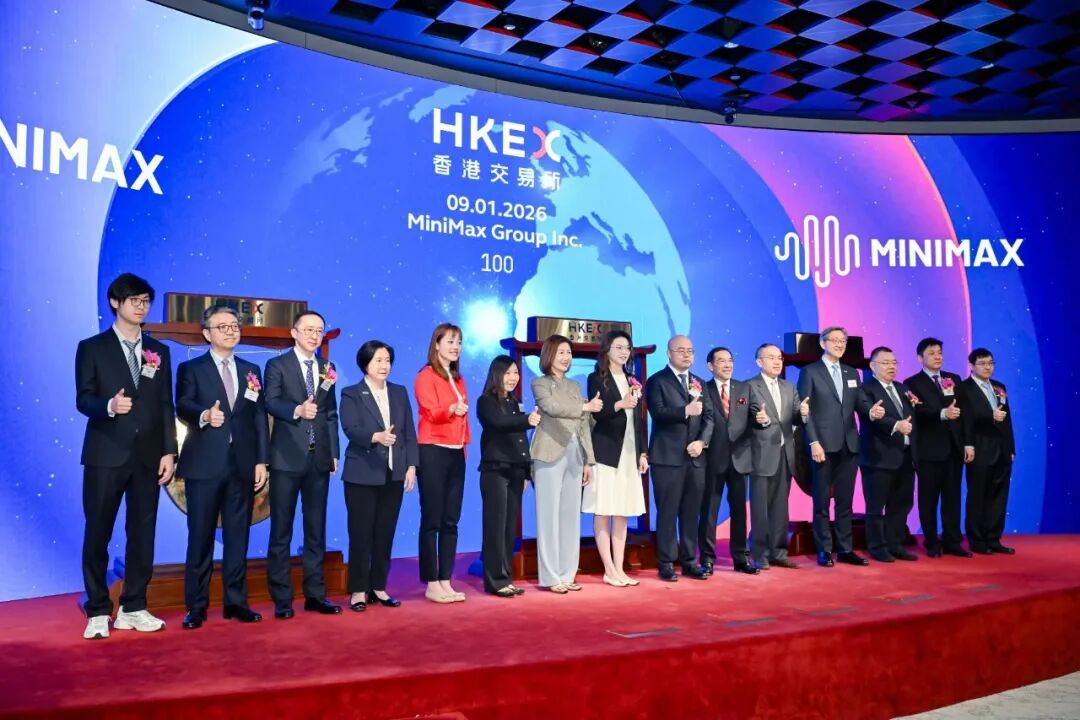
Core Insights - MiniMax has set a record for the fastest IPO in the global AI industry, completing its listing on the Hong Kong Stock Exchange just five years after its establishment in late 2021 [1][2] - The IPO was highly successful, with a subscription rate of 1209 times and total margin financing exceeding 253.3 billion HKD, reflecting a strong demand for tech stocks in Hong Kong [1][2] - The company reported a significant revenue increase from 346 thousand USD in 2023 to 3,052.3 thousand USD in 2024, and further to 5,433.7 thousand USD in the first three quarters of 2025 [2][3] Company Performance - MiniMax's business spans over 200 countries, with more than 70% of its revenue coming from international markets [2] - Despite impressive growth figures, the company has incurred a net loss of 1.32 billion USD from 2022 to the first three quarters of 2025, indicating challenges in achieving profitability [2][3] - The marketing expenses for 2024 are projected to reach 87 million USD, which is 2.8 times the expected revenue for that year [3] Market Position - MiniMax's IPO coincided with a surge in AI company listings in Hong Kong, creating a competitive landscape with other firms like Zhizhu [2][4] - The company's stock price surged by 109% on its first trading day, pushing its market capitalization beyond 100 billion HKD, distinguishing it from competitors [2][4] Investment and Financing - MiniMax's funding history shows consistent valuation growth with significant investments from major players like Tencent and Alibaba, raising 2.5 billion USD and 6 billion USD in A and B rounds respectively [5][6] - The company plans to allocate 90% of the IPO proceeds towards R&D for large models and AI-native development, with the remaining 10% for operational funding [3] Strategic Backing - MiHoYo, a significant investor in MiniMax, has increased its stake to 6.4% and has provided strategic support, enhancing the company's operational capabilities [6][7] - MiHoYo's investment strategy has evolved from focusing solely on gaming to diversifying into AI and other high-tech sectors, reflecting a broader investment vision [7][8]
智谱、MiniMax港股上市狂飙,谁在IPO中收割红利?
Sou Hu Cai Jing· 2026-01-09 12:08
Core Insights - The recent IPOs of Zhipu AI and MiniMax mark a significant milestone for the Hong Kong stock market, highlighting the entry of major AI players into the capital market [1] - Zhipu AI, as the first global large model company to go public, raised HKD 4.348 billion with a market capitalization of HKD 57.89 billion at IPO, while MiniMax saw a 109% increase in its stock price on the first day of trading [1] - Despite the excitement surrounding these IPOs, Zhipu AI faces challenges such as an imbalanced revenue structure, high computing costs, and a debt exceeding HKD 10 billion, raising questions about its future sustainability [1] IPO Performance - Zhipu AI's IPO was characterized by a strong demand, with a subscription rate of 910 times, indicating intense investor interest [6] - The stock opened at HKD 131.5, a 13.17% increase from its IPO price, and closed at HKD 158.6, with a market cap of HKD 698 billion [6] - Early investors in Zhipu AI, including major firms like Meituan and Ant Group, have seen substantial returns, with valuations skyrocketing from HKD 800 million in Series A to HKD 26 billion before the IPO [7][8] Financial Performance - Zhipu AI's revenue is projected to grow from HKD 57.41 million in 2022 to HKD 312 million in 2024, reflecting a compound annual growth rate of 130% [11] - However, the company is experiencing increasing adjusted net losses, projected to reach HKD 2.466 billion by 2024, primarily due to high R&D expenditures [11][12] - The company's gross margins are fluctuating, with 2022 at 54.6%, 2023 at 64.6%, and a drop to 56.3% in 2024, indicating potential profitability concerns [11] Revenue Structure - The majority of Zhipu AI's revenue comes from localized deployment, which accounted for 84.8% of total revenue in the first half of 2025, maintaining a gross margin of 59% [12] - In contrast, the cloud deployment segment is struggling with negative margins, attributed to aggressive pricing strategies to capture market share [13] - High customer concentration poses a risk, with the top five clients contributing 45.5% of revenue, indicating a need for diversification [13] Debt and Financial Health - Zhipu AI's debt has surged from HKD 542 million in 2022 to HKD 11.252 billion by mid-2025, resulting in a negative net asset position of HKD 6.151 billion [14] - The recent IPO proceeds of HKD 4.3 billion may alleviate short-term debt pressures, but long-term sustainability hinges on effective commercialization strategies [14] Industry Context - The IPO of Zhipu AI serves as a valuation benchmark for the large model industry, with a price-to-sales ratio of approximately 147 times based on 2024 revenue projections [15] - The Chinese large language model market is expected to grow significantly, from HKD 5.3 billion in 2024 to HKD 101.1 billion by 2030, with increasing market concentration favoring established players [15] - The future of Zhipu AI will be closely watched as it navigates the competitive landscape against global giants like OpenAI, emphasizing the importance of technological advancement and sustainable business models [16]