九号公司

Search documents
出口稳步增长,低空政策频发 | 投研报告
Zhong Guo Neng Yuan Wang· 2025-09-25 01:42
国元证券近日发布机械行业周报:2025年9月15日至9月19日,上证综指上涨-1.30%,深 证成指上涨1.14%,创业板指上涨2.34%。其中申万机械设备上涨2.23%,相较沪深300指数 跑赢2.67pct,在31个申万一级行业中排名第5。细分子行业来看,申万通用设备/专用设备/ 轨交设备Ⅱ/工程机械/自动化设备分别涨1.56%/1.14%/-1.56%/6.10%/2.93%。 以下为研究报告摘要: 报告要点: 机械设备板块:当前时点,出口端我们认为无论从供给端还是需求端看国内龙头企业仍 具备较强竞争优势。据中国工程机械工业协会对叉车主要制造企业统计,2025年8月当月销 售各类叉车118087台,同比增长19.4%。其中国内销量70174台,同比增长19.3%;出口量 47913台,同比增长19.6%。2025年1—8月,共销售叉车976026台,同比增长12.9%;其中国 内销量616256台,同比增长11.3%;出口359770台,同比增长15.7%。我们看好后续工程机 械行业仍将维持稳步增长态势。 投资建议 低空经济:基建方面,我们建议关注深城交、苏交科、华设集团及纳睿雷达;整机方 面,建议关注 ...
轻工、美护板块三季报前瞻:看好国货品势能向上,关注降息带动出口需求
HUAXI Securities· 2025-09-24 12:46
Investment Rating - Industry rating: Recommended [4] Core Views - The home furnishing sector remains under pressure, but government subsidy policies and the increasing demand for home renovation are expected to boost consumer willingness [6][8] - The paper and packaging sector is entering a traditional peak season, with anticipated recovery in downstream demand, particularly for cost-leading companies [6] - The light industry consumer segment is seeing a recovery in stationery procurement and growth in domestic brands in the cosmetics sector [2][9] - The export chain is expected to benefit from interest rate cuts, enhancing demand and improving the competitive landscape for leading companies [7][8] Summary by Relevant Sections Home Furnishing - The sector is facing significant pressure due to a decline in new housing starts and sales, with new construction area down 18.3% year-on-year [6][12] - Government subsidies are expected to stimulate consumer demand, while the trend of upgrading existing homes is gaining traction [6] - AI applications are enhancing product differentiation in smart home products [6] Paper and Packaging - September marks the beginning of the traditional peak season for paper, with expectations of demand recovery [6] - The metal packaging sector is at a breakeven point, and mergers among leading companies may improve the competitive landscape [6] Light Industry Consumption - In the stationery market, procurement is gradually recovering, and domestic brands are gaining market share in cosmetics due to their affordability and positive reputation [2][9] - The jewelry sector is experiencing high growth, particularly in mid-range brands focusing on traditional gold products [2][9] Export Chain - Anticipated interest rate cuts from the Federal Reserve are expected to boost export demand [7] - Leading companies are mitigating tariff impacts through capacity transfer and efficiency improvements [7] Electric Two-Wheelers - The industry is entering a traditional peak season, with positive growth expected in Q3 due to proactive inventory stocking [8] - The new national standards are likely to drive structural changes in consumer preferences and enhance average selling prices [8] Beauty and Personal Care - Domestic brands are expected to achieve steady growth due to their competitive pricing and effective marketing strategies [2][9]
红筹还是VIE?一文读懂中国企业海外上市的两种核心路径
Sou Hu Cai Jing· 2025-09-24 11:16
Core Insights - The article discusses the different corporate structures (Red Chip vs. VIE) that companies are adopting for their listings, highlighting the strategic choices made by various firms in response to regulatory environments and industry characteristics [1][3][10]. Group 1: Corporate Structure Choices - Bawang Tea Ji opted for a traditional Red Chip structure instead of the VIE structure, reflecting the non-restricted nature of the new tea beverage industry, which allows for direct equity control [1][8]. - Yuanrong Qihang is building a Red Chip structure following Alibaba's exit, indicating a potential preparation for future overseas listings [1][8]. - Megvii Technology dismantled its VIE structure to facilitate a strategic shift towards domestic listing on the Sci-Tech Innovation Board, despite its subsidiary facing foreign investment restrictions [1][8]. Group 2: Factors Influencing Structure Selection - The choice between Red Chip and VIE structures is primarily influenced by industry attributes and the intended listing destination, with fully open industries favoring Red Chip structures and restricted industries leaning towards VIE [3][12]. - Regulatory scrutiny is more stringent for VIE structures, as evidenced by the longer approval times for VIE companies compared to non-VIE counterparts [5][9]. Group 3: Listing Pathways and Regulatory Considerations - Different listing pathways exist, including H-share direct listings for compliant companies, Red Chip structures for restricted industries, and A-share spin-offs for existing listed companies [11]. - Red Chip structures are generally easier to navigate for listings, while VIE structures face higher regulatory risks and complexities, impacting their acceptance in international markets [15][16]. Group 4: Control and Stability - Red Chip structures provide more stable control through direct equity ownership, while VIE structures rely on contractual agreements, which can introduce uncertainties regarding control stability [16][22]. - The regulatory environment and market conditions are dynamic, necessitating ongoing adjustments to corporate structures to align with strategic goals and compliance requirements [10].


最严新国标落地,3.8亿小电驴用户告别“速度与激情”
3 6 Ke· 2025-09-24 08:36
Core Viewpoint - The implementation of the new national standard for electric bicycles (GB17761-2024) starting September 1, 2024, introduces strict speed limit regulations, requiring automatic power cut-off for speeds exceeding 25 km/h, marking a significant shift in the industry towards safety and regulation compliance [1][2]. Group 1: Speed Limitation and Price Increase - The new standard has led to a surge in prices for existing models, with reports of price increases ranging from 200 to 1000 yuan for older models as dealers clear inventory before the new regulations take full effect [2][3]. - The new regulations not only impose speed limits but also introduce additional requirements, such as limiting the total plastic weight of electric bicycles to no more than 5.5% of the total vehicle weight, which may further increase production costs [2][3]. - The design of new electric bicycles is expected to shift towards single-rider configurations, potentially reducing carrying capacity and altering consumer expectations [2][3]. Group 2: Impact on Delivery Riders - The electric bicycle market has approximately 380 million units in circulation, with a significant portion used by delivery riders, whose income is closely tied to speed and efficiency [5][6]. - The new speed regulations may hinder delivery riders' ability to meet tight deadlines, as many rely on modified bicycles that can exceed the new speed limits [5][6]. - The rise in traffic accidents involving delivery riders, particularly those caused by speeding, highlights the urgent need for regulatory compliance and safety measures in the industry [5][6]. Group 3: Market Dynamics and Industry Restructuring - The transition to the new standard is expected to lead to a market reshuffle, with a notable decline in sales projected for 2024, estimated at 49.5 million units, a decrease of 11.6% year-on-year [9][10]. - Major brands have reported significant sales declines in 2024, with Yadea's sales dropping by 21.18% to 13.02 million units, indicating the challenges faced by the industry during this transition [10]. - Despite the downturn, many leading companies have shown strong performance in the first half of the year, with double-digit revenue growth, suggesting a potential recovery as the market adapts to the new regulations [11][12]. Group 4: Future Outlook and Industry Evolution - The new standard is anticipated to drive the electric bicycle industry towards higher safety standards and technological advancements, with an emphasis on smart features and higher price points [11][12]. - The shift from speed to safety represents a broader transformation in urban mobility and management, indicating a future where electric bicycles are integrated into a more regulated and safer transportation ecosystem [12].


中证500增强ETF(159678)涨1.03%,半日成交额224.57万元
Xin Lang Cai Jing· 2025-09-24 04:23
Core Viewpoint - The Zhongzheng 500 Enhanced ETF (159678) has shown a positive performance with a 1.03% increase in value, reflecting a strong market interest and potential investment opportunities in the underlying assets [1] Group 1: ETF Performance - As of the midday close on September 24, the Zhongzheng 500 Enhanced ETF (159678) reported a price of 1.375 yuan with a trading volume of 2.2457 million yuan [1] - Since its inception on February 13, 2023, the fund has achieved a return of 35.84%, with a monthly return of 6.05% [1] Group 2: Top Holdings Performance - Key holdings in the ETF include: - Shenghong Technology: down 2.20% - Zhina Compass: down 0.33% - Dongwu Securities: up 0.65% - Nine Company: up 0.73% - Light Media: up 3.09% - Deepin Technology: up 3.40% - Ruixin Micro: up 1.73% - Changjiang Securities: up 1.16% - Perfect World: up 1.40% - Goldwind Technology: up 0.84% [1]
科创50ETF指数(588040)涨超1.7%,半导体设备领涨市场
Xin Lang Cai Jing· 2025-09-24 02:59
Group 1 - The Shanghai Stock Exchange Sci-Tech Innovation Board 50 Index (000688) has seen a strong increase of 1.74%, with notable gains from component stocks such as Shengmei Shanghai (688082) up 9.99%, Huahai Qingshi (688120) up 7.10%, and Hehui Optoelectronics (688538) up 7.04% [1] - The Sci-Tech 50 ETF Index (588040) also rose by 1.74%, with the latest price reported at 1.46 yuan [1] - Semiconductor equipment is leading the market, with Shengmei Shanghai reaching a new high following the announcement of its first KrF process front-end coating and developing equipment, Ultra Lith KrF, which was delivered to a major logic wafer factory in China on September 8, 2025 [1] Group 2 - The Sci-Tech 50 ETF Index closely tracks the performance of the Sci-Tech Innovation Board 50 Index, which consists of 50 securities with large market capitalization and good liquidity, reflecting the overall performance of representative sci-tech enterprises [2] - As of August 29, 2025, the top ten weighted stocks in the Sci-Tech Innovation Board 50 Index include Cambricon (688256), SMIC (688981), Haiguang Information (688041), and others, collectively accounting for 60.25% of the index [2] - The Sci-Tech 50 ETF Index is complemented by other products such as the Sci-Tech 50 Enhanced ETF (588460) and various connection funds [2]


在美国卖“老头乐”的涛涛车业,想要港股IPO
经济观察报· 2025-09-24 02:32
Core Viewpoint - Taotao Automotive, though relatively unknown in the automotive industry, has achieved significant success in overseas markets due to its unique business model, with overseas revenue accounting for 96.5% in the first half of 2023 [3][4]. Group 1: Company Overview - Taotao Automotive was founded by Cao Matao, who established the company in 2015 to focus on new energy smart mobility, moving away from the diversified business of its predecessor, Taotao Group [4]. - The company specializes in smart electric low-speed vehicles and specialty vehicles, targeting overseas markets, particularly the United States, which accounted for 78.11% of its total revenue in the first half of 2025 [4][5]. Group 2: Financial Performance - In the first half of 2025, Taotao Automotive reported a revenue of 1.713 billion yuan, a year-on-year increase of 23.19%, and a net profit of 342 million yuan, up 88.04% [6]. - The sales revenue from smart electric low-speed vehicles reached 1.152 billion yuan, growing by 30.65%, while specialty vehicle sales were 490 million yuan, increasing by 8.22% [6]. Group 3: Global Strategy and Market Position - The company is planning to apply for an IPO in Hong Kong to enhance its international brand influence and financing capabilities, aiming for a dual financing platform with "A+H" shares [3][6]. - Taotao Automotive has established production bases in the U.S., Vietnam, and Thailand, with a focus on localizing production to strengthen its "North American manufacturing+" strategy [5]. Group 4: Market Risks and Adaptation - The company faces risks due to its high dependency on the U.S. market, which has increased from 61.30% in 2022 to 78% in the first half of 2025 [7][8]. - To mitigate risks from U.S.-China trade tensions, Taotao Automotive is accelerating local production in North America and expanding capacity in Southeast Asia to avoid tariff barriers [7][8]. Group 5: Future Prospects - Taotao Automotive is exploring new business opportunities in AI and robotics, having formed strategic partnerships with companies like Kepler Robotics and Yushu Technology [8].


跨形态学习来了!轮式机器人的“经验”如何轻松传给双足机器人?
机器人大讲堂· 2025-09-23 13:24
Core Insights - The article discusses the rapid advancements in humanoid robot technology, particularly focusing on the Visual-Language-Action (VLA) model systems that can perform various household tasks with high reliability and generalization capabilities. However, a significant bottleneck remains due to the lack of high-quality, comprehensive demonstration data for bipedal robots [1][20]. Group 1: TrajBooster Framework - The TrajBooster framework was proposed by research teams from Zhejiang University and Westlake University to address the challenge of data scarcity by utilizing rich operational data from wheeled robots and trajectory redirection technology to enhance the action learning efficiency of bipedal humanoid robots [1][20]. - The core idea of TrajBooster is to use the 6D end-effector trajectory (3D position + 3D rotation) as a universal interface, allowing for "cross-modal" teaching regardless of robot morphology [2][4]. Group 2: Process Overview - The process involves three main stages: 1. Source data extraction from large datasets of wheeled robots, including language instructions, multi-view visual observations, and corresponding 6D end-effector trajectories [4]. 2. Trajectory redirection in a simulated environment to teach the target bipedal robot how to coordinate its joints to follow these trajectories [4][5]. 3. Model training and fine-tuning using minimal real data from the target robot to deploy the model effectively in real-world scenarios [4][9]. Group 3: Model Architecture - The model architecture consists of a hierarchical control model that breaks down complex problems into manageable sub-problems, with an upper layer for inverse kinematics (IK) to control the arms and a lower layer for a hierarchical reinforcement learning (RL) strategy to manage the legs and balance [5][8]. - The management policy acts as a "decision brain" to determine how the robot should move to reach the target position, while the worker policy translates these commands into specific joint actions [8]. Group 4: Training Phases - The training process includes two phases: Post-Pre-Training (PPT) and Post-Training (PT). PPT combines redirected action data with source data to create a new dataset for further pre-training the VLA model, allowing it to understand the action space of the target robot [9][10]. - The PT phase involves collecting only 10 minutes of real remote operation data to fine-tune the model, bridging the gap between simulation and reality, thus significantly reducing data collection costs [11]. Group 5: Experimental Results - Experiments conducted on the Unitree G1 bipedal robot demonstrated that the model trained with PPT outperformed models trained solely on real data, achieving significant performance improvements in tasks such as "grabbing Mickey Mouse" and "organizing toys" [12][15]. - The model's ability to perform zero-shot skill transfer was highlighted, as it successfully completed tasks not seen during training, indicating effective skill inheritance through trajectory transfer [15][16]. - The model also showed enhanced trajectory generalization capabilities, achieving an 80% success rate in novel object placements compared to 0% for models not using PPT, demonstrating a deeper understanding of the action space [16].

宁德时代加码两轮车市场:新能安发布全场景解决方案,定义行业 “优质” 新标准
Guan Cha Zhe Wang· 2025-09-23 12:38
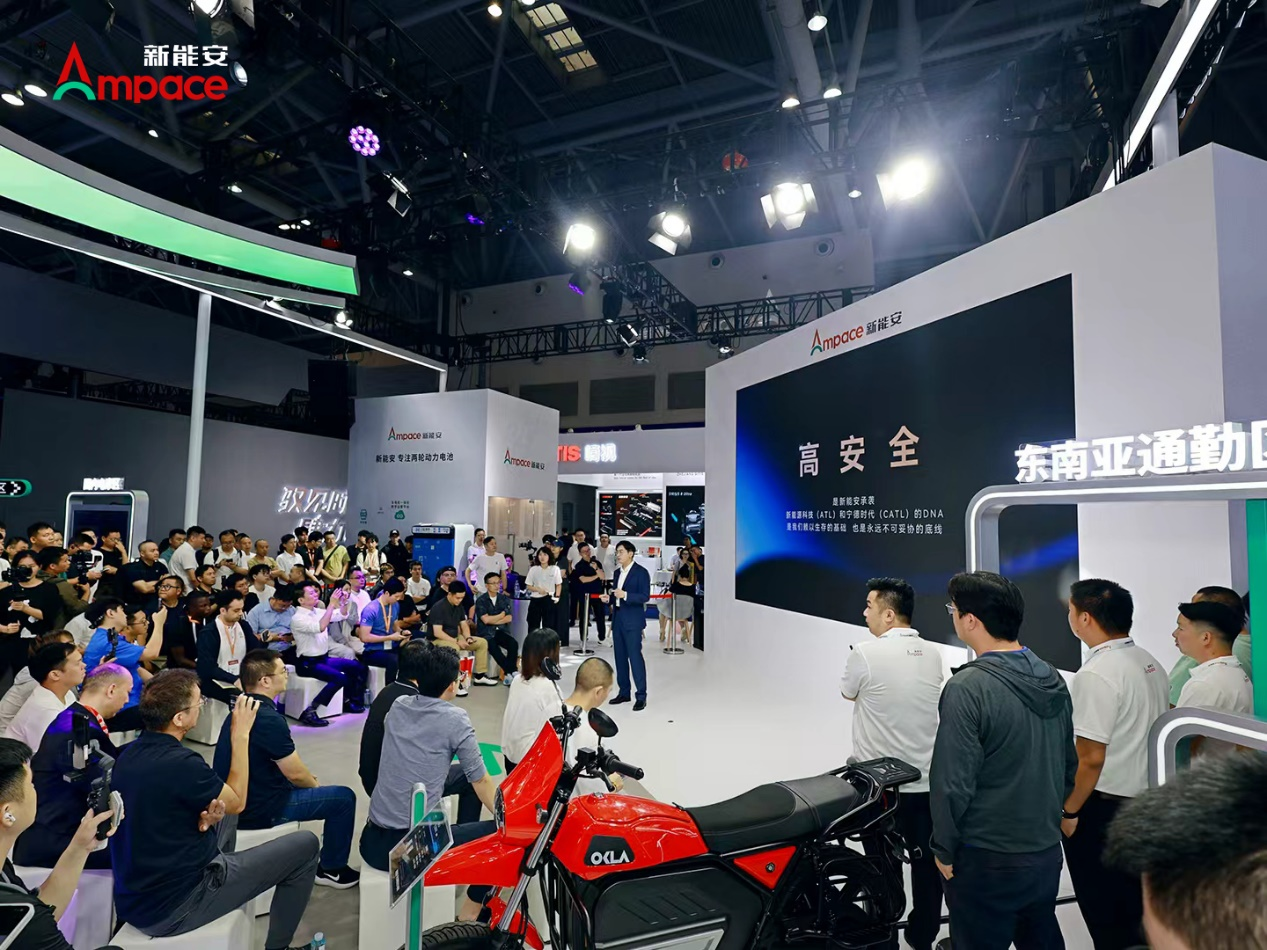
Core Viewpoint - The automotive industry's shift from gasoline to electric is mirrored in the two-wheeled transportation sector, with CATL's new energy brand, New Energy An, launching a comprehensive solution for two-wheeled travel at the 2025 China Motorcycle Expo, aiming to transition the industry from "low-price competition" to "quality-driven success" [1] Group 1: Market Context and Challenges - Electric motorcycles have become a choice for nearly 400 million people in China for short-distance travel, but the industry faces challenges such as discrepancies between actual and advertised range, rapid battery depletion, and safety concerns due to substandard modifications [3] - The prevalence of low-quality batteries has led to significant safety risks, with 7,048 electric bicycle fire incidents reported in the first half of 2025, highlighting the urgent need for improved safety standards [3] Group 2: New Energy An's Solutions - New Energy An emphasizes a safety-first approach, integrating full lifecycle safety and scenario safety into their product development process, with over 16,000 testing cases to ensure comprehensive safety for two-wheeled travel [5] - The company has introduced the "Snow Leopard" battery for commuters, featuring lightweight and high-strength materials, achieving high energy density and efficiency [5] - For adventure riders, New Energy An launched a 72V90Ah lithium battery, offering a range of up to 195 kilometers and superior performance, including a 5C pulse discharge capability for enhanced acceleration [6] - In commercial operations, New Energy An's battery solutions are designed to be reliable and efficient, allowing riders to maximize their productivity with minimal battery swaps [6] Group 3: Strategic Partnerships - New Energy An's 72V90Ah battery is set to be featured in the Ninebot flagship electric motorcycle M5200, with Ninebot's leadership emphasizing the importance of intelligent experiences in the future of electric motorcycles [7]

摩托“油转电”,拐点已至
高工锂电· 2025-09-23 10:13
Core Viewpoint - The article highlights a significant structural transformation in the motorcycle industry, where electric motorcycles (e-motorcycles) are systematically replacing fuel motorcycles (oil motorcycles) across major markets, driven by advancements in battery technology and evolving consumer demands [2][3][4]. Group 1: Market Trends - In Southeast Asia and China, the market share of fuel motorcycles is rapidly being eroded by electric motorcycles, with notable growth rates such as over 26% in Indonesia and a 45% increase in high-end e-motorcycle sales in China [2]. - Government policies, such as the ban on fuel motorcycles in Hanoi starting in 2026, are accelerating this transition [2]. Group 2: Consumer Preferences - The younger generation is shifting their perception of two-wheelers from mere transportation to lifestyle products, emphasizing design, smart features, and overall riding experience [5]. - E-motorcycles offer advantages such as lower charging costs and reduced maintenance expenses, making them more economically viable over their lifecycle compared to fuel motorcycles [6]. Group 3: Challenges and Solutions - The industry faces challenges including safety concerns due to low-quality batteries and a fragmented approach to solutions that do not cover all user scenarios [10]. - A focus on safety and comprehensive solutions that address various travel scenarios is essential for overcoming these challenges [11]. Group 4: Technological Innovations - New energy companies like 新能安 are leading the way with innovative solutions, emphasizing safety and performance through rigorous testing and high standards [14][16]. - The introduction of customized solutions for different user scenarios, such as lightweight batteries for urban commuting and high-capacity batteries for long-distance travel, showcases the industry's commitment to enhancing user experience [18][19]. Group 5: Industry Outlook - The electric motorcycle sector is poised for rapid growth, with the potential for Chinese brands to gain significant influence in the global motorcycle industry [24]. - The transition from fuel to electric motorcycles is expected to accelerate, particularly in economic and commuting scenarios, as technology and value systems mature [25].