
吉利

Search documents
越过电车的定价陷阱
新财富· 2025-03-25 03:27
Core Viewpoint - The article discusses the segmentation and competition within the Chinese automotive market, particularly focusing on the price ranges of 10-20 million, 20-30 million, and 30-40 million yuan, highlighting the unique dynamics and consumer preferences in each segment [5][6][24]. Group 1: Market Size and Sales Data - In 2024, the cumulative sales of new energy passenger vehicles in China reached 1,286.6 thousand units, with the 10-20 million segment selling 559.9 thousand units, the 20-30 million segment selling 212.3 thousand units, and the 30-40 million segment selling 221.1 thousand units [5][7]. - The market sizes for these segments in 2024 are estimated at 839.85 billion yuan for 10-20 million, 530.75 billion yuan for 20-30 million, and 773.85 billion yuan for 30-40 million, indicating that the 30-40 million segment has a larger market size than the 20-30 million segment [6][7]. - The sales figures for 2022-2024 show a consistent trend where the 30-40 million segment has outperformed the 20-30 million segment in terms of sales volume [5][6]. Group 2: Consumer Preferences and Market Dynamics - The article notes that the demand differentiation between fuel and electric vehicles, as well as between sedans and SUVs, is less applicable in the 20-30 million price range, leading to a more complex consumer decision-making process [3][5]. - The competition in the 10-20 million segment is characterized by a focus on cost-effectiveness, with brands like BYD dominating due to their early market entry and strong cost management [9][22]. - The 20-30 million segment is described as having unclear demand segmentation, with consumers seeking higher value and satisfaction without fully transitioning to the premium 30 million and above segment [29][30]. Group 3: Competitive Landscape - Companies that can effectively target both the 10-20 million and 30-40 million markets are likely to achieve the highest profitability, although few companies currently span this price gap [9][24]. - The article highlights that brands like BYD, Geely, Tesla, and Li Auto are well-positioned to capture market share across these segments due to their diverse product offerings [9][24]. - The 30-40 million segment is noted for having a clearer competitive landscape, with established brands like Tesla and Aito having distinct user bases that are difficult to overlap [24][25].



孚能科技获多家机构调研 低空经济、人形机器人赛道布局颇受关注
Zheng Quan Shi Bao Wang· 2025-03-24 11:14
Core Viewpoint - Company Fudi Technology is expanding its market focus from power batteries to emerging fields such as low-altitude economy and humanoid robots, achieving significant progress in technology development and commercialization [1][2]. Group 1: Battery Technology Development - Fudi Technology is advancing in semi-solid and solid-state battery technologies, with the first generation of semi-solid batteries successfully launched in 2022 and the second generation expected to achieve a specific energy density exceeding 330Wh/kg and a cycle life of over 4000 cycles by 2025 [1][2]. - The company has developed semi-solid batteries tailored for low-altitude economic applications, successfully delivering products to leading low-altitude aircraft customers in the U.S. in 2023, becoming the first global company to deliver eVTOL products to end customers [1]. Group 2: Strategic Partnerships and Market Position - Fudi Technology has received a development notification from Xiaopeng Huitian, becoming a supplier of high-voltage power batteries and connectors for the next-generation prototype, further solidifying its position in the low-altitude economy sector [2]. - The company is collaborating with leading domestic humanoid robot manufacturers to customize solid-state battery solutions, with expectations to deliver samples by 2025 [2]. Group 3: Production Capacity and Innovations - Fudi Technology is establishing SPS products capable of producing various battery materials and forms, with new production capacity concentrated in Ganzhou and Guangzhou, where the first phase of 15GWh capacity in Ganzhou has been launched [3]. - The company has introduced a super-fast charging battery system that can achieve fast charging rates of 5C for ternary batteries and 6C for lithium iron phosphate batteries, ensuring safety through innovative design [3].

创新“深”态第56 期丨弘景光电登陆创业板 加速研发创新把握新兴产业机遇
Zheng Quan Shi Bao Wang· 2025-03-24 09:48
Core Viewpoint - The rapid development of smart technologies is driving the growth of digital terminal products, presenting new opportunities for domestic optical lens manufacturers amid the wave of domestic substitution [1][2]. Group 1: Company Overview - Hongjing Optoelectronics, established in 2012, aims to become a leading provider of optical imaging and video imaging solutions in the global optoelectronics sector [1]. - The company has achieved a compound annual growth rate (CAGR) of 75% in revenue and 176% in net profit from 2021 to 2023, tripling its revenue scale in just two years [1][2]. - Hongjing Optoelectronics has established a strong market presence in various sectors, including smart automotive, smart home, and panoramic/sports cameras, with a significant market share [2][3]. Group 2: Market Position and Competitiveness - In the panoramic/sports camera sector, Hongjing Optoelectronics holds over 25% of the global market share, serving as a core supplier for leading companies like Yingshi Innovation, which has a market share of 50.7% [2]. - The company ranks sixth globally in the automotive optical lens market with a 3.70% market share and holds a 9.95% share in the home camera optical lens market as of 2023 [2]. Group 3: Research and Development - Hongjing Optoelectronics has maintained a R&D investment CAGR of 55% from 2021 to 2023, with R&D expenses consistently accounting for over 6% of revenue [4]. - The company has a dedicated R&D team of 216 personnel and collaborates with various research institutions to enhance its technological capabilities [4][5]. - As of June 30, 2024, the company has secured 270 domestic patents, including 116 invention patents, and is focusing on advanced research in areas such as smart driving and AR technology [5]. Group 4: IPO and Future Plans - The completion of the IPO will enable Hongjing Optoelectronics to accelerate its development, with nearly 500 million yuan allocated for expanding production capacity and R&D [6]. - The company plans to enhance its production capacity by over 35 million precision optical lenses and modules, addressing existing capacity constraints [6]. - Future R&D initiatives will focus on smart driving, laser radar, AR, medical lenses, and advanced optical technologies, aligning with emerging market trends [6][7]. Group 5: Industry Outlook - The optical lens market is expected to grow significantly, with supply projected to increase from 3.525 billion units in 2020 to 6.331 billion units by 2027 [7]. - Hongjing Optoelectronics aims to leverage its core technological advantages and expand its brand presence while focusing on the smart automotive and emerging consumer electronics sectors [7].
豪能股份 | 2024圆满收官 差速器快速放量【民生汽车 崔琰团队】
汽车琰究· 2025-03-23 16:24
Core Viewpoint - The company reported a significant increase in revenue and net profit for the fiscal year 2024, indicating strong growth and operational efficiency in its core business segments [1][4]. Group 1: Financial Performance - In 2024, the company achieved revenue of 2.36 billion yuan, a year-on-year increase of 21.29%, and a net profit attributable to shareholders of 322 million yuan, up 76.87% year-on-year [1]. - For Q4 2024, revenue reached 672 million yuan, reflecting a year-on-year growth of 9.78% and a quarter-on-quarter increase of 21.67% [1]. - The gross profit margin for Q4 2024 was 16.61%, showing a year-on-year increase of 0.81 percentage points [1]. Group 2: Business Segments - The differential gear business generated revenue of 470 million yuan in 2024, marking a year-on-year increase of 72.80%, with a gross margin of 9.03% [2]. - The aerospace components segment achieved revenue of 283 million yuan, up 27.71% year-on-year, with a gross margin of 47.91% [2]. Group 3: Strategic Initiatives - The company is accelerating its layout in the robotics reducer market, with a total investment of 1 billion yuan aimed at establishing production lines for high-precision reducers and related components [3]. - The company plans to build a production capacity of 5 million differential gears by 2025 and 10 million by 2030, indicating a strong commitment to scaling its operations in the automotive sector [2]. Group 4: Future Projections - Revenue projections for 2025, 2026, and 2027 are 3.015 billion yuan, 3.599 billion yuan, and 4.131 billion yuan, respectively, with corresponding net profits of 432 million yuan, 542 million yuan, and 696 million yuan [5]. - The expected earnings per share (EPS) for the same years are 0.67 yuan, 0.85 yuan, and 1.09 yuan, with price-to-earnings (PE) ratios of 26, 21, and 16 [5].


星宇股份20250321
2025-03-23 15:02
Summary of the Conference Call for Xingyu Co., Ltd. Industry Overview - The automotive lighting industry is undergoing significant upgrades due to the rise of intelligent technologies, with DLP and HD smart headlights becoming key selling points for new models [4][13][14]. Company Insights Market Position - Xingyu Co., Ltd. maintains a strong domestic market share, with Chery and Seres leading, while Ideal, SAIC Volkswagen, Hongqi, and Toyota account for approximately 50% [2][5]. - The company is actively expanding its client base to include potential customers like Geely, Dongfeng, and Xiaomi, with specific plans to increase Geely's share [2][6]. Financial Performance - In 2024, overseas revenue is projected to reach 500 million yuan, a nearly 50% increase, primarily driven by the European market [2][7]. - The company expects revenue to reach around 600 million yuan in 2025, benefiting from new projects with clients like Mercedes-Benz and BMW, although short-term profit contributions from the European market may be limited due to long R&D cycles and economic conditions [2][7]. Profitability and Margins - The gross margin improved in Q4 2024 due to revenue growth, fixed cost dilution, and favorable client payment conditions [11][12]. - The company aims to maintain or even improve gross margins by reducing costs and enhancing operational efficiency in response to price pressures from OEMs [12]. Client Structure and Growth Expectations - The top five clients for 2024 include Chery, Volkswagen, Seres, Hongqi, and Ideal, with Chery being the largest, accounting for over 20% of revenue [3][45]. - The company anticipates increased contributions from Geely, Ideal, and Xiaopeng in 2025, with a focus on high-end models [45][46]. Technological Developments - Xingyu is collaborating with Huawei to develop DLP headlights and has independently developed HD headlights, with plans to showcase these at the Shanghai Auto Show [4][15]. - The company is expanding its technology offerings to non-Huawei clients, enhancing its overall value and gross margins [4][15]. Strategic Initiatives - The company is cautious about capital expenditures in 2025, with no immediate pressure on cash investments, and is focusing on high-end products for international markets [4][29]. - Xingyu is also exploring opportunities in the North American market, where competition is less intense compared to Europe [25][27]. Challenges and Risks - The company faces challenges in the European market due to long R&D cycles and economic conditions, which may limit short-term profitability [2][7]. - Increased accounts receivable turnover days are attributed to a shift in client structure towards domestic clients with longer payment terms [28][29]. Future Outlook - By 2025, the company expects to see a continued rise in the proportion of revenue from new energy vehicles, projected to exceed 35% in 2024 and approach 40% in Q4 [20][47]. - The company aims to enhance its global presence, particularly in Europe and Latin America, as Chinese automakers expand their international footprint [36][37]. Conclusion - Xingyu Co., Ltd. is well-positioned in the automotive lighting industry, with a strong domestic market presence and strategic initiatives aimed at expanding its international footprint and enhancing profitability through technological advancements and client diversification [44][48].

比亚迪们为了这事儿杀红了眼
虎嗅APP· 2025-03-23 03:43
Core Viewpoint - The "Smart Driving Equality" trend in the Chinese automotive industry has gained momentum, with major domestic brands participating, indicating a critical juncture where over 50% of domestic car sales will be involved in this competitive landscape [1][2]. Group 1: Market Dynamics - The urgency for car manufacturers to enter the smart driving market is driven by a narrowing window for smart technology adoption, where strategic positioning will determine future market share [2]. - A price war has intensified, with 28 models, including 20 electric vehicles, experiencing price reductions averaging 30,000 yuan, representing a 13% decrease [4]. - New electric vehicle models have seen significant price cuts, with average reductions of 39,000 yuan and a 17% drop, marking the highest in their respective segments [4]. Group 2: Competitive Strategies - The price reduction strategy is influenced by ongoing promotional tactics and the need for product updates due to the "smart driving" wave, leading to increased market competition [5]. - BYD's dual strategy of promoting both smart and non-smart versions of its vehicles has resulted in sustained sales growth, particularly in lower-tier cities [5][6]. - Other brands, such as Extreme Fox, have also engaged in aggressive pricing, with significant discounts on models to remain competitive [6]. Group 3: Technological Evolution - The "Smart Driving Equality" movement is reshaping the value system of smart driving technologies, with a focus on establishing a new product hierarchy and accelerating the elimination of non-smart vehicles [8][10]. - The emergence of a structured smart driving product hierarchy, akin to a pyramid, is evident, with varying levels of capabilities from basic to advanced features [9]. - The trend indicates a shift where high-level smart driving features are becoming more accessible, with prices for advanced models dropping significantly [13]. Group 4: Challenges and Opportunities - Traditional automakers face challenges in building a sustainable technology cycle for smart driving, requiring both foundational functionality and continuous upgrades to maintain competitiveness [14]. - Collaborations with leading smart driving technology suppliers can provide traditional manufacturers with a balance of efficiency and autonomy, although long-term cost pressures remain a concern [15]. - The transition to a software-driven model poses significant challenges for traditional manufacturers, necessitating organizational restructuring and talent development to adapt to smart driving technology [16].

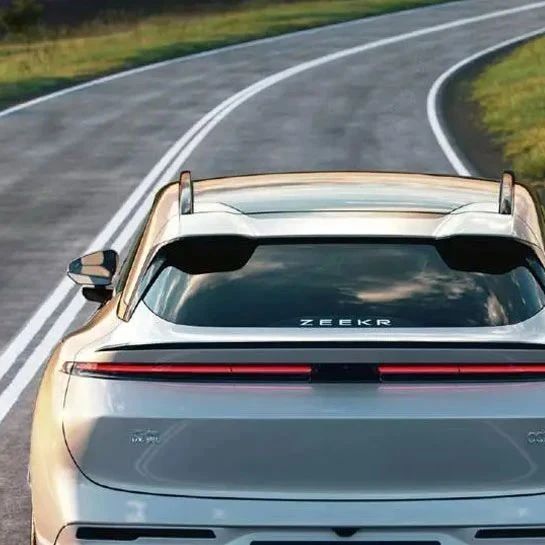
极氪:纯电黑马 “萎靡”,何时重振旗鼓?
海豚投研· 2025-03-21 12:38
4)但汽车毛利率继续环比上行,表现还不错: 汽车业务四季度毛利率 17.3%,继续环比上行 1.5 个百分点,主要仍在于规模效应的释放带来的单车摊折成本的下 滑。 5)研发费用高增,带动经营利润和经调整后净利润不及预期: 研发费用本季度环比的大幅上升(环比上行 12 亿), 虽然毛利率超出市场预期,但最后经营利润和 经调整后净利仍双双 miss 预期。 海豚君认为主要极氪仍在加速补足智驾短板,以及为 2025 年推出的 5 款新车型发布做准备,所以相对可以理解,但仍然需要让市场看到以换取销量的增长作为前 提。 | | | | | | 极搞财报數据概览 | | | | | | | | | | | --- | --- | --- | --- | --- | --- | --- | --- | --- | --- | --- | --- | --- | --- | --- | | 单位:亿元 | 1072 | 2072 | 3022 | 40 22 | 1025 | 2023 | 3 023 | 4023 | 1024 | 2024 | 3024 | 40724 | 4Q24E 4Q24 Gap | | | SIR ...
孚能科技再获eVTOL动力电池定点,牵手小鹏汇天
高工锂电· 2025-03-21 10:01
Core Viewpoint - The development of eVTOL (electric Vertical Take-Off and Landing) technology is accelerating in China, with significant advancements in battery technology and regulatory progress, indicating a shift from concept validation to scale validation in the low-altitude economy sector [1][4]. Group 1: eVTOL Battery Supply and Development - Aiko Technology has been confirmed as the high-voltage battery supplier for Xiaopeng Motors' next-generation eVTOL prototype, while Yiwei Lithium Energy will provide low-voltage lithium batteries, highlighting the critical role of advanced battery technology in this emerging field [1][2]. - The X3-F eVTOL, designed for private entertainment flights and flight training, has a maximum takeoff weight of 880 kg, exceeding traditional light-sport aircraft standards, and is currently undergoing regulatory review by the Civil Aviation Administration of China [1][2]. Group 2: Technical Specifications and Production Timeline - The X3-F has a maximum flight altitude of 120 meters, a range of 20 kilometers, and a maximum flight duration of 20 minutes, with a speed limit of 72 km/h, necessitating high energy density and power performance from its batteries [2]. - Xiaopeng Motors aims to complete the construction of its eVTOL manufacturing facility in Guangzhou by July 2025, with plans to obtain the type certificate by the second half of 2025 and commence mass production in 2026 [2]. Group 3: Market Position and Competitive Landscape - Aiko Technology has actively positioned itself in the eVTOL battery market, supplying its second-generation semi-solid batteries with an energy density of 330 Wh/kg and a cycle life exceeding 4000 cycles, entering small-scale production [3]. - The company has also established a presence in the overseas eVTOL market, delivering batteries with an energy density of 285 Wh/kg to a leading U.S. client, supporting speeds up to 320 km/h and a cruising range of 250 km [4]. - The collaboration between Aiko Technology and Xiaopeng Motors signifies a deepening engagement in the eVTOL sector, marking a new phase in the commercial viability of the low-altitude economy [4].

蜂巢能源1-2月出货同比爆增130%
高工锂电· 2025-03-20 11:59
Core Viewpoint - Hive Energy achieved a significant milestone with a total shipment of 5.374 GWh in January and February 2025, marking a 130% year-on-year growth and successfully reaching its "annual doubling" target [1][2]. Group 1: Product Innovation and Market Expansion - The explosive growth in battery shipments is attributed to Hive Energy's continuous efforts in product technology innovation and market expansion, particularly through the widespread application of the short-blade battery and the rapid rise of the off-road market [2]. - The short-blade battery, one of Hive Energy's core products, features a unique design and superior performance, making it a star product in the power battery market. It utilizes an innovative stacking process that offers higher energy density, longer cycle life, and better safety compared to traditional winding processes [2]. - The third-generation short-blade battery, known as the "Bee Walk" short-blade battery, was officially launched on Battery Day in January 2025. Its penetration in the passenger car market continues to rise, with several mainstream automakers, including Geely, Great Wall, and Stellantis, adopting it in their popular models [2]. Group 2: Off-Road Market Performance - Hive Energy has shown remarkable performance in the off-road vehicle segment, recognizing the trend of electrification in this market. The company launched the "Fortress Off-Road Battery," which is characterized by high energy density and safety, tailored to meet the specific needs of off-road vehicles [3]. - In January 2025, the Tank 500 Hi4-Z, equipped with Hive Energy's Fortress Off-Road Battery, was launched and achieved sales of over 130,000 units within a month [3]. - On March 10, 2025, the Great Wall Motors' 2025 Tank 300 Hi4-T was also launched, featuring the Fortress Off-Road Battery. This battery not only offers excellent range and fast charging capabilities but has also undergone rigorous environmental testing to meet various off-road conditions [4]. - The Fortress Off-Road Battery has been successfully installed in models such as Tank 400, 500, and 700 Hi4-T, with total shipments exceeding 265,000 units, positioning Hive Energy as a leader in the global off-road battery market [4][5].


汽车智能化系列一:向智驾2
2025-03-20 05:39
Summary of Key Points from the Conference Call Industry Overview - The focus on intelligent cockpits in the automotive industry has increased in 2025, marking a transition towards the era of Intelligent Driving 2.0 [2][5] - The domestic intelligent driving market is expected to reach a penetration rate of nearly 10% by 2025, entering a rapid growth phase [5][19] Core Insights and Arguments - **Technological Pathways**: The report outlines the latest end-to-end technology pathways for intelligent driving, emphasizing the advantages of pure vision solutions over LiDAR in the sub-200,000 yuan market [2][4] - **Market Dynamics**: The supply-side configuration upgrades will drive market development, with cost-effectiveness and functional experience being key influencing factors [5][7] - **Company Competitiveness**: The driving capabilities of automotive companies depend on team structure, execution, technology path selection, computational power, data support, and financial integration capabilities, with Huawei, Xiaopeng, and Li Auto leading the first tier [6][11] - **Investment Recommendations**: Whole vehicle manufacturers are deemed more valuable than parts manufacturers, with recommendations for Xiaopeng Motors, Fuyao Glass, and Top Group as potential investment targets [7][19] Additional Important Insights - **Diverse Technology Routes**: Mainstream manufacturers are adopting various autonomous driving technology routes, with Tesla utilizing an integrated end-to-end approach while domestic manufacturers primarily focus on perception and decision-making layers [8][10] - **Extension to Robotics**: Intelligent driving technology can extend to robotics, with pure vision solutions being more suitable for robots due to lower requirements for long-distance obstacle recognition [9] - **Competitive Landscape**: The competitive landscape in the intelligent driving sector is divided into three tiers, with Xiaopeng, Huawei, and Li Auto in the first tier, followed by emerging players like Future and Xiaomi, and traditional manufacturers like BYD and Geely in the third tier [11][12] - **Technological Integration**: Geely's ability to meet consumer demands through effective technological integration will be crucial for its success in the intelligent driving space [17] - **BYD's Developments**: BYD has launched the "Tian Shen Zhi Yan" series of intelligent driving systems, with the DiPilot 100 currently being the main offering, lacking urban NOA functionality [18] Future Outlook - The automotive industry is expected to see significant changes in 2025, driven by the rise of intelligent manufacturing and policies promoting vehicle upgrades [20]