地平线

Search documents
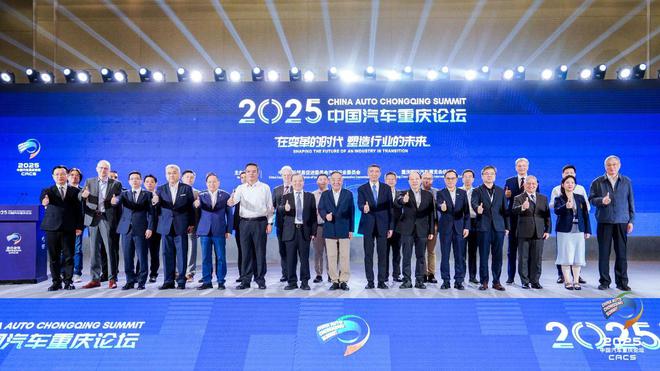
2025中国汽车重庆论坛:热议反内卷、共谋新出路
Guan Cha Zhe Wang· 2025-06-07 11:24
Group 1: Core Themes of the Forum - The 2025 China Automotive Chongqing Forum focused on the theme of shaping the future of the industry in a transformative era, highlighting intense competition within the Chinese automotive sector [1][3] - Discussions included topics such as "involution competition," "technological safety," and "overseas incremental markets," reflecting the heated debates among industry leaders [1][3] Group 2: Involution and Price Wars - The ongoing price war in the Chinese automotive market has intensified, with over 200 models experiencing price cuts last year and more than 60 models in the first four months of this year [3] - Industry leaders criticized the blind price competition and reckless technological races that have driven industry profits below 4% [3][5] - Executives from various companies expressed concerns about the negative impact of "involution" on the industry, with calls for ethical competition and adherence to legal standards [5][6] Group 3: Safety Concerns - Safety remains a paramount concern in the automotive industry, especially with the rise of electric and smart vehicles, prompting calls for adherence to quality and safety regulations [9][10] - Industry leaders emphasized the need for a commitment to safety and quality, with some pledging to avoid compromising user interests in the name of competition [9][10] Group 4: Overseas Market Opportunities - As domestic competition intensifies, many companies are looking to expand into overseas markets for growth opportunities [13][15] - Executives highlighted the importance of compliance and maintaining quality standards when entering international markets to protect brand reputation [15][16] - The need for a collective approach to global competition was emphasized, with calls for cooperation and resource reallocation rather than redundant production capacity [15][16]

地平线余凯:未来2-3年,自动驾驶发展将迎来拐点
Zhong Guo Jing Ji Wang· 2025-06-07 08:34
Group 1 - The founder and chairman of Horizon, Yu Kai, believes that the next two to three years will mark a turning point for the development of autonomous driving, making it more accessible to the general public [1] - Several car manufacturers, led by BYD, have launched products and plans aimed at equalizing intelligent driving capabilities, with Horizon being a major supplier for several of these companies [1] - Yu Kai emphasizes that while there are regulations on intelligent driving, these will ultimately benefit the healthy development of the industry and accelerate the stable growth of autonomous driving technology [1] Group 2 - The core of intelligent driving expansion overseas is the need for collaboration rather than operating independently, as highlighted by Horizon's partnerships with global companies and Tier 1 suppliers [2] - Horizon has formed joint ventures, such as with Continental Group, to ensure compliance in international markets [2]
英特尔、OMDIA、中科院领衔,500+芯片企业齐聚苏州,提前锁定2025半导体风向标!
半导体行业观察· 2025-06-07 02:08
Core Viewpoint - The Chinese integrated circuit industry is undergoing a "dual-line war," facing challenges from both advanced process technology and the demand for AI computing power, necessitating a restructuring of chip architecture [1] Group 1: Event Overview - The Fifth China Integrated Circuit Design Innovation Conference and IC Application Ecosystem Exhibition (ICDIA 2025) will take place on July 11-12 at the Suzhou Jinji Lake International Conference Center, focusing on the future of the semiconductor industry [1] - The conference will gather over 500 chip design companies, 200 terminal application enterprises, 150 AI and system solution providers, and more than 3,000 professional attendees [2] Group 2: Key Discussions and Presentations - High-level forums will feature discussions on AI-driven heterogeneous integration and the semiconductor market forecast for 2025, with insights from industry leaders [4] - The conference will also present the "2025 China Integrated Circuit Talent Development Research Report," highlighting the anticipated talent gap in the semiconductor sector [5][6] Group 3: Industry Trends and Innovations - The slowdown of Moore's Law is pushing the computing industry towards a critical turning point, with new technologies like 3D packaging and Chiplet technology emerging as key solutions [7] - Future computing power evolution will rely on multi-dimensional innovations rather than single-dimensional technological advancements, presenting a historic opportunity for the Chinese chip industry [9] Group 4: Collaboration and Development - The integration of academia, industry, and research is crucial, with various institutions and companies collaborating to redefine the landscape of AI and automotive chips [10] - The current low domestic production rate of automotive chips (less than 15%) highlights the need for a cohesive industry chain from design to testing [10][12] Group 5: Exhibition Highlights - The ICDIA exhibition will showcase China's IC innovation achievements, AI frontier technologies, and local industry applications across four major exhibition areas [13][15]
直面“痼疾” 中国汽车重庆论坛热议行业“自我变革”
Zheng Quan Ri Bao· 2025-06-06 16:43
Core Viewpoint - The automotive industry in China is facing significant challenges due to internal competition, pricing wars, and the need for technological innovation to ensure sustainable development and long-term health of the sector [2][3][7] Group 1: Industry Challenges - The automotive industry is experiencing severe issues such as rampant brand proliferation, chaotic pricing systems, misleading advertising, and capital interference that do not prioritize long-term health [2] - The price war has intensified, with over 200 models expected to be discounted in 2024, and more than 60 models already discounted in the first four months of 2025, leading to industry profits dropping below 4% [3] - Industry leaders express concerns that the current competition model threatens supply chain stability, reduces component quality and safety standards, and ultimately harms the industry's resilience and sustainability [2][3] Group 2: Calls for Change - Industry leaders emphasize the need for self-reform and a return to core values centered around technological innovation to break the cycle of unhealthy competition [3][7] - Long-term commitments to research and development are highlighted, with Changan Automobile planning to invest an additional 200 billion yuan in the next decade, building on nearly 60 billion yuan invested in the past ten years [3] - The importance of establishing clear technical standards and boundaries is underscored to promote healthy and rapid development of intelligent driving technology [4] Group 3: Sustainable Development - Sustainable development is viewed as essential for survival and industry positioning, with companies needing to adapt to fundamental changes in the automotive sector [5][6] - The integration of sustainability with cost reduction and efficiency is seen as achievable through advancements in Industry 4.0 and digitalization [6] - Companies are encouraged to embrace localization and collaboration to navigate global market challenges effectively [6] Group 4: Future Outlook - The automotive industry is projected to account for over 30% of the global market share in 2024, with significant performance in the new energy vehicle sector [7] - Industry leaders are committed to fostering innovation, deepening green transformation, and enhancing collaboration to create a better environment for future growth [7] - The forum concluded with a collective pledge to return technology to its value roots, restore competition boundaries, and pursue win-win outcomes in global markets [7]


地平线余凯:智能辅助驾驶收严是好事,有轨道火车才能跑得快
Nan Fang Du Shi Bao· 2025-06-06 13:29
Group 1 - The year has been dramatic for the automotive industry, with a shift from enthusiasm for "intelligent driving equality" to stricter regulations following several high-profile accidents [1] - The founder of Horizon, Yu Kai, believes that regulations will lead to healthier industry development, comparing it to how high-speed trains operate on tracks [1] - The initial wave of "intelligent driving equality" saw major companies like BYD and Changan Automotive promoting advanced driving features, but this enthusiasm has since cooled due to regulatory pressures [1] Group 2 - Yu Kai acknowledges that while intelligent driving features are not yet deeply ingrained in consumer consciousness, he remains optimistic about their future adoption within the next few years [2] - The real-world testing of vehicles like the M8 and M9 by Seres demonstrated the limitations of intelligent driving systems on unstructured roads, yet also highlighted their improved adaptability [2] Group 3 - Chinese automotive companies are recognized for their leading position in intelligent driving, with increasing market share in Europe, as noted by Audi China’s president [3] - The challenges of expanding intelligent driving systems internationally include complex data management and regulatory requirements, which may increase costs for companies [3] - Horizon is actively working with OEMs to meet the diverse requirements of future target markets, indicating a commitment to overcoming these challenges [3] Group 4 - Changan Automotive is heavily investing in intelligent technology, with a commitment of 600 billion yuan and plans to expand its software team significantly [4] - The company views intelligent technology as the true future of the automotive industry, beyond just new energy vehicles [4] - Changan's SDA platform is not only for internal use but is also open to international car manufacturers, emphasizing the importance of technology sharing [4]
世界模型有新进展,算力成本、数据质量成关键!数据ETF(516000)多空博弈激烈
Mei Ri Jing Ji Xin Wen· 2025-06-06 07:11
Core Insights - The China Securities Big Data Industry Index (930902) experienced fluctuations with mixed performance among constituent stocks, including Shiji Information hitting the daily limit and Keda Data rising by 2.43% [1] - The "Wujie" series of large models was announced at the 2025 Beijing Zhiyuan Conference, showcasing advancements in artificial general intelligence (AGI) [1][2] - The Data ETF (516000) closely tracks the China Securities Big Data Industry Index and has shown a 1.89% increase over the past week, ranking first among comparable funds [1][2] Group 1 - The "Wujie" series includes several models such as the world's first native multimodal world model "Wujie·Emu3" and the brain science multimodal general foundation model "Wujie·Jianwei Brainμ" [1] - The focus on world models is particularly strong among new car manufacturers, with companies like Xpeng, Li Auto, Huawei, and Horizon emphasizing their capabilities in smart driving systems [2] - The competition in smart driving has shifted from hardware specifications to the ability to construct world models that digitally understand and predict the physical world [2] Group 2 - Huatai Securities suggests that the emphasis on world models will enhance the computational power of onboard chips and the precision of sensors, raising new demands for algorithm companies and OEMs [2] - A report from Yiou Think Tank indicates that while world models can improve generalization through cloud training and vehicle-side enhancements, their large-scale implementation is still limited by computational costs and data quality [2] - The Data ETF includes companies involved in big data storage, analysis, operation platforms, production, and applications, reflecting the overall performance of the big data industry [2]
大摩:中国AI芯片自给率将达80%
半导体行业观察· 2025-06-03 01:26
Core Viewpoint - China's self-sufficiency rate in AI chips is expected to exceed 80% within three years, driven by the need to overcome U.S. semiconductor export controls, which have catalyzed the strengthening of China's semiconductor ecosystem [1][2]. Group 1: AI Chip Self-Sufficiency - As of last year, China's self-sufficiency rate in AI chips was only 34%, but it is projected to soar to 82% by 2027 [1]. - The external pressure from U.S. sanctions has accelerated China's efforts to achieve self-sufficiency, leading to the rapid establishment of a self-sustaining ecosystem [1]. Group 2: Talent and Strategic Investment - Approximately half of the world's AI researchers are based in China, which is a significant driver for the explosive growth of the AI sector [2]. - China is investing heavily in its AI ecosystem through substantial R&D funding and policies favoring domestic procurement, leveraging its large domestic market to support local companies [2]. Group 3: Robotics Market Potential - The humanoid robot market is expected to grow to $5 trillion by 2050, with China projected to capture 30% of the global supply due to cost competitiveness from domestic AI chip procurement [3]. - Manufacturing humanoid robots in China could reduce production costs to one-third of those using global supply chains [3]. Group 4: Ecosystem and Industry Growth - Leading companies in China's AI rise include Huawei, SMIC, Alibaba, Tencent, and others, all contributing to accelerated AI innovation [3]. - By 2030, the core AI industry in China is expected to grow to 1 trillion RMB (approximately 190 trillion KRW) [3]. - The competitive landscape is shifting from merely acquiring high-spec semiconductor chips to effectively integrating hardware with software and systems to create value [3].


汽车智能化主线6月投资策略
2025-06-02 15:44
Summary of Conference Call Records Industry Overview - The focus is on the automotive industry, specifically the trends in automotive intelligence and electrification strategies. The current market dynamics are influenced by a price war in the electric vehicle (EV) sector, which is seen as a temporary disruption to the long-term growth of automotive intelligence [1][3]. Key Points and Arguments - **Investment Strategy**: The electric vehicle price war, while disruptive, presents a good opportunity for bottom-fishing investments. The long-term logic of automotive intelligence remains unchanged, and investors should focus on structural opportunities [1][2]. - **Consumer Willingness**: Consumer willingness to pay for automotive intelligence is expected to increase with the rising penetration of electric vehicles. The penetration rate for urban NOA (Navigation on Autopilot) is projected to accelerate in the second half of the year, particularly in Q3 [1][6]. - **Market Growth**: The domestic market is expected to grow by 4% in 2025 due to the old-for-new policy. Traditional automakers like BYD and Geely are rapidly advancing in the mid-to-low price segment, but the effectiveness of these strategies remains to be observed [1][8]. - **Market Share**: Domestic brands have achieved a market share of 70.81% based on transaction value, but merely relying on price cuts to increase market share is challenging without stronger product capabilities [1][10]. - **Technological Advancements**: The acceleration of autonomous driving technology is anticipated, with a significant update expected in July. The installation of LiDAR is increasing rapidly, and the market is closely watching developments from companies like Xiaomi [1][11][13]. Important but Overlooked Content - **Stock Recommendations**: Key stocks to watch include XPeng in Hong Kong, and in A-shares, companies related to Huawei such as Desay SV, Bertel, and Jin Hong Holdings. In the US market, Pony.ai is highlighted, along with Jinwei Co., Run Technology, and Xingling Technology in A-shares [1][4][5]. - **Consumer Sentiment**: There is a gradual decline in consumer hesitation towards electric vehicles, with a notable increase in transaction volumes reported by BYD. The penetration rate for electric vehicles is expected to exceed 60% this year, reflecting a year-on-year growth of 33% [1][9]. - **Future Outlook**: The overall sentiment towards the automotive intelligence sector remains optimistic despite short-term fluctuations. The potential for new business models, particularly in autonomous taxi services, could significantly impact the automotive industry [2][3]. Conclusion The automotive industry is at a pivotal moment with the interplay of electrification and intelligence. While short-term price wars may create volatility, the long-term outlook remains positive, driven by technological advancements and changing consumer preferences. Key players and stocks in this space are positioned to benefit from the ongoing transformation.
构筑汽车产业新生态引力场,2025粤港澳大湾区车展开幕
3 6 Ke· 2025-06-02 05:17
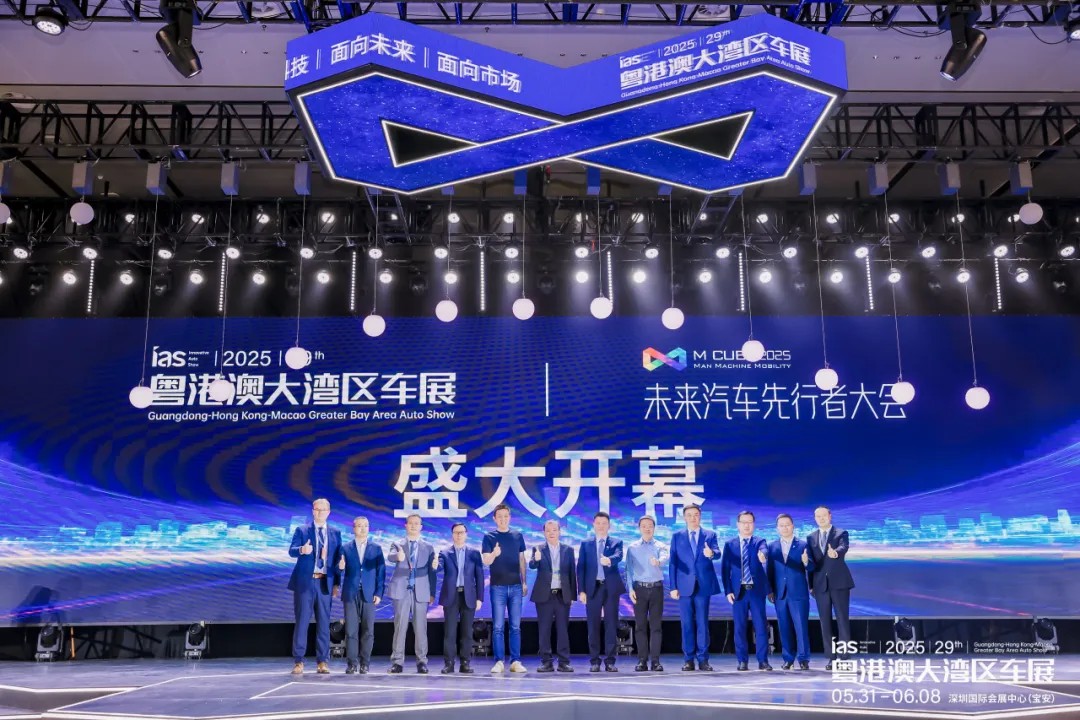
Core Insights - The 2025 Guangdong-Hong Kong-Macao Greater Bay Area Auto Show emphasizes a shift from traditional car exhibitions to a focus on technology and future mobility, showcasing 112 vehicle brands and 1,039 models [3][4] - The event aims to create an innovative ecosystem that integrates users, car manufacturers, tech companies, research institutions, and media, breaking the boundaries of conventional auto shows [4][5] - The show features a unique "Future Mobility Space Station" and various interactive zones, highlighting the transition of automobiles from mere transportation tools to lifestyle elements [3][4][9] Group 1: Event Overview - The auto show is held at the Shenzhen International Convention and Exhibition Center and is accompanied by the Future Automotive Pioneers Conference [1] - The theme "New A Show - Technology Alpha Auto Show" reflects a commitment to innovation and technology [4] - The event includes 50 new car launches and discussions on technological trends with industry experts [3][4] Group 2: Technological Focus - The show serves as a platform for showcasing advanced technologies such as AI, big data, and smart transportation, moving beyond just vehicle displays [10][11] - It aims to redefine the automotive industry by focusing on ecological definitions rather than just manufacturing [9][10] - The event highlights the importance of collaboration among various sectors, including chip manufacturers and software developers, to drive technological innovation [10][11] Group 3: Future Mobility - The auto show addresses future trends in mobility, including low-altitude economy initiatives, which are being pioneered in Shenzhen [11][12] - It features interactive demonstrations of integrated transportation solutions, showcasing the seamless connection between ground and aerial mobility [11][12] - The event aims to provide insights into consumer preferences and market opportunities for sustainable and innovative transportation solutions [12] Group 4: Industry Dialogue - The Future Automotive Pioneers Conference focuses on the competitive landscape of the automotive industry, emphasizing the need for ecological collaboration amid technological divergence [13][16] - Key industry leaders from traditional automakers and tech companies participate in discussions about the future of smart vehicles and the role of technology in shaping the industry [13][15] - The conference aims to establish strategic coordinates for the automotive industry, addressing challenges and opportunities in the evolving market [16]
今日新闻丨中汽协:反对价格战、内卷式竞争!2025粤港澳大湾区车展开幕!
电动车公社· 2025-05-31 17:49
关注 「电动车公社」 和我们一起重新思考汽车 《今日新闻》将会每天给大家带来几条当日重磅新闻,并附上社长的简单评论。关注「电动车公社」,新 能源圈大事小事 看我们就够啦~ 今日新闻要点: 1、 中汽协发布红头文件 近日,中国汽车工业协会发布红头文件《关于维护公平竞争秩序,促进行业健康发展的倡议》,文中重点 提及价格战、内卷式竞争对于行业的危害,提倡车企有序竞争。 前年,中汽协也曾与车企签署"反内卷"倡议,不过后来并未阻止行业进一步降价内卷。这次中汽协再次提 出倡议,说明目前汽车行业整体利润率已经低到了"非健康"水平,这种状况不可持续。希望这一轮,车企 们能够平衡好利润与市场竞争的关系,切记量力而行。 2、 2025粤港澳大湾区车展开幕 5月31日,2025粤港澳大湾区车展和第三届未来汽车先行者大会开幕。大会上演讲环节,邀请到了包括蔚 来李斌、小鹏何小鹏、鸿蒙智行靳玉志、地平线余凯等业界大佬,重点就未来汽车AI智能化等方面进行了 讨论。 值得一提的是,这次大会上业界大佬们对于目前汽车行业价格战愈演愈烈,基本上给出 了"卷技术、卷 AI、卷品质而不是卷价格"这一观点。但说是一回事, 做是另一回事。下半年的汽车行业 ...