小马智行

Search documents
美股三大指数小幅收涨,苹果涨超3%,中概指数跌0.1%
Ge Long Hui· 2026-02-18 01:05
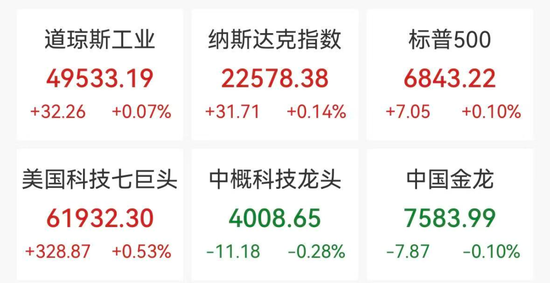
Group 1 - The three major US stock indices experienced slight gains, with the Nasdaq up by 0.14%, the S&P 500 up by 0.1%, and the Dow Jones up by 0.07% [1] - Large technology stocks showed mixed performance; Apple rose over 3%, Nvidia and Amazon increased by over 1%, while Google, Tesla, Microsoft, and Intel fell by over 1% [1] Group 2 - The Nasdaq China Golden Dragon Index declined by 0.10%, with notable movements in popular Chinese concept stocks; Tencent Music fell by 3.2%, Daqo New Energy dropped by 2.6%, and Kingsoft Cloud and Pony.ai decreased by over 2% [1] - Conversely, Huazhu Group rose by 2.9% and Trip.com increased by 3% [1]

美股深V反弹,苹果涨超3%,芯片股普跌,金银油大跌,特朗普称将间接参与美伊谈判
Xin Lang Cai Jing· 2026-02-17 23:18
Market Overview - US stock market experienced a significant rebound on February 17, with all three major indices closing slightly higher after initially opening lower, with the Dow Jones down over 300 points and the Nasdaq down over 1.2% at one point [9][10]. Major Indices Performance - The closing values for the major indices were as follows: Dow Jones at 49,533.19 (+32.26, +0.07%), Nasdaq at 22,578.38 (+31.71, +0.14%), and S&P 500 at 6,843.22 (+7.05, +0.10%) [10]. Technology Sector - Large tech stocks showed mixed results, with Apple rising over 3% due to news of accelerating development of three new wearable devices. Amazon and Nvidia also increased by over 1%, while Tesla, Microsoft, and Google fell by over 1% [10][12]. Semiconductor Sector - The Philadelphia Semiconductor Index decreased by 0.02%. Notable movements included Broadcom rising over 2%, Qualcomm and ARM increasing over 1%, while Micron Technology and AMD fell over 2%, and Intel dropped over 1% [10][11]. Banking Sector - Bank stocks collectively rose, with JPMorgan Chase and Goldman Sachs increasing by over 1%, and Citigroup rising over 2% [11]. Energy Sector - Energy stocks declined across the board, with ExxonMobil down over 1%, Chevron down 0.75%, ConocoPhillips down over 2%, and Occidental Petroleum down 0.26% [12]. Mining Sector - Mining stocks also faced declines, with Kinross Gold and Harmony Gold dropping over 5%, and Pan American Silver down over 3% [12]. Chinese Stocks - The Nasdaq Golden Dragon China Index fell by 0.10%. Individual stock performances varied, with Luokung Technology rising nearly 16%, and companies like TAL Education and Kingsoft Cloud dropping over 2% [12]. Precious Metals - Spot gold closed down 2.24% at $4,878.90 per ounce, while spot silver fell to $73.50 per ounce, marking a significant decline [12][13]. Oil Prices - International oil prices also saw a decrease, with WTI crude oil futures at $62.33 per barrel (down 0.89%) and Brent crude oil futures at $67.42 per barrel (down 1.79%) [13]. Cryptocurrency Market - Major cryptocurrencies experienced declines, with Bitcoin briefly dropping below $67,000 before recovering to $67,638.90, reflecting a 1.31% decrease [14].

利弗莫尔中概股龙头指数盘初上涨0.2%
Mei Ri Jing Ji Xin Wen· 2026-02-17 14:52
Group 1 - The Livermore Chinese concept stock index rose by 0.2% at the beginning of trading on February 17 [1] - Among the constituent stocks, Lufax increased by 10% [1] - Hesai Technologies rose nearly 8% [1] - Melco Resorts & Entertainment gained 4.7% [1] - Pony.ai saw an increase of over 2% [1]



小鹏为什么这么“烦”L3
虎嗅APP· 2026-02-16 13:01
Core Viewpoint - Xiaopeng Motors is shifting focus from L3 to L4 autonomous driving technology, arguing that L3 is a transitional technology that hinders progress due to regulatory constraints and safety concerns [12][20]. Group 1: Industry Context - The Chinese autonomous driving sector is projected to see total investments of 700-750 billion yuan by 2025, a 40% increase year-on-year, while the overall automotive industry's profit margin is only 4.1%, indicating a mismatch between profit growth and R&D investment [3]. - Many automakers are constrained by current regulations, with L3 technology being limited in its operational design domain (ODD), primarily restricted to urban and highway scenarios [8][24]. Group 2: Technological Development - Xiaopeng's GX model is currently undergoing L4 road tests, utilizing a high computing power of 3000 TOPS, which surpasses competitors like Li Auto's new L9 [5][7]. - The L4 technology is being validated through successful commercial trials, with companies like Pony.ai and RoboTaxi demonstrating profitability in specific applications [17][19]. Group 3: Challenges and Considerations - Transitioning directly to L4 from L2 requires substantial data accumulation, as L4 relies on insights gained from L3 operations [23]. - Regulatory frameworks pose significant challenges, as L3's operational limitations are defined by legal and liability considerations, which differ from L4's clearer responsibility structure [24]. - The current L4 implementations face hurdles, including the need for advanced perception systems that can handle diverse environmental conditions, which may not be achievable with a purely vision-based approach [28][30].


Aurora Innovation (AUR) Reports Q4 Loss
Yahoo Finance· 2026-02-15 17:11
Financial Performance - Aurora Innovation, Inc. reported Q4 revenue of $1 million, a 25% quarter-over-quarter increase [1] - Full year revenue totaled $3 million, with adjusted revenue at $4 million [1] - The company incurred an operating loss of $238 million in Q4, which included $48 million in stock-based compensation [1] - Research and Development costs were $155 million, while selling, general, and administrative expenses amounted to $30 million [1] - Cost of revenue for the quarter was $6 million [1] Cash Position and Future Projections - Despite using $146 million in operating cash during the quarter, the company ended the year with $1.5 billion in cash and other liquid assets [2] - Capital expenditures for the full year were $31 million, with $8 million spent in Q4 [2] - Revenue for 2026 is projected to be between $14 million and $16 million [2] - More than 200 driverless trucks are expected to be operational by the end of 2026 [2] - CFO David Maday indicated that revenue will be back-end loaded, with Q4 expected to contribute over half of the full year revenue [2] Company Overview - Aurora Innovation, Inc. is a self-driving technology company based in Pittsburgh, Pennsylvania, specializing in the development of the Aurora Driver platform [2] - The company was incorporated in 2017 and operates across the United States [2]

10亿用户的高德 5天迎来三次约谈
2 1 Shi Ji Jing Ji Bao Dao· 2026-02-15 14:03
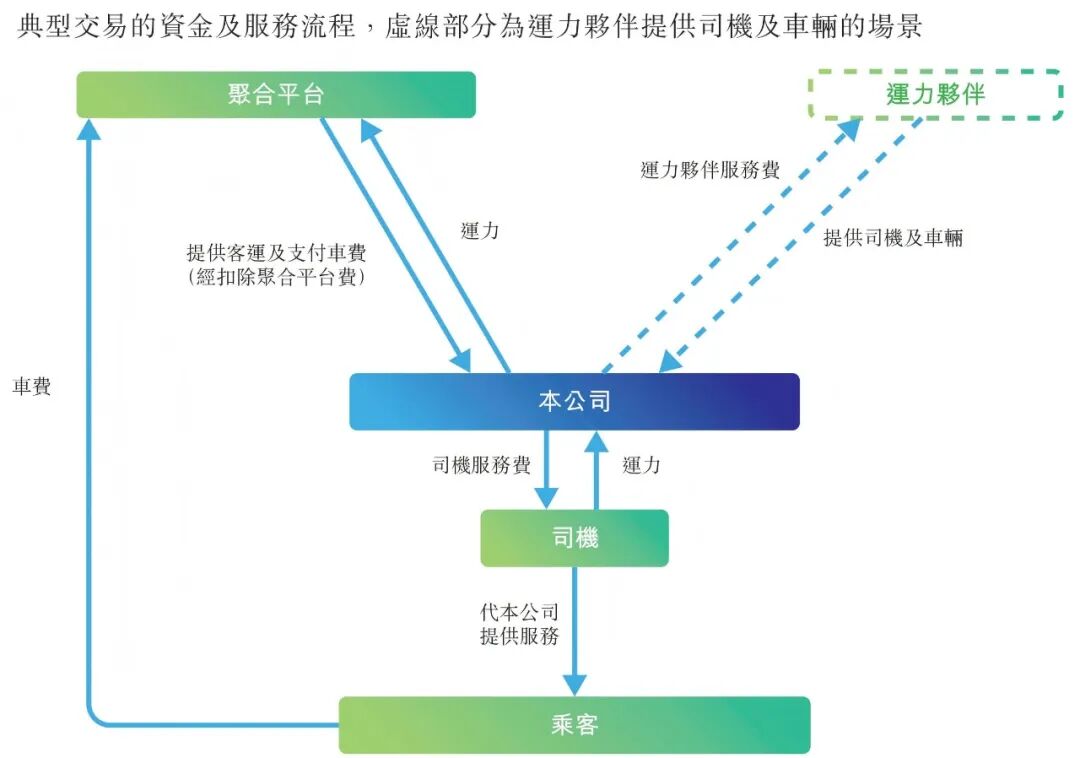
Core Viewpoint - Gaode has faced increasing regulatory pressure, being summoned three times in five days due to issues related to its ride-hailing business, including commission rates and compliance with regulations [1][23]. Group 1: Regulatory Pressure - Gaode and five other ride-hailing platforms were summoned by financial regulators on February 13 due to lending practices [1]. - The company has been under scrutiny for its commission practices and management of partner platforms, leading to a call for introspection and compliance improvements [22][23]. - As of December 2025, Gaode's order compliance rate was 69.4%, significantly lower than self-operated platforms like Didi and Cao Cao, which exceed 80% [18]. Group 2: Business Model and Financials - Gaode operates as an aggregator, facilitating transactions without owning a fleet or managing drivers, which allows it to maintain lower operational costs [13]. - The commission rates for aggregators range from 10% to 20%, with Gaode's effective rate calculated at 7.4% based on data from a partner company [4]. - In the first half of 2025, Gaode contributed to 94.5% of a partner's total transaction value, highlighting its significant role in the market [4]. Group 3: Market Dynamics - By the end of 2025, there were 395 ride-hailing platforms in China, with Gaode capturing a substantial share of the market [3]. - The number of ride-hailing orders processed by Gaode is projected to reach 2.92 billion by December 2025, accounting for 30% of the total market [25]. - The company has been quietly expanding its ride-hailing business while focusing on new initiatives, such as Robotaxi services, to adapt to market changes [28][36]. Group 4: Driver and User Experience - Drivers report dissatisfaction with transparency regarding commission structures, indicating a lack of clarity in earnings [2][7]. - The average passenger reward per order has fluctuated, with a notable decrease in recent periods, reflecting the pressure on driver incomes [9]. - The operational model of aggregators like Gaode has led to a "passing the buck" phenomenon, where service issues are often not adequately addressed, impacting user experience [16].
Klaviyo (KVYO) Reports Impressive Earnings But Jeffries Downgrades Target Price To $29
Yahoo Finance· 2026-02-15 13:58
Financial Performance - Klaviyo, Inc. reported Q4 revenue of $350 million, a 30% increase year-over-year [1] - Non-GAAP operating income for Q4 was $51 million, resulting in a 15% operating margin [1] - Non-GAAP gross margin for the quarter was 73%, with operating expenses at 58% of total revenue, marking the lowest level since the company went public [1] - Free cash flow increased to $87 million, reflecting a 61% year-over-year rise [2] - For the full year, non-GAAP operating income totaled $169 million with a 14% margin [2] - Free cash flow margin reached 16%, and cash balance exceeded $1 billion for the first time [2] Customer Metrics - 60% of Annual Recurring Revenue (ARR) now comes from multiproduct customers [2] - More than 15% of ARR is generated by customers using at least three products, indicating strong cross-sell and expansion opportunities [2] - The company serves over 193,000 customers in more than 100 countries, with strong momentum in the enterprise customer base and internationally [3] Market Position and Analyst Insights - Klaviyo is recognized as one of the 12 best mid-cap AI stocks to buy according to hedge funds [1] - Following the Q4 results, Jefferies lowered its price target from $35 to $29 while maintaining a Buy rating, citing long-term questions around AI [3] - Klaviyo operates a software-as-a-service platform targeting small and medium-sized businesses, enterprises, and mid-market businesses globally [4]

小马智行-W(2026.HK):获纳入MSCI中国指数 可受惠于被动资金流入
Ge Long Hui· 2026-02-15 02:22
Core Insights - The company is ranked second in China's Level 4 autonomous driving market, holding a 15.4% market share as of the end of 2024, and is the only company to have obtained regulatory approval for autonomous driving services in major cities like Beijing, Shanghai, Guangzhou, and Shenzhen [1] - The market for autonomous driving services in China is projected to grow from approximately $0.7 billion in 2025 to $39.4 billion by 2030 and $183 billion by 2035, indicating exponential growth potential [1] - The company is expected to significantly reduce its net losses in 2025 to between $69 million and $86 million, compared to $275 million in 2024, with a forecasted net loss attributable to shareholders between $126 million and $143 million [1] Group 1 - The company plans to launch its seventh-generation Robotaxi in 2025, achieving a 70% reduction in total costs compared to the previous generation, with savings of 80% in lidar and 68% in autonomous driving computing [2] - The company achieved city-level profitability for its vehicles in Guangzhou in Q3 2025, marking a critical turning point in its commercialization efforts [2] - The fleet size is expected to expand to 1,159 vehicles by Q3 2025, ahead of the target of 1,000 Robotaxis, with plans to exceed 3,000 vehicles by 2026 [2] Group 2 - The company has been included in the MSCI China Index, which will facilitate passive capital inflows [3] - The market anticipates a compound annual growth rate (CAGR) of approximately 70% for revenues from 2025 to 2027, with the current price reflecting a price-to-sales ratio of about 54 times the 2026 forecast [3] - If further regulatory relaxations for autonomous driving are implemented, it could enhance the company's valuation attractiveness [3]
MSCI中国指数大调仓,37只股票新纳入,高盛测算14亿美元净流入居全球首位
Jin Rong Jie· 2026-02-14 08:49
Group 1 - MSCI announced the results of its quarterly index review on February 11, 2026, which included the addition of 37 stocks to the MSCI China Index and the removal of 16 stocks [1] - The adjustments will take effect after the market closes on February 27, 2026 [1] Group 2 - Goldman Sachs estimated that the MSCI core index adjustment will trigger over $17 billion and $14 billion in two-way passive trading in the Asia-Pacific and global emerging markets, with net inflows of approximately $1.6 billion and $450 million respectively [3] - Chinese stocks are expected to receive about $1.4 billion in net passive fund inflows, leading globally, while markets in France, the UK, and the US are projected to experience significant outflows [3] Group 3 - In the Asia-Pacific region, the main beneficiaries of passive fund inflows include technology hardware and semiconductors (+$2.2 billion), capital goods (+$930 million), and software and services (+$480 million), while sectors like consumer, transportation, and travel services are facing passive reductions [3] - In the Chinese market, the main paths for fund inflows are through semiconductors and related hardware, AI software and autonomous driving applications, and upstream resources and materials [4] Group 4 - Goldman Sachs predicts that newly added stocks such as SenseTime, Changfei Optical Fiber, Hesai Technology, and Pony.ai will each see at least $200 million in potential net passive fund inflows [4] - Historical data shows that stocks added to the MSCI index or with increased free float factors typically outperform those removed or with decreased factors between the announcement and effective dates [4]

【联合发布】商用车周报(2026年2月第2周)
乘联分会· 2026-02-14 08:39
Group 1: Low-altitude Economy and Digital Infrastructure - The Ministry of Industry and Information Technology and four other departments aim to establish a "digital foundation" for the low-altitude economy, targeting a 90% coverage of the national low-altitude public air route communication network by 2027 [4][5] - Key tasks include enhancing 5G network coverage below 300 meters and integrating satellite communication to support logistics and urban governance applications [5] - The low-altitude economy is projected to reach a scale of 3.5 trillion yuan by 2035, with over 200 billion yuan in new investments anticipated [5] Group 2: Electric Vehicle Market and Policy Changes - The establishment of a national unified electricity market is transforming electric vehicles from mere "electric terminals" to "mobile energy storage units," enhancing grid flexibility and creating new revenue models for vehicle owners [6][7] - Canada plans to eliminate the 100% additional tax on Chinese electric vehicles, allowing an annual quota of 49,000 vehicles to enter the market, which will gradually increase to 70,000 [18][21] - The Canadian government will also restart subsidy programs, investing 2.3 billion CAD to assist consumers with new vehicle costs and 1.5 billion CAD for charging infrastructure [21] Group 3: Automotive Industry Developments - FAW Jiefang is expanding its strategic cooperation and local production overseas, including a partnership with Cainiao Group to build a global auto parts e-commerce platform [8][9] - The company has launched its first locally produced LN 4×4 truck in Indonesia, with plans to invest up to 10 billion yuan in wealth management to enhance capital efficiency [9] - Shaanxi Automobile has officially changed its name to Shanxi Tongxi New Energy Vehicle Co., with a shift in control to Xi Heavy Automobile, marking a strategic pivot towards becoming a leader in new energy heavy trucks [10][11] Group 4: Autonomous Driving Collaborations - Autonomous driving companies are shifting from technology development to large-scale deployment through partnerships with automotive and mobility platforms, focusing on markets in China, the US, and the Middle East [12][13] - Notable collaborations include Pony.ai with Toyota for mass production of autonomous vehicles and Baidu's partnership with Uber for commercial operations in Dubai [13] - Waymo is expanding its autonomous taxi services in Nashville and plans to deploy 1,200 self-driving taxis in the Middle East by 2027 [13] Group 5: New Energy Heavy Trucks and Market Trends - The latest product announcements indicate a significant increase in the proportion of new energy heavy trucks, which now account for 40.3% of the market, with a notable rise in battery-swappable models [17] - The shift in purchasing decisions among light commercial vehicle users is moving towards a comprehensive evaluation of total cost of ownership (TCO) rather than just initial purchase price [23][24]