
长安汽车

Search documents
全国人大代表朱华荣:“十五五”是中国汽车发展的最佳时机
Zhong Guo Xin Wen Wang· 2026-02-26 01:51
资讯编辑:王芳琴 021-66896877 资讯监督:乐卫扬 021-26093827 资讯投诉:陈跃进 021-26093100 免责声明:Mysteel发布的原创及转载内容,仅供客户参考,不作为决策建议。原创内容版权归Mysteel所有,转载需取得Mysteel书面授 权,且Mysteel保留对任何侵权行为和有悖原创内容原意的引用行为进行追究的权利。转载内容来源于网络,目的在于传递更多信息,方 便学习与交流,并不代表Mysteel赞同其观点及对其真实性、完整性负责。 2026年全国两会召开在即。近日,全国人大代表、中国长安汽车集团董事长朱华荣接受记者采访时表 示,"十五五"是中国汽车发展的最佳时机。他认为,所有的中国汽车品牌要抓住机遇,来推进新能源智 能化、全球化发展。 2026年全国两会期间,朱华荣还将聚焦汽车产业高质量发展,围绕技术创新、高质量"出海"等方面提出 建议。 ...

“十五五”开局首月车市运行平稳出口、商用车成为重要支撑
Zhong Guo Chan Ye Jing Ji Xin Xi Wang· 2026-02-26 00:22
2月11日,中国汽车工业协会发布2026年1月汽车产销数据及经济运行情况。作为"十五五"开局之年的首 份成绩单,1月车市呈现出鲜明的内外冷热不均:乘用车市场环比、同比双双下降,新能源汽车国内销 量罕见出现近两成同比下滑,但与此同时,商用车延续复苏态势,汽车出口总量同比增长44.9%,其中 新能源汽车出口同比倍增,成为开年车市最大亮点。 外国品牌阵营中,与去年12月相比,五大主要品牌销量均呈两位数下降;与去年同期相比,仅美系品牌 实现两位数增长,德系、日系、韩系、法系品牌均呈不同程度下降。 中国汽车工业协会陈士华在发布会上表示,1月市场下行主要受三方面因素影响:一是新能源汽车购置 税政策切换调整;二是多地购车补贴政策处于年度交替窗口期;三是部分消费需求已在2025年提前释 放。他认为,2026年开年首月,国家已密集推出一系列惠民惠企政策,其中"两新"政策平稳有序衔接, 各地正在陆续跟进发布实施细则;《加快培育服务消费新增长点工作方案》聚焦汽车后市场服务等重点 领域。随着相关政策的细化落实,有助于推动车市需求企稳回升。"'十五五'时期是我国汽车产业向高 质量转型的关键窗口期,需要行业在保持市场稳健运行的同时,着力 ...
特斯拉、小鹏、奇瑞……车企扎堆跨界“造人”
Mei Ri Shang Bao· 2026-02-25 22:23
Core Viewpoint - The performance of humanoid robots during the Spring Festival Gala has shifted public perception, indicating that these robots are moving beyond mere demonstrations to potential real-world applications, with 2026 identified as a critical year for mass production [1][2][6] Group 1: Industry Developments - Several leading automotive companies are entering the humanoid robot sector, with 2026 set as a key milestone for mass production [2][6] - Xiaopeng Motors plans to start mass production of its IRON humanoid robot by the end of this year, aiming to be the first to achieve large-scale production of advanced humanoid robots [2] - Tesla announced that its third-generation Optimus robot will be released in the first quarter of this year, with plans for mass production by the end of the year [2] - BYD and Changan are also actively developing humanoid robots, with BYD focusing on production for its own factories and Changan planning to release a prototype by 2027 [3] Group 2: Application and Pricing - Current humanoid robots are primarily being developed for industrial applications, with plans to expand into consumer markets later [4] - Initial applications include factory work, automotive showrooms, and traffic assistance, with future potential for home care and cleaning [4] - The pricing of humanoid robots is expected to decrease significantly, with BYD targeting a price below 100,000 yuan and Tesla estimating around 140,000 yuan after scaling production [4] - The commonality of core components between humanoid robots and smart vehicles is over 60%, allowing for cost reductions and shorter development cycles [4]



春节营销迎来「最猛一战」:千问豆包正面硬刚、机器人百花齐放、华米OV各玩花活
Sou Hu Cai Jing· 2026-02-25 14:38
史上最长春节假期结束。正月初七起,各家科技公司陆续复工,不少大厂的AI部门则开始放假。 借由巨头平台间掀起规模空前的AI战争、和在马年春晚等顶流舞台上演的科技大秀,史上最长春节假期,也演变为了前所未有的科技企业春节营销大战。 春节大战,全员在岗。假期结束,开始休假。 今年春节的这场营销大战,科技企业最新战报已经出炉。 大力出奇迹,阿里系以「字节之法」战字节 AI巨头平台在今年的春节营销大战,以阿里系(阿里、蚂蚁等)和字节间的较量最为激烈。 2月6日(腊月十九)起,阿里和蚂蚁祭出高达数十亿元的营销经费,强推千问和阿福App。 千问App,所有新老用户均可领取一张价值25元的免单卡,在让AI进行奶茶餐饮/零食百货下单、观影和出行/酒店/景点订票等消费时,均可直接抵扣,有效 期可到2月28日。 值得一提的是,在30亿活动经费消耗完毕后,千问又进行了3天的「超级免单卡」返场活动(有效期可到4月30日),配合继续开展的「每日首单必减」活 动,阿里今年这一波春节营销,对用户来说可谓诚意满满,而且获得众多网友赞誉。 QuestMobile数据显示,在上线30亿免单活动的第二天(2月7日),千问DAU(日活跃用户数)就暴涨至 ...


调研称全球超40%的汽车行业高管担心失业
Di Yi Cai Jing· 2026-02-25 11:16
据不完全统计,2024年,对外宣布人事变动的车企超过50家,超过180个高层岗位被调整,涉及高管170 余人,影响范围覆盖传统车企、合资公司及造车新势力。比如上汽集团,经历了近十年最大人事变动, 王晓秋接任董事长,贾健旭任总裁。 汽车行业的高管们,职业焦虑感远超其他行业。 咨询公司艾睿铂(AlixPartners)的最新调研揭示,全球汽车行业正面临剧烈的转型阵痛,而身处其中 的高管们,职业焦虑感远超其他行业。 艾睿铂汽车和工业实践全球联席负责人Dan Hearsch日前在接受采访时透露,超过40%的汽车行业高管 担心失业,这一比例远超艾睿铂所调查行业的平均水平(28%)。对比行业涵盖了零售、媒体娱乐、金 融服务、电信、能源、科技及消费品等。 这一焦虑情绪的背后,是汽车行业持续承压的严峻现实。根据艾睿铂发布的《2026艾睿铂颠覆指数》 (调研覆盖11个国家、3200名CEO及高管),汽车行业已经连续两年成为受冲击与变革最剧烈的行业。 尽管其行业颠覆指数从去年回落至74分,但增长乏力、竞争白热化以及成本居高不下,共同颠覆了全球 汽车业务的既有格局。 这从招聘计划的不确定性中也可见一斑:超半数受访高管预计今年将增加 ...
车企马年开工信:反内卷、AI、海外成关键词
Jing Ji Guan Cha Wang· 2026-02-25 11:09
2月24日春节后复工首日,吉利汽车集团CEO淦家阅、长安汽车总裁赵非、上汽通用五菱总经理吕俊成以及小鹏汽车董事长何小鹏陆续发布新春开工信,为 马年征程定下基调。 在"内卷"与"淘汰赛"的双重压力下,各家车企的战略重点既有共性,又各具特色。 吉利汽车:坚定"反内卷",聚焦五大战役 面对白热化的市场竞争,吉利汽车集团提出"反内卷",拒绝恶性消耗,转而聚焦技术、品质与品牌的长期主义。淦家阅在信中表示,面对激烈市场竞争,吉 利将摒弃内卷式恶性竞争,坚定走内涵式、可持续发展道路,聚焦技术、品质、品牌、服务与企业道德五大战役。 首先是AI科技化加速,吉利表示2026年将继续快速迭代千里浩瀚 G-ASD,G-ASD H7 方案也将搭载到领克和吉利银河的多款车型上,同时,在智能座舱方 面,超拟人智能体 Eva 将具备更强的交互能力,并能实现国内领先的舱驾联动体验。 第二是能源多元化。2026年,吉利全新一代甲醇混动车型量产上市,每公里使用成本约0.2元,同时加快加注网络建设,覆盖率提升至60%。此外,吉利将 把长续航、超快充的800V平台引入吉利银河品牌,全系电混车型纯电续航突破200公里;今年上半年正式发布i - HEV智 ...

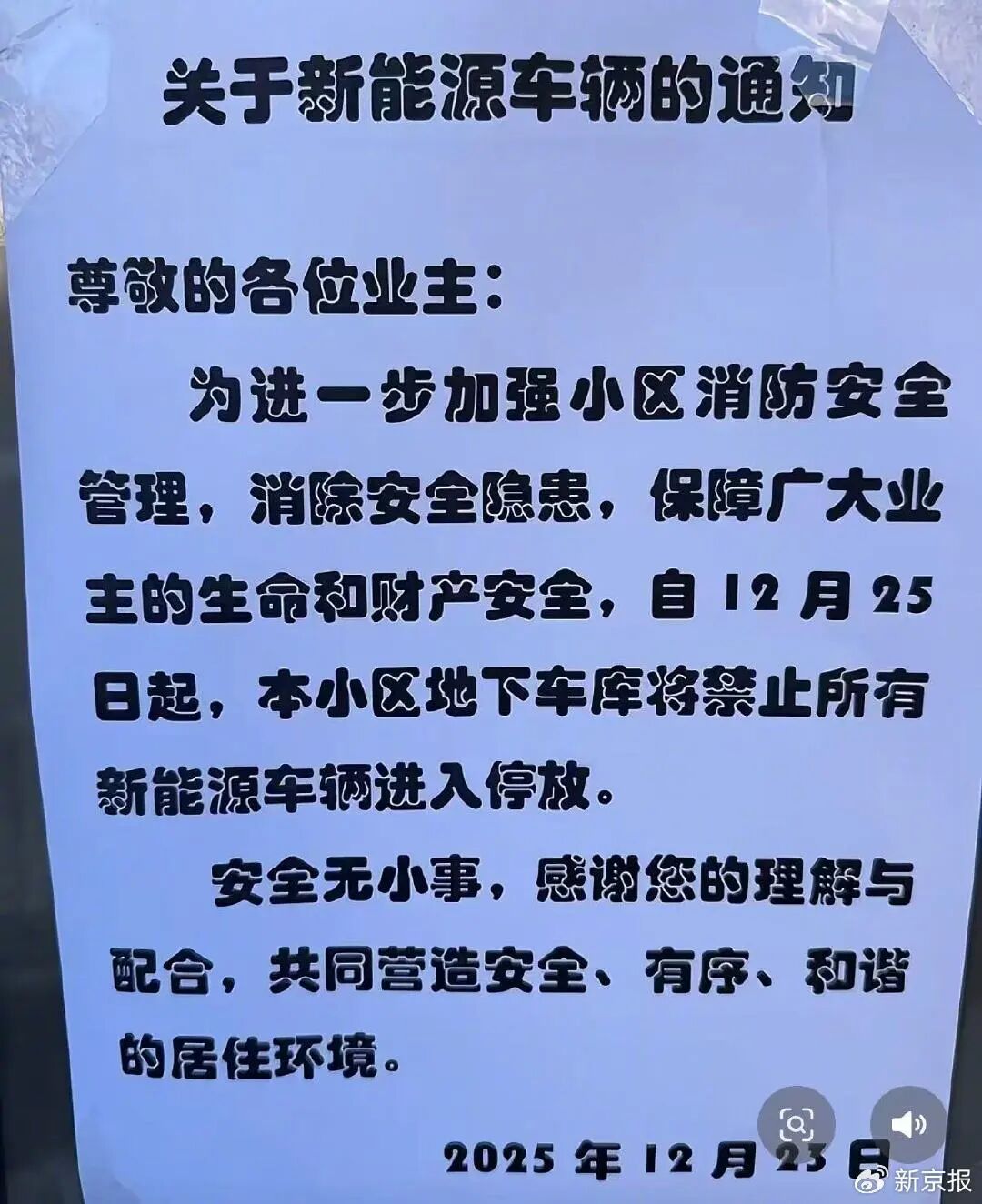
为什么你的电车,连自家小区地库都进不去?
3 6 Ke· 2026-02-25 10:28
Core Viewpoint - The increasing restrictions on parking for electric vehicles (EVs) in underground garages across various cities in China highlight a growing safety anxiety among property management companies, leading to a conflict between EV owners and traditional fuel vehicle owners [3][4][10]. Group 1: Issues Faced by EV Owners - EV owners, like Zhao Jinyuan, are facing significant challenges as property management companies impose bans on parking EVs in underground garages, citing fire safety concerns [1][4]. - The situation is not isolated, with reports from cities such as Hangzhou, Taiyuan, Ningbo, and Guangzhou indicating a widespread trend of EVs being denied access to underground parking [3][4]. - The restrictions have led to a decline in the quality of life for EV owners, who are forced to park in less convenient locations, facing harsh weather conditions that can affect vehicle performance [6][10]. Group 2: Safety Concerns and Misconceptions - Property management companies justify the bans by referencing the potential fire hazards associated with lithium batteries, despite data showing that the fire incident rate for EVs is comparable to or even lower than that of traditional fuel vehicles [6][9]. - The fear surrounding EVs stems from the rapid escalation of fires caused by lithium batteries, which can reach temperatures above 800°C in seconds, posing a significant risk in enclosed spaces like underground garages [9][11]. - The lack of standardized safety regulations for EV parking in underground facilities exacerbates the issue, leading to a "one-size-fits-all" approach to banning EVs [15][16]. Group 3: Potential Solutions and Innovations - Shenzhen has implemented a pioneering regulation for the safe underground parking of EVs, focusing on risk assessment rather than outright bans, which could serve as a model for other cities [17][18]. - The introduction of sodium batteries, which are less prone to thermal runaway and have a lower maximum temperature during failure, presents a promising alternative to lithium batteries, potentially alleviating safety concerns [21][23]. - The development of comprehensive safety standards and infrastructure upgrades for underground parking facilities is essential to accommodate the growing number of EVs and ensure their safe storage [19][24].
美系激进、欧系审慎、中国稳健:全球L3自动驾驶赛道会分化吗?
Guan Cha Zhe Wang· 2026-02-25 08:52
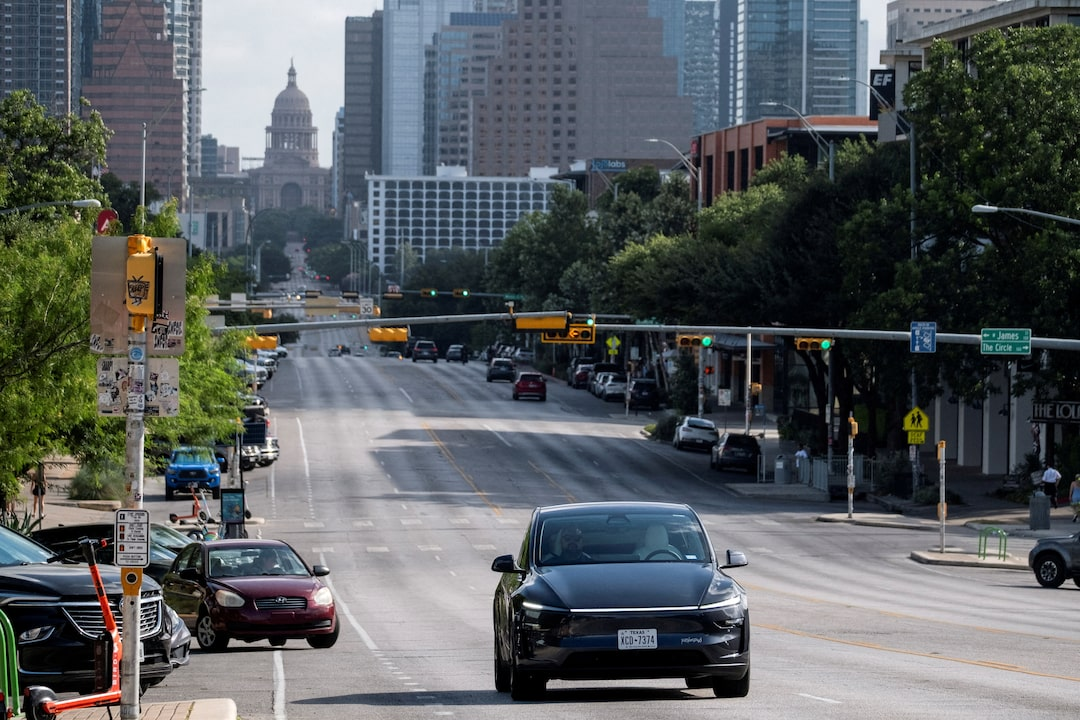
(文/观察者网 张家栋 编辑/高莘) 据路透社当地时间2月23日报道,多家美系车企正在将L3级"无需注视"(eyes-off driving)自动驾驶视为商业化突破口,希望借此在竞争中抢占主动权。 其中,福特态度最为积极,该公司高管道格·菲尔德(Doug Field)表示,L3系统可在特定场景下让驾驶员把视线从道路上移开,"发短信或处理工作",仅 在系统提示时接管即可。 在美国道路行驶的特斯拉 路透社 他强调,这项技术"可以立即为用户节省时间",并计划自2028年起在更亲民的电动车型上部署。通用汽车也在推进类似能力,希望在现有L2基础上实现体 验跃迁。 但争议同样激烈。路透社援引多方观点指出,人机之间频繁切换控制权存在现实挑战。南卡罗来纳大学法学教授史密斯(Bryant Walker Smith)指出,系 统必须在发出接管警告后,仍能保持车辆安全行驶数秒,这在技术与责任界定上都极为复杂。 他表示,L3级自动驾驶面临的主要技术挑战是设计一个能够检测到需要人类干预、发出警告并持续行驶直到驾驶员接管的系统。"至少要6秒钟,可能还 要更久,从监管角度来看,更合理的做法是在足够多的运行条件下提供L4级自动驾驶服务,让人 ...
重庆市“新春第一会”:持续迭代“六区一高地”建设
Zhong Guo Xin Wen Wang· 2026-02-25 06:21
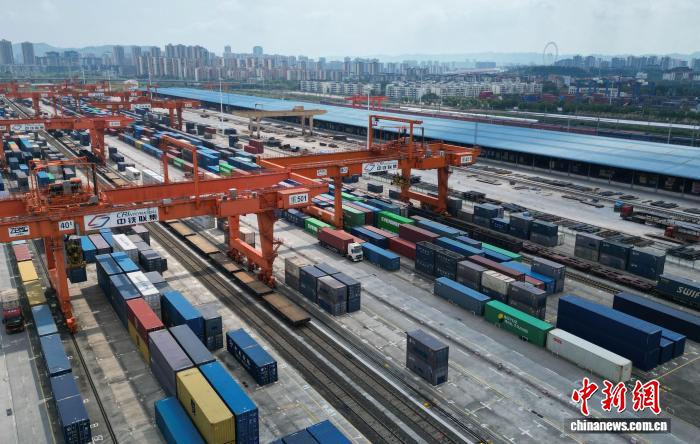
中新网重庆2月25日电 (梁钦卿)2月24日,春节假期后第一个工作日,重庆市委召开奋力谱写中国式现代 化重庆篇章推进大会。会议提出,重庆要持续迭代"六区一高地"建设目标任务,全力打造"西部领先、 全国进位和重庆辨识度"标志性成果。 "六区一高地"分别是指:西部地区高质量发展先行区、内陆开放国际合作引领区、全面深化改革先行 区、超大城市现代化治理示范区、城乡融合乡村振兴示范区、美丽中国建设先行区和新时代市域党建新 高地。 从2025年的迭代升级"六区一高地"建设体系构架,到今年的持续迭代"六区一高地"建设目标任务,重庆 连续两年的"新春第一会"都锁定"六区一高地"谋篇布局。从"迭代升级"到"持续迭代",两个关键词的转 变折射出重庆推进"六区一高地"建设的阶段演进。 作为我国中西部地区唯一的直辖市,重庆承担着成渝地区双城经济圈、西部陆海新通道、长江经济带高 质量发展等多重战略使命。"六区一高地"建设是重庆立足国家战略全局和自身发展阶段的主动作为。 今年是"十五五"开局之年,是现代化新重庆建设提质增效、整体跃升的关键一年。从智能工厂的机声隆 隆到乡村田野的硕果飘香,从基层一线的轻装实干到"两江四岸"的绿意盎然……从 ...
美国Robotaxi法规进展解读及后续展望
2026-02-25 04:13
Summary of the Conference Call on Robot Taxi and Autonomous Driving Policies Industry Overview - The conference focused on the developments in the autonomous driving industry, particularly in the context of Robot Taxi services in the United States and China [1][29]. Key Points from the Conference U.S. Autonomous Driving Policies 1. **Historical Context and Current Status**: - The U.S. government is divided into federal and state levels, both of which participate in autonomous driving legislation [2]. - Prior to 2016, the U.S. lacked a systematic framework for autonomous driving, leading to a fragmented approach [2][3]. - Post-2016, significant progress was made with the release of the AV 1.0 policy, establishing a foundational framework for future regulations [3][4]. 2. **Legislative Developments**: - The U.S. Department of Transportation (DOT) and the National Highway Traffic Safety Administration (NHTSA) have been pivotal in shaping the regulatory landscape since 2016 [4]. - The introduction of the Self Drive Act of 2026 aims to ensure the U.S. maintains its leadership in the autonomous driving sector by establishing a national safety data repository and clarifying federal priorities [7][8]. 3. **Key Legislative Proposals**: - The proposed Motor Vehicle Modernization Act increases the exemption limit for manufacturers from 2,500 to 90,000 vehicles and extends the exemption period to five years [9]. - The legislative process involves multiple steps, including committee reviews and votes, before becoming law [14][18]. 4. **Impact of Upcoming Regulations**: - The anticipated regulations are expected to facilitate the deployment of Robot Taxi services and enhance operational transparency for autonomous vehicles [6][19]. Chinese Autonomous Driving Regulations 1. **Regulatory Framework**: - China's autonomous driving vehicles (L3 and above) must undergo a two-phase process: application for access and pilot testing on public roads [21][22]. - Recent policies have clarified the requirements for these phases, with significant developments occurring in 2023 [21][23]. 2. **Approval Process**: - The Ministry of Industry and Information Technology (MIIT) has approved L3 vehicle models from Changan and BAIC for pilot testing, marking a significant step towards commercialization [24][25]. 3. **Standards and Compliance**: - Two key standards are being developed: Strong Standard A focuses on safety requirements for autonomous driving systems, while Strong Standard B addresses compliance testing for road usage [26][27]. - These standards are crucial for ensuring that vehicles meet safety and operational criteria before being allowed on public roads [28]. Market Implications - The advancements in both U.S. and Chinese regulations are expected to accelerate the development and deployment of Robot Taxi services, with companies like Tesla, Waymo, and various Chinese manufacturers being highlighted as key players [29]. - The overall trend in the Robot Taxi industry is positive, with ongoing monitoring and analysis of regulatory changes being essential for stakeholders [29]. Additional Insights - The conference emphasized the importance of continuous tracking of both policy changes and technological advancements in the autonomous driving sector to identify investment opportunities and risks [29]. - The potential for significant market growth in the Robot Taxi industry is underscored by the increasing regulatory support and technological readiness [29].