阿迪达斯

Search documents
安踏丁世忠的“氪金”哲学
Xin Lang Cai Jing· 2026-02-05 12:25
Core Viewpoint - Anta Group announced a cash acquisition of approximately €1.506 billion for a 29.06% stake in Puma, making it the largest shareholder of the brand, which has a significant historical presence in the global sports market [2][26]. Group 1: Acquisition Strategy - The acquisition of Puma marks Anta's first major purchase in 2026 and the sixteenth acquisition in nearly two decades, following brands like FILA and Amer Sports [2][26]. - Despite Puma's recent performance struggles, it retains high brand recognition and established distribution networks in Europe and North America, providing Anta with a competitive edge against Nike and Adidas [2][26]. - Anta's strategy reflects a shift towards external brand acquisitions as a growth engine, aiming to expand its market presence beyond outdoor sports into mainstream athletic fashion [3][27]. Group 2: Historical Context of Acquisitions - Anta's acquisition journey began in 2009 with the purchase of FILA's China operations for ¥332 million, transforming it into a high-end fashion sports brand [28][30]. - Within five years, FILA's revenue in China surged from under ¥200 million to over ¥10 billion, contributing significantly to Anta's profits [30][31]. - The company has since expanded its portfolio to include various brands, achieving a combined revenue exceeding ¥100 billion in 2024, surpassing Adidas to become the third-largest sportswear company globally [31][32]. Group 3: Market Dynamics and Challenges - The Chinese sportswear market is transitioning from growth to competition, necessitating new strategies for Anta to maintain its leadership position [9][32]. - The global sports goods industry is dominated by entrenched players like Nike and Adidas, creating high barriers for new entrants like Anta, which seeks to leverage acquisitions to gain market share [9][32]. - Anta's reliance on acquisitions has led to a strategic inertia, where the company continuously seeks the next successful brand like FILA to drive growth [10][33]. Group 4: Financial Performance and Brand Management - Anta's main brand has seen a decline in growth, with retail sales experiencing a slight decrease and revenue contribution dropping to 44% by mid-2025 [13][35]. - The growth rates of acquired brands like FILA are slowing, with a reported 6.1% increase in 2024, indicating potential challenges in sustaining high growth [15][37]. - The complexity of managing multiple brands has increased, with over ten core brands under Anta's umbrella, each requiring distinct strategies and resources [16][38]. Group 5: Future Outlook and Strategic Questions - Anta's founder, Ding Shizhong, has posed critical questions regarding the company's future, emphasizing the need for a differentiated multi-brand strategy to create shareholder value [20][41]. - The acquisition strategy includes "buying low" during market downturns, maintaining control without full ownership, and allowing acquired brands to operate independently while providing strategic support [43][44]. - The recent acquisition of Puma, while expanding Anta's brand portfolio, raises questions about how to effectively manage and differentiate between similar brands like FILA and Puma [39][40].


年轻人消费觉醒,一边精打细算,一边疯狂悦己
Sou Hu Cai Jing· 2026-02-05 11:33
曾几何时,"月光族"还是年轻人的代名词。 如今,画风已彻底改变。这届年轻人正用一种看似矛盾实则清醒的"双面"逻辑,重新定义着自己的消费 生活:一面在超市折扣区精打细算,用AI比价毫不手软;另一面却又乐意为一次深度旅行、一门兴趣 课程或一套专业装备一掷千金。 这种既务实又感性的复合需求,正推动着零售渠道的演变。当年轻人既想获得可靠的品牌保障与设计, 又希望价格能匹配自己精明的计算时,像唯品会这类成熟的折扣零售平台,便成为了一个顺理成章的选 择。 平台通过直接连接品牌,将波司登、安踏、耐克、阿迪达斯等国内外品牌,乃至各类美妆、生活好物, 以稳定、透明的优惠呈现。就比如在最近的年货节活动中,波司登、鸭鸭等国民品牌的爆款羽绒服,很 多都被打到了专柜价的两三折甚至更低,性价比都很不错。 这种"该省省、该花花"的态度,远非一句"消费降级"可以概括,它更像是一场深入的消费觉醒——年轻 人正将有限的预算,视为构建理想生活的资源,并试图在其中找到价值与情感的最优解。 这种新消费观的核心驱动力,是"心价比"的崛起。年轻人不再盲目为品牌溢价或社交面子买单,而是冷 静衡量每一笔花费带来的实际效用与情感回报。在日常生活的基础消费上,他 ...

春节限定款,终于开始尊重中产的智商了
3 6 Ke· 2026-02-05 02:33
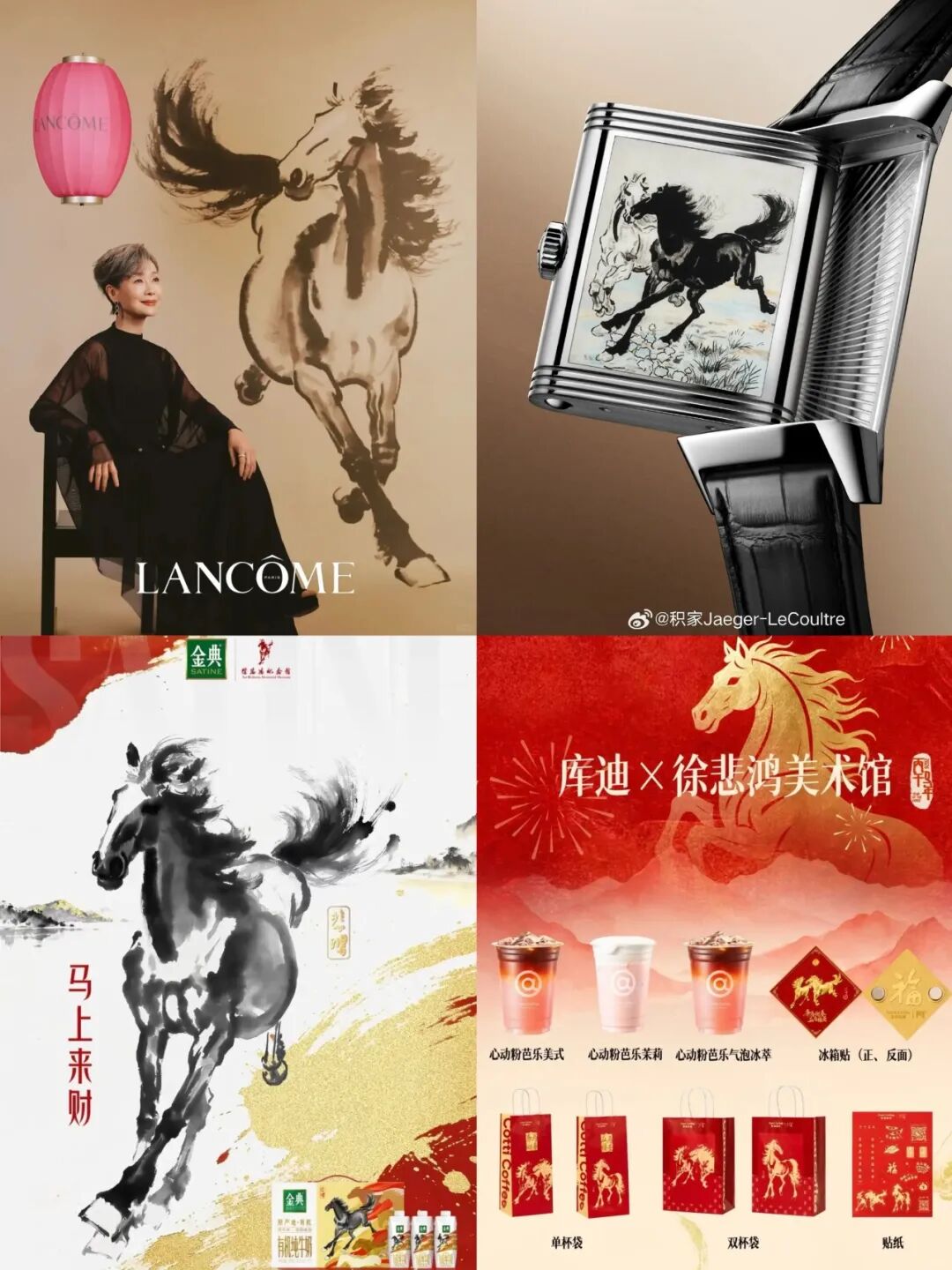
Group 1 - Brands are competing to deeply understand Chinese traditional culture, creating products that are more interesting, meaningful, unique, and emotionally resonant [1] - Moutai's recent release of the zodiac wine has led to a surge in its secondary market price due to a packaging error, causing fluctuations in Guizhou Moutai's stock price [1] - The high-end consumer market is shifting from "logo visibility" to "value recognition," with consumers increasingly seeking products that resonate emotionally rather than just luxury items [1][36] Group 2 - The application of red elements in this year's zodiac-themed products has become standard, with brands emphasizing craftsmanship and product details rather than merely using animal imagery [3] - International brands are leveraging the Year of the Horse to connect their brand history with Chinese culture, with examples like Burberry incorporating equestrian elements into their designs [7] - Brands are increasingly focusing on creating emotional connections through their products, moving away from superficial cultural appropriations [20][32] Group 3 - The trend of creating limited edition products for the Chinese New Year is evolving, with brands now exploring the feelings and cultural symbols associated with the zodiac rather than just the animal itself [6][32] - Successful brands are those that have established a local presence or have been acquired by Chinese companies, allowing them to better resonate with local consumers [26] - The concept of "cultural long-termism" is gaining traction, with brands like LVMH emphasizing the importance of understanding cultural consumption cycles for sustainable growth in China [20] Group 4 - The recent limited edition products from brands like Descente and On Running reflect a deeper understanding of consumer psychology, focusing on emotional value rather than just functionality [34] - The shift towards more thoughtful and culturally integrated marketing strategies is evident, as brands aim to create lasting emotional connections with consumers during the Chinese New Year [35][36] - The emergence of new cultural symbols, such as the "green horse" from Gansu Museum, illustrates the evolving landscape of consumer preferences and cultural engagement [32]

一年10条人事变动,运动品牌高管越来越不好干了
3 6 Ke· 2026-02-05 01:57
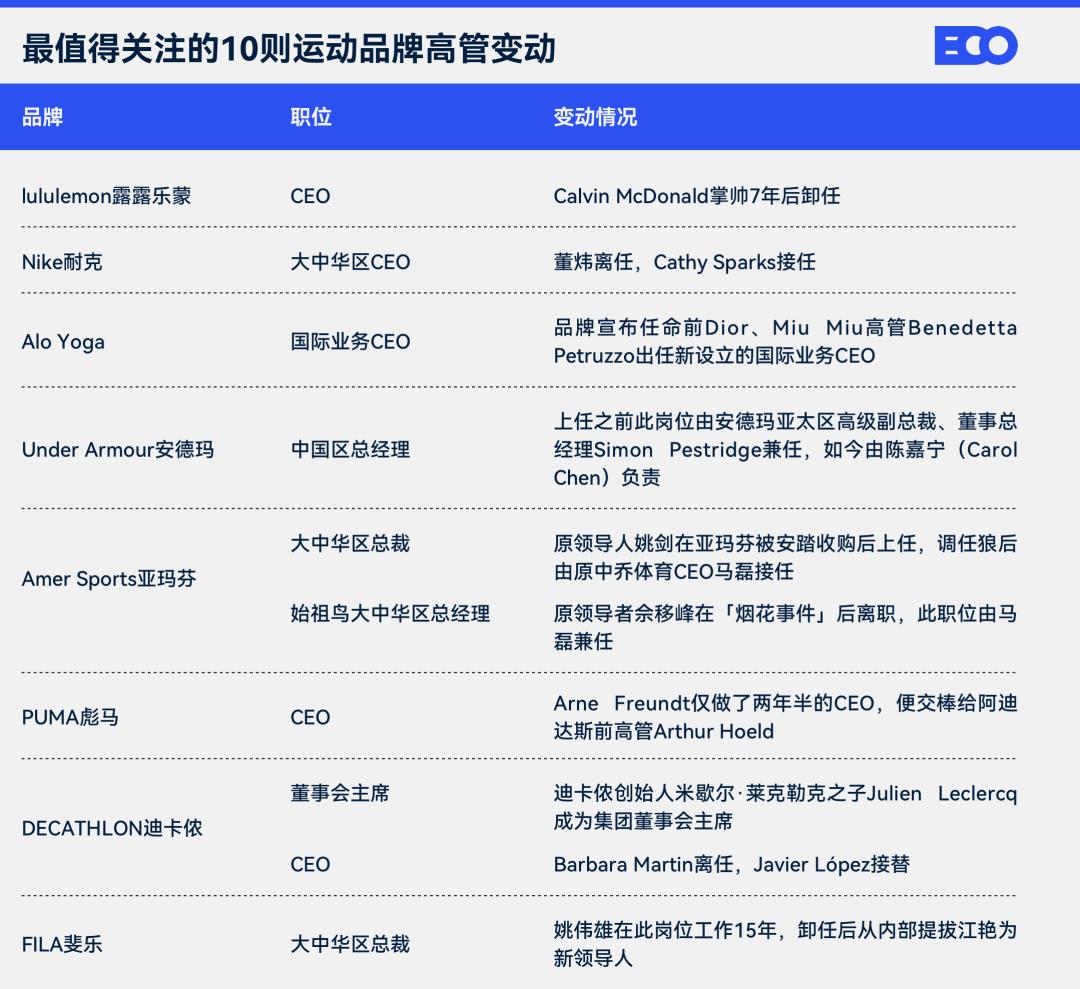
Core Insights - The leadership positions in major sports brands are becoming increasingly unstable, with significant CEO changes occurring across the industry, including Decathlon, Puma, and Lululemon [1][2] - The turnover at the executive level reflects a broader strategic shift within these companies, particularly in the Chinese market, as brands face the need to adapt to changing consumer demands and market conditions [1][3] Group 1: Executive Changes - Lululemon's CEO Calvin McDonald has stepped down after seven years, marking a significant leadership change [3] - Nike's Greater China CEO Dong Wei has left, with Cathy Sparks taking over [3] - Alo Yoga has appointed Benedetta Petruzzo, a former executive from Dior and Miu Miu, as its new International Business CEO [3] - Under Armour has seen changes in its China General Manager and Greater China President roles, with Carol Chen now in charge [3] - Puma's CEO Arne Freundt has left after two and a half years, with Arthur Hoeld, a former Adidas executive, taking over [3] - Decathlon's CEO Barbara Martin has resigned, and Javier López will succeed her [3] - Fila's Greater China President Yao Weixiong has stepped down after 15 years, with Jiang Yan promoted internally as the new leader [3] Group 2: Industry Signals - The high turnover of executives signals three key themes in the industry: crisis management, strategic pivots, and talent shortages [2][4] - Many brands are facing challenges from emerging competitors, prompting them to reassess their strategies and leadership [4][5] - The need for brands to adapt quickly to market changes is evident, as seen with Alo Yoga's shift towards high-end lifestyle products [7][13] Group 3: Market Dynamics - The sports brand market is experiencing a transformation, with established companies needing to respond to the rise of niche brands that are reshaping consumer preferences [4][10] - Brands like Nike and Under Armour are undergoing significant strategic shifts, with new leadership aimed at correcting previous missteps in market strategy [10][11] - The trend of frequent executive changes reflects a broader industry shift towards agility and responsiveness in a rapidly evolving market landscape [16][18]



Can NIKE Reignite Growth Amid Ongoing Wholesale Reset Pressures?
ZACKS· 2026-02-04 19:41
Key Takeaways NIKE is resetting its wholesale and marketplace strategy after years of prioritizing DTC expansion.NKE is tightening distribution, elevating assortments and aligning product drops with key partners.NIKE sees early North America progress, while EMEA and Greater China face a more complex reset.NIKE Inc. (NKE) is at a pivotal juncture as it works through a broad reset of its wholesale and marketplace strategy. After years of prioritizing direct-to-consumer expansion, the company is recalibrating ...
46394.2亿元!江苏社零总额首次全国第一
Guo Ji Jin Rong Bao· 2026-02-04 11:40
Core Insights - Jiangsu has surpassed Guangdong for the first time in 45 years, becoming the top consumer province in China with a retail sales total of 46,394.2 billion yuan in 2025, marking a 3.3% year-on-year growth [2] - Jiangsu's GDP reached 142,351.5 billion yuan in 2025, growing by 5.3%, making it the second province after Guangdong to enter the "14 trillion yuan" club [2] Group 1: Consumption Growth Drivers - The "Su Super" league emerged as a significant driver of consumption in Jiangsu, generating 379.6 billion yuan in revenue across five service sectors during its first six rounds, a 42.7% increase year-on-year [3][4] - The league attracted over 2.43 million live spectators and 2.2 billion online viewers, with the final match alone generating 2.6 billion yuan in retail, dining, and accommodation transactions in Nanjing, a 20% increase [3][4] - Jiangsu's innovative service offerings during the league, such as special trains and free public transport for fans, contributed to a robust "ticket root economy" [3][4] Group 2: Night Economy and Service Sector Growth - The night economy in Jiangsu has seen significant growth, with service sector electricity consumption increasing by 15.5% since May 2025, indicating strong activity in this area [8] - Cultural and immersive experiences, such as themed night tours and local food promotions, have enhanced the attractiveness of night-time consumption [7][8] Group 3: Policy Support and Innovation - Jiangsu's comprehensive policy framework has been pivotal in driving consumption growth, with initiatives like the "first store economy" leading to over 800 new stores in 2025, including 17 national first stores [6] - The "old for new" policy has expanded to cover various product categories, significantly boosting consumer spending and participation from businesses [8] - Government subsidies for the "old for new" program have reached over 196 million yuan, facilitating sales of 1.52 billion yuan and promoting green and intelligent consumption [8] Group 4: Future Directions - Jiangsu aims to focus on six key areas for consumption growth in 2026, including transportation and domestic services, while also enhancing the "Su New Consumption + Su Super League" initiative [9] - The province plans to host over 3,000 promotional events and optimize existing policies to further stimulate consumer activity [9]

Lululemon核心市场承压,品控失控是产能转移后遗症?
3 6 Ke· 2026-02-04 11:18
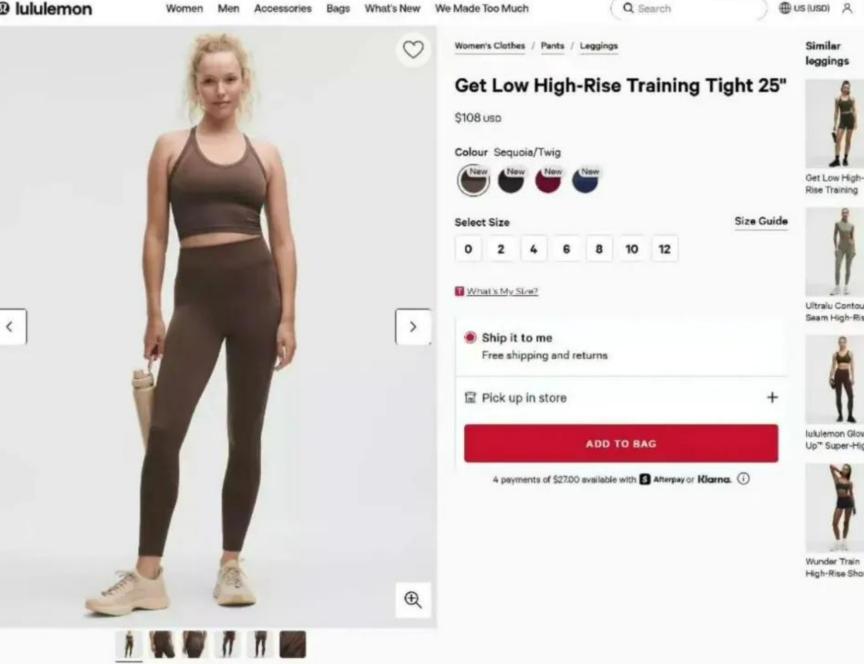
2026年开年,被誉为"中产收割机"的运动品牌Lululemon(露露乐蒙)再度因产品质量问题引发舆论风波——其售价数百元的"GetLow"系列瑜伽裤被消费者 曝光存在严重透光问题,深蹲、弯腰等常规动作下内裤轮廓清晰可见。 这场被网友戏称"社死级透视门"的事件,揭开了品牌十年内第三次陷入同类质量争议的伤疤。而随着核心市场萎缩、业绩承压、收购失利、竞争加剧等消息 的接踵而至,这个曾风靡全球的品牌,正面临不小的挑战。 品控失守戳破高端神话 据悉,此次引发舆论风波的瑜伽裤主打高弹裸感、适配深蹲等大幅度运动,定价约780元,却被消费者实测在深蹲、弯腰等常规动作下面料严重透光,内裤 轮廓清晰可见,存在明显隐私暴露风险。相关投诉与吐槽视频随即在Reddit、X等海外社交平台快速发酵。 (图片来自网络) 事件爆发后,Lululemon仅将北美线上渠道的该系列产品紧急下架3天,便原封不动重新上架,未对产品面料、版型做任何整改优化,仅在官网产品页面新增 提示,建议消费者购买大一码并搭配肤色无痕内裤以避免透光,同时,品牌坚称工程针织物拉伸时光线穿透是为实现高弹性的设计特性,未发布公开致歉声 明,也未启动产品召回、免费更换等补救措 ...
【声音】不忘“苏”心,方得始终
Xin Lang Cai Jing· 2026-02-03 19:46
Group 1 - The core idea of the articles highlights the significant growth and commercialization of the Jiangsu Provincial Football League (Su Super League), with a notable increase in sponsors from 6 to 24, including major international brands like Adidas [1][2] - The league is making efforts to remain accessible to small businesses, allowing them to participate with a low entry fee of 50,000 yuan, thus promoting inclusivity and community engagement [1][2] - The Su Super League has achieved impressive viewership statistics, with over 2.43 million attendees and more than 2.2 billion online views during the 2025 season, indicating a strong interest in football at the grassroots level [3] Group 2 - The league's development is contributing to a more comprehensive football ecosystem in China, integrating professional, youth training, and community involvement, which is essential for the sport's growth [4] - The Su Super League aims to maintain its local identity and community roots while expanding, emphasizing the importance of grassroots football in the overall development of Chinese sports [5] - The league's success is seen as a reflection of the broader trend towards making sports more integrated into daily life in China, aligning with the vision of sports being a part of everyday culture [5]
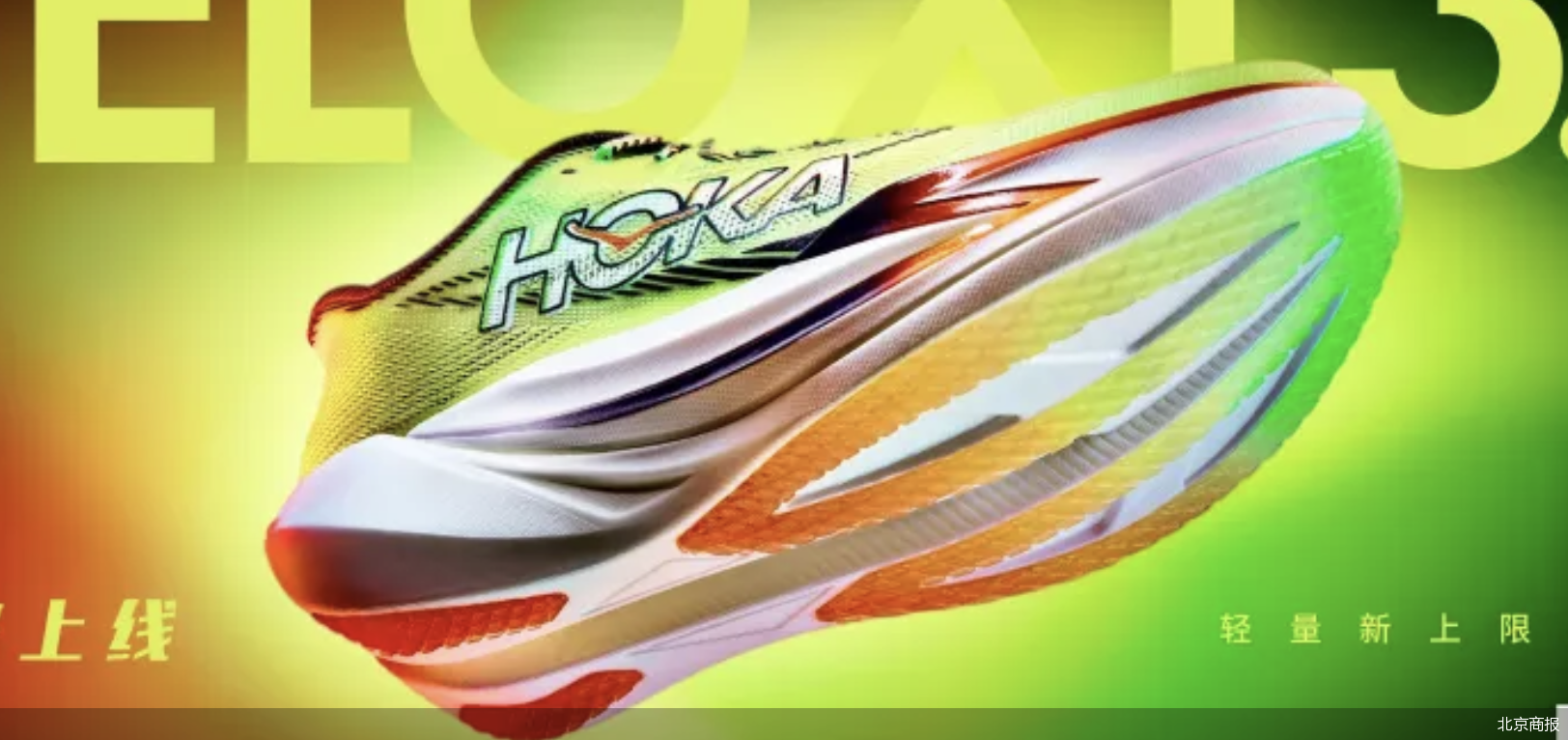
HOKA为何越跑越慢
Bei Jing Shang Bao· 2026-02-03 15:49
Core Insights - HOKA, a brand under Deckers, achieved a net sales growth of 18.5% in Q3 of fiscal year 2026, indicating strong performance despite a slowdown compared to previous years [1][3][4] - The overall net sales for Deckers reached $1.958 billion, with HOKA contributing $628.9 million, highlighting its significance in the company's growth strategy [3][4] - Increased competition in the running shoe market is impacting HOKA's growth, as other brands like Adidas and ANTA are also seeing substantial sales increases [4][8][9] Financial Performance - Deckers reported a net sales increase of 7.1% year-over-year, with HOKA's sales growing to $628.9 million [3] - HOKA's previous growth rates were significantly higher, with 23.7% in Q3 of fiscal year 2025 and 58.5% in fiscal year 2023, indicating a trend of slowing growth [4][6] - The brand's sales growth has been supported by product innovation and channel expansion, contributing to an increase in gross margin [3][4] Market Dynamics - The running shoe market is experiencing heightened competition, with brands like ANTA and international giants such as Nike and Adidas intensifying their presence [8][9] - HOKA's market share is being challenged as the consumer base expands to include more casual runners, which could dilute its existing market [9] - The growth of the running market is evident, with a nearly 80% increase in sales of trail running shoes on major e-commerce platforms [7] Strategic Initiatives - HOKA has been expanding its footprint in China, with over 230 stores established, making it a crucial market for the brand's growth [6][9] - The brand is focusing on a "Four Cities Flying Together" strategy to strengthen its presence in key economic regions of China [9] - Consumer trends indicate a shift towards comfort and fashion in sportswear, which HOKA aims to capitalize on by introducing products that meet these demands [9]

增速放缓,HOKA为何越跑“越慢”
Bei Jing Shang Bao· 2026-02-03 13:45
Core Insights - HOKA, a brand under Deckers, has shown a net sales growth of 18.5% in Q3 of FY2026, but this growth rate is slowing compared to previous years where it exceeded 30% [1][3] - The competitive landscape in the running shoe market is intensifying, impacting HOKA's market share and growth potential [1][8] Financial Performance - Deckers reported a total net sales of $1.958 billion for Q3 FY2026, a year-over-year increase of 7.1% [3] - HOKA's net sales reached $628.9 million, marking an 18.5% increase compared to the previous year [3] - In FY2025, HOKA's net sales were $429.3 million, reflecting a 23.7% growth from the previous year [4] Market Dynamics - HOKA's growth is supported by product innovation and channel expansion, which have driven global demand [3] - The running shoe market is experiencing significant competition, with brands like Adidas and On running achieving higher growth rates [4][8] - The Chinese market is becoming a crucial driver for HOKA's international growth, with over 230 stores established [5][6] Consumer Trends - The running market in China is expanding rapidly, with a nearly 80% increase in sales of trail running shoes on major e-commerce platforms [6] - The trend of consumer upgrading in the sportswear sector is contributing to the growth of brands like HOKA, as consumers shift towards higher-priced products [7] Competitive Landscape - HOKA faces competition from both international brands like Nike and Adidas, as well as domestic brands such as Anta and Li Ning, which are also targeting the mid-to-high-end running shoe market [8][9] - The entry of new players and the expansion of existing brands are likely to fragment HOKA's market share [9]