
Temu

Search documents
跨境电商的这一年:关税、贸易战、驶离美国
Xin Lang Cai Jing· 2026-01-05 15:37
Core Viewpoint - The cross-border e-commerce industry is facing significant challenges in 2025 due to escalating tariffs and stricter regulations, leading to increased operational costs and uncertainty for sellers [2][3][4]. Group 1: Tariff and Regulatory Changes - In January 2025, the U.S. initiated a review of trade deficits and tariff structures, leading to a series of tariff increases on Chinese goods, culminating in a total tariff rate of 145% by April [4][5]. - The U.S. also eliminated the tax exemption for small packages valued under $800, impacting many cross-border sellers targeting the U.S. market [4][6]. - Other countries, including the EU and Japan, are also planning to impose tariffs on low-value imports starting in 2026, indicating a global trend towards stricter trade policies [6]. Group 2: Impact on Sellers - The increased tariffs have made it difficult for many sellers to maintain profitability, with some reporting that the cost of tariffs has rendered certain products unviable for sale [7]. - Sellers are now facing higher operational costs due to new tax regulations, which could compress profit margins significantly, especially for low-margin products [6][7]. - The need to adapt to these changes has led sellers to seek ways to optimize supply chains and shift focus towards higher-value products [8]. Group 3: Industry Evolution - The cross-border e-commerce sector is transitioning from a phase of rapid growth to one of refined operations, with platforms actively filtering out low-quality sellers [10][12]. - Major platforms like Temu and TikTok Shop are increasing entry barriers for sellers, indicating a shift away from the "low-price" competition model [11][12]. - The industry is witnessing a consolidation phase where only those with robust operational capabilities and compliance awareness will thrive [10][19]. Group 4: Strategic Shifts - Platforms are increasingly focusing on localizing their operations to better serve overseas markets and mitigate tariff impacts [20]. - The use of AI tools is becoming a key growth driver, with platforms enhancing their efficiency and marketing capabilities through advanced technologies [22][27]. - The competitive landscape is evolving, with platforms moving towards long-term strategies rather than relying solely on price wars [18][19].


亚马逊大意失AI:昔日位面之子,沦为版本弃子?
Tai Mei Ti A P P· 2026-01-05 07:14
Core Viewpoint - Amazon is restructuring its AI strategy by creating a new "AGI organization" to integrate its language model team, chip development unit, and quantum computing team, as a response to its lagging position in the AI race compared to competitors like Google, Meta, and Nvidia [1][3]. Group 1: Amazon's AI Strategy and Challenges - Since 2025, Amazon's stock performance has been poor, with no significant annual gains, indicating that investors do not view Amazon as a key player in the AI sector [3]. - Despite having strong assets like AWS, self-developed chips, and a global e-commerce platform, Amazon's AI initiatives have been perceived as reactive rather than proactive, leading to a strategic need for urgent correction [3][4]. - Amazon's AI models, such as the Nova series, have not gained significant traction in the market, with OpenAI and Google dominating token usage [4]. Group 2: Competitive Landscape - Amazon's AWS, once a leader in cloud services, is facing increasing competition from Microsoft Azure and Google Cloud, which are integrating AI capabilities more effectively [7][10]. - Microsoft Azure's market share is growing, driven by strong demand for AI services, while AWS's positioning as a "model supermarket" dilutes its competitive edge [10][11]. Group 3: Internal Challenges and Organizational Structure - Amazon's AI team has been fragmented across various business lines, focusing on incremental improvements rather than developing a cohesive AGI strategy, leading to missed opportunities in the consumer AI space [15][16]. - The company's historical focus on customer-centric improvements has resulted in a reluctance to invest in long-term, high-risk AI innovations, causing it to fall behind competitors who are more agile in adapting to new trends [16][17].


2025年中国跨境电商营销服务行业报告-全托管一站式营销服务兴起
Sou Hu Cai Jing· 2026-01-05 01:55
Core Insights - The report highlights that China's cross-border e-commerce marketing service industry is experiencing robust growth, with the market size projected to increase from $22.8 billion in 2020 to $46.17 billion by 2024, reflecting a compound annual growth rate (CAGR) of approximately 19.3% [1][17]. - By 2029, the market is expected to reach $93.36 billion, indicating a fourfold expansion over the decade [1][17]. Cross-Border E-Commerce Industry Overview - China maintains its position as a global leader in digital trade, with a total import and export value projected to rise from 245.5 trillion yuan in 2015 to 438.2 trillion yuan by 2024, with exports dominating at around 58% in 2024 [21][24]. - The export structure is diversifying, with emerging consumer goods like household and beauty devices showing a CAGR exceeding 10%, while traditional bulk and agricultural products face negative growth [25][28]. Marketing Service Trends - The rise of one-stop marketing services is a key trend, encompassing integrated marketing, B2C platform marketing, and SaaS services, with companies like SHEIN, Temu, and AliExpress leading the way [2][44]. - The industry is characterized by a shift from single marketing service providers to comprehensive platforms that integrate marketing, scenarios, and transactions [3][40]. Competitive Landscape - The current landscape of Chinese outbound service providers is fragmented, with the top five market players accounting for approximately 36.5% of the market share by 2024 [3]. - Companies like Province Guang Group and Miduo Duo are notable representatives, with Province Guang Group focusing on cross-border e-commerce marketing services and experiencing continuous revenue growth [3]. Industry Drivers - Multiple factors are driving the industry, including global supply chain diversification, policy support, and the dual drivers of consumption and technology [2][34]. - The demand for intelligent marketing upgrades and the rise of social and interest-based e-commerce are expected to shape future growth, with the outbound marketing service market projected to reach $30.5 billion by 2029 [2][49]. Export Product Dynamics - The export of plastic products remains dominant, with a total export value projected to grow from $55.24 billion in 2020 to $106.03 billion by 2024, while glass products face ongoing pressure with a decline in export value [30][32]. - The overall export structure is heavily reliant on plastic products, necessitating attention to the declining glass product exports and the need for innovation in high-value, environmentally friendly materials [32].


Meta数十亿美元收购Manus;比亚迪超越特斯拉,拿下“全球第一”丨Going Global
创业邦· 2026-01-04 10:35
「Going Global 出海周报」 是创业邦推出的出海系列栏目,旨在为出海领域的创业者和投资人 精选出海大事件、海外大公司、投融资消息, 本篇 为栏目第 315 篇报道。 整理丨 Lucus 本周(1 2 月 29 日至1月 4 日)出海大事件包括: Temu针对特定品类提升保证金要求,最高10万元 ; 中国车畅销以色列市 场 ; 比亚迪超越特斯拉 , 拿下"全球第一" ; 华硕被传 将 进军DRAM制造 ; 宝马官宣Alpina成为旗下品牌;马斯克称2026 年将量产脑机接口设备; OpenAl加码音频AI研发 ; Meta数十亿美元收购Manus。 出海四小龙 在模式创新方面,Temu持续进行战略调整,从依赖中国直邮转向本地库存+本地配送的模式,有效提升了物流效率和用户体验。 大公司 中国车畅销以色列市场 1月2日 , 以色列汽车进口商协会公布数据显示,奇瑞生产的捷途7成为2025年以色列销量最高的车型。 数据显示,捷途7全年在以色列共售出约1.3万辆,韩国汽车品牌现代生产的科纳以约1.2万辆的销量位居第二。 中国品牌汽车2025年在以售出10.1万辆,销量位居第一。韩国品牌以5.2万辆位居第二,日本 ...




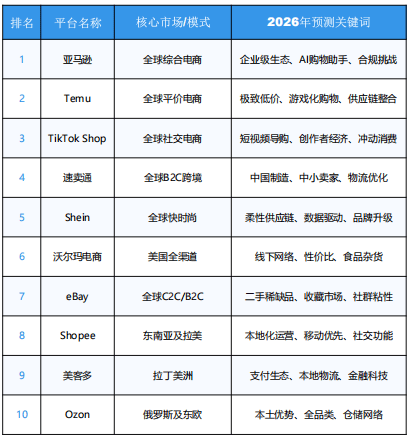
2026跨境电商突破口:供应链与选品智胜,谁主沉浮?
Sou Hu Cai Jing· 2026-01-04 10:11
Core Insights - The global e-commerce landscape in 2026 is characterized by intense competition, with a focus on product selection accuracy and supply chain resilience as key determinants of long-term success [1][5][13] Group 1: Market Structure - The e-commerce platform landscape has stabilized into a structure of "one superpower and multiple strong players," with Amazon leading due to its extensive logistics network and market penetration [2] - New entrants like Temu and Shein leverage extreme efficiency and social media dynamics to create competitive advantages, while TikTok Shop has transformed the "discovery-to-purchase" process [2][3] Group 2: Product Selection - Product selection has evolved from a trial-and-error approach to a data-driven process that integrates data science, social psychology, and trend analysis [7] - Successful sellers utilize a multi-dimensional data approach, extending their analysis beyond traditional e-commerce metrics to include social media trends [7] - The core challenge in product selection lies in balancing the immediacy of trends with the lag in supply chain responsiveness, necessitating a layered product selection matrix [7] Group 3: Supply Chain Management - Supply chain strength is critical for sustained profitability, with modern competition focusing on stability, responsiveness, quality control, and cost advantages [8][9] - The ability to quickly respond to market trends is essential, requiring sellers to compress the supply chain cycle to days or even hours [9] - Top sellers often develop a multi-tiered, networked supplier system to ensure both stability for core products and flexibility for new trends [9] Group 4: Efficiency Tools - Efficient tools are essential for professional sellers to reduce costs and enhance productivity, allowing them to focus on strategic decision-making rather than data collection [10] - Tools that facilitate rapid product sourcing and supply chain assessment are becoming increasingly valuable in the fast-paced e-commerce environment [10][12] Group 5: Future Competitiveness - Future competition in cross-border e-commerce will be systemic and ecological, requiring a comprehensive capability that integrates market insights, product selection, supply chain management, and brand building [12] - The integration of human experience, data insights, and tool efficiency will be crucial for creating a reliable operational system that supports product offerings [12][13]
中国跨境电商交易会:【广东产业带】大佬云集,广东卫冕跨境第一!
Sou Hu Cai Jing· 2026-01-04 04:21
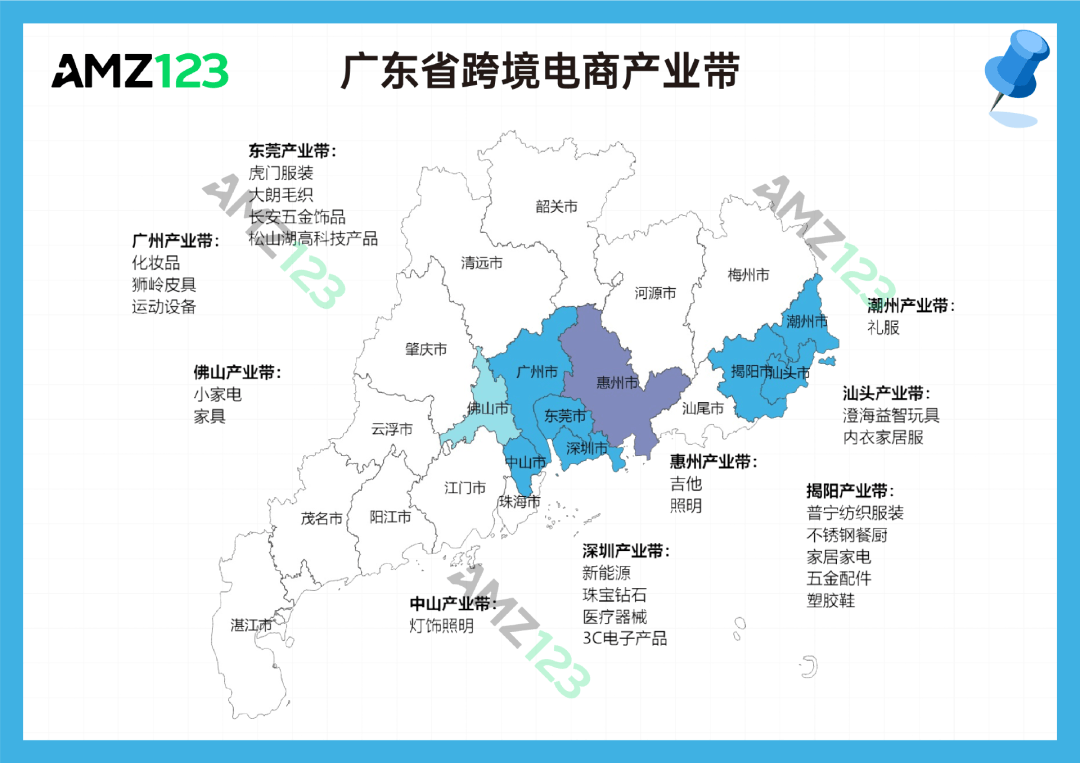
Core Insights - Guangdong has emerged as a leader in China's cross-border e-commerce, with its import and export scale growing from 11.3 billion yuan in 2015 to 745.4 billion yuan in 2024, an increase of approximately 66 times over nine years, accounting for over one-third of the national total [1][21][30] - The province's cross-border e-commerce exports have an average annual growth rate of 51.4%, the highest in the country, supported by a robust manufacturing base and an open economic framework [1][22][30] - Guangdong's cross-border e-commerce is transitioning from "platform distribution + foreign trade wholesale" to "brand export + digital supply chain" [1][21] Industry Overview - The success of Guangdong's cross-border e-commerce is attributed to its comprehensive and systematic manufacturing landscape, particularly in the Pearl River Delta, which has developed stable and specialized industrial belts [4][21] - The region has three main "outbound arteries": the 3C "hardcore belt" in Shenzhen, Dongguan, and Huizhou; the lifestyle belt in Guangzhou and Foshan; and the creative corridor of lighting and toys in Zhongshan, Jiangmen, and Chaozhou [7][12][17] 3C "Hardcore Belt" - The Shenzhen-Dongguan-Huizhou area is known for its dense network of factories and supply chains for electronic products, with Shenzhen housing over 80,000 cross-border e-commerce entities, accounting for about half of the national total [8][9] - Companies like UGREEN and GMKtec exemplify the successful integration of manufacturing and operations, leveraging local supply chains to build strong brands [11][12] Lifestyle Belt - The Guangzhou-Foshan area focuses on fashion and home appliances, with Guangzhou's textile and apparel exports reaching 46.09 billion yuan in 2024, supported by a high-frequency supply chain [12][14] - Brands like SHEIN have established flexible supply chains in Guangzhou, connecting global demand directly to local production [12][14] Creative Corridor - The Zhongshan area is recognized as the "Lighting Capital," with over 30,000 lighting businesses and significant export volumes, while Chaozhou is known for its toy manufacturing, with over 50,000 toy companies [17][18] - The integration of creative design and cross-border e-commerce has transformed local products into recognizable brands on platforms like Amazon [18][19] Infrastructure and Logistics - Guangdong has implemented 166 cross-border trade facilitation measures over the past eight years, enhancing customs efficiency and expanding shipping routes [22][23] - The province's logistics capabilities, including major ports and airports, support a multi-tiered outbound system for cross-border e-commerce [22][24] Economic and Policy Environment - The provincial government actively promotes cross-border e-commerce as a key strategy for foreign trade transformation, establishing comprehensive support systems for businesses [28][29] - The combination of experienced entrepreneurs and a new generation of digital-savvy operators is driving innovation in cross-border e-commerce [26][27] Challenges Ahead - The industry faces challenges in transitioning from volume-based sales to brand-building, as many early sellers struggle to establish lasting brand recognition [31][32] - Rising costs and labor shortages in the Pearl River Delta are prompting a shift in production to lower-cost regions, complicating supply chain management [33][34] Conclusion - Guangdong's early adoption of cross-border e-commerce and its ability to adapt to challenges position it as a likely leader in the next chapter of China's cross-border e-commerce landscape [35]
电商出海2025-直面挑战-保持韧性
2025-12-31 16:02
Summary of Key Points from the Conference Call Industry Overview - The cross-border e-commerce industry is projected to achieve a GMV growth rate of 12% in 2025, surpassing both global and domestic e-commerce growth rates of 8% and 11% respectively [1][4] - Major platforms such as Temu, Shein, TikTok Shop, and AliExpress are expected to see a GMV growth rate of 25% [1][4] - The compound annual growth rate (CAGR) for cross-border e-commerce from 2024 to 2027 is estimated at 11%, with the four major platforms achieving a CAGR of 23% [1][4] Core Insights and Arguments - Localization strategies are crucial for creating jobs, increasing tax revenue, and enhancing consumer retention through improved fulfillment and after-sales efficiency [1][2][5] - Challenges include homogenization of product offerings, diminishing price advantages, and complexities in managing overseas teams [1][2][5] - The Latin American market shows significant growth potential with an expected GMV growth rate exceeding 10% due to weak local manufacturing [1][7] - The European market remains fragmented, providing opportunities for Chinese companies like Temu and Shein, with market share expected to exceed 10% by 2026 [1][7] - U.S. tariffs are driving platforms to expand into emerging markets in Southeast Asia [1][2] Performance and Profitability Outlook - Major cross-border e-commerce platforms are anticipated to achieve profitability by 2026, with limited impact from tariffs on profit margins [2][10] - Temu is projected to incur losses of approximately $1 billion in 2024 and over $2 billion in 2025, but may reach breakeven in 2026 as GMV recovers [2][10][11] - Alibaba's international digital commerce aims for profitability improvement, expecting to maintain overall profitability by 2026 [2][11] Market Dynamics - The Southeast Asian e-commerce market is dominated by Shopee and TikTok Shop, with expectations of further market share concentration [2][9] - The competitive landscape in Southeast Asia is characterized by high growth rates but low entry barriers for new players [9] - Cross-border e-commerce platforms are outperforming domestic and global averages due to advantages in the Chinese supply chain, demand for cost-effective products, and improved logistics and payment infrastructure [8][19] Challenges and Strategic Responses - Platforms face regulatory challenges, particularly regarding tariff changes in key markets like the U.S. and Brazil [2][3] - Localization efforts are essential for mitigating risks associated with tax, legal, and regulatory changes [2][5] - Temu's strategy includes transitioning to a semi-managed model to improve supply chain efficiency and customer experience [13][14] Future Growth Potential - The overall cross-border e-commerce market is expected to reach approximately $680 billion by 2025 and $840 billion by 2027, with a growth rate exceeding 10% [22] - Temu's GMV is projected to grow from under $65 billion to over $90 billion by 2026, with a potential for quarterly breakeven [16][25] Additional Considerations - The impact of currency fluctuations, such as the appreciation of the RMB, is expected to be limited on cross-border e-commerce platforms due to their increasing local presence [22] - The evolving regulatory landscape in Europe regarding small package tariffs may complicate tax handling for platforms like Temu and Shein [17][18] This summary encapsulates the key insights and projections regarding the cross-border e-commerce industry and specific platforms, highlighting both opportunities and challenges ahead.
全球产业链供应链重塑期的中国企业:能力提升!| 跨越山海
Di Yi Cai Jing· 2025-12-31 05:09
Core Insights - The article discusses the evolving landscape of globalization in 2025, highlighting the rise of trade protectionism and the emphasis on national economic policies, which create uncertainties for Chinese enterprises in their global expansion efforts [2][4]. Group 1: Globalization Trends - The global trade environment is increasingly characterized by protectionism, with countries favoring regional trade agreements over multilateral cooperation, leading to a fragmented trade landscape [6]. - Major economies are tightening foreign economic policies under the guise of national security, particularly the U.S. and EU, which are implementing measures aimed at reducing reliance on Chinese technology and supply chains [6][7]. - The EU is establishing new compliance barriers through regulations that impose environmental and labor standards, creating additional challenges for Chinese products entering the European market [7][11]. Group 2: Market-Specific Challenges - In the U.S. market, Chinese companies face stringent export controls and investment scrutiny, particularly in high-tech sectors, which complicates their operational landscape [9][10]. - The EU has introduced a unified foreign direct investment review mechanism, increasing barriers for Chinese investments in critical sectors, alongside new environmental regulations that impose additional costs on Chinese exports [11][12]. - India has adopted a cautious approach towards Chinese enterprises, implementing strict market entry barriers and local compliance requirements, which complicates the operational environment for Chinese firms [14][15]. Group 3: Regional Dynamics - The RCEP agreement offers both opportunities and challenges for Chinese companies, facilitating trade with ASEAN nations while also intensifying competition from regional players [17][18]. - In Latin America, political changes and regional trade agreements introduce uncertainties for Chinese investments, necessitating a flexible approach to navigate the evolving landscape [19][20]. - The Middle East presents a mixed opportunity for Chinese enterprises, with potential for collaboration in infrastructure and technology, but also challenges related to geopolitical tensions and compliance with local regulations [21][22]. Group 4: Case Studies - DHgate has successfully navigated the U.S. market by leveraging a flexible supply chain and innovative marketing strategies, despite facing significant regulatory challenges [28][29]. - Xiaohongshu has capitalized on the migration of users from TikTok, rapidly expanding its user base internationally, but must address content regulation and data security concerns [34][35]. - BYD has adopted a localization strategy in Europe to mitigate the impact of anti-subsidy investigations, while facing significant barriers in the U.S. market due to high tariffs and restrictive policies [39][40][42].


4 retail brands that shut down in 2025 — and reboots to come
Yahoo Finance· 2025-12-30 20:19
Core Insights - The American high street experienced significant bankruptcies in 2025, affecting well-known brands like Rite Aid and Party City [1][2] Group 1: Bankruptcy Trends - A combination of rising debt and changing consumer habits led to the downfall of many household names, as inflation prompted shoppers to favor online retailers like Amazon and large stores like Target [2] - Forever 21 filed for bankruptcy for the second time in six years in March 2025, having previously declared bankruptcy in 2019 [3][4] - Rite Aid filed for bankruptcy in 2023 due to over $4 billion in debt, exacerbated by legal issues related to the opioid crisis, and filed again in May 2025 [8] Group 2: Company-Specific Details - Forever 21, once generating over $4 billion in annual revenue, struggled to adapt to changing consumer preferences and faced competition from brands like Shein and Temu [3][5] - Rite Aid, which peaked with over 5,000 locations, closed 500 stores to reduce debt but ultimately shut down its last 89 stores in October 2025, transferring millions of prescriptions to competitors [7][8]
泰国海关将自2026年起对电商进口商品全面征税,最高 30%
Shang Wu Bu Wang Zhan· 2025-12-30 09:12
Core Viewpoint - Thailand's Customs Department will impose import duties on goods valued at 1 Thai Baht and above from major e-commerce platforms starting January 1, 2026, replacing the previous exemption for goods under 1,500 Thai Baht, with a maximum tax rate of 30% [1] Group 1: Tax Policy Changes - The new policy aims to generate an annual revenue of 3 billion Thai Baht [1] - The "minimum threshold" (DMV) has been abolished, allowing for broader taxation on imported goods [1] - Goods valued below 1,500 Thai Baht will be taxed based on category, with fashion and footwear at a maximum of 30%, bags and accessories at 20%, and electrical products at 10% [1] Group 2: Impact on E-commerce Platforms - The Customs Department has signed memorandums of understanding (MoUs) with five major e-commerce platforms: Lazada, Shopee, TikTok Shop, Temu, and Shein [1] - These platforms will integrate tax collection into the checkout process, ensuring that shoppers pay the necessary duties and a 7% value-added tax (VAT) at the time of purchase [1] - The Customs Department has communicated with these platforms to ensure a smooth transition, with no delivery delays expected for 97% of shoppers due to immediate tax settlement through the applications [1]