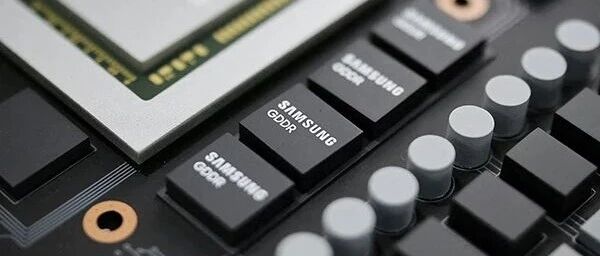
三星电子

Search documents
算力即国力:如何看待算力基础资源通胀投资机遇?
Changjiang Securities· 2026-01-30 13:58
Investment Rating - The industry investment rating is "Positive" and maintained [7] Core Insights - Since 2025, the technology sector has seen price increases in various segments of computing power resources, recently spreading to the midstream cloud computing sector in overseas markets. The demand for AI, coupled with tight capacity in core segments, has shifted industry pricing towards "supply-demand pricing + value reassessment." Some segments are still in the early stages of price increases, which are expected to gradually transmit to the domestic market, suggesting investment opportunities in domestic computing power resources [2][5] Summary by Relevant Sections - **Price Trends**: Since the second half of 2025, there has been a significant upward trend in prices for storage and other computing power resources. For instance, memory prices surged by 171.8% year-on-year in Q3 2025, with expectations of further increases of 40% to 50% in Q1 2026 and around 20% in Q2 2026. Major companies like Samsung have raised NAND flash contract prices by over 100% starting January 2026 [10][13] - **Market Dynamics**: The AI demand is robust, and the competition among tech giants for computing power resources is intensifying. For example, Meta's capital expenditure for 2026 is projected to reach $135 billion, significantly exceeding Wall Street's expectations. This surge in AI-related demand is creating a substantial supply-demand gap, particularly in storage chips, which is expected to lead to further price increases across various segments [10][13] - **Investment Recommendations**: The report recommends focusing on key domestic leaders in computing power resources, including AI chips (e.g., Haiguang Information, Cambricon), CPUs (e.g., Haiguang Information), and cloud service providers (e.g., Kingsoft Cloud, Capital Online). Additionally, it suggests monitoring other quality stocks with strong fundamentals and high correlation within the industry chain [5][10]



三星电子:存储芯片短缺未见缓解迹象
citic securities· 2026-01-30 13:25
本文是由投资/产品专员而非分析师撰写的文章汇编。 它不构成研究报告,也不应被解释为研究报告,也不旨在提供 专业、投资或任何其他类型的建议或推荐。 CSIWM 个股点评 2026 年 1 月 30 日 三星电子 005930 KS 本文内容由 Ryan Lee (李昊谦) 提供 中信证券财富管理(香港) 产品及投资方案部 韩国科技行业 电话:(852) 2237 9250 / 电邮:wminvestmentsolutions@citics.com.hk 存储芯片短缺未见缓解迹象 HBM4 认证在即;增加资本支出应对未满足需求 三星电子预计市场对 HBM 及高密度服务器 DRAM 的强劲需求将持续,并表示其所有 HBM 量产产能已全部被预订。 关于 HBM4 方面,公司表示产品已进入英伟达(Nvidia)认证的最后阶段,目标在一季度内启动量产。2025 年公司 的总资本支出为 52.7 万亿韩元(同比-2%),其中半导体资本支出(同比+3%)占比 90%。为应对强劲需求,公司 计划显著增加晶圆厂设备(WFE)的资本指出,着眼于短期扩大供给以把握需求机遇。 摘要 中信证券财富管理与中信里昂研究观点一致。根据中信里昂 ...
三星财报释放行业信号!存储芯片“超级周期”动能不减,AI与消费电子需求分化加剧
Hua Xia Shi Bao· 2026-01-30 13:05
Group 1 - The core viewpoint of the article highlights that the storage industry is currently experiencing a super cycle, driven by a surge in demand for storage chips due to the AI boom, leading to significant revenue and profit growth for major players like Samsung Electronics [2][3][4]. - Samsung Electronics reported a record revenue of 93.8 trillion KRW (approximately 455.9 billion RMB) in Q4 of last year, marking a year-on-year increase of about 24%, with operating profit reaching 20.1 trillion KRW (approximately 9.77 billion RMB), more than doubling year-on-year [2][3]. - The DS (Device Solutions) division, which includes storage chips, generated 44 trillion KRW in revenue, accounting for 47% of Samsung's total revenue, with a 46% year-on-year growth rate, double that of the overall company [3]. Group 2 - Samsung's storage chip business, contributing 37.1 trillion KRW to the DS division, represented 85% of its revenue, with a remarkable 62% year-on-year growth, significantly outpacing the overall revenue growth [3]. - The operating profit from the DS division was 16.4 trillion KRW, accounting for over 80% of Samsung's total operating profit, with a year-on-year increase of approximately 4.6 times [3]. - The strong performance of Samsung's storage chips was further supported by the rising value of high-margin products such as HBM (High Bandwidth Memory) and server DDR5, which are increasingly in demand for AI applications [4]. Group 3 - The strong performance of Samsung Electronics in Q4 was also aided by the strengthening of the US dollar, which positively impacted its operating profit by 1.6 trillion KRW (approximately 78 million RMB) [5]. - The shortage of general DRAM in the consumer electronics market has led to significant price increases, with Samsung and SK Hynix negotiating substantial price hikes for LPDDR supplied to Apple, with Samsung's prices rising over 80% [6][7]. - The increase in memory prices has resulted in higher costs for smartphone manufacturers, leading them to raise product prices, particularly affecting mid-range products more than high-end ones [8]. Group 4 - Samsung Electronics plans to prioritize high-value products for AI applications in Q1, including the mass production of HBM4, indicating a shift in focus towards the AI market rather than traditional consumer electronics [8][9]. - The IDC report noted that manufacturers are reallocating production capacity from consumer electronics to higher-margin AI-specific memory solutions, resulting in a supply shortage for general memory modules [9]. - Companies in the storage industry, such as Jiangbolong, are forecasting significant profit increases for 2025, driven by the rising prices of storage products and the shift in demand towards AI applications [9][10].


不是冒险,是结构:立琻起诉三星的专利逻辑
3 6 Ke· 2026-01-30 12:03
Core Viewpoint - The lawsuit between the emerging Chinese company Litan Semiconductor and the industry giant Samsung Electronics represents a significant confrontation over the discourse power of next-generation display technology, particularly in the Micro-LED sector [2][3]. Group 1: The Nature of the Lawsuit - The lawsuit is not merely a case of "small versus big," as Litan Semiconductor is challenging Samsung's extensive patent portfolio, which exceeds 20,000 patents, by targeting foundational technologies in Micro-LED [4][5]. - Litan's claims focus on core patents related to the vertical chip structure and light-emitting structure of Micro-LED, which are critical for yield, brightness, and mass production feasibility [5]. Group 2: Samsung's Patent Strategy - Samsung employs a mature patent litigation strategy characterized by two main approaches: strategic settlements when litigation costs exceed commercial benefits, and systematic challenges to the validity of competitors' patents through various legal channels [6]. - The company has previously settled disputes, such as paying $150 million to Nanoco in 2023 to resolve a quantum dot patent dispute [6]. Group 3: Litan's Position and Strategy - Litan's confidence in suing Samsung stems from its robust patent structure, which combines acquisition and self-research strategies, having acquired nearly 10,000 optical patents from LG Innotek and focusing on key bottleneck technologies in Micro-LED [7]. - As of now, Litan has publicly disclosed 712 patents in China and holds over 4,150 authorized patents globally, forming a comprehensive patent portfolio that supports proactive rights protection [7]. Group 4: The Broader Implications of the Lawsuit - The lawsuit is not merely about infringement and compensation; it is fundamentally a struggle for defining the technological path of next-generation display technologies [9][10]. - Litan aims for more than just a legal victory; it seeks to establish technological certainty, break existing market barriers, and aggregate an ecosystem in China by creating a patent pool with IPwe to attract more companies [10][12][13]. - This confrontation signifies a shift in the Chinese display industry's approach, where companies are beginning to assert themselves in foundational technology and patent structures, indicating a potential shift in discourse power within the high-end display sector [13].
芯片巨头,赚翻了
半导体芯闻· 2026-01-30 11:22
Core Insights - The surge in demand for AI data centers has led to a tight supply of storage semiconductors, resulting in record quarterly performances for both Samsung Electronics and SK Hynix [1][2] - Both companies are expected to supply the sixth generation of high bandwidth memory (HBM4) amid a supply-demand imbalance [1][3] Financial Performance - Samsung Electronics reported a revenue of 93.8 trillion KRW and an operating profit of 20.1 trillion KRW for Q4 2025, marking year-on-year increases of 23.7% and 209.2% respectively [1] - The semiconductor division of Samsung saw a 46% year-on-year revenue growth, reaching 44 trillion KRW, with operating profit soaring by 465.5% to 16.4 trillion KRW [1] - SK Hynix achieved a record revenue of 32.8267 trillion KRW in Q4, a 66.1% year-on-year increase, with operating profit rising by 137.2% to 19.1696 trillion KRW [1] Market Dynamics - The rapid expansion of AI data centers by major North American tech companies like Google, Microsoft, and Amazon has significantly increased the demand for storage semiconductors [2] - Despite a limited growth rate of DRAM bit shipments at around 10%, average selling prices (ASP) have surged by 25% to nearly 40% [2] - In NAND flash memory, SK Hynix's bit growth rate is approximately 10%, while Samsung's bit shipments have slightly declined, yet both companies' performance remains strong due to substantial price increases [2] HBM Market Trends - The HBM market is experiencing a supply shortage, exacerbated by AMD's announcement of its next-generation AI chip "MI455" featuring 432 GB of HBM4, which is 50% higher in capacity than similar products from Nvidia [3] - Both Samsung and SK Hynix have indicated that customer demand for HBM products far exceeds their current supply capabilities, leading to anticipated competition for market share [3] Future Product Strategies - Samsung and SK Hynix are preparing for the next generation of HBM (HBM4E) and customized HBM products, with both companies actively working to meet customer-specific requirements [4] - SK Hynix is focusing on customized HBM as a core competitive factor, while Samsung plans to initiate wafer trial production for customized HBM products in the second half of the year [4] NAND Flash Market Outlook - The demand for NAND flash memory is expected to grow significantly as AI applications shift focus towards inference stages, positioning NAND as a critical component in AI infrastructure [5] - The export value of Korean NAND flash memory is projected to reach 1.3 billion USD by January 2026, reflecting a 108% year-on-year increase [6] - Both Samsung and SK Hynix are adjusting their production strategies, focusing on high-margin products like HBM while maintaining stable pricing to enhance profitability [6][7]
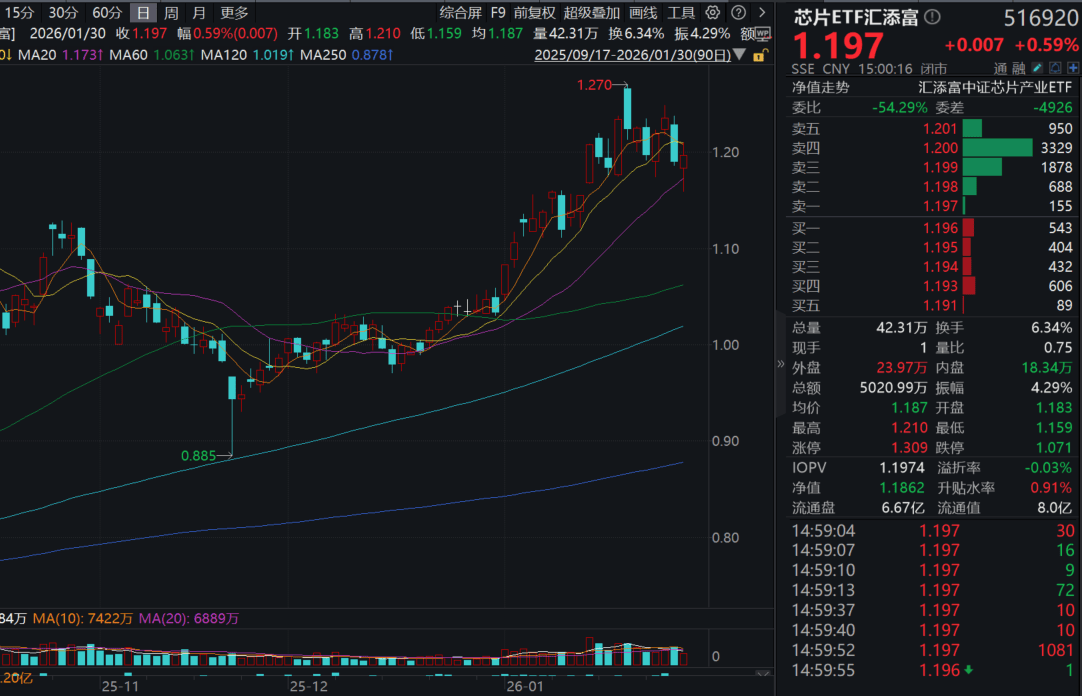
芯片逆市爆发,澜起科技涨超12%,将赴港IPO!芯片ETF汇添富(516920)收涨近1%!全球存储芯片行业迎来业绩爆发期!
Sou Hu Cai Jing· 2026-01-30 09:45
Core Viewpoint - The semiconductor sector is experiencing a surge, with significant interest in the chip ETF Huatai (516920), which saw a near 2% increase during trading, closing up 0.59% with a trading volume exceeding 500 million yuan. This reflects a positive trend in fund inflows over the past five days [1]. Group 1: Market Performance - The Huatai chip ETF (516920) recorded a closing price of 1.197, with a daily increase of 0.59% [1]. - The ETF's trading volume reached 42.31 million shares, with a turnover rate of 6.34% [1]. - Notable stocks within the ETF include Lanke Technology, which surged over 12%, and other companies like Zhaoyi Innovation and Huada Technology, which increased by over 2% [1]. Group 2: Company Financials - Samsung Electronics reported a record revenue of 93.8 trillion won for Q4 2025, marking a 23.8% year-on-year increase, while operating profit soared by 209.2% [3]. - SK Hynix also set a record with a total revenue of 97.15 trillion won for 2025, alongside an operating profit of 47.21 trillion won and a net profit of 42.95 trillion won [3]. - Beijing Junzheng announced price adjustments for its storage and computing chips, projecting a net profit of 370 to 403 million yuan for 2025, reflecting a year-on-year growth of 1.05% to 10.05% [3]. Group 3: Industry Trends - The global storage chip industry is entering a performance boom, driven by a "super cycle" in semiconductor demand, particularly from AI servers and smartphone upgrades [4]. - The demand for high-end storage chips like HBM and DDR5 is expected to rise significantly, with the global server market projected to reach 16 million units in 2024, a 1.91% increase [4]. - The current price increase in chips is attributed to a shift towards higher-margin products, with a focus on storage chips due to robust demand from both AI and smartphone sectors [5]. Group 4: ETF Characteristics - The Huatai chip ETF (516920) tracks the CSI Chip Industry Index, with 72% of its holdings in integrated circuits and 23% in semiconductor materials and equipment [5]. - The ETF has the lowest management fee rate of 0.15% and a custody fee of 0.05% among chip-themed ETFs [5]. - The top ten constituent stocks account for 56.29% of the ETF's total weight, indicating a concentrated investment strategy [5].



存储涨价“冲击波”来袭!消费电子行业打响成本防御战
证券时报· 2026-01-30 09:32
以下文章来源于e公司 ,作者证券时报 严翠 e公司 . e公司,证券时报旗下专注上市公司新媒体产品,立志打造A股上市公司资讯第一平台。提供7x24小时上市公司标准化快讯,针对可能影响上市公司股价的 主题概念、行业事件及时采访二次解读,从投资者需求出发,直播上市公司有价值的活动、会议。 2026年以来,存储产品延续暴涨行情,三星电子、SK海力士近期将一季度NAND闪存的供应合约价格上调超过100%,DRAM(内存)同样面 临供应紧张,价格持续攀升。 目前,三星电子已着手与客户就第二季度的NAND价格进行新一轮谈判,市场普遍预计价格上涨的势头将在第二季度延续。多家机构分析认为,AI 浪潮驱动的"存储芯片超级周期"正全面到来。花旗预计,2026年DRAM与闪存产品的平均售价或将分别上涨88%、74%,涨幅高于该行此前预测的 53%、44%。 证券时报记者多方采访获悉,此轮存储超级涨价周期"冲击波"的溢出效应已显现,消费电子终端厂商面对成本上涨和缺料问题,试图通过产品价格 调整、内部降本增效等方式化解压力,预计存储涨价周期将在一定时间内影响手机企业的库存、出货节奏乃至竞争格局。 数据来源:申港证券研究所 存储产品持续 ...


【焦点复盘】沪指深V回升4100点失而复得,AI软硬件同步回暖,农业板块全天强势
Xin Lang Cai Jing· 2026-01-30 09:26
Market Overview - A total of 48 stocks hit the daily limit up, while 21 stocks faced limit down, resulting in a sealing rate of 70%. Hunan Gold achieved five consecutive limit ups, Baichuan Co. had three, and Tiandi Online recorded six limit ups in ten days [1][3] - The three major A-share indices showed mixed results, with the Shanghai Composite Index down by 0.96%, the Shenzhen Component Index down by 0.66%, and the ChiNext Index up by 1.27%. The total trading volume in the Shanghai and Shenzhen markets was 2.84 trillion yuan, a decrease of 394.5 billion yuan from the previous day [1][8] Sector Performance - The agriculture, paper, computing hardware, and tourism hotel sectors led the gains, while non-ferrous metals, oil and gas, and real estate sectors faced declines [1] - The agricultural sector saw a price increase of 0.9% in edible agricultural products from January 19 to 25, indicating a recovery trend, which boosted stocks like Nongfa Seed Industry and Denghai Seeds [7][15] Stock Analysis - The advancement rate for consecutive limit-up stocks dropped to 10.53%, with only two stocks achieving three or more consecutive limit ups. The non-ferrous metals sector faced significant sell-offs due to a sharp correction in metal futures prices [3][4] - Stocks in the computing hardware sector performed strongly, driven by increased investments from major tech companies like Amazon and Microsoft, with companies like Jieput and Zhishang Technology hitting limit up [4][5] AI Applications - The AI application sector gained attention as Tencent and Baidu announced plans to distribute red envelopes during the Spring Festival, leading to a surge in stocks like Tiandi Online and Yidian Tianxia [5][19] - Alibaba plans to increase its investment in AI infrastructure to 480 billion yuan over the next three years, further stimulating demand in the computing sector [29] Semiconductor and Storage Industry - Major storage manufacturers like SK Hynix and Samsung reported better-than-expected earnings, contributing to a positive sentiment in the semiconductor supply chain, with stocks like Hengshuo and Lanqi Technology reaching historical highs [6][11] - The semiconductor equipment and testing sectors also saw significant gains, with stocks like Taiji Industrial and Baicheng Co. hitting limit up [6][12] Future Outlook - The market is expected to remain volatile, particularly in the resource sector, as significant sell-off pressures may continue. However, the computing hardware and semiconductor sectors are likely to recover, supported by strong demand and investment [8][9]

巨头酣战HBM市场之际 铠侠卡位AI高密度存储拥抱“泼天”需求
智通财经网· 2026-01-30 09:13
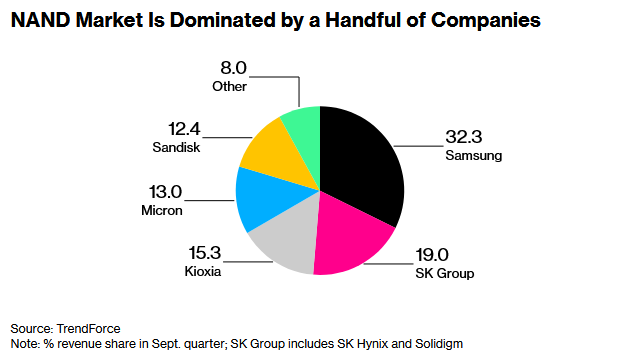
智通财经APP获悉,在日本NAND闪存制造商铠侠看来,当其竞争对手——三星电子、SK海力士、美光科技——正忙于争夺高带宽内存(HBM)市场 时,其有机会抓住人工智能(AI)数据中心高密度存储领域的增长机遇。铠侠执行董事长斯泰西·史密斯表示,这些竞争对手并未大力投资增加固态硬 盘及其他先进NAND存储产品的产能,而这些产品正是云服务提供商为满足AI对数据的需求所必需的。他在接受采访时表示:"我们在恰好的时机, 针对这些细分市场拥有了恰好的产品领导地位。" 史密斯表示,铠侠的目标是以"略快于"整体位增长率的速度提高产能(今年的位增长率估计约为20%),以帮助这家闪存制造商获得市场份额。此次扩 产大部分将在本周宣布的新领导层领导下进行——63岁的执行副总裁太田浩雄将出任首席执行官一职,接替70岁的早坂信夫。 分析师Jake Silverman表示:"SanDisk给出的第三季度盈利指引比预期高出163%,反映出NAND价格自去年10月以来快速攀升的持续上涨趋势。这推 动毛利率远超以往周期的峰值。未来1-2年内缺乏有意义的产能增加,表明在强劲的AI推理需求支撑下,NAND价格仍有进一步上涨空间,因为更大 的模型和推理 ...
空前的半导体存储器泡沫已经到来?
日经中文网· 2026-01-30 08:00
Core Viewpoint - The price of DRAM is experiencing significant increases due to heightened demand from AI applications, leading to supply shortages in consumer products like PCs [2][4]. Group 1: Price Trends - The bulk trading price of DRAM products for November-December 2025 has risen by 40% compared to September, and over three times compared to December 2024 [2][6]. - DDR4 8GB is priced around $6.36, and 4GB is priced at approximately $4.84, both reflecting a 40% increase from September [6]. Group 2: Supply and Demand Dynamics - Major companies are prioritizing supply for AI applications, resulting in insufficient availability for consumer products [2][5]. - In October 2025, a rare situation occurred where bulk trading prices could not be established due to supply shortages [4]. Group 3: Market Impact - The rise in DRAM prices is forcing some end products to increase their prices, with companies like Mouse Computer and HP indicating potential price hikes due to DRAM costs [8]. - IDC predicts that in a pessimistic scenario, PC shipments in 2026 could decrease by 8.9% compared to the previous year [8].