地平线

Search documents
强制安装!AEBS将覆盖所有乘用车,产业链达千亿元规模
Hua Xia Shi Bao· 2025-05-18 10:12
Core Viewpoint - The newly drafted mandatory national standard for automatic emergency braking systems (AEBS) in light vehicles is set to replace the existing voluntary standard, expanding its applicability and requiring M1 and N1 category vehicles to be equipped with AEBS [2][3] Industry Impact - The implementation of the mandatory standard signifies a fundamental shift in safety philosophy, transforming active safety features from marketing differentiators to industry entry barriers [5] - The new regulations are expected to create a significant market opportunity, with the global AEBS market projected to reach approximately 4.9 trillion yuan by 2031, growing at a compound annual growth rate of 5.8% [5] Market Penetration - As of early 2024, the overall penetration rate of AEBS in China is around 60%, with higher rates in new energy vehicles at 62.9% [4] - The demand for AEBS in the mainstream passenger car market (priced between 80,000 to 160,000 yuan) could lead to an annual increase of over 5 million systems [6] Domestic Replacement Acceleration - The core components of AEBS have been dominated by international Tier 1 suppliers, but the new standard is accelerating the domestic replacement process, with domestic market share expected to rise from 45% in 2024 to over 70% by 2027 [9] - The market response has been positive, with significant stock price increases for domestic AEBS-related companies following the announcement of the new standard [9] Competitive Landscape - The AEBS industry is witnessing a race for capacity, with over 5 billion yuan invested in AEBS-related capacity by major listed companies since 2024 [11] - The competition is intensifying among different technical solutions, with a shift towards a hybrid approach of camera and radar systems expected to dominate the economic vehicle segment [8] Standardization Effects - The new standard will unify performance benchmarks, reducing market confusion and enhancing consumer understanding of AEBS capabilities [10] - All systems will need to meet minimum performance thresholds, which will help eliminate substandard products and refocus competition on user experience [10]


晚点独家丨比亚迪智能化业务新变动:廖杰重回地平线,辅助驾驶、座舱团队整合
晚点LatePost· 2025-05-16 13:33
Core Viewpoint - BYD's intelligent driving business has entered a relatively stable phase after over two years of adjustments, with significant organizational changes reflecting its strategic focus on smart driving technology [2][4]. Group 1: Organizational Changes - Recent personnel changes in BYD's intelligent driving division indicate a shift in strategy, with key figures such as Liao Jie and Tang Minxin leaving the company [4][6]. - The restructuring has led to the integration of two major self-research teams, "Tianxuan" and "Tianlang," into a single team to streamline operations and enhance resource allocation [6][7]. Group 2: Strategic Focus - BYD has elevated intelligent driving to one of its core strategies, with Chairman Wang Chuanfu emphasizing its importance in internal meetings [6]. - The company aims to replace supplier solutions with self-developed technologies to reduce overall vehicle costs, as demonstrated by the successful transition to self-researched solutions in the "Tianshen Zhi Yan C" platform [7]. Group 3: Market Position and Goals - As the world's highest-selling new energy vehicle manufacturer, BYD has set an ambitious sales target of 5.5 million vehicles for the year, balancing the desire for technological leadership with cost-effectiveness [7].


专用车如何升级突破?众专家倡议“场景化创新驱动”
Jing Ji Guan Cha Wang· 2025-05-16 13:08
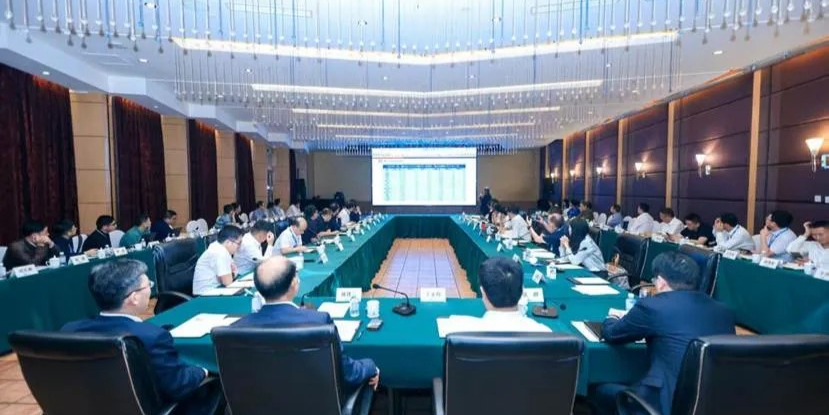
Core Insights - The conference held by the Electric Vehicle Hundred People Association focused on the transformation of the specialized vehicle industry, emphasizing "high-end, intelligent, and green" development paths [2] - The industry is undergoing a significant shift driven by policy support and technological advancements, with a notable increase in the penetration rate of new energy in specialized vehicles [3][4] Policy and Market Dynamics - The penetration rate of new energy in specialized vehicles is projected to rise from 1% in 2021 to 15% by 2025, outpacing that of passenger vehicles [3] - Strong policy initiatives post-2020, particularly the "dual carbon" goals, have accelerated the electrification of public sector vehicles, with a forecast of over 300,000 new energy specialized vehicles sold in 2024, marking a nearly 50% growth [3] Technological Innovations - Breakthroughs in charging technology have reduced the charging time for new energy heavy trucks from several hours to 30 minutes, alleviating "range anxiety" [3] - The integration of advanced technologies, such as the "Rui Control E Platform" by Yutong, has led to a 20% reduction in energy consumption [4] - The domestic production rate of key components like high-rate batteries and chips has exceeded 90%, with costs decreasing by 40% compared to three years ago [4] Scene-based Innovation - The future of specialized vehicles lies in identifying high-value niche markets rather than competing in saturated markets [5] - Companies are innovating by developing products tailored to specific operational scenarios, such as electric mixing trucks achieving a 71% penetration rate due to their suitability for short-distance operations [3][5] Industry Collaboration and Ecosystem Development - The specialized vehicle sector is witnessing an "ecological competition" that is reshaping the industry landscape, with a projected 96% year-on-year growth in specialized vehicle sales in Shiyan by 2024 [7] - Collaborative efforts among companies in Shiyan have led to significant reductions in logistics costs and improved product development cycles [6] International Expansion and Market Challenges - Chinese specialized vehicle exports are transitioning from low-end products to targeting high-end markets, with a focus on overcoming barriers in the European and American markets [8] - The industry faces challenges such as stringent emission standards and the need for localized operations to enhance competitiveness [8] Future Directions - The transformation of the specialized vehicle industry is characterized by a shift from cost advantages to system capability outputs, integrating manufacturing, services, and data [9] - Key strategies for future success include strengthening foundational innovations in emerging technologies and establishing a comprehensive output model that combines technology, standards, and ecosystems [9]
独家丨比亚迪智能化业务新变动:廖杰重回地平线,辅助驾驶、座舱团队整合
晚点Auto· 2025-05-16 10:50
Core Viewpoint - After more than two years of adjustments, BYD's intelligent business structure has entered a relatively stable phase, reflecting the company's strategic focus on intelligent driving and related technologies [2][3]. Group 1: Organizational Changes - Recent personnel changes at BYD's intelligent business unit highlight the company's strategic decisions and investments in intelligent driving, with key figures like Liao Jie and Tang Minxin leaving their positions [3][5]. - Liao Jie, who joined BYD in August 2023, was involved in the self-research of intelligent driving algorithms and has now returned to Horizon Robotics [3][5]. - The restructuring has led to a clearer division of responsibilities within the intelligent business unit, with a focus on integrating intelligent driving and cockpit functions under single management [6]. Group 2: Strategic Focus on Intelligent Driving - BYD has elevated intelligent driving to one of its core strategies, with significant investments and rapid recruitment aimed at catching up in the market [5][6]. - The company has formed two major self-research teams, "Tianxuan" and "Tianlang," which were later consolidated into a single team to streamline operations [5][6]. - The integration of intelligent driving and cockpit management is seen as a way to reduce costs and improve efficiency, aligning with the trend of combining these functionalities into a single computing chip [6]. Group 3: Technological Development and Market Position - BYD is focused on the self-research and mass production of the "Tianshen Zhi Yan B" platform, which aims to implement advanced driving features at a lower cost by replacing supplier solutions with in-house developments [6]. - The company has successfully validated this strategy with the "Tianshen Zhi Yan C" platform, demonstrating its capability to integrate advanced features into more affordable vehicle models [6]. - Unlike other emerging car manufacturers, BYD, as the world's top-selling new energy vehicle company, balances its desire for technological leadership with cost and return considerations, setting a sales target of 5.5 million vehicles for the year [6].

如何定位国产智驾芯片的终局价值?
Tai Mei Ti A P P· 2025-05-16 02:50
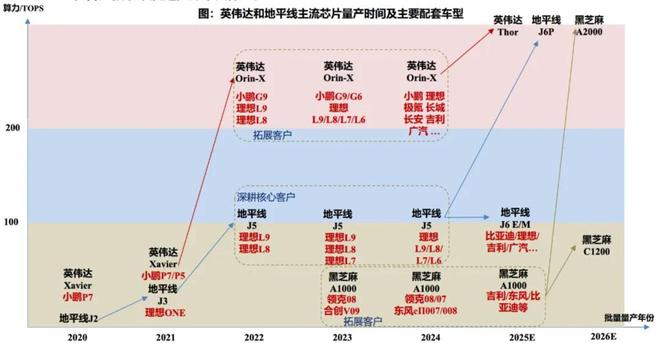
Core Insights - The automotive industry is experiencing a shift from traditional E/E architecture to a centralized architecture, enabling companies to take control of software development and redefine vehicle core functionalities [1] - The trend towards self-developed chips is driven by the desire to capture profits from the high-margin ends of the "smile curve" (chips and algorithms) [1] - The "smart driving equality" movement initiated by BYD presents both opportunities for automakers and a historic chance for smart driving suppliers [2] Industry Dynamics - In the context of intensified competition and the saturation of smart driving solutions, automakers prioritize getting their products to market rather than focusing solely on self-development [2][3] - The window for automakers to capitalize on this trend is limited to approximately two years [3] Competitive Landscape - NVIDIA currently dominates the smart driving market with a 45.4% share, primarily due to its Orin-X chip, which is highly regarded for its AI acceleration capabilities [4] - New entrants in the market, such as Horizon and Black Sesame, have made significant advancements in chip capabilities, allowing them to compete with NVIDIA's offerings [5][8] - The validation timeline for domestic chips is only 2-3 years behind NVIDIA, indicating a narrowing gap in competition [6][8] Chip Development and Cost Analysis - The development of chips is a long-term endeavor, with significant time required for accumulation and iteration [10] - Companies need to achieve a minimum production scale and possess strong iteration capabilities to make self-developed chips economically viable [11] - Cost analysis shows that the manufacturing costs of chips vary significantly based on technology nodes, with the total cost for advanced chips reaching up to 3915 yuan [12] Data and Talent Acquisition - Automakers have a substantial advantage in data acquisition for training smart driving systems, with companies like Tesla and Huawei leading in vehicle deployment [15] - The scale of talent and internal collaboration is crucial for the development of advanced smart driving technologies, with major players employing large teams dedicated to this field [16] Conclusion - BYD, while relying on external suppliers for chips and algorithms, is actively working on self-developed smart driving solutions, indicating a trend among leading automakers to balance self-development with external sourcing [17]


四维图新2024年度网上业绩说明会问答实录
Quan Jing Wang· 2025-05-16 02:23
Core Viewpoint - The company aims to significantly reduce losses in 2025, with a focus on improving performance across various business segments, particularly in data compliance and intelligent driving solutions. Group 1: Financial Performance and Projections - The company reported a loss of over 1 billion in 2024, primarily influenced by its subsidiary, Siwei Zhihui, and aims to achieve a substantial turnaround in 2025 [2][11]. - The company’s data compliance business has seen rapid growth, becoming a core pillar of the Zhiyun segment, with a revenue increase of 28.96% in 2024 [20][21]. - The company expects to achieve significant revenue growth in 2025, driven by new orders in intelligent driving products, with 300,000 basic driving products and 60,000 parking products already secured [36][67]. Group 2: Business Strategy and Market Position - The company is focusing on a comprehensive solution that integrates intelligent driving, intelligent cockpit, and chip development, aiming to enhance its competitive edge in the market [25][51]. - The company is actively pursuing partnerships and collaborations, including with Huawei for the development of high-precision maps and data compliance solutions [4][96]. - The company acknowledges the challenges posed by intense competition in the automotive industry and is adjusting its strategies to focus on core competencies and cost control [19][51]. Group 3: Operational Developments - The company has established a complete low-altitude economic solution through its subsidiary, Liufen Technology, and is actively pursuing project implementations in multiple cities [3]. - The company has received new orders from various clients, including Xiaopeng and Wuling, indicating a positive trend in its order book [4][6]. - The company is committed to enhancing its operational efficiency through cost control measures and optimizing its organizational structure [19][73]. Group 4: Market Challenges and Responses - The company faces significant challenges due to the competitive landscape and has experienced a decline in revenue in its intelligent driving segment, which decreased by 28.08% in 2024 [6][28]. - The company is implementing strategies to improve its market recognition and brand awareness, particularly in the context of its intelligent driving and high-precision mapping solutions [74][96]. - The company is aware of shareholder concerns regarding stock performance and is taking steps to improve communication and transparency regarding its business developments [45][71].

最严智驾监管后的30天:车企集体改口,行业从狂热到退烧
Nan Fang Du Shi Bao· 2025-05-15 02:01
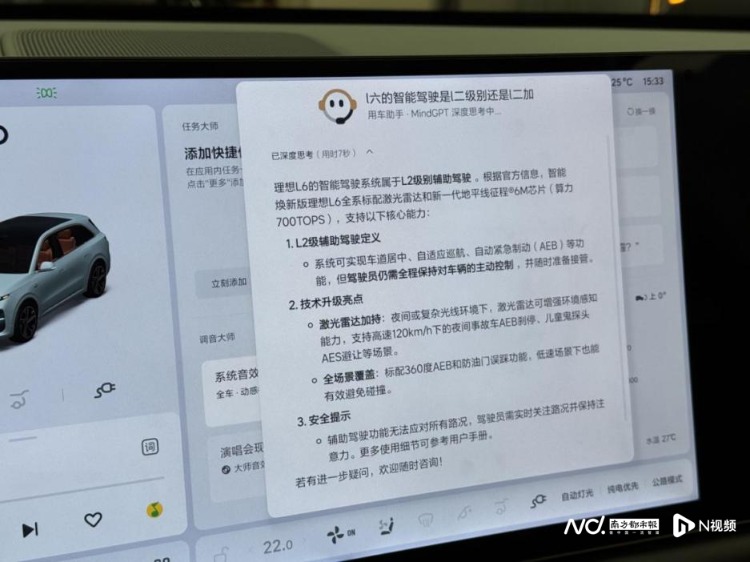
Core Viewpoint - The recent regulatory changes by the Ministry of Industry and Information Technology (MIIT) have significantly impacted the marketing strategies of automotive companies regarding intelligent driving features, leading to a shift from promoting "high-level autonomous driving" to "combined auxiliary driving" [3][6][16] Group 1: Regulatory Impact - The MIIT's notification prohibits the use of vague terms like "automatic driving" and "high-level autonomous driving," mandating a unified terminology of "combined auxiliary driving" (L2 level) [6] - Following the new regulations, companies like Huawei and Xiaomi have altered their promotional materials to reflect the new terminology, emphasizing "intelligent auxiliary driving" instead of previous terms [6][9] - The notification has also led to a reduction in the frequency of over-the-air (OTA) updates, with companies now required to manage risks and validate updates more thoroughly before deployment [8][14] Group 2: Marketing Adjustments - Automotive sales personnel have begun to avoid mentioning "intelligent driving" during customer interactions, focusing instead on safety and regulatory compliance [5][9] - The Shanghai Auto Show showcased a noticeable absence of terms related to "intelligent driving," with companies like XPeng emphasizing safety through initiatives like the "AI Auxiliary Driving Safety Training Camp" [9][11] - Despite the regulatory changes, some companies continue to engage in semantic debates regarding the terminology used for their driving assistance features [8][16] Group 3: Technological Shift - The new regulations have shifted the focus from software-defined vehicles to core technologies such as battery management and chassis tuning, with companies like BYD and Geely highlighting these aspects at recent exhibitions [13][14] - Laser radar technology has regained attention as a safety feature, with its mention in technical discussions increasing significantly compared to previous years [13] - The introduction of national standards for laser radar performance marks a critical transition towards prioritizing safety over mere technical specifications in the industry [14][16] Group 4: Industry Dynamics - The regulatory environment has led to a division within the industry, with leading companies leveraging their technological and financial advantages to expand their market presence, while second-tier brands struggle to survive [16] - The rise of supply chain companies focusing on "laser radar + domestic chips" indicates a shift in competitive dynamics within the automotive sector [15][16] - The industry's evolution reflects a broader understanding that true intelligence in driving technology lies in adhering to safety regulations rather than an uncritical embrace of advanced technologies [16]
自研算法是否将成为主机厂的必选项?——第三方算法厂商的“护城河”探讨
2025-05-13 15:19
Summary of Conference Call Notes Industry Overview - The conference call discusses the challenges and opportunities in the autonomous driving industry, particularly focusing on traditional automakers and their ability to develop self-driving algorithms and chips compared to new entrants and leading third-party companies [1][3][4]. Key Points and Arguments Challenges for Traditional Automakers - Traditional automakers are significantly weaker in self-developed autonomous driving algorithms compared to new players and leading third-party firms, due to factors such as leadership quality, development models, slow iteration speeds, and insufficient data accumulation [1]. - The main barriers for traditional automakers in self-developing algorithms include: - **Technical Capability**: Traditional firms lack the understanding and development capabilities for algorithms compared to new entrants [3]. - **Development Cycle**: New players can iterate versions in one to two weeks, while traditional firms have slower iteration speeds [3]. - **Financial Investment**: Developing autonomous driving algorithms is costly, with leading firms spending millions annually on talent and computational resources [3]. - **Data Closure**: Traditional automakers have lower data accumulation rates due to lower penetration of intelligent features [3]. Self-Developed Chips - The challenges in self-developing chips include: - **Technical Capability**: Traditional firms lag in core architecture and IP selection [4]. - **Development Cycle**: The fastest design to production cycle is about 1.5 years, but traditional firms face delays due to rigid development models [4]. - **Financial Support**: The cost of chip production exceeds 150 million yuan, which is burdensome for many traditional automakers [4]. - **Algorithm and Chip Optimization**: Many traditional firms struggle to define their algorithm direction, complicating optimization efforts [4]. Market Segmentation - The autonomous driving market can be segmented into three tiers: - **First Tier**: Companies like Huawei, Xiaopeng, and Li Auto that are fully self-developing and have achieved mass production [5]. - **Second Tier**: Companies like Xiaomi, Geely, and BYD that are combining self-development with third-party collaborations [5]. - **Third Tier**: Companies like SAIC and FAW that rely entirely on third-party solutions [5]. Opportunities for Mid-Tier Companies - Mid-tier companies have the potential to either advance or decline based on their ability to enhance R&D capabilities, increase financial investment, shorten development cycles, and collaborate with advanced technology partners [6]. Conditions for Successful Chip Development - Companies aiming to develop chips should have: - **Moderate Computational Power**: At least 200 TOPS or 80 TOPS [7]. - **Data Closure**: A significant amount of data from mass-produced vehicles, ideally over 600,000 units [7]. - **Computational Requirements**: A minimum of 300 million FLOPS to ensure iteration speed and closure capabilities [7]. - **Leadership and Organizational Support**: Strong leadership with business acumen and a supportive organizational structure for rapid iteration [7]. IP Licensing and Costs - The industry standard for IP licensing includes: - A one-time authorization fee of approximately 30 million yuan, with an annual maintenance fee of about 2 million yuan [8][9]. - Royalties based on chip sales, typically around 5% [8][9]. Data Scarcity and Its Importance - Data scarcity remains a critical issue, as companies with rich data resources can optimize and expand their capabilities more effectively than those with limited data [14]. Future Trends and Developments - The autonomous driving technology landscape is expected to undergo significant changes in the next two years, with a focus on world models and reinforcement learning [29][30]. - Companies that continue to invest in R&D and enhance their technical capabilities may catch up with or surpass current leaders in the long term [29]. Academic Insights - Academic discussions are focusing on using reinforcement learning for model generation and exploring new architectures to improve existing models [32]. Other Important Insights - The impact of new regulations from the Ministry of Industry and Information Technology (MIIT) is expected to widen the gap between first and second-tier companies, affecting market competition and investment decisions [20][21]. - The transition from software to hardware development poses challenges for companies like Monta, which require significant experience in hardware processes [11]. This summary encapsulates the key discussions and insights from the conference call, highlighting the competitive landscape and the challenges faced by traditional automakers in the autonomous driving sector.
智驾芯片,国产替代到哪一步了?
3 6 Ke· 2025-05-13 11:30
Core Insights - The optimistic forecast for the penetration rate of intelligent driving (NOA) suggests an annual growth of 5%, reaching 55% for highways and 25% for urban areas by 2030 [1] - The increase in penetration rates is attributed to competitive pricing strategies among automakers, which have driven down the costs of intelligent driving systems [1] - The domestic production of key components, such as lidar and chips, has significantly contributed to cost reductions in intelligent driving hardware [1] Summary by Categories Intelligent Driving Chip Market - Intelligent driving chips are categorized by computing power: low (<30 TOPS), medium (30-150 TOPS), and high (>150 TOPS) [2] - The domestic replacement rate for low-power chips is high, with products like Horizon J2 and J3 gaining traction due to their cost-effectiveness and local service capabilities [3][4] - Horizon J2/J3 chips are priced at $50 each, significantly lower than Mobileye's EyeQ4, which enhances their market appeal [5] Medium-Power Chips - Medium-power chips support more complex driving algorithms, with products like NVIDIA Xavier and Horizon J5 leading the market [6] - Horizon J5 has achieved a market share of 5.1% with a projected shipment of 26.9 million units by 2024 [6][7] - The Horizon J6 series targets both urban and highway NOA applications, with J6M and J6E designed for different driving environments [7] High-Power Chips - High-power chips are essential for complex urban driving scenarios, with products like NVIDIA Orin-X and Tesla HW series dominating the market [9][10] - NVIDIA's Orin-X holds a 39.8% market share, while Tesla's FSD accounts for 25.1% [11] - The Horizon J6P, with a computing power of 560 TOPS, is positioned as a strong competitor to NVIDIA's offerings [11][12] Emerging Technologies - The NIO-developed Shenji NX9031 chip, with a performance equivalent to four flagship chips at 1000 TOPS, represents a significant advancement in domestic chip technology [13] - The A2000 series from Black Sesame targets various levels of autonomous driving needs, with performance metrics that could rival NVIDIA's Thor chip [12]
【新能源周报】新能源汽车行业信息周报(2025年5月5日-5月11日)
乘联分会· 2025-05-13 08:35
Industry Information - During the "May Day" holiday, over 80 cities in China hosted nearly 100 auto shows, with smart and new energy vehicles becoming the main drivers of consumption, as sales of new energy vehicles exceeded 60% in many locations [9][10] - Continental Group and Horizon's joint venture, Zhijia Continental, launched the Astra and Luna driver assistance systems, securing multiple mass production orders from leading automakers [9][10] - NVIDIA is developing a new AI chip compliant with U.S. export regulations to maintain its market share in China, with samples expected for testing by June [11] - Uber partnered with Momenta to deploy autonomous taxis in Europe by early 2026 [11] - The U.S. imposed a 25% tariff on key automotive parts, which Japan strongly opposes [12] - Waymo announced its autonomous taxi fleet has surpassed 1,500 vehicles, with plans to produce 2,000 more in Arizona [12][13] - Pony.ai and Uber will integrate their Robotaxi services on the Uber platform in the Middle East, expanding to 15 cities internationally [13][14] - The European Parliament approved relaxed carbon emission rules for automakers, allowing more time for compliance [14] - CATL launched a 9MWh super-capacity energy storage system, TENER Stack, which improves energy density and reduces construction costs [19][20] - The automotive import and export total for March increased by 32.1% month-on-month, with exports growing by 38.9% [19] Policy Information - Jiangsu Province announced a new pricing structure for industrial electricity to promote renewable energy consumption and reduce costs for businesses [3][32] - Guangdong's Nanao County issued interim measures for managing new energy vehicle charging and swapping infrastructure [4][33] - Beijing set standards for electric vehicle battery swapping times, with passenger vehicles limited to 4 minutes and commercial vehicles to 5 minutes [34] - Sichuan Province will implement regulations for the recycling and utilization of used power batteries starting June 1 [36] - The Ministry of Industry and Information Technology is proposing new safety standards for electric vehicle door handles [40] Company Information - Avita's global R&D center has been inaugurated, facilitating collaboration with Huawei on new product development [43] - Xiaomi has renamed its "smart driving" features to "assisted driving" in response to national standards [45] - NIO delivered its 700,000th vehicle at its Wuhan research facility [6]