格力电器

Search documents
多重利好叠加四川消费市场热闹开场
Xin Lang Cai Jing· 2026-01-03 19:18
Core Insights - The consumption market in Sichuan is experiencing a vibrant start in 2026, driven by favorable factors such as the New Year holiday, the "old-for-new" national subsidy policy, and the launch of the "Tianfu Boutique" Spring Consumption Month [1] Group 1: Sales Performance - From January 1 to 2, 550 key commercial enterprises in Sichuan achieved an average daily revenue of 610 million yuan, representing a year-on-year increase of 0.9% [1] - Offline consumption in Sichuan totaled 19.733 billion yuan, with a year-on-year growth of 3.54% [1] Group 2: "Old-for-New" Policy Impact - A total of 7,293 enterprises in Sichuan actively promoted the "old-for-new" policy through various channels, stimulating consumer demand [2] - Sales of home appliances and digital products under the subsidy program reached 182,000 units, generating 740 million yuan in consumption [2] - Major retailers like JD.com and Suning launched promotional activities, with discounts as low as 75% and maximum subsidies of 3,000 yuan for mobile phone exchanges [2] Group 3: Consumer Experience and Events - Various cross-year activities were organized across Sichuan to enhance the festive atmosphere, significantly boosting consumer engagement [4] - In Chengdu, the "Chengdu Lights Up for You" event attracted thousands, leading to a revenue increase of 93.7% in the Jiazi Park business district, with visitor numbers up by 111.4% [4] - The integration of culture, tourism, and sports is being promoted to create immersive holiday experiences, with significant impacts on local consumption [5] Group 4: Dining and Online Consumption Trends - The restaurant sector saw a daily average revenue of 230 million yuan from 139 enterprises, marking a year-on-year increase of 6.5% [6] - Online consumption demand surged, particularly for grocery delivery and restaurant takeout services, with a notable increase in revenue for key restaurants in Chengdu [6]
2025年深市公司分红总额超5000亿元
2 1 Shi Ji Jing Ji Bao Dao· 2026-01-03 08:42
Core Viewpoint - The article highlights the positive trend in cash dividends among companies listed in the Shenzhen Stock Exchange, indicating a stable and transparent dividend mechanism that enhances shareholder recognition and boosts the market image and long-term investment value of companies [1][2]. Group 1: Dividend Trends and Amounts - In 2025, companies in the Shenzhen market are expected to distribute over 500 billion yuan in dividends, with more than 18 companies anticipated to announce distributions exceeding 10 billion yuan at the beginning of 2026 [1]. - By the end of 2025, a total of 5,475.59 billion yuan in cash dividends will be distributed, contributing to a cumulative total of over 20 trillion yuan during the "14th Five-Year Plan" period [4]. - The number of companies disclosing mid-term dividend plans in 2025 reached 535, an increase of 7.24% year-on-year [3]. Group 2: Regulatory and Policy Support - Recent policies, including the new "National Nine Articles," have strengthened the regulation of cash dividends and increased incentives for companies with high-quality dividend practices [2]. - The China Securities Regulatory Commission (CSRC) has issued guidelines to encourage cash dividends, aiming to enhance the frequency and level of dividends among listed companies [2]. Group 3: Financial Performance and Governance - In the first three quarters of 2025, Shenzhen-listed companies achieved a total operating revenue of 15.72 trillion yuan, a year-on-year increase of 4.31%, and a net profit attributable to shareholders of 903.02 billion yuan, up 9.69% [2]. - The improvement in corporate governance has led to more standardized and predictable dividend distributions, enhancing transparency and investor confidence [3]. Group 4: Sector-Specific Dividend Highlights - Leading companies in the consumer and financial sectors have shown strong dividend distribution activity, with notable examples including Wuliangye and Gree Electric, which announced significant cash distributions in late 2025 [5][6]. - In the advanced manufacturing sector, companies like CITIC Special Steel and Weichai Power have also implemented substantial mid-term dividends, reflecting a robust return mechanism [5][6]. - The green and low-carbon sector is represented by companies like CATL, which distributed significant dividends, further demonstrating the trend of stable dividends across various industries [7].
2025年深市公司分红总额超5000亿元
21世纪经济报道· 2026-01-03 08:37
Core Viewpoint - The article highlights the positive trend of stable dividend distribution among companies listed in the Shenzhen market, with a total dividend payout exceeding 500 billion yuan in 2025, indicating a strong commitment to shareholder returns and enhancing market image [1][4]. Group 1: Dividend Policy and Regulatory Environment - Recent regulatory measures, including the new "National Nine Articles," have strengthened the supervision of cash dividends and incentivized companies with robust dividend policies [4]. - The China Securities Regulatory Commission (CSRC) has issued guidelines to encourage cash dividends, aiming to enhance the overall dividend levels and frequency among listed companies [4]. - The profitability of companies supports regular dividend distributions, with Shenzhen companies reporting a total revenue of 15.72 trillion yuan and a net profit of 903.02 billion yuan in the first three quarters of 2025, reflecting a year-on-year growth of 4.31% and 9.69% respectively [4]. Group 2: Dividend Distribution Trends - In 2025, Shenzhen companies distributed a total of 547.56 billion yuan in cash dividends, with a significant increase in mid-term dividend announcements, up 25.98% year-on-year [7]. - Approximately 60% of companies that declared mid-term dividends had a payout ratio exceeding 20%, with 105 companies exceeding 50%, indicating a strong commitment to returning profits to shareholders [7]. - The number of companies disclosing mid-term dividend plans increased by 7.24% in 2025, with 535 companies participating [5]. Group 3: Sector-Specific Dividend Highlights - Leading companies in the consumer and financial sectors have shown strong dividend distribution, with notable examples including Wuliangye and Gree Electric, which announced substantial cash distributions [9]. - In the financial sector, companies like GF Securities and Ningbo Bank also demonstrated active dividend policies, contributing to the overall positive trend [9]. - The advanced manufacturing and digital economy sectors are also participating in this trend, with companies like CITIC Special Steel and Yilian Network announcing significant mid-term dividends [10].


格力电器取得可变内径式焊渣防护机构专利
Sou Hu Cai Jing· 2026-01-03 04:52
声明:市场有风险,投资需谨慎。本文为AI基于第三方数据生成,仅供参考,不构成个人投资建议。 来源:市场资讯 国家知识产权局信息显示,珠海格力电器股份有限公司取得一项名为"可变内径式焊渣防护机构及焊渣 防护方法"的专利,授权公告号CN115365714B,申请日期为2022年8月。 天眼查资料显示,武汉凌达压缩机有限公司,成立于2011年,位于武汉市,是一家以从事通用设备制造 业为主的企业。企业注册资本3000万人民币。通过天眼查大数据分析,武汉凌达压缩机有限公司参与招 投标项目31次,专利信息61条,此外企业还拥有行政许可42个。 珠海格力电器股份有限公司,成立于1989年,位于珠海市,是一家以从事电气机械和器材制造业为主的 企业。企业注册资本601573.0878万人民币。通过天眼查大数据分析,珠海格力电器股份有限公司共对 外投资了99家企业,参与招投标项目5000次,财产线索方面有商标信息5000条,专利信息5000条,此外 企业还拥有行政许可908个。 ...

格力股东万万没想到的意外之喜:线上竟能买到平价茅台!
Sou Hu Cai Jing· 2026-01-02 15:44
Core Viewpoint - The contrasting business models and channel strategies of Kweichow Moutai and Gree Electric Appliances highlight the challenges and opportunities each company faces in their respective industries. Group 1: Kweichow Moutai's Strategy - Kweichow Moutai has launched a direct sales initiative through its "i Moutai" app, offering its flagship product at an official price of 1499 yuan, aiming to reclaim market pricing power and eliminate middlemen [3][5] - The company has historically operated under a "dual pricing system," where the factory price is around 1169 yuan, but retail prices often soar to 2500-3000 yuan due to speculation and hoarding [3][5] - The introduction of direct sales is expected to significantly increase Moutai's profit margins, as the difference between the factory price and retail price will now benefit the company directly [5][12] Group 2: Gree Electric Appliances' Challenges - Gree Electric Appliances faces limitations in adopting a similar direct sales model due to the nature of its products, which require extensive logistics, installation, and after-sales services [5][6] - The company has built a vast distribution network over 30 years, with more than 40,000 outlets, which has been crucial for its market dominance but poses challenges in transitioning to online sales [6][12] - Gree's attempts to engage directly with consumers through initiatives like the "Gree Dong Mingzhu Store" have led to conflicts with traditional distributors, revealing the complexities of balancing online and offline sales strategies [6][12] Group 3: Financial Comparisons - Kweichow Moutai operates with a low capital expenditure relative to its net profit, averaging only 8.7% over the past 15 years, allowing it to distribute substantial profits to shareholders [11] - In contrast, Gree Electric Appliances has a much higher capital expenditure ratio of 20.6%, necessitating significant reinvestment to maintain competitiveness in a highly saturated market [11] - The financial dynamics of both companies illustrate Moutai's ability to generate profit with minimal reinvestment, while Gree must continually invest to sustain its market position and explore diversification [11][12]


美的、海尔、海信、TCL,一场决定未来十年命运的战争
虎嗅APP· 2026-01-02 09:36
Core Viewpoint - The Chinese home appliance industry is at a critical juncture, with the focus shifting towards international expansion as domestic markets reach saturation. The theme for 2026 is "going abroad," which represents a significant opportunity for companies like Haier, Midea, Hisense, and TCL to explore new markets and alleviate overcapacity issues [7]. Group 1: Overseas Market Potential - The global home appliance market is valued at nearly 4.5 trillion yuan, indicating substantial overseas market potential. In 2024, Midea and Haier are projected to generate approximately 270 billion yuan each in appliance revenue, translating to a global market share of only about 6% [9]. - Domestic brands have low market shares in most overseas regions, with Midea and Haier struggling to exceed 10% in many markets. In contrast, their competitors like Samsung and LG dominate the market [11]. - The growth strategy for domestic brands hinges on increasing their market share abroad, transitioning from competing with regional brands to facing established global giants [13]. Group 2: Challenges of Past Success - Historically, Chinese home appliance companies have relied on capacity expansion and brand acquisitions for international growth. However, this simplistic growth model is becoming unsustainable, as evidenced by the significant gap between global manufacturing share (over 45%) and retail share (less than 20%) [17]. - The stagnation in overseas revenue for leading companies like Haier and Midea, which has remained around 50% and 42% respectively for the past five years, highlights the need for a shift in strategy [18]. Group 3: Brand and Channel Development - The success of domestic brands in China was due to a strong competitive edge in product, brand, and channel management. However, these strengths have not yet translated effectively to international markets, where brand recognition and channel control remain challenges [23]. - Building brand recognition in mature markets is particularly difficult, as Chinese brands face trust issues despite offering lower prices compared to Japanese and Korean brands [25]. - The reliance on traditional retail channels in overseas markets poses significant barriers, as these channels are often fragmented and dominated by established players [30]. Group 4: Opportunities for Breakthrough - Technological innovation is seen as a key pathway to overcoming brand premium challenges and building core competitiveness. Chinese companies have increased R&D investments, achieving breakthroughs in areas like robotic vacuum navigation technology [33]. - Emerging markets such as Southeast Asia and Latin America present significant growth opportunities due to low penetration rates and a favorable demographic profile. These markets are less saturated, allowing for greater brand establishment potential [43]. - The rise of e-commerce in overseas markets offers a new avenue for brand penetration, enabling companies to reach consumers without the need for extensive physical retail investments [45].



格力电器取得节能空调系统及余热回收方法专利
Sou Hu Cai Jing· 2026-01-02 06:04
Group 1 - Gree Electric Appliances, Inc. of Zhuhai has obtained a patent for an energy-saving air conditioning system and a method for recovering waste heat from the air conditioning system, with the authorization announcement number CN115638464B, and the application date being September 2022 [1] - Zhuhai Lihigh Precision Manufacturing Co., Ltd., established in 2013, is primarily engaged in the manufacturing of specialized equipment, with a registered capital of 30 million RMB [1] - Gree Electric Appliances, Inc. of Zhuhai, founded in 1989, is mainly involved in the manufacturing of electrical machinery and equipment, with a registered capital of approximately 601.57 million RMB [1] Group 2 - Gree Electric Appliances has made investments in 99 companies and participated in 5,000 bidding projects, with 5,000 trademark and patent information entries, as well as 908 administrative licenses [1] - Zhuhai Lihigh Precision Manufacturing Co., Ltd. holds 30 patents and has 13 administrative licenses [1]
最全资本版图梳理!壁仞科技上市,市值狂飙!碧桂园、格力丰收,耀途、松禾等A轮入局丨创投智库
Sou Hu Cai Jing· 2026-01-02 04:40
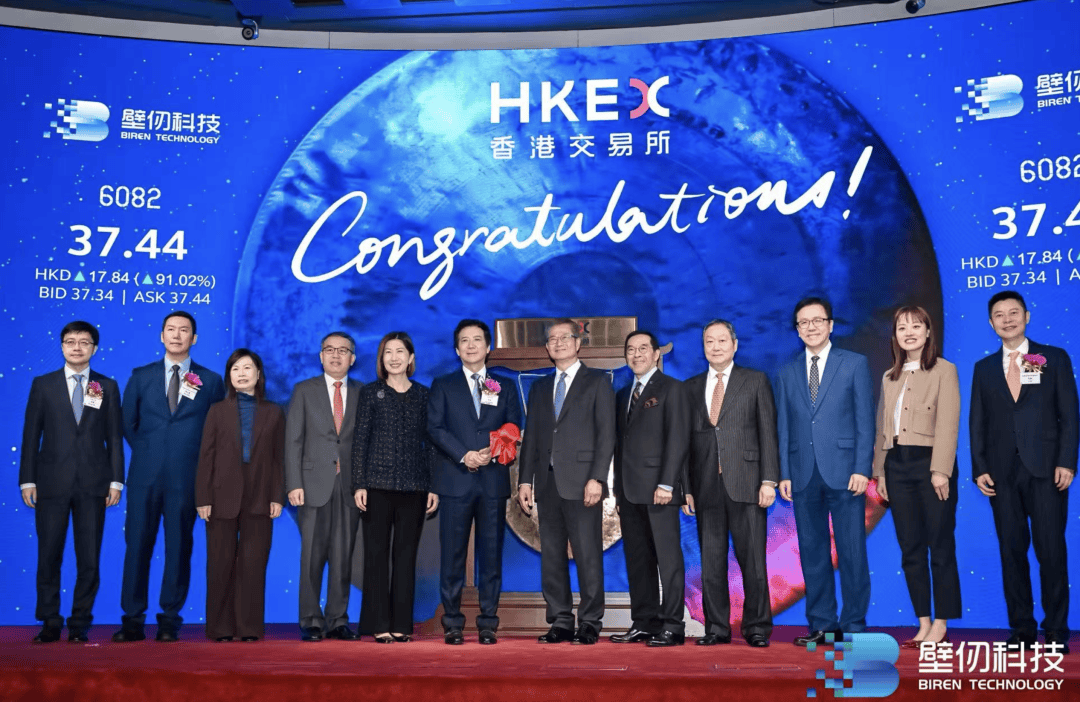
Core Insights - Wall Street's interest in domestic GPU companies is highlighted by the successful IPO of Birun Technology, which saw its stock price surge by 82.14% on its debut, reaching a market capitalization of over 80 billion HKD [1] - The company, founded in September 2019 by Zhang Wen, has attracted significant venture capital investment, totaling over 30 billion CNY across its funding rounds, marking a milestone in China's chip industry [1][2] - Birun Technology's journey reflects the challenges and opportunities within the domestic GPU sector, as it aims to compete with industry giants like NVIDIA [2][24] Company Overview - Birun Technology was established in 2019 and has since positioned itself as a key player in the GPU market, with a focus on developing high-performance chips [1][2] - The company has successfully completed multiple funding rounds, with significant contributions from notable investors such as Qiming Venture Partners and IDG Capital, which have helped it grow rapidly [3][4][11] - The firm aims to leverage its IPO proceeds to attract top talent and potentially pursue mergers and acquisitions to strengthen its market position [24] Funding and Valuation - Birun Technology's early funding rounds included a Pre-A round in December 2019, raising 15 million USD, and a Pre-A+ round in February 2020, raising 10 million USD, with valuations increasing from 110 million USD to 150 million USD [3][4] - By mid-2020, the company had raised approximately 2.9 billion CNY across four funding rounds, with a pre-IPO valuation soaring to 6.06 billion CNY [8][16] - The total amount raised by Birun Technology reached 9.32 billion CNY before its IPO, significantly outpacing its competitors in the domestic GPU space [16][24] Market Position and Challenges - Despite its rapid growth, Birun Technology's revenue figures for 2022 and 2023 were 499,000 CNY and 62.03 million CNY, respectively, indicating a slower growth trajectory compared to peers like Moore Threads and Muxi Technology [14][16] - The company faces substantial competition from NVIDIA, which reported a global revenue of 130.5 billion USD for the fiscal year 2025, dwarfing the combined revenue of Birun Technology and its competitors [24] - The ongoing challenge for domestic GPU manufacturers is to bridge the significant valuation and performance gaps with established industry leaders [24]


中国企业“出海”迈出新步伐
Ren Min Wang· 2026-01-01 21:56
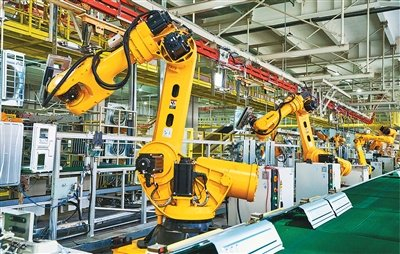
Group 1 - The forum emphasized the importance of Chinese brands transitioning to "high-quality overseas expansion," focusing on integrating into global sustainable development [3][4] - The 2025 China Outbound Brand Top 100 and Emerging 20 Index report was released, highlighting three paradigms of overseas expansion: high-end manufacturing and hard technology, industrial ecosystem, and global brand trust [3][4] - Notable case studies of successful overseas communication by Chinese brands were presented, showcasing a shift from mere product export to a collaborative approach involving technology and brand integration [4][7] Group 2 - ESG (Environmental, Social, and Governance) has evolved from a supplementary aspect to a prerequisite for Chinese companies going global, with 48.3% of companies deploying environmental monitoring systems [6][7] - The report indicated that 42.3% of companies identified a shortage of ESG professionals as a major barrier to ESG practice, highlighting the need for skilled talent in this area [7][8] - The forum initiated a service platform for sustainable development among outbound Chinese enterprises, aiming to enhance the global presence of Chinese brands [9][10]
2025TAOTIE中国商界卓越女性榜:柔性力量与产业韧性
Sou Hu Cai Jing· 2026-01-01 20:51
Core Insights - The article highlights the transition of China's manufacturing sector towards high-quality development, emphasizing the role of female leaders in driving this transformation [2][4] - The 2025 TAOTIE list showcases 50 outstanding female leaders who are pivotal in various key industries, including advanced manufacturing, new energy, biomedicine, technology services, and modern consumption [2][4] Group 1: Female Leadership Characteristics - The top three leaders, Dong Mingzhu, Wang Laichun, and Zhou Qunfei, exemplify essential leadership traits needed for industrial challenges: strategic vision, operational precision, and technological depth [5][6] - Dong Mingzhu represents "strategic decisiveness and problem-solving," pushing Gree Electric towards core technology R&D and green transformation [6] - Wang Laichun embodies "precision operation and systematic evolution," leading Luxshare Precision in complex system capabilities and efficient manufacturing [6] - Zhou Qunfei showcases "technological depth and long-termism," guiding Lens Technology in vertical integration from consumer electronics to smart automotive components [6] Group 2: Evolution of Female Leadership Roles - The list indicates a shift in female leadership from traditional management roles to innovation leaders and ecosystem builders, with over 40% of honorees directly involved in core technology advancements [7][8] - Notable figures like Guo Xinjie and Qiu Yujing are leading innovations in AI chips and automotive-grade chips, respectively, showcasing their deep involvement in technology selection and industry standards [7][8] Group 3: Cross-Industry Integration and Collaboration - Many honorees demonstrate exceptional resource integration and ecosystem connectivity, essential in today's converging industries [9][10] - Leaders like Meng Wanzhou and Xu Ran are noted for their ability to align financial strategies with global business expansion and drive strategic transformations within their companies [9][10] Group 4: Generational Transition in Leadership - The list reflects a clear generational transition, with established leaders like Dong Mingzhu and emerging entrepreneurs like Zong Fuli and Yang Tao, each contributing unique strengths to the industry [11] - This generational relay supports the continuous evolution of China's industry from catching up to leading in certain sectors [11] Group 5: Regional Economic Synergy - The geographical distribution of the honorees illustrates a close relationship between female leadership and local industrial clusters, with Shanghai and Guangdong being prominent regions for female executives [12][14] - Shanghai, with 17 honorees, is a hub for modern services and multinational companies, while Guangdong, with 12 honorees, focuses on manufacturing and global supply chain integration [14] Group 6: Value Assessment of Female Leadership - The evaluation criteria for the TAOTIE list emphasize three emerging value anchors: industry leadership and upgrade capability, cross-industry integration and ecosystem shaping, and sustainable growth and value inclusivity [18][19][20] - These leaders are evolving from mere corporate stewards to co-creators of industry value and promoters of business civilization [20]