
京东

Search documents
港股收盘(09.05) | 恒指收涨1.43% 新能源方向爆发 有色、医药股等重拾升势
Zhi Tong Cai Jing· 2025-09-05 09:09
Market Overview - The Hong Kong stock market rebounded strongly, with the Hang Seng Index rising 1.43% to close at 25,417.98 points, and a total trading volume of 299.945 billion HKD [1] - The Hang Seng Tech Index increased by 1.95%, while the Hang Seng China Enterprises Index rose by 1.34% [1] - The overall weekly performance showed a cumulative increase of 1.36% for the Hang Seng Index [1] Foreign Investment Trends - The Cathay Pacific Haitong overseas strategy team indicated that under the backdrop of the Federal Reserve potentially restarting interest rate cuts, there is a possibility of unexpected foreign capital inflow into the Hong Kong stock market [1] - Foreign investment in Hong Kong stocks is particularly favoring technology and financial sectors [1] Sector Performance Blue-Chip Stocks - Xinyi Solar (00968) led blue-chip stocks with a 7.54% increase, closing at 3.71 HKD, contributing 1.89 points to the Hang Seng Index [2] - Other notable performers included China Biologic Products (01177) up 6.2% and Hang Lung Properties (00101) up 6.13% [2] New Energy Sector - The new energy sector, including solar and energy storage, saw significant gains, with companies like China Innovation Aviation (03931) rising 18.37% and New Special Energy (01799) up 17.28% [3][4] - The Ministry of Industry and Information Technology's recent action plan aims to guide the orderly layout of the photovoltaic and lithium battery industries, indicating potential for industry recovery [3][4] Innovative Pharmaceuticals - The innovative drug sector rebounded, with companies like Three-San Pharmaceutical (01530) increasing by 18.24% [4] - The upcoming World Lung Cancer Conference (WCLC) is expected to showcase significant contributions from Chinese scholars, highlighting the growth in the pharmaceutical sector [5] Gold Stocks - Gold stocks collectively rose, with Shandong Gold (01787) increasing by 5.87% [5] - The market anticipates a continued rise in gold prices, driven by high demand and traditional consumption peaks [5] Employment Data Impact - Recent ADP data indicated an increase of 54,000 jobs in the U.S. for August, which was below market expectations, reinforcing the likelihood of interest rate cuts by the Federal Reserve [6] - The market is closely watching the upcoming U.S. non-farm payroll data for further insights [6] Chip Sector Recovery - The semiconductor sector saw a rebound, with notable increases in stocks like Innodisk (02577) up 8.52% and SMIC (00981) up 4.82% [6][7] - The Ministry of Industry and Information Technology's action plan emphasizes support for AI chips and other critical technologies, indicating a focus on domestic production and innovation [7] Notable Stock Movements - Tianyue Advanced (02631) reached a new high, closing up 18.24% [8] - Goldwind Technology (02208) reported a 41.46% year-on-year revenue increase, reflecting strong market performance [9] - Chow Tai Fook (06168) surged 16.58% amid rising gold prices and seasonal demand [10] - Huya Technology (01860) saw a 9% increase, driven by significant revenue growth attributed to AI-driven systems [11] - Zhongshen Construction (02503) experienced a drastic decline of 72.36% following a poor financial report [12]
港股收盘 | 恒指收涨1.43% 新能源方向爆发 有色、医药股等重拾升势
Zhi Tong Cai Jing· 2025-09-05 08:58
Market Overview - The Hong Kong stock market rebounded strongly, with the Hang Seng Index rising 1.43% to close at 25,417.98 points, and a total trading volume of HKD 299.95 billion [1] - The Hang Seng Tech Index increased by 1.95%, while the Hang Seng China Enterprises Index rose by 1.34% [1] - The overall weekly performance showed a cumulative increase of 1.36% for the Hang Seng Index and 0.23% for the Hang Seng Tech Index [1] Foreign Investment Trends - The Cathay Pacific Haitong overseas strategy team indicated a potential unexpected return of foreign capital to Hong Kong stocks due to the Federal Reserve's renewed interest rate cuts [1] - The focus of foreign investment is particularly on technology and financial sectors [1] Sector Performance Blue-Chip Stocks - Xinyi Solar (00968) led blue-chip stocks with a 7.54% increase, contributing 1.89 points to the Hang Seng Index [2] - Other notable performers included China Biologic Products (01177) up 6.2% and Hang Lung Properties (00101) up 6.13% [2] New Energy Sector - The new energy sector, including solar and storage, saw significant gains, with companies like China Innovation Aviation (03931) rising 18.37% and New Special Energy (01799) up 17.28% [3][4] - The Ministry of Industry and Information Technology's action plan aims to promote high-quality development in the photovoltaic sector and address low-price competition [4] Innovative Pharmaceuticals - The innovative drug sector rebounded, with companies like 3SBio (01530) increasing by 18.24% [4][5] - The total value of outbound licensing agreements for domestic innovative drugs reached USD 84.53 billion, a 73.2% increase from the previous year [5] Gold Stocks - Gold stocks collectively rose, with Shandong Gold (01787) increasing by 5.87% [6] - The market anticipates a rise in gold prices, with Goldman Sachs predicting potential prices nearing USD 5,000 per ounce [6] Semiconductor Sector - Semiconductor stocks experienced a rebound, with notable increases in companies like InnoCare Pharma (02577) and SMIC (00981) [6] Government Initiatives - The Ministry of Industry and Information Technology and the State Administration for Market Regulation released a plan to stabilize growth in the electronic information manufacturing industry, focusing on high-performance AI servers and chip technology [7]
港股将迎超级长牛?
Mei Ri Jing Ji Xin Wen· 2025-09-04 02:34
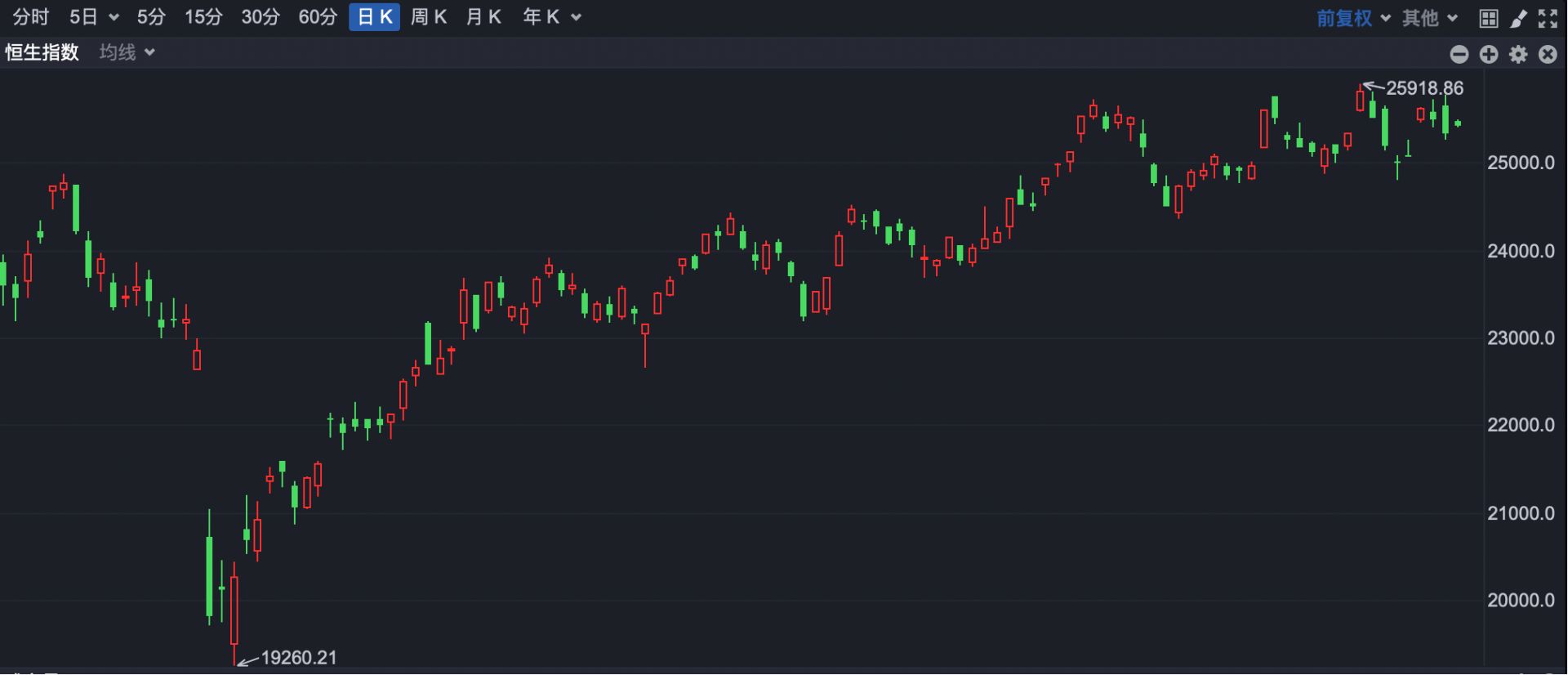
Group 1 - The Hong Kong stock market opened slightly higher, with the Hang Seng Index at 25,489.13 points, up 0.57%, and the Hang Seng Tech Index at 5,725 points, up 0.74% [1] - Southbound funds net bought over 5.5 billion HKD in Hong Kong stocks, with Alibaba, Xiaomi, and Meituan being the most favored, receiving net purchases of 2.489 billion HKD, 699 million HKD, and 570 million HKD respectively [3] - Technology stocks showed a mixed performance, with Lenovo, Baidu, Tencent, Kuaishou, and JD.com rising over 1%, while Bilibili fell nearly 0.5% [4] Group 2 - The robotics sector saw strong performance, with UBTECH rising over 6%, reaching a new high [5] - The innovative drug concept continued its upward trend, with WuXi AppTec opening 2% higher [6] - Apple-related stocks generally rose, with AAC Technologies up 3%, GoerTek up over 6%, and BYD Electronics up over 4% [7] Group 3 - Gold stocks were active, with Zhaojin Mining rising nearly 2% [8] - The outlook for the market suggests a potential long-term bull market for both A-shares and Hong Kong stocks, driven by a unique financial development path in China [8] - The expectation of a long bull market is supported by the positive feedback between the Chinese stock market, economy, and policy expectations, aligning with high-quality economic development and modernization strategies [8] Group 4 - The September market outlook indicates accumulated momentum for Hong Kong stocks to catch up, with a slow upward trend expected to continue [9] - Despite potential volatility in September, the overall direction is upward, with recommendations to focus on technology stocks and innovative pharmaceuticals [9] - Other sectors worth attention include new consumption, banking, non-banking financials, metals, and chemicals [9]

阿里、美团们烧钱,分众传媒得益丨消费参考
2 1 Shi Ji Jing Ji Bao Dao· 2025-09-04 00:40
Group 1: Advertising Market Impact - The fierce competition in the food delivery market has significantly influenced various industries, particularly the advertising market, with a notable increase in advertising revenue for media companies like Focus Media [1] - Focus Media reported a year-on-year increase of 89.22% in advertising revenue from the internet sector, reaching 985 million yuan, which constituted 16.12% of its total revenue [1] - In contrast, the daily consumer goods sector saw a decline of 10.87% in advertising revenue, amounting to 3.4 billion yuan, while the telecommunications and entertainment sectors experienced growths of 63.28% and 28.83%, respectively [1] Group 2: Financial Performance of Major Players - Major internet platforms, including Meituan, Alibaba, and JD.com, faced substantial declines in net profits due to increased marketing expenditures related to food delivery subsidies, with Meituan's net profit plummeting nearly 90% [2][3] - The three major food delivery companies collectively spent at least 30 billion yuan on marketing during the second quarter [3] Group 3: Future Outlook and Strategic Importance - Despite the regulatory measures that have somewhat controlled the intensity of the food delivery competition, Focus Media remains optimistic about its business prospects, emphasizing the long-term strategic significance of advertising in the emerging instant retail sector [4] - The company believes that the development of instant retail will profoundly change consumer purchasing habits and drive consumption growth, highlighting the critical role of advertising in enhancing brand reach and facilitating purchase decisions [4]

股价暴涨、估值飙升,淘宝闪购推动电商进入“大消费”时代
Sou Hu Cai Jing· 2025-09-04 00:16
Group 1: Financial Performance - Alibaba Group reported Q1 FY2026 revenue of 247.65 billion yuan, with a year-on-year growth of 10% when excluding disposed businesses [1] - Net profit attributable to ordinary shareholders was 43.12 billion yuan, representing a 76% year-on-year increase [1] - Following the earnings report, several financial institutions raised Alibaba's target price significantly, with JPMorgan increasing it from $140 to $170 and Citigroup from $148 to $187 [1] Group 2: Market Position and Strategy - The "flash purchase" model is seen as a pivotal strategy for Alibaba in the retail sector, with the company achieving a peak daily order volume of 120 million in August [4][13] - The flash purchase initiative is part of a broader trend towards "instant retail," which is expected to redefine the boundaries of e-commerce and consumer services [11][12] - Alibaba aims to create a "super app" that integrates various aspects of consumer life, moving beyond traditional e-commerce to encompass a wide range of services [10][11] Group 3: Industry Trends and Future Outlook - The retail industry is entering a "big consumption" era, where the integration of online and offline services is becoming increasingly important [2][11] - The instant retail market in China is projected to reach 7.8 trillion yuan by 2024, with a compound annual growth rate of 46% [11] - Alibaba's long-term goal is to meet the shopping and lifestyle needs of 1 billion consumers, positioning itself as a leader in the anticipated 30 trillion yuan big consumption market [15][16]

再砸184亿,刘强东的Plan B落子
3 6 Ke· 2025-09-04 00:00
Core Insights - JD.com has made a formal acquisition offer to European company CECONOMY, valuing the deal at approximately €4.6 per share, totaling around €2.2 billion (184 billion RMB) [1][3] - The acquisition price represents a 42.6% premium over the three-month volume-weighted average price (VWAP) as of July 23, 2025, indicating a strategic move despite JD's significant losses in its new business segments [3][10] - JD's internationalization efforts have faced challenges, with frequent management changes and a lack of consistent strategy, highlighting the difficulties of expanding overseas [4][5][10] Company Strategy - JD's international strategy has shifted focus from Russia and Southeast Asia to Europe, aiming to leverage existing brand resources and sales networks through acquisitions [10][11] - The company plans to build a supply chain fulfillment system and overseas warehousing network, emphasizing logistics as a key component of its global strategy [10][11] - JD's approach to internationalization will follow a "self-built + acquisition" model, focusing on local e-commerce rather than cross-border e-commerce, which may limit differentiation in foreign markets [15][16] Market Context - The competitive landscape in the domestic e-commerce sector is more intense than in foreign markets, where established players like Amazon still hold significant market share [11][12] - JD's reliance on domestic business models may not translate effectively to international markets, as evidenced by past failures of similar strategies by other Chinese companies [12][13] - Successful international players like Shein and Temu have established differentiated strategies rather than merely replicating domestic models, suggesting that JD must adapt to local market conditions to succeed [20][22][23]
外卖“三国杀”后,电商终究阿里“坐庄”?
Hu Xiu· 2025-09-03 14:17
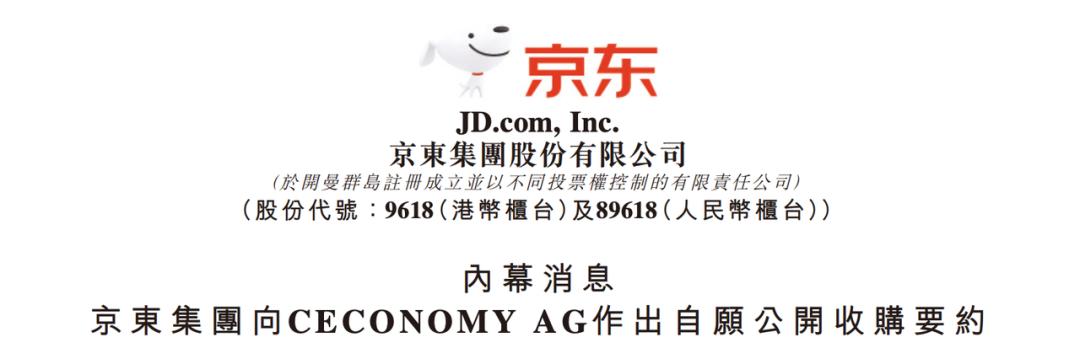
Group 1 - Alibaba achieved significant victories in both performance data and stock price during the summer of 2025, indicating a strong recovery [1] - The recent e-commerce battle involving Alibaba, JD.com, and Meituan is reshaping the market landscape, hinting at potential long-term changes in the e-commerce sector [2][3] - The stock market reaction to the earnings reports of Alibaba, Meituan, and JD.com shows that Alibaba's stock surged nearly 13% on the first day after its earnings announcement, while Meituan's stock dropped nearly 13% [4] Group 2 - In the second quarter, Alibaba's adjusted profit was 38.8 billion yuan, a decline of less than 14% year-on-year, indicating that its investments in the food delivery sector did not severely impact its profitability [18] - In contrast, Meituan's operating profit plummeted by 97% to only 200 million yuan, while JD.com reported a loss of 860 million yuan, highlighting the severe financial impact of the delivery battle on these companies [17] - The market's perception of the three companies is evident: Alibaba is seen as having a strong position due to its size and financial resources, while Meituan and JD.com face significant challenges [9][10][13] Group 3 - The food delivery battle has led to a substantial increase in daily active users (DAU) for all three companies, with Alibaba experiencing a 17% year-on-year increase in DAU by July [29][30] - Alibaba's Taobao Flash has achieved a significant increase in order volume, reaching an average of 75 million daily orders in the third quarter, nearly matching Meituan's expected 90 million [34] - The competitive landscape has shifted, with Alibaba's market share in food delivery approaching parity with Meituan, indicating a successful strategy in scaling operations [36][88] Group 4 - Alibaba's management anticipates that the integration of its various business units will create a comprehensive consumption platform, aiming for a seamless user experience across different services [89][90] - The company plans to enhance its operational efficiency and reduce average losses per order by optimizing its delivery structure and increasing the average order value [85][86] - The long-term goal for Alibaba is to establish a unified platform that encompasses all aspects of consumer needs, including food delivery, traditional e-commerce, and other services [92]
神州数码上半年陆续推出了大规模训练一体机、推理服务器以及企业私有化部署方案“智汇魔方”,进一步完善了产品矩阵
Ge Long Hui· 2025-09-03 12:01
Group 1 - The core viewpoint of the article highlights that Digital China (000034.SZ) is actively expanding its capabilities in the computing infrastructure sector through its proprietary brand, Shenzhou Kuntai [1] - In the first half of the year, the company launched large-scale training integrated machines, inference servers, and the enterprise privatization deployment solution "Zhihui Mofang," enhancing its product matrix [1] - The company has partnered with JD.com to introduce a consumer-grade AIPC new brand "Lingmi," and established the first Kirin technology route PC production line in Hefei, filling a significant gap in the domestic PC sector [1]

监管铁幕落下又升起,谁能掌握“稳定币”的话语权?
3 6 Ke· 2025-09-03 03:13
Group 1: Overview of Stablecoins - Stablecoins are blockchain-based digital currencies that maintain a stable value, typically pegged to the US dollar at a 1:1 ratio, aimed at facilitating daily transactions [2][4] - The largest stablecoin by market share is USDT (Tether), while USDC is another prominent stablecoin issued by Circle and Coinbase [2] - The appeal of stablecoins lies in their price stability compared to volatile cryptocurrencies like Bitcoin, providing users with predictability in value [4] Group 2: Market Developments - Circle's stock surged 750% following its NYSE listing in June, and the US government has recognized stablecoins as legitimate financial instruments through the signing of the "Genius Act" [1][14] - Hong Kong has taken the lead in regulating stablecoins with the introduction of the "Stablecoin Ordinance," prompting major companies like Ant Group and JD.com to explore the stablecoin market [1][9] - The global trend shows increasing adoption of stablecoins in countries facing currency devaluation, such as Argentina and Venezuela, where stablecoins are used for domestic transactions [8] Group 3: Regulatory Landscape - The "Genius Act" in the US establishes a legal framework for stablecoin issuance, requiring that only licensed financial institutions can issue stablecoins and mandating a 100% reserve requirement [15] - In contrast, Hong Kong's regulatory approach emphasizes functional regulation, allowing stablecoins to be pegged to multiple currencies, potentially facilitating the internationalization of the Renminbi [17] - The regulatory environment for stablecoins is evolving, with significant scrutiny on their use in illicit activities, leading to a complex landscape of compliance and innovation [11][17] Group 4: Technological and Economic Implications - Stablecoins enable efficient and low-cost transactions, operating 24/7 and significantly reducing friction in cross-border payments compared to traditional banking systems [6] - The integration of stablecoins with real-world assets (RWA) is becoming more prevalent, as seen in recent cross-border financing projects involving renewable energy assets [10] - The potential for stablecoins to create a Web 3.0 version of the Bretton Woods system is being explored, highlighting their role in reshaping global financial dynamics [8]
中泰国际每日晨讯-20250903
ZHONGTAI INTERNATIONAL SECURITIES· 2025-09-03 02:03
Market Overview - On September 2, the Hang Seng Index fell by 0.5% to close at 25,496 points, while the Hang Seng Tech Index dropped by 1.2% to 5,728 points[1] - The market turnover was HKD 328.1 billion, with a net inflow of HKD 9.28 billion from southbound funds[1] Sector Performance - Major tech stocks faced pressure, with Meituan and Alibaba both down nearly 2%, while Xiaomi rose by 3.4%[1] - Semiconductor and infrastructure sectors showed weakness, with Hong Teng Precision down nearly 10% and SMIC down over 4%[1] - Conversely, banking stocks performed well, with Agricultural Bank of China up nearly 3%[1] Economic Indicators - The Hang Seng Index is currently oscillating around the 25,000-point mark, which is considered a normal consolidation phase[2] - External uncertainties are rising as the U.S. stock market enters the historically poor-performing month of September, with significant economic data releases expected[2] - Gold prices recently surpassed USD 3,500, indicating a potential shift towards risk aversion among global investors[2] Industry Insights - In the automotive sector, BYD reported a slight year-on-year sales increase of 0.15% for August, while Geely's sales surged by 38%[3] - The healthcare sector saw a minor increase of 0.07% in the Hang Seng Healthcare Index, supported by new approvals for innovative drugs[3] Real Estate Trends - New home transaction volume in 30 major cities reached 1.8 million square meters, a year-on-year increase of 3.6%[9] - The property inventory-to-sales ratio for major cities was 101.9, higher than last year but lower than the previous week[11] - Recent policy adjustments in Shanghai aim to stimulate the housing market, allowing eligible families to purchase unlimited properties outside the outer ring[13]