
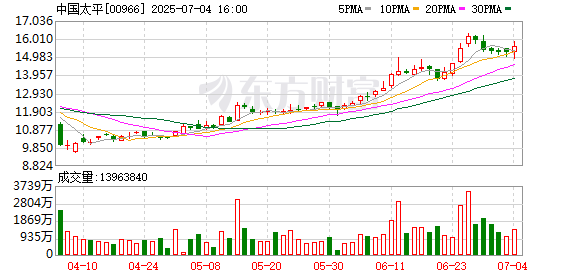
中国太平

Search documents
678万元!又有保险资管被罚
Zhong Guo Ji Jin Bao· 2025-07-04 14:41
Group 1 - The core viewpoint of the article highlights the administrative penalties imposed on Taiping Asset Management Co., Ltd. by the National Financial Regulatory Administration for various violations, including unapproved executive roles and incomplete reporting of related party information [2] - Taiping Asset was fined 6.78 million yuan, and several responsible individuals received warnings and fines totaling 760,000 yuan [2] - The penalties involve a range of high-level executives, indicating a long duration of regulatory issues within the company [2] Group 2 - Taiping Asset Management, established in September 2006, is a professional asset management institution under China Taiping Insurance Group, holding 80% of its shares [3] - In 2024, Taiping Asset achieved an operating income of 1.851 billion yuan, a year-on-year increase of 6.67%, while net profit decreased by 4.36% to 932 million yuan [3] - The management scale of Taiping Asset exceeded 1.67 trillion Hong Kong dollars in 2024, reflecting an 8.4% year-on-year growth due to inflows of insurance funds [3]


678万元!又有保险资管被罚
中国基金报· 2025-07-04 14:17
Core Viewpoint - The article highlights the recent administrative penalties imposed on Taiping Asset Management Co., Ltd. by the National Financial Regulatory Administration due to various violations, including unapproved executive roles and incomplete reporting of related party information [2]. Group 1: Regulatory Actions - Taiping Asset Management was fined 6.78 million yuan, with additional fines totaling 760,000 yuan imposed on several responsible individuals [2]. - The violations included high-level executives performing duties without proper qualifications and the investment of insurance funds in non-trustee managed products [2]. Group 2: Company Overview - Taiping Asset Management, established in September 2006, is a professional asset management institution under China Taiping Insurance Group and is one of the first nine insurance asset management companies in China [3]. - The company holds a comprehensive range of business qualifications, including entrusted management of insurance funds, investment banking, and third-party asset management [3]. - In 2024, Taiping Asset achieved an operating income of 1.851 billion yuan, a year-on-year increase of 6.67%, while net profit decreased by 4.36% to 932 million yuan [3]. - The asset management scale exceeded 1.67 trillion Hong Kong dollars in 2024, reflecting an 8.4% year-on-year growth, driven by inflows of insurance funds [3]. Group 3: Industry Context - The article notes a trend of stringent regulatory scrutiny in the insurance asset management sector, with multiple companies facing penalties for similar violations [4][5].
保险行业2025年5月保费收入点评:寿险高增驱动行业保费回暖,财险延续稳定
CMS· 2025-07-04 09:50
Investment Rating - The report maintains a "Recommended" rating for the insurance industry, indicating a positive outlook for the sector's fundamentals and expected performance relative to market benchmarks [2][6]. Core Insights - The life insurance sector is experiencing significant premium growth, particularly in life insurance, while health and accident insurance face short-term pressures. In the first five months of 2025, life insurance premium income reached 18,735 billion, with a year-on-year increase of 3.9% [5][7]. - Property insurance companies are seeing stable growth in auto insurance premiums, with a total premium income of 3,720 billion for auto insurance, reflecting a 4.4% increase year-on-year. Non-auto insurance is also expected to improve in profitability [5][7]. - Overall, the insurance industry reported a cumulative premium income of 30,602 billion, up 3.8% year-on-year, with a notable monthly increase of 13.2% in May [5][7]. Summary by Sections Life Insurance Companies - Cumulative premium income for life insurance companies was 22,797 billion, with a year-on-year growth of 3.3%. In May alone, premium income was 3,328 billion, marking a 16.6% increase [5][7]. - Life insurance premiums specifically reached 2,674 billion in May, showing a robust year-on-year growth of 24.1% [5][7]. - Health insurance premiums decreased by 6.3% year-on-year, while accident insurance premiums fell by 8.5% [5][7]. Property Insurance Companies - Cumulative premium income for property insurance companies was 7,805 billion, with a stable year-on-year growth of 5.2% [5][7]. - Auto insurance premiums totaled 3,720 billion, with a 4.4% increase year-on-year, benefiting from government policies and rising penetration of new energy vehicles [5][7]. - Non-auto insurance premiums reached 4,085 billion, up 6.0% year-on-year, driven by growth in health and accident insurance [5][7]. Overall Industry Performance - The insurance industry as a whole saw a cumulative premium income of 30,602 billion, reflecting a 3.8% year-on-year increase [5][7]. - Total assets in the insurance industry reached 384,239 billion, up 7.0% since the beginning of the year, while net assets increased by 8.3% to 36,023 billion [5][7].
2024年度寿险公司新业务获取费率排行榜,是不是获取费用率越高,新业务利润率就越低呢?
13个精算师· 2025-07-03 09:43
Core Viewpoint - The analysis of new business acquisition cost rates in the life insurance sector indicates that a higher acquisition cost does not necessarily correlate with lower profitability for new business, challenging conventional wisdom in the industry [1][6][24]. Group 1: New Business Acquisition Cost Rate - The formula for calculating the new business acquisition cost rate is defined as the cash flow from acquiring insurance contracts divided by the present value of future cash inflows from those contracts [1][11]. - In 2024, the aggregated new business acquisition cost rate for 12 life insurance companies was 8.4%, a decrease of 0.8 percentage points year-on-year [17]. - The new business profit margin for the same group of companies was 8.7%, reflecting a year-on-year decline of 0.4 percentage points [19]. Group 2: Performance of Individual Companies - Among the 12 companies, Ping An Life had the highest new business acquisition cost rate at 11.9%, followed by Taiping Life at 9.6% [19]. - The analysis revealed that loss-making contracts had a new business acquisition cost rate of 5.7%, while non-loss-making contracts had a rate of 8.7%, suggesting that higher quality, potentially profitable business requires greater investment in acquisition [19][22]. - Companies primarily using the bancassurance channel, such as Zhong Postal Life and Sunshine Life, experienced a 2.5 percentage point decrease in their new business acquisition cost rates due to the "reporting and operation integration" effect [21][22]. Group 3: Insights on Cost and Profitability Relationship - The relationship between new business acquisition cost rates and profit margins is complex; higher acquisition costs do not equate to lower profit margins, which contradicts common assumptions [6][24]. - The analysis indicates that companies with higher acquisition costs often achieve higher profit margins, likely due to their investment in acquiring higher quality business [7][26]. - The findings suggest that the main distribution channels for leading companies remain focused on individual agents, which influences their cost structures and profitability [4][26].




汽车产业变革倒逼车险转型,新老玩家如何破局?
3 6 Ke· 2025-07-03 08:00
Core Insights - The rapid growth of the new energy vehicle (NEV) market in China is not matched by the development of the corresponding insurance market, leading to high premiums, high claim rates, and high loss ratios in NEV insurance [1][3][7] - The insurance industry is facing challenges due to the high repair costs associated with NEVs, which are exacerbated by the vehicles' design and technology [15][18] - The market for NEV insurance is projected to grow significantly, with estimates suggesting it could reach 500 billion yuan by 2030, accounting for nearly 50% of total auto insurance premiums [9][10] NEV Market Growth - In March 2025, NEV sales in China reached 1.237 million units, with a month-on-month growth of 38.7% and a year-on-year growth of 40.2%, achieving a penetration rate of 42.4% [1] - By the end of 2024, the total number of NEVs in China is expected to reach 31.4 million, representing 8.9% of the total vehicle population, with an annual growth rate exceeding 50% [1] Insurance Market Dynamics - In 2024, the insurance industry covered 27.95 million NEVs, generating 140.9 billion yuan in premiums but incurring a loss of 5.7 billion yuan [3][10] - The average premium for NEVs is approximately 30%-50% higher than that for traditional fuel vehicles, with NEV premiums ranging from 3,000 to 4,000 yuan compared to 2,000 to 3,000 yuan for fuel vehicles [6][10] Challenges in NEV Insurance - The high repair costs for NEVs are attributed to advanced designs, high-tech components, and a lack of scale in parts production, leading to increased insurance claims [15][18] - The operational use of NEVs, particularly in ride-hailing and delivery services, results in a higher claim rate compared to traditional vehicles, with 5.5% of NEVs used for commercial purposes versus only 0.4% for fuel vehicles [19] Regulatory and Industry Responses - Regulatory bodies are closely monitoring the NEV insurance market, with initiatives aimed at improving pricing mechanisms and developing new insurance products to address the unique risks associated with NEVs [14][19] - Major insurance companies are adopting strategies to maintain market share in the NEV segment despite ongoing losses, indicating a willingness to invest in the future potential of this market [9][10] Competitive Landscape - Traditional insurance companies maintain a significant market share in NEV insurance, with the top three companies holding approximately 74.7% of the market [21] - New entrants, including automotive manufacturers, are beginning to establish their own insurance operations, aiming to integrate insurance offerings with their vehicle sales to enhance customer loyalty [22][24] Future Outlook - The NEV insurance market is expected to evolve with increased competition and potential collaboration between traditional insurers and automotive manufacturers, as both sectors seek to adapt to the changing landscape of vehicle technology and consumer needs [27][28]

金融工程定期:港股量化:南下资金累计流入达2024年91%,7月增配成长
KAIYUAN SECURITIES· 2025-07-02 12:15
- Model Name: Hong Kong Stock Selection 20 Portfolio; Model Construction Idea: The model selects the top 20 stocks with the highest scores based on four types of factors (technical, capital, fundamental, and analyst expectations) from the Hong Kong Stock Connect sample stocks and constructs an equal-weighted portfolio at the end of each month; Model Construction Process: The model uses the Hong Kong Composite Index (HKD) (930930.CSI) as the benchmark. The specific construction process involves selecting the top 20 stocks with the highest scores based on the four types of factors and constructing an equal-weighted portfolio at the end of each month[3][37][39]; Model Evaluation: The model has shown excellent performance in the Hong Kong Stock Connect sample stocks[37] - Factor Name: Technical Factors; Factor Construction Idea: Technical factors are constructed based on the price and volume data of stocks; Factor Construction Process: The specific construction process involves calculating various technical indicators such as moving averages, relative strength index (RSI), and moving average convergence divergence (MACD) to evaluate the stock's price trend and momentum[37][38]; Factor Evaluation: Technical factors have shown good performance in the Hong Kong Stock Connect sample stocks[37] - Factor Name: Capital Factors; Factor Construction Idea: Capital factors are constructed based on the capital flow data of stocks; Factor Construction Process: The specific construction process involves calculating the net capital inflow and outflow of stocks to evaluate the stock's capital flow trend[37][38]; Factor Evaluation: Capital factors have shown good performance in the Hong Kong Stock Connect sample stocks[37] - Factor Name: Fundamental Factors; Factor Construction Idea: Fundamental factors are constructed based on the financial data of stocks; Factor Construction Process: The specific construction process involves calculating various financial ratios such as price-to-earnings (P/E) ratio, return on equity (ROE), and total market value to evaluate the stock's financial health and valuation[37][38]; Factor Evaluation: Fundamental factors have shown good performance in the Hong Kong Stock Connect sample stocks[37] - Factor Name: Analyst Expectation Factors; Factor Construction Idea: Analyst expectation factors are constructed based on the analyst ratings and target prices of stocks; Factor Construction Process: The specific construction process involves collecting and analyzing the analyst ratings and target prices of stocks to evaluate the stock's future performance expectations[37][38]; Factor Evaluation: Analyst expectation factors have shown good performance in the Hong Kong Stock Connect sample stocks[37] Model Backtest Results - Hong Kong Stock Selection 20 Portfolio, Annualized Excess Return: 13.3%, Excess Return Volatility Ratio: 1.0[4][40][41] Factor Backtest Results - Southbound Capital, Average Return: 25.7%[32][36] - Foreign Capital, Average Return: 13.5%[32][36] - Domestic Capital, Average Return: 14.0%[32][36] - Hong Kong Capital and Others, Average Return: 10.2%[32][36]
保险行业点评:寿险快速回暖,财险多险种共振支撑增长
Minsheng Securities· 2025-06-30 07:04
Investment Rating - The report maintains a "Recommended" rating for the insurance sector, indicating a positive outlook for the industry in the coming months [7]. Core Insights - The insurance industry has shown signs of recovery, with total premium income reaching 30,602 billion yuan from January to May 2025, reflecting a year-on-year increase of 3.8%. The premium income for May alone was 4,647 billion yuan, up 13.2% year-on-year [4]. - Life insurance continues to recover, with premium income of 18,735 billion yuan from January to May 2025, a 3.9% increase year-on-year. The premium income for May was particularly strong at 2,674 billion yuan, marking a 24.1% increase year-on-year [4]. - The health insurance sector experienced a slight decline in premium income, totaling 3,879 billion yuan from January to May 2025, a 0.9% increase year-on-year, with May showing a decrease of 6.3% [5]. - The property insurance sector saw premium income of 7,805 billion yuan from January to May 2025, a 5.2% increase year-on-year, with May's income at 1,319 billion yuan, up 5.3% [4]. - The report highlights the potential for life insurance products, particularly participating insurance, to gain market share due to their dual benefits of protection and investment returns, especially in a low-interest-rate environment [4][9]. - The automotive insurance segment benefited from increased vehicle sales, with premium income reaching 3,720 billion yuan, a 4.4% increase year-on-year, while non-auto insurance premiums were 4,085 billion yuan, up 6.0% [8]. Summary by Sections Life Insurance - Life insurance premium income from January to May 2025 was 18,735 billion yuan, up 3.9% year-on-year, with a significant increase in May of 24.1% [4]. - The demand for life insurance products is expected to recover due to the declining bank deposit rates, enhancing the attractiveness of long-term insurance products [4]. Health Insurance - Health insurance premium income was 3,879 billion yuan from January to May 2025, reflecting a modest growth of 0.9% year-on-year, with a notable decline in May [5]. - The report suggests that the health insurance sector is undergoing a transformation, with potential for growth in mid-to-high-end medical insurance products [5]. Property Insurance - Property insurance premium income reached 7,805 billion yuan from January to May 2025, a 5.2% increase year-on-year, with steady growth in both auto and non-auto segments [4][8]. - The report anticipates a continued focus on professionalization and refinement in the property insurance sector, particularly among leading companies [9]. Investment Opportunities - The report suggests that the insurance sector is poised for growth, with a focus on improving product structures and increasing the share of participating insurance products [9]. - The macroeconomic recovery is expected to support long-term interest rates, which could positively impact the insurance sector's performance [9].

招商证券:保险行业负债端转型深化 资产端哑铃型结构突出
智通财经网· 2025-06-30 02:02
Core Viewpoint - The insurance industry is experiencing significant transformation in liabilities and optimization in asset allocation, with a notable increase in bond investments and equity investments expected to enhance long-term returns [1][5]. Group 1: Performance Overview - In the first half of the year, the insurance sector demonstrated resilience in a volatile market, with a 14.5% increase in the A-share insurance index, outperforming the broader market by 8.5 percentage points [1][2]. - Despite the strong performance, public funds' holdings in insurance stocks remain low, with a share of only 0.91% at the end of Q1, significantly below the benchmark of 1.99% [1]. Group 2: Liability Side Transformation - The transformation of participating insurance products has shown remarkable results, with the proportion of participating insurance in individual channels reaching 98.9% in January-February [2]. - The property insurance sector continues to grow steadily, with a 5.2% year-on-year increase in premiums from January to April, supported by stable demand and product innovation [2]. Group 3: Asset Side Structure - The insurance companies have increased their allocation to long-duration bonds, with bond investments reaching a historical high of 50.4% by the end of Q1 [3]. - Equity investments have also seen a net increase of 389.3 billion yuan, reflecting a strategic shift towards higher stock allocations [3]. Group 4: Outlook for the Second Half - The cost of liabilities in life insurance is expected to decrease in an orderly manner, with a potential adjustment in the preset interest rate window anticipated in Q3 [4]. - The property insurance sector is expected to see stable premium growth, particularly in the new energy vehicle insurance market, where leading companies are likely to achieve underwriting profitability [4]. Group 5: Investment Opportunities - The insurance industry is poised to increase its allocation to value-oriented and technology growth equities, which is expected to provide direct incremental capital to the market and enhance long-term returns [5].

党建联建惠民生 “津”彩服务零距离
Zhen Jiang Ri Bao· 2025-06-26 00:18
Group 1 - The event on June 24 involved over 70 party members participating in a thematic party day activity focused on "Strict Work Style and Strong Party Character," integrating various educational and community service elements [1] - The activity included visits to historical sites and educational bases, emphasizing the importance of discipline and learning from historical figures, such as the first Communist Party member in Zhenjiang [1] - The transformation of the historical cultural street into a popular landmark with over 100,000 visitors annually was highlighted as a successful example of government and business collaboration [1] Group 2 - A micro party class featuring a photography exhibition titled "Memories of the Republic in Cheng Mo's Lens" was held, showcasing valuable historical images from wartime and post-war periods [2] - The event included over 20 public service projects, such as health consultations and cultural experiences, aimed at addressing community needs and promoting integrity [2] - The community's leadership emphasized the importance of integrating party education with practical community service to enhance grassroots governance and mobilize red resources [2]
分红险点燃行情?保险股集体起飞
Guo Ji Jin Rong Bao· 2025-06-25 14:38
Core Viewpoint - The insurance sector in A-shares and Hong Kong stocks has shown significant growth, with major companies experiencing substantial stock price increases, driven by a shift towards participating insurance products and regulatory guidance aimed at stabilizing the market [1][2][3]. Group 1: Market Performance - On June 25, A-shares saw all three major indices rise, with the Shanghai Composite Index increasing by 1.04%, reaching a new high for the year [1]. - The insurance sector led the gains, with companies like New China Life and China Pacific Insurance rising over 3%, and China Life increasing by more than 2% [1]. - In Hong Kong, insurance stocks also performed well, with China Pacific Insurance rising over 5% and New China Life and China Taiping both increasing by over 4% [1]. Group 2: Regulatory Environment - The China Banking and Insurance Regulatory Commission issued guidelines to life insurance companies, emphasizing prudent management and discouraging excessive competition in dividend levels [1][2]. - The guidelines aim to stabilize the market by ensuring that companies do not artificially inflate dividend levels, which could disrupt the insurance market [1][2]. Group 3: Industry Trends - The transition towards participating insurance products is expected to begin in 2025, with a focus on floating yield products [2]. - Analysts predict that the adjustment of preset interest rates and the integration of individual insurance reporting will impact premium growth rates, with a potential increase in the attractiveness of participating insurance [2]. - The regulatory measures are seen as beneficial for controlling the floating cost levels of participating insurance, thereby reducing long-term risks associated with interest rate differentials [2]. Group 4: Future Outlook - Analysts expect that the new business value (NBV) growth rate will decline compared to 2024, but the quality of operations is anticipated to improve [3]. - The insurance sector is viewed as having long-term investment potential, with the ability to withstand market fluctuations and support capital market development [3]. - The target demographic for insurance products is shifting towards wealthier individuals from the 60s and 70s, with participating insurance products likely to become central in wealth management [3].