谷歌

Search documents
海泰新光:与谷歌的TPU没有联系
Ge Long Hui· 2025-12-19 07:44
格隆汇12月19日丨海泰新光(688677.SH)在投资者互动平台表示,公司与谷歌的TPU没有联系。 ...

甲骨文百亿项目融资突然“告吹” 美国AI泡沫恐慌来袭
Xin Lang Ke Ji· 2025-12-19 06:22
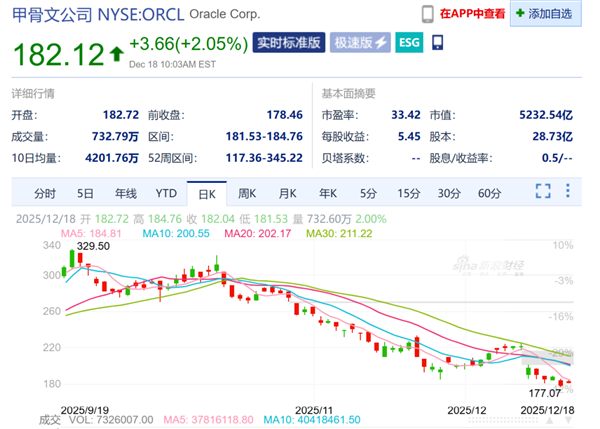
Core Viewpoint - Oracle's significant data center project in Michigan, valued at $10 billion, will not receive funding from Blue Owl Capital, raising concerns about the AI bubble and leading to a nearly 45% drop in Oracle's stock price since its peak in early September [1] Group 1: Financial Performance and Market Reaction - Oracle's stock price surged from approximately $122 on April 21 to over $320 in early September, driven by AI narratives, but has since retraced all gains as investors focus on the costs of realizing these promises [4] - Jim Chanos criticized Oracle's rapid asset expansion, indicating that the return on new capital investments is only about 8.5%, compared to nearly 40% for Microsoft, suggesting Oracle may struggle to recover its incremental capital costs [4][5] - Analysts are questioning how much Oracle is investing in AI, with management failing to provide clear financial guidance during a recent earnings call [6] Group 2: Funding and Project Viability - Blue Owl Capital, previously a key financier for Oracle's data center projects, has opted out of the Michigan project due to changing market attitudes towards AI spending and Oracle's debt levels, leading to stricter loan terms [7][9] - Concerns are growing regarding the reliability of OpenAI's commitments to Oracle, with analysts suggesting that Oracle should consider restructuring its contract with OpenAI to manage capital deployment more responsibly [11] Group 3: Competitive Landscape and Future Outlook - OpenAI's partnerships with Microsoft and Amazon indicate a diversification of its computing resources, potentially diminishing Oracle's role in OpenAI's ecosystem [12] - The competitive landscape is shifting, with stronger players like Google accelerating their AI capabilities, raising questions about OpenAI's ability to maintain its lead [13][14] - Uncertainties remain regarding a potential agreement between OpenAI and Nvidia, which could impact Oracle's future revenue from AI infrastructure [15] Group 4: Capital Structure and Investment Strategy - Oracle's traditional business model, characterized by predictable cash flows and high gross margins, is being challenged by the capital-intensive nature of AI investments, which require longer return periods [16] - The company's ability to sustain high levels of investment in AI will ultimately depend on decisions made by founder Larry Ellison, as the market shifts focus from grand AI visions to the sustainability of capital structures during prolonged return delays [16]

“AI泡沫即使存在,也将继续膨胀”
Xin Lang Cai Jing· 2025-12-19 05:35
Core Insights - The current AI boom exhibits characteristics of a historical bubble, but it is not merely a case of "overheated tech stock speculation" as the AI industry is likely to undergo structural differentiation while continuing to grow [1][8] - Despite widespread discussions about the existence of a bubble, investments continue to flow into the sector, with valuations rising and enthusiasm persisting [1][8] - Major tech companies are using their cash flow to fund AI infrastructure, contrasting with the debt-laden startups of the early internet era, leading some investors to believe "this time is different" [8][10] AI Bubble Existence - To assess whether an AI bubble exists, a reliable evaluation tool is needed, such as the four-factor framework proposed by Brent Goldfarb and David A. Kirsch [2] - The four factors include uncertainty, a significant gap between investment scale and actual revenue, the prevalence of pure investment targets, and the influx of inexperienced investors [3][4][5] Investment and Revenue Discrepancy - Large tech companies are projected to invest up to $3 trillion in AI infrastructure by 2028, while current annual AI revenue is approximately $50 billion, indicating a significant gap [4] - Morgan Stanley estimates that to achieve a 10% return on these investments, AI must generate $650 billion annually, which is 13 times the current revenue level [4] Market Dynamics - The narrative surrounding AI is powerful, with claims that AI will solve numerous global issues, which fuels investment despite the lack of clear profitability [6][10] - The current market sentiment is characterized by a fear of missing out (FOMO), leading investors to overlook potential risks associated with AI investments [7][10] Financial Structures and Risks - The financing structure for AI investments is evolving, with private equity and bond markets increasingly involved, which could spread risks beyond traditional equity speculation [11] - Oracle's significant debt and reliance on OpenAI for revenue highlight the risks associated with high leverage in the AI sector [12] Technological Progress vs. Bubble - Technological advancements in AI are real and ongoing, but this does not negate the existence of a bubble characterized by inflated market prices [13][14] - The current valuation of AI companies appears to be the highest since the internet bubble, indicating a potential disconnect between market prices and actual value [14][15] Geopolitical Influences - Geopolitical competition, particularly between the U.S. and China, is driving the narrative that justifies massive investments in AI, further complicating the bubble dynamics [16] Conditions for Bubble Disproof - For the AI bubble to be disproven, core companies must demonstrate robust financial health, productivity gains must be realized quickly, and the competitive landscape must ensure healthy profit distribution [17][18][19] - The financing structure must be de-risked to avoid systemic debt risks, and market sentiment must remain rational to prevent a full-blown bubble [20] Economic Implications of Bubble Burst - If the AI bubble bursts, it could lead to significant economic repercussions, including a potential recession, as AI-related investments have become a substantial part of U.S. GDP growth [21] - The resilience of major tech companies may mitigate systemic financial crises, but asset price corrections could still occur [21][22] Future Outlook - The AI market is expected to continue growing, albeit with structural differentiation, as some overhyped sectors may face challenges while others with clear ROI will thrive [23] - The focus will shift from storytelling to efficiency and physical implementation, with critical issues like power supply and funding gaps needing resolution [23]




AI人工智能ETF(512930)涨超1.4%,谷歌将上市TPUV7重塑AI芯片竞争格局
Xin Lang Cai Jing· 2025-12-19 05:27
Core Viewpoint - The upcoming launch of Google's TPU v7 chip represents a significant advancement in AI computing power, with performance metrics comparable to NVIDIA's B200, which is expected to drive demand in the ASIC chip and related industries [1][2]. Group 1: Market Performance - The CSI Artificial Intelligence Theme Index (930713) rose by 1.59%, with notable gains from constituent stocks such as Jingsheng Electronics (600699) up 7.92% and Desay SV (002920) up 7.38% [1]. - The AI Artificial Intelligence ETF (512930) increased by 1.43%, with the latest price at 2.13 yuan [1]. Group 2: Technological Advancements - Google's TPU v7 chip, named "Ironwood," features a peak computing power of 4614 TFLOPs (FP8 precision), 192GB of HBM3e memory, and a memory bandwidth of 7.4TB/s, with a power consumption of approximately 1000W [1][2]. - Compared to its predecessor, the Ironwood chip's computing power has increased by 4.7 times, and its energy efficiency has reached 29.3 TFLOPs per watt, doubling that of the previous generation [1]. Group 3: Industry Implications - The TPU v7 chip focuses on AI inference scenarios and utilizes a 100% liquid cooling architecture, which is expected to significantly reduce the cost of large model inference [2]. - As Google Cloud accelerates its commercial deployment, major overseas companies like Meta are planning to access computing power through rental agreements, which will further stimulate growth in the ASIC chip and supporting industry chain, including liquid cooling, power supply, and PCB sectors [2]. Group 4: Index Composition - As of November 28, 2025, the top ten weighted stocks in the CSI Artificial Intelligence Theme Index include companies such as Zhongji Xuchuang (300308) and Hikvision (002415), collectively accounting for 63.92% of the index [2].
每日投资策略-20251219
Zhao Yin Guo Ji· 2025-12-19 03:55
Core Insights - The report highlights that the macroeconomic environment in 2026 will be influenced by U.S. midterm election pressures, defense demands in Europe and Japan, and China's focus on stable growth, leading to continued policy easing in the first half of the year [2] - The AI boom is expected to enhance efficiency and stock valuations but may also exacerbate job losses and economic K-shaped divergence [2] - The report suggests that the second half of 2026 may see a rebound in inflation due to global liquidity easing, a weaker dollar, and China's anti-involution efforts, potentially causing volatility in high-valuation assets [2] Industry Outlook Chinese Internet Software - 2026 is seen as a critical year for competing for user attention in the AI era, with a focus on lowering usage barriers, enhancing decision-making efficiency, and creating real value [2] - Companies with stable cash flows supporting AI investments and strong operational capabilities are expected to have higher long-term investment value [5] Semiconductor - The report maintains four core investment themes for 2026: AI-driven structural growth, China's semiconductor self-sufficiency trend, high-yield defensive allocations, and industry consolidation [7] - The global semiconductor market is projected to grow by 26% to $975 billion in 2026, with AI-related segments leading the growth [7] Technology - The global tech industry is expected to experience demand differentiation and accelerated AI innovation, with a focus on AI computing infrastructure and end-user AI products [8] - Key companies to watch include Apple, which is anticipated to have a year of innovation with new AI products [8] Consumer Sectors Essential Consumption - The report identifies three main investment themes: deepening consumption stratification, focusing on essential survival needs, and leveraging overseas expansion to hedge against domestic uncertainties [10][20] - Companies in the food and beverage sector, such as Nongfu Spring and China Resources Beverages, are recommended due to their stable demand and attractive valuations [21] Discretionary Consumption - The outlook for the discretionary consumption sector is cautious, with expected retail sales growth of about 3.5% in 2026, slightly down from 4% in 2025 [11] - The report suggests a focus on survival-type consumption and low-cost emotional comfort products, with recommendations for companies like Luckin Coffee and Bosideng [11][21] Automotive - The Chinese automotive industry is expected to show resilience despite pressures from subsidy reductions and tax incentives, with retail sales of passenger vehicles projected to remain stable [12] - Key trends include intensified competition and the introduction of new models, particularly in the new energy vehicle segment [12] Pharmaceuticals - The innovative drug sector has seen significant growth driven by overseas licensing deals, but future catalysts are expected to shift from upfront payments to milestone achievements [13] - The CXO industry is anticipated to continue its recovery in 2026, supported by a rebound in domestic R&D demand [13] Real Estate - The report forecasts a continued contraction in the real estate market, with total residential sales expected to decline by 8% in 2026 [16][17] - Investment themes include focusing on stock market service providers and companies with strong operational capabilities in commercial assets [18][19]




T5Gemma模型再更新,谷歌还在坚持编码器-解码器架构
机器之心· 2025-12-19 03:42
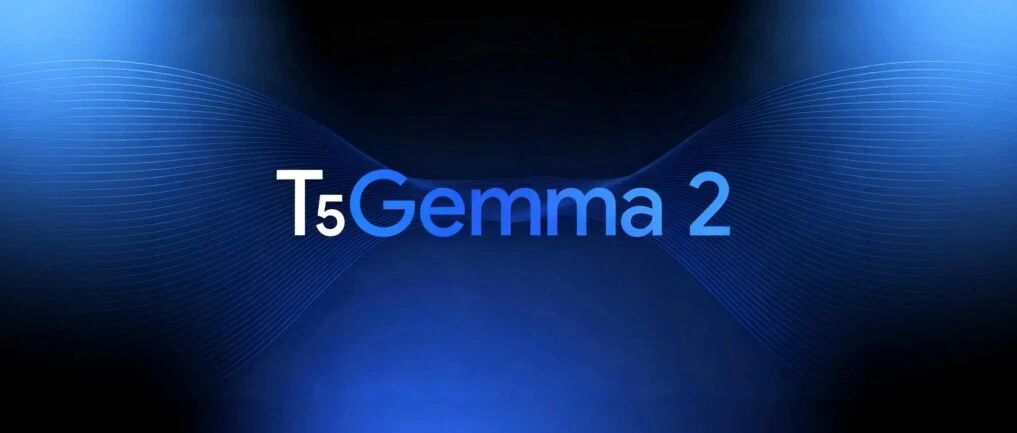
Core Viewpoint - Google has recently intensified its model releases, introducing the Gemini 3 Flash and the unexpected T5Gemma 2, which builds on the capabilities of the Gemini 3 series [1][3]. Group 1: T5Gemma 2 Overview - T5Gemma 2 is a new generation encoder-decoder model that is the first to support multi-modal and long-context capabilities, built on the robust features of Gemini 3 [9]. - The model offers three pre-trained scales: 270M-270M, 1B-1B, and 4B-4B, and is the first high-performance encoder-decoder model in the community to support ultra-long contexts of up to 128K tokens [9][11]. Group 2: Innovations and Upgrades - T5Gemma 2 continues the adaptation training approach of T5Gemma, converting a pre-trained decoder model into an encoder-decoder model, while leveraging key innovations from Gemini 3 to extend into the visual-language model domain [13]. - Significant architectural innovations include: 1. Shared word embeddings between the encoder and decoder, reducing overall parameter count and allowing for more effective capabilities within the same memory footprint [15]. 2. Merging self-attention and cross-attention into a unified attention layer, enhancing model parallelization efficiency and inference performance [16] [15]. Group 3: Model Capabilities - T5Gemma 2 demonstrates significant upgrades in capabilities: 1. Multi-modal capability, enabling the model to understand and process both images and text, facilitating tasks like visual question answering and multi-modal reasoning [17]. 2. Extended context support, with the ability to handle context windows of up to 128K tokens through a local-global alternating attention mechanism [18]. 3. Large-scale multilingual support, capable of operating in over 140 languages due to training on larger and more diverse datasets [19]. Group 4: Performance Results - T5Gemma 2 sets a new standard for compact encoder-decoder models, showing outstanding performance in key capability areas and inheriting the powerful multi-modal and long-context features of Gemini 3 [21]. - In benchmark tests, T5Gemma 2 outperforms both Gemini 3 and T5Gemma in multi-modal performance, long-context capability, and overall general capabilities across various tasks [25][29].
【大涨解读】核聚变:特朗普旗下企业拟并购+甲骨文、OpenAI项目或电力支持,核聚变再掀上涨潮,能源革命赛道迎来估值重构
Xuan Gu Bao· 2025-12-19 02:20
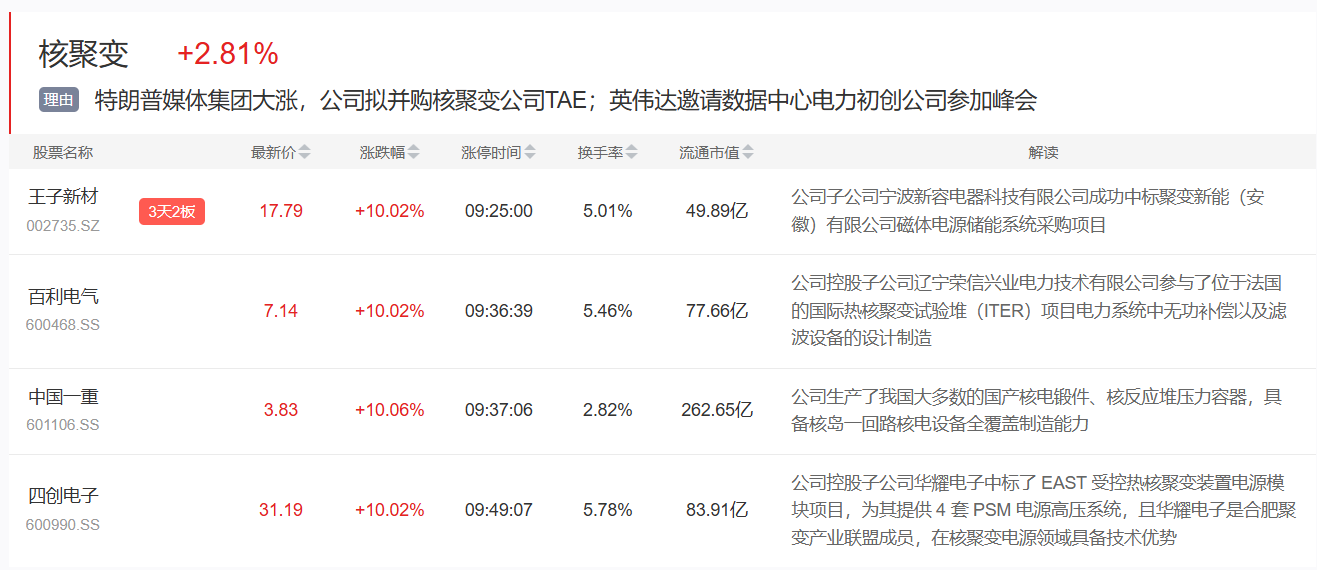
Market Overview - On December 19, the nuclear fusion sector opened with significant gains, with companies like Wangzi New Materials and Baili Electric hitting the daily limit, and others like Sichuang Electronics and Xue Ren Group also experiencing substantial increases [1] Key Events - On December 18, Trump Media Technology Group announced a merger agreement with nuclear fusion company TAE Technologies, valued at over $6 billion, aiming to build the world's first 50 MW utility-scale fusion power plant by 2026 to meet the energy demands of AI data centers [3] - The same day, Michigan regulators approved DTE Energy Co.'s power supply plan to support a 1.4 GW data center project in collaboration with Oracle and OpenAI, with a total planned capacity exceeding 8 GW and an investment of $450 billion over the next three years [3] Industry Insights - Nuclear fusion is emerging as the "ultimate energy" solution for high-energy consumption scenarios in AI, driven by explosive growth in electricity demand from data centers, which is expected to reach 180 TWh in 2024, accounting for 45% of global demand, and projected to grow to 420 TWh by 2030 at a CAGR of 15% [4] - The global controllable nuclear fusion market is estimated to reach approximately $20.35 billion between 2025 and 2035, with over 50% of this market attributed to core components such as magnet structures, vacuum chambers, and power systems [4] Technological and Policy Developments - The industry is transitioning from laboratory research to engineering deployment, supported by policies like the $900 million funding for small modular reactors (SMRs) in the U.S. and an executive order mandating the deployment of nuclear reactors at military bases by 2028 [4] - Major AI companies, including Microsoft, Google, and Amazon, are accelerating their investments in nuclear fusion, with OpenAI's first commercial micro-reactor expected to be operational by 2027 [5] Domestic Market Potential - Domestic companies are positioned to benefit from global energy transition trends, with collaborative efforts between research institutions and private enterprises accelerating key projects like the BEST project [5] - The nuclear fusion supply chain encompasses critical components such as magnets, power supplies, and supporting equipment, with opportunities for domestic firms to share in market growth through supply contracts and technology exports [5]
吞电巨兽AI正在全面重构美国能源格局|独家
24潮· 2025-12-19 02:04
Core Viewpoint - The article emphasizes that electricity has become a critical constraint on the development of artificial intelligence (AI), with the demand for power surging due to the exponential growth of AI models and data centers [2][14]. Group 1: AI Power Consumption - ChatGPT consumes approximately 2.9 watt-hours per response, which is nearly ten times the energy used by a traditional Google search, leading to a daily consumption of over 500,000 kilowatt-hours [3][9]. - The energy required for training AI models has significantly increased, with GPT-3 consuming 1,287 megawatt-hours for a single training session, enough to power 3,000 Tesla vehicles for 200,000 miles [9][10]. - The projected AI computing power in the U.S. is expected to require about 1,269 terawatt-hours by 2030, accounting for 22% of the total electricity consumption [10][12]. Group 2: Electricity Supply Challenges - The U.S. electricity grid is aging, with 70% of transformers exceeding their 25-year design life, leading to a low load reserve margin of only 20% [10][11]. - The average outage duration for U.S. users reached 662.6 minutes in 2024, a year-on-year increase of 80.74%, with states like Virginia and Texas experiencing even longer outages [11]. - The demand for electricity from AI is characterized by "pulse-like" spikes, which poses significant challenges to grid stability [10][11]. Group 3: Renewable Energy Solutions - Solar power combined with energy storage is viewed as the most viable solution to meet the growing electricity demands of AI, given its economic advantages and shorter construction timelines compared to other energy sources [15][17]. - The cost of solar power generation is the lowest among various energy sources, with prices ranging from $0.038 to $0.078 per kWh, making it an attractive option for data centers [17][18]. - Major tech companies like Google, Microsoft, and Amazon have set ambitious goals for achieving 100% renewable energy for their data centers by 2030, indicating a strong commitment to sustainable energy solutions [20][21].
美股强势反弹,科技股领涨,中概股普涨,CPI数据提振市场信心、美光强劲财测重燃AI赛道交易热情
Jin Rong Jie· 2025-12-19 01:16
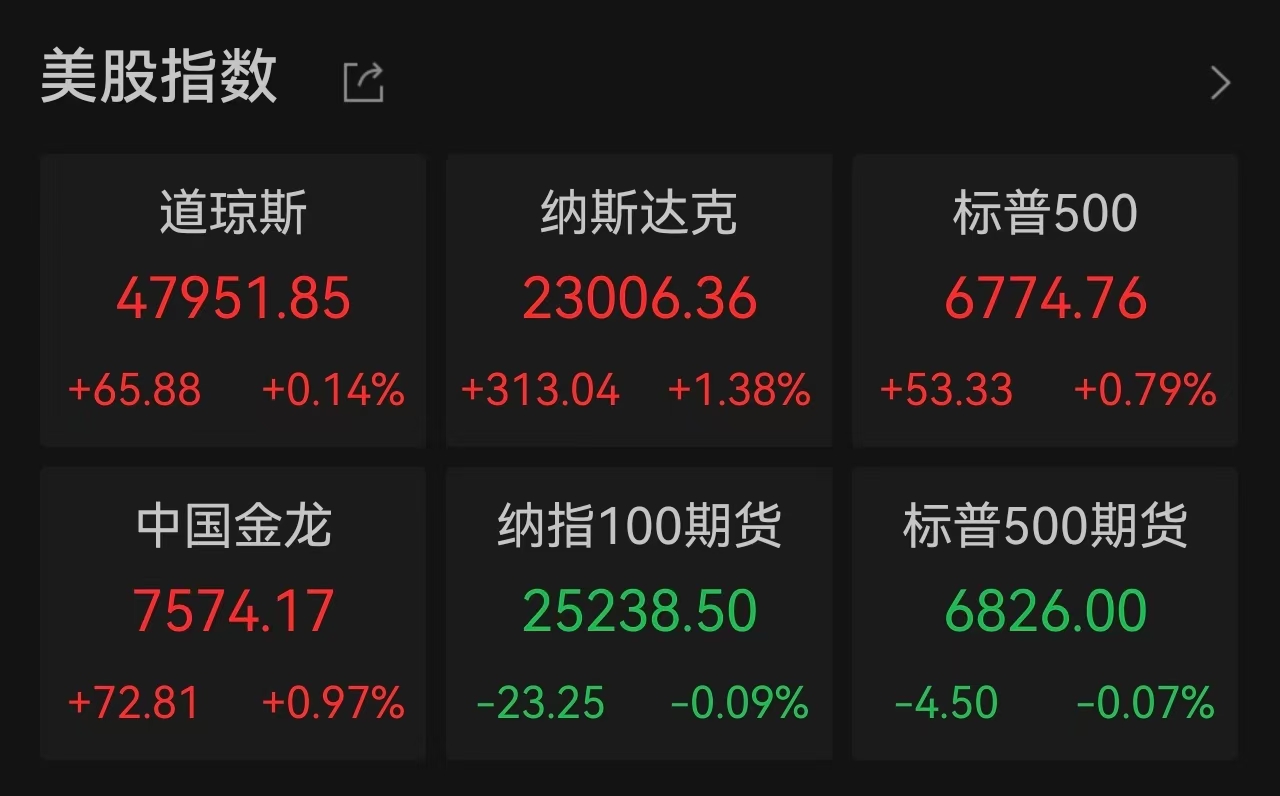
截至收盘,道琼斯工业平均指数上涨65.88点,涨幅0.14%,报47951.85点;标普500指数上涨53.33点,涨幅0.79%,报6774.76点;纳斯达克综合指数表现尤 为亮眼,上涨313.04点,涨幅1.38%,报23006.36点,结束此前连续回调的走势。小盘股同步走强,罗素2000指数上涨0.62%。 在利好通胀数据的提振下,美股市场于当地时间12月18日迎来全面反弹,三大指数集体收高,科技股成为推动市场上涨的主要动力。美国劳工部当日公布的 11月消费者价格指数(CPI)同比上涨2.7%,显著低于市场预期的3.1%,核心CPI同比上涨2.6%,同样低于预期,创下2021年3月以来新低。这一数据缓解了 投资者对通胀压力的担忧,强化了美联储明年降息的预期。 科技股普遍大涨,人工智能相关需求依旧强劲。美光科技股价飙升10.21%,公司发布的季度利润指引接近分析师预期的两倍,显示存储芯片需求旺盛,带 动费城半导体指数上涨2.6%。其他大型科技股中,特斯拉上涨3.45%,亚马逊上涨2.48%,Meta上涨2.30%,英伟达上涨1.87%,微软上涨1.65%,谷歌上涨 1.93%,苹果微涨0.13%。非必需消 ...
昨夜,这一赛道,大爆发!美联储,降息大消息!
证券时报· 2025-12-19 00:16
Core Viewpoint - The article highlights a significant rise in storage concept stocks, particularly driven by strong performance from Micron Technology and the Trump Media Technology Group, amidst a generally positive trend in the U.S. stock market [1][4]. Group 1: Market Performance - On December 19, U.S. stock indices collectively rose, with the Dow Jones Industrial Average increasing by 0.14%, the Nasdaq Composite by 1.38%, and the S&P 500 by 0.79% [1][2]. - Major technology stocks saw substantial gains, with Micron's stock price rising over 10%, and other companies like Tesla, Amazon, and Meta also experiencing notable increases [4]. Group 2: Micron Technology's Financial Results - Micron Technology reported a revenue of $13.64 billion for the first fiscal quarter of 2026, marking a quarter-over-quarter growth of over 20% and a year-over-year increase of 56.6%, surpassing analyst expectations of $12.95 billion [4]. - The company's adjusted net profit reached $5.482 billion, reflecting a quarter-over-quarter growth of 58.03% and a year-over-year increase of 169.12% [4]. - For the second fiscal quarter, Micron expects revenue to be between $18.3 billion and $19.1 billion, significantly higher than the previous analyst average estimate of $14.4 billion [4]. Group 3: Trump Media Technology Group - The stock price of Trump Media Technology Group surged by 41.93% following the announcement of a merger with TAE Technologies, a nuclear fusion startup, expected to be completed by mid-2026 [4]. - Post-merger, the company plans to establish its first utility-scale nuclear fusion power plant, which is anticipated to support the U.S.'s AI leadership and energy security [4].