格力电器

Search documents
2026国补来了!汽车消费补贴由“定额”改为“按比例”
Mei Ri Jing Ji Xin Wen· 2025-12-31 01:42
Group 1 - The core viewpoint of the news is the announcement of the 2026 national subsidy policy, which includes subsidies for smart products like AR glasses and emphasizes the importance of expanding domestic demand as a key task for the upcoming year [1][2] - The new subsidy policy for automobiles shifts from a fixed amount to a proportional subsidy, with electric vehicle scrappage subsidies set at 12% of the vehicle price (up to 20,000) and fuel vehicle scrappage subsidies at 8% (up to 15,000) [1][3] - The focus on expanding domestic demand is framed as a strategic deployment to address external shocks and enhance domestic circulation, highlighting the growth potential of discretionary consumption sectors such as retail, new energy vehicles, and smart home appliances [1][2] Group 2 - The optional consumption ETF primarily covers sectors closely related to service consumption and the unified market, with significant weightings in automobiles (46%) and home appliances (34%) [2] - The top ten weighted stocks in the optional consumption ETF include major companies such as Midea Group, BYD, Gree Electric, and Haier Smart Home, indicating a strong representation of leading firms in the consumer sector [2]

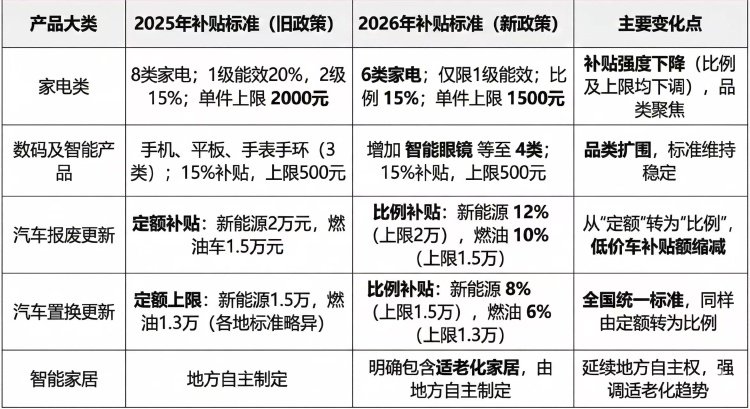
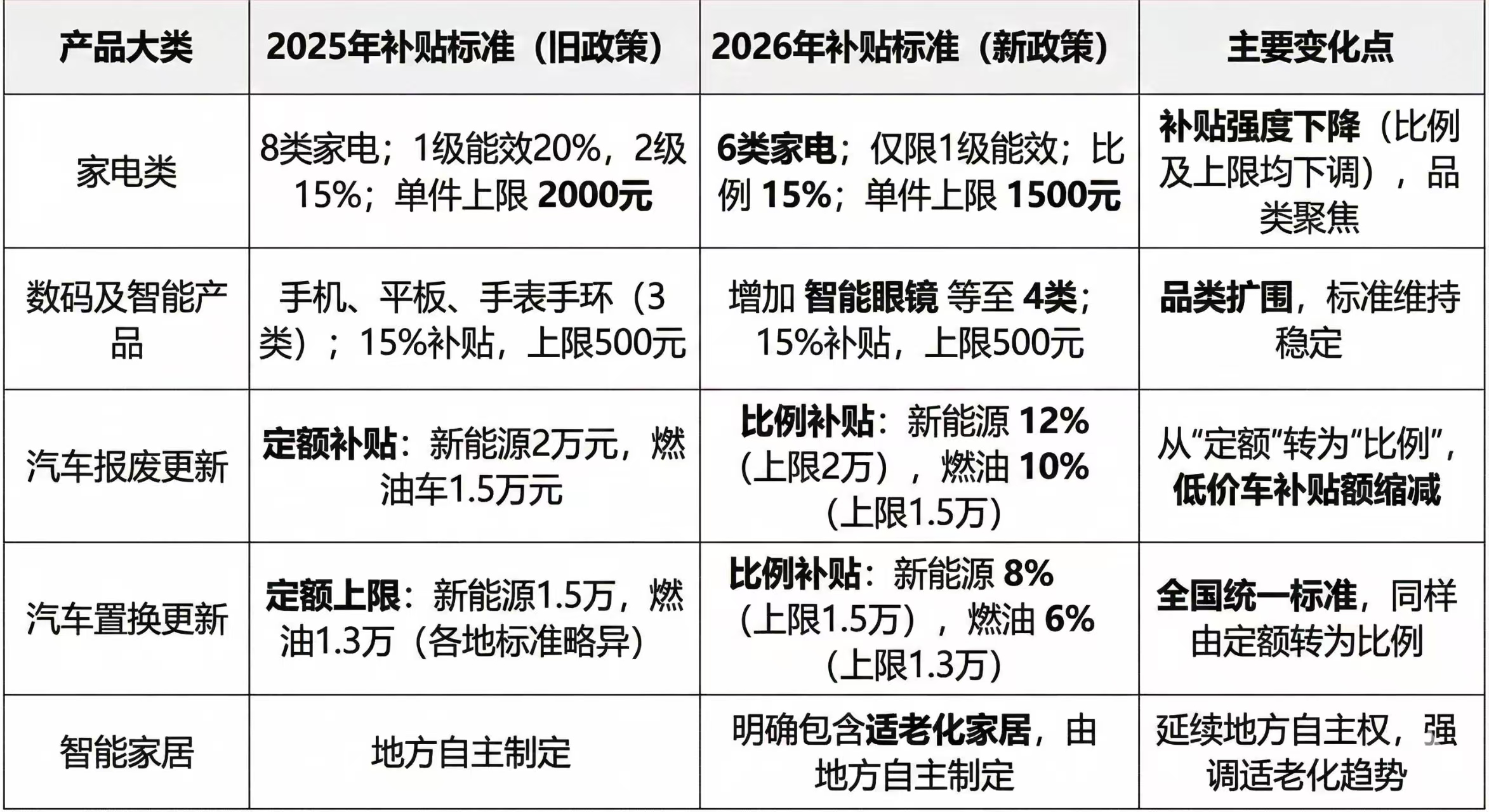
2026国补来了!汽车消费补贴由“定额”改为“按比例”(附对照表)
Mei Ri Jing Ji Xin Wen· 2025-12-31 01:11
Group 1 - The core viewpoint of the news is the announcement of the 2026 "National Subsidy" policy by the National Development and Reform Commission (NDRC) and the Ministry of Finance, which includes subsidies for smart products like AR glasses and emphasizes the importance of expanding domestic demand as a key task for the upcoming year [1] - The subsidy for scrapping and updating vehicles has shifted from a fixed amount to a proportional method, with new energy vehicle scrapping subsidies set at 12% of the vehicle price (up to 20,000 yuan), and fuel vehicle scrapping subsidies at 8% (up to 15,000 yuan) [1] - The NDRC's strategy to expand domestic demand is aimed at addressing external shocks and declining external demand, and is seen as crucial for strengthening the domestic circulation and stimulating market vitality [1] Group 2 - The optional consumption ETF primarily covers sectors closely related to service consumption and the unified market, including automobiles (46%), home appliances (34%), and commercial retail (6%) [2] - The top ten weighted stocks in the optional consumption ETF include Midea Group, BYD, Gree Electric, Fuyao Glass, Haier Smart Home, Seres, Sanhua Intelligent Control, China Duty Free Group, SAIC Motor, and Changan Automobile [2] Group 3 - The previous subsidy standards for 2025 included a fixed subsidy for home appliances (up to 2,000 yuan), digital and smart products (up to 500 yuan), and specific amounts for scrapping and updating vehicles [3] - The old policy provided a fixed subsidy of 20,000 yuan for new energy vehicles and 15,000 yuan for fuel vehicles for scrapping, and 15,000 yuan for new energy vehicles and 13,000 yuan for fuel vehicles for replacement [3]
家用电器行业投资策略周报-20251230
CAITONG SECURITIES· 2025-12-30 13:17
Core Insights - The report maintains a positive outlook on the home appliance sector, particularly focusing on the cost reduction potential of aluminum replacing copper in air conditioning systems [2][5] - The adoption of aluminum-copper technology is seen as a significant step towards reducing production costs amid rising copper prices and resource scarcity [10][15] Group 1: Aluminum-Copper Technology Impact - The use of aluminum instead of copper in air conditioning units can lead to substantial cost savings, with estimates suggesting a reduction of 208 to 277 RMB per unit when replacing 50% of copper, and up to 416 to 554 RMB when replacing 100% [11][12] - Copper currently constitutes about 26% to 33% of the cost in standard air conditioning units, with high-end models reaching over 40% [11][12] - The global market has seen significant adoption of aluminum-copper products, particularly in Japan where approximately 40% to 50% of air conditioners use aluminum heat exchangers [15][16] Group 2: Domestic Market Challenges - Despite the cost advantages, the domestic promotion of aluminum-copper air conditioners faces challenges, including inferior thermal conductivity and corrosion resistance compared to copper [19][20] - Consumer perception is a major barrier, as negative opinions about aluminum's reliability persist, complicating market acceptance [19][20] - The first domestic aluminum-copper air conditioner was launched by Wanbao in collaboration with JD.com, targeting the mid-to-low-end market, which may help accelerate industry-wide material transitions [16][17] Group 3: Industry Performance and Trends - The home appliance sector has shown mixed performance, with the overall index increasing by 0.44%, while specific segments like white goods and black goods experienced varied changes [21][22] - Recent data indicates a decline in domestic sales growth for air conditioners, refrigerators, and washing machines, reflecting broader market challenges [33][47] - The report highlights the importance of monitoring raw material prices, with copper and aluminum prices showing significant fluctuations that could impact production costs [29][31]






格力电器(000651):主营承压下盈利能力改善,制造体系持续夯实:格力电器(000651):重大事项点评
Huachuang Securities· 2025-12-30 13:13
公司研究 证 券 研 究 报 告 格力电器(000651)重大事项点评 强推(维持) 主营承压下盈利能力改善,制造体系持续夯实 事项: ❖ 2025 年 11 月,工信部公示《2025 年度领航级智能工厂项目培育名单》,格力 电器旗下"全价值链格力协同屋空调智能工厂"项目入选(全国首批仅 15 家), 公司智能制造能力与示范效应获得国家级层面认可。 评论: ❖ 风险提示:新品开拓不及预期、原材料价格上涨。 [ReportFinancialIndex] 主要财务指标 | | 2024A | 2025E | 2026E | 2027E | | --- | --- | --- | --- | --- | | 营业总收入(百万) | 190,038 | 179,515 | 187,740 | 196,561 | | 同比增速(%) | -7.3% | -5.5% | 4.6% | 4.7% | | 归母净利润(百万) | 32,185 | 30,058 | 32,279 | 34,156 | | 同比增速(%) | 10.9% | -6.6% | 7.4% | 5.8% | | 每股盈利(元) | 5.75 | 5. ...
逸豪新材:公司目前未有商业航天领域的客户
Zheng Quan Ri Bao Wang· 2025-12-30 12:16
证券日报网讯 12月30日,逸豪新材(301176)在互动平台回答投资者提问时表示,公司PCB产品已与 LG、三星、格力电器(000651)、TCL、聚飞光电(300303)、视源股份(002841)、兆驰股份 (002429)等优质品牌厂商建立了稳定的合作关系。公司目前未有商业航天领域的客户。 ...
今年十大最惨板块,跌麻了
3 6 Ke· 2025-12-30 12:11
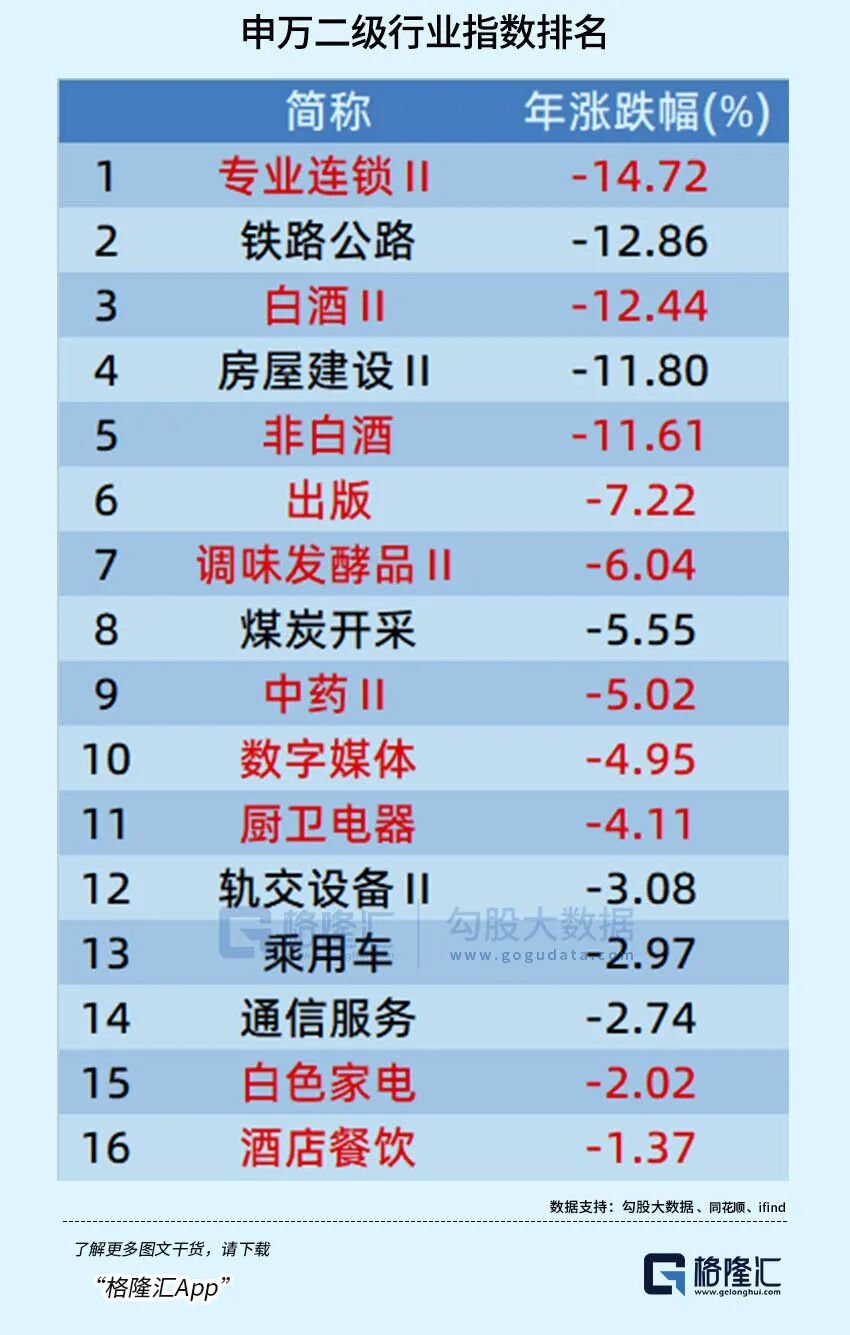
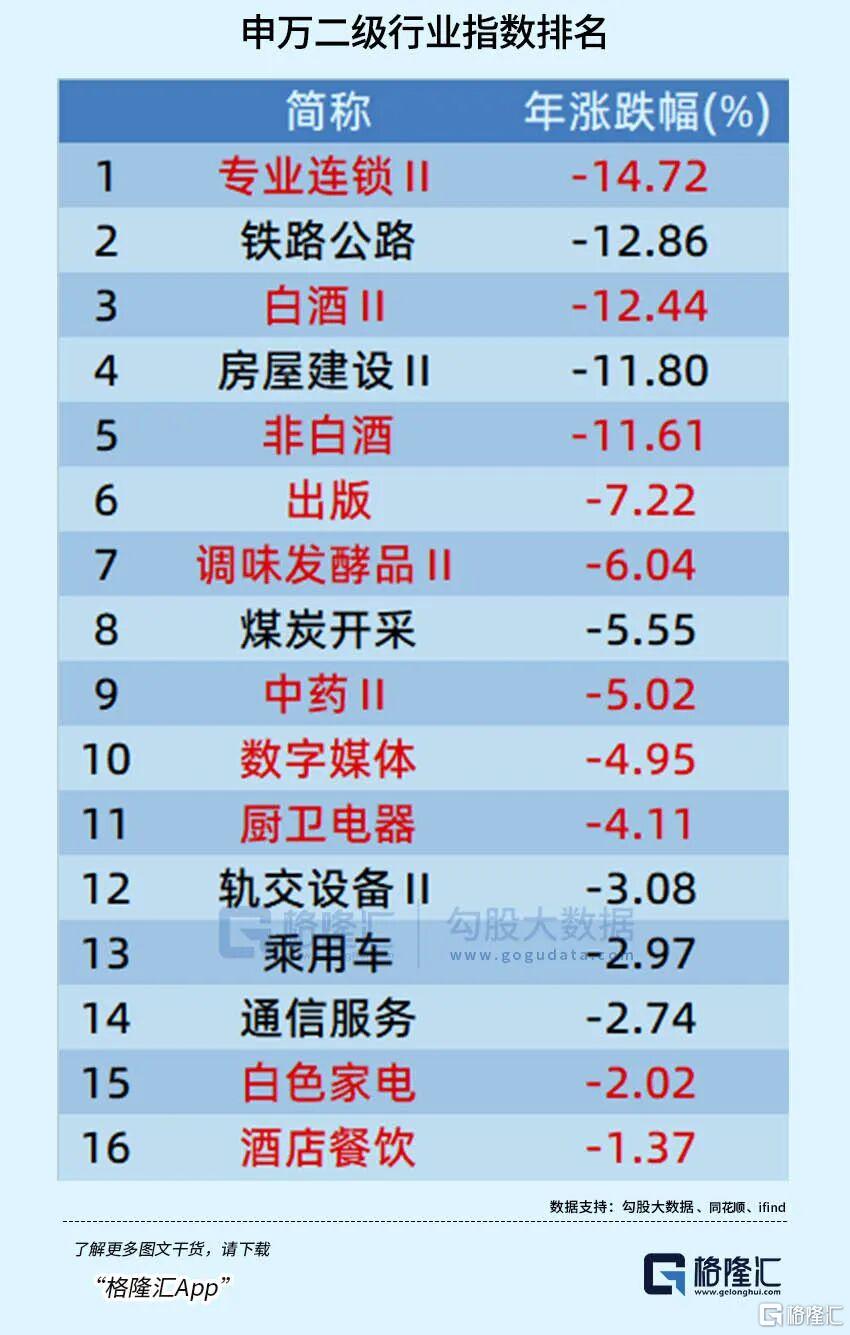
Core Viewpoint - The consumer sector has faced significant challenges in the past year, with many industries within this sector experiencing declines despite overall market growth. The focus on domestic demand and consumption has not translated into positive performance for many consumer-related industries [1]. Group 1: Consumer Sector Performance - In the first half of the year, 10 out of 16 industries that saw declines were from the consumer sector, indicating a troubling trend for consumer-related stocks [1]. - The white liquor sector, a key component of the consumer market, has seen a year-to-date decline of 12.44%, with major brands like Wuliangye experiencing significant drops in revenue and profit [5][8]. - The professional chain sector has been particularly hard hit, with a year-to-date decline of 14.72%, as traditional retail models struggle to adapt to changing consumer behaviors [13][14]. Group 2: White Liquor Industry - The white liquor industry is facing its eighth consecutive year of production decline, with both volume and price dropping, leading to increased inventory pressure and cash flow issues for many companies [9]. - Wuliangye reported a 10.26% decline in revenue and a 13.72% drop in net profit for the first three quarters, marking its first negative growth in nearly a decade [8]. - The changing consumer landscape, with a shift towards lower-alcohol and healthier options, is forcing white liquor companies to adapt or risk further declines [12]. Group 3: Professional Chain Sector - The professional chain sector is experiencing a crisis, with many traditional stores closing and business models failing to adapt to the digital age [14][19]. - The decline of major players like Renrenle, which has seen its market value plummet and faced continuous losses, exemplifies the struggles within this sector [18]. - The shift towards online shopping and personalized consumer experiences is reshaping the retail landscape, leaving traditional large-format stores at a disadvantage [20]. Group 4: Non-White Liquor Sector - The non-white liquor sector, including beer and wine, has also faced challenges, with a year-to-date decline of 11.61% [22]. - Budweiser APAC reported an 8.2% drop in domestic sales and a 24.4% decline in net profit, reflecting broader issues within the beer industry [25]. - The rise of cross-industry competition, with liquor companies diversifying into other beverage categories, indicates a shift in market dynamics [27]. Group 5: Publishing Industry - The publishing industry has seen a decline in the overall market, with a 10.4% drop in the domestic paper book market, yet some companies have managed to increase profits through cost control [35][38]. - Chinese Media, a leading player in the sector, has faced significant revenue and profit declines, highlighting the challenges of adapting to changing educational policies [36][38]. Group 6: Seasoning Industry - The seasoning industry has experienced a 6.04% decline, with companies like Qianhe Flavor struggling due to a drop in sales across key product lines [43][47]. - The industry is facing increased competition and changing consumer preferences, necessitating a shift in strategy for many companies [52]. Group 7: Traditional Chinese Medicine - The traditional Chinese medicine sector has seen a 5.02% decline, with companies like Pian Zai Huang facing significant revenue and profit drops due to rising costs and regulatory pressures [53][56]. - The industry is undergoing a transformation as companies seek to innovate and diversify their product offerings in response to market challenges [62]. Group 8: Digital Media - The digital media sector has faced a 4.95% decline, with traditional advertising models struggling to keep pace with new digital trends [67]. - Companies like Mango TV have reported significant revenue declines, indicating the need for adaptation in a rapidly changing media landscape [66]. Group 9: Kitchen and Bathroom Appliances - The kitchen and bathroom appliance sector has seen a 4.11% decline, largely due to a slowdown in new housing demand and increased competition [69][70]. - Companies like Boss Appliances are experiencing revenue declines for the first time in years, reflecting broader industry challenges [69]. Group 10: White Goods - The white goods sector has faced a 2.02% decline, with major players like Gree Electric experiencing significant revenue and profit drops due to increased competition and market saturation [76][80]. - The industry is shifting towards a focus on product quality and operational efficiency as traditional growth drivers diminish [80]. Group 11: Hotel and Catering - The hotel and catering sector has seen a 1.37% decline, with many businesses struggling to convert increased travel demand into profits due to high commission fees from online platforms [84][85]. - The industry is witnessing a shift towards more refined operational models as companies seek to adapt to changing consumer behaviors and market conditions [86].
2025年A股十大最惨板块,跌麻了
Ge Long Hui· 2025-12-30 11:30
Core Viewpoint - The consumer sector has faced significant challenges in the past year, with many sub-sectors experiencing declines despite overall market growth. The focus on domestic demand and consumption has not translated into positive performance for many consumer-related industries [1][5]. Consumer Sector Performance - In the first half of the year, 10 out of 16 declining industries were from the consumer sector, indicating a broader trend of underperformance [1]. - The white liquor sector, a key component of the consumer market, has seen a year-to-date decline of 12.44%, with major brands like Wuliangye experiencing significant drops in revenue and profit [6][9]. - The professional chain sector has been particularly hard-hit, with a year-to-date decline of 14.72%, exemplified by the struggles of companies like Renrenle [16][20]. White Liquor Sector - The white liquor industry is facing its eighth consecutive year of production decline, with both volume and price dropping simultaneously [10]. - Wuliangye reported a 10.26% decline in revenue and a 13.72% drop in net profit for the first three quarters, marking its first negative growth in a decade [9]. - The industry is shifting from a growth-driven model to one focused on consumer choice, with a need for companies to adapt to changing consumer preferences [15]. Professional Chain Sector - The professional chain sector is experiencing a crisis, with many physical stores closing and traditional business models failing [16][20]. - Renrenle, once a leading private supermarket, has seen its market value plummet and is now facing delisting due to ongoing financial struggles [21][24]. - The shift towards online shopping and personalized consumer demands has further exacerbated the challenges faced by traditional retail chains [24][25]. Non-White Liquor Sector - The non-white liquor sector, including beer and wine, has also faced declines, with the beer segment seeing a notable drop in sales and profits [27][32]. - Budweiser APAC reported an 8.2% decline in domestic sales and a 24.4% drop in net profit, reflecting broader industry challenges [32][33]. - The market is witnessing a trend of cross-industry competition, with liquor companies diversifying into new beverage categories [34]. Publishing Sector - The publishing industry has shown resilience despite a 10.4% decline in the overall market for printed books, with listed companies managing to increase net profits by 14.65% [43][44]. - However, leading companies like Zhongwen Media are struggling, with significant revenue and profit declines due to changes in educational material procurement policies [45][48]. Seasoning Sector - The seasoning industry has faced a 6.04% decline, with companies like Qianhe Flavor struggling due to falling revenues and a loss of consumer trust [51][55]. - The industry is experiencing a shift in consumer preferences and increased competition, necessitating a reevaluation of business strategies [60]. Traditional Chinese Medicine Sector - The traditional Chinese medicine sector is facing challenges, with companies like Pian Zai Huang reporting significant declines in revenue and profit due to rising costs and regulatory pressures [61][66]. - The industry is undergoing a transformation as companies seek to innovate and diversify their product offerings [70]. Digital Media Sector - The digital media industry has seen a 4.95% decline, with companies like Mango TV reporting significant drops in revenue and profit due to changing consumer behaviors and market dynamics [71][74]. - The sector is grappling with the need to adapt to new content consumption trends while facing pressure from traditional advertising models [75]. Kitchen and Bathroom Appliances Sector - The kitchen and bathroom appliance sector has experienced a 4.11% decline, largely due to reduced demand from the real estate market [78][79]. - Companies like Boss Electric are facing revenue declines for the first time in years, highlighting the challenges of adapting to a changing market landscape [79][80]. White Goods Sector - The white goods sector has seen a 2.02% decline, with major players like Gree Electric facing significant revenue and profit pressures due to increased competition and market saturation [83][84]. - The industry is shifting towards a focus on product quality and brand strength as external stimuli diminish [88]. Hotel and Restaurant Sector - The hotel and restaurant sector has faced a 1.37% decline, with revenue pressures stemming from changing consumer spending habits and increased competition from online platforms [89][92]. - Companies are beginning to adopt more refined operational strategies to navigate the challenging market environment [96].




今年十大最惨板块,跌麻了
格隆汇APP· 2025-12-30 11:04
Core Viewpoint - The article discusses the significant downturn in various consumer sectors, particularly the liquor and retail industries, highlighting the challenges and potential opportunities for recovery amidst changing consumer behaviors and market dynamics [2][4][43]. Group 1: Liquor Industry - The liquor sector, especially the white liquor segment, has faced substantial declines, with the overall white liquor market down by 12.44% this year [9][15]. - Major brands like Wuliangye have reported significant drops in revenue and profit, with a 10.26% decline in revenue and a 13.72% drop in net profit for the first three quarters [17]. - The white liquor industry is experiencing a shift from a growth-driven model to one focused on consumer preferences, with a need for companies to adapt to changing consumption patterns [26][27]. Group 2: Retail Industry - The professional chain sector has seen a dramatic decline of 14.72%, with many traditional retail models struggling to survive [28][30]. - Companies like Renrenle have faced severe financial difficulties, leading to a significant reduction in store numbers and ultimately triggering delisting procedures [34][35]. - The shift towards online shopping and changing consumer preferences have forced traditional retailers to innovate or face extinction [36][39]. Group 3: Non-White Liquor Sector - The non-white liquor sector, including beer and wine, has also suffered, with a reported decline of 11.61% this year [40]. - Major players like Budweiser APAC have experienced significant sales drops, with a 9.5% revenue decrease and a 24.4% decline in net profit [46]. - The industry is witnessing a trend of cross-industry competition, with liquor companies diversifying into other beverage categories to adapt to market changes [51][56]. Group 4: Publishing Industry - The publishing sector has faced a 7.22% decline, with the overall market for printed books down by 10.40% [60]. - Despite the downturn, some publishing companies have managed to increase profits through cost control and operational efficiency, with a 14.65% rise in net profit for listed companies [61][62]. - The industry is undergoing significant transformation, moving from traditional sales models to more dynamic content management and IP development strategies [70][71]. Group 5: Seasoning Industry - The seasoning sector has seen a 6.04% decline, with companies like Qianhe Flavor struggling due to a drop in revenue and profit [74]. - The industry is facing challenges from both market saturation and changing consumer preferences, necessitating a shift in strategy for many companies [81]. Group 6: Traditional Chinese Medicine - The traditional Chinese medicine sector has experienced a 5.02% decline, with companies like Pian Zai Huang facing significant revenue and profit drops [86]. - The industry is under pressure from regulatory changes and increased competition, pushing companies to innovate and diversify their product offerings [91][92]. Group 7: Digital Media - The digital media sector has reported a 4.95% decline, with traditional advertising models struggling to adapt to new market realities [97][100]. - Companies like Mango TV have seen significant revenue drops, highlighting the challenges of maintaining profitability in a rapidly changing landscape [101][104]. Group 8: Kitchen and Bathroom Appliances - The kitchen and bathroom appliance sector has faced a 4.11% decline, with major players like Boss Electric experiencing revenue drops for the first time in years [112]. - The industry is grappling with reduced demand due to a slowdown in the real estate market, necessitating a shift towards innovation and international expansion [117][118]. Group 9: White Goods - The white goods sector has seen a 2.02% decline, with companies like Gree Electric facing significant challenges due to market saturation and increased competition [126][129]. - The industry is shifting towards a more rational consumer base that prioritizes product quality and brand reputation over traditional growth drivers [133]. Group 10: Hotel and Restaurant Industry - The hotel and restaurant sector has experienced a 1.37% decline, with many businesses struggling to convert increased tourism into profits [140][141]. - The industry is witnessing a shift towards more refined operational models, with companies focusing on member engagement and digital transformation to enhance profitability [142][143].



罗永浩炮轰,空调售后成“暴利江湖”?
商业洞察· 2025-12-30 09:23
Core Viewpoint - The article discusses the high costs associated with air conditioning maintenance and repair services, highlighting the lack of regulation in the air conditioning after-market, which has become a lucrative but problematic area for consumers and companies alike [2][4][15]. Group 1: High Costs of Air Conditioning Maintenance - The cost for seasonal cleaning and filter replacement for central air conditioning units can reach approximately 15,000 yuan, with filter replacement accounting for 70% of this cost [4][7]. - Consumers have expressed frustration over the high service fees, with some stating that the cost of maintenance can exceed the price of purchasing new units, especially as air conditioning prices have dropped significantly due to market competition [5][10]. - The average cleaning costs for other brands like Midea and Gree range from 100 to 300 yuan, indicating that the prices for maintenance services can vary widely across different brands [10][11]. Group 2: Issues in the After-Market - The air conditioning after-market is plagued by issues such as price opacity, inflated repair costs, and unnecessary upselling, leading to consumer distrust [15][16]. - Reports indicate that third-party service providers often charge significantly more than official brand service teams, sometimes up to 3-4 times higher [15][18]. - The lack of regulation in the after-market allows for a variety of service quality, with many third-party companies operating outside of formal oversight [18]. Group 3: Competitive Landscape and Service Improvements - Major appliance brands like Gree and Midea are increasingly focusing on enhancing their after-sales service networks, with Gree boasting over 15,000 authorized service points [20][22]. - The article notes a shift in service strategies, with brands like Midea and Xiaomi introducing longer warranty periods and comprehensive service packages to improve customer satisfaction [22][24]. - As the price competition in the air conditioning market reaches its limits, companies are recognizing the importance of service quality as a key differentiator in maintaining market share [23][24].


家电行业2026年度投资策略:重视红利、拥抱出海、把握家电+转型机遇
HUAXI Securities· 2025-12-30 09:17
Core Insights - The report emphasizes the strong resilience of leading white goods companies, highlighting their high dividend yields, with Gree Electric at 7.3%, Midea Group at 5.1%, Hisense Home Appliances at 4.9%, and Haier Smart Home at 4.6% [6][22] - The "Home Appliance +" strategy indicates opportunities in extending the appliance industry into robotics, with companies like Midea Group and Fuhua Co. making significant advancements [6][58] - The export market shows potential, particularly in the U.S. real estate sector, with expectations of demand recovery due to anticipated interest rate cuts and housing stimulus policies [6][70] Section Summaries 2025 Home Appliance Review - The home appliance index has shown a modest increase of 7.7% year-to-date, underperforming the CSI 300 index by approximately 9.7 percentage points [11][14] - The market style in 2025 has favored growth stocks, while the home appliance sector has leaned towards value, leading to a mismatch in market expectations [13][14] - The public fund allocation in the home appliance sector is at a historical low of 2.94%, indicating potential for future growth as external demand remains optimistic [18][19] Dividends - Leading white goods companies maintain high dividend yields, with Gree Electric at 7.3%, Supor at 6.1%, and Midea Group at 5.1%, reflecting strong earnings resilience [24][29] - The report suggests that the dividend rates for companies like Midea and Haier may continue to increase, supported by robust profit growth [24][30] Domestic Sales - The national subsidy policy has positively impacted consumer confidence, with a clear trend towards structural upgrades in appliance consumption [34] - The sales growth of home appliances has been driven by the "trade-in" policy, although growth rates have shown a declining trend in the latter part of the year [34][39] - The air conditioning market has maintained stable pricing, with a continued trend towards mid-to-high-end products [39] "Home Appliance +" - Midea Group has made significant investments in robotics, with humanoid robots already in practical application within factories [58] - Fuhua Co. is expected to launch its grain storage robots in 2026, indicating a diversification into new growth areas [59] - Key component manufacturers like Huaxiang Co. and Hanyu Group are positioned to benefit from the robotics trend, focusing on core components such as reducers and harmonic drives [64][65] Exports - The U.S. real estate market is expected to recover, with potential interest rate cuts and housing stimulus policies likely to boost demand for home appliances [71][84] - Retail inventory levels in the U.S. are high, which may affect sales performance in the short term, but long-term housing demand remains strong [76][83] - The report anticipates that if mortgage rates fall below 6%, there could be a significant recovery in demand within the real estate chain [84]