
潞安环能

Search documents
消失的中间商,敏感的煤价:物流总包筑壁垒,量价挂钩扩优势
ZHONGTAI SECURITIES· 2025-08-20 12:28
Investment Rating - The industry investment rating is maintained at "Overweight" [2] Core Viewpoints - The combination of "logistics package" and "volume-price linkage" is driving the increase in industry concentration, forcing intermediaries out of the market and enhancing the sensitivity of coal prices [5] - The "logistics package" mechanism significantly reduces comprehensive logistics costs, creating sustainable advantages in delivery certainty and cost, while raising entry barriers for small coal operators [5] - The "volume-price linkage" mechanism strengthens scale premiums, allowing large mining and trading enterprises to gain larger discounts, while smaller entities face profit margin compression [5] - The weakening of intermediary roles is expected to enhance coal price sensitivity, with a clear trend of price reversal under the backdrop of supply contraction expectations [5] - The report emphasizes the importance of evaluating the effectiveness of "anti-involution" policies and their impact on liquidity and risk preferences to seize coal investment opportunities [5] Summary by Sections Policy Focus on Cost Reduction and Efficiency - National policies are continuously promoting the development of logistics package models [14] - The logistics package model is seen as a core strategy to reduce overall logistics costs through integrated services [7] Strengthening Long-term Contract Barriers - Long-term contract policies are reinforcing scale barriers, putting pressure on intermediaries [16] - The proportion of railway coal in total coal shipments has increased significantly in 2023 compared to 2022 [21][20] Volume-Price Linkage Trading Pilot - The introduction of volume-price linkage trading mechanisms is expected to benefit large market players significantly [25] - The rapid decrease in port coal inventories contrasts with weak net inflows, indicating a structural tightening in supply [24][23] - The Taiyuan Coal Trading Center has initiated a volume-price linkage trading mechanism to enhance market liquidity and efficiency [27] Investment Recommendations - The report recommends focusing on elastic stocks in the coal sector, highlighting specific companies likely to benefit from the current market dynamics [10]




超120家上市公司宣布现金分红计划,国企红利ETF(159515)红盘蓄势
Sou Hu Cai Jing· 2025-08-20 05:59
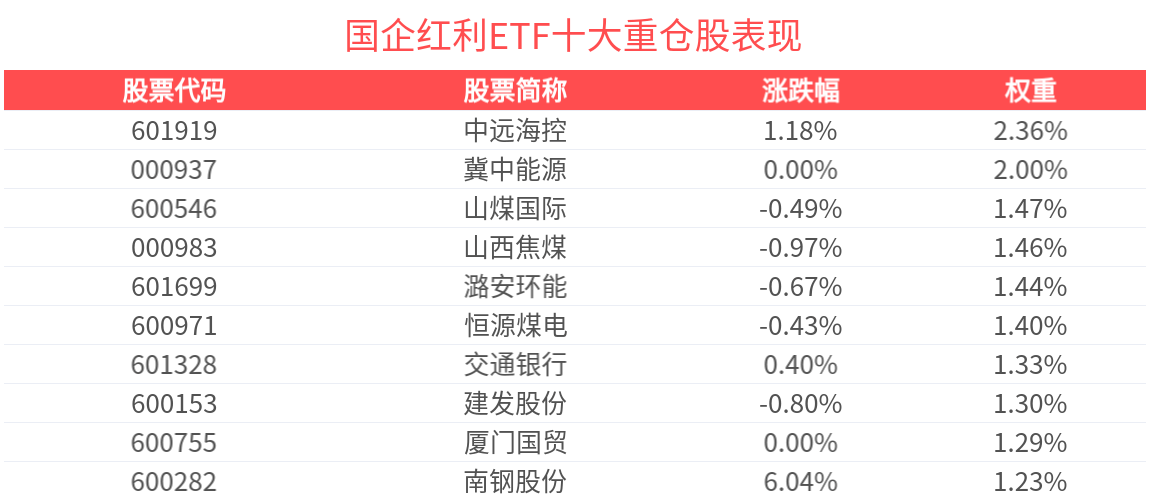
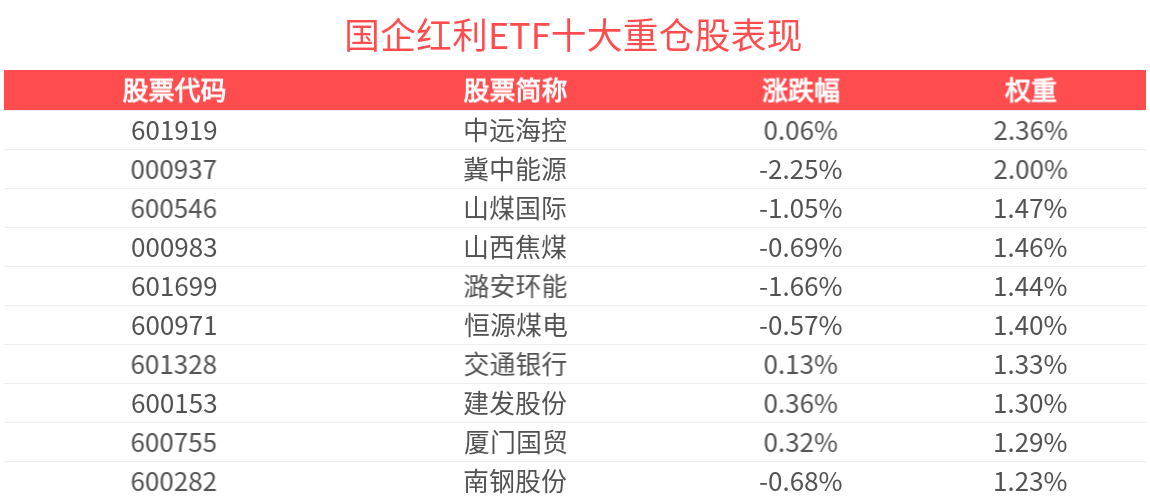
Group 1 - The core viewpoint of the news highlights the strong performance of dividend assets, particularly bank stocks, amidst a low interest rate environment, with a consensus on their long-term investment value [1][2] - As of August 18, 2025, 121 listed companies have announced cash dividend plans totaling 108.6 billion yuan, indicating a robust trend in mid-year dividends [1] - The China Securities Index Company notes that the dividend distribution characteristics this year include an increase in the number of companies distributing dividends, larger scales, a higher proportion of net profits, and enhanced sustainability and predictability [1] Group 2 - The CSI State-Owned Enterprises Dividend Index (000824) tracks 100 listed companies with high cash dividend yields and stable distributions, reflecting the overall performance of high-dividend securities among state-owned enterprises [2] - As of July 31, 2025, the top ten weighted stocks in the CSI State-Owned Enterprises Dividend Index account for 16.77% of the index, with significant contributors including COSCO Shipping Holdings (601919) and Jizhong Energy (000937) [2][4] - The National State-Owned Enterprises Dividend ETF (159515) closely follows the CSI State-Owned Enterprises Dividend Index, indicating a growing interest in dividend-focused investment products [2][4]





国盛证券:7月煤炭产量同、环比双降 年底煤价或以最高点收官
智通财经网· 2025-08-19 08:36
Core Viewpoint - The report from Guosheng Securities indicates a significant decline in China's coal production in July, with a year-on-year decrease of 3.8%, marking the first negative growth since May 2024 [2][3] Production Data - In July, the national industrial raw coal output reached 380 million tons, with an average daily output of 12.29 million tons, the lowest since July 2023 [2][3] - Major companies reported declines in coal production, with Zhongyue Coal achieving 11.05 million tons, down 8.7% year-on-year, and Lu'an Huanneng producing 4.48 million tons, down 9.1% [2] Factors Behind Production Decline - Prolonged heavy rainfall has severely impacted coal production and transportation in major mining areas, leading to increased shutdowns and reduced output [3] - The National Energy Administration's recent measures to check overproduction have further constrained supply, with some mines implementing a "276 working days" system [3] Price Trends - Coal prices hit a low of 618 yuan per ton in early June but began to rebound seasonally, with market sentiment shifting positively following the release of the "Document No. 108" [4] - The report suggests that coal prices may experience fluctuations or slight corrections before rising again towards the end of the year, potentially reaching unexpected highs [5] Recommendations for Companies - Companies with strong performance elasticity such as Lu'an Huanneng (601699.SH), Yanzhou Coal (600188.SH), and Jinko Coal (601001.SH) are recommended for investment [6] - Attention is also drawn to major coal enterprises like China Coal Energy (601898.SH) and China Shenhua (601088.SH), as well as companies showing signs of recovery like China Qinfang (00866) [6]
【盘中播报】沪指跌0.09% 国防军工行业跌幅最大
Zheng Quan Shi Bao Wang· 2025-08-19 06:41
Market Overview - The Shanghai Composite Index decreased by 0.09% as of 13:58, with a trading volume of 1,356.55 million shares and a turnover of 21,661.97 billion yuan, representing a decrease of 5.03% compared to the previous trading day [1]. Industry Performance - The top-performing sectors included: - Comprehensive: Increased by 2.71% with a turnover of 54.09 billion yuan, led by Yueda Investment, which rose by 10.06% [1]. - Food and Beverage: Increased by 1.03% with a turnover of 414.45 billion yuan, led by Guifaxiang, which rose by 9.99% [1]. - Communication: Increased by 0.90% with a turnover of 1,168.66 billion yuan, led by Zhaolong Huilian, which rose by 10.90% [1]. - The sectors with the largest declines included: - National Defense and Military Industry: Decreased by 1.38% with a turnover of 882.05 billion yuan, led by Jingjiawei, which fell by 7.94% [2]. - Non-Bank Financial: Decreased by 1.17% with a turnover of 953.14 billion yuan, led by Zhongyin Securities, which fell by 2.81% [2]. - Coal: Decreased by 0.93% with a turnover of 73.84 billion yuan, led by Lu'an Environmental Energy, which fell by 2.12% [2]. Summary of Trading Data - A total of 2,667 stocks rose, with 86 hitting the daily limit, while 2,572 stocks fell, including 6 hitting the lower limit [1]. - The overall market sentiment showed a mixed performance across various sectors, with significant activity in the comprehensive and food and beverage industries, while national defense and non-bank financial sectors faced notable declines [1][2].
2025年1-5月山西省能源生产情况:山西省发电量1796.4亿千瓦时,同比下滑0.3%
Chan Ye Xin Xi Wang· 2025-08-19 01:33
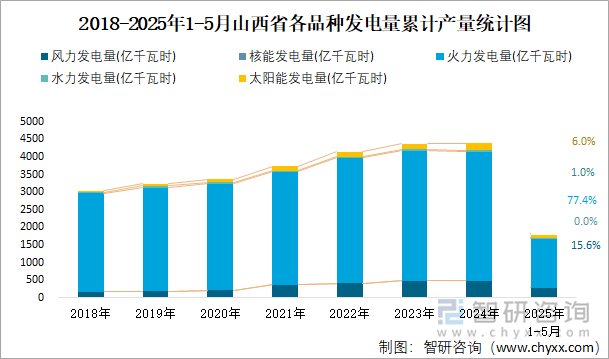
Group 1 - The core viewpoint of the news highlights the performance of Shanxi Province's power generation in 2025, indicating a slight overall decline in electricity generation compared to the previous year, with specific growth in renewable energy sources [1] - In May 2025, Shanxi Province generated 32.95 billion kilowatt-hours of electricity, representing a year-on-year increase of 2.4% [1] - From January to May 2025, the total electricity generation in Shanxi Province was 179.64 billion kilowatt-hours, showing a year-on-year decrease of 0.3% [1] Group 2 - The breakdown of electricity generation by type from January to May 2025 shows that thermal power accounted for 139.13 billion kilowatt-hours, or 77.4% of the total, with a year-on-year decline of 5.4% [1] - Hydropower generation was 1.71 billion kilowatt-hours, making up 1% of the total, with a year-on-year increase of 9.5% [1] - Wind power generation reached 28.05 billion kilowatt-hours, representing 15.6% of the total, with a year-on-year growth of 27.2% [1] - Solar power generation was 10.749 billion kilowatt-hours, accounting for 6% of the total, with a year-on-year increase of 13.4% [1]
山西证券研究早观点-20250819
Shanxi Securities· 2025-08-19 00:17
Group 1: Coal Industry Insights - In July 2025, coal supply showed a marginal decrease, with cumulative production from January to July reaching 2.779 billion tons, a year-on-year increase of 3.8%, but the growth rate is declining. In July alone, production was 381 million tons, down 3.8% year-on-year and 9.52% month-on-month [6][5]. - Demand for coal in the first seven months of 2025 was supported by manufacturing and infrastructure, with fixed asset investment increasing by 1.6% year-on-year. However, real estate investment fell by 12.0% [6]. - Coal prices entered a rebound phase in July, with coking coal showing resilience. The average price of Shanxi mixed 5500 thermal coal has decreased since the beginning of 2025, while the average price of coking coal at Jingtang Port has also declined [6][5]. - The report suggests that the market's pricing in July was "beyond expectations," indicating a potential shift in policy that could lead to inflationary pressures. The expectation of price increases has led to a significant rise in coal stock prices [6][5]. - The report anticipates that the low point for coal prices this year may have already occurred, with prices unlikely to fall back in the second half of the year [6]. Group 2: Biopharmaceutical Industry Insights - The report highlights the potential of next-generation immuno-oncology (IO) therapies for non-small cell lung cancer (NSCLC), particularly those combining PD-1/L1 monoclonal antibodies with VEGF inhibitors, IL-2 agonists, and antibody-drug conjugates (ADCs) [8]. - Clinical data shows that PD-1/VEGF dual antibodies have achieved significant progression-free survival (PFS) and overall survival (OS) benefits in first-line NSCLC treatments, outperforming traditional therapies [8]. - The report notes that the PD-1/IL-2α-bias dual antibody fusion protein has shown promising OS benefits in IO-treated NSCLC patients, indicating a strong potential for these innovative therapies in overcoming immune resistance [8]. Group 3: Company-Specific Insights on Beite Technology - Beite Technology reported a revenue of 1.113 billion yuan for the first half of 2025, a year-on-year increase of 14.71%, with a net profit of 55 million yuan, up 45.14% [9]. - The company’s main business segments showed steady growth, particularly in the air conditioning compressor sector, which grew by 42.13% year-on-year [9]. - Beite Technology is expanding its production capacity for planetary roller screws, which is expected to contribute to its second growth curve, alongside ongoing construction projects in Jiangsu and Thailand [9].

中长期资金对高股息板块配置力度进一步提升,国企红利ETF(159515)整固蓄势,成分股中粮糖业3连板!
Sou Hu Cai Jing· 2025-08-18 07:13
Core Viewpoint - The China Securities State-Owned Enterprises Dividend Index (000824) has shown a slight decline of 0.03% as of August 18, 2025, indicating mixed performance among constituent stocks, with a shift in investment logic from style-driven to stock-driven in the dividend sector [1] Group 1: Index Performance - The China Securities State-Owned Enterprises Dividend Index reflects the overall performance of 100 listed companies selected for high cash dividend yields and stable dividends [1] - The index's constituent stocks include notable performers such as COFCO Sugar (600737) with three consecutive gains, and Shaanxi Natural Gas (002267) rising by 8.77% [1] - The National Enterprise Dividend ETF (159515) is currently priced at 1.15 yuan, indicating a consolidation phase [1] Group 2: Investment Trends - There is a growing trend of long-term funds increasing their allocation to high-dividend stocks, driven by insurance and AMC stake acquisitions since the beginning of the year [1] - High-quality stocks with stable dividend rates and return on equity (ROE) characteristics are expected to continue attracting specific style funds [1] - The top ten weighted stocks in the index account for 16.77% of the total index weight, with significant players including COSCO Shipping Holdings (601919) and Jizhong Energy (000937) [2][4]

煤炭月度供需数据点评:7月:供给收缩,反内卷或带来“温和风暴”-20250818
Shanxi Securities· 2025-08-18 06:31
Investment Rating - The report maintains an investment rating of "Leading the Market" for the coal industry, indicating an expected price increase exceeding the benchmark index by more than 10% [1][31]. Core Insights - The coal supply has contracted, and the "gentle storm" brought by anti-involution may lead to a more moderate impact on the industry [1][6]. - From January to July 2025, the cumulative output of raw coal reached 2.779 billion tons, with a year-on-year increase of 3.8%, although the growth rate is declining [2][3]. - In July 2025, the raw coal output was 381 million tons, showing a year-on-year decrease of 3.8% and a month-on-month decrease of 9.52% [2][3]. - Terminal demand has been supported by manufacturing and infrastructure, with fixed asset investment increasing by 1.6% year-on-year in the first seven months of 2025 [3]. - Coal imports in July showed a month-on-month increase, but the cumulative import volume from January to July 2025 was 25.7 million tons, down 13% year-on-year [3][4]. Supply and Demand Summary - The report highlights a marginal decrease in raw coal supply from January to July 2025, with July's output reflecting a significant decline [2][3]. - The demand for coal is primarily driven by improvements in electricity demand and support from manufacturing and infrastructure investments [3][4]. - The report notes that the coal price entered a rebound phase in July, with coking coal showing more elasticity compared to thermal coal [4][5]. Price Trends - The report indicates that coal prices are expected to rise, with market pricing in July exceeding expectations due to anticipated policy shifts related to anti-involution [5][6]. - The report suggests that the low point for coal prices in 2025 may have already occurred, with expectations for price increases in the second half of the year [5][6]. Investment Recommendations - The report recommends focusing on specific coal companies such as Lu'an Huanneng, Jinko Coal Industry, Shanxi Coal International, and others, anticipating a slight upward or fluctuating trend in coal stocks [6][7].
煤炭开采行业跟踪周报:库存显著下行,煤价持续上涨-20250817
Soochow Securities· 2025-08-17 13:58
Investment Rating - The report maintains an "Accumulate" rating for the coal mining industry [1] Core Viewpoints - The coal industry is currently experiencing a peak season due to sustained high temperatures, leading to increased electricity consumption from both residential and industrial sectors. It is anticipated that with stable supply and rising demand, coal prices may continue to rise [1] - The report highlights a significant decrease in inventory levels, with the average daily coal inventory in the Bohai Rim region dropping to 23.685 million tons, a reduction of 974,000 tons or 3.95% compared to the previous week [1][29] - The average daily coal inflow to the Bohai Rim ports increased by 30,600 tons, or 1.89%, to 1.65 million tons, while the average daily outflow rose by 175,300 tons, or 10.99%, to 1.7704 million tons [1][26] Summary by Sections 1. Market Review - The Shanghai Composite Index rose by 1.35% to 3,696.77 points during the week of August 11 to August 15, with a trading volume of 4.33 trillion yuan, an increase of 24.81% [10] - The coal sector index decreased by 0.52% to 2,675.94 points, with a trading volume of 35.982 billion yuan, down 7.79% [10] 2. Coal Prices - The port price of thermal coal increased by 16 yuan/ton to 698 yuan/ton as of August 15 [15] - The average price of thermal coal in major production areas showed a mixed trend, with prices in Datong and Yanzhou increasing, while prices in Inner Mongolia remained stable [15][19] 3. Inventory and Shipping - The number of anchored vessels in the Bohai Rim region increased by 35% to 93 ships, indicating heightened shipping activity [29] - Domestic shipping costs rose by 6.78% to 39.24 yuan/ton, reflecting increased transportation demand [31] 4. Recommendations - The report suggests focusing on resource stocks, particularly recommending companies like Haohua Energy and Guanghui Energy as potential investment opportunities due to their low valuations and elasticity in coal production [2][33]
7月统计局数据点评:原煤产量同比转负,旺季火电增幅扩大
Changjiang Securities· 2025-08-17 13:45
Investment Rating - The industry investment rating is "Positive" and maintained [9]. Core Viewpoints - The report highlights that the domestic raw coal production has turned negative year-on-year, with a significant increase in thermal power generation during the peak season. The report anticipates that the demand for thermal coal will remain resilient due to high temperatures and the upcoming "golden September and silver October" non-electric peak season, which may support continued price increases for thermal coal. The report also emphasizes the defensive allocation value of coal stocks due to their high dividend yield and low allocation in the current coal sector [2][12][25]. Supply Summary - Domestic raw coal production in July was 38.099 million tons, down 3.8% year-on-year and down 9.5% month-on-month. From January to July, the total production was 2.779 billion tons, up 3.8% year-on-year [6][15]. - The import of coal and lignite in July was 35.61 million tons, down 22.94% year-on-year but up 7.8% month-on-month. The cumulative import from January to July was 25.731 million tons, down 13.0% year-on-year [12][17]. Demand Summary - In July, thermal power generation increased by 4.3% year-on-year and 21.9% month-on-month, with total domestic power generation reaching 926.7 billion kWh, up 3.1% year-on-year and 16.4% month-on-month. The report notes that the demand for thermal coal is supported by high electricity consumption due to summer heat [25][26]. - The report indicates that the demand for non-electric coal, particularly in cement production, has decreased, with July cement output at 14.557 million tons, down 5.6% year-on-year [30][34]. Future Outlook - For thermal coal, the report expects continued upward price momentum due to sustained electricity demand driven by high temperatures and the upcoming non-electric peak season. Key factors to monitor include production checks and the sustainability of terminal demand [2][12]. - For coking coal, the report notes that supply is tight due to production controls and safety regulations, with short-term price stability expected. The report suggests that there may be opportunities for strategic allocation in coking coal following policy catalysts and the release of negative mid-term reports [2][12][35].


