
赛力斯

Search documents
尊界模式:"慢市场"里的"快突破"
Di Yi Cai Jing· 2025-12-30 07:57
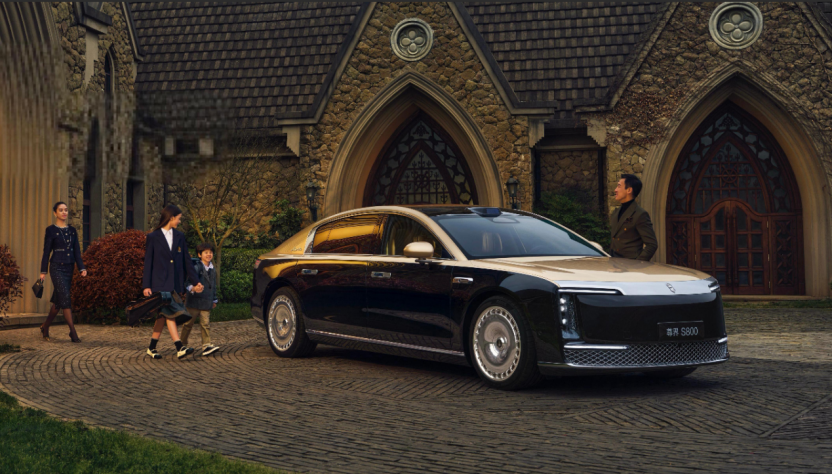
Core Insights - The luxury automotive market, traditionally dominated by foreign brands, is being disrupted by domestic brands like ZunJie, particularly with the launch of the ZunJie S800, which is redefining the competitive landscape in the ultra-luxury segment [1][3][4] Delivery Performance - As of December 25, 2025, the ZunJie S800 achieved over 200 units delivered in a single day, with a total of 3,127 units delivered in December, and expected monthly deliveries to surpass 4,000 units, marking a historic high for the brand [3][6] - The cumulative delivery of over 10,000 units within a short timeframe demonstrates ZunJie's capability to achieve rapid breakthroughs in a traditionally slow market [4][6] Market Dynamics - The ZunJie S800's success indicates a shift in consumer perception, showcasing that Chinese brands can compete effectively in the ultra-luxury market, traditionally characterized by long delivery times and high inventory risks [10][14] - The vehicle's delivery speed significantly reduces customer wait times, enhancing emotional value and customer satisfaction [10][14] Technological and Supply Chain Innovations - The delivery success of the ZunJie S800 is attributed to a digital-driven efficiency revolution and a systematic restructuring of the supply chain, creating a closed-loop system of demand forecasting, flexible production, and precise delivery [8][10] - ZunJie's high-end manufacturing system and supply chain collaboration have led to a significant reduction in cash conversion cycles and inventory depreciation risks, establishing a competitive edge that traditional luxury brands struggle to match [10][11] Brand Perception and User Experience - The ZunJie S800 has successfully shifted high-net-worth users' perceptions from traditional luxury brands to a new recognition of "tech luxury," emphasizing safety and unique user experiences [14][16] - The vehicle's features, such as the Harmony Cabin 2.0 and intelligent starry sky roof, provide immersive experiences that enhance emotional value, leading to a shift in consumer loyalty from traditional luxury vehicles to the ZunJie S800 [16][18] Business Model and Market Implications - The ZunJie model exemplifies a replicable framework for Chinese smart electric vehicles aiming for the high-end market, reshaping capital market valuations of the automotive industry [21][26] - The success of the ZunJie S800 is expected to influence the automotive industry's competitive landscape, with a focus on technology premium, ecological value, and innovative business models [26][27] Future Outlook - The ZunJie S800's achievements signal a transition in China's high-end manufacturing from "following" to "defining," indicating a broader shift in the automotive industry towards intelligent and connected vehicles [30]

2025IPO:全球十大,中国独占五席!港股是最靓的仔!
Sou Hu Cai Jing· 2025-12-30 05:08
岁末年终,回顾2025年全球IPO市场,港交所以一记漂亮的"回马枪"重夺全球募资额冠军,"A赴港"贡献接近一半;美股IPO活动继续回暖,纳斯达克凭借 2025年全球规模最大IPO公司——医疗用品巨头Medline的贡献拿下全球募资额第二名;去年的冠军印度国家证券交易所位列第三。 三甲之外,纽交所拿下全球第四,纽交所上市的液化天然气出口商Venture Global募资额位列全球第十;A股首日涨幅超过300%的"大肉签"多达34只,硬 科技企业"量价齐升",其中,上交所和深交所募资总额位列第五和第八。 星标★IPO日报 精彩文章第一时间推送 张力制图 全球十大IPO 锂电池巨头宁德时代以410.06亿港元的H股募资额位列全球第二,也是港股今年的"募资王"。此外,在港交所上市的黄金开采公司紫金黄金国际、重型工 程机械制造企业三一重工、赛力斯凭借287亿港元、153亿港元、143亿港元的募资额成为全球第四、八、九大IPO募资项目。也就是说,港交所在前十大 IPO募资中独得四席,而2024年仅有美的集团在港交所上市募资357亿港元进入前十。需要指出的是,宁德时代、三一重工、赛力斯均是A+H两地上市的 公司。赛力斯公司 ...
东方风来故里新——广安市“十四五”发展成就纪实
Zhong Guo Fa Zhan Wang· 2025-12-30 04:37
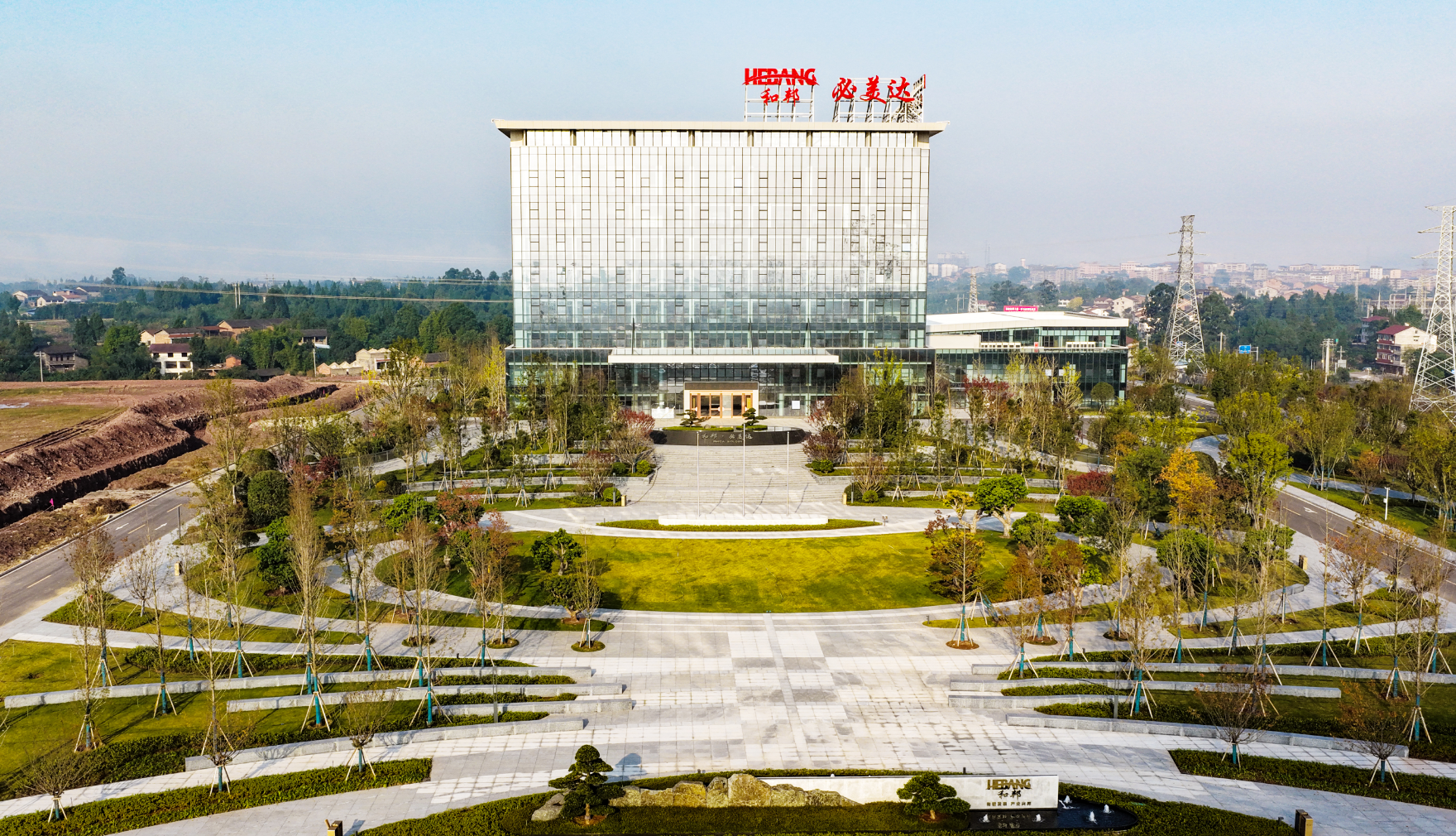
Core Insights - The article highlights the significant economic growth and development achievements of Guang'an during the "14th Five-Year Plan" period, showcasing a GDP increase from 130.1 billion to an expected 1.7 trillion, crossing four hundred billion milestones in five years [3]. Economic Development - Guang'an's GDP has shown remarkable growth, with figures rising from 130.1 billion to an expected 1.7 trillion, indicating a strong economic trajectory [3]. - The region has successfully navigated numerous challenges, including the pandemic and economic pressures, while achieving substantial economic milestones [5][11]. - The establishment of the Sichuan-Chongqing High Bamboo New District has led to over 100 reform outcomes and a 98.2% industrial investment growth rate, positioning Guang'an as a model for regional development [8][9]. Strategic Initiatives - Guang'an has implemented four major strategies: "Same City Integration," "Quality Towns and Prosperous Villages," "Quality Leadership," and "Industry Support," aimed at accelerating the construction of a cooperative demonstration zone with Chongqing [20]. - The city has focused on project-driven growth, with 457 projects totaling over 700 billion in investments, and has seen a significant increase in funding for development projects [23][24]. Industrial Growth - Guang'an is witnessing a transformation in its industrial landscape, with major projects like the 16.7 billion investment in the HeBang Biological annual production facility for glyphosate, marking the largest single project since the city's establishment [36]. - The region is enhancing its industrial capabilities by developing green chemical, equipment manufacturing, and health industries, while also fostering new emerging sectors [39][40]. Infrastructure Development - Guang'an is investing heavily in transportation infrastructure, with over 600 billion allocated to improve connectivity, including highways and railways, enhancing its strategic position near Chongqing [51]. - The city is also focusing on urban and rural integration, with initiatives to improve public amenities and enhance the quality of life for residents [52][53]. Social Welfare and Education - Guang'an is prioritizing social welfare, with over 70% of fiscal spending directed towards improving living standards, education, and healthcare services [65]. - The establishment of Guang'an Polytechnic University and partnerships with renowned institutions aim to enhance educational resources and opportunities for local students [27][30]. Cultural and Environmental Initiatives - The city is actively promoting cultural heritage and environmental sustainability, with projects aimed at revitalizing local culture and enhancing the urban landscape [49][50]. - Guang'an is also focusing on creating a vibrant tourism sector, leveraging its historical significance and natural beauty to attract visitors [48].
2025年港股大爆发,这13只股涨超十倍
3 6 Ke· 2025-12-30 03:54
Core Viewpoint - In 2025, the Hong Kong stock market experienced a strong recovery, achieving its best annual performance in five years, leading global capital markets and becoming a favored destination for capital allocation [1][3]. Market Performance - As of December 29, the Hang Seng Index rose nearly 28% for the year, while the Hang Seng Technology and Hang Seng China Enterprises indices increased by over 21% each, marking a significant valuation recovery [1][3]. - Over 400 stocks doubled in price during the year, with 13 stocks increasing by more than 10 times, particularly in sectors like hard technology, biomedicine, and precious metals [1][5]. Capital Inflow and Market Dynamics - Southbound capital acted as a stabilizing force, with a net inflow exceeding 1.3 trillion yuan, the highest annual figure since the launch of the mutual market access mechanism [4]. - The average daily trading volume in the Hong Kong stock market reached 256.4 billion HKD in the first three quarters, a 126% year-on-year increase, indicating heightened market activity [4]. Sector Highlights - The emergence of "ten-bagger" stocks was a notable feature of the market, with significant gains in hard technology and biomedicine sectors, reflecting the ongoing technological revolution and industrial upgrades [5][10]. - The number of "red chip" stocks (priced over 100 HKD) increased to 47, nearly doubling from the end of 2024, with many new listings in the hard technology sector [6]. Institutional Innovations - The strong recovery of the Hong Kong stock market was supported by institutional innovations, including the introduction of the "Special Technology Listing" channel, which facilitated the listing of hard technology companies [7][8]. - The IPO market saw a resurgence, with 111 new companies listed in 2025, raising approximately 278.7 billion HKD, a 224.38% increase from the previous year [8][9]. Future Outlook - The Hong Kong stock market is expected to maintain an active financing environment in 2026, with a focus on sectors like hard technology and biomedicine, driven by improving profitability and policy support [10]. - Investor enthusiasm for IPOs remains high, with some companies experiencing subscription multiples exceeding 5000 times, indicating strong market interest [10].
2025汽车大事记:政策锚定“理性竞争” 汽车行业严控无序价格战
Zhong Guo Jing Ji Wang· 2025-12-30 02:42
Core Viewpoint - The Chinese government is taking decisive actions to regulate the "price war" in the automotive industry, aiming to promote rational competition and high-quality development through the release of the "Automotive Industry Pricing Behavior Compliance Guidelines (Draft for Comments)" [1][3][10]. Group 1: Regulatory Actions - The National Market Supervision Administration released guidelines to standardize pricing and sales behaviors, requiring clear pricing and prohibiting misleading promotional tactics [1][3]. - Following the release of the guidelines, several major automotive companies, including BYD and Xpeng, expressed support and committed to adhering to the new pricing regulations [3]. - The government has initiated a series of measures, including cost investigations and price monitoring, to combat irrational competition in the automotive sector [10][11]. Group 2: Industry Impact - The ongoing "price war" has led to a decline in profit margins within the automotive manufacturing sector, with projected profit margins for 2024 at only 4.3%, down 8% year-on-year [4]. - The automotive industry has seen a significant increase in the number of models with price reductions, from 99 models in 2022 to 269 in 2024, before decreasing to 173 in 2025, indicating a shift towards more rational pricing strategies [11][13]. - The average price reduction for new passenger cars in the first 11 months of the year was 21,000 yuan, with a reduction rate of 10.9%, showing a trend towards more moderate pricing [13]. Group 3: Shift in Competitive Focus - The focus of competition among automotive companies is shifting from price competition to technology and service enhancements, as evidenced by increased R&D investments [11][13]. - In the first half of 2025, 16 major automotive companies invested a total of 123.07 billion yuan in R&D, with 83.33% of companies increasing their R&D spending [11][13]. - The ultimate goal of the regulatory measures is to create an ecosystem characterized by cost transparency, reasonable pricing, and value-based competition, which is essential for the sustainable development of the automotive industry [11].
科技板块引领行情
Jin Rong Shi Bao· 2025-12-30 02:17
这一年,香港恒生科技股表现强劲。恒生指数今年初至今共上涨28.71%,有望创下自2017年以来的最 佳年度表现。恒生科技指数全年上涨超40%,多只成分股涨幅领跑全球科技板块,其出色表现源于技术 突破、政策支持、资金流入与市场结构优化四重动力的协同作用。2025年,南向资金净流入港股达1.41 万亿港元,刷新历史纪录,与2024年全年总额相比增长74.37%。自互联互通机制开通以来,南向资金 累计净买入港股市场的金额已超5.1万亿港元,本年度净买入额占互联互通机制开通以来累计净买入额 的比例更是高达27.59%。南向资金对腾讯控股、阿里巴巴-W、小米集团-W等龙头股的持仓显著提升, 成为稳定市场情绪、提升流动性的重要力量。 截至上周末,2025年仅剩数个交易日,标普500指数全年涨幅已接近18%,以科技股为主的纳斯达克综 合指数涨幅更是达到22%。然而,相较全球其他市场,美股涨幅相对温和,反映其已从"全面牛市"进 入"盈利驱动型慢牛"阶段,市场呈现显著的结构性分化:科技板块内部从"七巨头"主导转向"硬科技"驱 动,资金与盈利预期集中于半导体、先进计算与能源转型材料,而高估值题材板块则经历深度回调。 2025年, ...
英矽智能等六股上市!港股年内新股发行完毕 达117只




Bei Jing Shang Bao· 2025-12-30 02:00
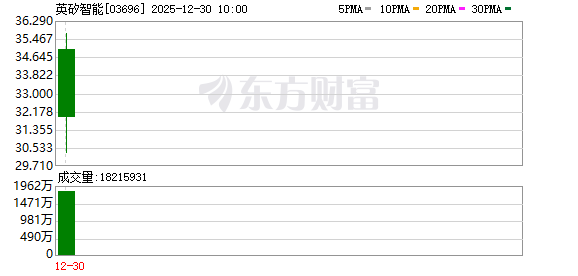
Core Viewpoint - Six companies, including Wanan Robotics (6600.HK) and Yingxi Intelligent (3696.HK), successfully listed on the Hong Kong Stock Exchange on December 30, marking the completion of new stock issuances for the year, totaling 117 listings [1]. Group 1: New Listings - The six newly listed companies are Wanan Robotics, Yingxi Intelligent, Xunce, Meilian Holdings, and Linqingxuan [1]. - On their first trading day, only Wanan Robotics opened flat, while the other five stocks experienced gains, with Yingxi Intelligent leading at a 45.53% increase [1]. Group 2: Fundraising Statistics - The total amount raised by the 117 new stocks in Hong Kong for the year is approximately 285.693 billion HKD [1]. - CATL (宁德时代) topped the fundraising list with approximately 41.006 billion HKD, followed by other companies like Zijin Mining International and Sany Heavy Industry, each raising over 10 billion HKD [1].
英矽智能等六股上市!港股年内新股发行完毕,达117只
Bei Jing Shang Bao· 2025-12-30 01:43
经同花顺iFinD统计,港股年内117只新股合计募资金额约为2856.93亿港元,其中宁德时代募资总额居 首,约410.06亿港元;在其之后,港股年内募资额破百亿的新股还有紫金黄金国际、三一重工、赛力 斯、恒瑞医药、三花智控、海天味业、奇瑞汽车等7股。 北京商报讯(记者 马换换 王蔓蕾)12月30日,五一视界(6651.HK)、卧安机器人(6600.HK)、英矽 智能(3696.HK)、迅策(3317.HK)、美联股份(2671.HK)、林清轩(2657.HK)等6股登陆港交所 上市。而伴随上述6股登陆港股市场,港股年内新股发行完毕,发行数量达117只。 交易行情显示,上市首日,上述6股中,仅卧安机器人平盘开盘,其余5股均实现高开,其中英矽智能开 盘涨幅居首,为45.53%。 ...
2025IPO:全球十大,中国独占五席!港股是最靓的仔!
IPO日报· 2025-12-30 00:32
星标 ★ IPO日报 精彩文章第一时间推送 岁末年终,回顾2025年全球IPO市场,港交所以一记漂亮的"回马枪"重夺全球募资额冠军,"A赴港"贡献接近一半;美股IPO活动继续回暖,纳斯达克凭借 2025年全球规模最大IPO公司——医疗用品巨头Medline的贡献拿下全球募资额第二名;去年的冠军印度国家证券交易所位列第三。 三甲之外,纽交所拿下全球第四,纽交所上市的液化天然气出口商Venture Global募资额位列全球第十;A股首日涨幅超过300%的"大肉签"多达34只,硬 科技企业"量价齐升",其中,上交所和深交所募资总额位列第五和第八。 此外,新能源赛道贡献了全球前十大募资中的三席,美股三大赛道新股表现亮眼,均显示出资本涌动的流向。 那么,具体来说,全球各大IPO市场又有哪些亮点? 张力制图 全球十大IPO 毕马威报告显示,2025年全球IPO募资总额预计达到1584亿美元,较2024年增长18%。全年上市宗数略有下降,但市场流动性增强,尤其大型IPO项目表 现突出。2025年,全球前十大IPO募资额合计2539亿港元,占比为17%,相比去年的占比略有下滑。报告认为,市场波动与全球贸易紧张局势缓和、人工 ...

港股IPO登顶全球
2 1 Shi Ji Jing Ji Bao Dao· 2025-12-30 00:31
Core Viewpoint - In 2025, the Hong Kong Stock Exchange (HKEX) is expected to lead the global IPO market with a projected fundraising total exceeding HKD 280 billion, marking a significant return to prominence after several years [1][2]. Group 1: IPO Market Dynamics - The HKEX is anticipated to host 117 new listings in 2025, averaging a new listing every two trading days [1]. - Major IPO projects are significantly contributing to the overall fundraising scale, with the top ten IPOs expected to account for a substantial portion of the total [3][4]. - Six of the top ten IPOs are "A+H" listed companies, collectively raising HKD 1,033.20 million, which represents 36.12% of the total IPO fundraising for the year [4]. Group 2: A-Share Influence - The "A-share" influence is increasing, with 19 A-share companies successfully listing in Hong Kong, raising a total of HKD 1,399.93 million, nearly half of the total new fundraising [6]. - The "A+H" listing model is becoming a preferred choice for many companies, driven by various strategic needs such as international expansion and risk diversification [6][8]. Group 3: Policy Support - Continuous policy support is fueling the IPO trend, including measures from the China Securities Regulatory Commission to encourage leading companies to list in Hong Kong [7][8]. - Recent optimizations to HKEX listing rules have made it easier for companies to meet public shareholding requirements, further lowering the barriers for listing [8]. Group 4: New Economic Forces - The IPO market is witnessing a strong emergence of "new economy" companies, particularly in sectors like AI and robotics, with six companies set to list simultaneously [10]. - The hard technology sector is a key driver, with significant representation in the IPO pipeline, including 20 companies in pharmaceuticals and 19 in software services [11]. Group 5: Consumer Brands - The "new consumption" sector is also thriving, with 19 companies from various consumer industries listing in 2025, many of which had previously attempted to list in the A-share market [13][14]. - High demand for these consumer brands is evident, with many experiencing subscription rates exceeding 100 times, indicating strong investor interest [13][14]. Group 6: Market Performance and Future Outlook - The IPO market is showing a notable improvement in profitability, with a record low IPO failure rate of 28.83% and significant first-day price increases for many new listings [16]. - Despite some recent volatility, forecasts for 2026 remain optimistic, with expectations of around 160 new listings and fundraising of at least HKD 300 billion [18]. - Long-term prospects suggest that the HKEX could solidify its role as a global pricing hub for Chinese assets, contingent on maintaining high-quality listings and robust capital flows [19].
