
华润

Search documents
链上好品牌:山东产业链的“冠军基因”
3 6 Ke· 2025-08-01 09:02
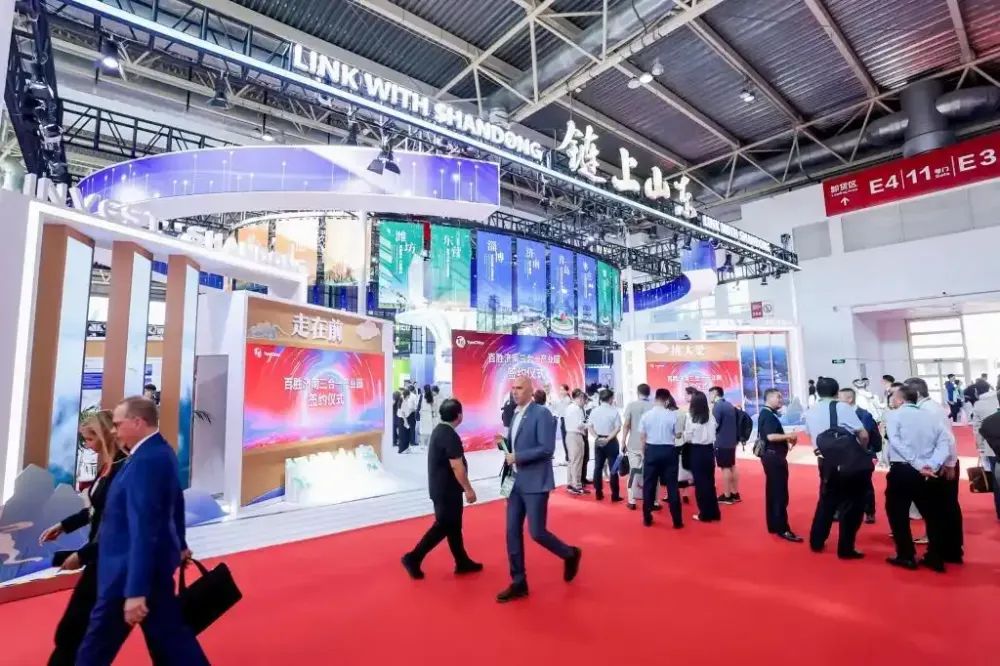
Core Insights - The third China International Supply Chain Promotion Expo highlighted Shandong as a focal point for global industrial giants like Apple, China Resources, and Airbus, showcasing its industrial capabilities [1][3] Group 1: Shandong's Industrial Strength - Shandong is the only provincial-level administrative region globally that possesses all 41 major industrial categories, 197 medium categories, and 603 small categories, making it the most comprehensive industrial province in China [3] - The province leads the nation in agricultural and fishery product supply, with over 100 key products ranking in the top three nationally, and more than 40 products holding the top position [3] - Shandong's industrial capabilities span from excavators to new energy vehicles, industrial mother machines to high-end chip materials, indicating its diverse manufacturing prowess [3] Group 2: Transition from "Group Elephant" to "Chain Master" - Shandong's industrial evolution from a "Group Elephant" model, characterized by large-scale enterprises, to a "Chain Master" model has been significant, with companies like Wanhua Chemical controlling 31.6% of the global polyurethane market [7] - The province has developed a full-chain layout from basic raw materials to high-end new materials, positioning itself as a critical player in the global supply chain [10] - Shandong is home to 18,072 specialized and innovative small and medium-sized enterprises, with 1,163 recognized as national "little giants," enhancing its industrial ecosystem [10] Group 3: Government Initiatives and Economic Strategy - The Shandong government has actively guided the transition to a "Chain Master" model since 1996, focusing on cultivating key enterprise groups to drive economic structural adjustments [11] - The "Chain Leader System" was introduced in 2021, streamlining 43 industrial chains to 11 key chains, covering over 80% of the province's industrial output [13] - The government has identified 112 "chain leader" enterprises and 709 supporting enterprises, with significant financial investments to bolster these industries [17] Group 4: Future Prospects and Innovations - By 2025, Shandong plans to refine its "Chain Leader System" further, establishing 19 key industrial chains and 67 sub-chains to enhance precision in industrial development [19] - The government aims to transition from a regulatory role to an architectural role, creating a supportive environment for enterprises to thrive [21] - Shandong's comprehensive industrial chain capabilities are increasingly vital for maintaining stability in the face of global trade fluctuations, providing a solid foundation for domestic circulation [23]




星巴克中国已有20个潜在追求者
Hu Xiu· 2025-07-31 13:03
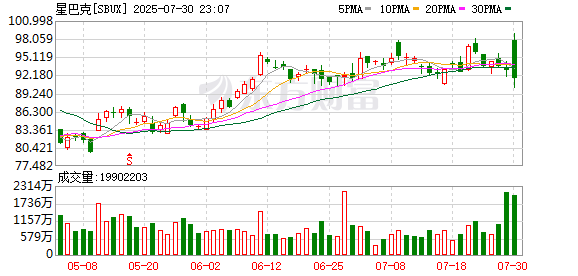
Core Viewpoint - Starbucks has reported a recovery in its China operations, with a 8% year-on-year revenue growth to $790 million in Q3 FY2025, marking the third consecutive quarter of growth. Same-store sales increased by 2%, the first rise in six quarters, indicating a positive trend in customer engagement and sales performance [1][2]. Financial Performance - Q3 FY2025 net revenues reached $790 million, up from $733.8 million in Q3 FY2024, reflecting an increase of 8% [2]. - Comparable store sales improved by 2%, a significant turnaround from a decline of 14% in the previous year [2]. - Transaction volume increased by 6%, compared to a 7% decline in the same quarter last year [2]. - The total number of stores in China reached 7,828, with 70 new stores opened and expansion into 17 new county-level markets [2]. Strategic Initiatives - Starbucks is actively evaluating over 20 interested institutional partners for a potential partial sale of its China business, aiming to retain a significant equity stake [3][7]. - The company has implemented a series of operational adjustments, including product innovation and a focus on non-coffee offerings to cater to diverse consumer needs throughout the day [4][5]. - A systematic price adjustment strategy was introduced, reducing prices on non-coffee beverages while maintaining higher price points for core coffee products [6]. Market Positioning - The introduction of customizable drink options has led to an increase in the proportion of customized orders from 15% to 28%, contributing to a 9% rise in average transaction value [6]. - Starbucks is leveraging its established supply chain to minimize risks associated with new product launches, focusing on refreshing existing product lines rather than creating entirely new categories [5][10]. - The company aims to balance maintaining its premium brand image while penetrating the mass market through strategic pricing and product offerings [10]. Leadership and Management Changes - The recent leadership changes, including the appointment of Brian Niccol as CEO, are seen as pivotal for Starbucks' strategic transformation, emphasizing a shift in operational focus and customer experience [8][9]. - Niccol's previous experience in crisis management and operational reform is expected to drive Starbucks' recovery and growth in the competitive Chinese market [9]. Competitive Landscape - Despite the positive performance, Starbucks faces increasing competition from local coffee brands and tea beverage companies, which are appealing to younger consumers seeking value [10]. - The ongoing operational adjustments and potential equity partnerships are part of Starbucks' strategy to enhance its market position and adapt to evolving consumer preferences in China [10].


出售中国区股权,星巴克CEO透露正对超20个意愿机构进行评估
Guo Ji Jin Rong Bao· 2025-07-30 15:07
Core Viewpoint - Starbucks reported a total net revenue of approximately $9.456 billion for the reporting period, representing a year-on-year growth of 3.8%, while net profit attributable to shareholders fell by 47.1% to $558 million [1]. Financial Performance - Global comparable store sales decreased by 2%, and the global operating margin was 10.1% [1]. - In the Chinese market, same-store sales grew by 2%, with transaction volume increasing by 6%, but the average transaction value declined by 4% [3]. Strategic Moves in China - Starbucks is seeking strategic partners to sell part of its stake in the Chinese market, aiming to retain a significant portion of ownership [2][3]. - The valuation of Starbucks' Chinese business is reported to be as high as $10 billion, attracting nearly 30 private equity firms [3]. - Potential buyers include major domestic players and well-known investment firms, with Starbucks emphasizing the need for partners who can provide resources or expertise for growth in China [3]. Market Challenges - Starbucks faces increasing competition from local coffee brands like Luckin Coffee and Koolearn, which have surpassed Starbucks in revenue and store count [3]. - The coffee market in China is experiencing rapid growth, with a significant increase in per capita coffee consumption [3]. Changes in Business Strategy - Starbucks has increased its marketing efforts, including collaborations with popular brands and a price reduction on several key products, marking the first official price cut in 25 years [10]. - The company is also enhancing its "third space" concept by introducing free study rooms in some locations, aiming to differentiate itself from competitors [10]. - Starbucks is undergoing self-transformation to adapt to the evolving consumer preferences and competitive landscape in the Chinese coffee market [10]. Store Expansion - As of the end of the third quarter, Starbucks operated 7,828 stores in China, making it the third-largest brand in terms of store count in the Chinese coffee market, with 70 new stores opened in the quarter [8].
半导体石英器件领域取得重要突破
Liao Ning Ri Bao· 2025-07-26 22:18
Group 1 - The core achievement of Tuo Bang Hong Ji is obtaining supplier qualification certification from KE Group, making it the only domestic company in mainland China to achieve this in the 12-inch semiconductor quartz device field [1] - This certification is significant for promoting the localization of key components in the domestic semiconductor equipment industry and ensuring the security of the industrial chain [1] - The company has demonstrated that its products meet international advanced standards in purity and processing precision, showcasing its competitive strength against international firms [1] Group 2 - Tuo Bang Hong Ji, established in 2017, focuses on producing semiconductor-grade high-purity quartz products, which are critical consumables in semiconductor, photovoltaic, optical fiber, and optoelectronic fields [2] - The company aims to break the long-standing monopoly of foreign enterprises in the domestic semiconductor quartz product market and has developed a comprehensive precision processing technology system [2] - Tuo Bang Hong Ji has completed six rounds of financing and operates two modern intelligent factories covering a total area of 63,000 square meters, equipped with over 200 high-precision processing and testing devices [2] Group 3 - Under the support of industrial policies and innovation ecology in the Shenfu Demonstration Zone, Tuo Bang Hong Ji has rapidly developed into a national-level specialized and innovative "little giant" enterprise and a national high-tech enterprise [3] - The company has been recognized as a potential unicorn enterprise for 2024 and has applied for multiple patented technologies, overcoming several overseas technology monopolies [3] - Tuo Bang Hong Ji has gained certifications from several domestic core wafer fabs and semiconductor equipment manufacturers, becoming one of the few suppliers capable of mass production of 12-inch semiconductor quartz products [3]
华润接盘康佳完成股权转让,正式派驻人选尚未明确
Di Yi Cai Jing· 2025-07-21 13:09
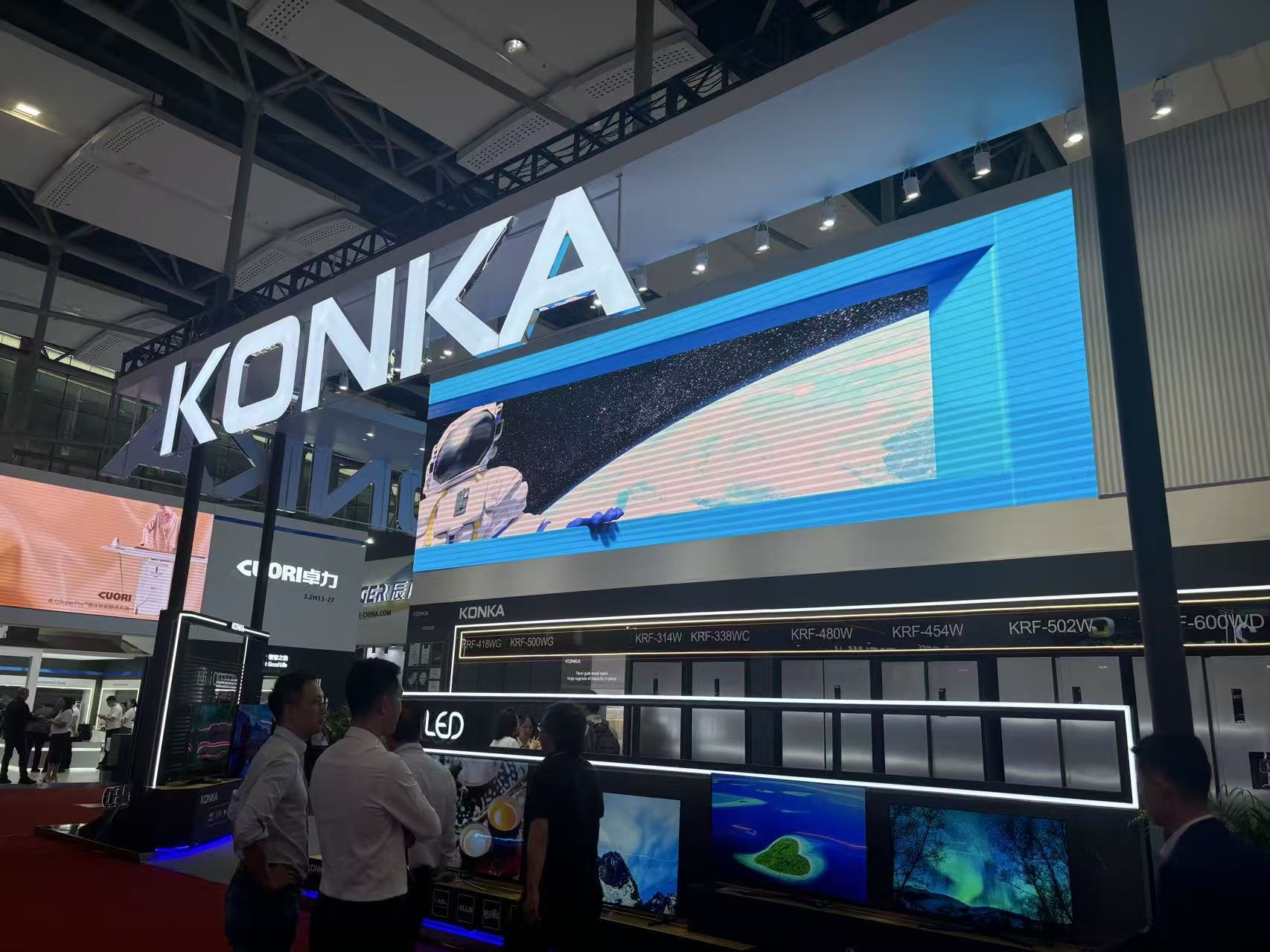
Core Viewpoint - The transfer of shares from China Overseas Land & Investment to China Resources has been completed, which is expected to alleviate Konka's financial and credit pressures. Group 1: Share Transfer Details - On July 21, Konka announced that the shares held by Overseas Chinese Town (OCT) have been transferred to a subsidiary of China Resources, marking the completion of the share transfer process [3] - As of July 21, OCT's subsidiary, Jialong Investment, has transferred 198.36 million B shares to Hehuo Company, completing the share transfer [4] - After the transfer, Panshi Run Chuang holds 524.02 million A shares of Konka, accounting for 21.76% of the total share capital, while Hehuo Company holds 8.24% [4] Group 2: Implications for Konka - The change in major shareholders is expected to significantly relieve Konka's financial and credit pressures, with potential benefits from China Resources' semiconductor business aiding Konka's TV and MLED operations [5] - Konka's half-year performance forecast indicates a projected net loss of 360 million to 500 million yuan for the first half of 2025, attributed to intensified competition in the consumer electronics sector and delays in new product launches [5] - Konka's semiconductor business is still in the early stages of industrialization and has not yet achieved scale or profitability, contributing to its financial losses [5] Group 3: Market Reaction - On the day of the announcement, Konka's stock price increased by 0.4% to 5.04 yuan per share [6]

绿电行业深度:新能源全面入市,三大压制因素释放绿电迎反转
2025-07-21 00:32
Summary of Key Points from the Conference Call Industry Overview - The conference call focuses on the green electricity (绿电) industry, particularly the impact of policy-driven market transactions and the challenges faced by listed companies in this sector [1][3][7]. Core Insights and Arguments - **Investment Logic**: The investment logic in the green electricity sector is driven by policy changes and market transaction rules, emphasizing cash flow value and marginal changes, contrasting with nuclear power investment logic [1][3]. - **Valuation Factors**: Key factors affecting the valuation of the green electricity industry include: - Settlement electricity prices, which have been declining since 2020, directly impacting cash inflows and long-term returns [1][6]. - Consumption issues due to high installed capacity leading to limited operating hours, negatively affecting net cash flow and project returns [6][21]. - Subsidy arrears, which suppress free cash flow due to slow central government payment schedules [6][26]. - **Policy Impact**: The issuance of Document No. 136 is expected to enhance market certainty for both existing and new projects, stabilize electricity prices, and improve cash flow through better subsidy management [1][7][10]. Important but Overlooked Content - **Market Dynamics**: The transition to a market-driven pricing mechanism is anticipated to stabilize overall electricity prices and improve the profitability of existing projects [10][12]. - **Capital Expenditure Trends**: The industry is expected to see a rational return in capital expenditures, with new installed capacity projected to decrease from an average of 250-300 GW during the 14th Five-Year Plan to 200 GW in the 15th [24]. - **Emerging Opportunities**: The green certificate prices have risen due to increased requirements for high-energy-consuming industries to use green electricity, indicating potential additional revenue for green electricity companies [20]. - **Future Subsidy Solutions**: Historical subsidy arrears are expected to be resolved through natural growth and policy support, with discussions around special bonds or secured loans to expedite this process [27]. Recommendations for Specific Companies - Companies such as Longyuan Power, New天绿色能源, and 大唐新能源 are advised to adapt their strategies in response to the new market environment post-Document No. 136, focusing on optimizing capital expenditure and improving operational efficiency [8][28]. Conclusion - The green electricity sector is poised for a transformation driven by policy changes, market dynamics, and rational capital expenditure, which could lead to improved cash flow and valuation for companies in this space [7][30].
能源化工日报-20250718
Guang Fa Qi Huo· 2025-07-18 03:07
Report Industry Investment Rating There is no information provided regarding the report industry investment rating in the given content. Core Viewpoints Urea - The main logic for the stabilization of the urea futures market is the improved demand - side expectations, but the high - supply pressure still limits the rebound height. Future demand improvement expectations, along with partial device overhauls, support the futures price [5]. Polyolefin - For PP and PE, there is a lack of strong driving forces. The static situation shows a double - decline in supply and demand, inventory accumulation, and weak apparent demand. However, there are expectations of demand improvement for PE in late July. Suggested strategies include range - bound operations for both PP and PE, and taking profit when the LP spread reaches around 250 [10]. Polyester Industry Chain - Different products in the polyester industry chain have different outlooks. PX may be boosted in the short - term, PTA is expected to be supported in the short - term, MEG is expected to fluctuate and consolidate, short - fiber has limited driving forces, and bottle - chip has expectations of supply - demand improvement [48]. Crude Oil - Overnight oil prices rose due to expectations of marginal supply contraction and supply uncertainties caused by geopolitical risks. It is recommended to adopt a short - term band - trading strategy [52]. Methanol - The inland methanol market is expected to see an increase in production in late July. The port market faces pressure from expected arrivals and planned MTO overhauls, resulting in continuous inventory accumulation from July to August. It is recommended to conduct range - bound operations [73]. Chlor - Alkali Industry - For caustic soda, there is limited supply - demand contradiction in the fundamentals, but high profits stimulate high production. It is recommended that previous long - position holders temporarily exit and wait and see. For PVC, the current supply - demand pattern is in the off - season of increasing supply and decreasing demand, and it is recommended to wait and see [81]. Pure Benzene and Styrene - The supply - demand of pure benzene is expected to improve in July, but its own driving force is limited. For styrene, the supply - demand is marginally repaired, but the supply - demand expectation is still weak. Short - term price support may come from the overall positive sentiment in the domestic commodity market [86]. Summary by Relevant Catalogs Urea - **Futures Prices**: On July 17, the 01 contract closed at 1718 yuan/ton (up 0.47% from July 16), the 05 contract at 1730 yuan/ton (up 0.17%), the 09 contract at 1743 yuan/ton (up 0.58%), and the methanol - main contract at 2373 yuan/ton (up 0.25%) [1]. - **Futures Contract Spreads**: The spread between the 01 and 05 contracts was - 12 yuan/ton on July 17 (up 29.41% from July 16), the spread between the 05 and 09 contracts was - 13 yuan/ton (down 116.67%), and the spread between the 09 and 01 contracts was 25 yuan/ton (up 8.70%) [2]. - **Main Positions**: On July 17, the long - position of the top 20 was 110750 (down 1.28% from July 16), the short - position of the top 20 was 123632 (up 1.78%), and the long - to - short ratio was 0.90 (down 3.00%) [3]. - **Upstream Raw Materials**: Most upstream raw material prices remained stable, with only slight changes in a few items such as动力煤港口(秦皇岛) (up 0.32%) and合成氨(山东) (down 0.33%) [4]. - **Spot Market Prices**: Spot prices in different regions showed minor fluctuations, with some prices decreasing slightly [4]. - **Supply - Demand Overview**: Domestic urea daily production decreased slightly on July 18 compared to July 17. Weekly data showed a decrease in domestic urea production, an increase in device overhaul losses, a decrease in factory inventory, and an increase in port inventory [5]. Polyolefin - **Futures and Spot Prices**: On July 17, L2601 closed at 7235 yuan/ton (up 0.14% from July 16), L2509 at 7215 yuan/ton (up 0.01%), PP2601 at 7016 yuan/ton (up 0.11%), and PP2509 at 7020 yuan/ton (up 0.10%). Some spot prices remained unchanged [10]. - **Inventory and Operating Rates**: PE and PP inventories increased, and the operating rates of some devices and downstream industries decreased [10]. Polyester Industry Chain - **Upstream and Downstream Prices**: Upstream prices such as Brent crude oil and WTI crude oil increased slightly. Downstream polyester product prices and cash - flows showed various changes, with some prices rising and some cash - flows changing significantly [48]. - **Operating Rates**: The operating rates of different segments in the polyester industry chain showed different trends, with some increasing and some decreasing [48]. Crude Oil - **Prices and Spreads**: On July 18, Brent crude oil was at 69.52 US dollars/barrel (up 1.46% from July 17), WTI at 67.55 US dollars/barrel (up 0.01%), and there were also changes in various price spreads [52]. - **Supply - Demand and Market Logic**: Supply decreased due to factors such as a decline in US crude oil inventories and production cuts in the Iraqi Kurdish region. Market focus has shifted to supply - side risks [52]. Methanol - **Prices and Spreads**: On July 17, MA2601 closed at 2438 yuan/ton (up 0.16% from July 16), MA2509 at 2373 yuan/ton (up 0.25%), and there were changes in various regional price spreads [73]. - **Inventory and Operating Rates**: Methanol enterprise inventory decreased slightly, while port and social inventories increased. The operating rates of upstream and downstream industries also changed [73]. Chlor - Alkali Industry - **Prices and Spreads**: For PVC and caustic soda, futures and spot prices showed minor changes, and there were also changes in price spreads [76]. - **Supply - Demand and Inventory**: The operating rates of the chlor - alkali industry and its downstream industries changed, and inventory levels also showed different trends [79][80][81]. Pure Benzene and Styrene - **Prices and Spreads**: On July 17, the price of pure benzene and styrene and their related price spreads changed. For example, the price of benzene - ethylene in the East China spot market decreased [85]. - **Inventory and Operating Rates**: Pure benzene and styrene inventories and operating rates showed different trends, with some operating rates decreasing [85][86].
五台县抓项目建设抢占产业经济发展新高地
Zhong Guo Xin Wen Wang· 2025-07-16 09:38
Group 1 - The core viewpoint emphasizes the ongoing infrastructure projects in Wutai County, particularly the renovation of the old urban pipeline network, reflecting the county government's commitment to achieving economic goals and laying a solid foundation for future development [1][3] - The county government is implementing a work mechanism that includes leadership involvement, checklist management, scheduling reports, and performance assessments to enhance the planning and execution of industrial economic projects [3] - Major projects such as the Xiongxin High-speed Railway and the Fenwu Expressway are prioritized, alongside initiatives to attract high-quality hotels, guesthouses, and travel agencies to boost the local economy [3][4] Group 2 - The establishment of a 500-acre standardized Chinese medicinal herb base and the enhancement of certification efforts are part of the county's strategy to promote agricultural and tourism development [4] - The collaboration between Wutai Mountain Tianyu Agricultural Development Co., Ltd. and Shanxi Xinghuacun Fenjiu Distillery has led to the successful production of Wutai Mountain Quinoa Wine, creating a comprehensive industry chain from cultivation to sales [4][6] - The implementation of solar power projects in Siyang Village has significantly increased the village's collective economic income, with solar revenue accounting for 56% of total income [6]
恒隆超30亿拿下杭百20年经营权,杭城重奢江湖上演“龙虎斗”
Sou Hu Cai Jing· 2025-07-14 10:13
Core Viewpoint - Hang Lung Group is making a significant investment in the luxury market of Hangzhou by signing a major leasing contract for the Hangzhou Department Store, indicating a strategic move to strengthen its presence in the high-end retail sector [2][5][11]. Group 1: Leasing Agreement Details - The leasing contract involves the property located at 546 Yan'an Road, Hangzhou, with a total area of approximately 42,000 square meters, set to be leased to Hang Lung Business Operation (HK) Limited for 20 years starting from April 1, 2028 [5][6]. - The rental fee is set at RMB 37.5 million per quarter, with a 4.5% increase every three years, amounting to a total rental payment of over RMB 3 billion over the 20-year period [5][8]. - The rental agreement includes a rent waiver for the first two years, allowing for three months of rent to be waived each year [5][6]. Group 2: Market Context and Competition - The luxury retail market in Hangzhou is competitive, with established players such as Hangzhou Tower, Hangzhou MixC, and Lakeside Yintai in77, all of which have reported significant sales figures [14][16][18]. - Hangzhou Tower achieved sales of RMB 14 billion in 2023, while Hangzhou MixC reported sales of RMB 11.2 billion in the same year, indicating a robust luxury market [16][18]. - The upcoming Hang Lung Plaza, located near the leased property, is expected to create a combined luxury retail space of over 300,000 square meters, further intensifying competition in the area [11][29]. Group 3: Strategic Implications for Hang Lung - Hang Lung's decision to invest heavily in Hangzhou reflects its confidence in the city's economic potential, driven by a strong consumer base and a favorable business environment [31][35]. - The company has a history of successful operations in mainland China, with a significant portion of its revenue derived from retail leasing, which underscores its strategic focus on high-end commercial properties [30][35]. - The expansion in Hangzhou is part of a broader strategy to enhance its market position in key cities, leveraging its existing assets and brand reputation to capture a larger share of the luxury retail market [35].


136号文转变行业发展逻辑,利好因素累积绿电有望否极泰来
2025-07-14 00:36
Summary of Key Points from the Conference Call Industry Overview - The conference call focuses on the green electricity (绿电) sector in China, particularly in relation to the impact of the 136 Document released by the National Development and Reform Commission in early 2025 [1][3][9]. Core Insights and Arguments - **Valuation of Green Electricity Sector**: The price-to-book (PB) ratio for green electricity operators has fallen to approximately 0.7 to 0.8, reflecting a significant decline over the past three years. Despite this, favorable policy developments are expected to enhance the sector's attractiveness [2][4]. - **Impact of the 136 Document**: The 136 Document mandates that all new energy grid-connected electricity enters market-based trading, stabilizing revenue expectations for existing projects through a price difference settlement mechanism. This has led to increased competition among operators [3][9][10]. - **Cash Flow Improvement**: The cautious investment approach in the sector is anticipated to improve cash flow and alleviate the financial pressures caused by previous rapid capacity expansions [4][14]. - **Accounts Receivable Issues**: Many green electricity operators face high accounts receivable due to historical subsidy shortfalls. If these issues are resolved, it could lead to significant upward potential for these companies [5][16]. - **Green Value as Competitive Advantage**: The green value of electricity is highlighted as a core competitive advantage, with the gradual improvement of China's green certificate system gaining international recognition [1][6][20]. Additional Important Content - **Historical Context of the Green Electricity Market**: The market has experienced three distinct phases, with the current phase characterized by low valuations and high policy support, making it an attractive investment opportunity [7][8]. - **Future Directions for Green Electricity Consumption**: The ongoing development of a green electricity consumption system is crucial, with policies aimed at ensuring fair competition and enhancing overall industry efficiency [17][22]. - **Cross-Province Trading Dynamics**: Currently, 92% of transactions in the green electricity market are cross-province, with provinces rich in renewable resources selling to high-energy-consuming provinces [21]. - **Government Measures to Promote Green Energy**: The government is implementing dual control measures on energy consumption and renewable energy consumption weights to drive the growth of green energy [22][24]. Conclusion - The green electricity sector in China is positioned for potential growth due to favorable policy changes, improved cash flow prospects, and a strong competitive edge based on environmental value. The current low valuation presents a compelling investment opportunity for operators like Datang Renewable Power, Jinneng Clean Energy, and Longyuan Power [24].