
华润饮料

Search documents
产业景气前瞻-饮料、乳制品大商交流
2025-12-04 02:21
Summary of Industry and Company Insights from Conference Call Industry Overview - **Dairy Products Market**: The dairy market shows significant differentiation, with the ambient milk segment experiencing a decline, though the rate of decline is narrowing. Yili shows signs of bottoming out, while Mengniu is affected by internal management issues. The low-temperature milk segment is primarily driven by fresh milk growth, with Junlebao and New Hope performing well due to regional expansion and product innovation, posing challenges to Yili and Mengniu [1][5][12]. - **Channel Transformation**: Traditional supermarket channels are in decline due to store closures and high costs. New retail channels, such as O2O platforms, are rapidly emerging, with dairy product sales exceeding 20% and maintaining high growth, significantly impacting traditional channels [1][7][8]. - **Brand Competition**: The beverage market is highly competitive, with brands investing heavily to capture large outlets. Nongfu Spring benefits from the Wahaha incident and market recovery, showing significant performance improvement, while China Resources Beverage faces a decline due to strategic missteps [1][15][17]. Key Company Insights - **Yili and Mengniu Performance**: Both companies are in a declining state in the ambient liquid milk segment, with Yili's decline around 6-7% year-on-year and Mengniu's around 10%. However, Yili shows signs of recovery, and both companies face intense price competition and rising raw material costs [5][12]. - **Ice Cream and Other Dairy Products**: Yili's ice cream and milk powder segments are growing, with ice cream increasing by over 10% and milk powder by around 10%. Mengniu also shows positive performance in its milk powder business [6]. - **Sales Channels**: The performance of sales channels varies, with traditional supermarkets declining significantly. New retail channels are growing, with Nongfu Spring achieving a 20% e-commerce sales ratio [7][23]. Market Trends and Future Outlook - **Sales Growth**: The overall dairy product sales growth is projected at 20-30% for 2025, with low-temperature milk growing by 30% and ambient milk showing no significant growth [10][11]. - **Future Projections for Major Brands**: Yili aims for a 2-3% growth in ambient products and 10% in low-temperature products, while Mengniu targets stability or slight growth in ambient products and 8-10% in low-temperature products [12]. - **Emerging Competitors**: Junlebao and New Hope are gaining market share due to effective marketing and regional expansion strategies, posing a threat to established players like Yili and Mengniu [13]. Beverage Market Dynamics - **Nongfu Spring's Strategy**: Nongfu Spring has adopted a strategy of inventory reduction and reduced pressure on annual targets, leading to strong performance in both water and sugar-free tea segments, with overall growth exceeding 15% [16]. - **Competitive Landscape**: The beverage industry is highly competitive, with brands increasing spending to secure market share. This has led to significant shifts in market dynamics, particularly in the restaurant and special channel sectors [15][18]. - **Market Challenges**: Traditional channels continue to face challenges, with small supermarkets and convenience stores struggling due to economic downturns and reduced consumer purchasing power [11][22]. Conclusion The dairy and beverage industries are undergoing significant transformations, with emerging competitors and changing consumer preferences shaping the market landscape. Companies like Yili and Mengniu are adapting to these changes, while new players like Junlebao and Nongfu Spring are capitalizing on growth opportunities. The future outlook remains cautiously optimistic, with potential for recovery and growth in specific segments.




实探兰州智能工厂!王老吉西北落子,饮料行业产能竞赛再升级
Hua Xia Shi Bao· 2025-12-02 03:17
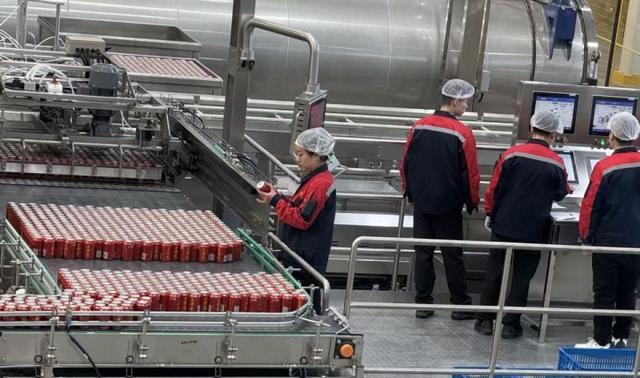
Core Viewpoint - The beverage industry is transitioning from a phase of rapid growth to a focus on capacity layout competition, with leading companies shifting their strategic emphasis from marketing and channel battles to supply chain efficiency and regional penetration [2][4]. Group 1: Company Developments - The newly completed production base of Wanglaoji in Lanzhou represents a significant addition to China's beverage industry capacity upgrade map, featuring highly automated production lines operating in a sterile environment [2][3]. - The Lanzhou production base is Wanglaoji's fourth self-owned facility, with a total investment of 350 million yuan, covering an area of approximately 100 acres, and an annual production capacity of about 6.5 million standard boxes [3][4]. - Wanglaoji aims to establish the Lanzhou base as a national-level green factory and intelligent manufacturing demonstration factory, leveraging local resources and geographical advantages to strengthen its supply chain network [4][5]. Group 2: Strategic Significance - The Lanzhou base is strategically positioned to enhance Wanglaoji's domestic and international supply chain systems, facilitating access to the Central Asian market and supporting the Belt and Road Initiative [5][6]. - Wanglaoji has expanded its international presence, covering over 100 countries and regions, and has maintained its position as the world's top seller of natural plant beverages for five consecutive years [5][6]. Group 3: Industry Trends - The expansion of Wanglaoji's production capacity reflects a broader trend among beverage giants in China, as they collectively embark on capacity expansion amid intensifying competition [6][7]. - The beverage industry is experiencing a shift in competitive logic, moving from aggressive market expansion to a focus on production efficiency and supply chain optimization, as companies adapt to slowing growth and increased competition [7][8]. - The current expansion wave is not limited to traditional beverage companies; some liquor companies are also exploring entry into the beverage sector, although this diversification is still in its early stages [6][7].

【转|太平洋食饮-东鹏饮料深度】品牌东南亚出海篇:东鹏饮料出海机会探讨与展望
远峰电子· 2025-11-30 12:26
Group 1 - Southeast Asia's beverage market is experiencing significant growth, particularly in the energy drink sector, which is projected to reach a retail value of approximately 306 billion yuan by 2024, with a CAGR of 6.0% from 2014 to 2024 [23][15][24] - Vietnam and Cambodia are identified as the fastest-growing markets for energy drinks, with Vietnam leading in market size and growth rate, expected to reach 107.5 billion yuan by 2024, with a CAGR of 12.0% [25][24][23] - The overall retail value of soft drinks in Southeast Asia is estimated at 287.2 billion yuan for 2024, with a CAGR of 2.2% from 2014 to 2024, indicating a slower growth compared to energy drinks [15][19] Group 2 - The demographic profile of Southeast Asia is characterized by a young population, with a median age around 30 years in key markets like Indonesia, the Philippines, and Vietnam, which supports the demand for energy drinks [3][6][10] - The region's labor force is predominantly engaged in industrial and service sectors, creating a strong demand for energy-boosting beverages [10][12] - E-commerce is rapidly growing in Southeast Asia, with online sales channels experiencing a CAGR of over 30% from 2018 to 2023, although traditional retail remains dominant [12][14] Group 3 - Local and global brands dominate the soft drink market in Southeast Asia, with major players like Coca-Cola and PepsiCo holding significant market shares [20][21] - The energy drink market is highly concentrated, particularly in Vietnam, where Red Bull holds a market share of 42.3%, while local brands like Number 1 are gaining traction [27][24] - In Indonesia, the energy drink market is still developing, with a market size of only 18.4 billion yuan in 2024, indicating potential for growth [29][35] Group 4 - The energy drink sector in Cambodia is particularly strong, with energy drinks accounting for 50% of the soft drink market, and a projected CAGR of 9.3% from 2014 to 2024 [47][46] - The market dynamics in Thailand show a stable competitive landscape with three major players controlling 83.8% of the market share, indicating limited growth potential [40][41] - The potential for East Peak Beverage to expand in Southeast Asia is significant, with projected revenues of 5 billion yuan, primarily driven by growth in Vietnam and Cambodia [54][53]

研判2025!中国即饮咖啡行业发展历程、市场政策、产业链图谱、销售现状、竞争格局及发展趋势分析:雀巢咖啡龙头优势明显[图]
Chan Ye Xin Xi Wang· 2025-11-29 05:27
Core Insights - The ready-to-drink (RTD) coffee market in China has seen significant growth, with 2023 offline sales reaching 3.76 billion liters and a revenue of 10.653 billion yuan, but a decline is expected in 2024 due to economic slowdown and competition from freshly brewed coffee [1][5]. Overview - RTD coffee refers to coffee products that can be consumed directly without brewing, primarily packaged in bottles and cans, characterized by convenience and stable shelf life [1]. Development History - The development of China's RTD coffee industry can be divided into four stages: initial enlightenment, steady growth, diversified competition, and high-quality upgrade, with a focus on health, premium quality, and localization since 2020 [2]. Regulatory Policies - The food and beverage industry is facing stricter regulations, impacting the RTD coffee sector, which must comply with various food safety laws throughout the production process [3]. Industry Chain - The RTD coffee industry chain includes upstream suppliers of raw materials (coffee beans, milk, etc.), midstream production processes, and downstream sales channels such as convenience stores and e-commerce [4]. Upstream Supply - Yunnan province is the primary coffee bean production area in China, contributing over 90% of the national output, with 2024 production expected to reach 150,200 tons [4]. Consumer Demographics - By 2024, the number of coffee consumers in China is projected to reach 417 million, with a significant portion of the core consumer group aged 25-35, primarily urban professionals [5]. Current Market Status - The RTD coffee market is becoming mainstream in China, with a notable increase in consumer adoption, although a decline in sales volume is anticipated for 2024 [1][5]. Competitive Landscape - The market is highly concentrated, with the top five companies holding an 87.2% market share. Nestlé leads with a 60.4% share, while new brands are emerging, intensifying competition [6][7]. Company Analysis - **China Resources Beverage**: A state-owned enterprise with a revenue of 6.206 billion yuan and a gross profit margin of 46.67% in the first half of 2025 [8]. - **Nongfu Spring**: A leading beverage company with a revenue of 25.62 billion yuan and a gross profit margin of 60.3% in the first half of 2025 [8]. Future Trends - Health-oriented products, including sugar-free and plant-based options, are expected to dominate the market, along with the introduction of functional ingredients in RTD coffee [9].


华润饮料、伊利、霸王茶姬、绿茶……多家食品饮料企业驰援香港
Guo Ji Jin Rong Bao· 2025-11-28 07:29
Core Viewpoint - The fire disaster in Hong Kong's Tai Po district has resulted in significant casualties and property damage, prompting a swift response from various companies to provide aid and support for recovery efforts [1]. Company Responses - China Resources Beverage activated its emergency response mechanism, delivering 10,080 bottles of water within two hours to ensure basic drinking water safety for affected residents [1]. - China Resources Vanguard coordinated with local welfare agencies to provide over 5,000 essential supplies, including milk and instant noodles, to support disaster relief efforts [1]. - China Resources Charity Fund donated HKD 20 million for emergency rescue, medical assistance, and emotional support for victims [1]. - Wens Foodstuff Group pledged HKD 40 million in cash and supplies to assist local residents with recovery and rebuilding efforts [1]. - Nongfu Spring delivered drinking water and beverages to shelters and donated HKD 10 million in cash and HKD 5 million in supplies for emergency relief and recovery [5]. - Haitian Flavoring & Food Company donated HKD 10 million for medical aid, emergency housing, and rebuilding efforts [7]. - Heytea contributed HKD 5 million to support disaster relief and subsequent recovery efforts for affected residents [11]. - Cha Baidao initiated a donation of HKD 5 million for medical assistance and rebuilding efforts for the affected population [13]. - Yum China, through its brands, donated RMB 3 million to aid Hong Kong's Tai Po fire relief efforts [15]. - Green Tea Group donated HKD 1 million for emergency assistance to affected residents and will continue to monitor the situation [18]. - Haidilao initiated an emergency response, sending over 1,200 boxes of instant food and donating RMB 4 million for medical aid and essential supplies [22].




食饮年度投资策略:稳基调黎明将至,抱主线向阳而生
Guotou Securities· 2025-11-26 08:09
Core Insights - The report emphasizes a cautious yet optimistic outlook for the food and beverage sector, suggesting that the economic cycle and drinking policies will stabilize, leading to potential recovery in valuations, particularly in the liquor segment [1][12] - The investment strategy focuses on identifying companies with strong performance resilience and growth potential across various sub-sectors, including liquor, beer, dairy, soft drinks, and snacks [12] Group 1: Liquor Industry - The liquor sector is currently experiencing a bottoming out phase, with low expectations, low holdings, and low valuations. The report suggests that the supply-demand imbalance is easing, and consumer spending is expected to gradually recover, making it a good time to invest in leading brands like Moutai and Wuliangye [1][27] - In Q3 2025, the liquor industry saw a revenue and profit decline of around 20%, with high-end and regional liquor experiencing significant drops in growth rates. The report indicates that the industry is in an adjustment phase, with companies becoming more pragmatic in their growth targets [27][39] - The report highlights a trend towards premiumization, with consumers increasingly favoring well-known brands and products, leading to a concentration of market share among top players [53][58] Group 2: Beer Industry - The beer sector is expected to maintain a structural growth trend, particularly for companies with strong single-product growth logic. The profitability of beer companies is on an upward trajectory, driven by the expansion of products priced between 8-10 yuan and improved operational efficiency [2] Group 3: Dairy Industry - The dairy sector is poised for a turnaround in the raw milk cycle in 2026, with expectations of recovering demand for raw milk as deep processing capacities come online. The report recommends investing in the dairy supply chain, as average milk prices are projected to rise above production costs [3][6] Group 4: Soft Drinks Industry - The soft drink sector is advised to focus on high-growth categories and capitalize on changes in competitive dynamics within the market. The report notes that functional beverages, particularly low-sugar options, are expected to gain traction, catering to the needs of health-conscious consumers [4] Group 5: Snack Industry - The snack segment is benefiting from new channel dynamics, with significant growth potential in bulk snack sales. The report highlights the strong performance of companies like Wancheng Group and suggests that products like konjac snacks have substantial market growth opportunities [5][20]
食品饮料行业2026年度投资策略:新消费内部轮动传统消费底部改善
Yin He Zheng Quan· 2025-11-24 11:23
Investment Rating - The report maintains a "Buy" rating for the food and beverage industry, highlighting several key companies as investment opportunities [3][4]. Core Insights - The food and beverage industry is experiencing internal rotation in new consumption and improvement at the bottom of traditional consumption. The overall performance in 2025 was weak, primarily due to the adjustment in the liquor sector, but the long-term recovery trend for mass consumer goods remains intact [3][8]. - For 2026, structural opportunities are expected to continue, with new consumption showing internal rotation and traditional consumption gradually recovering from the bottom [3][15]. Summary by Sections Industry Overview - In 2025, the food and beverage sector's revenue grew by only 0.1% year-on-year, while profits fell by 14.6%, underperforming compared to the previous year. The industry index ranked last among 31 sub-industries with a decline of 4.8% [8][11]. - The adjustment in the liquor sector is identified as the main factor for the overall weak performance, while the recovery trend for mass consumer goods is expected to persist [8][11]. Soft Drinks - The beverage industry is projected to benefit from a rebound in travel demand in 2026, with a revenue increase of 6.2% in the first half of 2025 compared to the previous year [42][45]. - Cost advantages from declining prices of raw materials like sugar and PET are expected to continue, enhancing profit margins for beverage companies [45][49]. Snacks - The konjac snack sector is experiencing high growth, with companies like Salted Fish and Wei Long achieving significant revenue increases in 2025 [66][67]. - The competitive landscape for konjac products is expected to remain manageable, with established brands likely to maintain their market positions despite new entrants [70][76]. Dairy Products - The dairy sector is anticipated to see a recovery in supply-demand balance, with raw milk prices expected to stabilize in 2026 due to ongoing supply adjustments [38][39]. - Policies promoting consumption are expected to benefit liquid milk and milk powder sales, driving demand improvements [38][39]. Frozen and Condiment Products - The frozen food sector is expected to see performance improvements as competition stabilizes, with a focus on recovery in demand [38][39]. - The condiment sector is also projected to benefit from a gradual recovery in consumer demand [38][39]. Liquor - The liquor industry is still in an adjustment phase but is gradually approaching a bottoming out stage, with supply clearing expected to continue into 2026 [6][25]. - The report suggests that the long-term value of liquor stocks will become more apparent as the market stabilizes [6][25]. Investment Recommendations - Key companies to watch include Dongpeng Beverage, Nongfu Spring, and Moutai in the beverage sector, as well as Wei Long and Salted Fish in the snack sector [6][8].



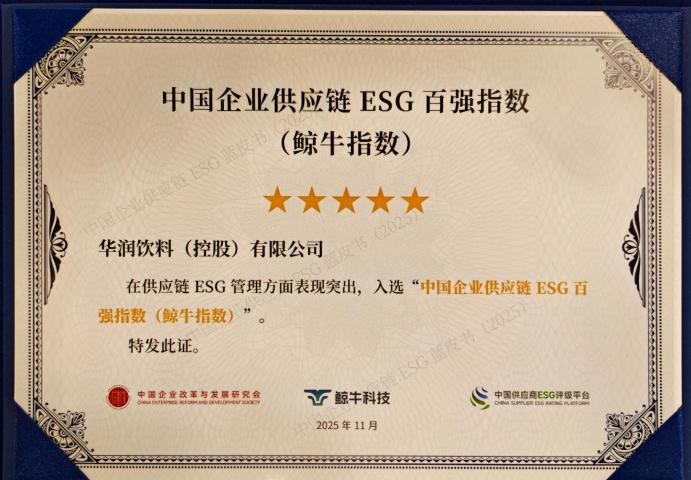
华润饮料入选食品饮料行业社会责任发展指数前十榜单 获评“ESG治理先锋”等多项ESG荣誉
Jiang Nan Shi Bao· 2025-11-21 07:00
华润饮料入选"中国企业供应链ESG百强指数(鲸牛指数)" 此次发布的《企业社会责任蓝皮书(2025))》对国有企业100强、民营企业100强、外资企业100强以 及14个重点行业、部分优秀企业在社会责任(ESG)管理和信息披露方面的表现进行了整体评价。同时 公布了电力、建筑、食品饮料、互联网等14个重点行业的社会责任发展指数。华润饮料首次入选该指 数,位列食品饮料行业第8名。 为期两天的会议还发布了《中国企业供应链ESG蓝皮书(2025)》暨"中国企业供应链ESG百强指数 (鲸牛指数)"和2025年"ESG鲸牛奖"。华润饮料凭借在供应链ESG管理及ESG治理方面的优秀实践和成 效,成功入选"中国企业供应链ESG百强指数(鲸牛指数)",获评ESG鲸牛奖之"ESG治理先锋"。 未来,华润饮料将继续以ESG为重要抓手,不断深化理念与实践,持续推动公司实现更高质量、更可持 续的发展。 11月20日-21日,由中国企业改革与发展研究会、责任云研究院主办的ESG中国·第八届北京责任展开幕 式暨《企业社会责任蓝皮书(2025)》发布会在北京召开。会上,华润饮料入选"食品饮料行业社会责 任发展指数"前十榜单、中国企业供应链E ...
招银国际焦点股份-20251118
Zhao Yin Guo Ji· 2025-11-18 14:05
Group 1: Stock Recommendations - Geely Automobile (175 HK) has a target price of 25.00, indicating a potential upside of 47% with a PE ratio of 9.50[5] - Luckin Coffee (LKNCY US) has a target price of 44.95, suggesting a potential upside of 12% with a PE ratio of 30.00[5] - Alibaba (BABA US) has a target price of 209.40, indicating a potential upside of 33% with a PE ratio of 22.50[5] Group 2: Market Performance - The basket of 24 long positions had an average return of -3.4%, while the MSCI China Index returned -0.8%[9] - Among the 24 stocks, only 5 outperformed the benchmark[9] Group 3: Analyst Ratings - New additions include companies like Bosideng (3998 HK) and Futu Holdings (FUTU US), both rated as "Buy"[6] - The report indicates a focus on sectors such as technology, insurance, and consumer goods, with multiple stocks receiving "Buy" ratings[5][6]





食品饮料行业周报:CPI催化预期,底部价值凸显-20251117



Haitong Securities International· 2025-11-17 07:10
Investment Rating - Investment advice indicates a sector recovery catalyzed by recent CPI data, focusing on growth and supply-demand inflection points [5][16]. Core Views - The report emphasizes the importance of consumer goods growth, particularly in beverages, snacks, and food ingredients, while also highlighting structural opportunities in the baijiu sector [5][16]. - CPI data shows a positive trend with October CPI year-on-year at +0.2% and core CPI at +1.2%, indicating a recovery in domestic demand [6][16]. - The baijiu industry is undergoing accelerated clearing, with expectations for improved sales and inventory adjustments leading into 2026 [7][16]. - Consumer goods are expected to benefit from stabilization and recovery, with a focus on low valuation and high dividend stocks [8][16]. Summary by Sections Investment Recommendations - Recommended baijiu stocks include Shanxi Xinghuacun Fen Wine Factory, Gujing Distillery, and stable targets like Kweichow Moutai and Wuliangye [5][16]. - Beverage growth is highlighted with recommendations for Eastroc Beverage and Nongfu Spring, alongside low valuation stocks like China Foods and Tingyi [5][16]. - Snack and food ingredient stocks recommended include Bailong Chuangyuan, Yankershop Food, and Three Squirrels [5][16]. - Beer recommendations include Yanjing Brewery and Tsingtao Brewery, while condiment stocks like Haitian Flavoring & Food are also suggested [5][16]. Baijiu Sector Insights - The baijiu sector is experiencing a significant adjustment, with industry destocking still in progress and a focus on promotional sales for 2026 [7][16]. - Recent sales data from JD.com shows a +18% year-on-year increase in liquor sales during the Double 11 shopping festival, indicating a positive market response [7][16]. Consumer Goods Outlook - Consumer goods are expected to see growth as the mainline, with structural differentiation evident in beverages, snacks, and health products [8][16]. - The report notes that companies with product innovation and channel expansion will have growth advantages, particularly in the context of recent service and non-food price recoveries [8][16].