奈雪的茶

Search documents
库迪全场饮品9.9元活动确认结束!曾称会持续到2027年
Nan Fang Du Shi Bao· 2026-01-30 12:09
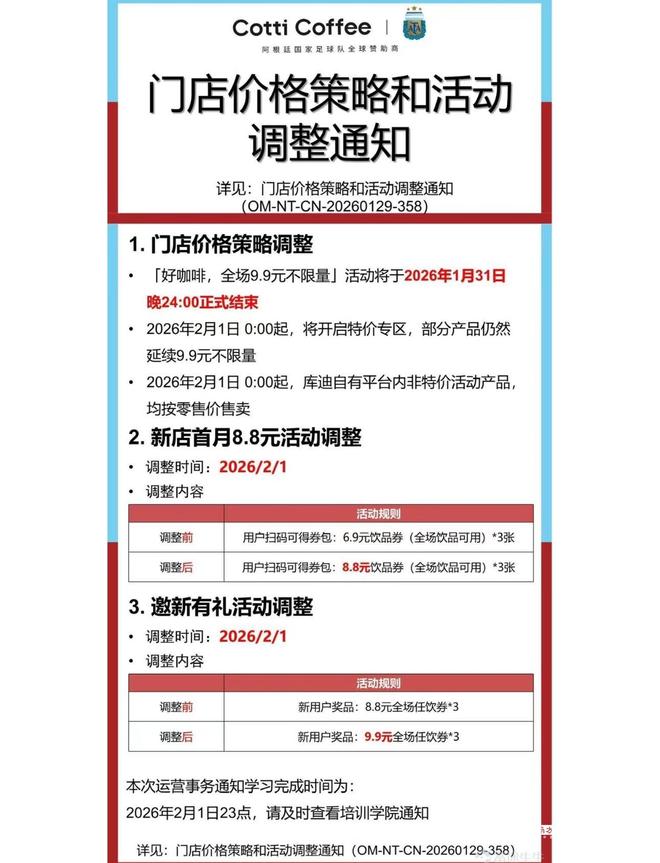
Core Viewpoint - Kudi Coffee is ending its "all products for 9.9 yuan unlimited" promotion on January 31, 2024, and will adjust its pricing strategy starting February 1, 2024, with some products remaining at the promotional price while others will revert to retail prices [1][6]. Pricing Strategy Changes - The "9.9 yuan unlimited" promotion will officially conclude on January 31, 2024, with a new special price section starting February 1, 2024, where select products will still be available at 9.9 yuan [1]. - All non-special promotional products will be sold at their retail prices, which range from 10.5 yuan to 15.9 yuan, indicating a significant price increase for many items [6]. Impact on Franchisees - A franchise store manager confirmed that Kudi's headquarters issued a price adjustment notice to franchisees on January 29, 2024, and multiple stores were still offering the 9.9 yuan promotion as of January 30, 2024 [3]. Historical Context of Promotions - Kudi initiated the 9.9 yuan promotion in February 2023, which sparked a price war in the coffee industry, leading competitors like Luckin Coffee to adopt similar pricing strategies [8][9]. - Kudi's Chief Strategy Officer previously stated that the company was prepared to sustain the 9.9 yuan promotion for at least three years, with expectations of achieving positive cash flow by February 2025 [8]. Competitive Landscape - Following Kudi's promotion, Luckin Coffee also launched a 9.9 yuan campaign, which has since become a common practice among various beverage brands, including Tims and Nayuki [9]. - However, Luckin has also reduced the scope of its 9.9 yuan promotion due to declining operating profit margins, indicating a trend of tightening promotional strategies within the industry [9]. Expansion Goals - Kudi has rapidly expanded its store count since its inception in October 2022, aiming to reach 50,000 stores by the end of 2025, although it has not met its original expansion targets [9].

关于加盟商筛选、补贴大战与跨国并购,柠季汪洁和我们复盘了这五年
Hua Er Jie Jian Wen· 2026-01-30 10:15
Core Insights - The new tea beverage market in China has become highly competitive, with established players dominating the landscape, yet there remains an untapped opportunity in the lemon tea segment [3][4]. Group 1: Market Overview - In 2021, the new tea beverage market appeared to be saturated, with major brands like Mixue Ice City, Heytea, and Nayuki competing fiercely [1]. - Despite the crowded market, there are over 6,000 lemon tea specialty stores in Guangdong alone, indicating a significant market potential [2][8]. - The annual sales of Vitas Lemon Tea reach several billion yuan, highlighting the lucrative nature of this category [2]. Group 2: Company Strategy - The company, founded by Wang Jie, opened its first lemon tea store in February 2021 in Changsha, focusing on product quality over prime location [4][11]. - The average number of stores per franchisee has reached 1:2.7, with over 3,000 signed stores, demonstrating successful expansion in a previously localized market [4][21]. - The company emphasizes a franchise model that requires franchisees to have their own funds and management experience, ensuring a commitment to the business [18][19]. Group 3: Competitive Landscape - The company faces challenges from intense competition and the ease of replicating lemon tea products, necessitating a focus on differentiation [5][13]. - Wang Jie views competitors as those who compete for talent rather than market share, indicating a unique perspective on competition [6][32]. Group 4: Product Development and Marketing - The company has developed specific products to participate in the ongoing delivery subsidy wars, aiming to maintain brand visibility while managing costs [29][30]. - The strategy includes a focus on health trends, with lemon tea being associated with health benefits, which is expected to sustain its market presence [12]. Group 5: Expansion Plans - The company is exploring international markets, having established a bubble tea brand in the U.S. to mitigate risks associated with entering new markets [36]. - Future plans include potential acquisitions of brands in Brazil, focusing on scalable beverage categories [41][44].
越卖越亏 茶饮、快餐品牌集体上调外卖价格
Nan Fang Du Shi Bao· 2026-01-30 03:21
Core Insights - The recent price increases in tea drinks and fast food delivery services are attributed to rising costs across multiple factors, including raw materials, labor, and rent, rather than just platform commission changes [1][2][4] - The shift in consumer behavior towards reliance on delivery services has forced companies to raise prices to avoid losses, leading to a cycle of increasing sales without corresponding profit [1][4][7] Group 1: Price Increases and Cost Factors - Many popular brands, such as "Kawanka" and "Naixue's Tea," have raised prices in response to increased raw material costs, with examples including a price hike from 9.9 yuan to 15.9 yuan for breakfast sets [2][3] - Key raw materials like coconut water and lemon have seen price increases of up to 300% and nearly 100% respectively, driven by supply chain issues and rising shipping costs [2][3] - The Consumer Price Index (CPI) has shown a 0.8% increase, with fresh fruit prices rising by 4.4% [2] Group 2: Delivery Channel Dynamics - The delivery channel has become a primary sales avenue for many tea brands, with some stores reporting over 90% of sales coming from delivery, yet profits are only one-third of in-store sales [4][5] - The reliance on delivery has led to a situation where increased sales volume does not equate to increased profits, with some businesses experiencing losses on delivery orders [4][5] Group 3: Operational Challenges and Strategies - High delivery reliance has resulted in increased operational costs, including platform fees and labor, leading to a significant drop in net revenue per store [5][6] - Companies are now focusing on optimizing their channel structures, such as promoting in-store pickup to reduce delivery costs and enhance customer experience [6][7] - The adjustment in pricing strategies is seen as a necessary step for sustainable operations, moving away from a low-price competition model to a more balanced approach [6][7]


“欠薪两亿”的茶里,靠酒店袋泡茶业务续命?
3 6 Ke· 2026-01-29 00:20
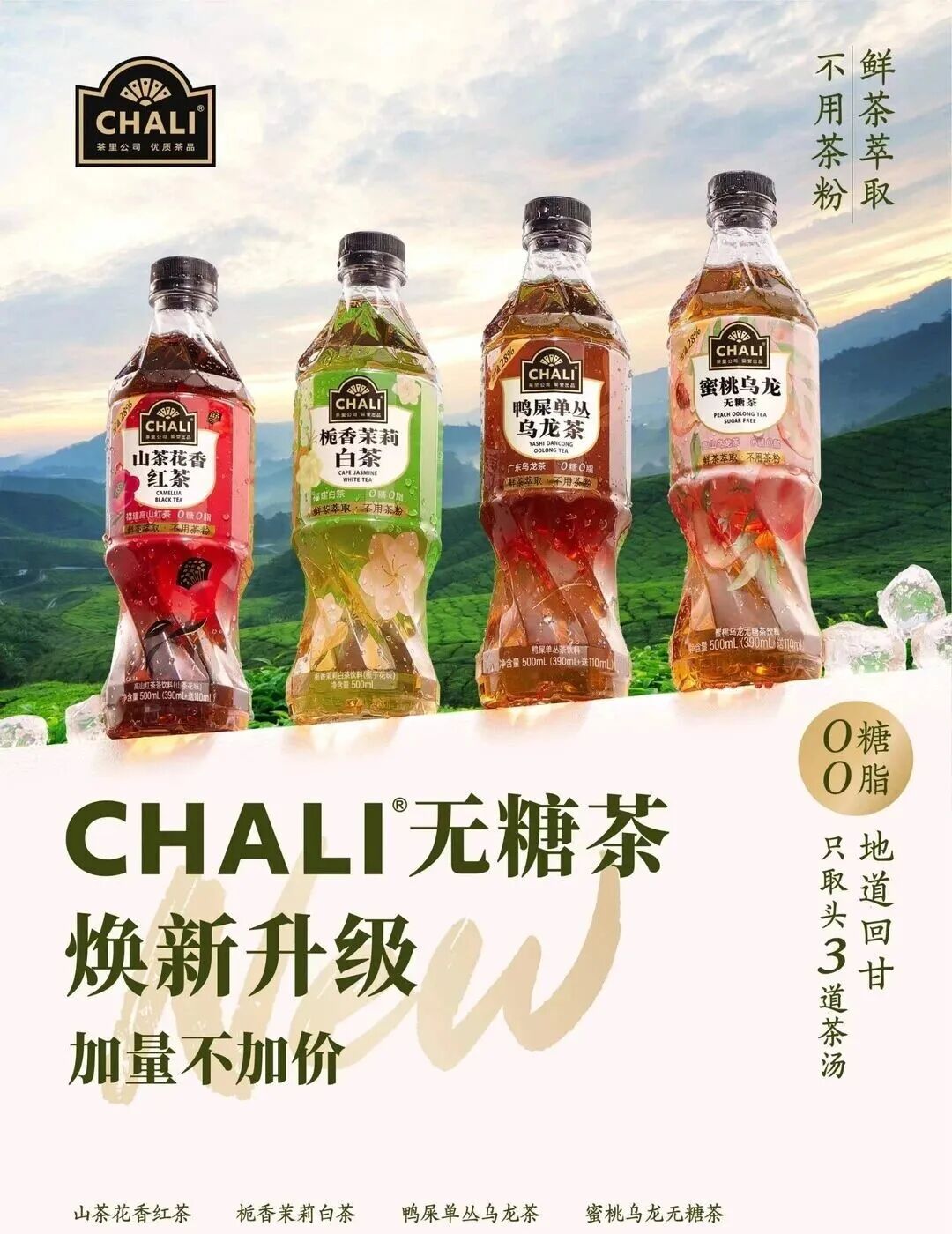
Core Insights - CHALI, a unicorn enterprise in Guangzhou, faces financial difficulties due to strategic missteps in its bottled tea business, leading to delayed salary payments and supplier settlements, with liabilities approaching 200 million yuan [1][7] - Surprisingly, CHALI's hotel business, which constitutes about 60% of its revenue, has emerged as a crucial support during this crisis [1][10] Group 1: Business Strategy and Performance - CHALI initially gained success by focusing on high-end bagged tea, achieving significant market presence by 2016, but faced a turning point in 2022 when it aggressively entered the bottled tea market [4][5] - The bottled tea venture has been a failure, with market share plummeting to 0.02% by Q3 2024, forcing CHALI to terminate the business and related divisions [5][7] - The hotel tea bag market, previously dominated by foreign brands, has become a lifeline for CHALI, as hotels tend to maintain stable supplier relationships once established [10][20] Group 2: Market Position and Competitive Landscape - CHALI has successfully penetrated over 7,000 high-end hotels, leveraging the growing demand for Chinese tea experiences in the hospitality sector [10][19] - The company has differentiated itself by offering transparent tea bags and innovative flavors, catering to the specific needs of various hotel settings [15][16] - Despite its current stability, the hotel tea bag market presents limited growth potential, and CHALI must find new growth avenues while managing risks associated with reliance on the hotel sector [21][32] Group 3: Future Challenges and Opportunities - The hotel tea bag market is becoming increasingly competitive, with both international brands and emerging local brands posing threats to CHALI's market share [23][28] - CHALI's extensive network of 137 quality tea garden suppliers provides a competitive edge, but the company must adapt to the evolving landscape of the tea industry, which is shifting towards a full supply chain competition [26][31] - The management emphasizes the need to stabilize cash flow from core bagged tea operations and optimize costs to ensure long-term viability [32][33]
烟火气里迎新年,广发卡联动5万商户点燃消费热潮
Mei Ri Shang Bao· 2026-01-28 22:20
除餐饮之外,年末"自我奖赏"与年货采买也迎来消费高峰。名创优品、百果园等零售品牌同步加入"周 五5折(达标享)"活动,以5折代金券助力消费者轻松实现"仪式感消费"。1月1日起至2月28日,商圈餐饮 零售还推出"满88元随机立减5至88元",进一步降低消费门槛。 元旦开始,广发信用卡优惠继续加码。1月1日至31日每周五,"超级广发日周五5折(达标享)"活动接力 登场,Tims咖啡、皮爷咖啡、茶百道等品质品牌,与必胜客等连锁餐饮,新增"10元购20元代金券"等折 扣,覆盖简餐到聚会的多元需求。广发万事达信用卡持卡人活动期间逢每周五、六、日可参与满1000元 立减高至266元活动,每日还有满200元立减高至56元优惠活动打底。高频消费与场景化用餐的结合,既 顺应了当下消费者"理性消费不降级"的趋势,也通过密集的优惠触点,有效提升了线下商圈的客流与消 费频次。 商报讯(记者叶晓珺通讯员倪斐)岁末年初的"仪式感消费"正带动消费市场持续升温,广发信用卡近日启 动"贺岁狂欢.超级广发日"跨年商圈大促营销活动,携手全国100余座商圈超过5万家商户,围绕美食、 茶饮、零售等多类消费场景,推出"天天5折""周五5折(达标享)"" ...
突发!蜜雪集团被瑞银下调评级 股价重挫超10%
Xin Lang Cai Jing· 2026-01-28 05:00
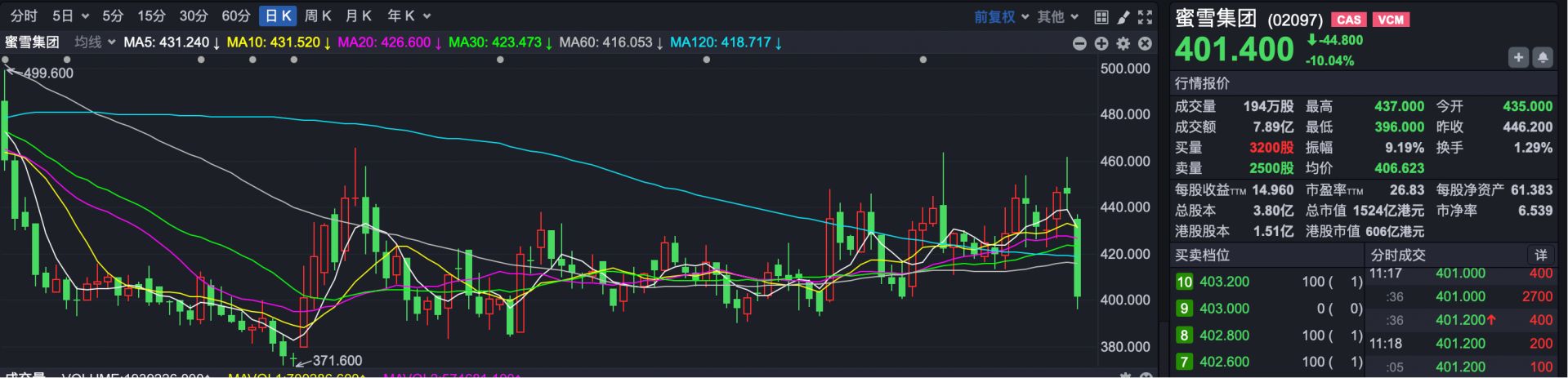
Core Viewpoint - The decline in shares of Mixue Group is primarily attributed to UBS downgrading the company's rating from "Buy" to "Neutral" and lowering the target price from HKD 490 to HKD 468 [3][7]. Company Performance - As of January 28, Mixue Group's shares fell over 10%, reaching a low of HKD 396 during trading [1]. - The company faces risks of declining gross margins due to rising raw material costs, particularly for key ingredients like lemons, a reduction in delivery subsidies, and intensified industry competition [4][9]. Market Outlook - Despite the downgrade by UBS, domestic institutions remain optimistic about Mixue Group's growth prospects. West Securities noted that the company is accelerating its overseas expansion, with store performance exceeding expectations [4][10]. - Mixue Group plans to open three new stores in the U.S. by December 2025, targeting major cities like Los Angeles and New York. The menu will include high-sweetness options and plant-based milk to cater to local tastes [4][10]. International Expansion - The company is set to open an exclusive overseas franchise channel in November 2025, targeting 16 countries and regions, with Southeast Asia identified as a key area for expansion [5][10]. - In Vietnam, the total cost for a franchise store is approximately 10 billion VND, equivalent to 265,000 RMB, leveraging local supply chains and standardized support systems [5][10]. - Mixue Group has signed a procurement order for 4 billion coffee beans with Brazil, with plans to establish a supply chain factory, aiming to open its first store in São Paulo by March 2026 [5][10]. Financial Projections - West Securities has raised its profit forecasts for Mixue Group, expecting net profits attributable to shareholders to reach 6.1 billion, 7 billion, and 8.1 billion RMB for the years 2025 to 2027, respectively [5][10]. - The current stock price corresponds to a price-to-earnings ratio of 25, 22, and 19 times for the years 2025 to 2027, with a "Buy" rating assigned [5][10].
新茶饮的下半场竞争转向同质化破圈
Mei Ri Shang Bao· 2026-01-27 22:25
Core Viewpoint - The new tea beverage market is experiencing severe homogenization and intense competition, with brands struggling to differentiate themselves in a saturated environment [4][6][9] Group 1: Market Dynamics - The new tea beverage sector remains active and competitive, with brands like Gu Ming, Ba Wang Cha Ji, Mi Xue Bing Cheng, and Hu Shang A Yi recently listing on the Hong Kong Stock Exchange, joining earlier entrants like Nai Xue's Tea and Cha Bai Dao to form the "New Tea Beverage Six Little Dragons" [4][5] - Market growth has significantly slowed after years of rapid expansion and internal competition, prompting brands to shift focus towards deeper market penetration [5][6] Group 2: Product Homogenization - There is a notable increase in product homogenization, with many brands offering similar flavors and product names, making it difficult for consumers to distinguish between them [6][8] - Popular product combinations often follow a basic model of "tea base + fruit/dairy + toppings," leading to a lack of innovative breakthroughs and a tendency for consumers to switch to cheaper alternatives [6][8] Group 3: Marketing Strategies - Although the number of brand collaborations has decreased, they remain a crucial marketing strategy, with approximately 125 collaborations reported in 2025, averaging ten per month [7] - Recent marketing efforts have shifted towards more creative strategies, such as unique promotional events, to engage consumers beyond traditional IP collaborations [7][8] Group 4: Health and Emotional Value - Brands are increasingly focusing on health-oriented products, incorporating ingredients like kale and dietary fibers to meet diverse consumer health needs [8][9] - Emotional experiences during consumption are becoming more important, with consumers valuing the social aspects of beverage consumption alongside taste [9]
信达证券:百龙创园业绩再创新高,维持“买入”评级
Jin Rong Jie· 2026-01-26 07:37
Core Viewpoint - The report from Cinda Securities indicates that Bailong Chuangyuan is expected to achieve record high performance in both 2025 and Q4 2025, driven by further capacity release and continuous growth in sales [1] Industry Summary - The food and beverage market is anticipated to experience a peak in the launch of new products this year, particularly with the introduction of D-alloheptulose, following the adoption of allulose by brands like Nayuki's Tea and Mengniu's UHT probiotic drink [1] - There is a clear global trend towards healthier food options, which is expected to sustain the growth of multiple products offered by the company, while the penetration rate still has room for improvement, indicating potential future growth [1] Company Summary - The company is actively expanding its production capacity both domestically and internationally, which is aimed at supporting global sales and growth while reducing costs [1] - Earnings per share (EPS) projections for the company are set at 0.87, 1.11, and 1.45 yuan for the years 2025, 2026, and 2027 respectively, corresponding to price-to-earnings ratios (PE) of 28X, 22X, and 17X for those years [1] - The company maintains a "buy" rating based on its growth prospects and market positioning [1]


研报掘金丨信达证券:百龙创园业绩再创新高,维持“买入”评级
Ge Long Hui· 2026-01-26 07:34
Core Viewpoint - The report from Cinda Securities indicates that Bailong Chuangyuan is expected to achieve record high performance in both 2025 and Q4 2025, driven by further capacity release and continuous growth in sales [1] Industry Summary - The food and beverage market is anticipated to experience a peak in the launch of new products this year, particularly with the introduction of D-alloheptulose, following the adoption of allulose by brands like Nayuki's Tea and Mengniu's probiotic drink [1] - There is a clear global trend towards healthier food options, which is contributing to sustained sales growth for multiple products within the industry, while there remains potential for increased market penetration [1] Company Summary - The company is actively expanding its production capacity both domestically and internationally, which supports its global sales and growth while also focusing on cost reduction [1] - Earnings per share (EPS) projections for the company are estimated at 0.87, 1.11, and 1.45 yuan for the years 2025, 2026, and 2027 respectively, corresponding to price-to-earnings ratios of 28X, 22X, and 17X for those years [1] - The company maintains a "buy" rating based on its growth opportunities in the medium term [1]
价格卷不动,奶茶品牌又开始玩升级了
Xin Lang Cai Jing· 2026-01-26 06:38
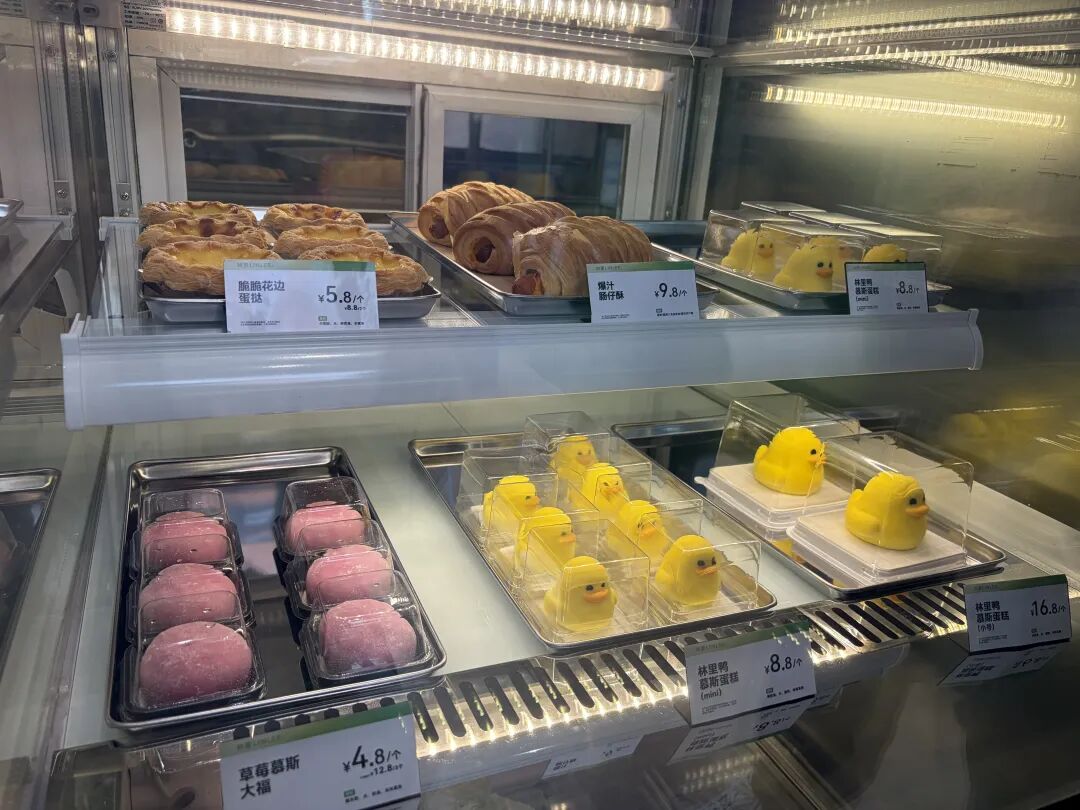
编辑|王秀清 这轮加码烘焙业务的茶饮品牌,主要分为两种模式。 文|红餐网 卢子言 产品创新乏力、价格低到不能再低后,茶饮品牌集体卖起了烘焙。 为了快速开店,过去几年茶饮品牌纷纷砍掉烘焙业务,把开店门槛一降再降。如今烘焙再次成为茶饮品牌的座上宾,是"熹贵妃回宫",还是又一阵"短平 快"的风? 01.从店中店到主题店,茶饮品牌又开始扎堆卖烘焙了 一是谨慎试水,通过"店中店"的形式进行品类补充。 比如,手打柠檬茶品牌林里LINLEE在其首家3.0升级形象店中试点推出了"林里点心铺"。 目前该店产品线较精简,仅有脆脆花边蛋挞、爆汁肠仔酥、草莓慕斯大福以及两种尺寸的林里鸭慕斯蛋糕共5款产品,价格在4.8元-16.8元之间。据红餐网 观察,门店现场不少顾客表示出愿意尝鲜的兴趣。 2025年7月,茶颜悦色同样以店中店的模式推出新中式烘焙坊"茶颜饼坊"。其产品种类较为为丰富,涵盖西式面包、蛋挞、可颂、中式酥饼、其他面点等 超20个SKU,主打高性价比,产品价格主要集中在3-5元,最贵的欧芹沙拉牛肉面包也不超过10元。 茶颜悦色小程序显示,如今茶颜饼坊已开出8家门店,在社交平台上收获了不少好评。 2024年,霸王茶姬曾在部分门 ...