上美股份

Search documents
商贸零售行业周报:关税冲击持续,关注内需优质渠道和产品龙头-20250413
KAIYUAN SECURITIES· 2025-04-13 11:11
Investment Rating - The industry investment rating is "Positive" (maintained) [1] Core Viewpoints - The report emphasizes the ongoing impact of tariff shocks and suggests focusing on high-quality retail channels and differentiated consumer brands that cater to domestic demand [4][22] - The report highlights the transformation of traditional retail, with Yonghui Supermarket leading the way in adapting to a consumer-centric retail era [4][22] - The rise of domestic brands and the recovery of consumer demand are seen as inevitable trends, with recommendations to focus on quality retail channels and differentiated brands [4][22] Summary by Sections Retail Market Review - The retail industry index rose by 2.88% during the week of April 7 to April 11, outperforming the Shanghai Composite Index, which fell by 3.11% [6][13] - The supermarket sector showed the largest increase, with a weekly rise of 13.54% [14][17] - Notable individual stock performances included Guofang Group (+61.1%), Eurasia Group (+26.3%), and Nanning Department Store (+22.4%) [19][20] Industry Dynamics - Yonghui Supermarket has opened a "green channel" for domestic manufacturers affected by export restrictions, receiving over 100 cooperation requests from various sectors [4][22] - The report discusses the approval of a new collagen product by Jinbo Bio, which is expected to strengthen its leading position in the medical beauty sector [4][23] Investment Recommendations - Investment focus areas include: - Traditional retail: Highlighting companies like Yonghui Supermarket and Aiyingshi that are adapting to consumer trends [7][27] - Gold and jewelry: Recommendations for brands like Laopu Gold and Chaohongji that possess differentiated product capabilities [7][28] - Cosmetics: Emphasizing domestic brands such as Maogeping and Shangmei that are expanding into high-potential segments [7][28] - Medical aesthetics: Focusing on companies like Aimeike and Kedi that are positioned to benefit from the recovery in medical beauty consumption [7][28] Company-Specific Insights - Laopu Gold reported a revenue of 8.506 billion yuan (+167.5%) and a net profit of 1.473 billion yuan (+253.9%) for FY2024, indicating strong growth potential [29] - Yonghui Supermarket's revenue for the first three quarters of 2024 was 54.549 billion yuan (-12.1%), with a net loss of 78 million yuan, but it is undergoing significant transformation [32] - Jinbo Bio's new collagen product is expected to provide both immediate filling effects and stimulate collagen regeneration, enhancing its competitive edge in the market [23][24]





美妆巨头抢滩医美:欧莱雅科技转型背后的行业变局
3 6 Ke· 2025-04-13 05:05
Core Insights - The beauty and medical aesthetics sectors are increasingly merging, with significant interest from both international giants and local startups, indicating a strong growth trend in this area [1][5][31] - L'Oréal is a leading player in this trend, having made substantial investments and strategic moves to integrate beauty and medical aesthetics [2][10][17] Group 1: Industry Trends - Since 2024, there has been an unusual enthusiasm among beauty companies to enter the medical aesthetics business, with both high-end and budget brands participating [1] - The merger of beauty and medical aesthetics is not a new concept, but it is gaining momentum, with companies like L'Oréal leading the charge [1][5] - The retail sales of cosmetics in China fell by 1.1% in 2024, while the total retail sales of consumer goods grew by 3.5%, highlighting the need for beauty brands to innovate and find new growth avenues [5] Group 2: Company Developments - In 2023, L'Oréal rebranded its active health cosmetics division to the skin science beauty division and launched its core brand, SkinCeuticals, in 2024 [2] - Estee Lauder's Clinique launched a series of medical device products, while Shiseido is set to introduce its first medical beauty brand in China [3] - Domestic brands like Shiseido and Up Beauty are also making strides in the medical aesthetics space, with new product launches and business developments [4] Group 3: Strategic Initiatives - L'Oréal's beauty tech transformation strategy, initiated in 2018, focuses on integrating technology into beauty and medical aesthetics, with significant investments in digital R&D [6][8] - The company has established a comprehensive network for integrating beauty and medical aesthetics, including investments in high-end medical beauty chains and partnerships with biotech firms [17][18] - L'Oréal's SkinCeuticals brand has seen a 9.8% year-on-year growth, reaching €7.03 billion in revenue, making it the fastest-growing segment of the group [10] Group 4: Market Dynamics - The merging of beauty and medical aesthetics allows brands to create a closed-loop product offering, enhancing customer loyalty and repeat purchases [22] - The shift towards medical aesthetics is seen as a necessary strategy to avoid intense competition in traditional beauty markets [19][20] - However, the differing operational models and regulatory requirements between beauty and medical aesthetics present new challenges for companies [24][30]



国货替代逻辑兑现!基金经理看好本土增长驱动
券商中国· 2025-04-12 13:12
Core Viewpoint - The article discusses the strong rebound of domestic brands in sectors such as consumer goods, pharmaceuticals, and technology, driven by the logic of domestic brand substitution and independent performance growth, leading to increased market share and revenue opportunities for these brands [2][3]. Group 1: Domestic Brand Substitution Logic - Public funds have heavily invested in domestic brands, particularly in the cosmetics sector, benefiting from the domestic brand substitution logic, as foreign competitors like Estée Lauder face challenges in the Chinese market [3]. - The stock of Estée Lauder has seen a cumulative decline of over 25% in the last four trading days, while domestic brands like Mao Geping and Shangmei have shown strong resilience, with increases of 6.30% and 3.89% respectively [3]. - In the infant formula sector, domestic brand China Feihe has surged over 10% in the Hong Kong market, supported by significant investments from Ping An Fund and GF Fund [3]. Group 2: Independent Performance Growth - The article emphasizes the importance of independent performance, highlighting that many domestic brands achieve stable growth by relying on the vast domestic market, with companies like Bosideng generating approximately 94% of their revenue from China [6]. - The motorcycle sector has seen a surge in interest for domestic brand Chunfeng Power, with 70 public funds including it in their top ten holdings, reflecting confidence in the brand's growth potential [7]. - The article notes that many companies, including internet and consumer goods firms, have achieved consistent performance growth without international operations, indicating a strong domestic market drive [7]. Group 3: Market Opportunities and External Factors - The article points out that the strong manufacturing capabilities and demand in the domestic market provide public funds with opportunities to capitalize on undervalued stocks that have been unfairly punished by market sentiment [8]. - The pharmaceutical sector is expected to remain resilient against external factors, with domestic innovative drug companies benefiting from supportive policies and technological advancements [9][10]. - The article mentions that the introduction of zero tariffs on certain cancer and rare disease drugs in early 2024 may further mitigate external impacts on the pharmaceutical sector [10].

上美股份(02145) - 2024 - 年度财报
2025-04-10 14:12
Financial Performance - Revenue increased to RMB6,792.5 million in 2024 from RMB4,190.7 million in 2023, representing a growth of 62.2%[17] - Gross profit rose to RMB5,109.4 million in 2024 from RMB3,019.5 million in 2023, marking an increase of 69.2%[17] - Profit for the full year of 2024 was RMB803.3 million, compared to RMB461.7 million in 2023, reflecting a growth of 73.9%[17] - Total revenue generated from four primary brands in 2024 was RMB6,571.9 million, reflecting a 65.3% increase compared to 2023, contributing 96.7% of total revenue[68] - Revenue from the KANS brand surged by 80.9% to RMB5,591.0 million in 2024 from RMB3,090.4 million in 2023[122] - Revenue from the One Leaf brand decreased by 35.7% to RMB229.3 million in 2024 from RMB356.5 million in 2023[122] - Revenue from the Baby Elephant brand remained stable, increasing by 0.1% to RMB376.0 million in 2024[124] - Revenue from the newpage brand grew significantly by 146.3% to RMB375.6 million in 2024 from RMB152.5 million in 2023[125] - Other income and gains increased by 60.5% from RMB156.5 million in 2023 to RMB251.2 million in 2024, primarily due to higher government grants[141] - Cash generated from operating activities decreased to approximately RMB547.0 million in 2024 from RMB746.2 million in 2023, representing a decline of 26.7%[157] - The Group's annual profit increased to RMB803.3 million in 2024 from RMB461.7 million in 2023, reflecting a growth of 73.9%[162] Dividends and Shareholder Returns - A final dividend of RMB0.75 per share was proposed for the year ended December 31, 2024, consistent with the previous year's dividend[18] Brand Performance and Market Position - KANS ranked second in GMV among domestic cosmetics brands in 2024, with the highest growth rate among top cosmetics brands[23] - Baby Elephant was certified as the No. 1 online sales of children's makeup in China in 2024, selling a total of 0.4 million children's makeup products[47][48] - One Leaf underwent a brand revamp in 2024, targeting younger consumers with a new brand positioning and spokesperson[39][40] - Baby Elephant won the "Outstanding Performance Award for Children's Cosmetics Brand of the Year" at the 9th Cherry Awards in 2024[53] Product Development and Innovation - KANS upgraded the Polypeptide Collagen Softening series to version 2.0, introducing the new ingredient "CYCLOHEXAPEPTIDE-9" for enhanced anti-wrinkle effects[29][32] - The launch of the "X-peptide Cream" achieved over RMB 40 million in sales during the Double Eleven shopping festival[29][32] - The newly launched youth 0U series targets teenagers aged 12-18, addressing oily skin and acne issues[50] - The brand is developing a sensitive skincare brand ARMIYO using "artemisia annua oil AN+" as a core ingredient[72] - The company is preparing to launch the maternity and childcare brand Anpanman, licensed to use well-known IPs[72] Research and Development - In 2024, the company incurred R&D expenses of RMB179.9 million, accounting for 2.6% of its revenue, compared to RMB125.8 million and 3.0% in 2023[75][79] - The company applied for 76 new patents in 2024, including 36 invention patents, and was granted 27 patents, 5 of which are invention patents[78][81] - The company published 15 scientific research papers in 2024, contributing to a comprehensive research system covering basic research, process optimization, and clinical validation[83][84] - The company worked with industry departments to publish several industry standards in 2024, including methods for testing cosmetic ingredients and sun protection factors[76][79] Operational Efficiency and Strategy - The Group is committed to a "six-six" strategy to promote overall business growth through six main competitive aspects and the planning of six major sectors[95] - The Group aims to enhance R&D investments in core skincare technologies, including anti-aging and skin barrier repair, to drive product innovations[103] - The introduction of AI-powered management tools is expected to improve data analysis, resource allocation, and overall operational efficiency[103] - The Group plans to expand its marketing networks, particularly in online e-commerce platforms, to enhance user penetration and consumer engagement[105] - The strategic layout includes six major sectors: mass skincare, personal care, maternal and baby products, skin medical beauty, makeup, and high-end skincare[107] - The Group aims to enhance its international R&D capabilities and brand awareness to become a world-class cosmetics group[108] Employee and Management Information - The total remuneration cost for 2024 was RMB551.3 million, an increase from RMB494.6 million in 2023, reflecting a reasonable growth in employee compensation[89][92] - The company has a total of 2,086 full-time employees as of December 31, 2024, with 2,007 based in the PRC and 79 overseas[89][92] - The company focuses on attracting and cultivating talent, maintaining a strong R&D team with rich experience[75][79] - The management team includes experienced professionals with backgrounds in finance, operations, and product development, enhancing strategic decision-making[185][190] Financial Position and Ratios - The debt to asset ratio increased to 37.9% in 2024 from 35.1% in 2023, while the current ratio decreased to 1.8 times from 2.0 times[165] - Interest-bearing bank and other borrowings decreased by 39.9% to RMB60.1 million as of December 31, 2024, down from RMB100.0 million in 2023, due to abundant working capital[166] Management Team - Mr. Lyu Yixiong has been the CEO since the company's founding in June 2004 and is a controlling shareholder[178] - Ms. Luo Yan, who joined the group in March 2012, is currently the vice president responsible for managing and marketing several brands[181] - Mr. Feng Yifeng, the CFO since July 2016, has extensive experience in finance and asset management, previously holding senior positions at major firms[185] - Ms. Song Yang, who joined in December 2013, is responsible for research and development and product innovation within the group[190]
“给我转人工,转人工”,AI客服把人逼疯
创业邦· 2025-04-05 03:20
Core Viewpoint - The article discusses the increasing reliance on AI customer service and the challenges it presents, highlighting the tension between efficiency and the need for human empathy in customer interactions [5][12][34]. Group 1: AI Customer Service Adoption - AI customer service is being adopted widely across various industries, with many businesses transitioning from human to AI support to reduce costs and improve efficiency [7][12]. - The cost of AI customer service is significantly lower than traditional human customer service, with one AI service provider offering a monthly fee of 99 yuan compared to an average monthly cost of 3000 yuan for human agents [7][10]. - The Chinese intelligent customer service market reached 3.94 billion yuan in 2023 and is projected to grow to 9.07 billion yuan by 2027, indicating a rapid expansion in this sector [12]. Group 2: Limitations of AI Customer Service - Despite the cost benefits, AI customer service often fails to address complex or urgent customer needs, leading to frustration among users who find it difficult to reach human agents [23][24]. - A survey indicated that over 80% of human customer service agents are hard to reach, with many consumers unable to find a way to connect with them [26][27]. - Privacy concerns are also prevalent, as customer interactions with AI systems are stored on third-party servers, raising fears of data breaches and misuse [29]. Group 3: Human Element in Customer Service - The article emphasizes that while AI can handle simple queries, it lacks the ability to understand human emotions and complex needs, which can lead to dissatisfaction among customers [24][32]. - Human customer service representatives are better equipped to respond to emotional cues and provide personalized assistance, which is often lacking in AI interactions [31][34]. - The shift towards AI in customer service raises questions about the future of human roles in this field, with some companies already reducing their workforce significantly due to AI implementation [34][36].

「给我转人工,转人工」,AI客服把人逼疯
36氪· 2025-04-03 13:46
Core Viewpoint - The article discusses the challenges and limitations of AI customer service, questioning whether AI can fully replace human customer service representatives, highlighting consumer frustrations and the emotional aspects of human interaction [5][20][39]. Group 1: AI Customer Service Adoption - AI customer service is increasingly being adopted by various industries, including e-commerce, airlines, and banks, due to its cost-effectiveness and efficiency [4][17]. - A case study reveals that an e-commerce business reduced its customer service team from 36 to 9 employees after implementing AI, saving over 1 million yuan annually [8][18]. - The AI customer service market in China reached 3.94 billion yuan in 2023, with projections to grow to 9.07 billion yuan by 2027 [17]. Group 2: Consumer Experience and Frustrations - Consumers often face difficulties in accessing human customer service, with many reporting that AI systems are unresponsive or fail to understand their needs [23][27]. - A survey indicated that over 50% of consumers encountered issues with customer service, with 80% of human representatives being hard to reach [27]. - Key complaints about AI customer service include its inability to handle personalized issues, mechanical responses, and lack of understanding of emotional cues [24][28]. Group 3: Emotional and Human Aspects - Human customer service representatives are perceived to better understand and respond to customer emotions, providing a sense of comfort that AI cannot replicate [32][39]. - The article emphasizes that while AI can handle simple queries, it struggles with complex or urgent situations, leading to increased consumer frustration [24][25]. - The emotional connection and understanding provided by human agents are highlighted as irreplaceable aspects of customer service [32][39].

又一家美妆头部企业准备上市
3 6 Ke· 2025-04-02 00:53
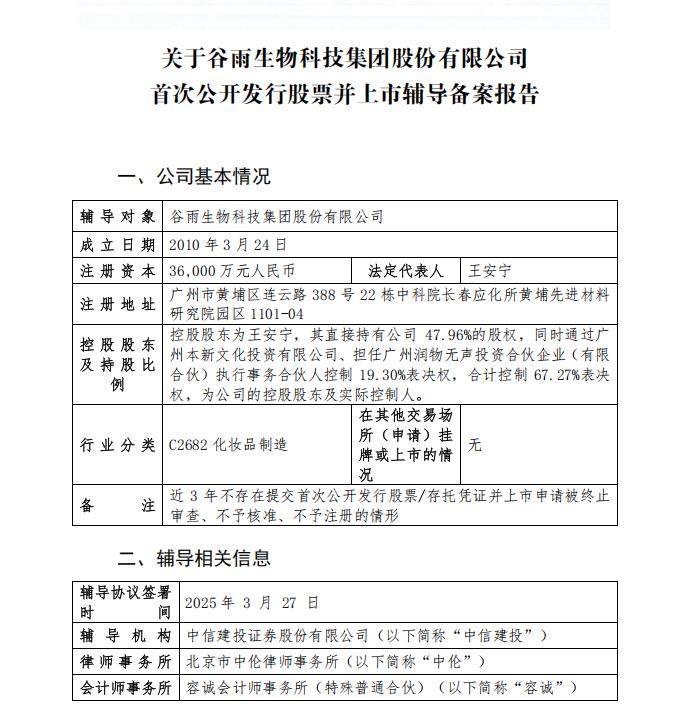
Core Viewpoint - Gu Yu Biotechnology Group Co., Ltd. has initiated its IPO process, marking a significant step in its growth trajectory within the beauty industry, leveraging unique product offerings and a strong online presence to capture market share [1][2][3]. Company Overview - Gu Yu was founded on March 24, 2010, with a registered capital of 36 million RMB, and is headquartered in Guangzhou [1]. - The company is primarily engaged in the manufacturing of cosmetics, specifically focusing on skincare products with unique ingredients like Glabridin [1][3]. - The founder, Wang Anning, has extensive experience in the cosmetics industry, having worked in his family's supply chain and developed numerous formulations before establishing Gu Yu [3][6]. IPO Progress - Gu Yu has signed a counseling agreement with CITIC Securities on March 27, 2025, to prepare for its IPO, officially starting the process for listing on the A-share market [1][10]. - The company has undergone a name change and shareholding restructuring in early 2024, indicating readiness for public offering [7][10]. Market Position and Performance - Despite being a latecomer compared to established brands like Proya and Han Shu, Gu Yu has rapidly gained recognition, ranking third in the Douyin beauty category in early 2023 [2][11]. - The brand's GMV (Gross Merchandise Volume) has shown significant growth, reaching 9 billion RMB in 2021, doubling to 22 billion RMB in 2022, and projected to reach 35 billion RMB in 2023 [11][13]. - Gu Yu's sales strategy focuses on multi-channel distribution, successfully leveraging platforms like Douyin, Kuaishou, and Tmall to maximize reach and sales [11][21]. Product Strategy - The company has developed a product matrix centered around its unique ingredient, Glabridin, with a focus on "big single products + gift sets" [23][24]. - Gu Yu's best-selling products include the third-generation snow skin water and cream sets, which have sold over 125,800 units [23]. Challenges and Future Outlook - Gu Yu faces challenges related to high dependency on a single brand for revenue, which poses risks compared to competitors with diversified brand portfolios [26][27]. - The company is also navigating the complexities of high-end market positioning, as it attempts to penetrate the premium segment while maintaining its value-oriented brand image [32][34]. - The ongoing development of its research capabilities and potential expansion into offline channels will be crucial for sustaining growth and competitiveness in the evolving beauty market [34][41].
烧钱“买买买”,名创优品能否撕下“十元店”标签
3 6 Ke· 2025-03-31 12:08
Core Insights - Miniso has made a strategic investment in Lingmouse Animation, a company founded by Jin Jin, known for creating the popular IP "Ye Luo Li," which has generated over 10 billion yuan in sales from its merchandise [1][2] - This investment indicates Miniso's shift towards developing its own IPs, reducing reliance on high licensing fees for existing popular IPs [2][3] Group 1: Investment and Business Strategy - Miniso's investment in Lingmouse Animation is part of its broader strategy to enhance its core business by exploring self-owned IP models [2][6] - The company has spent 420 million yuan on licensing fees in the past year, highlighting the financial burden of relying on external IPs [2][3] - Miniso aims for IP products to account for over 50% of its total sales by 2028, with current IP product sales already exceeding 30% [4] Group 2: Financial Performance and Market Position - In 2024, Miniso's total revenue is projected to grow by 22.8% to 17 billion yuan, with adjusted net profit increasing by 15.4% to 2.72 billion yuan [7] - Despite rapid expansion, same-store sales growth has declined, raising concerns among investors, as evidenced by a 9.75% drop in stock price following the financial report [7][8] - The average transaction value has risen to 38.1 yuan, with gross margins climbing to 44.9% [4] Group 3: Market Dynamics and Competition - The market for IP products is becoming increasingly competitive, with many retailers entering the space, leading to a "red ocean" scenario [10][11] - Miniso's strategy includes targeting younger consumers, particularly the Alpha generation, and adapting its product offerings accordingly [12][13] - The number of companies in the toy and IP sector has surged, with over 20,800 related enterprises currently registered in China, reflecting a 30.27% increase in new registrations [13][14]

泡泡玛特营收首破百亿;海底捞不想只卖火锅;始祖鸟称产品中的PFAS符合标准丨品牌周报
36氪未来消费· 2025-03-30 12:06
Group 1 - The core viewpoint of the article highlights the aggressive growth targets set by Pop Mart, which has achieved a significant revenue milestone of over 10 billion yuan for the first time, with a net profit growth of nearly 200% to 3.4 billion yuan [2][3] - Pop Mart's success is attributed to the frequent emergence of blockbuster IPs and rapid growth in overseas markets, with 17 IPs generating over 1 billion yuan each, and plush toys showing remarkable growth of 12% year-on-year [3][4] - The company's overseas revenue has doubled, rising from 16.9% in 2023 to 38.9% in 2024, with a focus on expanding in Southeast Asia, North America, and Europe [4] Group 2 - Haidilao is diversifying its brand portfolio by launching multiple sub-brands, including 11 new restaurant brands, to alleviate growth pressure as its main brand faces stagnation [5][6] - The company has seen low single-digit growth in revenue and net profit for 2024, with a decline in average customer spending, prompting a search for new growth avenues beyond hot pot [6][7] - Despite internal entrepreneurial efforts, Haidilao's sub-brands currently contribute only 1% to overall revenue, raising questions about their ability to scale in a competitive market [7] Group 3 - Nongfu Spring's aggressive pricing strategy with its green bottle water has significantly impacted competitors like Yibao and Wahaha, capturing a market share of 9% shortly after launch [11][12] - The competitive landscape has intensified, with Yibao and Wahaha adjusting their strategies in response to Nongfu Spring's market entry, leading to a decline in Yibao's revenue for the first time in three years [12][13] - Despite gaining market share, Nongfu Spring's revenue from bottled water products has decreased by 21.3%, indicating a trade-off between market share and profitability [12] Group 4 - Xiangpiaopiao's attempt to upscale its product offerings has faced backlash due to a significant price increase, reflecting the challenges traditional brands face in transitioning to higher-end markets [15][16] - The pricing controversy highlights the struggle of established brands to redefine their image amidst rising competition from fresh tea beverage brands [16][17] Group 5 - TOP TOY, a brand under Miniso, has announced plans for global expansion, aiming for overseas sales to account for over 50% of its revenue within five years, supported by a budget of 10 billion yuan [25] - Bawang Tea Ji has submitted an IPO application, reporting a GMV of 29.5 billion yuan and a net profit of 2.515 billion yuan for 2024, marking a significant milestone in the new tea beverage sector [26] - China Duty Free Group reported a 36% decline in net profit for 2024, reflecting ongoing challenges in the duty-free industry [27]

人工智障,把这个职业的人逼下岗
盐财经· 2025-03-28 10:06
Core Viewpoint - The article discusses the challenges and limitations of AI customer service, highlighting that while AI is increasingly adopted for cost-saving and efficiency, it often fails to meet the nuanced needs of consumers, leading to frustration and a preference for human interaction [4][14][26]. Group 1: AI Customer Service Adoption - AI customer service is being widely adopted across various industries, including e-commerce, airlines, and banking, as companies seek to reduce costs and improve efficiency [3][8]. - The cost of AI customer service is significantly lower than traditional human customer service, with one AI service provider offering a monthly fee of 99 yuan compared to an average monthly cost of 3000 yuan for human staff [5][7]. - The Chinese intelligent customer service market reached 3.94 billion yuan in 2023 and is projected to grow to 9.07 billion yuan by 2027, indicating rapid market expansion [8]. Group 2: Limitations of AI Customer Service - Consumers report significant difficulties in accessing human customer service, with many stating that AI systems often do not understand their requests, leading to a frustrating experience [12][17]. - A survey indicated that over 80% of human customer service representatives are difficult to reach, with many consumers unable to find a way to connect with them [17]. - Key complaints about AI customer service include its inability to handle personalized issues, mechanical responses, and a lack of understanding of customer emotions and urgency [14][19]. Group 3: Human Customer Service Preference - Many consumers express a strong preference for human customer service, citing the ability of human agents to understand complex needs and provide empathetic responses [15][22]. - Instances are shared where human customer service representatives were able to address urgent issues more effectively than AI, reinforcing the value of human interaction [20][22]. - The emotional connection and understanding provided by human agents are seen as irreplaceable, with consumers feeling more comfortable and valued when interacting with a person rather than an AI [22][26]. Group 4: Industry Trends and Future Outlook - The trend of replacing human workers with AI is gaining momentum, with companies like Klarna announcing significant layoffs in customer service roles due to AI integration [24][25]. - The article raises concerns about the broader implications of AI replacing human jobs, questioning the balance between efficiency and the preservation of human qualities in service roles [25][26]. - The ongoing shift towards AI in customer service reflects a larger global trend of technological advancement, prompting discussions about the future of work and the role of human employees in an increasingly automated world [25][26].