陕西煤业

Search documents
2025年1-8月陕西省能源生产情况:陕西省发电量2163.6亿千瓦时,同比增长2.1%
Chan Ye Xin Xi Wang· 2025-10-15 03:33
上市企业:陕天然气(002267)、通源石油(300164)、宝光股份(600379)、隆基绿能(601012)、 中国西电(601179)、陕西煤业(601225)、陕鼓动力(601369)、美能能源(001299)、陕西能源 (001286)、爱科赛博(688719) 相关报告:智研咨询发布的《2026-2032年中国能源行业市场研究分析及投资前景评估报告》 2025年8月,陕西省发电336.3亿千瓦时,同比增长12.5%。2025年1-8月,陕西省发电2163.6亿千瓦时, 同比增长2.1%。分品种看,2025年1-8月,陕西省火力发电量1862.1亿千瓦时,占总发电量的86.1%,同 比增长1.6%;陕西省水力发电量40.9亿千瓦时,占总发电量的1.9%,同比下滑25.8%;陕西省风力发电 量145.3亿千瓦时,占总发电量的6.7%,同比增长16.1%;陕西省太阳能发电量115.34亿千瓦时占总发电 量的5.3%,同比增长9.4%。 2018-2025年1-8月陕西省各品种发电量累计产量统计图 数据来源:国家统计局,智研咨询整理 附注 统计范围: 报告中的产量数据统计口径均为规模以上工业,其统计范围为 ...


A股成交量缩量,四季度或风格切换,自由现金流ETF基金(159233)投资机会受关注
Xin Lang Cai Jing· 2025-10-15 03:13
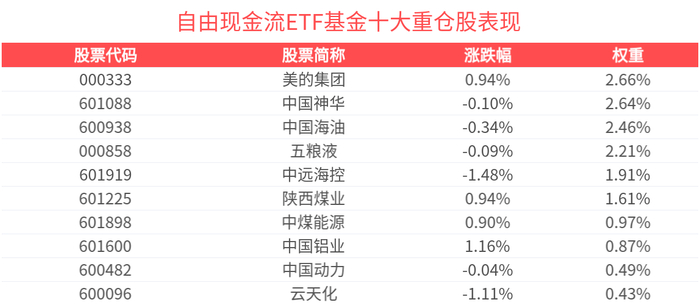
Core Viewpoint - The article discusses the performance and metrics of the CSI All Index Free Cash Flow ETF (932365) and its underlying index, highlighting recent trends in stock performance, liquidity, and fund inflows. Group 1: Fund Performance - As of October 14, 2025, the Free Cash Flow ETF has achieved a maximum monthly return of 7.80% since its inception, with the longest consecutive monthly gain being 4 months and a total increase of 12.71% [2] - The fund has a historical monthly profit probability of 89.47%, with a 100% probability of profit over a 3-month holding period [2] - The maximum drawdown since inception is 3.76%, with a relative benchmark drawdown of 0.49% [2] Group 2: Fund Metrics - The Free Cash Flow ETF fund has a management fee of 0.50% and a custody fee of 0.10% [3] - The fund closely tracks the CSI All Index Free Cash Flow Index, which includes 100 listed companies with high free cash flow rates [3] - As of September 30, 2025, the top ten weighted stocks in the index account for 56.31% of the total index weight, with notable companies including China National Offshore Oil Corporation and Midea Group [3][5] Group 3: Liquidity and Inflows - The Free Cash Flow ETF has seen continuous net inflows for 26 days, with a maximum single-day net inflow of 19.19 million yuan, totaling 175 million yuan in net inflows [1] - The fund's latest scale reached 281 million yuan, marking a 3-month high, with the latest share count at 246 million shares [1] - The fund's average daily trading volume over the past year is 21.83 million yuan, with a turnover rate of 1.09% on the latest trading day [1]
煤炭行业四季度底部明确,反弹可期 | 投研报告
Zhong Guo Neng Yuan Wang· 2025-10-15 01:45
Core Viewpoint - The coal industry is expected to experience a slight decline in production in 2025, with a projected total output of approximately 4.71 billion tons, reflecting a year-on-year decrease of 1.1% due to various supply and demand factors [1][3][4]. Supply - In July, the national raw coal output was 380 million tons, a month-on-month decrease of 40 million tons (-9.5%) and a year-on-year decrease of 9 million tons (-3.8%). In August, the output was 390 million tons, with a year-on-year decrease of about 6 million tons (-3.2%) but a month-on-month increase of 9 million tons (+2.5%) [1][3]. - The average monthly production from January to June 2025 is estimated at 401 million tons, while the average for July and August is 386 million tons. If safety inspections remain at July levels, the estimated average for September to December is also 386 million tons, leading to an annual output of about 4.71 billion tons in 2025 [1][3]. - The reduction in output is primarily from Inner Mongolia and Xinjiang, with expected year-on-year declines of 3.7% and 4.6%, respectively. Coal imports are projected to decrease by approximately 15.8% in 2025, mainly due to reduced imports from Indonesia [3]. Demand - There is an expectation of increased demand due to a cold winter, with the total electricity consumption projected to grow by 5%-6% year-on-year in 2025. The demand for chemical coal remains high, with significant year-on-year increases in coal-based PVC, ethylene glycol, and methanol production [4][5]. - The average daily pig iron production is expected to remain above 240,000 tons, with a year-on-year increase of 3.9% [5]. Inventory - Inventory pressures have eased significantly compared to the first half of the year, supporting a rebound in coal prices. Mainstream port inventories have decreased to 60.43 million tons, down from mid-May highs, and are lower than the same period last year [5]. Price - Expectations of supply contraction are raising the bottom for coal prices, with seasonal demand potentially opening up upward price movement. The central price for thermal coal is anticipated to reach 750 yuan/ton in the fourth quarter [5]. Investment Recommendations - The coal sector is currently at a cyclical low with high PE and low PB ratios, indicating potential for rebound as coal prices rise. Recommended stocks include flexible targets like Yanzhou Coal, Jin控 Coal, and Shanxi Coal International, as well as growth-oriented stocks like Electric Power Investment and Huayang Co., and stable long-term investments such as China Shenhua and Shaanxi Coal [6].
国信证券晨会纪要-20251015
Guoxin Securities· 2025-10-15 01:42
Core Insights - The report highlights the potential for performance recovery in the express delivery sector due to the "anti-involution" policies, which are expected to last until the end of the year or even until the Spring Festival next year [6][7] - The coal industry is anticipated to see a rebound in the fourth quarter of 2025, with clear bottom signals and improving profitability as coal prices are expected to rise [10][11] - The Hong Kong stock market is experiencing a risk premium, with a reevaluation of its valuation logic, particularly in light of recent economic conditions [14][15] Transportation Industry - The express delivery sector is expected to benefit from the "anti-involution" policies, which have led to price increases across approximately 90% of the delivery volume in China [6][7] - The shipping industry is facing challenges due to mutual port fees imposed by the US and China, affecting over 40% of shipping capacity, with varying impacts across different shipping segments [6] - The aviation sector is seeing a stabilization in domestic ticket prices, with a projected recovery in profitability as the economy improves [6][7] Coal Industry - The coal sector is showing signs of a bottoming out, with expectations for a price rebound in the fourth quarter of 2025, driven by supply constraints and seasonal demand increases [10][11] - Coal production has decreased due to weather conditions and regulatory measures, with a projected annual output decline of 1.1% [11][12] - Demand for coal is expected to rise in the winter months, supported by increased electricity consumption and chemical coal needs [12][13] Investment Recommendations - The report recommends investing in companies with stable operations and potential for steady returns, including SF Express, Zhongtong Express, and Southern Airlines, among others [8][21] - In the coal sector, companies like Yancoal and Shanxi Coking Coal are highlighted as potential investment targets due to their expected performance recovery [14] - The automotive glass market is projected to grow significantly, with recommendations for investing in leading companies like Fuyao Glass, which is well-positioned to capitalize on market trends [21]
晨会报告:今日重点推荐-20251015
Shenwan Hongyuan Securities· 2025-10-15 01:09
Group 1: Bond Market Outlook - The bond market has shifted from pessimistic liquidity expectations to improved economic outlooks, influenced by tariff impacts and risk preference changes [3][11] - The strategy for Q4 2025 focuses on short-term certainty while continuing to control duration, with expectations for 10-year government bond yields to range between 1.75% and 1.90% [11] - The market is facing challenges from mid-term logic shifts and potential changes in risk preferences, suggesting a cautious approach to long-term bonds [11] Group 2: TOP TOY and the Trend of the Toy Industry - TOP TOY, a brand under Miniso, has shown strong growth since its establishment in 2020, with a complete ecosystem from IP incubation to multi-channel sales [4][12] - The Chinese toy industry is experiencing rapid growth, with retail sales expected to rise from 207 billion yuan in 2019 to 587 billion yuan by 2024, reflecting a compound annual growth rate of 23.2% [12][4] - The company has a diverse IP matrix, with 17 self-owned IPs and over 600 licensed IPs, enhancing its competitive edge in the market [12][13] Group 3: Coal Industry Performance - Domestic coal production increased by 2.8% year-on-year, while coal imports decreased by 11.1%, indicating a tightening supply [14][15] - The average price of thermal coal in Q3 2025 showed a recovery, with expectations for further performance improvement in Q4 [15][14] - Key companies in the coal sector are projected to report varying earnings, with some exceeding expectations due to stable pricing and production increases [15][14] Group 4: Public Utilities Sector - The hydropower sector is expected to recover due to improved rainfall conditions, while thermal power profitability is anticipated to remain strong despite fluctuating coal prices [25][24] - Nuclear power generation is on the rise, with new units expected to contribute significantly to output growth [25][24] - The gas sector is witnessing a gradual recovery in consumption, supported by lower costs and improved pricing strategies [25][24]
申万宏源研究晨会报告-20251015
Shenwan Hongyuan Securities· 2025-10-15 00:47
| 指数 | 收盘 | | 涨跌(%) | | | --- | --- | --- | --- | --- | | 名称 | (点) | 1 日 | 5 日 | 1 月 | | 上证指数 | 3865 | -0.62 | -0.14 | -0.45 | | 深证综指 | 2440 | -1.91 | -0.92 | -3.16 | 2025 年 10 月 15 日 煎熬已过,余波未平——2025 年四季度债券市场展望 ⚫ 2025 年 1 月至今债券市场行情的运行逻辑:从流动性悲观预期到经济改善 预期->"对等关税"冲击下的风险偏好切换->反内卷预期下的股债跷跷板 效应及资金分流->债基赎回压力。 ⚫ 4 季度债市策略:把握短端确定性,继续控久期 风险提示:宏观调控力度超预期、金融监管超预期、市场风险偏好超预 期、海外环境变化超预期。(详见正文) | 风格指数 (%) | 昨日 | 近 1 个月 | 近 6 个月 | | --- | --- | --- | --- | | 大盘指数 | -1.18 | -0.22 | 20.87 | | 中盘指数 | -2.62 | 1.62 | 29.44 | | 小盘指数 ...
煤炭反内卷政策梳理:超产核查渐落地,供给收缩仍可期
2025-10-14 14:44
Summary of Coal Industry Conference Call Industry Overview - The conference call focuses on the coal industry in China, particularly the impact of recent policies and market dynamics on coal supply and pricing [1][3][9]. Key Points and Arguments 1. **Coal Price Surge**: Post-holiday, coal prices have risen unexpectedly due to multiple factors, including prolonged summer heat in southern China, autumn rains in northern regions, and increased market demand for safe-haven assets amid the US-China trade war [1][2][4]. 2. **Supply-Side Policies**: The "anti-involution" policy has been implemented in three phases: preparation, response, and execution. This includes checks on overproduction and penalties for non-compliance, which are expected to tighten supply and heighten market expectations for future shortages [1][3][7]. 3. **Production Capacity**: The combined production capacity of Shanxi, Shaanxi, and Inner Mongolia has reached 70 million tons, with national capacity nearing 5 billion tons. However, actual production may be lower due to ongoing safety inspections and potential shutdowns [1][9]. 4. **Demand Outlook**: The manufacturing sector shows weak demand growth expectations, and the re-escalation of the US-China trade war poses long-term negative impacts. A potential cold winter could increase energy demand, further tightening supply [1][10]. 5. **Investment Recommendations**: Companies with strong dividend attributes and price elasticity are recommended for investment, including China Shenhua, China Coal Energy, Shaanxi Coal and Chemical Industry, and Yanzhou Coal Mining Company. Yanzhou is highlighted for its low valuation, high dividend yield, and significant growth potential [1][11][12]. 6. **Market Price Forecast**: The coal market is expected to maintain a tight balance from Q4 2025 to early 2026, with prices likely to rise. Current average prices are around 715-717 RMB/ton, lower than last year's average of 855 RMB/ton, but the overall trend is expected to be stable with an upward bias [1][13]. Additional Important Insights - The execution of the anti-involution policy will significantly influence supply dynamics, and strict enforcement could lead to further price support [1][8]. - The market's reaction to international uncertainties, particularly the US-China trade relations, will continue to drive demand for coal as a defensive asset [1][4][8].

三重利好催化,再次重申煤炭Q4行情可期
2025-10-14 14:44
Summary of Coal Industry Conference Call Industry Overview - The coal industry is experiencing a positive trend due to supportive policies and measures against excessive competition, leading to a stable outlook. The intervention of energy, safety, and environmental authorities since early July has resulted in a contraction in supply, with coal prices improving from a low of 610 CNY/ton in Q2 to around 712 CNY/ton post-holiday, indicating strong fundamentals in the coal sector [1][3][4]. Key Points Price Trends - The average coal price for 2025 is expected to be at a recent low, but with inventory depletion and ongoing supply-side policies, the average price for 2026 is projected to rise further. The bottom price for this year has been established, with marginal improvements in fundamentals [1][4]. - The price of thermal coal has shown strong resilience, maintaining high levels despite weak demand, driven by a recovery in marginal purchasing due to colder weather in northern regions [2][10]. Supply and Demand Dynamics - The supply side has contracted significantly due to policies aimed at reducing overproduction, with a potential reduction of 100 million tons in imports, corresponding to a supply contraction of about 2%. Domestic production is also declining, with marginal production growth of approximately 40-50 million tons this year, leading to an overall negative growth in supply [1][8][9]. - The overall supply-demand situation is characterized by slight negative growth without severe imbalances, as both supply and demand are weak [8]. Institutional Holdings and Market Sentiment - Institutional holdings in the coal sector are significantly low, with only about 0.2% in Q1 and 0.3% in Q2, indicating a low allocation. This low positioning, combined with improving fundamentals, suggests limited downside risk [1][5]. - The market sentiment has shifted towards more aggressive cyclical sectors, benefiting coal as other sectors face higher valuations and increased uncertainty due to trade tensions [5]. Quarterly Performance and Future Outlook - The third-quarter performance of coal companies is expected to show a noticeable improvement compared to Q2, with a general recovery in earnings. Although year-on-year growth may not be immediately visible, expectations for future growth remain positive [6][13]. - The coal sector is viewed as a favorable investment opportunity due to ongoing supply contraction and low institutional holdings, with recommendations for companies like Yanzhou Coal, Shaanxi Coal, and China Shenhua Energy, which are expected to provide stable returns [12][14]. Comparison with Historical Trends - The current market conditions bear similarities to those in 2020, where high inventory and low prices were followed by significant price increases due to supply reductions. The potential for unexpected price increases by the end of this year exists, driven by continued inspections and colder weather boosting demand [15]. Additional Insights - The focus on safety inspections and regulatory measures is expected to sustain supply reductions, with significant impacts on production levels continuing into the fourth quarter [9]. - The thermal coal market is anticipated to see increased demand as the heating season approaches, further supporting price stability [10]. This summary encapsulates the key insights from the conference call regarding the coal industry, highlighting the interplay of supply, demand, pricing trends, and market sentiment.
煤炭行业2025年三季报业绩前瞻:煤价回升,看好四季度煤企业绩进一步修复
Shenwan Hongyuan Securities· 2025-10-14 13:13
Investment Rating - The report maintains an "Overweight" rating for the coal industry, indicating a positive outlook for the sector's performance relative to the overall market [32]. Core Insights - Domestic raw coal production increased by 2.8% year-on-year to 3.165 billion tons from January to August 2025, while coal imports fell by 11.1% year-on-year to 35 million tons from January to September 2025 [4][18]. - In Q3 2025, both thermal coal and coking coal prices rebounded, with the average price of 5500 kcal thermal coal at ports rising to approximately 673 CNY/ton, a 6.75% increase from Q2 2025, despite a 20.66% decrease year-on-year [4][23]. - Key companies in the coal sector are expected to report varying performance in their Q3 2025 earnings, with China Shenhua and Shaanxi Coal achieving better-than-expected results, while Shanxi Coking Coal and Huai Bei Mining are projected to meet expectations [4][25]. Supply and Demand Dynamics - The supply of coal remains tight due to production capacity checks, while demand is robust, leading to a rebound in coal prices during Q3 2025 [4][23]. - The report highlights that major coal-producing regions like Shanxi and Shaanxi have shown production increases, while Inner Mongolia experienced a slight decline [10][18]. Price Trends - The report details significant price fluctuations in coal types, with thermal coal prices showing a rebound in Q3 2025 compared to Q2 2025, while coking coal prices also saw increases due to supply constraints [21][24]. - The average price of Shanxi's main coking coal at the port was reported at 1564 CNY/ton, reflecting a 19.09% increase from Q2 2025, despite a year-on-year decrease [24]. Company Performance Forecast - The report provides earnings forecasts for key coal companies, indicating that China Shenhua is expected to report an EPS of 1.97 CNY, while companies like Shaanxi Coal and Shanxi Coking Coal are projected to have EPS of 1.29 CNY and 0.25 CNY, respectively [25]. - The report identifies companies with strong earnings potential, recommending investments in undervalued stocks such as Shanxi Coking Coal and Huai Bei Mining, while also suggesting stable dividend-paying stocks like China Shenhua and Shaanxi Coal [4][25].



【14日资金路线图】银行板块净流入约104亿元居首 龙虎榜机构抢筹多股
证券时报· 2025-10-14 11:18
Market Overview - The A-share market experienced an overall decline on October 14, with the Shanghai Composite Index closing at 3865.23 points, down 0.62%, the Shenzhen Component Index at 12895.11 points, down 2.54%, and the ChiNext Index at 2955.98 points, down 3.99% [1] - The total trading volume in the A-share market reached 25,969.16 billion yuan, an increase of 2,223.82 billion yuan compared to the previous trading day [1] Capital Flow - The main capital in the A-share market saw a net outflow of 629.82 billion yuan, with an opening net inflow of 51.83 billion yuan and a closing net outflow of 156 billion yuan [2] - The CSI 300 index recorded a net outflow of 232.11 billion yuan, while the ChiNext saw a net outflow of 298.81 billion yuan, and the STAR Market had a net inflow of 3.7 billion yuan [4] Sector Performance - Among the 6 sectors that experienced net capital inflows, the banking sector led with a net inflow of 103.99 billion yuan, followed by food and beverage with 24.15 billion yuan, and coal with 14.25 billion yuan [6][7] - The electronic sector faced the largest net outflow of 533.39 billion yuan, followed by the computer sector with 264.94 billion yuan, and non-ferrous metals with 253.11 billion yuan [7] Institutional Activity - Institutions showed interest in several stocks, with notable net purchases in stocks like Kaimete Gas and Lihengxing, while stocks like Zhichun Technology saw significant net selling [9][10] - Recent institutional focus includes stocks such as Kechuan Technology, Bailong Chuangyuan, and Xinhua Insurance, with target price increases indicating potential upside [11]