
vivo

Search documents
百度、阿里、小米加快布局!这一超级赛道爆火!关键转折点要来了?
Zheng Quan Shi Bao Wang· 2025-11-22 05:22
Core Insights - The smart glasses market, including XR and AI glasses, is experiencing strong growth driven by major tech companies like Baidu, Alibaba, and Xiaomi accelerating their investments and product launches [1][2] - IDC predicts that by 2025, the global shipment of smart glasses will reach 12.8 million units, with China leading the market [3][4] Market Growth - Baidu has re-entered the smart glasses market with the launch of its Xiaodu AI Glass Pro, featuring multiple AI functionalities [2] - Tmall reports a 2500% year-on-year increase in sales for AI glasses, while JD.com indicates a 346% increase during the "Double 11" shopping festival [2] - CINNO Research notes that the AR/VR industry secured approximately 5.5 billion yuan in funding in Q3 2025, driven by new product launches and cost optimizations [2] Technological Advancements - The integration of AI and AR is seen as a key driver for the adoption of smart glasses, with IDC forecasting significant growth in the Chinese market [3][4] - The cost structure of smart glasses is heavily influenced by hardware components, which account for 80-85% of total costs, with optical and display modules being the most significant cost drivers [4] Industry Trends - Companies are focusing on Micro LED technology for its advantages in high pixel density and low power consumption, which is essential for near-eye displays [6][7] - Liard is actively pursuing both B2B and B2C markets for AR glasses, leveraging its expertise in Micro LED technology [7] Challenges - Despite advancements, the Micro LED technology still faces challenges related to cost, efficiency, and full-color capabilities [8] - The industry is shifting focus from technical specifications to user experience, emphasizing the importance of integrating AI capabilities into smart glasses [9]




智能眼镜市场快速增长明年有望迎来规模化拐点
Zheng Quan Shi Bao· 2025-11-21 23:34
Core Insights - The smart glasses market, including XR and AI glasses, is experiencing strong growth driven by major tech companies like Baidu, Alibaba, and Xiaomi accelerating their investments and product launches [1][2][3] Market Growth - According to IDC, the global smart glasses shipment is expected to reach 12.8 million units by 2025, with a year-on-year growth of 26%, and the Chinese market is projected to exceed 2.75 million units, growing by 107% [3] - Tmall reported a 2500% year-on-year increase in sales for AI glasses as of October 30, while JD.com noted a 346% increase during the "Double 11" shopping festival, marking AI glasses as one of the fastest-growing categories in the digital industry [2] Technological Advancements - The integration of AI and AR is seen as a key trend, with AR glasses being the optimal carrier for AI technology in daily life [3] - Micro LED technology is being prioritized by display companies due to its advantages such as high pixel density and low power consumption, which are essential for near-eye displays like smart glasses [6][7] Industry Dynamics - Companies are adopting a dual strategy in the AR glasses market, focusing on both B2B and B2C segments, leveraging existing resources and expanding into consumer markets [7] - The cost structure of smart glasses indicates that hardware components account for 80-85% of total costs, with significant potential for cost reduction through innovations in design and technology [4][8] Future Trends - The market is expected to transition through three development stages, starting with lightweight AI glasses without displays, moving to AI+AR single display, and ultimately achieving AI+AR dual full-color displays [5] - As optical and display technologies mature, the market for AR glasses is anticipated to expand, leading to a gradual "AR-ification" of AI glasses [5]
智能眼镜市场快速增长 明年有望迎来规模化拐点
Zheng Quan Shi Bao· 2025-11-21 16:33
Core Insights - The smart glasses market, including XR and AI glasses, is experiencing strong growth driven by major tech companies like Baidu, Alibaba, and Xiaomi accelerating their investments and product launches [1][2] - IDC predicts that by 2025, the global shipment of smart glasses will reach 12.8 million units, with China leading the market [3][4] - The market is expected to undergo significant changes in product forms, interaction methods, and service models by 2026, marking a critical turning point for the industry [1][3] Market Growth - Baidu has re-entered the smart glasses market after 11 years with the launch of its Xiaodu AI Glass Pro, featuring multiple AI functionalities [2] - Tmall reports a 2500% year-on-year increase in sales for AI glasses as of October 30, while JD.com indicates a 346% increase during the "Double 11" shopping festival [2] - CINNO Research notes that the AR/VR industry saw 33 financing deals in Q3 2025, totaling approximately 5.5 billion yuan, driven by new AR device launches and AI technology integration [2] Technological Integration - The integration of AI and AR is seen as a key driver for the adoption of smart glasses, with AR glasses being the ideal platform for AI technology [3] - The average price of AI glasses is expected to remain around 1500 yuan, appealing to both tech enthusiasts and general consumers [3][4] - The development of Micro LED technology is crucial for the next generation of smart glasses, offering advantages such as high pixel density and low power consumption [6][7] Industry Dynamics - Companies are focusing on reducing costs and enhancing user experience to transition smart glasses from novelty to everyday use [4][8] - The cost structure of smart glasses is heavily influenced by hardware components, with hardware costs accounting for 80-85% of total expenses [4] - The industry is witnessing a shift towards lightweight AI glasses without displays, which are more affordable and can stimulate market growth [5][8] Future Outlook - The smart glasses market is expected to evolve through three stages: lightweight AI glasses, AI+AR single display, and ultimately AI+AR dual full-color display [5] - As optical and display technologies mature, the market for AR glasses is anticipated to expand, leading to a gradual "AR-ification" of AI glasses [5] - The integration of advanced technologies and user-centric design will be essential for the sustained growth of the smart glasses market [8]
三星瑕疵屏幕引爆手机业“绿线门”,大厂售后按闹分配被吐槽
第一财经· 2025-11-21 12:19
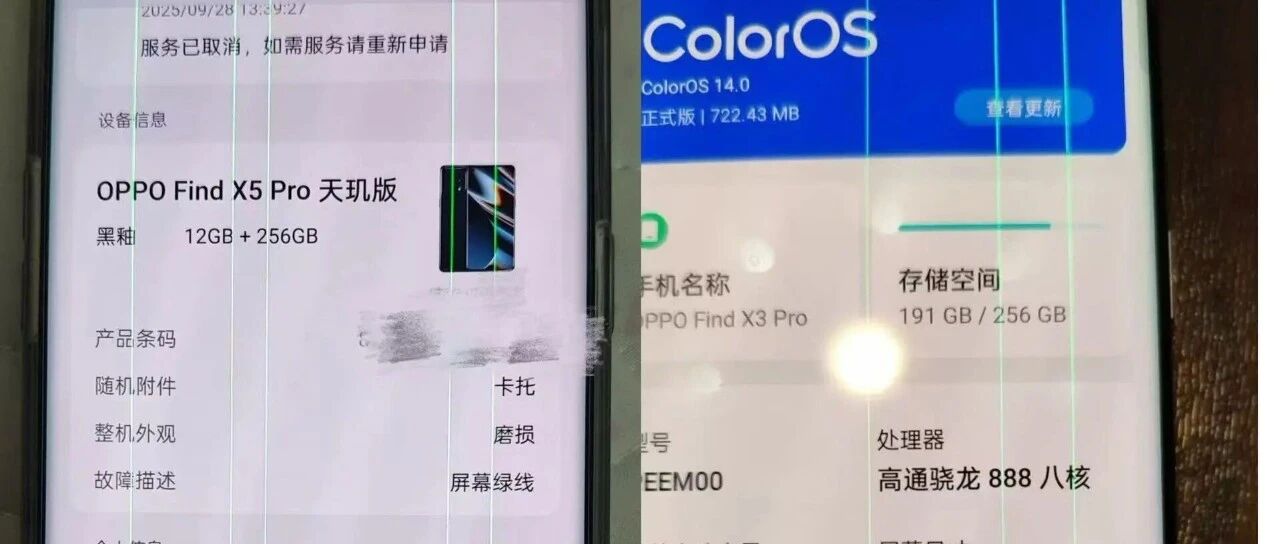
Core Viewpoint - The article discusses the recent consumer rights movement triggered by the "green line" issue in smartphone screens, affecting major brands like OPPO, Vivo, Samsung, Xiaomi, and Huawei, highlighting the dissatisfaction with after-sales service and warranty policies [3][4][14]. Group 1: Consumer Complaints and After-Sales Service - The "green line" issue is primarily a reliability problem with the screens, not due to user damage, leading to widespread consumer complaints [4][14]. - Different manufacturers have varying after-sales policies, with OPPO and Vivo offering around four years of warranty, while Xiaomi and Huawei typically provide one year [7]. - OPPO announced free screen replacements for devices with green line issues within four years of purchase, but consumers report difficulties in obtaining this service due to strict requirements like providing purchase invoices [7][8]. Group 2: Variability in Service Execution - There are inconsistencies in after-sales service across different locations, even within the same brand, leading to confusion and frustration among consumers [11][12]. - Some users have successfully obtained free replacements through persistent complaints, while others have faced high repair costs or outright denial of service [8][10]. - The article notes that even when brands have announced policies for free or discounted repairs, the execution often varies significantly, leading to a lack of transparency and fairness in the process [12][18]. Group 3: Technical Background of the Issue - The green line problem is a common defect in OLED screens, potentially caused by issues like chip detachment or circuit failure, and has been reported across various models from different manufacturers [14][16]. - The issue has been particularly prevalent in devices using specific batches of Samsung screens, which have been linked to the recent surge in complaints [16][17]. - The article emphasizes that the reliability of OLED screens can be affected by environmental conditions, with higher incidences reported during warmer months [17].

三星瑕疵屏幕引爆手机业“绿线门”,大厂售后按闹分配被吐槽
Di Yi Cai Jing· 2025-11-21 11:25
Core Viewpoint - The article discusses the consumer rights issues arising from the "green line" problem in smartphone screens, affecting major brands like OPPO, Vivo, Samsung, Xiaomi, and Huawei, highlighting the inconsistent after-sales service and warranty policies among these manufacturers [1][9]. Group 1: After-Sales Service Policies - OPPO and Vivo offer a warranty period of around four years, while Xiaomi, Huawei, and Honor typically provide one year of warranty service [3]. - OPPO announced free screen replacement for devices with green line issues within four years of purchase, while users with devices older than four years can receive discounted repair services [3]. - There are significant discrepancies in after-sales service experiences among OPPO users, with some receiving free replacements while others are denied service due to lack of purchase receipts [4][5]. Group 2: Consumer Complaints and Experiences - Many consumers report unreasonable demands for proof of purchase, such as requiring original receipts and packaging, which complicates the warranty claim process [4][8]. - Some users have successfully obtained free screen replacements after escalating complaints through various channels, despite being initially denied service [4][5]. - The article notes that even within the same brand, different service centers may apply different policies regarding the green line issue, leading to confusion and frustration among consumers [7][8]. Group 3: Technical Background of the Issue - The green line issue is a common fault in OLED displays, potentially caused by various factors such as chip failure or circuit issues [9][11]. - The problem has been linked to specific batches of screens supplied by Samsung, affecting multiple smartphone models [11]. - High temperatures and humidity are noted as conditions that can exacerbate the green line problem, with summer months being particularly problematic [12]. Group 4: Industry Response and Consumer Trust - There is a growing consumer expectation for a transparent and fair after-sales service system, especially in light of the marketing claims of high-quality products [13]. - The article emphasizes that the lack of a unified standard in after-sales service undermines consumer trust, as users feel that the service does not match the promised product quality [13].


集体“抗税”大势已成,游戏厂商终于迎来低抽成时代?
Sou Hu Cai Jing· 2025-11-21 09:27
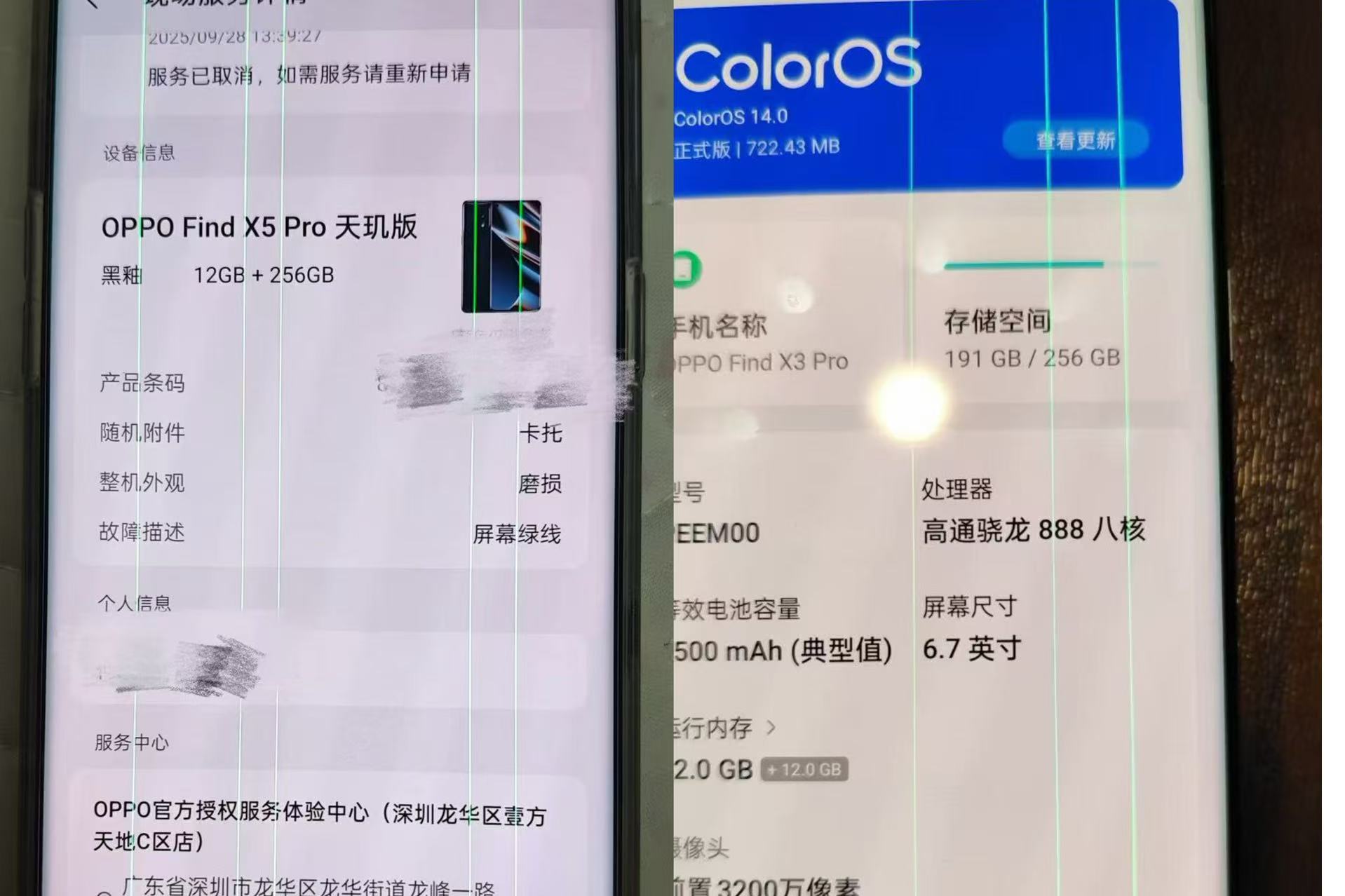
Core Insights - The "revenue share dispute" between Apple and Tencent has reached a resolution, with Apple agreeing to a 15% revenue share for in-app purchases in Tencent's mini-games, significantly lower than the standard 30% [2] - This new agreement signals a positive shift for game developers, who have long struggled with high revenue share percentages imposed by both iOS and Android platforms [2][8] - The change in revenue share is expected to lead to a more optimized and restructured industry ecosystem, providing game companies with greater autonomy in revenue distribution [2][8] Group 1: Apple and Tencent Agreement - Apple will implement a 15% revenue share for Tencent's in-app purchases starting in 2024, down from the usual 30% [2] - This agreement is seen as a significant concession by Apple and may influence Android channels to follow suit in reducing their revenue share percentages [8] - The new revenue share model is anticipated to enhance the competitive environment for game developers, allowing for fairer competition [8] Group 2: Industry Context and Reactions - The high revenue share model has historically placed a heavy burden on game developers, with Android channels often charging up to 50% [2][5] - Companies like NetEase have begun to push back against these high fees, with CEO Ding Lei expressing dissatisfaction with the 50% share in the Chinese Android ecosystem [5][6] - The emergence of alternative distribution methods, such as direct downloads and partnerships with third-party platforms, is becoming more common among leading game developers [6][9] Group 3: Future Implications for Channels - The traditional high revenue share model is becoming increasingly outdated, as game developers gain more negotiating power [9][11] - Mobile channel providers must reassess their strategies, moving from a reliance on traffic to offering unique services to maintain partnerships with game developers [11][13] - The industry is witnessing a shift towards a new channel era focused on user experience and ecosystem services, driven by innovations like cloud gaming and AI [13]



东兴证券晨报-20251121
Dongxing Securities· 2025-11-21 09:06
Core Insights - The report highlights a significant increase in electricity consumption in October, with a total of 857.2 billion kWh, representing a year-on-year growth of 10.4% [2] - The Chinese smartphone market experienced a notable recovery in October, with overall sales increasing by 8% year-on-year, driven by strong performances from brands like Apple and Xiaomi [5] - The airline industry showed positive trends in October, with an increase in passenger load factors and capacity deployment, indicating a favorable supply-demand relationship [7][8] Electricity Consumption - In October, the total electricity consumption reached 857.2 billion kWh, with the first industry consuming 12 billion kWh (up 13.2%), the second industry 568.8 billion kWh (up 6.2%), and the third industry 160.9 billion kWh (up 17.1%) [2] - Cumulative electricity consumption from January to October was 8,624.6 billion kWh, reflecting a year-on-year increase of 5.1% [2] Smartphone Market - The smartphone market in China saw a significant uptick in October, with Apple leading the market with a 37% year-on-year increase in sales, capturing a 25% market share [5] - Xiaomi ranked second for the first time in over a decade, with a 7% increase in sales, attributed to its diverse product offerings [5] - OPPO also contributed to market growth with a 19% increase in sales, while other brands like vivo and Honor experienced minor fluctuations [5] Airline Industry - Domestic airline capacity increased by approximately 3.6% year-on-year in October, with a corresponding rise in passenger load factors by about 1.8 percentage points [8] - International airline capacity saw a year-on-year increase of 14.3%, with a slight rise in load factors, indicating a healthy demand despite some overcapacity risks [9] - The report notes that the recent travel advisories may impact demand for certain international routes, particularly to Japan [10][11] Financial Sector - The report indicates a continued decline in social financing growth, with a year-on-year increase of 8.5% as of October, reflecting a slowdown in credit demand [14][15] - The total new RMB loans in October amounted to 220 billion, with a year-on-year decrease of 280 billion, highlighting a weak credit environment [16] - The M1 growth rate decreased to 6.2%, while M2 grew by 8.2%, indicating a trend towards "de-banking" in the financial sector [18]
有钱人终成眷属!霸王茶姬创始人迎娶400亿「光二代」千金;广汽和华为曾多次「吵架」!启境幕后细节曝光;大疆正式杀入3D打印赛道
雷峰网· 2025-11-21 00:44
Group 1 - The founder of Bawang Tea Ji, Zhang Junjie, is getting married to Gao Haichun, daughter of the founder of Trina Solar, with a combined market value of approximately 613 billion yuan for their respective companies [5][6] - DJI has officially entered the consumer-grade 3D printing market by investing in Smart Pie Technology, indicating a strategic move towards innovative technology [11] - Ant Group's CTO He Zhengyu stated that the Lingguang App and Alibaba's Qianwen App are not competitors but rather allies in the pursuit of AGI [8][9] Group 2 - Xiaomi's 500,000th car has rolled off the production line, achieving this milestone in just 602 days, marking a record for global new energy vehicle companies [15] - Star Motion Era has completed nearly 1 billion yuan in A+ round financing, led by Geely Capital, indicating strong investor confidence in the robotics sector [17][18] - Huawei and GAC have had multiple disputes during their collaboration on the Qijiang project, highlighting the challenges in automotive partnerships [20][21] Group 3 - NetEase reported a Q3 revenue of 28.4 billion yuan, with gaming revenue reaching 23.3 billion yuan, reflecting a year-on-year growth of 11.8% [23] - The new Xiangjie S9 MPV from Huawei's Hongmeng Zhixing will be launched, featuring a price range of 309,800 to 369,800 yuan, with a focus on high-end configurations [24][25] - Meizu Technology has clarified that it will not relocate its headquarters despite a building being listed for sale, emphasizing its commitment to its current location [27][28] Group 4 - Nvidia has warned that its potential $100 billion investment in OpenAI is not guaranteed, reflecting the uncertainties in large-scale tech investments [37][38] - Qualcomm has filed a complaint leading to a raid on Arm's Seoul office by South Korea's antitrust agency, indicating ongoing tensions in the semiconductor industry [38][39] - Google has introduced AI content detection features in its Gemini application, aiming to enhance transparency in AI-generated content [39][40]




隆利科技(300752) - 投资者关系活动记录表(2025年度深圳辖区上市公司投资者网上集体接待日活动)
2025-11-20 12:32
Financial Performance - In Q3, cash paid for purchasing goods and services was approximately 810 million, up from 630 million in the previous period [2] - Cash paid to employees in Q3 was about 160 million, compared to 110 million last year [2] - Tax expenses for the current period were approximately 59 million, an increase from 9.4 million in the previous period [2] LIPO Technology Development - LIPO technology has been successfully applied in products from major clients like Xiaomi and Vivo, indicating a strong market presence [3] - The company has made significant investments in LIPO technology since its layout in 2022, with production capacity and efficiency expected to improve over time [3][5] - The current production capacity for LIPO is gradually increasing, with some production lines operating at full capacity [4] Market Position and Competition - The market for LIPO technology is rapidly developing, with major brands like Apple leading the trend [3] - The company holds a first-mover advantage in LIPO technology, which is recognized by clients [3][4] - There are concerns regarding potential patent infringements from competitors, but the company asserts that it does not infringe on any patents [5][6] Cash Flow and Investment Management - In Q3, cash received from investments was 1.6 billion, while cash paid for investments was 1.8 billion, primarily for structured deposits [4] - The company is focused on enhancing the efficiency of its cash management strategies to improve financial performance [4][7] Future Outlook - The company anticipates that operational improvements and product launches will enhance profitability in Q4 [4][5] - There is a commitment to expanding partnerships and applications for LIPO technology across various sectors [5][7]

AI手机竞速智能应用,卡点在哪里?
2 1 Shi Ji Jing Ji Bao Dao· 2025-11-20 10:06
Core Insights - The focus of leading domestic smartphone manufacturers has shifted from performance metrics of large models to practical applications of edge AI, enabling rich functionalities in offline scenarios [1][2] - The rapid development of open-source large models, exemplified by DeepSeek, has facilitated the miniaturization of models, which is a fundamental reason for the enhanced capabilities of edge AI in smartphones this year [1][3] - AI smartphones are transitioning from being seen as a novelty to becoming a necessity, indicating a critical point in their evolution [1] AI Underlying Evolution - Recent breakthroughs in AI large models, including miniaturization, multimodality, and long-context expansion, have provided foundational conditions for edge applications in smartphones [1] - The integration of cloud and edge computing paradigms presents key opportunities for terminal manufacturers [2] - The miniaturization of models has significantly improved the feasibility of deploying powerful models on smartphones, allowing for enhanced offline AI functionalities [3][5] Application and Ecosystem Development - OPPO has identified three strategic pillars for AI: new computing, new perception, and new ecosystem [3] - The deployment of edge models has reduced memory requirements, allowing for more efficient use of high-end smartphones [4][5] - The evolution of AI applications is expected to enhance user experiences by integrating AI into traditional functionalities like voice assistants and photo management [6] Agent Ecosystem and User Interaction - The year 2025 is anticipated to be pivotal for the development of AI agents, with manufacturers focusing on embedding AI capabilities into smartphones [7] - The transition from basic smart assistants to more sophisticated systems with multi-agent architectures is underway, enabling complex tasks like food delivery and ride-hailing [7][8] - Challenges remain in user adaptation to AI-driven interactions, as many users are accustomed to traditional GUI methods [8] Market Dynamics and Consumer Behavior - The perception of AI capabilities in smartphones has historically been limited, impacting consumer purchasing decisions [9] - The success of AI features will depend on their ability to address user pain points and enhance convenience [9][10] - The competition among AI smartphones is shifting from technical specifications to the ability to create open and unified ecosystems that align with user interaction habits [10]