
南京银行

Search documents
债市波动拖累投资收益银行非息收入增长现分化
Zhong Guo Zheng Quan Bao· 2025-11-06 20:15
Core Viewpoint - In a low interest rate environment, banks are increasingly relying on non-interest income to drive revenue growth, with significant disparities in performance among different banks [1][2]. Non-Interest Income Overview - In the first three quarters of the year, 42 listed banks achieved a total non-interest income of 1.22 trillion yuan, an increase of over 300 billion yuan compared to the first half of the year and an increase of 583 billion yuan year-on-year [1]. - Only 18 banks reported a year-on-year increase in non-interest income, while 8 banks experienced a decline in investment income due to bond market volatility, and 31 banks reported negative fair value changes [1][2]. Fee and Commission Income - Among the non-interest income components, net fee and commission income, investment income, and fair value changes significantly impacted overall non-interest income [1]. - 27 banks reported a year-on-year increase in net fee and commission income, with 12 banks showing growth exceeding 10%. Notably, Changshu Bank and Ruifeng Bank saw increases of 364.75% and 162.66%, respectively [1][2]. Wealth Management and Consumer Finance - The recovery in domestic consumption and capital markets has created opportunities for wealth management and consumer finance, contributing to the growth of some banks' intermediary business income [2]. - China Bank attributed its growth in net fee and commission income to strong performance in agency, custody, and other entrusted businesses [2]. Impact of Bond Market Volatility - The bond market's fluctuations have negatively affected investment income and fair value changes for several banks. For instance, 8 banks reported a year-on-year decline in investment income, and 31 banks had negative fair value changes [2][3]. - For example, China Merchants Bank reported a 4.23% year-on-year decline in non-interest net income, with a 0.90% increase in net fee and commission income but an 11.42% decrease in other net income due to reduced bond and fund investment returns [2]. Regional Banks' Performance - Regional banks like Qingdao Bank also faced challenges, with a year-on-year decrease in investment income and fair value changes due to weaker bond market performance [3]. - Conversely, some banks, such as China Construction Bank and Changsha Bank, reported over 100% year-on-year growth in investment income [3]. Future Outlook - Analysts suggest that the bond market is likely to remain volatile in the short term, with various factors creating disturbances [4]. - The overall liquidity in the market is expected to remain favorable for the bond market, but the performance of risk assets may weaken the attractiveness of bonds [4][5].
城商行“王座”易主后,北京银行还没放弃
Hua Er Jie Jian Wen· 2025-11-06 11:21
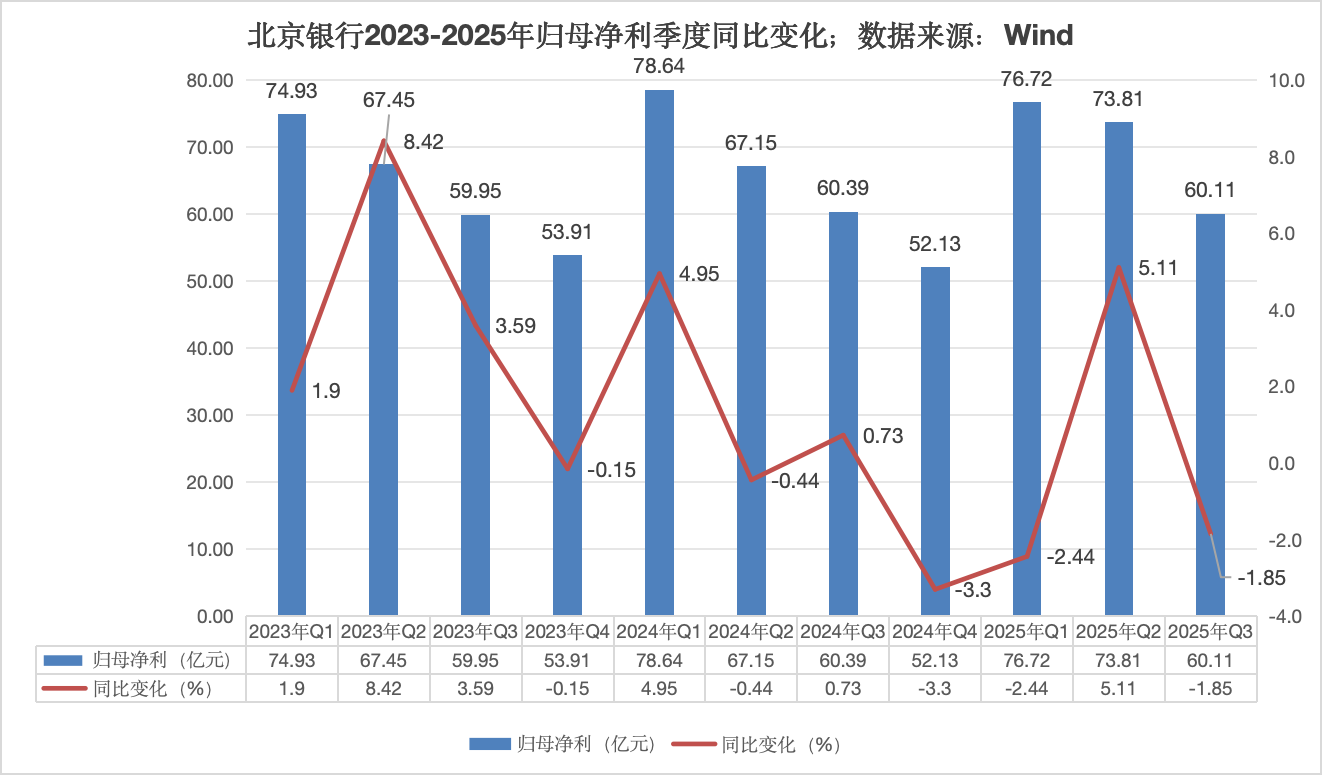
Core Viewpoint - Beijing Bank has reported a mixed performance in the first three quarters, with operating income and net profit showing slight declines, indicating challenges in maintaining growth amidst competitive pressures from peers like Jiangsu Bank [1][4][16]. Financial Performance - For the first three quarters, Beijing Bank's operating income was 51.588 billion yuan, and net profit attributable to shareholders was 21.064 billion yuan, with year-on-year growth rates of -1.08% and 0.26%, ranking 31st and 33rd among 42 listed banks in A-shares [1]. - In Q3, both operating income and net profit declined by 5.71% and 1.85% year-on-year, respectively, marking a significant downturn in performance [4]. - The bank's asset scale grew by 15.89% year-to-date, ranking third among A-share listed banks, but this growth was primarily driven by financial investments rather than traditional lending [6]. Asset Quality and Risk Management - The non-performing loan ratio decreased by 0.02 percentage points to 1.29%, indicating improvements in asset quality [1][14]. - The bank's capital adequacy ratio stood at 12.83%, which, while above the regulatory requirement of 8%, is still below the average of listed banks [9]. Strategic Initiatives - Since the appointment of the new chairman in 2022, Beijing Bank has initiated a series of strategic transformations, focusing on digitalization and regional collaboration, particularly in the Yangtze River Delta [2][20]. - The bank aims to enhance its competitive edge by developing specialized financial services for "specialized, refined, and innovative" enterprises, particularly in technology finance [18][23]. Regional Expansion Efforts - Beijing Bank has been actively pursuing growth in the Yangtze River Delta, with plans to establish a regional approval center and strengthen partnerships with local banks [21][24]. - Despite these efforts, the bank's loan growth in the Yangtze River Delta remains below that of local competitors, indicating challenges in gaining market share [24]. Conclusion - Overall, while Beijing Bank has made strides in asset quality and strategic initiatives, it faces significant challenges in revenue growth and competitive positioning, particularly against stronger peers in the Yangtze River Delta region [25].



城商行板块11月6日跌0.11%,厦门银行领跌,主力资金净流出6.08亿元
Zheng Xing Xing Ye Ri Bao· 2025-11-06 08:51
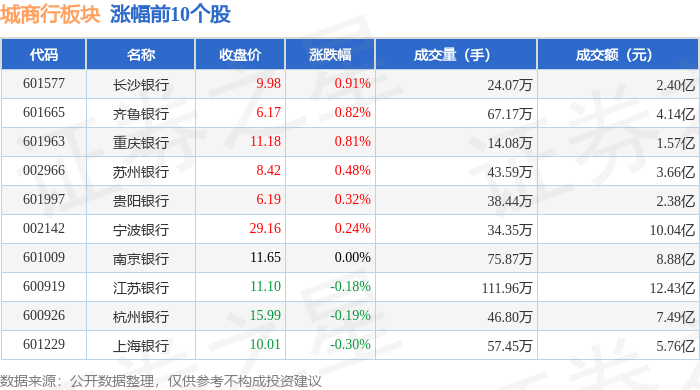
Core Viewpoint - The city commercial bank sector experienced a slight decline of 0.11% on November 6, with Xiamen Bank leading the drop, while the overall market indices showed positive movements with the Shanghai Composite Index up by 0.97% and the Shenzhen Component Index up by 1.73% [1][2]. Group 1: Market Performance - The closing price of Xiamen Bank was 7.16, reflecting a decrease of 2.59% with a trading volume of 539,700 shares and a transaction value of 387 million yuan [2]. - Other notable banks included Changsha Bank, which closed at 9.98 with a rise of 0.91%, and Qilu Bank, which closed at 6.17 with an increase of 0.82% [1]. - The city commercial bank sector saw a net outflow of 608 million yuan from major funds, while retail investors contributed a net inflow of 473 million yuan [2][3]. Group 2: Individual Bank Performance - Beijing Bank had a net inflow from major funds of 20.80 million yuan, while it experienced a net outflow from retail investors of 30.79 million yuan [3]. - Chongqing Bank recorded a net inflow of 11.91 million yuan from major funds but faced a net outflow of 12.20 million yuan from retail investors [3]. - Jiangsu Bank had a net inflow of 202.55 million yuan from major funds, while retail investors contributed a net inflow of 3.33 million yuan [3].
美元理财,不香了?
Sou Hu Cai Jing· 2025-11-06 08:18
Core Viewpoint - The Federal Reserve's recent interest rate cut has led to a decline in dollar deposit rates across various banks, indicating a broader trend of decreasing returns on dollar-denominated investments [1][3][7]. Group 1: Interest Rate Adjustments - The Federal Reserve announced a 25 basis point rate cut, bringing the federal funds rate target range to 3.75% to 4.00% [1]. - Xi'an Bank adjusted its dollar deposit rates, with 1-month, 3-month, 6-month, 1-year, and 2-year rates now at 3.2%, 3.6%, 3.98%, 3.98%, and 3.6% respectively, all entering the "3" range [1]. - Nanjing Bank also lowered rates for certain dollar deposit products, with rates for 6-month and 1-year products dropping from 3.3% and 3.6% to 3.2% and 3.3% respectively [2]. Group 2: Market Trends and Predictions - The overall decline in dollar deposit rates is attributed to the Federal Reserve's easing monetary policy, which aims to reduce banks' funding costs [3]. - Analysts predict that the Fed may continue to lower rates, potentially leading to further decreases in dollar deposit rates in the coming years [3]. - The average annualized yield for dollar cash management products has decreased to 3.879%, reflecting the impact of the Fed's rate cuts [6]. Group 3: Investment Strategies - With the decline in dollar deposit attractiveness, experts recommend diversifying investments rather than relying solely on dollar deposits, suggesting a mix of dollar bond funds and other financial products [7]. - The report indicates that by early 2025, the dollar may still be the preferred currency for deposits, but other currencies like the euro and yen may surpass it in yield [8]. - Investors are advised to consider both interest income and exchange rate fluctuations to maximize returns from foreign currency deposits [8].
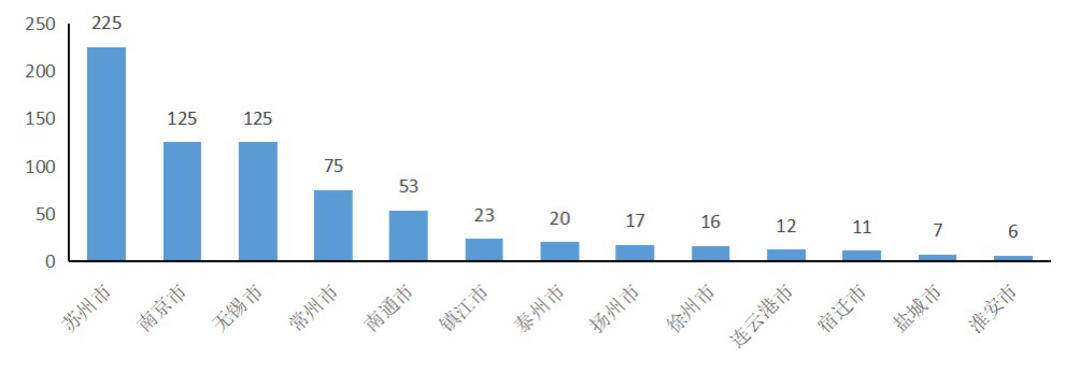
江苏共有上市公司715家
Sou Hu Cai Jing· 2025-11-06 06:52
Group 1 - As of October 31, 2025, Jiangsu has a total of 715 listed companies, including 220 on the Shanghai Stock Exchange Main Board, 114 on the Sci-Tech Innovation Board, 125 on the Shenzhen Stock Exchange Main Board (including one pure B-share), 203 on the Growth Enterprise Market, and 53 on the Beijing Stock Exchange [1] - In October 2025, Jiangsu added one new listed company (Changjiang Nengke), bringing the total number of new listings in 2025 to 21 [1] - The total market capitalization of the 714 listed companies in Jiangsu is 85,985.35 billion yuan, accounting for 13.12% of the total number of A-share listed companies and 8.01% of their total market capitalization [3] Group 2 - As of October 31, 2025, the companies in Jiangsu with a market capitalization exceeding 100 billion yuan (excluding the Beijing Stock Exchange) include Hengrui Medicine, WuXi AppTec, Jiangsu Bank, Guodian Nari, Huatai Securities, Nanjing Bank, Huidian Co., S. Hengli Hydraulic, Dongshan Precision, Xugong Machinery, Tianfu Communication, and Yanghe Brewery [5] - The bottom ten ranked A-share listed companies in Jiangsu (excluding the Beijing Stock Exchange) are Yangzi New Materials, Nanwei Co., Guangge Technology, Xuelang Environment, Zhongshe Co., *ST Hengjiu, Ailong Technology, Jinpu Garden, *ST Tianlong, and *ST Suwu [7] - In October 2025, Jiangsu's A-share listed companies had a total of 3 financing events, raising a total of 1.269 billion yuan, while the total financing events for the year reached 49, raising a total of 61.438 billion yuan [7]






路博迈中债优选投资级信用债指数证券投资基金基金份额发售公告
Zhong Guo Zheng Quan Bao - Zhong Zheng Wang· 2025-11-06 03:28
Core Points - The fund, named "Loomis Sayles China Bond Select Investment Grade Credit Index Securities Investment Fund," has been approved for registration by the China Securities Regulatory Commission (CSRC) on July 21, 2025 [1] - The fund is a bond-type fund, expected to have a risk and return profile higher than money market funds but lower than mixed and equity funds [1][20] - The fund will be publicly offered from November 10, 2025, to February 9, 2026, through various sales channels [8][31] Fund Structure - The fund is categorized as a bond-type securities investment fund and operates as a contractual open-end fund [29] - The fund's share issuance price is set at RMB 1.00 per share [29] - The minimum total number of shares to be raised is 200 million, with a total fundraising amount of at least RMB 200 million [35] Subscription Details - The fund will accept subscriptions only from qualified institutional investors and qualified foreign investors, excluding individual investors [2][32] - The minimum initial subscription amount is RMB 1 for institutional investors and RMB 100 for subscriptions through the direct sales center [40] - The total subscription amount during the fundraising period is capped at RMB 6 billion, and if this limit is reached, the fundraising will close early [35] Investor Requirements - Investors must provide valid tax residency declarations and other necessary documentation to confirm their eligibility [5][26] - The fund management has the right to refuse subscriptions from non-qualified investors, including U.S. taxpayers and those on sanction lists [3][4][5] - Investors must ensure that the funds used for subscription are legally sourced and free from any legal or contractual encumbrances [10][12] Fund Management - The fund management is conducted by Loomis Sayles Fund Management (China) Co., Ltd., with Nanjing Bank as the custodian [1] - The fund will utilize sampling replication and dynamic optimization methods to track the performance of the underlying index [20] - The fund management retains the right to adjust the subscription process and investor qualifications as necessary [19][26]


中泰期货晨会纪要-20251106
Zhong Tai Qi Huo· 2025-11-06 01:29
1. Report Industry Investment Ratings No relevant content provided. 2. Core Views of the Report - The A - share market showed a pattern of opening low and closing high, with the storage and new - energy sectors leading the gains. The domestic economic data in October is expected to face a decline in pressure, and the monetary policy is expected to be further loosened in the fourth quarter [9]. - For the black industry, the medium - term (winter) view remains to be bearish on rallies. The coal - coke prices may continue to fluctuate in the short term, and the prices of iron alloys are recommended to be shorted on rallies in the medium - term [14][15][17]. - In the non - ferrous and new materials sector, the demand for lithium carbonate continues to support the price, and the zinc price can be considered to be shorted on rallies. Industrial silicon and polysilicon are expected to trade within a range [20][21][24]. - In the agricultural products sector, cotton and sugar are under supply pressure, eggs may be strong in the short - term but the increase is limited, and the prices of other products such as corn, jujubes, and live pigs are affected by various factors and need attention [27][30][33]. - In the energy and chemical sector, the oil price is expected to fluctuate, and the prices of various chemical products such as plastics, rubber, and methanol are affected by factors such as supply and demand and cost, with different trends and trading suggestions [39][42][46]. 3. Summary by Relevant Catalogs 3.1 Macro Information - China has announced specific measures to implement the consensus of the China - US economic and trade consultations in Kuala Lumpur, including tariff adjustments and the relaxation of export controls on some US entities [6]. - The US Supreme Court is debating the legality of Trump's large - scale tariff measures, and the results may be announced in December. The US federal government's "shutdown" has broken the historical record, which may reduce the economic growth rate in the fourth quarter [6][8]. - The ADP employment and service industry PMI in the US in October were better than expected, which added uncertainty to the Fed's decision on whether to cut interest rates in December [8]. - Guizhou Moutai has launched a second - round share repurchase and announced a mid - year profit distribution plan. The scope of institutions participating in the stock repurchase and increase loan business is expected to expand [7]. 3.2 Stock Index Futures - The A - share market opened low and closed high, with the storage and new - energy sectors leading the gains. The Shanghai Composite Index rose 0.23% to 3969.25 points, and the daily trading volume was 1.89 trillion yuan. The domestic economic data in October is expected to face a decline in pressure, and the monetary policy is expected to be further loosened in the fourth quarter [9]. 3.3 Treasury Bond Futures - The capital market is balanced and loose, and the price is stable. The treasury bond futures opened high and closed low, showing a seesaw effect with the A - share market. The symbolic meaning of the central bank's bond - buying is more positive than the actual scale, and the monetary policy is expected to be further loosened in the fourth quarter [11]. 3.4 Black Industry 3.4.1 Iron Ore and Steel - The spot prices of steel and iron ore fluctuated. The prices were affected by factors such as environmental protection restrictions and steel mill maintenance. In the medium - term, the winter market may show a pattern of first rising and then falling, and the steel price is expected to have limited rebound space. The medium - term view is to be bearish on rallies [12][13][14]. 3.4.2 Coal - Coke - The short - term iron - making volume has a downward space, and the coal - coke prices continue to fluctuate at a high level. In the short - term, the supply of coking coal is expected to shrink, but the weakening demand for steel during the off - season will restrict the price [15]. 3.4.3 Ferroalloys - Affected by the price increase of动力煤 and lump coal, the cost of ferrosilicon is expected to increase, but the black sector is weak, and the price is recommended to be shorted on rallies in the medium - term [17]. 3.5 Non - ferrous and New Materials 3.5.1 Zinc - The zinc price fluctuated. The import of refined zinc in China decreased in September. The downstream demand is cautious, and the price can be considered to be shorted on rallies [20]. 3.5.2 Lithium Carbonate - The demand for lithium carbonate continues to increase, and the supply increase is less than the demand increase. Although the expected resumption of production of the Jiaxiawo lithium mine affects the market sentiment, the strong demand in the short - term still supports the price [21]. 3.5.3 Industrial Silicon - The contradiction of industrial silicon is not prominent. It is affected by the macro - environment and coal prices. It is expected to trade within a range, and small - position long positions can be tried at the lower end of the range [24]. 3.5.4 Polysilicon - The spot trading of polysilicon is in a stalemate. The market is affected by policies and fundamentals, and it is expected to trade within a range [25]. 3.6 Agricultural Products 3.6.1 Cotton - The supply of cotton is relatively loose, and the demand is weak. The price is expected to fluctuate at a low level, and it is recommended to wait and see [27]. 3.6.2 Sugar - The global sugar supply is in surplus, and the domestic sugar price is affected by factors such as import cost and domestic production cost. It is recommended to operate with a short - selling strategy or wait and see [30]. 3.6.3 Eggs - The futures price of eggs is strong due to the expectation of "capacity reduction". The spot price may be strong in November, but the increase is limited. It is recommended to operate according to the range - trading idea [33]. 3.6.4 Apples - The acquisition of apples is in the middle - late stage, and the price is stable. The market is expected to be strong with fluctuations [35]. 3.6.5 Corn - The spot price of corn has rebounded to some extent, but the supply pressure is still accumulating. It is recommended to wait and see [36]. 3.6.6 Jujubes - The spot price of jujubes in the sales area is weak, which affects the new - jujube ordering price. It is recommended to wait and see [37]. 3.6.7 Live Pigs - The supply pressure of live pigs continues, and the spot price is expected to fluctuate weakly. It is recommended to wait and see in the short - term [38]. 3.7 Energy and Chemical Industry 3.7.1 Crude Oil - The US commercial crude oil inventory has increased, and the oil price is under pressure. The OPEC+ measure to delay the increase in production in the first quarter has limited impact, and the oil price is expected to fluctuate [39]. 3.7.2 Fuel Oil - The fuel oil price fluctuates with the oil price. The supply is loose, and the demand is flat. The short - term trading focus is on the impact of sanctions on the supply [41]. 3.7.3 Plastics - The supply pressure of polyolefins is large, and the price is expected to fluctuate weakly. It is recommended to adopt a bearish - on - rallies trading idea [42]. 3.7.4 Rubber - The raw material price in the Yunnan region of China has slightly decreased, and the price in Thailand is firm. The fundamental situation is still slightly weak, and it is recommended to hold short - call option strategies [43]. 3.7.5 Synthetic Rubber - The price of synthetic rubber is expected to continue to fluctuate weakly due to the decline in raw material prices. It is recommended to be cautious about going long [44]. 3.7.6 Methanol - The methanol market fluctuates greatly due to factors such as the arrival of Iranian goods and potential plant maintenance. The supply pressure is large, and it is recommended to be bearish on rallies in the near - term and wait for a rebound in the far - term [46]. 3.7.7 Caustic Soda - The spot price of caustic soda is weak, and the supply exceeds demand. The price is expected to fluctuate, and it is recommended to adopt a range - trading idea [48]. 3.7.8 Asphalt - The asphalt price is expected to have a larger fluctuation range due to factors such as the change in oil price focus, production increase, and geopolitical risks [48]. 3.7.9 Polyester Industry Chain - The polyester industry chain lacks a clear driving direction and is expected to follow the cost - end movement. It is recommended to pay attention to the 1 - 5 reverse spread opportunity of ethylene glycol [50]. 3.7.10 Liquefied Petroleum Gas (LPG) - The supply of LPG is abundant, and the demand is affected by different factors. The price is expected to be bearish in the medium - long term [52]. 3.7.11 Pulp - The pulp spot price is stable, and the market has rigid demand. The price is expected to be supported but has limited upside space. It is recommended to establish long positions at low prices after observing the port inventory and spot trading [53]. 3.7.12 Logs - The spot trading of logs is weak, and the supply pressure exists. The price is expected to be under pressure [54]. 3.7.13 Urea - The spot price of urea has increased, and the futures price fluctuates strongly. It is recommended to adopt a range - trading idea [55].

债市成拖累?多家银行非息收入承压,央行重启国债买卖有何利好
Xin Lang Cai Jing· 2025-11-06 00:38
Core Viewpoint - The bond market's volatility has significantly impacted the non-interest income and overall revenue growth of listed banks in China during the first three quarters of the year [1][3][7]. Group 1: Non-Interest Income Decline - Among 42 A-share listed banks, 24 reported a year-on-year decline in non-interest income, with 8 banks experiencing a drop in net investment income [1][2]. - For instance, China Merchants Bank reported a 4.23% decrease in non-interest net income, primarily due to reduced bond and fund investment returns [3][4]. - Ping An Bank's revenue fell by 9.8%, influenced by declining loan rates and market volatility affecting non-interest income [3]. Group 2: Fair Value Changes - The significant drop in fair value changes has also been a major factor in revenue growth decline, with China Merchants Bank reporting a cumulative loss of 8.827 billion yuan in fair value changes for the first three quarters [4]. - Other banks like Everbright Bank and Huaxia Bank also reported losses in fair value changes, amounting to 4.982 billion yuan and 4.505 billion yuan, respectively [4]. - Analysts noted that fair value changes are highly influenced by bond market fluctuations, with smaller banks being more affected due to a higher proportion of FVTPL assets [4]. Group 3: Future Outlook and Central Bank Actions - The People's Bank of China announced the resumption of government bond trading operations, which is expected to help lower bond yields and benefit banks' non-interest income [11][12]. - Some bank executives expressed uncertainty about future non-interest income growth due to ongoing market volatility, suggesting that the bond market may remain in a fluctuating state [9][10]. - Analysts believe that the resumption of government bond trading will provide a safety net for the bond market, potentially stabilizing yields and supporting both bond and equity markets in the long term [12][13].






四大证券报精华摘要:11月6日
Xin Hua Cai Jing· 2025-11-06 00:12
Group 1: Market Trends and Investment Strategies - The A-share market is experiencing increased volatility, with a focus on style rebalancing and a "dumbbell" investment strategy being adopted by public funds [1] - Fund managers are highlighting investment opportunities in sectors such as engineering machinery, chemicals, and non-ferrous metals, anticipating revenue growth due to recovering overseas demand [1] - Analysts suggest that the market is still in a slow upward channel, despite short-term fluctuations, with a potential for style switching in November [3][9] Group 2: Corporate Financial Activities - The stock repurchase and increase loan business is expected to expand to city commercial banks, with several banks already signing loan commitment letters with listed companies [2] - A total of 1,035 companies have announced interim dividends this year, with the total amount exceeding 735.69 billion yuan, indicating a growing trend in mid-term dividends among industry leaders [11] - The Hong Kong Stock Exchange reported record high revenues and net profits for the first three quarters, driven by increased market activity and strong new listings [5] Group 3: Industry-Specific Developments - The power equipment sector is maintaining high prosperity due to increased investment in power grids and the growing demand for AI-related power solutions [4] - The pig farming industry is undergoing a deep adjustment, with calls for capacity control and self-discipline to navigate challenges such as overcapacity and high debt levels [6][7] - The tourism sector is seeing a surge in activity following the announcement of the longest Spring Festival holiday in history, leading to increased interest in travel-related stocks [12] Group 4: Brokerage Performance - A total of 42 listed brokerages reported a net income of 186.86 billion yuan from proprietary trading in the first three quarters, reflecting a year-on-year increase of 43.83% [14]
外资A股最新持仓曝光,行业龙头仍是“聪明钱”的最爱
Di Yi Cai Jing· 2025-11-05 23:49
Group 1 - The A-share market has significantly rebounded since the third quarter, with active trading and foreign capital continuing to buy aggressively [1][2] - Leading companies such as Kweichow Moutai, Ping An Insurance, and Wuliangye have attracted over 80 foreign institutional investors each, indicating strong foreign interest in industry leaders [1][2] - As of the end of September, the top three foreign-held A-shares by market value are CATL, Kweichow Moutai, and Midea Group, with values of 265.66 billion, 88.14 billion, and 71.65 billion respectively [1][2] Group 2 - Foreign investment is particularly focused on industry leaders, "Chinese state-owned enterprises," and bank stocks, with major banks holding significant foreign shares [2][3] - As of September 30, 2023, 32 foreign investors collectively held 2.36 billion shares of Nanjing Bank, while 42 foreign investors held 1.60 billion shares of Ningbo Bank [2] - A total of 42 A-shares have foreign holdings exceeding 10 billion, including Zijin Mining, Hengrui Medicine, BYD, and Fuyao Glass [2] Group 3 - The number of foreign investors in China Shipbuilding has increased by over 40% from the end of June, reaching 68 by the end of September [3] - Other companies such as Kweichow Moutai, BYD, and Yangtze Power have also seen an increase in foreign holdings compared to the end of June [3] Group 4 - Foreign investors have shown a preference for specific stocks, with UBS significantly increasing its stake in RuiNeng Technology, becoming the third-largest shareholder by the end of September [4][5] - UBS held 1.15 million shares of RuiNeng Technology, a 130.2% increase from the previous quarter, while Goldman Sachs, JPMorgan, and Merrill Lynch entered the top ten shareholders [5] Group 5 - RuiNeng Technology's stock has seen a significant rise, reaching a peak of 24.43 yuan, with a cumulative increase of over 40% since mid-October [7] - Despite a 12.95% year-on-year revenue growth, RuiNeng Technology's net profit decreased by 32.73% to 40.75 million [7] Group 6 - Foreign investors are optimistic about the long-term performance of the A-share market, with UBS forecasting a 6% year-on-year growth in total A-share earnings by 2025 [8] - UBS noted that 60% of industries recorded year-on-year profit growth in the third quarter, with sectors like non-ferrous metals and non-bank financials achieving over 30% growth [8] Group 7 - Goldman Sachs predicts a sustained upward trend in the Chinese stock market, expecting major indices to rise by about 30% by the end of 2027 [9] - Factors supporting this bullish outlook include favorable policy developments, accelerating earnings growth, and strong capital inflows [9] Group 8 - As the bull market unfolds, Goldman Sachs advises investors to shift their strategy from "selling on highs" to "buying on lows" [10]



