卫龙

Search documents
年销10亿仍然破产,自嗨锅营销窟窿有多大?
3 6 Ke· 2026-02-11 13:34
Core Viewpoint - The company "自嗨锅" (Self-Heating Hot Pot) is facing significant challenges, including declining sales, negative consumer sentiment, and operational losses, leading to its potential bankruptcy and a shift in consumer preferences towards more convenient and appealing food options [2][6][32]. Financial Performance - In 2020, "自嗨锅" achieved sales close to 1 billion, but still reported a net loss of 1.51 billion due to high marketing expenses [9][11]. - By 2022, the company's revenue dropped by 17.34% to 819.7 million, with online sales declining by 41.54% [11]. - The marketing expenses were significantly reduced from 246 million in 2021 to below 30 million in 2022, which helped improve profit margins [9][11]. Consumer Sentiment - Consumer feedback has turned negative, with complaints about product quality, including issues like unappetizing flavors and high prices, leading to a loss of brand loyalty [17][19][21]. - The perception of "自嗨锅" as overpriced and underwhelming in taste has become prevalent among consumers, impacting its market position [21][23]. Market Trends - The self-heating hot pot market is shrinking, with competitors like "卫龙" and "统一企业" also withdrawing from the market due to changing consumer demands [32][35]. - The rise of pre-packaged meals and the convenience of delivery services have further eroded the unique selling proposition of "自嗨锅" [38][43]. Product Development - "自嗨锅" has struggled to innovate and keep up with evolving food trends, failing to introduce new flavors or healthier options that resonate with current consumer preferences [20][43]. - The brand's attempts at cross-promotions and collaborations have not generated significant consumer interest, indicating a disconnect with its target audience [26][32]. Operational Challenges - The company is burdened with debt and legal issues, complicating its ability to recover and adapt to market changes [16][32]. - Regulatory challenges, such as bans on carrying self-heating hot pots on trains, have further limited its market reach [14][32].

港股开盘:恒指涨0.65%、科指涨0.82%,科网股、有色金属及汽车股走高,新消费概念股走势分化,乐欣户外IPO首日高开逾96%
Jin Rong Jie· 2026-02-10 01:34
Market Overview - The Hong Kong stock market opened higher on February 10, with the Hang Seng Index rising by 0.65% to 27,202.96 points, the Hang Seng Tech Index up by 0.82% to 5,461.96 points, and the National Enterprises Index increasing by 0.64% to 9,226.56 points [1] - Major technology stocks saw gains, with Alibaba up 1.14%, Tencent Holdings up 0.54%, JD Group up 1.2%, Xiaomi up 0.85%, NetEase up 2.35%, and Kuaishou up 1.01% [1] - The new consumption concept stocks showed mixed results, with Pop Mart rising over 2% and Weilon falling over 2% [1] Corporate News - Pop Mart (09992.HK) expects global sales of all IP products to exceed 400 million units by 2025, with THE MONSTERS product line projected to sell over 100 million units [2] - Youjia Innovation (02431.HK) has secured a contract with a leading domestic automotive brand to provide several key products, including the iPilot 4 Plus driving controller and driver monitoring systems [2] - Ruifeng New Energy (00527.HK) signed an investment framework agreement to build the largest inference computing cluster park in North China, with a total investment of approximately RMB 240 billion [2] Earnings Forecasts - Hong Kong Telecom (06823.HK) reported a 5% increase in total revenue to HKD 36.553 billion for 2025, with EBITDA growing by 4% to HKD 14.234 billion and net profit attributable to shareholders increasing by 4% to HKD 5.286 billion [4] - China Nuclear International (02302.HK) anticipates revenue for 2025 to exceed HKD 2.46 billion, with gross profit expected to reach at least HKD 260 million, driven by increased uranium trading volumes [4][6] - Mingyuan Cloud (00909.HK) expects a net profit of approximately HKD 26.9 million to HKD 32.8 million for 2025, representing a growth of about 114% to 117% [4] - China Oriental Education (00667.HK) forecasts a 46% to 51% increase in net profit for 2025 [5] Market Dynamics - Several companies are actively repurchasing shares to boost market confidence, including Xiaomi Group-W (01810.HK), which repurchased 1.5 million shares for HKD 52.7268 million, and Geely Automobile (00175.HK), which repurchased 1.408 million shares for HKD 23.4587 million [8] - China Smart Energy (01004.HK) announced a share consolidation effective February 10, pending approval from the Stock Exchange [8] Institutional Insights - Galaxy Securities noted a significant "Spring Festival effect" in the Hong Kong market, with optimistic market sentiment and early capital positioning [10] - Dongwu Securities indicated that while short-term challenges remain, the market should be monitored for overseas risks and domestic AI catalysts [10] - Bank of China International believes that after the recent negative factors have subsided, market sentiment is at a low point, with potential rebounds in the AI multi-modal industry chain [10]
舌尖上崛起2500亿大产业
Zhong Guo Jing Ji Wang· 2026-02-10 01:08
Core Insights - The food industry in Luohe, Henan Province, has grown from 200 billion to 250 billion yuan during the 14th Five-Year Plan period, accounting for 1/4 of the province's food industry and 1/40 of the national total, becoming a crucial support for the province's trillion-yuan food industry cluster [1] - The Central Plains Food Laboratory has established a collaborative innovation system to drive technological breakthroughs and support local food industry innovation, achieving over 40 key technology breakthroughs [1][3] - The laboratory's "order-based cooperation" model effectively connects scientific research with industry needs, leading to significant advancements in food technology and production efficiency [2][3] Industry Development - The Central Plains Food Laboratory has provided technical services to over 280 companies and signed substantial cooperation agreements with 42 firms, positioning itself as an innovation engine for the Luohe food industry [3] - The establishment of a full-chain service system in Luohe facilitates the transformation of scientific research results into market-ready products, with an 80% success rate for industrialization after pilot testing [4] - Luohe has set up a 50 million yuan technology financial risk compensation fund to address financing challenges for startups, issuing over 3.4 billion yuan in loans to technology-based enterprises [4] Talent and Innovation - Luohe has implemented a "Talent New Policy" to support research personnel, investing over 100 million yuan annually to attract talent and enhance research capabilities, resulting in a multi-tiered talent structure led by 14 academicians [5] - The local government aims to strengthen the role of the laboratory and improve the "R&D—Pilot Testing—Industrialization" service chain to ensure more food technology achievements are realized in Luohe, contributing to national food security and diverse consumer needs [6]
零食月度渠道跟踪
2026-02-02 02:22
Company and Industry Summary Company: Wei Long Key Financial Performance - Wei Long's combined assessment target for January-February 2026 is approximately 1.6 billion yuan, with 70%-80% completion achieved so far, and an expected shipment volume of about 400 million yuan in February, leading to a target achievement rate of over 90% [1][3] - Overall sales growth in January 2026 reached approximately 41%, with the shipment period extended to 25 days compared to the previous year [2][3] - The sales revenue for the konjac category in January 2026 was about 710 million yuan, showing a significant year-on-year increase from 470 million yuan [8] Product Performance - The spicy strips category saw a year-on-year growth of about 15%, while the konjac and vegetable categories grew over 60% [2][4] - Gift box products performed better than expected during the 2026 Spring Festival, with popular price ranges from 9.9 yuan to 59.9 yuan, particularly the 29.9 yuan gift box [5] - The company plans to increase revenue from noodle products by approximately 5% in 2026, supported by new product launches and sales strategies [11] Marketing and Sales Strategies - Wei Long increased its market investment expenses by about 20% in January-February 2026 compared to the fourth quarter, focusing on advertising for konjac products [9] - The company is enhancing its sales strategies in traditional distribution channels and KA stores, with a focus on improving conversion rates and encouraging the sale of higher-priced products [6] - New SKUs, such as the porcini product, have been introduced into leading snack channels, contributing to the sales target [7] Competitive Landscape - Wei Long and its competitor Yan Jin increased their marketing expenditures during the Spring Festival, with Yan Jin's investment being notably higher [9] - The overall market share for the konjac snack market in 2025 was approximately 8 billion yuan, with Wei Long, Yan Jin, and Que Ya Chi holding over 65% of the market share [18] Future Outlook - The company anticipates that the sales of gift box products will normalize in the coming quarters, with lower-priced boxes maintaining stable demand while higher-priced boxes may not sustain high sales [13] - Wei Long plans to strengthen its focus on the spicy strips category, but the investment strategy will depend on the growth of high-performing categories like konjac [14] Additional Insights - The average daily sales level for the "Hao Xiang Lai" stores in North China was about 400,000 yuan in Q4 2025, reflecting an 8% year-on-year decline, though the decline has narrowed [20][21] - The company is exploring ways to improve the sales performance of its seaweed products, with plans to increase market penetration and promotional efforts [17] This summary encapsulates the key points from the conference call, highlighting Wei Long's financial performance, product strategies, competitive landscape, and future outlook in the snack food industry.
春节消费前瞻
Sou Hu Cai Jing· 2026-02-01 11:23
Group 1: Consumer Market Overview - The consumer market in 2025 shows a complex situation with per capita disposable income reaching 43,300 yuan, a year-on-year increase of 5.0%, providing a foundation for consumption [1][11] - Social retail growth has been declining since June, with December showing a single-month growth of only 0.9% [1][11] - The consumer confidence index has risen to 90.3 but remains below pre-pandemic levels, indicating that consumer confidence still needs to be restored [1][16] Group 2: Tourism Industry - The tourism market performed well, with total tourism revenue during the National Day holiday reaching 809 billion yuan, a year-on-year increase of 15%, and the number of tourists reaching 880 million, up 16% [1][14] - November's passenger volume has returned to the same level as in 2019, indicating that travel has become an essential part of life [1][14] Group 3: Food and Beverage Industry - The food and beverage industry experienced a cumulative growth of 3.2% in 2025, with a noticeable slowdown in growth after June [2][17] - The CPI in December increased by 0.8%, indicating that the downward trend in prices has been halted [2][19] - The industry is facing challenges, including price wars and a decline in consumer spending, particularly in the restaurant sector [2][17] Group 4: Textile and Apparel Industry - The textile and apparel industry benefits from increased demand for winter clothing and products related to winter sports, supported by national policies and a recovery in consumption [3] Group 5: Automotive Industry - In 2025, passenger car sales exceeded 30 million units, a year-on-year increase of 9.2%, with new energy vehicle sales reaching 16 million units, up 32.0% [3] Group 6: Key Companies and Investment Opportunities - Companies such as Haidilao (6862.HK) and Guoquan (2517.HK) are expected to benefit from the upcoming Spring Festival, with Haidilao showing signs of same-store sales improvement [10][29] - Wei Long (9985.HK) is also anticipated to perform well during the Spring Festival, with a reasonable valuation [10][39]

引入资本后启用新CEO,大窑进入新阶段
Jing Ji Guan Cha Wang· 2026-01-30 14:57
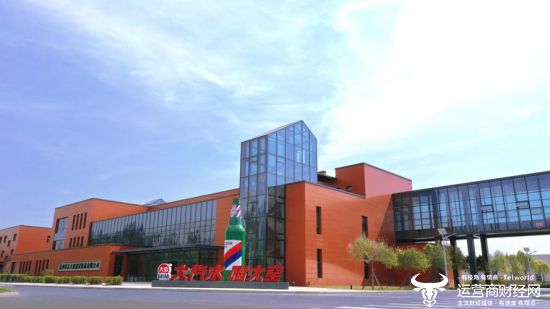
Core Viewpoint - The article discusses the strategic transformation of Dayao Beverage, a local soda brand in China, following its acquisition by KKR, a private equity firm, and the appointment of a new CEO, aiming for national expansion and product diversification. Group 1: Company Overview - Dayao Beverage, known for its 520ml glass bottle soda, has gained popularity in northern Chinese restaurants, particularly in barbecue and northeastern cuisine establishments [1] - The company was founded in 1983 and has undergone several transformations, including a name change and strategic shifts towards national distribution [6] - KKR acquired Dayao Beverage in July 2025, gaining control over its operations through a special purpose vehicle [2] Group 2: Management Changes - In January 2025, Sun Yinan was appointed as CEO, bringing experience from his previous role at Weilong, where he successfully led the company to a public listing [4] - The management team has seen significant changes, with KKR appointing representatives to key positions, including financial and legal roles [3] Group 3: Strategic Initiatives - Dayao Beverage has launched a "1+2+N" product strategy, focusing on carbonated drinks while expanding into juice and plant-based protein beverages [7] - The company aims to enhance brand recognition and market presence through product innovation and strategic marketing campaigns, including partnerships with celebrities [6][8] Group 4: Market Position and Challenges - Dayao Beverage's sales are heavily reliant on the restaurant channel, with over 85% of revenue generated from this sector [6] - Despite its strong market position, the company faces challenges from emerging competitors in the beverage space, particularly from new tea drink brands [10][12] - The introduction of new products is still in the cultivation phase, with limited market acceptance reported for recent launches [10][12]
洽洽食品业绩退回11年前
Shen Zhen Shang Bao· 2026-01-30 12:48
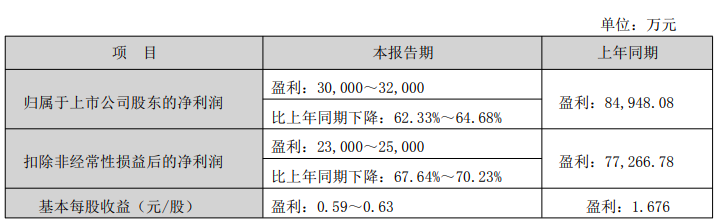
Core Viewpoint - The leading snack food company Qiaqia Foods (002557) has forecasted a significant decline in its 2025 net profit, projecting a decrease of 62.33% to 64.68% year-on-year, which reflects a return to profit levels not seen in 11 years [1][2]. Financial Performance - The expected net profit attributable to shareholders is approximately 300 million to 320 million yuan, down from 849.48 million yuan in the previous year [2]. - The net profit after deducting non-recurring gains and losses is projected to be between 230 million and 250 million yuan, a decline of 67.64% to 70.23% compared to 772.67 million yuan last year [2]. - Basic earnings per share are expected to be between 0.59 and 0.63 yuan, down from 1.676 yuan [2]. Margin Analysis - The company has experienced a downward trend in gross margin over recent years, with gross margins of 31.96%, 26.75%, and 28.78% for 2022 to 2024, respectively [2]. - In 2025, the gross margin is expected to drop sharply, with the first quarter showing a gross margin of 19.47%, a year-on-year decrease of approximately 11 percentage points [3]. - By the third quarter of 2025, the gross margin slightly recovered to 24.52%, but still represented a year-on-year decline of 8.59 percentage points [3]. Revenue and Profit Decline - For the first three quarters of 2025, the company reported a revenue of 4.501 billion yuan, a year-on-year decrease of 5.38% [3]. - The net profit attributable to shareholders for the same period was only 168 million yuan, reflecting a dramatic decline of 73.17% [3]. - The net profit after deducting non-recurring gains and losses saw an even steeper decline of 79.46% [3]. Strategic Initiatives - In response to declining performance, Qiaqia Foods is seeking new growth opportunities through cross-industry collaborations, such as a joint venture with Chengdu Zhengchuang Laomofang to enter the konjac food sector [3]. - The konjac market has a size of 18.3 billion yuan, but the competitive landscape is already established, with major players like Weilong and Yanjinpuzi holding over 50% of the market share [3][4]. - The rising prices of raw materials, including konjac flour, are adding cost pressures to industry participants, with over thirty brands now competing in this field [4].

卫龙前CEO孙亦农跳槽大窑 曾获年薪2349.3万还舍得走?
Xin Lang Cai Jing· 2026-01-21 13:24
Group 1 - The core management team of Dayao has undergone significant changes, with Sun Yinong appointed as the new CEO [1] - Dayao, founded by Wang Qingdong in the 1980s, is a well-known domestic soda brand in China. In July 2025, it was reported that 85% of its shares were sold to the American private equity firm KKR [3] - Wang Qingdong stepped down from key positions in December 2025, with KKR's representative Dai Cheng taking over [3] Group 2 - Sun Yinong joined Dayao in January 2026 as CEO, having previously held significant positions in companies like Coca-Cola and Xiamen Yili Food Group [3][4] - During Sun's tenure at Weilong from 2022 to 2024, the company's revenue grew from 4.632 billion RMB to 6.266 billion RMB, and net profit increased from 151 million RMB to 1.069 billion RMB [4] - Sun's compensation during his time at Weilong was notably high, with salaries of 15.886 million RMB in 2022 and 23.493 million RMB in 2023, surpassing that of the chairman [4] Group 3 - The appointment of Sun Yinong signifies a shift in management following foreign investment, and the effectiveness of this new leadership under Dai Cheng and Sun Yinong will be tested in the market [6]
再论消费重塑-AI-的-从1到10
2026-01-21 02:57
Summary of Conference Call Records Industry and Company Overview - The conference call discusses various sectors including AR technology, cross-border e-commerce, online travel agencies (OTA), human resources, the pork industry, rubber market, home appliances, and the food and beverage sector. Key Points and Arguments AR and E-commerce - 康耐特 (Kangnate) collaborates with 歌尔光学 (Goer) to expand AR business, expecting a net profit growth of over 30% by 2025 due to supply chain synergy [1] - 小商品城 (Small Commodity City) and other companies have made progress in AI-enhanced cross-border e-commerce, with Yiwu market's export growth projected at around 25% and store order growth exceeding 30% [1][2] Online Travel Agencies (OTA) - AI technology significantly improves efficiency in OTA platforms, with 携程 (Ctrip) resolving 80% of inquiries through AI customer service, leading to lower commission rates [3][4] - The overall commission rate for domestic OTAs is currently half that of international giants [4] Human Resources - AI has automated recruitment processes, reducing hiring cycles from 45 days to 15 days, enhancing job matching accuracy [4] Pork Industry - Current pork prices have risen to approximately 13 RMB per kilogram, with expectations to stabilize around 12 RMB post-holiday, indicating a potential bottoming out of prices [6] Rubber Market - The rubber market shows signs of recovery with inventory levels normalizing; future price increases are anticipated if production can meet demand by December 2025 [7] Home Appliances - AI technology is creating new product categories in home appliances, such as AI glasses and 3D printing devices, which have long-term growth potential [8][9] - Major companies like 美的 (Midea) and 海尔 (Haier) are recommended for their strong market positions and potential for increased overseas market share [10] Food and Beverage Sector - The restaurant supply chain is performing well, with a focus on companies with strong pricing power and B2B customization, such as 颐海国际 (Yihai International) and 千禾味业 (Qianhe Flavoring) [11] - In the snack sector, companies like 盐津铺子 (Yanjinpuzi) and 卫龙 (Weilong) are highlighted for their strong performance and market strategies [12] Liquor Industry - The liquor sector is expected to see a rebound due to limited stock price declines and potential for short-term recovery, with a focus on mid-tier brands like 金水源 (Jinshuiyuan) and 迎驾贡 (Yingjiagong) [13] Additional Important Insights - The policy environment is favorable for service consumption, with extended holiday periods expected to boost sectors like tourism and retail [5] - Investment opportunities may arise from mergers and acquisitions, as well as emerging consumer markets such as trendy toys and sports [5]
未知机构:东吴食饮苏铖团队0120Q1消费看大众旺季零食闪亮餐饮餐供季节性饮-20260120
未知机构· 2026-01-20 02:25
Summary of Conference Call Notes Industry Overview - The focus is on the consumer sector, particularly in the food and beverage industry, highlighting a seasonal uptick in demand during spring [1][2]. - The report emphasizes the recovery of service consumption, particularly in the restaurant and food supply sectors, supported by government initiatives to boost consumer spending [2]. Key Companies and Recommendations - **Snack Food Companies**: - Recommended leading snack brands include Wanchen Group, Yanjinpuzi, Weilong, Youyou, and Ganyuan [1][2]. - **Restaurant Supply Chain**: - Key players include Babi, Anjins, Guoquan, and Yihai International, along with Baoli Foods and Lihai Foods [1][2]. - **Beverage Companies**: - Notable recommendations are Yangyuan Beverage and Dongpeng Beverage [1][2]. Company-Specific Insights - **Babi**: Focused on diversified growth strategies to recreate its business model [2]. - **Anjins**: Confirming a bottoming out phase and restarting growth initiatives [2]. - **Guoquan**: Demonstrating a resilient business model with accelerated store openings [2]. Market Trends and Predictions - Historical data indicates that Q1 typically shows positive performance for many restaurant companies, with factors such as market profitability, delayed corporate events, and favorable seasonal reporting expected to drive growth in Q1 2026 [3]. - The report anticipates a multi-factor resonance effect in Q1 2026, which may positively impact metrics like customer spending, same-store sales, and table turnover rates [3]. Government Initiatives - The government has implemented a series of fiscal and financial policies aimed at stimulating domestic demand, which includes measures to clear overdue payments to businesses and ensure wage payments to migrant workers [2]. Additional Insights - The report highlights the cyclical nature of the consumer sector and its role as a leader in consumption recovery, with key companies showing continued improvement [4]. - Emphasis on valuation switching as a strategy to recommend high-quality stocks such as Ximai, Babi, Guoquan, and Yanjinpuzi [4].