弗列加特

Search documents
解码2026年宠物食品行业新品趋势
2026-03-03 02:52
Summary of Pet Food Industry Conference Call Industry Overview - The pet food industry is undergoing a structural shift from "ingredients and processes" to "functional and solution-oriented" products, driven by both supply-side differentiation and increasing consumer concerns about pet health [1][2][3]. - The demand for functional pet food is growing as consumers seek customized solutions for pets based on age, breed, and specific health issues, moving away from mere concept packaging [1][2]. Key Insights - **Functional Pet Food**: The core of functional pet food lies in providing tailored solutions for pets with specific health concerns, rather than just marketing concepts. Brands like Frigat are focusing on "precision nutrition" to compete with established players like Royal Canin [1][4]. - **Market Dynamics**: Domestic brands are shifting from differentiation strategies to directly competing with international giants. Long-term success will depend on addressing the real needs of pets and educating consumers about nutrition [1][5]. - **Brand Switching Windows**: Pet owners experience three key brand switching windows: breeding (first food), retail (profit-driven), and medical (health concerns). The medical switch is particularly irreversible, making functional and prescription foods critical areas for brands to focus on [1][6]. Competitive Landscape - The competition in the pet food industry has intensified, particularly in the prescription and functional food segments, with a projected market size of approximately 2 billion [2][11]. - Companies like Royal Canin are experiencing supply shortages in prescription foods, indicating strong demand driven by pet health issues [2][11]. - R&D investment and scientific validation are becoming crucial competitive factors, with companies like Weishi establishing research institutes to enhance their product offerings [2][10]. Consumer Behavior - Pet owners are increasingly concerned about their pets' health, leading to a rise in demand for functional foods that address specific health issues such as gastrointestinal, skin, and joint problems [2][7][8]. - The concept of "health-oriented" pet food is gaining traction, with consumers willing to pay more for high-quality, health-focused products [8][9]. Product Development Trends - The industry is seeing a trend towards high-end and health-oriented products, with brands like Frigat launching new lines that emphasize precision nutrition [4][10]. - The aging pet population is prompting the development of age-specific nutrition solutions, with international brands like Royal Canin leading the way in systematic approaches to senior pet food [9][10]. Challenges and Opportunities - The entry barriers for prescription food are high, but the potential for high margins makes it an attractive segment for new entrants [11][24]. - The competitive landscape is shifting, with increased marketing expenditures among leading brands to capture market share, leading to further concentration in the industry [17][18]. Conclusion - The pet food industry is at a pivotal point, with significant opportunities in functional and prescription foods driven by consumer health concerns. Brands must focus on R&D, consumer education, and addressing specific health needs to succeed in this evolving market [1][2][10].
6500万人关注!国家贴息来了
Sou Hu Cai Jing· 2025-11-15 09:27
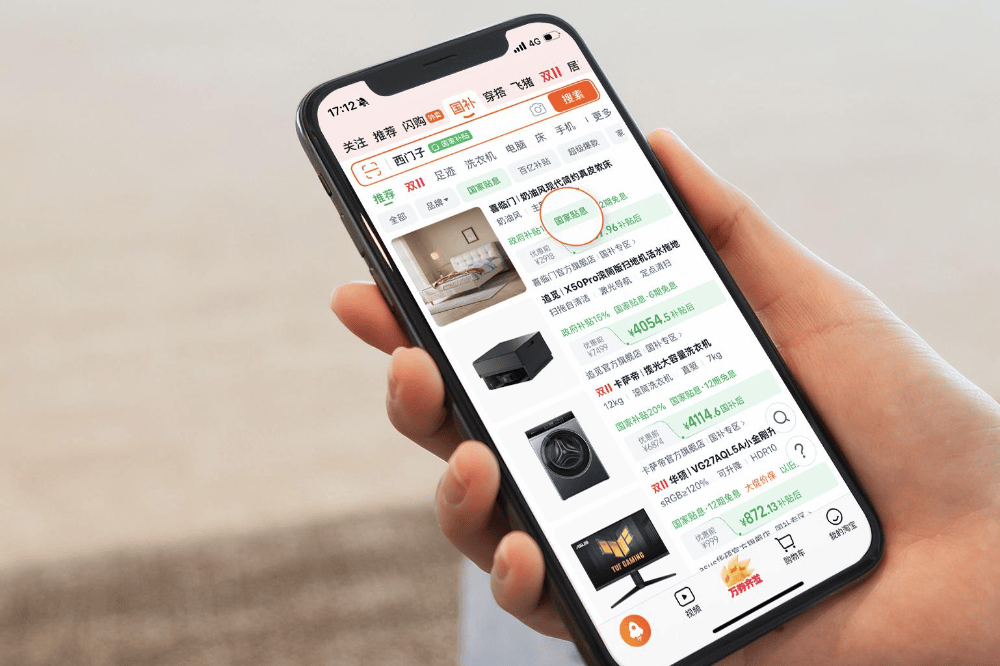
Group 1 - The core viewpoint of the article highlights a significant transformation in consumer behavior during the "Double 11" shopping festival, shifting from "price wars" to "value wars" due to the integration of AI services and instant retail, supported by government policies on interest-free installment payments [1][3] - The implementation of a 1% personal consumption loan interest subsidy policy has led to the launch of a "National Subsidy" product section on platforms like Taobao and Tmall, with over 100 million products supporting interest-free installment payments, directly benefiting consumers [1][3] - During the Double 11 event, 65 million users visited the "National Subsidy" section, with nearly 2 million first-time users of the interest-free installment service, indicating a successful outreach of the policy [1][3] Group 2 - The interest-free installment payment service has become a crucial driver for transaction conversion, with brands reporting a 97.8% coverage rate for products priced over 100 yuan and a 12.7% share of total payment amounts during the event [3] - Specific brands, such as a leading solid wood furniture brand, experienced an 80% increase in installment sales and a nearly 20% overall sales growth, showcasing the effectiveness of the interest-free payment model [3][4] - The collaboration between government subsidies and merchant strategies has created a win-win situation for both consumers and businesses, aligning with national strategies to boost consumption and reflecting a shift towards high-quality growth in the Chinese economy [3][4]

国家贴息促消费显现杠杆效应,“双11”人均分期消费金额提升18%
Guo Ji Jin Rong Bao· 2025-11-14 12:25
Core Insights - The "Double 11" shopping festival this year saw significant consumer engagement due to government subsidy policies, with over 100 million interest-free installment products offered by platforms and merchants [1][3] - The implementation of the personal consumption loan subsidy policy has effectively reduced consumer credit costs, leading to an 18% increase in per capita installment spending compared to September [1][3] Group 1: Government Policies - The introduction of the "Personal Consumption Loan Fiscal Subsidy Policy" in September aims to stimulate market activity and consumer spending by lowering credit costs [3] - The "National Subsidy" product section on Taobao and Tmall has attracted 65 million views since its launch on October 30, highlighting increased consumer awareness of the subsidy policy [4] Group 2: Consumer Behavior - There was a 19% increase in the number of consumers benefiting from the national subsidy during "Double 11," with nearly 2 million first-time users of interest-free installments [4] - Consumers are increasingly opting for installment payments, as evidenced by a significant rise in the use of these options during the shopping festival [7] Group 3: Merchant Response - Merchants have responded positively to the subsidy, with many reporting increased sales and higher coverage of interest-free installment options [6] - For example, Bosideng reported a 97.8% coverage of interest-free installments for products over 100 yuan, with installment payments accounting for 12.7% of total sales [6] - Brands offering full-store interest-free options saw substantial growth, with some reporting an 80% increase in installment sales and nearly 20% growth in overall sales [6] Group 4: Market Dynamics - The collaboration between government subsidies and merchant strategies has created a win-win situation, enhancing consumer purchasing power while driving sales growth for businesses [8] - The recent emphasis on boosting consumption in the "14th Five-Year Plan" underscores the importance of collaborative efforts in stimulating economic activity [8]
6500万人关注!“双11”这一数据最新披露
券商中国· 2025-11-14 11:56
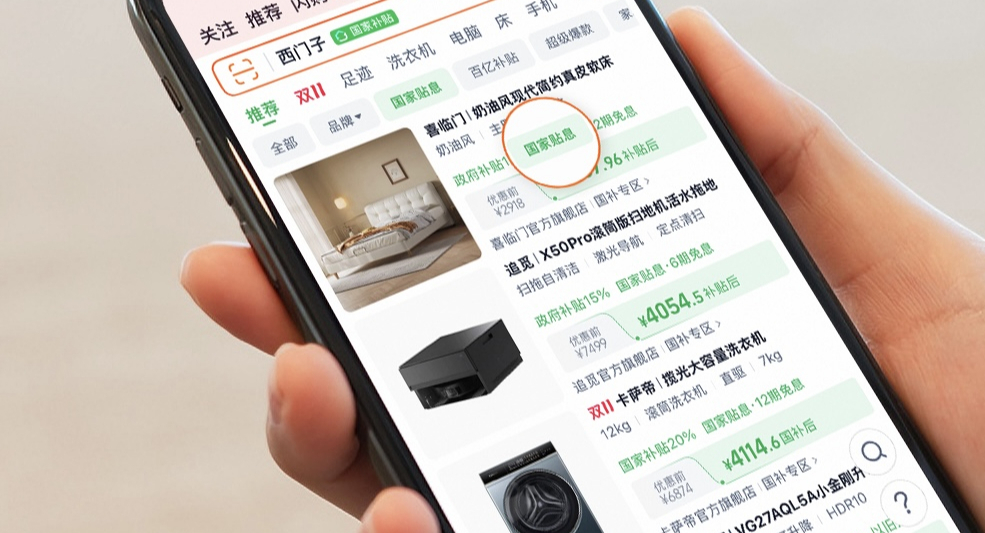
Core Viewpoint - The article highlights the positive impact of the "National Subsidy" policy on consumer spending during the "Double 11" shopping festival, showcasing a collaborative effort among the government, platforms, merchants, and consumers to stimulate the economy through innovative financial practices [1][2]. Policy Impact - The Chinese government has been actively enhancing its consumer support policies, including a 1% financial subsidy for eligible personal consumption loans, which has led to a rapid market response since its implementation [2][6]. - The introduction of the "National Subsidy" section on e-commerce platforms has attracted 65 million consumers, with a 19% increase in the number of consumers benefiting from the subsidy during the "Double 11" period compared to September [2][4]. Consumer Experience - A typical consumer experience is illustrated by a case where a consumer was able to purchase a refrigerator through a combination of a trade-in subsidy and interest-free installment payments, significantly reducing financial pressure [3][5]. Market Dynamics - The collaboration between the government and market players has created a robust synergy, with platforms and merchants actively participating in promotional activities, leading to a 97.8% coverage of interest-free installment payments for certain products [4][6]. - Brands that offered full-store interest-free options saw significant sales increases, with one furniture brand reporting an 80% growth in installment sales and a nearly 20% increase in overall sales [6][8]. Consumer Behavior - The trend of interest-free installments has become a new norm, with a notable increase in consumer usage during the "Double 11" festival, indicating a shift towards more calculated spending [7][8]. - Research indicates that products with interest-free installment options experienced an average sales increase of 30%, while overall store sales rose by 15% [8].

猫双11宠物行业市占率达64%,“它经济”迎来国货黄金时代
Sou Hu Wang· 2025-11-08 03:49
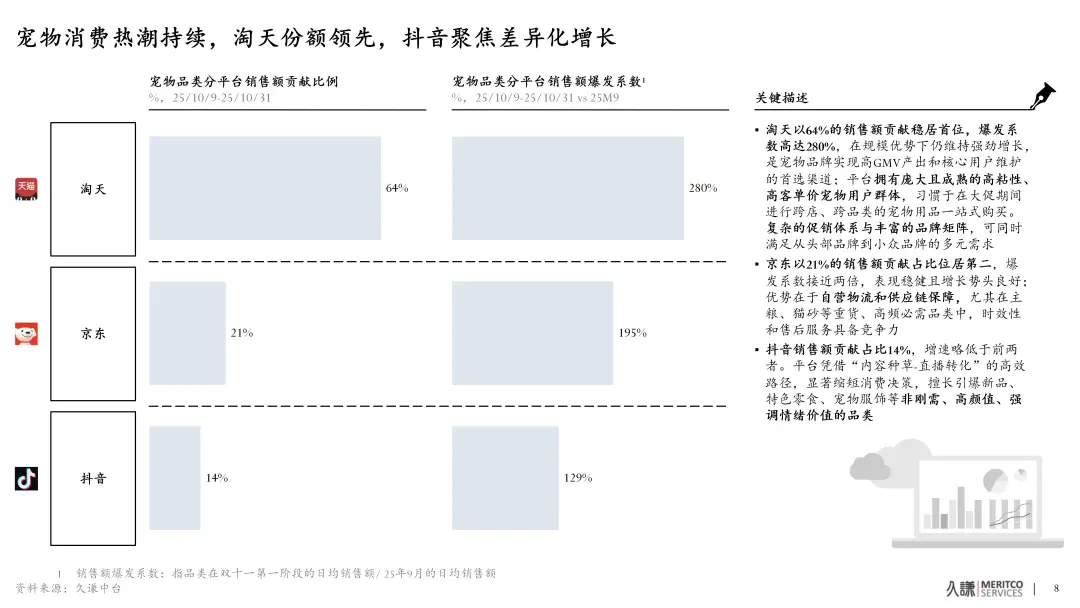
Core Insights - The pet consumption market is experiencing significant growth, with Tmall leading in sales during the Double Eleven shopping festival, contributing 64% of total sales and achieving a high explosion coefficient of 280% [1][3] - Tmall's pet industry has maintained double-digit growth despite its scale advantage, with pre-sale amounts surpassing last year's total within just half an hour [3] - Domestic brands are increasingly dominating the pet consumption landscape, accounting for 68% of the brands that achieved over 10 million in sales on Tmall during the event [3] Group 1 - Tmall's pet industry has shown remarkable growth, with 18 brands achieving over 10 million in sales within the first hour of the Double Eleven event [3] - The trend of domestic brand replacement is evident, with brands like 麦富迪 and Toptrees showing significant sales increases of over 90% and 170% respectively [3] - The pet consumption market is witnessing cross-industry integration, with brands like Adidas and Xiaomi entering the pet apparel and smart drinking fountain markets, respectively [4] Group 2 - Since its upgrade to a primary category in 2021, Tmall's pet sector has experienced continuous high growth, doubling in scale and surpassing 100 million annual purchasing users [6] - The pet industry is entering a "platform ecosystem competition" phase, with Tmall's user base supporting both short-term and long-term growth through diverse consumer insights [6] - The rise of the "it economy" is expected to further solidify Tmall's leading position in the pet industry [6]
25W43周观点:直补趋势化,AI赋能商家降本增效,即时零售贡献新增量-20251102
Huafu Securities· 2025-11-02 11:49
Investment Rating - The report maintains a rating of "Outperform the Market" for the home appliance sector [7]. Core Insights - The Double Eleven shopping festival has seen an earlier start and extended duration this year, with major platforms like Kuaishou, JD, and Douyin initiating pre-sales as early as October 7, 2025 [14][16]. - Direct subsidy trends have become prominent, simplifying promotional strategies and focusing on direct price reductions across platforms [14][16]. - AI tools are increasingly empowering marketing operations, helping merchants reduce costs and improve conversion rates through precise customer targeting and efficient ad spending [3][16]. - The instant retail market is expected to contribute significantly to this year's Double Eleven sales, with platforms like Taobao and JD enhancing their local life services and promotional strategies [4][20]. Market Performance Data - The home appliance sector experienced a weekly increase of 1.2%, with specific segments showing varied performance: white goods up 1.6%, black goods down 0.3%, small appliances up 1.1%, and kitchen appliances up 2.7% [26]. - Key brands in the home appliance sector have shown significant sales growth, particularly in 3C digital and AI innovation products, with order volumes for major categories increasing over 70% year-on-year [20][21]. Segment Tracking - The report highlights the performance of various segments within the home appliance industry, noting that brands like Haier and Midea have faced challenges in sales, particularly in offline channels [37][40][41]. - The small appliance segment has shown resilience, with brands like Joyoung and Supor reporting positive sales growth in specific product categories [40]. - Kitchen appliances have also seen varied performance, with brands like Boss and Huadi experiencing significant fluctuations in sales figures [41].
国家贴息落地分期免息,消费提振新解法
Bei Jing Shang Bao· 2025-10-30 13:43
Core Insights - The "National Subsidy" initiative launched during this year's "Double 11" shopping festival aims to boost consumer spending by providing interest-free installment payment options for selected products [1][12] - This initiative is a collaboration between government fiscal policy, financial tools, and commercial entities, creating a win-win situation for consumers, merchants, and policymakers [1][11] Group 1: Policy and Implementation - The "National Subsidy" program was implemented following the release of the "Personal Consumption Loan Fiscal Subsidy Policy Implementation Plan" by the Ministry of Finance, the People's Bank of China, and the financial regulatory authority [1][12] - The program allows consumers to purchase products marked with the "National Subsidy" label on e-commerce platforms like Taobao and Tmall, enabling them to enjoy interest-free installment payments without additional applications [2][12] - The initiative has led to a 60% increase in the coverage of high-instalment products eligible for interest-free payments on Taobao and Tmall, with the number of such products reaching tens of millions [8][12] Group 2: Consumer Behavior and Market Response - Consumers are increasingly favoring interest-free installment payments, with 85% preferring this option even when they can afford to pay in full [10] - Merchants report a significant sales boost, with nearly 70% indicating that offering interest-free installment options has led to a noticeable increase in sales, averaging a 30% rise for key subsidized products [10][11] - The combination of "National Subsidy" and "trade-in" programs allows consumers to benefit from dual subsidies, further enhancing the attractiveness of high-value items [8][11] Group 3: Future Implications - Analysts believe that this model of "policy guidance and market operation" could extend beyond e-commerce platforms, potentially becoming a regular feature of consumer support initiatives [13] - The collaboration between government and commercial entities is seen as a way to transform consumer credit from merely a spending tool into a service that enhances quality of life [13]
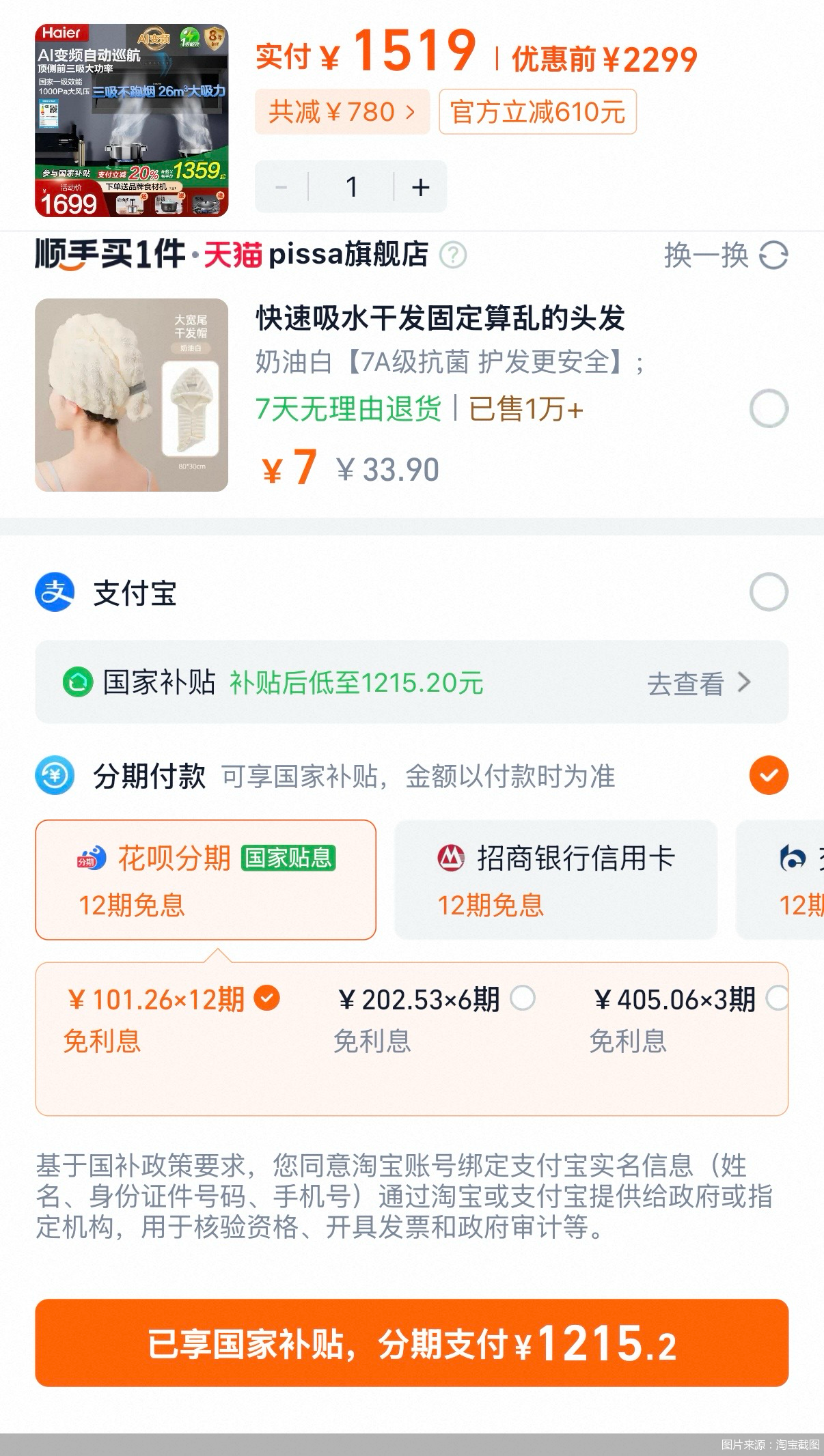
消费贷财政贴息政策持续落地 天猫双11上线“国家贴息”专区
Shang Hai Zheng Quan Bao· 2025-10-30 05:15
Core Insights - The launch of the "National Subsidy" product section on Taobao Tmall aims to implement the personal consumption loan interest subsidy policy, allowing consumers to enjoy interest-free installment payments when purchasing eligible products [1][2] - The combination of government subsidies, financial support, and merchant discounts is expected to stimulate consumer spending and drive economic growth [1] Group 1: Policy Implementation - The "National Subsidy" product section was officially launched on October 30, allowing consumers to benefit from state subsidies when using Huabei installment payments [1] - Since the introduction of the subsidy policy on September 1, e-commerce platforms and brand merchants have actively responded, offering additional interest subsidies [1] Group 2: Consumer Behavior - Interest-free installment payments have become increasingly popular among consumers, as they reduce financial burden and enhance purchasing power [1] - The number of products eligible for Huabei interest-free installments on Taobao Tmall has reached tens of millions, with a 60% increase in the coverage of high-instalment products [2] Group 3: Brand Response - Leading brands, such as Freycat in the pet food industry, have reported significant increases in order numbers through interest-free payments, with a nearly 9-fold growth compared to the previous promotional event [2] - Bosideng Group plans to expand its interest-free installment offerings and enhance promotional efforts to maximize consumer benefits from the subsidy policy [2]

宠物食品竞争到底有加剧吗?
2025-10-27 00:30
Summary of Pet Food Industry Conference Call Industry Overview - The pet food market is experiencing a slowdown in overall growth in 2025, with platforms like JD and Douyin showing strong performance due to improvements in logistics and user experience, as well as user growth on emerging e-commerce platforms [1][4] - Market shares are approximately 40% for Tmall, 25% for JD, and 35% for Douyin [5] - The pet staple food market is dominated by puffed food (over 70% market share), while low-temperature baked food (about 20%) and freeze-dried food are rising in the mid-to-high-end market [1][5] Competitive Landscape - The competitive landscape is characterized by a "one strong, many strong" scenario, with Guobao Group leading and expected to achieve total revenue of 4.3 billion yuan in 2025 [1][9] - The second tier includes companies with revenues between 1.5 billion to 2 billion yuan, while the third tier consists of companies with revenues between 500 million to 1 billion yuan [9] - Head brands are expanding their market share steadily, while smaller brands face pressure to exit the market [1][10] Marketing and Sales Trends - Marketing expenses for pet food companies have significantly increased, with some brands like Blue's achieving rapid growth through high marketing investments, although marketing expense ratios exceeded 40%, impacting net profits [1][11] - In 2025, leading brands like Freigat and Xuanlang have increased their marketing expenditures to cope with fierce competition [1][11][12] - Sales growth during the Double Eleven shopping festival in 2025 showed JD's pet food sales growing by 15%-20%, Douyin by 20%-25%, while Tmall experienced a decline of -5% to -10% [2] Consumer Behavior and Pricing - The average consumer spending on pet food has increased, with Tmall's overall average price rising from 40 yuan to 45-50 yuan [3][18] - The high-end and mid-high-end pet food markets are expanding, driven by consumer demand for better quality and scientifically formulated products [17] Market Dynamics - The pet food industry is maintaining growth, with the cat food market showing significant growth rates of 15%-20%, while dog food is experiencing single-digit growth [3][16] - The market concentration is increasing, with the top 5 brands' market share rising from 15% to 20% and the top 10 from 27%-28% to 35% [3][16] Challenges for Smaller Brands - Smaller brands are facing increased competition and pressure to exit the market, with many experiencing reduced scale [10][14] - The competitive environment has intensified, particularly for non-head brands, which struggle to maintain market presence [10][22] Future Outlook - The overall growth target for companies is to achieve at least 10%-20% annual growth while maintaining a profit margin of around 8%-10% [31] - Companies are adapting to trends such as the aging of pets and the high-end market, although the demand for specialized aging pet food remains limited [32] Key Takeaways - The pet food industry is evolving with a shift towards high-end products and increased marketing investments, while competition intensifies among leading brands and smaller players face significant challenges [1][10][17]
国庆假期,它去哪儿?
3 6 Ke· 2025-09-30 10:13
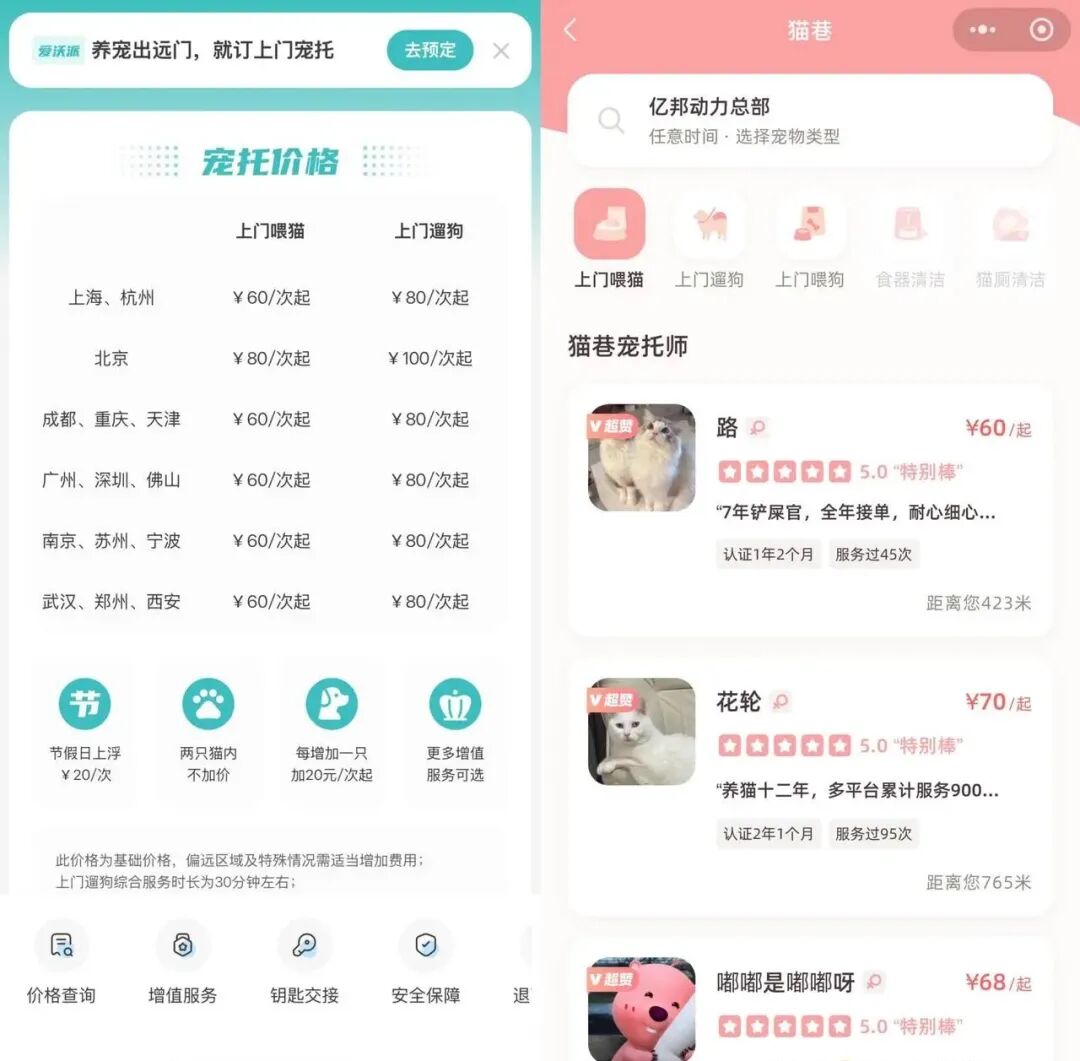
Core Insights - The traditional pet boarding model is being challenged as pet owners increasingly view their pets as family members, leading to a demand for higher-quality pet care services [1][3][4] - The rise of on-demand pet care services, such as home feeding and pet-friendly travel options, reflects a shift in consumer preferences towards personalized and quality services [1][5][8] Pet Care Services - Many pet owners are opting for home feeding services instead of traditional boarding due to concerns about the quality of care and the environment in boarding facilities [3][4] - The market for home pet care services is growing, with platforms like Aiwopai and Cat Alley offering various packages during peak seasons like National Day [5][7] - The pricing for home feeding services varies, with costs ranging from 40 to 100 yuan per visit depending on the service and location [5] Pet-Friendly Trends - The concept of "pet-friendly" is becoming a new consumer trend, with more businesses catering to pet owners by allowing pets in their establishments [8][9] - Pet-friendly hotels are increasingly popular, with a nearly 20% year-on-year increase in the number of such hotels listed on major booking platforms [8][9] - Travel agencies are also creating pet-friendly travel packages, allowing pet owners to travel with their pets while ensuring their care and safety [11] Market Growth and Dynamics - The Chinese pet industry is experiencing rapid growth, with the number of pet-related businesses increasing from 380,000 in 2019 to nearly 4 million in 2025 [14] - The market for pet products and services is projected to exceed 400 billion yuan by 2027, with pet food accounting for over 40% of the market share [14] - The demand for quality and personalized pet care is driving innovation and competition within the industry, leading to a diversification of services offered [14][17] Challenges and Issues - The pet care industry faces challenges such as product standardization, quality control, and consumer trust due to issues like misleading marketing and inconsistent product quality [17][19] - There is a growing need for regulatory frameworks and quality standards to address these challenges and rebuild consumer confidence in pet products and services [19]