
产业安全

Search documents
中国管制白银,最大成果不是中国胜了, 而是美国再无手段控制中国
Sou Hu Cai Jing· 2026-02-06 00:12
当美国试图用白银定价权掐住中国产业升级的脖子时,中国一纸管制令直接击碎这场金融围猎! 2026年白银出口许可证管理正式延续实施,纳入出口国营贸易管理清单,这记精准重拳不仅冲击了美国操控全球白银市场的底层逻辑,更让其依托资源霸权 制华的手段大幅失效。 这场看似围绕贵金属的博弈,实则是大国资源话语权与产业安全的终极较量,中国的白银管制从不是简单的资源调控,而是跳出西方设定的博弈陷阱,用实 物掌控权赢得的硬核胜利。 为何白银会成为美国制华的关键抓手?中国的管制政策又如何从根上瓦解其操控体系?这背后藏着的大国博弈逻辑,值得所有市场参与者深思。 美国将白银选为围猎中国的核心工具,绝非偶然,而是掐准了中国"工业用银第一大国"的刚需痛点,更依托其在全球定价中的影响力,将白银打造成遏制中 国高端产业发展的金融武器。 从产业属性来看,白银早已不是单纯的贵金属,而是现代工业的"刚需基石"——光伏电池银浆、新能源汽车电池、半导体导电层、数据中心散热部件等核心 领域,都离不开白银的不可替代作用。 中国作为全球制造业核心基地,工业用银占比超90%,仅光伏产业就消耗国内35%的白银,新能源汽车用银量更是传统燃油车的20倍以上,2024年 ...


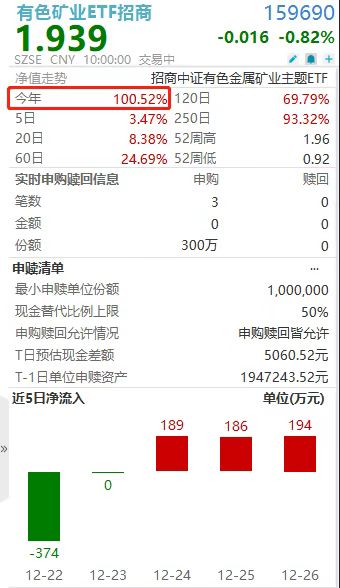
年内第27次新高!有色矿业ETF招商(159690)盘中强势翻红,白银有色、湖南白银双双涨停封板
Jin Rong Jie· 2025-12-29 04:04
Core Viewpoint - The non-ferrous metal mining sector is experiencing strong performance, with related ETF products reaching new highs, indicating structural opportunities within specific sub-sectors [1][2]. Group 1: ETF Performance - The non-ferrous metal ETF (159690) rose by 0.10%, marking its 27th price high of the year, with a year-to-date increase exceeding 102% [1][2]. - The sector shows significant stock performance divergence, with silver-related stocks, including Hunan Silver, hitting the daily limit up, highlighting structural opportunities in specific varieties [1]. Group 2: Market Dynamics - The current market rally is driven by several factors: the index focuses on upstream mining companies benefiting directly from rising commodity prices, enhanced profitability of leading mining firms, and dual support from macroeconomic conditions and industrial demand [2][3]. - Major global economies are adopting looser monetary policies, coupled with sustained structural demand for key minerals in sectors like renewable energy and artificial intelligence, which collectively support the high prosperity of the non-ferrous metal sector [2]. Group 3: Strategic Value of Resources - The strategic value of resources is being re-evaluated by the market, with copper and lithium transitioning from traditional commodities to strategic materials, leading to a fundamental shift in valuation logic for upstream resource companies [3]. - Despite the high volatility in the sector, non-ferrous metal resource assets still possess long-term allocation value as long as the supply-demand dynamics remain unchanged [3].

白银价格异常波动冲击我国战略产业安全
Zhong Guo Neng Yuan Wang· 2025-12-26 02:31
异常溢价:一场背离基本面的市场异动 上海期货交易所的电子屏幕上,一串红色数字持续跳动,将沪银主力合约价格推升至每千克17400元的 高位。与此同时,国际市场的白银现货价格却稳定在16300元附近徘徊。这高达1100元的价差,如同一 道刺眼的裂痕,横亘于国内外市场之间,向所有观察者发出无声的警报。 当一种广泛应用于现代工业体系的关键金属价格,在短期内出现大幅异常波动,其影响往往远超金融市 场范畴。近期,白银市场呈现的国内外价格严重背离现象——外盘价格稳定在每千克16300元左右,而 国内期货价格一度飙升至17400元以上,形成超过1100元的罕见溢价——正将我国具有全球竞争优势的 光伏和新能源汽车产业置于严峻的成本压力之下。 这不仅是简单的市场价格波动,更是一场关乎我国高端制造业竞争优势与产业链安全的深度挑战。白 银,这种工业属性占比高达60%的金属,其价格信号的扭曲,正在向实体经济传导不容忽视的风险预 警。 这绝非正常的市场波动所能解释。白银,这一工业属性占比高达60%的金属,其价格本应紧密围绕全球 实体经济供需关系展开。然而,当前国内市场呈现出的,却是金融属性对工业属性的显著背离。 多位资深行业分析师指出, ...
石破茂的预言开始应验,中方还没有发力,日本企业经营压力就提前暴露
Sou Hu Cai Jing· 2025-12-20 04:12
近年来,日本不断强调所谓的供应链多元化,但替代方案的推进速度却非常有限。问题也很简单,这些领域并不是能靠政策口号快速重构的,它们需要时 间、成本和市场规模的支撑,而这些恰恰是日本所不具备的。今年早些时候,日本的车企已经为此付出了代价。在相关管理措施调整后,一些零部件供应出 现中断,日本国内的小型车生产线被迫停产。那不是推测,而是已经发生的事实。当时,很多人选择将其视为个别事件,并安慰自己说影响只是暂时的,很 快就会过去。但结构性依赖并不会因短期停产就消失。石破茂真正担心的,并非是某个工厂停产几天,而是日本整个经济体系是否能承受与重要经贸伙伴长 期高摩擦状态的成本。事实证明,这种担忧并非多余。 日本政坛这些年一直把安全立场价值挂在嘴边,然而最先承受后果的,却不是那些做出决策的人,而是那些靠小时工薪水生活的工人,以及依赖稳定供应才 能运转的制造业体系。最近,本田在多个国家同步减产,看似是一起普通的芯片短缺事件,但如果深入分析,就会发现这背后其实是日本自己一步步将产业 推向了高风险区,而非某种突发事件。 如果仅从表面上看,很多人可能会认为这只是又一次的芯片不足,供应链出了问题。实际上,这一次的情况并非全球同步失速, ...


【致言同声】致同咨询合伙人武建勇:“耐心资本”入场,“十五五”投资聚焦安全与新质生产力
Sou Hu Cai Jing· 2025-12-16 15:03
"十五五"时期是我国推动产业升级、筑牢发展安全根基的关键阶段。面对日益复杂的国际竞争格局,中 国企业如何夯实产业基础、培育具有韧性与竞争力的新增长动能,已成为各方关注的焦点。 近日,致同咨询融资与并购财务顾问服务主管合伙人武建勇在媒体分享会上,与在场记者展开深入交 流。他从并购市场与资本运作的视角切入,系统剖析"十五五"期间投资演进的新逻辑与涌现的新机遇, 为企业的战略决策与投资布局提供重要参考。 武建勇解析了"十五五"时期企业投资的新动向。"与此前相比,中国并购市场今年增长的主要动力是本 土交易。数据显示,截至目前,全球并购交易量占比从2024年的9.5%升至9.75%,跑赢全球。"他表 示,正是由于中国本土产业结构的调整,大型国有企业进入并购市场,产融基金持续发力、特别是地方 性产投基金的介入共同促进了本土市场并购的快速增长。 武建勇认为,在"十五五"期间,产业投资策略有四个重点: 武建勇坦言,产业投资面临挑战,核心是国有企业投资平衡难题。国企适合布局大产业集群与产业链, 民企擅长点的突破,需优势互补。目前部分领域已有突破,如国企投资新能源汽车不再仅以盈利为 KPI,但国企仍需解决考核体系、风控思维、治理 ...

北新建材20251027
2025-10-27 15:22
Summary of North New Building Materials Conference Call Industry Overview - The gypsum board industry is facing challenges due to macroeconomic downturns and a 18.9% decrease in new construction area, leading to reduced demand and price pressure [2][3][4] - Customers are shifting towards more cost-effective alternatives, further impacting prices [2][3] - Increased competition from foreign brands and cross-industry entrants has intensified pressure in the low-end market [2][3] Company Performance and Strategies - North New Building Materials has seen a doubling in sales of its home decoration product series (e.g., Longpan Guochao series, Taishan series) in the retail and rural markets from January to September, which is expected to drive overall volume and price increases [2][4] - The company is optimistic about a price increase for gypsum boards in 2026, supported by signs of rational recovery in the industry as small and high-end brands begin to raise prices [2][4] - The company is investing in technological innovations, such as the TF version and its derivatives, to enhance product attributes and replace other materials [2][4] - A new 2000 square meter production line is under construction, expected to release 20 million square meters of capacity, significantly improving pricing and profit margins [2][4] Financial Performance - The waterproof business has achieved positive revenue and profit growth despite adverse external conditions, benefiting from the company's strong capabilities and future development certainty [5][6] - Beijing Jiaboli's net profit exceeded 300 million yuan in the first three quarters of 2025, driven by market share pursuit, cost reduction, and improved operational quality [5][6] Future Outlook - The company plans to continue internal development while pursuing external expansion in the waterproof and coating sectors, targeting large-scale acquisitions in the construction coating market and focusing on niche areas like automotive and marine coatings [5][6][8] - North New Building Materials is actively pursuing globalization, focusing on greenfield projects in Southeast Asia and Africa, while using acquisitions in developed markets [8][9] Market Dynamics - The company is addressing the competitive landscape by simplifying competition and enhancing product differentiation, particularly in strategic locations [13][23] - The company aims to expand the gypsum board market by introducing new applications and products, such as fire-resistant applications, to increase market capacity [23][24] Challenges and Responses - The company acknowledges challenges in the gypsum board sector, including price pressure and competition, and is implementing measures to enhance internal collaboration and optimize production layouts [15][18] - North New Building Materials is committed to maintaining a balanced growth strategy, focusing on value-driven operations rather than just scale [12] Conclusion - North New Building Materials is navigating a challenging market environment with strategic innovations, a focus on quality, and a commitment to expanding its market presence both domestically and internationally. The company is optimistic about future price increases and growth opportunities in various segments, including waterproofing and coatings.

以制度型开放提升产业链韧性与安全水平
Xin Hua Ri Bao· 2025-10-16 23:20
Core Insights - The article emphasizes the importance of industrial security as a key component of national economic security, highlighting the need for resilience and safety in industrial supply chains in Suzhou, a major city for foreign trade and industry [1] Group 1: Current Risks and Challenges in Suzhou's Industrial Security - The restructuring of global supply chains has intensified export competition, with local production being shifted to Southeast Asia and Mexico due to U.S. policies, creating homogeneous competition in sectors like automotive parts and electronics [2] - Suzhou faces significant pressure in maintaining foreign trade and investment, despite a double-digit growth in total foreign trade. The city has reduced its reliance on exports to the U.S. while expanding into emerging markets, but remains vulnerable to international environmental changes [2] - Institutional and industrial innovation policies need breakthroughs, as local protectionism and limited authority hinder the implementation of open policies, affecting sectors like biomedicine where foreign investment restrictions remain high [3] Group 2: Suggestions for Enhancing Industrial Chain Resilience and Safety - The article suggests aligning with high international trade rules to establish a cross-border flow mechanism for high-level factors, leveraging Suzhou's free trade zone to promote open innovation in sectors like biomedicine and data flow [6] - It advocates for integrating technological and industrial innovation by fostering collaboration between academia and industry, utilizing high-level innovation platforms to address critical issues in various sectors [7] - The development of modern industrial clusters with international competitiveness is encouraged, focusing on the integration of strategic emerging industries with advanced manufacturing to enhance value and influence [8] Group 3: Logistics and Economic Development - The article highlights the need to optimize the logistics industry and spatial layout to create a dual-open hub city, enhancing domestic and international logistics channels to support regional industrial collaboration [9] - It emphasizes the importance of establishing a foreign-funded headquarters economy in Suzhou, which reflects the region's development strength and international openness, while encouraging foreign enterprises to expand their operations and innovate [10]
特朗普没想到,中方突然下“封杀令”?美方当面表态:希望能共存
Sou Hu Cai Jing· 2025-09-20 05:26
Core Points - China has taken a preemptive measure against Nvidia by ordering domestic tech companies to halt all purchases of Nvidia's AI chips, including canceling existing orders, signaling a strategic response to U.S. tech restrictions [1][3] - Nvidia faces a dilemma as it must comply with U.S. government policies while trying to maintain its market presence in China through "special edition" chips, which have significantly reduced performance and high prices [3][6] - The Chinese government's actions are not merely defensive but are aimed at accelerating domestic chip alternatives, with companies like Huawei and Cambricon making progress in specific applications [6][8] Industry Implications - The increasing penetration of domestic chips in critical sectors indicates that Nvidia is facing not just a temporary procurement ban but a deeper trend of domestic substitution [8][12] - The U.S. government's dual approach of seeking to limit China's technological growth while wanting to retain access to the Chinese market reveals a complex geopolitical landscape [8][10] - The ongoing tech competition between the U.S. and China is likely to evolve into a "cold peace" state, where both sides avoid direct military conflict but continue to compete in technology while maintaining limited cooperation in key industries [10][12] Company Challenges - Nvidia's CEO Jensen Huang expressed disappointment over China's decision but also indicated a willingness to navigate the situation, highlighting the challenges multinational companies face in the U.S.-China tech war [6][12] - The dilemma for the Trump administration lies in the fact that increasing tech restrictions may accelerate China's self-innovation, while easing restrictions could allow China to catch up technologically [12] - The situation with Nvidia's H20 chip exemplifies the challenges faced, as the Chinese market may no longer require such "downgraded" products when the U.S. is finally willing to sell them [12]


以提升产业发展质量维护产业安全
Ren Min Ri Bao· 2025-08-29 04:10
Core Viewpoint - Industrial security is emphasized as a core component of economic security, with a focus on enhancing resilience, technological self-reliance, and high-level openness to improve industrial development quality [1] Group 1: Industrial Scale Expansion - Steady expansion of industrial scale is crucial for maintaining industrial security, serving as a stabilizing factor during the transition from middle-income to high-income status [2] - China's manufacturing sector has maintained the largest global scale for 15 consecutive years, showcasing unique advantages in scale and system [2] - Future efforts should focus on continuing to expand industrial scale while stabilizing the proportion of industrial and manufacturing sectors in the national economy [2] Group 2: Industrial Quality Upgrade - Promoting quality upgrades in industries is essential to avoid low-level repetitive investments that can harm industrial security [3] - Digital transformation is highlighted as a key area, with Shenzhen's manufacturing value added projected to account for about one-third of its GDP in 2024, significantly above national averages [3] - Emphasis on green low-carbon development and the establishment of advanced industrial clusters in fields like artificial intelligence and life sciences to enhance industrial safety [3] Group 3: Enhancing Industrial Resilience - Strengthening industrial resilience is necessary for building a modern industrial system and ensuring industrial security [4] - Despite improvements, there are still weaknesses in the industrial chain that need to be addressed through technological advancements and diversified supply systems [4] - Monitoring and early warning systems for various risks are essential to enhance governance resilience [4] Group 4: Strengthening Technological Innovation - Technological self-reliance is a critical aspect of industrial development quality, with a focus on addressing "bottleneck" issues in technology [4] - Investment in foundational technology and major innovative infrastructure is necessary to improve the supply of original and cutting-edge technologies [4] Group 5: Expanding High-Level Openness - Expanding high-level openness is vital for enhancing industrial development quality, transitioning from passive integration into global supply chains to active participation [5] - China's foreign investment and global capacity layout have accelerated, particularly in relation to countries involved in the Belt and Road Initiative [5] - Future strategies should include aligning with international trade rules and enhancing international industrial cooperation in emerging sectors [5]

以提升产业发展质量维护产业安全(专题深思)
Ren Min Ri Bao· 2025-08-28 22:38
Core Viewpoint - Industrial security is emphasized as a core component of economic security, with a focus on enhancing resilience, technological self-reliance, and high-level openness to improve industrial development quality [1] Group 1: Industrial Scale Expansion - Steady expansion of industrial scale is crucial for industrial security, serving as a stabilizing factor during the transition from middle-income to high-income status [2] - China's manufacturing sector has maintained the largest global scale for 15 consecutive years, showcasing unique advantages in scale and system [2] - Achievements in various sectors, such as high-speed trains and advanced manufacturing, are linked to these scale and system advantages [2] Group 2: Industrial Quality Upgrade - Promoting quality upgrades in industries is essential to avoid low-level repetitive investments that can harm industrial security [3] - Digital transformation is highlighted as a key area, with Shenzhen's manufacturing value added projected to account for about one-third of its GDP in 2024 [3] - The focus on green low-carbon development and advanced industrial clusters is aimed at enhancing industrial safety and creating new growth sectors [3] Group 3: Enhancing Industrial Resilience - Strengthening industrial resilience is necessary for building a modern industrial system and ensuring industrial security [4] - Despite improvements, there are still vulnerabilities in the industrial chain that need to be addressed through technological advancements and diversified supply systems [4] - Monitoring and early warning systems for various risks are essential for enhancing governance resilience [4] Group 4: Expanding High-Level Openness - Expanding high-level openness is vital for improving industrial development quality in the context of deepening economic globalization [5] - China's foreign investment and global capacity layout have accelerated, particularly in relation to the Belt and Road Initiative [5] - Active engagement with international high-standard trade rules and international industrial cooperation is necessary for building a new type of collaborative framework [5]