区域化

Search documents
BorgWarner (NYSE:BWA) Conference Transcript
2026-03-18 14:47
Summary of BorgWarner Conference Call - March 18, 2026 Company Overview - **Company**: BorgWarner (NYSE: BWA) - **Industry**: Automotive technology, focusing on clean and efficient technology solutions for combustion, hybrid, and electric vehicles Key Points Market Outlook - Initial guidance for global production is flat to down 3%, with a midpoint of approximately down 1.5% [5][7] - Concerns about consumer demand due to higher vehicle prices and an oil shock, but current demand remains stable [7] Product Mix and Business Strategy - BorgWarner's portfolio includes foundational products, hybrids, and electric vehicles (EVs) [8] - Success is measured by outgrowing industry production in foundational and hybrid markets, with a target of mid-teens growth for e-products [10] - Regionalization is impacting the adoption rates of hybrids and EVs, with China leading in battery electric vehicle (BEV) adoption [12] Performance Metrics - Increased margins by 60 basis points and record free cash flow last year [13] - Year-over-year EPS growth of 14% [13] China Market Insights - China accounts for about 20% of BorgWarner's sales, with 75% of that from local OEMs [16] - Strong relationships with top Chinese OEMs, focusing on speed to market and technology leadership [18][20] - The company has successfully adapted to local market dynamics, achieving faster production timelines compared to Western counterparts [28] Competitive Landscape - BorgWarner is typically ranked 1 or 2 in market share for foundational products, with a path to becoming a top three player in e-products [31][32] - Observations of consolidation in the industry, with larger suppliers winning more business [31] Regulatory Environment - BorgWarner's diverse portfolio allows for adaptability to regulatory changes, focusing on both foundational and e-products as needed [36] - The company has received over 30 awards for its adaptability and success in winning new business [37] Battery Business Challenges - Anticipated revenue decline of about $200 million in the battery business for 2026, impacting growth by 150 basis points [40] - Long-term outlook remains positive due to the ongoing need for energy storage solutions [42] Data Center Market Entry - BorgWarner signed a master supply agreement with TurboCell, targeting $300 million in sales by 2027 [77] - The power generation market is expected to grow in the mid-teens percentage over the next decade [78] Capital Allocation Strategy - Focus on maintaining a healthy balance sheet, with a target of 20% of sales in liquidity [178] - Plans to balance dividends, share repurchases, and potential acquisitions to enhance earnings power [180] Hybrid Vehicle Market - Advanced hybrids present significant opportunities, with content per vehicle estimated at $2,300 compared to $570 for foundational products [165][166] - The company is seeing growth in hybrid applications, particularly in China and Europe [171] Turbocharger Business - Opportunities for growth in turbocharger penetration in North America, with potential for more efficient turbo technologies [119] - Competitive advantages include scale, technology, and customer relationships [129] Additional Insights - The company is exploring power generation, power conversion, and power storage as growth areas outside of automotive [116] - The competitive landscape for new products includes both primary power and backup generation markets, with a focus on flexibility and efficiency [135] This summary encapsulates the key insights and strategic directions discussed during the BorgWarner conference call, highlighting the company's adaptability and growth potential in a changing automotive landscape.

能源金属成为战略资源
猛兽派选股· 2026-02-26 06:45
Group 1 - Zimbabwe's lithium export ban, which began in 2022, aims to promote local processing and increase resource value, with a full ban on lithium concentrate exports starting January 2027 [1] - Zimbabwe is the fourth largest lithium producer globally and the largest in Africa, with 15.5% of China's lithium concentrate imports coming from Zimbabwe in 2025, making it China's second-largest source [1] - The underlying logic of Zimbabwe's ban reflects resource nationalism, similar to Indonesia's nickel and Congo's cobalt policies, aiming for resource sovereignty and industrial upgrading [1] Group 2 - The U.S. has included lithium and other critical minerals in its national security strategy, focusing on creating a supply chain that excludes China [2] - The U.S. is leading the establishment of FORGE, a strategic partnership involving over 50 countries, to create an exclusive supply chain system prioritizing resource-producing countries [2] - The U.S. aims to penetrate African resources through security aid and financial support, securing priority investment and procurement rights in countries like Congo and Zimbabwe [2] Group 3 - In the short term, global lithium supply is expected to contract, leading to rising lithium prices and increased raw material costs for Chinese lithium salt companies, particularly affecting those reliant on Zimbabwean sources [3] - In the medium term, Chinese companies are likely to accelerate the establishment of processing facilities in Zimbabwe while expanding lithium resource channels in Australia, South America, and other African countries [4] - Long-term implications include a bifurcation of the global lithium supply chain, with Western-led and China-led supply chains coexisting, enhancing the bargaining power of resource countries [4] Group 4 - The commodity and stock market indices are entering a period of volatility, with certain companies like Salt Lake Co. showing strong performance due to unique domestic resource conditions [7] - Salt Lake Co. has demonstrated a consistent upward trend, with a pullback of less than 13%, distinguishing itself from other lithium stocks that are stagnating [8]

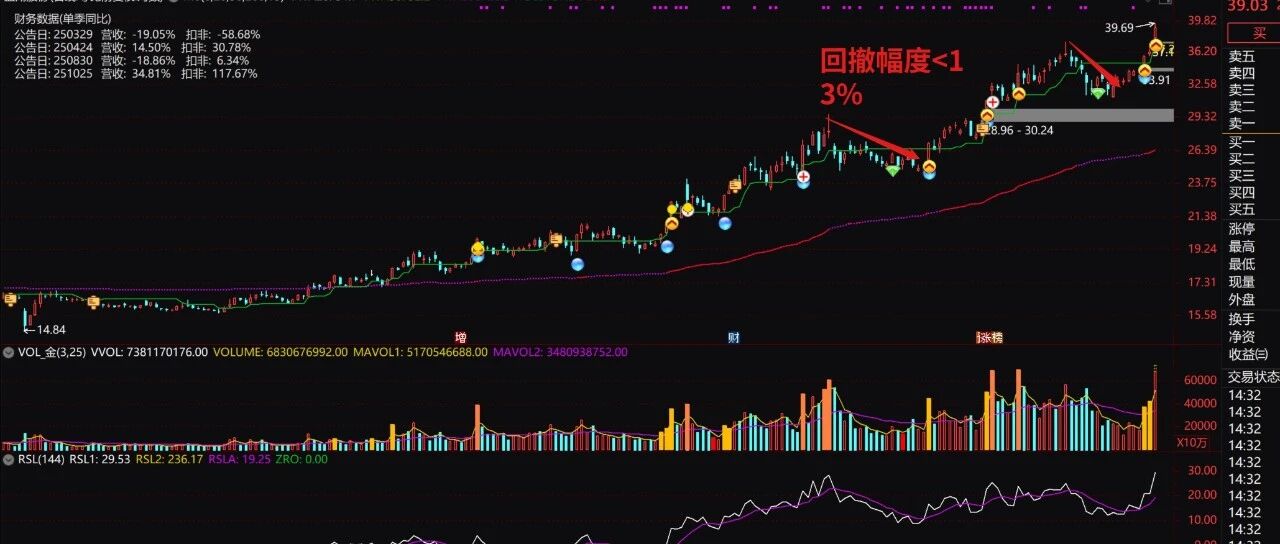
晨光乳业荣膺“华南牛奶领导品牌”认证,全链赋能铸就领导地位
Chang Jiang Shang Bao· 2025-12-30 07:56
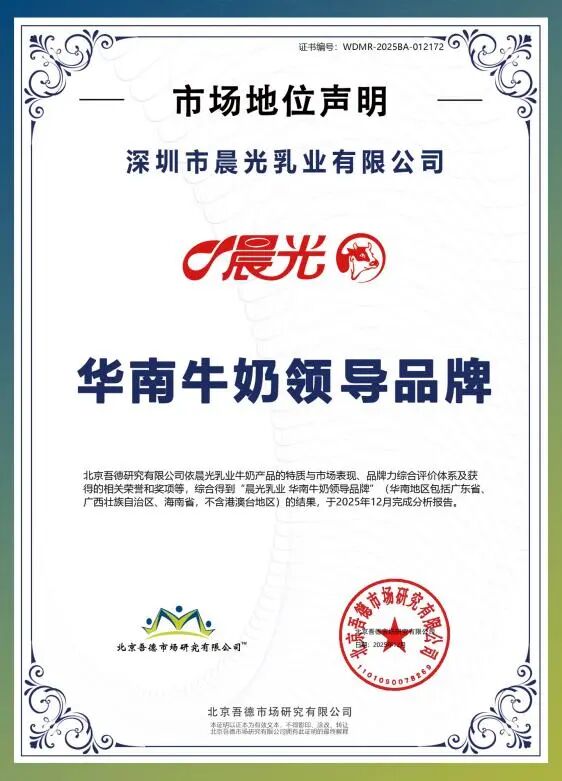
Core Insights - Shenzhen Chenguang Dairy Co., Ltd. has been awarded the "South China Milk Leading Brand" certification by Beijing Wude Research Co., Ltd., recognizing its leadership position in the South China dairy market and setting a benchmark for industry standardization and branding [1]. Group 1: Competitive Advantage - Chenguang Dairy has established a robust industry competitive barrier through deep integration across the entire supply chain, including modern ecological farms and standardized management systems to ensure the freshness and safety of milk sources [3]. - The company has invested in advanced international production equipment and sterile processes, forming a specialized R&D team to continuously launch innovative products tailored to the preferences and nutritional needs of South China consumers [3]. - A comprehensive "farm-to-table" control system has been implemented, ensuring that every product meets national and industry quality standards through multiple testing protocols, thereby enhancing consumer trust [3]. Group 2: Market Trends and Strategies - The dairy industry is evolving towards health, quality, and regionalization, with South China being a key area for consumer upgrades, leading to increased demand for freshness, nutrition, and personalized products [5]. - Chenguang Dairy is strategically focusing on health needs by ensuring natural nutrition through its supply chain management and launching products like organic yogurt and herbal drinks that cater to local climate and health concepts [5]. - The company is optimizing product formulas and supply systems for different demographics while adapting to emerging retail channels such as instant retail and community group buying, addressing diverse needs in both urban and rural markets [5]. Group 3: Future Outlook - The "South China Milk Leading Brand" certification marks a significant milestone for Chenguang Dairy and serves as a new starting point for future growth [6]. - The company plans to increase R&D investment and upgrade its supply chain, deepen industry-academic cooperation, and focus on product innovation and service optimization to enhance its brand influence and contribute to the regional dairy industry's development [6].
中国家电巨头正扎堆去泰国
2 1 Shi Ji Jing Ji Bao Dao· 2025-12-29 05:49
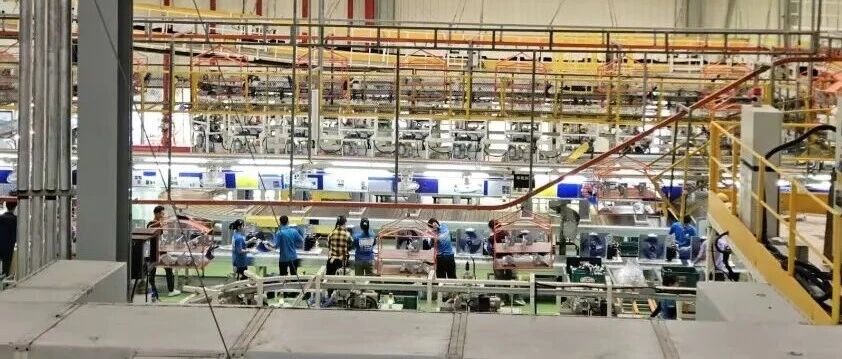
Core Viewpoint - Chinese home appliance companies are increasingly establishing production bases in Thailand, positioning it as a strategic hub for their international expansion, with significant growth in overseas revenue reported by major players like Midea and Haier [1][2][3]. Group 1: Market Expansion and Strategy - Midea's overseas revenue has significantly increased, with OBM revenue accounting for over 45% of its TO C business in 2025 [1]. - Haier's overseas market revenue reached 79.08 billion yuan in the first half of 2025, growing by 11.7% [1]. - Midea has established its largest overseas manufacturing base in Thailand and aims to make it its "second home market" after China [3][4]. Group 2: Reasons for Choosing Thailand - Thailand offers advantages in political stability, supply chain infrastructure, and population demographics, making it an attractive location for Chinese home appliance companies [4]. - The eastern economic corridor of Thailand, particularly in Chonburi and Rayong, is a strategic focus for many Chinese brands due to its proximity to major ports [4]. Group 3: Consumer Trends and Brand Positioning - The Thai home appliance market is experiencing a consumption upgrade, with consumers increasingly willing to invest in higher-end products [5][6]. - Chinese brands are gaining market share in Thailand, with Haier leading in air conditioning and Midea dominating in refrigerators and microwaves [6][7]. Group 4: Product Development and Innovation - Chinese home appliance companies are noted for their rapid product iteration and responsiveness to market demands, which contrasts with the slower innovation cycles of traditional Japanese and Korean brands [7]. - High-end product development is becoming a trend, with companies recognizing the need to move beyond low-cost competition to capture higher profit margins [8]. Group 5: Challenges and Opportunities - Despite significant market presence, Chinese brands still face challenges in brand recognition and consumer perception in Thailand [10][11]. - After-sales service is critical for success, with companies investing heavily in service networks to enhance customer satisfaction [11]. Group 6: Globalization and Regionalization - The concept of regionalization is emerging as a strategy to mitigate risks associated with global trade, allowing companies to leverage local production capabilities to support global operations [12]. - The home appliance industry is transitioning towards a comprehensive ecosystem approach, integrating R&D, supply chain, sales, and after-sales services in overseas markets [12].


中国家电巨头正扎堆去泰国
21世纪经济报道· 2025-12-29 05:40
Core Viewpoint - The article discusses the strategic expansion of Chinese home appliance companies, particularly Midea and Haier, in Thailand, highlighting the importance of the Thai market as a manufacturing and export hub for these companies aiming for global growth [1][3][4]. Group 1: Market Expansion and Strategy - Midea's overseas OBM revenue has significantly increased, accounting for over 45% of its TO C business in 2025 [3]. - Haier's overseas market revenue reached 79.08 billion yuan in the first half of 2025, growing by 11.7% [3]. - The article emphasizes that Chinese home appliance brands are increasingly establishing production bases in Thailand, with Midea planning to produce 6 million units by 2026 [1][4]. Group 2: Competitive Advantages in Thailand - Thailand is seen as a strategic location due to its political stability, supply chain infrastructure, and large market potential, making it an ideal base for Chinese companies [5][6]. - The proximity to major ports, such as Laem Chabang, enhances the export capabilities of these companies [6]. - The Thai market is experiencing a consumption upgrade, with consumers increasingly seeking high-quality products [7]. Group 3: Brand Positioning and Consumer Perception - Chinese brands are gaining market share in Thailand, with Haier leading in air conditioning and Midea dominating in refrigerators and microwaves [10][11]. - The article notes that while Chinese brands have improved their product offerings, there is still a perception challenge among Thai consumers who may prefer established Japanese brands [16]. - Localized marketing strategies, including celebrity endorsements, are being employed to enhance brand visibility and consumer acceptance [10][11]. Group 4: Product Development and Innovation - Chinese companies are noted for their rapid product iteration and responsiveness to market demands, which contrasts with the slower innovation cycles of traditional Japanese and Korean brands [11][13]. - The article highlights the importance of high-end product lines while maintaining mid-range offerings to cater to a broader consumer base [14]. Group 5: Challenges and Future Outlook - Despite the growth, there are challenges related to brand recognition and consumer loyalty, with some consumers still favoring established brands for high-value purchases [16]. - The article suggests that after establishing a presence in Thailand, companies must focus on enhancing after-sales service and operational efficiency to improve market share [17]. - The future of Chinese home appliance companies is seen as moving towards a comprehensive ecosystem that includes R&D, supply chain, sales, and after-sales services in international markets [19].
世界贸易组织报告指出:全球价值链经历再全球化重塑
Jing Ji Ri Bao· 2025-12-25 02:19
Core Insights - The World Trade Organization's report indicates a transformation in global value chains towards "re-globalization," driven by technological advancements, green transitions, and geopolitical changes [1][2] Group 1: Trade Structure and Dynamics - "De-globalization" is not occurring; instead, "re-globalization" is forming, with global value chain trade still accounting for approximately 46% of global trade, down from a peak of 48% in 2022 but still at a high level [2] - Future trade volumes are not expected to decline systematically, but trade structures, routes, and rules will continue to evolve, leading to a growth model characterized by restructuring rather than rapid expansion [2] - The importance of services and digital trade is expected to rise significantly, with digitalization reshaping value creation methods and increasing the share of services in global value chains [2] Group 2: Policy and Governance Influences - Trade is increasingly driven by policy rather than solely by costs, with industrial policies, green regulations, and security reviews deeply influencing trade flows [2] - The report highlights over 180 "targeted trade agreements" focused on digital trade, critical minerals, and green sectors, indicating a shift from comprehensive agreements to problem-oriented cooperation in trade governance [2] Group 3: Environmental and Technological Shifts - Carbon emissions responsibilities are now integrated into value chain decisions, with green policies directly affecting corporate site selection, trade structures, and intermediate goods division [3] - The green industry is undergoing restructuring, with value chains moving towards "green, circular, and traceable" models, emphasizing recycling, reuse, and local processing [3] - Digital technology is lowering the barriers for participation in global value chains, enabling small and medium-sized enterprises to integrate more deeply into multinational value chains [3]
全球价值链经历再全球化重塑
Sou Hu Cai Jing· 2025-12-24 22:46
Core Insights - The World Trade Organization's report indicates a transformation in global value chains towards "re-globalization," driven by technological advancements, green transitions, and geopolitical changes [1][2] Group 1: Trade Structure and Dynamics - Global value chain trade remains significant, accounting for approximately 46% of global trade, despite a decrease from the 48% peak in 2022 [2] - Future trade growth is expected to be characterized by structural adjustments, technological upgrades, and deepened regional cooperation rather than rapid expansion [2] - The importance of services and digital trade is rising, with digitalization reshaping value creation and increasing the share of digitally deliverable services in global value chains [2] Group 2: Policy and Governance Influences - Trade is increasingly influenced by policy rather than solely cost factors, with industrial policies, green regulations, and security reviews significantly affecting trade flows [2] - The report highlights over 180 "targeted trade agreements" focusing on digital trade, critical minerals, and green sectors, indicating a shift from comprehensive agreements to issue-oriented cooperation [2] Group 3: Environmental and Technological Shifts - Carbon emissions responsibilities are now integrated into value chain decisions, with green policies directly impacting corporate site selection and trade structures [3] - The green industry is undergoing restructuring, with a focus on electric vehicles and critical minerals, leading to a reorganization towards "green, circular, and traceable" value chains [3] - Digital technology is lowering barriers for participation in global value chains, enabling small and medium enterprises to engage more deeply in cross-border value chains [3]
世界贸易组织报告指出——全球价值链经历再全球化重塑
Jing Ji Ri Bao· 2025-12-24 22:38
Core Insights - The World Trade Organization's report indicates a transformation in global value chains towards "re-globalization," driven by technological advancements, green transitions, and geopolitical changes [1][2] Group 1: Trade Structure and Dynamics - "De-globalization" is not occurring; instead, "re-globalization" is forming, with global value chain trade still accounting for approximately 46% of global trade, down from a peak of 48% in 2022 but still at a high level [2] - Future trade volumes are not expected to decline systematically, but trade structures, routes, and rules will continue to evolve, leading to a growth model characterized by restructuring rather than rapid expansion [2] - The importance of services and digital trade is expected to rise significantly, with digitalization reshaping value creation methods and increasing the share of services in global value chains [2] Group 2: Policy and Governance Influences - Trade is increasingly driven by policy rather than solely by costs, with industrial policies, green regulations, and security reviews deeply influencing trade flows [2] - The report highlights over 180 "targeted trade agreements" focused on digital trade, critical minerals, and green sectors, indicating a shift from comprehensive agreements to problem-oriented cooperation in trade governance [2] Group 3: Environmental and Technological Shifts - Carbon emissions responsibilities are now integrated into value chain decisions, with green policies directly affecting corporate site selection, trade structures, and intermediate goods division [3] - The green industry is undergoing restructuring, with value chains moving towards "green, circular, and traceable" models, emphasizing recycling, reuse, and local processing [3] - Digital technology is lowering the barriers for participation in global value chains, enabling small and medium-sized enterprises to integrate more deeply into cross-border value chains [3]
中国会议产业:正以高端化赋能,进行产业化布局
Zhong Guo Jing Ji Wang· 2025-12-23 10:22
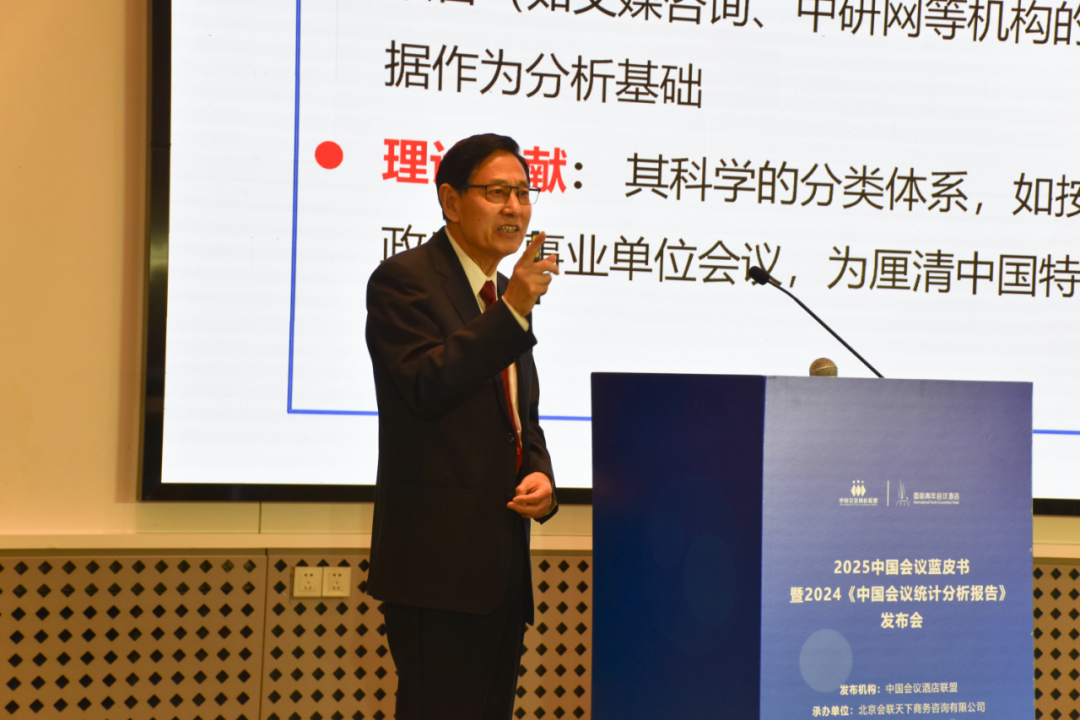
Core Insights - The 2025 China Conference Blue Book and the 2024 Annual "China Conference Statistical Analysis Report" were released, summarizing the conference industry in China and forecasting its development for 2026 [1][5] Group 1: Industry Overview - The "China Conference Statistical Analysis Report" has been a core database for the industry since its first release in 2011, providing essential data for industry development [1][3] - The report is recognized as the only authoritative annual conference statistical analysis in China, serving as a critical reference for investment, market expansion, academic research, and decision-making for organizers [3][5] Group 2: Market Trends - The conference industry is undergoing a restructuring, with marketization and specialization becoming mainstream. Since 2023, the market has shown a diverse range of conference types, with corporate meetings dropping from a peak of 70% to 50%, while association meetings have increased by 15 percentage points [5][6] - The China Materials Conference (CMC) exemplifies the growth in association meetings, with attendance rising from 19,000 in 2023 to 25,000 in 2025, reflecting the industry's shift towards market-oriented and specialized events [6] Group 3: Economic Impact - In 2023, 18 monitored conference hotels in Nanjing hosted over 1,400 large-scale meetings with more than 600,000 participants, demonstrating the significant economic impact of the conference industry [8] - The 113th National Sugar and Wine Products Trade Fair generated over 3 billion yuan in direct economic benefits through associated business activities, highlighting the importance of the conference economy in resource aggregation [8] Group 4: Future Outlook - For 2026, the conference industry is expected to develop along three main trends: high-end, industrial, and regional integration, driven by major international conferences and new productivity forces [10][11] - Local governments are encouraged to shift from financial subsidies to enhancing service quality and optimizing support for industry-specific conferences, thereby increasing the value of meetings [11][13]
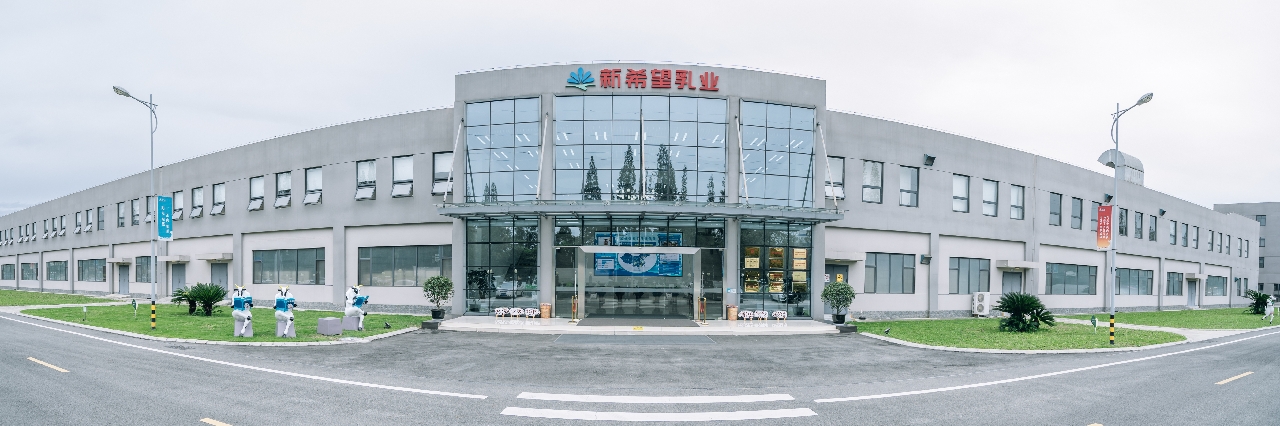
新乳业南下:收购福州澳牛,区域乳企整合再下一城
Guan Cha Zhe Wang· 2025-12-22 10:18
Core Viewpoint - New Dairy has successfully completed the acquisition of Fuzhou Aoniu Dairy assets, marking the end of a six-year negotiation process, which is part of its broader strategy to expand its national presence through mergers and acquisitions [2][6][34]. Group 1: Acquisition Details - The acquisition of Fuzhou Aoniu Dairy involved a total payment of 111 million yuan, with 109 million yuan already paid by November 2025, and the final payment of 2.31 million yuan completed on December 18 [6][8]. - The deal began in August 2019, with a framework agreement signed shortly after New Dairy's IPO, aiming to acquire 55% of Aoniu's equity [7][34]. - Aoniu Dairy has been operating in the local market for over 20 years, focusing on low-temperature milk products, and holds a significant market share in Fujian province [10][11]. Group 2: Market Position and Strategy - New Dairy's acquisition strategy has included multiple regional brands since its listing in 2019, establishing a business network centered in the Southwest and extending nationwide [2][34]. - The company currently operates 15 major dairy brands, 16 processing plants, and 12 owned farms, with a total liquid milk production capacity exceeding 162,000 tons per year [4][20]. - The acquisition of Aoniu is expected to enhance New Dairy's channel capabilities and brand influence in the Fujian region, which is crucial for expanding its market presence in Southern China [15][35]. Group 3: Financial Performance - For the first three quarters of 2025, New Dairy reported revenues of 8.434 billion yuan, a year-on-year increase of 3.49%, and a net profit of 623 million yuan, up 31.48% [23]. - The company has been focusing on low-temperature products, which have shown double-digit growth, particularly in its low-temperature yogurt brand [23]. - New Dairy's debt levels have been high, with total liabilities decreasing from 68.25 billion yuan in 2022 to 56.24 billion yuan by September 2025, marking a significant reduction in its debt ratio [30][33]. Group 4: Industry Trends - The Chinese low-temperature milk market is projected to grow at a rate of 8.4% in 2024, significantly outpacing the 1.2% growth of ambient milk, indicating a shift in consumer preferences [17]. - The trend in the dairy industry is moving towards consolidation, with regional dairy companies banding together to enhance competitiveness, as seen in New Dairy's acquisition strategy [17][29].