对冲风险

Search documents
配置半夏,押注李蓓
半夏投资· 2026-02-04 08:33
Group 1 - The performance of Hanxia's funds has been strong this year, with recent days showing resilience despite market fluctuations, leading to new net asset value highs [1] - High-net-worth individuals and wealth management institutions are currently concentrating their asset allocations in four main categories: quantitative long positions, all-weather funds, science and technology innovation funds, and overseas assets [3] - The existing allocation structure is heavily skewed and crowded, which carries significant risks [4] Group 2 - The core trigger for potential risks is whether housing prices and consumer prices can bottom out and rebound [5] - Two future economic scenarios are analyzed: - Scenario A: A reversal of deflation, leading to significant gains for Hanxia and a lackluster performance from heavily weighted strategies in the wealth market [7] - Scenario B: Continued deflation, resulting in modest losses or small gains for Hanxia while the wealth market's four major strategies continue to rise [8] - The conclusion suggests that allocating a portion of investments to Hanxia and betting on Li Bei could be a wise choice to hedge risks and improve the risk-return profile of the portfolio [9] Group 3 - The second article confirms the major turning point in China's real estate market, which aligns with the conditions discussed in the first article [11] - The current allocation to Hanxia and betting on Li Bei is now seen as a right-side choice, indicating a confirmation of the turning point and an opportunity for trend investors to increase their positions [12] - Investors who followed the advice to increase their positions in Hanxia are likely experiencing positive outcomes [10]


中国再抛61亿美债!特朗普口风变了,鲍威尔保住乌纱帽
Sou Hu Cai Jing· 2026-01-19 10:17
Core Viewpoint - China is strategically reducing its holdings of US Treasury bonds, selling $6.1 billion in November 2025, bringing its total holdings down to $682.6 billion, the lowest level since 2008, indicating a deliberate shift in asset management strategy [1][4]. Group 1: China's Strategy - Since April 2022, China has actively reduced its US Treasury bond holdings to below $1 trillion, marking a three-year trend of asset restructuring [4]. - This reduction is not a reaction to market trends but a calculated move aimed at enhancing national asset security and long-term risk hedging [4][17]. - In contrast, other countries like Japan and the UK have increased their US Treasury holdings during the same period, indicating that China's actions are not a market trend but a strategic decision [4]. Group 2: Shift to Gold - Following the reduction in US Treasury holdings, China's gold reserves have increased to 74.15 million ounces, with continuous accumulation over 14 months [6]. - This transition from US debt to gold serves as a hedge against risks associated with the US dollar, particularly in light of rising US debt and inflation concerns [6][20]. - Gold is viewed as a stable asset that cannot be easily manipulated by any single country, making it a strategic buffer for China [6]. Group 3: US Political and Economic Context - The US is experiencing internal political tensions affecting monetary policy, with former President Trump pressuring the Federal Reserve for interest rate cuts ahead of the 2026 midterm elections [9][12]. - Despite Trump's calls for action, the Federal Reserve, led by Powell, is cautious about lowering rates due to persistent inflation, complicating the political landscape [12][15]. - The independence of the Federal Reserve is under scrutiny, and any perceived political interference could undermine market confidence in the US dollar [15][22]. Group 4: Future Outlook - The trend of reducing US Treasury holdings is expected to continue as inflation remains high and the US faces ongoing fiscal challenges [18]. - China is diversifying its reserve assets away from a singular reliance on the US dollar towards a more varied portfolio, which is a gradual but strategic process [20][22]. - This shift is not a complete disengagement from US debt but a methodical approach to mitigate risks and establish a more resilient foreign exchange structure [22].

金银铜锡:刷新历史新高,今年金价或达5000美元
Sou Hu Cai Jing· 2026-01-15 13:50
Core Insights - The simultaneous historical highs of gold, silver, copper, and tin reflect investor concerns over geopolitical tensions in regions like Venezuela and Iran [1] - Investors are reassessing asset allocations amid reshaping geopolitical and trade landscapes, indicating potential for further increases in gold and silver prices [1] - A Singapore asset management firm noted that many brokerages have recently increased their commodity allocations, particularly in gold, as a risk-hedging tool [1] Investment Trends - The allocation of precious metals in the U.S. market is currently only 0.4%, compared to over 4% in the late 1970s, suggesting a potential gradual increase in the future [1] - A UK asset management firm, Morningstar, predicts that gold and silver will continue to rise this year, with gold potentially reaching $5,000 per ounce and silver exceeding $100 per ounce [1]
多因素驱动ETF市场特色化发展
Zheng Quan Ri Bao· 2025-11-12 16:15
Core Insights - The ETF market has experienced significant growth, with total shares reaching 31.7 trillion and total assets amounting to 5.74 trillion yuan, alongside over 1,300 products available [1] - The market is diversifying, expanding from traditional equity ETFs to include bonds, commodities, currencies, and REITs, while also covering emerging sectors like semiconductors, AI, and carbon neutrality [1][2] - The development of innovative trading strategies and product differentiation is evident, with customized index products for institutional investors and regional theme ETFs aligning with national development strategies [1][2] Market Trends - The ETF market is characterized by a shift towards personalized investment solutions, driven by increasing competition and the need for differentiation among market participants [2] - Institutional investors are demanding customized ETFs that align with their long-term liabilities, leading to the creation of low-volatility and high-dividend index products [2] - Technological advancements, particularly in big data and AI, are facilitating product innovation within the ETF space, making it essential for firms to adapt to these changes [2] Future Outlook - The trend towards specialized and differentiated ETF products reflects a broader shift in the asset management industry from supply-driven to demand-driven strategies [2] - Successful products in the future will be those that can accurately capture industry changes and continuously lower the cost of investor participation [2]
帮主郑重:别把期权当“赌具”!普通人该懂的几个实用知识点
Sou Hu Cai Jing· 2025-11-04 19:27
Core Viewpoint - Options are not gambling tools but financial instruments that can be used for hedging and risk management, requiring a clear understanding of their mechanics before investing [3][4]. Group 1: Understanding Options - Options can be likened to a deposit for purchasing an asset at a predetermined price, allowing investors to benefit from price movements without committing to the full purchase [3]. - A call option provides the right to buy an asset at a set price, while a put option allows selling at a predetermined price, functioning as a form of insurance against market fluctuations [3]. Group 2: Risks and Cautions - Investors should avoid the temptation of "small bets for big returns," as options can expire worthless, leading to total loss of the invested capital [4]. - It is crucial to understand the rules of options, including expiration dates, as failing to exercise options before they expire results in a total loss of the premium paid [4]. - New investors are advised to start with small amounts to familiarize themselves with options strategies before committing larger sums [4].
比特币破12.5万美元!不是泡沫,是全球信任重构的信号?
Sou Hu Cai Jing· 2025-10-06 14:08
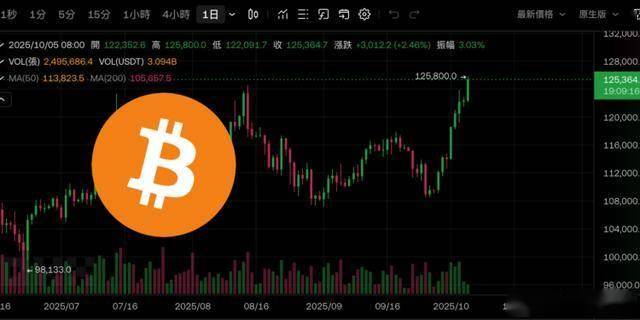
Core Insights - Bitcoin reached a historical high of $125,689 on October 5, 2025, sparking mixed reactions in the market, with some viewing it as "digital gold" while others see it as another bubble [1] - The current surge is driven by institutional investments rather than retail speculation, with multiple Bitcoin spot ETFs experiencing consistent net inflows [3] - The macroeconomic environment, including potential government shutdowns and rising uncertainty around the US dollar, is prompting investors to seek alternatives like Bitcoin for hedging [3] Institutional Investment Trends - Unlike the retail-driven market of 2021, the current Bitcoin rally is characterized by significant institutional buying, indicating a shift in asset allocation strategies [3] - Major financial institutions are incorporating Bitcoin into their asset allocation models, reflecting a structural change in how Bitcoin is perceived as an alternative asset [5] Regulatory and Technological Landscape - China's stance on cryptocurrencies is clear: it avoids speculative trading but focuses on underlying technology, such as the digital yuan, which is being gradually rolled out [5] - The trust mechanism in traditional finance is under scrutiny due to high debt levels and persistent inflation, leading to increased interest in decentralized alternatives like Bitcoin [5][7] Market Dynamics and Future Outlook - The driving force behind Bitcoin's adoption is often practical rather than ideological, with investors focused on its ability to hedge against risks and outperform inflation [7] - The existence of Bitcoin has altered the default settings of the financial system, providing a psychological reference point for market participants [7] - The potential for Bitcoin to reach $125,000 is seen as a midpoint rather than a final destination, with ongoing developments in institutional adoption and regulatory frameworks likely to influence its trajectory [9]
原木期货首个合约圆满完成交割
Qi Huo Ri Bao Wang· 2025-08-10 16:09
Core Viewpoint - The successful completion of the LG2507 futures contract delivery marks a significant milestone for the wood futures market, validating the contract rules and regulatory framework, and laying a solid foundation for future market functionality and industry development [1][7]. Delivery Performance - The LG2507 contract operated for 169 trading days, with a total trading volume of 4.3411 million contracts and a transaction value of 321.328 billion yuan, averaging 25,700 contracts traded daily [1]. - In July, 1,281 contracts were delivered, equivalent to 115,290 cubic meters of wood, with total delivery value around 95.33 million yuan [2]. Industry Response - Companies like Shandong Tengnuo Wood Industry Co., Ltd. have utilized the futures market to hedge against rising raw material prices, achieving cost and profit margin stabilization through early delivery [3]. - Jiangsu Huihong International Group implemented a sell hedge strategy on the LG2507 contract, successfully completing 85 contracts, which helped smooth their revenue curve [4]. Quality and Efficiency Improvements - The introduction of standardized measurement and inspection processes has enhanced the quality assurance of delivered wood, reducing subjective quality assessments and improving delivery efficiency [4][5]. - Taicang Xinhai Port Development Co., Ltd. achieved a delivery efficiency of 20 minutes per contract, with a daily average of 30 contracts delivered during peak periods [5]. Market Development Initiatives - The Dalian Commodity Exchange has taken proactive measures to ensure smooth delivery operations, including organizing mock deliveries and enhancing training for market participants [6]. - Future plans include strengthening market regulation, expanding delivery resources, and promoting best practices to enhance industry participation in hedging and trading activities [7].
高盛:全球信用利差收窄至2007年以来最低水平 建议做好对冲
news flash· 2025-08-01 03:13
Core Viewpoint - Goldman Sachs warns investors to hedge risks as global credit spreads narrow to the lowest level since 2007, despite signs of economic weakness and the absence of clear signals from the Federal Reserve regarding interest rate cuts [1] Group 1: Credit Spreads and Economic Indicators - The global investment-grade corporate bond credit spread has narrowed to 79 basis points, the lowest level since July 2007, just before the onset of the global financial crisis [1] - Recent trade agreements between the U.S. and its trading partners have clarified tariff prospects, leading investors to overlook short-term economic growth weaknesses as long as recession risks remain manageable [1] Group 2: Federal Reserve and Market Signals - Despite the narrowing credit spreads and the S&P 500 index reaching a new all-time high, the Federal Reserve has not provided clear signals of imminent interest rate cuts, indicating a need for more data to confirm that inflation risks are not persistent [1] - Goldman Sachs emphasizes that there are still significant downside risks, suggesting that investors should maintain some hedging measures in their portfolios [1]

机构:美股屡创新高之际空头仓位持续攀升
news flash· 2025-07-03 07:57
Core Viewpoint - Despite a strong rebound in the U.S. stock market following a 25% decline earlier this year, short positions in the S&P 500 and Nasdaq 100 indices continue to rise, indicating that investors may be employing a contrarian strategy to hedge risks or express doubts about the sustainability of the recovery [1] Group 1: Short Position Trends - According to S3 Partners, the short position in the S&P 500 has increased from 5.4% at the beginning of the year to 5.8% [1] - The short position in the Nasdaq 100 has expanded from less than 5.2% to approximately 6.1% [1] Group 2: Market Performance Comparison - The S&P 500 index has seen a year-to-date increase of only 6%, which is significantly lower than the average gains of 15%-20% in major global markets [1] - S3 Partners highlights that only a few major global indices have underperformed the S&P 500, contributing to its lagging growth compared to the global average [1]
中国央行的“出击”与美联储的“按兵不动”
经济观察报· 2025-05-10 04:57
Core Viewpoint - The article discusses China's proactive monetary policy measures in response to the U.S. economic challenges, emphasizing a combination of "credit easing and risk hedging" as a strategic move in the context of U.S.-China economic relations [1][7]. Summary by Sections Monetary Policy Actions - The People's Bank of China (PBOC) announced a "double reduction" (cutting the reserve requirement ratio and interest rates), implementing these easing measures ahead of the Federal Reserve [2][4]. - Key measures include a 10 basis point reduction in policy rates, a 0.25 percentage point cut in relending rates, and an increase in the quota for technology innovation loans from 500 billion to 800 billion yuan, among other policies aimed at stabilizing the market [4]. Financial Regulatory Measures - The Financial Regulatory Administration plans to introduce several policies to support real estate financing, expand insurance investment trials, and facilitate small and micro-enterprise financing [5]. - The China Securities Regulatory Commission aims to consolidate market stability and promote long-term capital inflow through various reforms and initiatives [5]. Economic Context and Implications - The article highlights the deteriorating economic indicators in China, such as a CPI of -0.3% and a PPI decline of 2.1%, indicating weak economic momentum that requires stimulation [8]. - The coordinated efforts of financial policies are seen as a response to the challenges posed by the U.S. economic situation, with the aim of creating a favorable environment for upcoming U.S.-China trade talks [9]. Market Reactions - Following the announcement of these policies, the A-share market responded positively, reflecting market confidence in the government's measures [9]. - The article notes that while the market reaction was more rational compared to previous policy announcements, it underscores the need for further fiscal measures to complement monetary policy [9]. Future Considerations - Analysts suggest that for these monetary policies to effectively stabilize the economy and mitigate structural risks, fiscal measures must also be implemented, including increasing the deficit ratio and enhancing consumer spending [8][9].