
通胀升温

Search documents
中泰期货晨会纪要-20260323
Zhong Tai Qi Huo· 2026-03-23 01:50
Report Industry Investment Rating No relevant information provided. Core Viewpoints of the Report - The report provides a comprehensive analysis of various industries and commodities, including macroeconomics, finance, black commodities, non - ferrous metals, agricultural products, and energy chemicals. It assesses the current market situation, supply - demand relationships, and price trends of each sector, and gives corresponding trading strategies and investment suggestions based on these analyses [2][6][12]. Summary by Directory 1. Commodity Trend Judgments - **Based on Fundamental Analysis**: For commodities like live hogs, short - fiber, and fuel oil, trend judgments (such as trend空头, 震荡偏空, 震荡, 震荡偏多, trend多头) are made based on fundamental factors [2]. - **Based on Quantitative Indicators**: For commodities like manganese silicon, soybean No.1, and rubber, trend judgments (偏空, 震荡, 偏多) are made based on quantitative indicators such as volume - price factors [4]. 2. Macro News - **Interest Rates**: China's March LPR remained unchanged for 10 consecutive months. Experts predict a possible 10 - 20 basis - point interest rate cut in the middle of the year, and the 5 - year - plus LPR may be further reduced to stabilize the property market [6]. - **Financial Laws**: The draft financial law aims to build a capital market that is safe, regulated, transparent, open, dynamic, and resilient, promoting the coordinated development of investment and financing and supporting the entry of medium - and long - term funds into the market [6]. - **International Affairs**: Tensions in the Middle East, especially the Iran - US conflict, have led to disruptions in oil supply, with the US considering military deployment and Iran threatening counter - attacks. There are also concerns about the closure of key shipping lanes like the Strait of Hormuz and the Bab el - Mandeb Strait [6][9]. - **Corporate News**: Tesla is seeking to purchase $2.9 billion worth of photovoltaic manufacturing equipment from China. Yushu Technology is applying for a listing on the STAR Market, with significant revenue and profit growth in 2025. The IPO financing in the Hong Kong stock market has exceeded HK$100 billion this year [7]. - **Domestic Policies**: The National Development and Reform Commission and the Ministry of Agriculture and Rural Affairs have called on pig - farming enterprises to adjust production to balance supply and demand. Nanjing has introduced policies to stabilize the property market, including mortgage interest subsidies and tax adjustments [8]. - **Central Bank Policies**: The Fed may cut interest rates three times this year, while the European Central Bank may raise interest rates 2 - 3 times this year [8][9]. 3. Macro - finance - **Stock Index Futures**: It is recommended to wait and see, and consider right - side trial long positions when trading volume increases. The A - share market shows significant differentiation, and the Iran situation has suppressed risk appetite, but the central bank's statement to maintain market stability has boosted confidence [12]. - **Treasury Bond Futures**: It is advisable to wait for the odds point and consider left - side long positions as the bond market gradually has odds. The bond market is affected by factors such as capital supply and inflation expectations, and the yield curve is likely to remain steep [13][14]. 4. Black Commodities - **Steel and Iron Ore**: Steel demand is weak, with low - profit steel mills and stable supply. Iron ore supply and demand are both strong. Short - term steel long positions should be closed at high prices, and iron ore should be sold with a wide - straddle strategy [16][17]. - **Soda Ash and Glass**: They are affected by geopolitical energy sentiment. Soda ash supply is high, and glass supply has cold - repair and ignition expectations. It is recommended to wait and see [18]. 5. Non - ferrous Metals and New Materials - **Copper**: Due to geopolitical tensions, inflation pressure has increased, and the expectation of interest rate cuts has decreased. Copper prices will be under pressure and fluctuate. However, the improvement in fundamentals may support prices in the medium and long term [20][21]. - **Zinc**: Inventory has decreased, and it is advisable to adopt a short - bias trading strategy [22]. - **Lead**: Inventory has stopped rising, and it is recommended to observe the price rebound and trade with a range - bound strategy [24]. - **Lithium Carbonate**: Supply and demand are marginally weakening, and prices will be under pressure and fluctuate [26]. - **Industrial Silicon and Polysilicon**: Industrial silicon will fluctuate, and it is advisable to consider selling out - of - the - money put options. Polysilicon will fluctuate weakly, and caution is needed due to low liquidity [27]. 6. Agricultural Products - **Cotton**: It is affected by increased imports and geopolitical conflicts, and is in a high - level adjustment. In the long term, the decrease in cotton supply may support prices [30][31]. - **Sugar**: There is a divergence in the global sugar supply outlook. Domestic sugar prices will fluctuate and rebound, but there are still supply pressures [32][33]. - **Eggs**: Consumption has recovered in the short term, but supply pressure is large. The upside of spot prices is limited, and futures prices may face pressure [36][37]. - **Apples**: High - quality apples may continue to be strong, and the market is expected to be stable and strong in the short term [38]. - **Corn**: It is recommended to be cautious about chasing high prices and consider a 5 - 7 reverse spread strategy. Low inventory supports prices, but policy regulation and wheat substitution may suppress prices [39]. - **Jujubes**: The market is expected to be range - bound and weak [40]. - **Pigs**: It is advisable to consider selling out - of - the - money call options on near - month contracts. Supply pressure is high, but inventory may start to decline [41]. 7. Energy Chemicals - **Crude Oil**: The Strait of Hormuz remains closed, and supply risks are increasing. The market has not fully priced in the supply shortage [41]. - **Fuel Oil**: It will follow the price of crude oil and fluctuate at a high level as long as geopolitical risks remain [43]. - **Plastics**: Affected by the Iran conflict, prices may be slightly supported in the short term, but the long - term trend depends on the end of the war [44]. - **Rubber**: It is advisable to be cautious in unilateral trading. Pay attention to narrowing price spreads and consider selling put options after full - scale tapping [45]. - **Synthetic Rubber**: Prices may continue to rise due to cost factors, but high volatility is expected. It is advisable to wait and see [46]. - **Methanol**: The current supply - demand situation has slightly improved, but it is greatly affected by the Iran situation. It may be slightly strong in the short term, but may correct if the war eases [47]. - **Caustic Soda**: The price is affected by supply - side production cuts and export increases, as well as futures premium. It is necessary to closely monitor the market [48][49]. - **Asphalt**: The industry is in a situation of weak supply and demand, and prices follow the price of crude oil [50]. - **PVC**: The price may be strong in the short term due to upstream production cuts, but there is a risk of correction if the market sentiment turns bad [51]. - **Polyester Industry Chain**: It is advisable to be cautiously bullish, but beware of corrections due to the cooling of geopolitical sentiment. Pay attention to device maintenance and demand recovery [52]. - **Liquefied Petroleum Gas (LPG)**: Prices have risen significantly due to the Iran - US conflict, and are expected to remain high and volatile [53]. - **Paper Pulp**: The market is in a state of multi - empty game. If the market improves and inventory decreases, it is advisable to try long positions at low prices [55]. - **Logs**: The demand is gradually recovering, and prices are supported by cost. Pay attention to the impact of the Iran - US conflict and port inventory [55][56]. - **Urea**: The spot market is oversupplied, and futures prices are affected by policy and coal prices [57].
降息3次?美联储,突传重大变数!
券商中国· 2026-03-21 04:55
Core Viewpoint - The Federal Reserve officials have indicated a potential shift in monetary policy, with discussions around interest rate cuts and the impact of geopolitical tensions on inflation and the economy [2][4][5]. Group 1: Interest Rate Outlook - Federal Reserve Vice Chair Michelle Bowman expects the Fed to cut interest rates three times this year, despite concerns about the labor market [2][3]. - Fed Governor Christopher Waller stated he would support rate cuts later this year if signs of labor market weakness emerge, while also being cautious about inflation pressures from geopolitical events [4][5]. - The CME FedWatch Tool indicates that traders now see a greater than 30% chance of a rate hike by the end of the year, contrasting with the expectation of rate cuts [2][5]. Group 2: Geopolitical Impact - The ongoing conflict in the Middle East has led to rising oil prices, which may contribute to renewed inflationary pressures in the U.S., potentially delaying rate cuts or prompting rate hikes [2][4][6]. - Waller highlighted that the closure of the Strait of Hormuz could lead to increased inflation, affecting core inflation metrics [4]. Group 3: Federal Reserve Leadership Changes - President Trump has publicly supported the investigation into Fed Chair Jerome Powell, which may complicate the confirmation process for Kevin Warsh as Powell's potential successor [7][8]. - The investigation focuses on cost overruns related to the renovation of the Fed's headquarters, raising concerns about the independence of the Fed from political influence [8][9]. - Powell's term as Fed Chair ends in May, but he will continue to serve until a successor is confirmed [10].


降息预期与通胀升温的博弈
HUAXI Securities· 2026-03-08 14:27
1. Report Industry Investment Rating No information provided in the report. 2. Core Viewpoints of the Report - In the first ten days of March, the bond market was mainly priced by two logics: the rising risk - aversion sentiment caused by the Middle - East geopolitical conflict and whether there were new statements or incremental policies in the government work report of the Two Sessions. With the long - end interest rates in a sideways shock state and short - end performance being more dominant, the interest - rate bond curve steepened as a whole. Meanwhile, the general credit bonds and Tier 2 capital bonds continued their strong performance [1]. - Starting from mid - March, three logics are worthy of attention: the price - rising logic, the marginal changes at the institutional level, and the central bank's possible "slow withdrawal" of medium - and long - term redundant funds. Without incremental positive factors, long - end interest rates may be in a "unable to decline" state, and the key variable to break the lower bound of interest rates may be the implementation of interest - rate cuts, with April being a critical window [2][3]. - For bond - market strategies, the box - thinking may still work. When the yield of 10 - year Treasury bonds enters the range of 1.83 - 1.85%, it may be in a state where long - end interest rates "cannot rise", and high - elasticity varieties can be added to increase the duration; when the yield of 10 - year Treasury bonds drops to the range of 1.75 - 1.77%, a catalyst is needed for further decline, and one can consider taking profits on long - term bonds and waiting, using the leverage + coupon strategy as a transition. In mid - March, one should play the game of rising inflation while taking into account the possibility of interest - rate cuts, with the portfolio duration placed at a neutral level and a more extreme dumbbell strategy adopted [3]. 3. Summary According to the Directory 3.1. Multi - factor Intertwining, Cautious Pricing in the Bond Market - From March 2 - 6, affected by domestic important meetings and overseas geopolitical conflicts, the bond market priced cautiously. The long - end interest rates of 10 - year Treasury bonds, 30 - year Treasury bonds, and 10 - year CDB bonds had slight fluctuations, while the short - end interest rates of 1 - year and 3 - year Treasury bonds also changed [8]. - In the first week of March, the central bank routinely withdrew the cross - month funds, and the weekly average of R001 and R007 were 1.36% and 1.51% respectively. In a loose environment, the short - end performed better, and the interest - rate bond curve steepened. The yields of general credit bonds showed a parallel downward trend, and the issuance rates of inter - bank certificates of deposit declined counter - seasonally [10][13]. 3.2. Three Logics Worthy of Attention from Mid - March - **Price - rising logic**: Since the beginning of March, the full blockade of the Strait of Hormuz by Iran has led to a sharp rise in crude - oil prices. If the average price of Brent crude oil in March reaches $90, $100, and $120 per barrel respectively, the impact on the year - on - year growth rate of China's PPI in March will be + 0.5pct, + 0.7pct, and 1.2pct respectively, and the delayed impact on April data may reach + 0.6pct, + 0.8pct, and 1.4pct. The market may pre - price the potential accelerated recovery of inflation [19]. - **Institutional - level marginal changes**: From January to March 2026, the medium - and long - term bond allocation behavior of large banks in the secondary market went through three stages: over - buying in January, slow - buying in February, and no - buying in March, indicating that the early - year asset - grabbing is coming to an end. As the primary - market supply accelerates, large banks are gradually returning to the role of sellers of long - term bonds in the secondary market. Near the end - of - quarter revenue settlement, banks may turn to taking profits and have a higher demand to reduce medium - and long - term bonds [21]. - **The central bank's possible "slow withdrawal" of medium - and long - term redundant funds**: Recently, the central bank has started to implement a "slow withdrawal" operation for medium - and long - term funds. For example, the bond - buying scale in February decreased from 100 billion yuan to 50 billion yuan, and the net withdrawal of 3 - month repurchase in March was 200 billion yuan. It is crucial to observe the stability of the money market after the Two Sessions [24]. 3.3. The Seasonal Recovery of Wealth - Management Scale in the First Week of the Month - **Weekly scale**: The wealth - management scale decreased at the end of February due to the impact of balance - sheet return pressure. In the first week of March, it recovered as expected, with a week - on - week increase of 33.5 billion yuan to 33.37 trillion yuan. As the end of the quarter approaches, the balance - sheet return pressure will gradually emerge [35]. - **Wealth - management risks**: The retracement of equity - containing products has increased, and the negative - return ratio of wealth - management products has risen. The overall negative - return ratio of wealth - management products has increased by 7.73pct to 9.65% this week. The net - breaking rate of all products has increased by 0.02pct to 0.31%, and the performance non - compliance rate has increased by 0.3pct to 25.1% [41][49]. 3.4. The Leverage Ratio in the Inter - bank and Exchange Markets Has Both Increased - From March 2 - 6, the money market loosened spontaneously under the influence of fiscal expenditure. The average daily trading volume of inter - bank pledged repurchase increased significantly, and the proportion of overnight trading also increased. The inter - bank leverage ratio, exchange - market leverage ratio, and the leverage ratio of non - bank institutions all increased [55][59]. 3.5. Both Interest - type and Credit - type Medium - and Long - term Bond Funds Have Extended Their Durations - From March 2 - 6, the durations of interest - type and credit - type medium - and long - term bond funds have both increased. The weekly average duration of interest - type medium - and long - term bond funds has increased from 3.26 years to 3.43 years, and that of credit - type medium - and long - term bond funds has increased from 1.96 years to 2.05 years. The durations of short - term and medium - short - term bond funds have slightly decreased [66][75]. 3.6. The Net Issuance Scale of Government Bonds Has Decreased - From March 9 - 13, the planned issuance of government bonds is 49.75 billion yuan, slightly higher than the previous week. However, the net payment of government bonds on a payment - date basis will turn negative, estimated to be about - 162.1 billion yuan. The net payment of Treasury bonds has decreased significantly, and the net payment of local bonds has also decreased [77][80].
鲍威尔放鹰,12月降息“难说”
HUAXI Securities· 2025-10-30 01:32
Group 1: Federal Reserve Actions - The Federal Reserve lowered the interest rate by 25 basis points to a range of 3.75-4.0% on October 30, 2025[1] - Market expectations for a December rate cut dropped from approximately 90% to 63% following Powell's hawkish statements[2] - The Fed will cease its balance sheet reduction starting December 1, allowing $35 billion in MBS to mature and reinvesting the proceeds into Treasury bonds[2] Group 2: Economic Indicators and Risks - Employment growth has slowed, and the unemployment rate has slightly increased, indicating rising downside risks to employment[1] - Inflation has shown signs of rising, with recent indicators suggesting a potential upward trend in inflation risks[6] - The market anticipates a policy rate of about 3.08% by the end of 2026, compared to the Fed's September dot plot estimate of 3.4%[6] Group 3: Divergence in Fed Opinions - Two dissenting votes were recorded in the recent Fed meeting, with one member advocating for a 50 basis point cut and another supporting no change[3] - The divergence in opinions among Fed members reflects uncertainty regarding future rate cuts, with some members preferring to wait for more data[3] Group 4: Market Reactions - Following Powell's hawkish remarks, the 2-year Treasury yield rose by approximately 10 basis points to 3.6%, and the 10-year yield increased by about 9 basis points to around 4.07%[4] - The S&P 500 index initially fell by 0.77% but later recovered some losses, while the dollar index briefly rose by 0.4%[4]
黄金今日行情走势要点分析(2025.9.12)
Sou Hu Cai Jing· 2025-09-12 00:40
Core Viewpoint - The recent economic data from the U.S. presents a dual signal, with rising inflation pressures and a significant increase in unemployment claims, impacting the gold market dynamics positively despite short-term volatility [2][3][4]. Fundamental Analysis - Inflation is rising, with the U.S. Consumer Price Index (CPI) for August increasing by 2.9% year-on-year, the highest in seven months, and a month-on-month rise of 0.4%, exceeding the expected 0.3% [2]. - Employment data shows a notable decline, with initial jobless claims rising to 263,000, the highest in three years, significantly above the expected 235,000, and non-farm payrolls only increasing by 22,000 in August, far below the anticipated 75,000 [3]. - The market anticipates a 100% probability of a rate cut by the Federal Reserve in the upcoming meeting, with a 91% chance of a 25 basis point cut, driven by weak employment data and a surprising drop in the Producer Price Index (PPI) [3][4]. - The low interest rate environment enhances the attractiveness of gold as a non-yielding asset, despite recent buyer fatigue [4]. Technical Analysis - On the daily chart, gold has shown a downward trend followed by a rebound, maintaining a volatile pattern. The price has broken below the 5-day moving average, indicating a potential shift in support levels [8]. - Key support levels to watch include 3613 and 3585, while resistance levels are identified at 3651 and 3674 [9]. - The four-hour chart indicates a slowdown in upward momentum, with the market potentially entering a corrective phase, necessitating close monitoring of price movements [8][9]. Key Financial Data and Events - Upcoming financial data to watch includes Germany's August CPI, UK's GDP, and U.S. consumer confidence index, which may influence market sentiment and gold prices [11].
张尧浠:金价看涨前景加强、周尾留意数据短线调整风险
Sou Hu Cai Jing· 2025-08-28 01:36
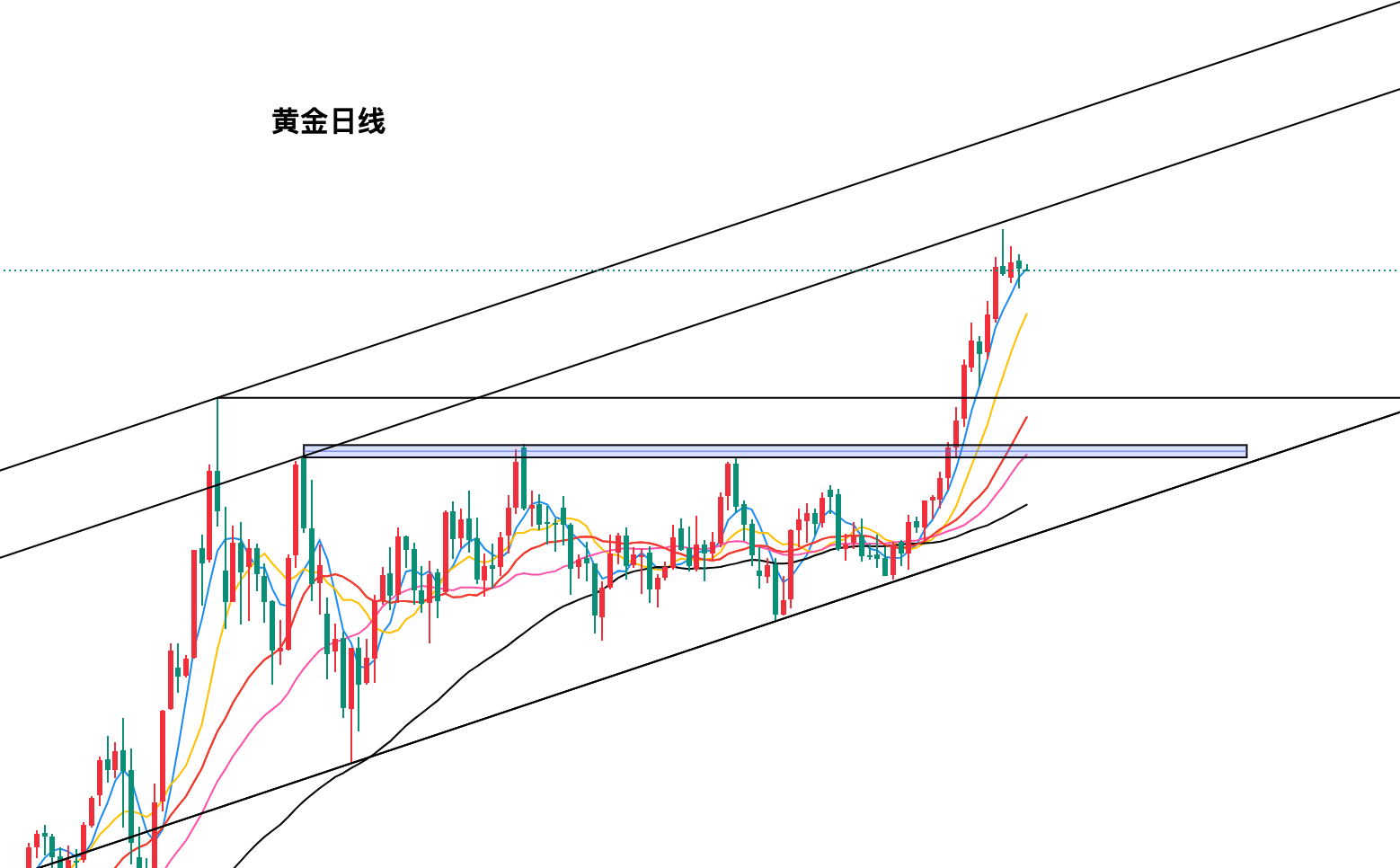
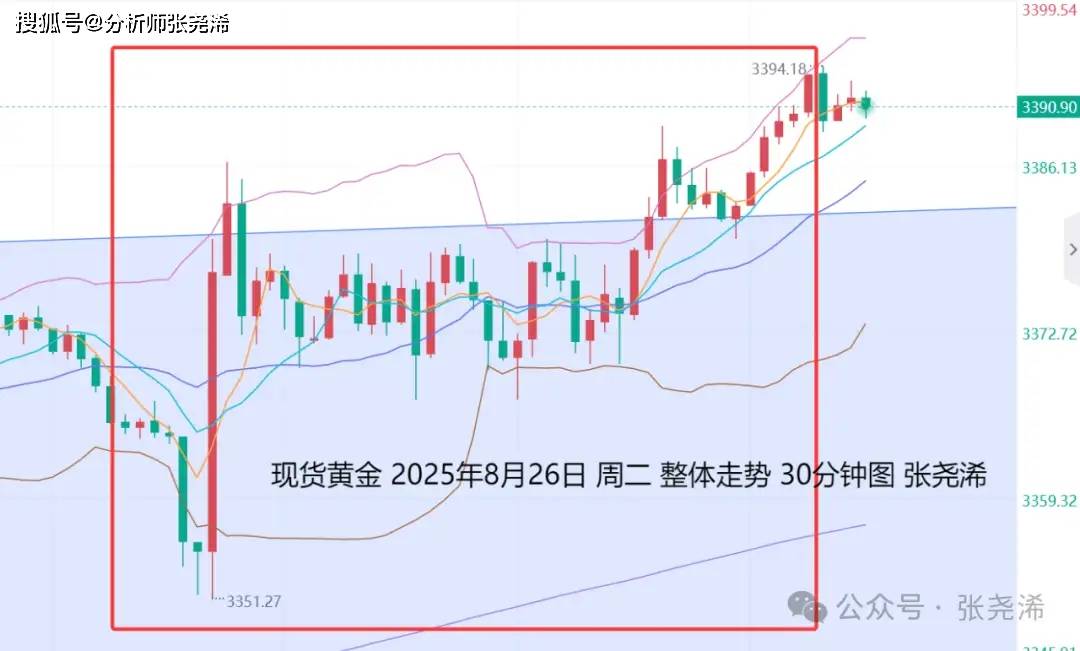
Core Viewpoint - The outlook for gold prices remains bullish, supported by concerns over the independence of the Federal Reserve and potential dovish monetary policy from the U.S. government [1][3]. Price Movements - On August 27, gold opened at $3,393.50 per ounce, dipped to a low of $3,373.48, and then rebounded to a high of $3,398.30, closing at $3,396.82, marking a daily increase of $3.32 or 0.098% [3]. - The price is expected to remain within a triangular consolidation pattern, with a bias towards upward breakout in the coming days [3]. Market Influences - Concerns regarding President Trump's attempts to dismiss a Federal Reserve board member have heightened market anxiety about the Fed's independence, which supports gold prices [3]. - The market anticipates a more dovish outlook for the Federal Reserve, which is likely to further benefit gold [3]. Technical Analysis - The gold price has been in a bullish trend since last year, with recent adjustments likely leading to another upward movement [7]. - Key support levels to watch are around $3,270 and $3,220, which may present buying opportunities [7]. - The daily chart indicates that gold remains above the midline and 60-day moving averages, with bullish momentum prevailing despite some indicators suggesting a potential pullback [9]. Support and Resistance Levels - For gold, support levels are identified at $3,382 and $3,361, while resistance levels are at $3,407 and $3,418 [10]. - Silver support levels are at $38.35 and $38.15, with resistance at $39.00 and $39.20 [10].
通胀升温+经济仍具韧性 给英国央行降息预期“泼冷水”
智通财经网· 2025-08-18 12:45
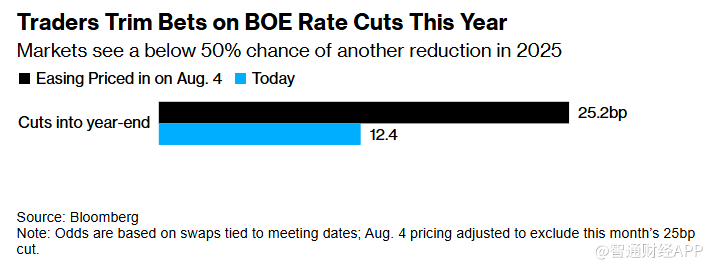
Group 1 - The market is increasingly betting that the Bank of England will maintain interest rates at 4% for the remainder of the year due to accelerating inflation and signs of a more resilient economy, making further monetary easing less justified [1][2] - Traders have reduced their bets on a 25 basis point rate cut by the Bank of England this year, with swap trading indicating a less than 50% chance of a rate cut [1] - The overall inflation rate is expected to rise to 3.7% in July, with the Bank of England previously forecasting a peak of 4% in September, which is double its target [1] Group 2 - Following the unexpectedly hawkish signals from the Bank of England in August, market bets on easing policies have decreased [2] - The UK GDP grew by 0.3% in the second quarter, surpassing economists' and the Bank of England's predictions of 0.1%, indicating stronger economic performance [2] - The shift in the Bank of England's policy outlook is boosting the British pound, which has appreciated by 2.5% against the US dollar this month, making it the best-performing G10 currency [2]
美联储戴利淡看火热经济数据:仍支持9月行动 今年大约降息两次是合理的
智通财经网· 2025-08-16 00:28
Core Viewpoint - The President of the San Francisco Federal Reserve, Daly, supports the idea of easing monetary policy next month, with a reasonable expectation of two rate cuts this year [1] Economic Indicators - The Producer Price Index (PPI) in July unexpectedly accelerated, marking the largest increase in three years, with a month-on-month rise of 0.9% and a year-on-year increase of 3.3%, both exceeding market expectations [1] - The rise in PPI indicates that businesses are passing on higher import costs associated with tariffs, suggesting that inflationary pressures are far from over [1] Retail Sales Performance - U.S. retail sales in July exceeded expectations, driven by strong automobile sales and major online promotions, indicating increased consumer spending and boosting optimism about U.S. economic growth [1] Monetary Policy Outlook - Daly noted that while the labor market is gradually slowing and the economy is decelerating, it has not yet stalled, and inflation remains above the Federal Reserve's target, suggesting potential rate cuts later this year [1] - Daly expressed concern about delaying necessary support for the labor market due to fears of persistent inflation, advocating for a balanced approach to monetary policy [1] - However, she opposed the necessity of a 50 basis point cut at the September meeting, indicating that such a move would signal an emergency situation, which she does not believe is warranted given the current labor market conditions [1]
黄金ETF持仓量报告解读(2025-8-15)降息未定 金价何去何从
Sou Hu Cai Jing· 2025-08-15 06:46
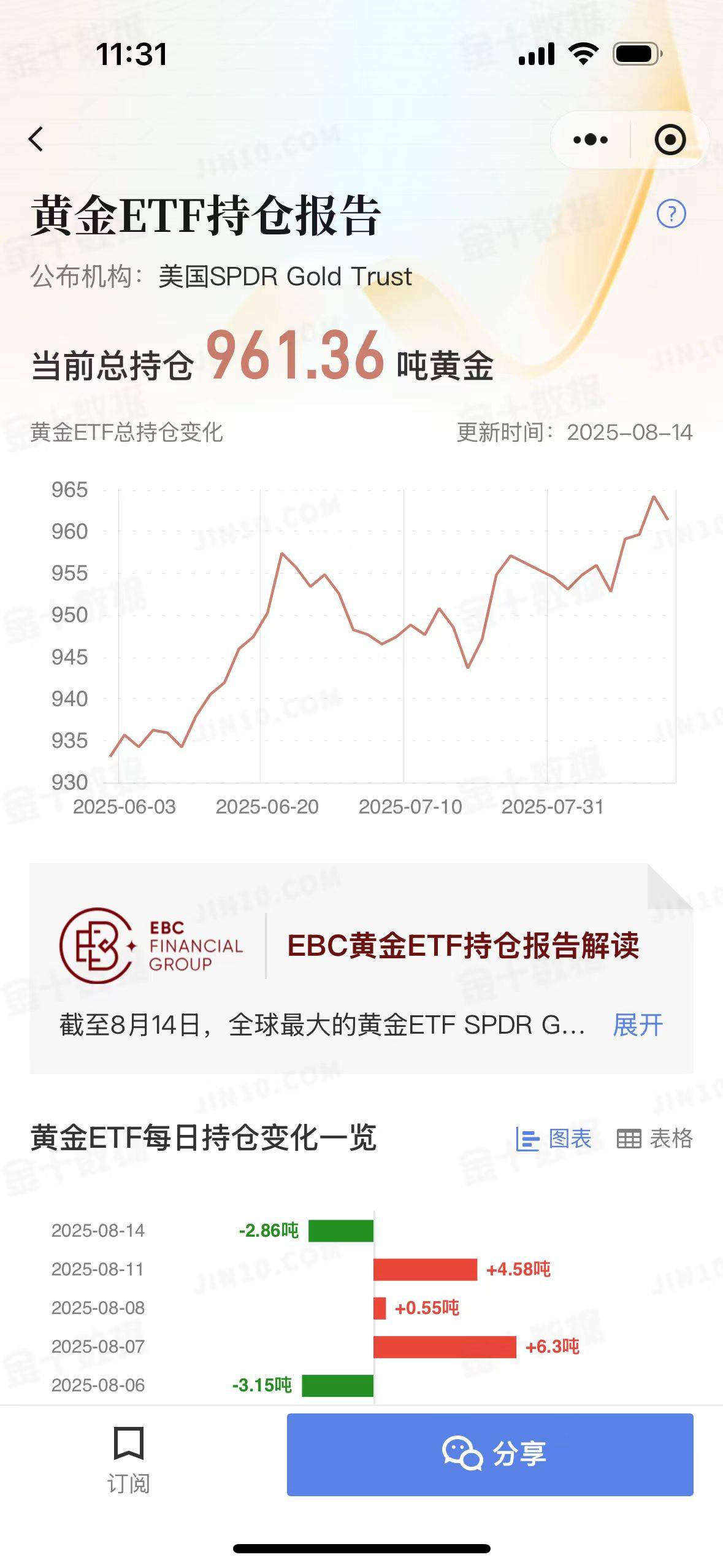
Core Viewpoint - The SPDR Gold Trust, the world's largest gold ETF, reported a decrease in holdings to 961.36 tons as of August 14, 2025, reflecting a drop of 2.86 tons from the previous trading day, amid significant adjustments in spot gold prices [5]. Group 1: Gold ETF Holdings - As of August 14, 2025, SPDR Gold Trust's total holdings stand at 961.36 tons [5]. - The holdings decreased by 2.86 tons compared to the previous trading day [5]. Group 2: Market Conditions - On August 14, spot gold prices fell significantly, reaching a low of $3,329.73 per ounce and closing at $3,335.33 per ounce, a decline of $20.69 or 0.62% [5]. - The decline in gold prices is attributed to rising inflation indicators, with the U.S. Producer Price Index (PPI) for July showing a year-on-year increase from 2.3% to 3.3%, the highest level since February [5]. - The month-on-month increase of 0.9% in PPI is the largest since June 2022, driven by soaring service costs [5]. Group 3: Federal Reserve Influence - The rising inflation data has led traders to reduce bets on a rate cut by the Federal Reserve in September, resulting in a rebound of the U.S. dollar and Treasury yields, which in turn suppresses gold prices [5]. - Several Federal Reserve officials, including San Francisco Fed President Mary Daly, have publicly opposed a significant 50 basis point rate cut in September, indicating that such a move could send unnecessary signals [6]. - Analysts suggest that while rate cut expectations are already priced in, gold prices may begin to rise by the end of the year due to concerns over high debt levels [6]. Group 4: Technical Analysis - Technical indicators show that while the Relative Strength Index (RSI) is above the midpoint, it is not sufficient to confirm a new upward trend for gold prices [5]. - The gold price has closed below the 50-day moving average of $3,350, with the next target being the 100-day moving average at $3,302 [5]. - If gold prices continue to decline, they may challenge the July 31 low of $3,274 [5].
荷兰国际:英国央行面临就业疲软与物价上涨双重压力
news flash· 2025-07-24 11:50
Core Viewpoint - The Bank of England is facing dual pressures from a weak labor market and rising inflation, complicating its policy decisions [1] Group 1: Employment Market - Recent business surveys indicate a decline in employment numbers within the UK services sector, attributed to recent minimum wage increases and rising labor costs [1] - The trend of declining employment is significant as it reflects broader economic challenges [1] Group 2: Inflation Trends - The surveys also reveal a resurgence in input price inflation, suggesting that inflationary pressures are re-emerging in the economy [1] - The critical question remains whether higher inflation or lower hiring is more significant for the economy [1] Group 3: Policy Implications - The dual pressures of weak employment and rising inflation will pose a difficult decision for the Bank of England in its upcoming policy meeting in August [1] - Despite the challenges, there is a belief that a rate cut remains a more likely option for the Bank of England [1]