
避险

Search documents
未知机构:国泰海通金属周论避险与通胀金属迎全面重估金地缘政治扰动-20260302
未知机构· 2026-03-02 02:45
Summary of Key Points from the Conference Call Industry Overview - The report focuses on the metals industry, particularly precious metals, copper, aluminum, tin, lithium, rare earths, tungsten, and uranium, highlighting the impact of geopolitical tensions and macroeconomic factors on metal prices and supply dynamics [1][2][3][4][5][6][7][8][9][10][11][12][13][14][15][16][17][18][19][20][21][22]. Core Insights and Arguments Precious Metals - Geopolitical disturbances have led to a steady increase in precious metal prices, with expectations for continued upward movement due to uncertainties stemming from the U.S.-Iran conflict [2][6]. - Central banks continue to purchase gold, and while U.S. inflation data has risen, it has not yet impacted the interest rate reduction process, maintaining the long-term logic for precious metals [3][7]. Copper - The price of copper is driven by rigid supply and strategic stockpiling, with macroeconomic factors such as tariffs and the U.S. Trade Representative's consultation on critical minerals influencing the market [4][8]. - Supply disruptions are prevalent, but demand from sectors like AI investment, power grid construction, and robotics is expected to support prices, alongside copper's strategic resource status [9]. Aluminum - Global macroeconomic conditions are moderately improving, but high inventory levels are putting pressure on aluminum prices [10]. - Uncertainties surrounding tariff policies and geopolitical tensions contribute to a volatile market, with seasonal supply exceeding demand leading to an expected accumulation of aluminum ingots post-holiday [11][12]. Tin - Supply disruptions are decreasing, with concerns about trade blockages due to conflicts in Myanmar being mitigated by the location of core mining areas and progress in production resumption [13]. - Attention is needed on the pace of downstream recovery and stockpiling demand post-holiday [14][15]. Lithium - Post-holiday, lithium carbonate inventories are continuing to decrease, with strong demand persisting despite rising production [16]. - Anticipated reductions in export tax rebates for battery products may lead to a front-loading of battery demand [17]. - Monitoring of Zimbabwe's export policies is crucial for understanding potential supply disruptions [18]. Rare Earths - Prices for both light and heavy rare earths have increased following the holiday, indicating a positive market outlook for these strategic resources [19][20]. Tungsten - Domestic regulatory tightening and geopolitical issues in Myanmar are reducing supply rigidity, while overseas price increases and U.S. government AI pricing models are adding strategic premiums to tungsten [20]. - The current supply chain dynamics are leading to a pricing surge, with high prices expected to persist until supply issues are resolved [21][22]. Uranium - January saw the highest long-term contract prices for natural uranium in a decade, driven by rigid supply and ongoing nuclear power development, suggesting a sustained upward trend in uranium prices [22].
李槿:2/26黄金高位震荡,避险加持!回落就是上车机会!
Sou Hu Cai Jing· 2026-02-26 12:48
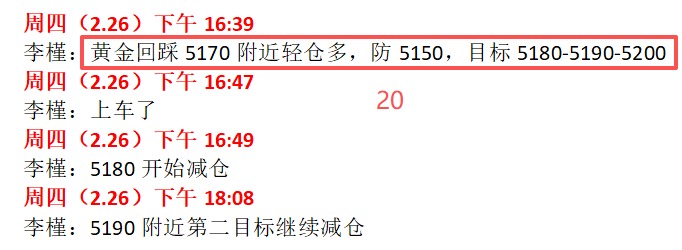
实战方面欧盘回落5170多,反弹5190有20美金的收获。 短期内黄金还在高位震荡中。今日的美伊谈判暂时没有进展,避险持续升温,叠加中东jun事风险刺 激,所以黄金短期易涨难跌。目前在5100-5220区间震荡洗盘,下方支撑还是关注5145区域支撑,下方 强支撑5120-5100见到也是做多的位置。思路依旧以回落做多为主,不充分回调不做多,不追高、不踏 空,恐高的都是苦命人。 意外关注实时走势分析 投资有风险,入市需谨慎。 ...

宏观利好共振,有色板块迎投资窗口?从“硬资产轮动”到有色重估:机构眼中的2026主线
Xin Lang Cai Jing· 2026-02-26 08:33
Core Viewpoint - The recent performance of precious metals, particularly gold and silver, has shown a strong upward trend driven by "safe-haven" and "stagflation trading" dynamics, with gold prices surpassing $5240 per ounce as of February 24, 2026 [1][7]. Group 1: Safe-Haven Logic - Multiple macroeconomic uncertainties globally are providing fundamental support for the prices of non-ferrous metals, including precious metals [3][9]. - The reversal of U.S. tariff policies, following a Supreme Court ruling against large-scale tariffs from the Trump administration, indicates prolonged trade friction and increased market risk aversion [3][9]. - Geopolitical uncertainties, such as the lack of progress in Russia-Ukraine negotiations and potential military conflicts between the U.S. and Iran, are heightening global risk aversion [3][9]. - Analysts from Goldman Sachs suggest that rising macro and geopolitical risks are driving investors to diversify into "hard assets," with precious metals and copper showing significant price appreciation potential [3][9]. Group 2: Stagflation Trading - Recent U.S. economic data indicates a slowdown, with the actual GDP growth for 2025 projected at 2.2%, down from 2.8% in 2024, marking the lowest growth since 2021 [3][9]. - The Personal Consumption Expenditures (PCE) price index for December 2025 is expected to rise by 3.0%, significantly above the Federal Reserve's 2% inflation target, raising concerns about stagflation [3][9]. - Stagflation, characterized by stagnant economic growth and high inflation, typically benefits commodities due to their inflation-hedging properties [3][9]. Group 3: Focus on Non-Ferrous Core Assets - As the market enters a "profit-driven growth phase" in 2026, the strong cyclical nature of non-ferrous metals is expected to manifest, supported by domestic re-inflation narratives [4][11]. - The ongoing issuance of the Silver Hua Zhongzheng Non-Ferrous Metals ETF provides a convenient investment tool for investors looking to capitalize on core assets in the non-ferrous sector [4][11]. - The top five sectors in the Zhongzheng Non-Ferrous Metals Index as of February 24, 2026, are copper (29.6%), gold (14.9%), aluminum (14.7%), rare earths (8.3%), and lithium (6.5%), reflecting a broad representation of the industry [6][13].

宏观利好共振,有色板块迎投资窗口? 从“硬资产轮动”到有色重估:机构眼中的2026主线
Sou Hu Cai Jing· 2026-02-26 07:46
春节假期至今,海外黄金、白银为代表的贵金属市场整体呈现震荡偏强格局。北京时间2月24日,伦敦金黄金盘中突破5240美元/盎司。有专业分析认为,本 轮板块上涨的核心逻辑在于"避险"与"滞胀交易"两条主线共振,在此背景下,如何高效关注有色龙头? 一、避险逻辑:宏观不确定性构建底层支撑 近期全球宏观层面多重不确定性因素叠加,成为有色金属(含贵金属)价格的核心底层支撑力。一方面,美国关税政策上演剧烈反转,美国最高法院裁定特 朗普政府大规模关税措施违法后,特朗普政府迅速切换至122法案并将税率上调至15%,这种政策反复意味着贸易摩擦将长期化,后续政策仍充满变数,短 期内或对市场风险偏好形成压制。 另一方面,地缘不确定性加剧,俄乌谈判未取得实质性进展,美伊对峙甚至面临军事冲突风险,地缘政治的不确定性推升了全球避险情绪。 高盛分析师表示,在宏观与地缘风险上升的驱动下,投资者分散投资"硬资产"的意愿或已成为本轮商品行情的关键推动力。硬资产通常指、、基础设施等有 形实物资产,而在此轮配置转移中,贵金属与铜或更具价格上涨潜力。 二、海外滞胀交易:通胀与增长放缓强化上涨动力 当地时间2月20日,美国发布数据显示,2025年美国全年 ...

FPG财盛国际:避险情绪高涨 金银寻觅支撑
Xin Lang Cai Jing· 2026-02-25 15:14
2月25日,在经历隔夜冲向三周高点的强劲涨势后,黄金市场在周二午盘出现了预期的震荡修正。FPG 财盛国际认为,这种价格回落主要源于短线期货交易员在阶段性高位后的常规获利了结,并非市场情绪 的根本性逆转。与此同时,白银市场在双向波动的博弈中表现出更强的避险属性。数据显示,4月黄金 期货近期下跌约63.40美元,维持在5162.00美元附近;而3月白银期货则逆势上涨1.142美元,报收87.765 美元,显示出实物资产在动荡局势下的独特韧性。 宏观层面的政策不确定性正成为贵金属价格的强力支撑。FPG财盛国际表示,随着特朗普政府新的10% 全球关税于今日正式生效,贸易局势再度陷入紧张。欧盟方面的评估显示,涵盖农产品在内的多项出口 税率已超过协定框架。更令市场关注的是,白宫官员透露政府正研究将全球关税进一步提升至15%的方 案。FPG财盛国际认为,这种持续的关税博弈不仅加剧了全球贸易摩擦,更通过提升政策不确定性,为 黄金和白银提供了长期的避险溢价空间。 金融体系的潜在风险同样引发了投资界的警惕。摩根大通首席执行官杰米·戴蒙近期发出了严厉警告, 认为当前部分金融机构为追求净利息收入而采取的激进放贷行为,与2008年金融 ...

黄金板块大涨,黄金股ETF、黄金股票ETF涨超5%,黄金ETF、上海金ETF、金ETF南方涨超4%
Ge Long Hui· 2026-02-24 05:18
A股马年首个交易日迎来开门红!三大指数集体上涨,沪指涨1.17%报4129.78点,深证成指涨1.82%, 创业板指涨1.76%。沪深京三市半日成交额15210亿元,较上日放量3074亿元,全市场超4200只个股上 涨。盘面上,地缘冲突、美国关税政策不确定性再度引发市场担忧,黄金概念股走强,其中,晓程科技 涨超14%,白银有色、湖南白银涨停,四川黄金、中国黄金涨超8%。 瑞银预计,在更强劲的投资流动和各国央行持续购买的推动下,金价将进一步上涨。供应方面,增长似 乎受限。虽然金价高企可能激励勘探活动,但咨询公司伍德麦肯兹估计,到2028年,约有80座矿山将耗 尽当前的生产计划,这表明短期内供应弹性有限。 整个春节假期贵金属遭遇美国经济数据、全球地缘风险以及美国政局、三重冲击。首先,美国经济数据 喜忧参半:1月份CPI同比上涨2.4%,虽然较2025年底略有回落,但核心CPI仍维持在2.5%。2月份的数 据显示,由于关税政策开始实施,耐用品价格出现了明显的脉冲式上涨。受到关税预期的影响,消费者 在1月份出现了一波"抢购潮",导致12月和1月的数据波动剧烈。但2月初的数据显示,零售销售增长开 始放缓,反映出高物价对 ...
黄金期货价格大涨超3%,券商认为“去美元化”叙事仍难以证伪
Huan Qiu Wang· 2026-02-24 01:16
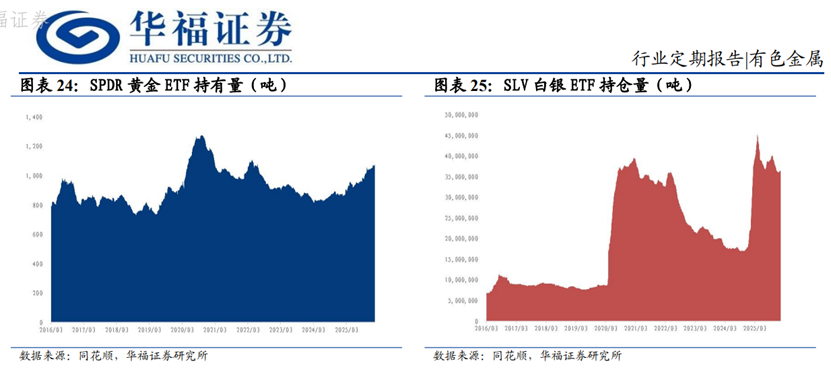
因此,华福证券认为,中长期而言,全球关税政策和地缘政治的不确定性背景下,避险和滞涨交易仍是黄金交易的核 心,长期配置价值不改。 【环球网财经综合报道】北京时间2月24日凌晨,国际贵金属期货普遍收涨,COMEX黄金期货涨3.29%报5247.90美元/ 盎司,COMEX白银期货涨6.87%报88.00美元/盎司。 东吴证券也认为,中长期来看,"去美元化"叙事仍难以证伪,黄金依然处于上行区间;同时,美国关税收入预期落空 引发了市场对美国财政赤字的担忧,四季度GDP增速显著低于市场预期,滞胀预期升温下,贵金属为代表的抗通胀品 种受益。 华福证券近日发布研报指出,美国一系列宏观经济数据发布,就业数据韧性及美联储官员一系列偏鹰派言论削弱市场 降息预期,市场主流对首次降息预期从此前6月延后至7月;但美国非农数据的亮眼表现难掩其经济结构脆弱性本质, 市场更倾向于其为美联储为后续政策保留空间的预期管理手段,且由于近年来相关数据的大幅下修的失真表现,市场 对实际就业市场情况存在分歧。 ...
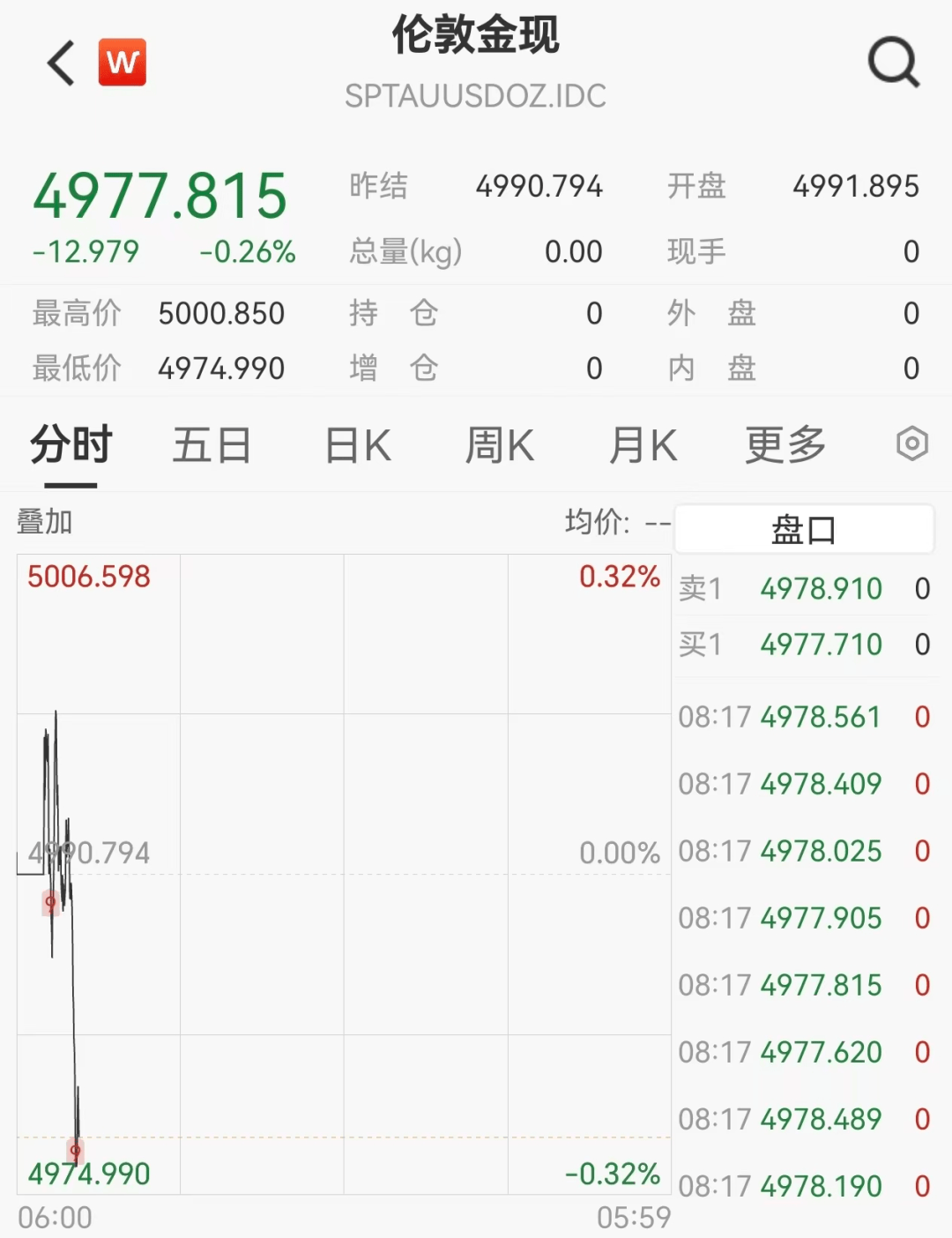
金银集体跳水,现货黄金失守4980美元
Sou Hu Cai Jing· 2026-02-17 01:26
| < W | | 伦敦银现 | | | | --- | --- | --- | --- | --- | | | | SPTAGUSDOZ.IDC | | | | 76.031 | | 昨结 | 开盘 | 76.524 | | -0.550 | -0.72% | 总量(kg) | 现手 | 0 | | 最高价 | 76.879 持 | 0 | 外 盟 | 0 | | 最低价 | 75.809 | 增 仓 0 | 内 盘 | 0 | | स्त्रेष्ठये | | 五日 日K 周K 月K 更多 | | 0 | | ෆ加 | | 均价:-- | 盘口 | | | 77.353 | | 1.01% 卖1 76.105 | | 0 | | | | | 买1 76.031 | 0 | | | | | 08:18 76.034 | 0 | | e | | | 08:18 76.056 | 0 | | 581 | | 0.00% 08:18 76.039 | | 0 | | | | | 08:18 76.034 | 0 | | | | | 08:18 76.029 | 0 | | | | | 08:18 76.047 ...
金价“拉锯战”中的投资图谱:近六成受访者为“新玩家” 近七成不买黄金首饰
Sou Hu Cai Jing· 2026-02-14 00:15
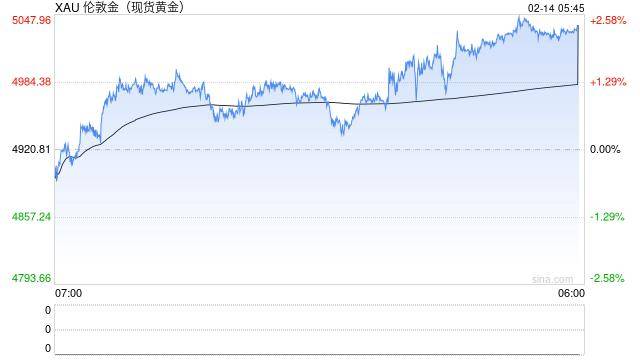
Core Viewpoint - The gold market is experiencing significant volatility, with prices fluctuating dramatically, indicating a shift from a peripheral asset to a core investment asset for many investors [2][4]. Group 1: Market Dynamics - Gold prices have shown extreme fluctuations, reaching nearly $5,600 per ounce before dropping to around $4,400, and then stabilizing around $5,000 [2]. - A recent survey indicates that 38.8% of respondents have over 10% of their investable assets in gold, with 57.17% being new investors who entered the market since last year [2][4]. - The average holding cost for new investors is relatively high, with many entering the market after significant price increases [3]. Group 2: Investor Sentiment and Behavior - The primary motivations for investing in gold include inflation protection (26.58%) and risk aversion (23.05%), which together account for nearly half of the responses [3]. - A notable 54.95% of respondents indicated they would not consider purchasing gold jewelry due to high prices and associated costs, reflecting a historical separation between gold's investment and consumption attributes [5]. - Despite the volatility, 48.76% of respondents remain bullish on gold prices in the short term, with a significant portion of investors expressing cautious optimism [8]. Group 3: Investment Strategies - The survey revealed a lack of strategic discipline among investors, with 14.39% admitting to trading without a clear strategy, which is higher than those engaging in short-term trading [4]. - The preferred investment vehicles include gold ETFs (32.5%) and physical gold (19.01%), indicating a trend towards more liquid and lower-cost investment options [6]. - The majority of respondents (37.13%) are choosing to hold their positions and observe market changes, suggesting a cautious approach amidst volatility [7]. Group 4: Future Outlook - Analysts predict that while the long-term trend for gold prices remains upward, volatility is expected to increase due to various macroeconomic factors and geopolitical risks [9]. - The consensus among investors leans towards a bullish outlook for gold, with many anticipating continued price increases despite recent market corrections [8].
金价“拉锯战”中的投资图谱:近六成受访者为“新玩家”近七成不买黄金首饰
Shang Hai Zheng Quan Bao· 2026-02-13 17:04
Core Insights - The gold market is experiencing significant volatility, with prices fluctuating dramatically, indicating a new normal for investors [1][9] - A substantial portion of investors are new entrants, with nearly 57% having entered the market since last year, reflecting a shift in gold's status from a peripheral asset to a core investment [2][3] Investor Sentiment and Behavior - 38.8% of respondents hold more than 10% of their investable assets in gold, with 9.95% investing over half of their assets in gold, suggesting a shift towards viewing gold as a risk asset rather than merely a safe haven [3][5] - 42.82% of investors express cautious optimism about gold prices, while 21.29% report stable emotional responses, indicating a generally rational approach amidst market fluctuations [4] Investment Strategies and Preferences - The majority of investors (37.13%) are choosing to hold their positions and observe market changes, while 26.73% are looking to increase their holdings, indicating a prevailing bullish sentiment [7] - Gold ETFs and funds are the preferred investment vehicles, chosen by 32.5% of respondents, highlighting their appeal due to low entry barriers and high liquidity [6] Market Dynamics and Future Outlook - The recent sharp decline in gold prices is attributed to broader market conditions, including declines in the U.S. stock market and changing investor sentiment, particularly in technology stocks [8] - Analysts predict that while the long-term trend for gold prices remains upward, volatility is expected to increase due to various macroeconomic factors and geopolitical risks [9]