C2M模式

Search documents
贝壳-W(02423):业绩承压未来向好,新兴业务利润率改善:贝壳-W(02423):
Shenwan Hongyuan Securities· 2026-03-17 07:13
Investment Rating - The report maintains a "Buy" rating for the company [2] Core Insights - The company's performance is under pressure but shows potential for improvement in emerging business profit margins [7] - The total transaction volume (GTV) for 2025 is projected at 31.8 trillion yuan, a year-on-year decrease of 5% [7] - The company emphasizes long-term shareholder returns, with a total of 1.2 billion USD allocated for share buybacks and cash dividends, reflecting a 9% increase year-on-year [7] Financial Data and Profit Forecast - Revenue projections for the years 2024 to 2028 are as follows: - 2024: 93,457 million yuan - 2025: 94,580 million yuan - 2026E: 86,976 million yuan - 2027E: 89,777 million yuan - 2028E: 94,436 million yuan - Net profit attributable to ordinary shareholders is forecasted as: - 2024: 4,065 million yuan - 2025: 2,994 million yuan - 2026E: 3,907 million yuan - 2027E: 4,474 million yuan - 2028E: 5,086 million yuan - The company’s return on equity (ROE) is expected to improve from 5.70% in 2024 to 6.37% in 2028 [6][8] Business Segment Performance - The real estate brokerage segment experienced a decline in GTV, with a 4.2% decrease in existing home transactions and an 8.2% decrease in new home transactions for 2025 [7] - The home decoration and rental segments showed significant growth, with revenues increasing by 4.4% and 53% respectively in 2025 [7] - The company is focusing on enhancing its C2M model to improve new home product capabilities and aims to transition its home decoration business towards a platform-based and asset-light model [7]
2025总结与展望 | 产品篇:聚焦产品价值与客户需求的精准对接
克而瑞地产研究· 2026-02-20 09:31
Core Viewpoint - The Chinese real estate industry is entering a new stage of quality development driven by the "good housing" policy, focusing on optimizing product value and aligning with customer needs [2] Product Transaction Structure - The market is increasingly favoring larger housing types, with four-bedroom and five-bedroom units seeing a rise in transaction share, increasing by 0.7 and 0.2 percentage points to 30.1% and 2.3% respectively, while two-bedroom units dropped to 10.7%, down 1.1 percentage points [3] - The demand for larger units is driven by families seeking long-term living solutions, particularly for multi-child and multi-generational households [5] - In first-tier cities, the share of four-bedroom units increased by 5.6 percentage points to 32.6%, while two-bedroom and three-bedroom units saw declines of 1.6 and 4 percentage points respectively [6] - Second-tier cities also showed growth in four-bedroom and five-bedroom units, with increases of 2.5 and 0.3 percentage points, while two-bedroom and three-bedroom units' shares decreased [6] - Third and fourth-tier cities maintained over 50% for three-bedroom units, with four-bedroom units increasing by 3.4 percentage points to 29.8% [6] Area Segment Trends - The market is shifting towards larger area products, with segments above 120 square meters seeing increased transaction shares, while segments below 120 square meters have decreased [8] - First-tier cities maintain a strong position in the 90-110 square meter range, while second-tier cities show comprehensive improvement in larger segments, particularly 110-140 square meters, which holds a 36.2% market share [10] - Third and fourth-tier cities also exhibit a clear trend towards larger areas, with significant increases in the 140-180 square meters and above segments [11] Product Features - Residential product capabilities are evolving from "physical space supply" to "dynamic living ecosystem construction," focusing on emotional connectivity within spaces [13] - The design emphasizes optimized storage systems, ecological landscape creation, and upgraded public area configurations to enhance living quality [13] - The concept of vacation-style landscapes is gaining traction, responding to customer desires for natural healing and relaxed living environments [15] - The integration of sensory experiences in community design enhances psychological healing value, creating a high-end, relaxed atmosphere [20] Future Outlook - The industry is moving towards a more defined product direction, with a focus on soft value extraction as a new trend [24] - The disconnect between product supply and actual demand is a core issue, necessitating a shift towards a customer-driven C2M model [25] - Misalignment in product positioning and ineffective configurations are identified as major pain points, leading to decreased competitiveness [25] - A restructured product logic is essential, emphasizing customer needs and aligning product offerings with market demand [26]


美腕创始人戚振波:直播电商进入价值深耕时代|2026商业新愿景
Jing Ji Guan Cha Wang· 2026-02-13 13:17
Core Insights - The live e-commerce industry is entering a phase of value reconstruction, moving away from chaotic growth towards a more regulated and sustainable growth model as the "Live E-commerce Supervision Management Measures" come into effect [2] - The focus is shifting from sheer traffic and GMV (Gross Merchandise Volume) to trust and cognitive recognition as new growth engines in the industry [2] Industry Trends - The industry is transitioning from a traffic-driven model to a quality-driven approach, with brands like Li Jiaqi's adopting a "brand-driven, professional assistant" model to enhance professional barriers [3] - The complexity of managing multiple live streams requires a robust supply chain and quality control system to maintain user trust across various platforms [3] Business Strategies - The live e-commerce model is evolving into a C2M (Customer-to-Manufacturer) model, where real-time demand sensing and agile brand responses are becoming critical [4] - The company aims to deepen user experience, enhance digital efficiency in industry collaboration, and upgrade content value in response to stricter industry regulations expected in 2026 [4] Future Outlook - By 2026, the focus of competition in live e-commerce will shift from traffic scale and conversion efficiency to content innovation and value system strength [4] - The company plans to build an expert anchor matrix to enhance the content product attributes of live streams, aiming for professional, serialized, and IP-based content [5] Value Innovation - The company will leverage C2M collaboration, data-driven product selection, and comprehensive quality control to empower brand partners, aiming to provide consumers with a reliable and transparent experience [6] - The long-term vision is to establish the company as a trusted consumer partner, a deep collaborator with the industry, a builder of professional content, and a practitioner of benevolent commerce [6]

从街边小店到港交所:鸣鸣很忙用九年织就一张2万家店的“零食普惠网”
Mei Ri Jing Ji Xin Wen· 2026-01-29 05:28
Core Insights - Hunan Mingming Hen Mang Commercial Chain Co., Ltd. has officially listed on the Hong Kong Stock Exchange, marking another retail enterprise in China that emphasizes "inclusive" business practices [1] - The company has grown from a small shop in Changsha in 2017 to a retail giant with over 20,000 stores across 28 provinces, achieving a GMV of over 66.1 billion yuan by the third quarter of 2025 [3] - Mingming Hen Mang focuses on long-term value creation by restructuring supply chains and reducing costs, making high-quality snacks accessible to a broader consumer base [3] Group 1: Business Model and Market Strategy - The company operates under a model that emphasizes "creating demand" rather than merely transferring existing demand, leading to a new consumer habit of purchasing snacks regularly [6] - Mingming Hen Mang's strategy includes direct sourcing from manufacturers, eliminating middlemen, and thus reducing costs for consumers [7] - The company has established partnerships with over 2,500 manufacturers, ensuring stable orders that encourage innovation and product development [7] Group 2: Consumer Engagement and Experience - The brand has successfully penetrated lower-tier cities, with nearly 70% of its stores located in third-tier cities and below, enhancing local consumer choices [4] - Mingming Hen Mang promotes a shopping experience that combines convenience and emotional value, transforming snack purchasing into a family activity rather than a mere chore [6] - The company’s transparent packaging and bulk purchasing options allow consumers to buy exactly what they want, reducing waste and enhancing satisfaction [9] Group 3: Long-term Vision and Sustainability - Starting in 2024, Mingming Hen Mang will no longer charge franchise fees, focusing instead on product sales, which aligns the interests of franchisees and the company [10] - The company emphasizes a "healthy growth" philosophy, prioritizing consumer service and stable operations over short-term profits [12] - Mingming Hen Mang has implemented a comprehensive food safety system and quality control measures, ensuring product safety and building consumer trust [11]

七天一个爆款、两月增长百万 拼多多重构养生品牌生长逻辑
Sou Hu Cai Jing· 2026-01-28 08:23
Core Insights - Pinduoduo has evolved from a simple transaction platform to a comprehensive commercial infrastructure that integrates demand detection, market validation, and supply chain response, fundamentally shifting the logic of "demand defines supply" [1][6][12] Group 1: Brand Growth and Innovation - The brand Qing Shang achieved remarkable growth by leveraging Pinduoduo's data-driven approach, with sales projected to rise from 50 million yuan in 2023 to 150 million yuan in 2024, and expected to exceed 250 million yuan in 2025 [3][6] - Qing Shang's innovative product development cycle has been significantly shortened, allowing for rapid market entry and adaptation based on real-time consumer data, reducing the traditional 12-month development period to just 30 days [5][6] - Daily Jiao An, initially hesitant about entering Pinduoduo, found that the platform's user base had evolved to include consumers willing to pay a premium for quality, leading to a monthly sales breakthrough of over 1 million yuan within two months of operation [7][9] Group 2: Supply Chain and Operational Efficiency - Pinduoduo's strategic shift towards "All in China Supply Chain" aims to enhance the quality and efficiency of supply chains, with a focus on nurturing new quality merchants and industry clusters through substantial financial support [12][13] - The "Billion Subsidy" initiative has been upgraded to a "Trillion Support Plan," emphasizing a systematic approach to fostering innovation and reducing operational costs for brands like Qing Shang and Daily Jiao An [12][13] - The platform's ability to facilitate rapid production scaling within 48 hours in response to market demand exemplifies the agility and responsiveness of the new supply chain model [5][13] Group 3: Market Dynamics and Consumer Behavior - The transformation of consumer behavior on Pinduoduo reflects a shift towards valuing quality and efficiency, with brands adapting their strategies to meet the demands of a more discerning customer base [7][9] - The integration of data analytics into brand operations has allowed for more effective decision-making and reduced risks associated with inventory and capital [5][6] - Pinduoduo's role as a "value converter" and "user asset reservoir" highlights the importance of a new marketing logic that combines brand value, trust conversion, and agile operations for sustainable growth [10][11]

未知机构:康耐特光学创新引领蜕变科技改变视界国联民生轻工中小盘-20260127
未知机构· 2026-01-27 02:05
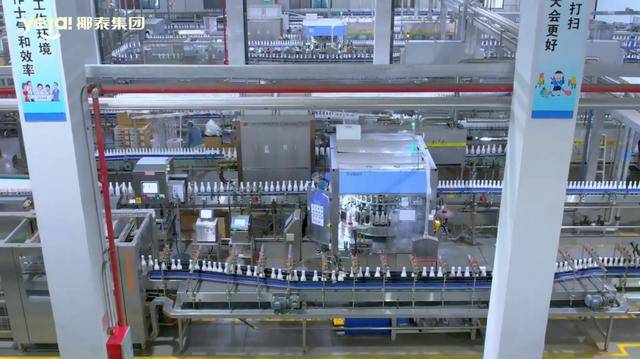
Company and Industry Summary Company: 康耐特光学 (Kangnate Optical) Key Points - **Market Position**: 康耐特光学 is ranked second globally in resin lens sales for 2024, indicating a strong competitive position in the optical industry [1] - **Financial Growth**: The company has achieved a compound annual growth rate (CAGR) of 15.8% in revenue and 32.7% in net profit from 2018 to 2024, driven by both volume and price increases [1] - **Product Strategy**: There is a significant trend towards high-end traditional lenses, with a focus on optimizing product structure to enhance profitability [1] - **Smart Glasses Development**: The introduction of new smart glasses products has invigorated the market, marking 2024 as a pivotal year for rapid development in this segment [1] - **Competitive Advantage**: The company emphasizes a strong price advantage in high-quality products compared to foreign brands, particularly in the high-end market [1] - **Acquisition Impact**: The acquisition of Asahi Optical from Japan has allowed 康耐特光学 to gain production technology for 1.74 refractive index products, enhancing its capabilities in mass production and patent technology [1] - **Customization Capability**: The company boasts a robust customization ability under the C2M (Customer to Manufacturer) model, capable of producing a total of 7 million SKU lens products, which creates a significant competitive moat [1] - **AI/AR Lens Business**: In 2021, 康耐特光学 expanded into the AI/AR lens segment, collaborating with leading global technology and consumer electronics companies [2] - **Strategic Partnership**: The introduction of Goer Technology as the second-largest shareholder, holding approximately 20.0% of shares, is expected to support the growth of smart glasses lens production [2] - **Profit Forecast**: Projected net profits for 2025, 2026, and 2027 are estimated at 560 million, 690 million, and 840 million yuan respectively, with corresponding price-to-earnings ratios of 47, 38, and 32 times [2] Additional Considerations - **Market Challenges**: The company faces global macroeconomic fluctuations, trade tensions, and delays in the release of smart glasses products, which could impact future performance [3]
康耐特光学(02276):首次覆盖报告:创新引领蜕变,科技改变视界
Guolian Minsheng Securities· 2026-01-25 08:30
Investment Rating - The report gives a "Buy" rating for 康耐特光学 (2276.HK) with a target price of 61.10 HKD [2][10]. Core Insights - 康耐特光学 is a leading global manufacturer of resin lenses, ranking second in sales volume globally. The company has shown a compound annual growth rate (CAGR) of 15.8% in revenue and 32.7% in net profit from 2018 to 2024, driven by both volume and price increases [7][8]. - The traditional lens market is expected to grow, with a projected CAGR of 5.8% in production and 6.2% in retail sales from 2024 to 2029. The demand for smart glasses is also anticipated to surge, with global shipments expected to reach approximately 61.07 million units by 2029 [7][8]. - The company has a strong competitive edge due to its pricing advantages, access to high-refractive index lens materials, and exceptional customization capabilities. The partnership with 歌尔股份 is expected to enhance its smart glasses business [7][8]. Summary by Sections Company Overview - 康耐特光学 was established in 1996 and has become a leading resin lens manufacturer, covering a full range of products including standardized, functional, and customized lenses. The company has a production capacity of over 7 million SKUs [7][13][16]. Traditional Lens Market - The traditional lens market is driven by health needs and technological advancements, with a significant increase in demand for high-refractive index lenses. The company is well-positioned to benefit from these trends [8][58]. Smart Glasses Market - The smart glasses segment is expected to open new growth opportunities, with 康耐特光学 actively engaging in R&D and partnerships to supply lenses for upcoming smart glasses products [8][9]. Financial Projections - Revenue and net profit forecasts for 2025-2027 are projected at 5.6 billion, 6.9 billion, and 8.4 billion RMB respectively, with corresponding P/E ratios of 47, 38, and 32 [2][10][31].
拼多多:国内主站行稳致远,海外 Temu 再造第二极-20260125
GUOTAI HAITONG SECURITIES· 2026-01-25 07:45
Investment Rating - The report recommends a rating of "Buy" for Pinduoduo (PDD.O) [1] Core Insights - The domestic main site is entering a phase of high-quality and stable development, while the overseas platform TEMU is creating a second growth pole, initiating a new cycle of value reassessment [2] Financial Summary - Total revenue projections for Pinduoduo are as follows: - 2023: 247,639 million RMB - 2024: 393,836 million RMB - 2025E: 434,930 million RMB - 2026E: 514,929 million RMB - 2027E: 588,823 million RMB - Net profit projections are as follows: - 2023: 67,899 million RMB - 2024: 122,344 million RMB - 2025E: 114,810 million RMB - 2026E: 131,702 million RMB - 2027E: 156,059 million RMB - The PE ratio is projected to decrease from 15.5 in 2023 to 6.7 in 2027 [4][41] Overseas Business (TEMU) - TEMU has rapidly grown to become the second-largest comprehensive e-commerce user pool globally, with MAU reaching 540 million by the second half of 2025, which is 77% of Amazon's MAU [11][30] - The transition from a fully managed model to a semi-managed model is expected to enhance profitability and user experience, with a projected breakeven point for the unit economics model by 2026 [20][30] - TEMU's unique advantage lies in leveraging China's supply chain to meet global consumer demand, enhancing operational efficiency and cost competitiveness [28][29] Domestic Business - Pinduoduo is expected to maintain a GMV growth rate of 10%-15% in 2025, outpacing the industry average, despite the reduction in subsidies [31][42] - The company focuses on a "low price + experience" strategy, which solidifies its competitive moat in the market [31][42] Profit Forecast and Investment Recommendations - Revenue forecasts for 2025-2027 are projected at 4,349 million RMB, 5,149 million RMB, and 5,888 million RMB, respectively, with net profits expected to be 1,148 million RMB, 1,317 million RMB, and 1,561 million RMB [41][42] - The report employs a Sum-of-the-Parts (SOTP) valuation method, estimating a reasonable market value of approximately 299.6 billion USD for Pinduoduo, with a target price of 201.39 USD [44][50]
拼多多(PDD):国内主站行稳致远,海外Temu再造第二极
GUOTAI HAITONG SECURITIES· 2026-01-25 05:50
Investment Rating - The report recommends a rating of "Buy" for Pinduoduo (PDD.O) [1] Core Insights - The domestic main site is entering a phase of high-quality and stable development, while the overseas platform TEMU is creating a second growth pole, initiating a new cycle of value reassessment [2] Financial Summary - Total revenue projections for Pinduoduo are as follows: - 2023: 247,639 million RMB - 2024: 393,836 million RMB - 2025E: 434,930 million RMB - 2026E: 514,929 million RMB - 2027E: 588,823 million RMB - Net profit projections are: - 2023: 67,899 million RMB - 2024: 122,344 million RMB - 2025: 114,810 million RMB - 2026: 131,702 million RMB - 2027: 156,059 million RMB - The PE ratio is expected to decrease from 15.5 in 2023 to 6.7 in 2027 [4][41] Overseas Business (TEMU) - TEMU has rapidly grown to become the second-largest comprehensive e-commerce user pool globally, with MAU reaching 540 million by the second half of 2025, achieving 77% of Amazon's MAU [11][30] - The transition from a fully managed to a semi-managed model is expected to enhance profitability and user experience, with a projected breakeven point for the unit economics model by 2026 [20][30] - TEMU's unique advantage lies in leveraging China's supply chain to meet global consumer demand, enhancing operational efficiency and cost competitiveness [28][29] Domestic Business - Pinduoduo is expected to maintain a GMV growth rate of 10%-15% in 2025, outpacing the industry average, despite the reduction in subsidies [31][42] - The company focuses on a "low price + experience" strategy, which solidifies its competitive edge in the market [31] Earnings Forecast and Investment Recommendations - Revenue forecasts for 2025-2027 are projected at 434,930 million RMB, 514,929 million RMB, and 588,823 million RMB, respectively, with net profits expected to be 114,810 million RMB, 131,702 million RMB, and 156,059 million RMB [41][43] - The report estimates a reasonable market value of approximately 299.6 billion USD for Pinduoduo, with a target price of 201.39 USD per share, indicating a high margin of safety at the current stock price [44][50]
资本“运动特质”的数字跃迁——从“惊险跳跃”到“光速闭环”
Jing Ji Guan Cha Bao· 2026-01-19 02:25
Core Insights - The article discusses the transformation of capital movement in the digital age, emphasizing the shift from traditional methods to a near real-time, globally interconnected "light-speed closed loop" due to advancements in technologies like blockchain, AI, and IoT [1][3]. Theoretical Foundation - Marx's analysis of capital movement includes three forms: monetary capital circulation (G-W...P...W'-G'), production capital circulation (P...W'-G'-W...P), and commodity capital circulation (W'-G'-W...P...W'). The efficiency of capital movement is determined by turnover time, with shorter times leading to higher annual surplus value rates [2]. - The successful reproduction of social total capital relies on maintaining proportional relationships between the two main classes of production, as any imbalance can lead to economic crises [2]. Micro Circulation Acceleration - Digital technology has significantly compressed capital turnover time and optimized social production ratios, leading to a "digital leap" in capital movement [3]. - **Production Cycle (G-W...P)**: Companies like SHEIN utilize data analytics and AI to minimize inventory, achieving a turnover time of just 7 days compared to the traditional 180 days in the apparel industry, thus reducing capital occupancy in production [5]. - **Circulation Cycle (W'-G')**: Blockchain technology has streamlined cross-border payments, reducing transaction times from 7-10 days to under 4 hours, with a 40% reduction in fees, enhancing the speed of capital transformation [6]. - **Reproduction Cycle (G'-G)**: The C2M model allows for real-time feedback from consumer data, enabling rapid product iteration and efficient capital cycles, creating a self-optimizing "light-speed closed loop" [7]. Macro Circulation Structural Imbalance - The micro-efficiency revolution does not guarantee macro-level stability and may exacerbate structural contradictions [8]. - **Virtual Economy Expansion**: The global financial derivatives market has reached 8.2 times the size of the real economy, driven by AI quantitative trading, which can lead to systemic risks during market volatility [9]. - **Ecological Costs of Capital Movement**: Bitcoin mining consumes more electricity annually than Sweden, highlighting the environmental impact of high-energy capital movement models [10]. - **Global Value Chain Fragmentation**: Geopolitical factors hinder the optimal allocation of resources, as seen in the U.S. policies that force companies to relocate manufacturing, disrupting global supply chains [12]. China's Coordinated Practice - China’s governance practices aim to balance the efficiency and risks associated with accelerated capital movement [13]. - **Technological Empowerment**: Initiatives like the "East Data West Computing" project optimize resource allocation and reduce costs, enhancing macro movement efficiency [13]. - **Regulatory Frameworks**: The introduction of mechanisms like the "regulatory sandbox" aims to prevent disorderly capital expansion and ensure that financial technology serves the real economy [13]. - **Process Reengineering**: The "digital port" system has significantly reduced customs clearance times and created profit-sharing mechanisms for stakeholders, promoting equitable benefits from capital movement [13].