全球供应链重构

Search documents
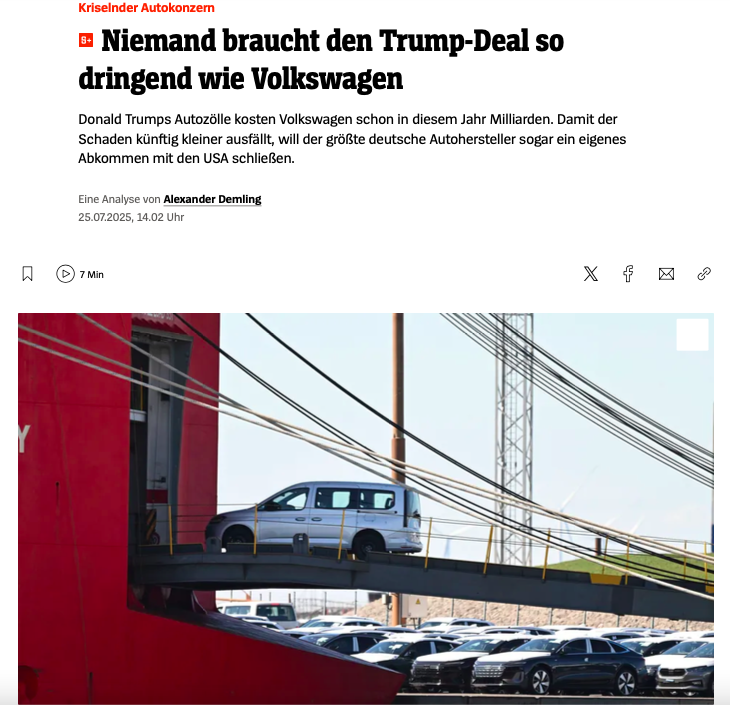
欧洲头条丨大众承压 美加关税拖累“德国制造”
Yang Shi Xin Wen Ke Hu Duan· 2025-07-27 09:40
Core Viewpoint - Volkswagen Group's recent financial report for the first half of 2025 reveals a significant profit drop of nearly 40%, high restructuring costs, and pressures on the global supply chain, reflecting broader challenges faced by German manufacturing amid geopolitical and economic shifts [1][25]. Group 1: Profit Decline and Costs - Volkswagen's revenue for the first half of 2025 reached €158.4 billion, remaining stable year-on-year, but operating profit fell by 33% to €6.7 billion, with net profit dropping over 38% to €4.47 billion, significantly below market expectations [2]. - A key factor for the profit decline is the new round of import tariffs imposed by the U.S. government on electric vehicles and components, resulting in an additional cost burden of €1.3 billion for Volkswagen [2][4]. Group 2: Supply Chain Challenges - The global automotive supply chain is undergoing forced restructuring due to the U.S. tariff policies, which disrupt the collaboration needed for electric vehicle production that relies on cross-border component integration [12]. - The inability to achieve "closed-loop production" for electric vehicles due to high precision component requirements exacerbates the impact of policy barriers, leading to increased uncertainty in strategic planning and financial cost control [12]. Group 3: Role of China in Global Market - Despite a 3% year-on-year decline in sales in China, Volkswagen emphasizes the importance of the Asian market for long-term growth, focusing on collaborations in software and battery technologies [13]. - China is transitioning from being merely a sales market to becoming an innovation engine for German automakers, with partnerships in electric and intelligent vehicle technologies expected to enhance Volkswagen's global strategy [16]. Group 4: Institutional Cooperation - Amidst the fragmentation of international trade rules, institutional cooperation between China and Europe is seen as a crucial stabilizing factor for the global manufacturing system [17]. - The collaboration between Germany and China in high-tech and green industries is deepening, with Chinese advancements in technology becoming a key driver for German automotive companies' global strategies [21][24].

新转折出现?中国对美国稀土出口激增近7倍!中美关系究竟发生了什么?
Sou Hu Cai Jing· 2025-07-21 10:58
Group 1 - Recent data from China's customs shows a significant increase of over 660% in rare earth magnet exports to the U.S. in June, reaching 353 tons, indicating a gradual warming of trade relations between China and the U.S. [1] - The surge in rare earth exports is attributed to policy adjustments and new agreements following a series of trade frictions, including the Trump administration's tariff increases in April [1][4] - Both countries have shown signs of easing tensions, with China agreeing to restore exports of key raw materials, including rare earths, while the U.S. has relaxed export controls on high-end chips [4] Group 2 - The shift from high-pressure tactics to interaction reflects a reassessment of future trade relations, with rare earths being crucial for high-end manufacturing, energy-saving, and new energy sectors [6] - Despite the rebound in rare earth exports, the volume remains significantly lower than the same period last year, indicating China's cautious approach to export regulation [6] - The adjustment of trade structures between China and the U.S. will continue, with mutual interests in rare earths, chips, and high-end manufacturing driving limited concessions for a more stable supply chain relationship [6]

第 29 周全球港口拥堵实况报告
Sou Hu Cai Jing· 2025-07-21 08:06
Core Insights - The global shipping industry is facing significant delays, with nearly 30% of container ships acting as "floating parking lots," leading to a 40% decrease in vessel turnaround rates and increased costs for shipping companies [2][6]. Group 1: Shipping Delays - A container ship in Morocco has been waiting for 6 days, causing European retailers to miss the peak season for autumn product launches [1] - In Bangladesh, containers have been stuck for 22 days, affecting Christmas orders for North American markets [1] - Global port data reveals severe delays, with ports like Algeria's Skikda averaging 6.5 days of waiting and South Africa's Cape Town experiencing 3 days of delays [1] Group 2: Financial Impact - The daily operating cost for an 18,000 TEU container ship is approximately $120,000, meaning a 6-day wait at Tangier Med Port incurs an additional cost of $720,000 [2] - Since July, detention fees on Asia-Europe routes have increased by 25%, which will ultimately lead to higher prices for consumers [2] Group 3: Supply Chain Disruptions - Non-scheduled arrivals at ports like Kenya's Mombasa have caused delays of 2-3 days, disrupting shipping schedules and leading to production halts in factories [3] - Exporters in Guangdong face significant risks of order cancellations due to delays caused by typhoons, with waiting times of 2-3 days at Shanghai Yangshan and 1.5-2 days at Ningbo [3] Group 4: Trust Issues in Trade - Delays have led to increased demands for "delay compensation agreements" in regions like Cameroon, indicating a shift in trust dynamics within international trade [4] Group 5: Port Congestion - Ports in Malaysia are operating at 85-90% capacity, leading to severe congestion and delays in truck deliveries [5] - In Vietnam, the influx of goods due to manufacturing shifts from China has overwhelmed port infrastructure, causing significant delays in logistics [5] Group 6: Global Supply Chain Vulnerabilities - The current congestion crisis highlights the fragility of global supply chains under pressures such as extreme weather, geopolitical shifts, and consumer demand rebounds [6] - The mismatch between the increasing size of vessels and the slow pace of port expansions has exacerbated the situation [6]
中方说到做到,对“背刺”我们的加拿大,直接断了其财路
Sou Hu Cai Jing· 2025-07-20 10:10
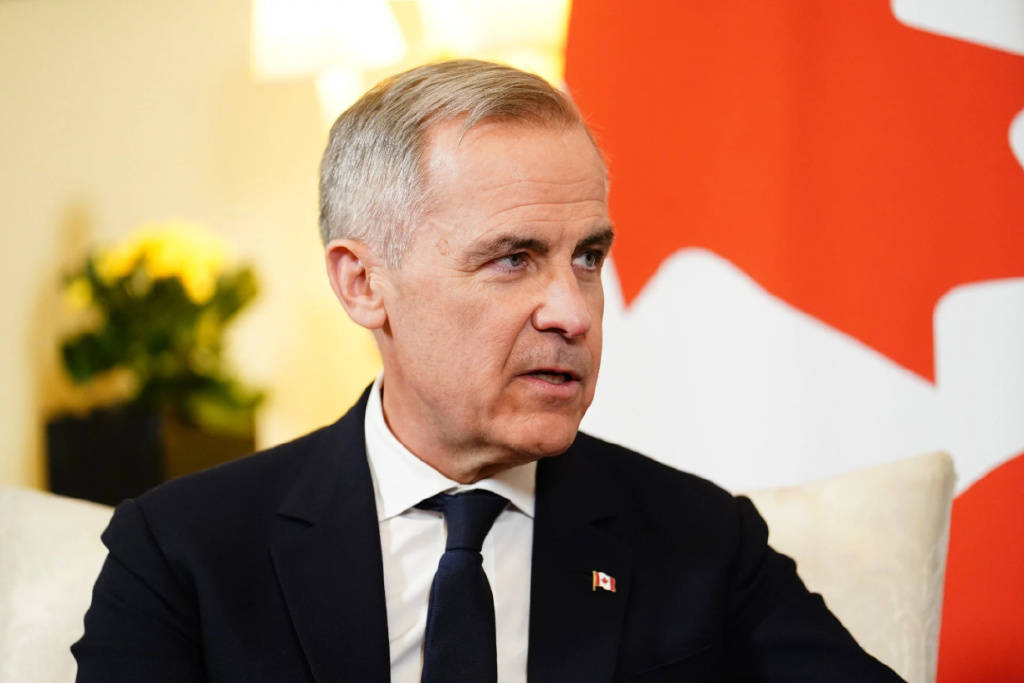
Group 1 - Canada imposed a 25% tariff on Chinese steel products in response to pressure from the United States, following the U.S. imposing a 35% tariff on Canadian products [1][3][5] - The Canadian government aims to alleviate economic pressure from the U.S. by targeting China, which is seen as a provocative move against China amid already strained relations [5][11] - China's immediate response included cutting off certain economic channels with Canada, indicating a strong stance against perceived threats to its interests [3][7] Group 2 - The Canadian steel industry faces significant challenges due to U.S. tariffs, with 91% of its steel exports going to the U.S., leading to potential layoffs and production halts [9][11] - Canada heavily relies on the U.S. for exports, with a dependency rate of 75%, making it vulnerable to U.S. trade policies [11][13] - Canadian farmers and businesses express disappointment with the government's approach, as losing access to the Chinese market could severely impact their operations [11][13] Group 3 - Australia has successfully negotiated to restore canola seed exports to China, which could undermine Canada's market position in this sector [7][14] - The total canola seed export volume from Canada for 2023-2024 is projected at 6.859 million tons, with 64% of that going to China, highlighting the importance of the Chinese market [7] - China's response to Canada's tariffs is characterized as a rational choice based on international rules and national interests, serving as a warning to other countries about the consequences of antagonizing China [14][16]
共话中国经济新机遇丨专访:链博会搭建全球供应链合作关键平台——访普华永道中国公共事务主管合伙人周星
Xin Hua She· 2025-07-19 06:57
Core Viewpoint - The China International Supply Chain Promotion Expo (Chain Expo) serves as a key platform for global supply chain cooperation, providing valuable opportunities for multinational companies operating in China [1] Group 1: Role of Chain Expo - Chain Expo is the world's first national-level exhibition focused on supply chains, promoting stability and smoothness in global industrial and supply chains [1] - The event facilitates the integration of global resources, enhancing the deep fusion of technology, standards, and markets [1] - It acts as a vital window for Chinese enterprises to showcase their strengths and connect directly with core segments of the global supply chain [1] Group 2: Global Supply Chain Reconstruction Trends - The supply chain strategy is shifting from "efficiency-first" to "resilience-first," with companies increasingly focusing on diversification and risk mitigation [2] - Digitalization and intelligent technologies are rapidly penetrating the supply chain, breaking down information barriers and reshaping industrial collaboration [2] - Green transformation is becoming essential, with carbon footprint tracking and green standards emerging as the new "universal language" of supply chains [2] - Ecological collaboration is replacing isolated efforts, particularly in emerging fields like the low-altitude economy, where cross-industry and cross-regional cooperation is crucial [2] Group 3: China's Role in Global Supply Chains - Chinese enterprises are playing an increasingly critical role in the global supply chain reconstruction, transitioning from a manufacturing powerhouse to a significant innovation force [2] - China is actively integrating advanced digital technologies and artificial intelligence to drive supply chain innovation, creating more agile and precise networks [2] - Continuous investment in strategic industries such as new energy vehicles and biomedicine, along with a large market scale and rich talent pool, is attracting high-value-added supply chains and global R&D centers [2] Group 4: Business Environment in China - China's business environment offers multiple supports for multinational companies' supply chain layouts, including institutional guarantees, market advantages, and ecological resilience [2] - The ongoing high-level opening-up policy provides a stable framework for supply chain implementation, while the vast market and complete industrial system support large-scale supply chain operations and technological iterations [2] - Advanced layouts in digital and green sectors create favorable conditions for transformation and innovation [2]
【高端访谈】跨境金融服务全面升级 供应链重构给予中企“出海”广阔机遇——访渣打银行(中国)有限公司行长兼副董事长鲁静
Xin Hua Cai Jing· 2025-07-18 09:12
Core Viewpoint - The global supply chain is undergoing significant structural adjustments, shifting focus from cost efficiency to a balance of efficiency, safety, and resilience, necessitating a "one-stop" service system to support diverse cross-border business needs [1][2] Group 1: Supply Chain and Financial Services - The concept of supply chain encompasses the entire process from product development to final consumption, emphasizing the need for efficient collaboration among various stages [2] - Chinese enterprises are increasingly showcasing unique competitiveness in the international market due to innovation and industry upgrades, moving from labor-intensive production to high-end, intelligent, and green enterprises [2][3] - The "Standard Global Chain" solution has been developed to address the high demands for cross-border financial services, compliance systems, and local execution capabilities [2][3] Group 2: Challenges and Opportunities - Companies face challenges such as high regulatory costs, varying levels of digitalization, and significant legal and compliance risks when building overseas supply chains [3] - The recent imposition of tariffs by the U.S. has profound implications for global supply chains and trade patterns, prompting financial institutions to upgrade cross-border financial service models [3][4] Group 3: Renminbi Internationalization - The restructuring of global supply chains presents opportunities for the internationalization of the Renminbi, with increasing demand for cross-border settlement and investment financing [4][5] - Chinese enterprises are showing a growing willingness to use Renminbi for foreign direct investment, while multinational groups are also inclined to use Renminbi when investing in China [5] Group 4: Strategic Initiatives - The launch of the "Standard Global Chain" aims to integrate supply chain financial solutions into clients' business processes, providing comprehensive support across funding, information, and trade flows [5][6] - The Chinese market is viewed as a core component of the Standard Chartered Group's global business strategy, driven by the resilience and potential of the Chinese economy [6]
圆通亮相链博会 加速全球物流网络升级
Zhong Guo Jing Ji Wang· 2025-07-18 08:04
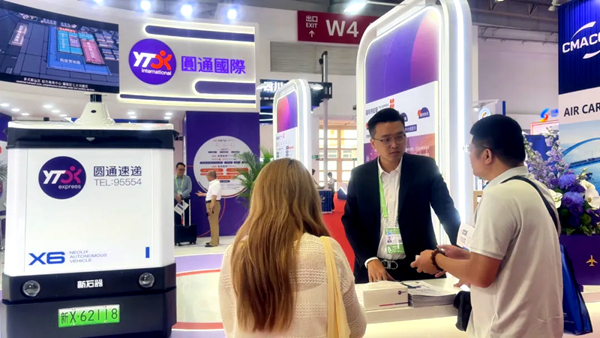
Core Viewpoint - The third China International Supply Chain Promotion Expo showcases the commitment of YTO Express to enhance its international supply chain capabilities and expand its global presence through strategic partnerships and innovative logistics solutions [1][4]. Group 1: Company Strategy - YTO Express is implementing a "1+7" global strategy, focusing on building a core hub at the Jiaxing Oriental Tian Di Port and establishing seven regional hubs overseas within the next three years [1][2]. - The company aims to enhance its core capabilities in air transport and overseas networks while collaborating with partners in trunk transportation and customs clearance [1][2]. Group 2: International Business Development - YTO Express is adopting a differentiated development strategy for its international business, targeting markets in Central Asia, Australia, Japan, South Korea, South Asia, and Southeast Asia, particularly in countries involved in the Belt and Road Initiative [2][4]. - The Jiaxing Oriental Tian Di Port project, expected to be completed by 2025, will integrate multiple functions such as air cargo, bonded warehousing, customs services, and aircraft maintenance, significantly improving international logistics efficiency for Chinese enterprises [2]. Group 3: Innovation and Market Position - The company showcased innovative international logistics solutions tailored for high-end manufacturing and cross-border e-commerce, effectively meeting diverse customer needs [4]. - The launch of the "1+7" global strategy signifies a transformation of Chinese express logistics companies from mere transport service providers to global supply chain solution providers [4].

顺丰圆通新开航线,织密国际航空物流网
Sou Hu Cai Jing· 2025-07-18 07:46
Core Insights - The launch of new air cargo routes by SF Express and YTO Express signifies a transformation in China's air logistics from a participant to a shaper in the global supply chain [1][2][3] - The opening of the "Ezhou - Abu Dhabi - Hanoi" route by SF Express connects central China with key markets in the Middle East and Southeast Asia, reducing delivery times by 12-24 hours compared to previous routes [1] - YTO Express's "Urumqi - Bishkek" route, operated by the domestically produced C909 aircraft, marks a shift towards self-reliance in air cargo logistics, reducing operational costs by approximately 15% [2] - The expansion of air routes from inland logistics hubs like Ezhou, Urumqi, and Xi'an creates a comprehensive air logistics network that enhances trade efficiency and reduces logistics costs from 15%-20% to below 10% [3] Industry Developments - The new air routes are reshaping the cost structure of cross-border trade, allowing inland enterprises to directly access global markets without relying on coastal ports [3] - The increase in international cargo flights from Xinjiang, which surged by 6.8 times in the first seven months of the year, highlights the value of these new logistics channels [2] - The interconnected air routes provide backup options for foreign trade enterprises, enhancing resilience against global supply chain uncertainties [3] - The collaboration between SF Express and YTO Express in launching these routes reflects a strategic move towards optimizing logistics costs and improving operational autonomy [2][3]
第三届链博会主场奏响“鲁泰协奏曲”:为“黄金50年”再添新章
Huan Qiu Wang· 2025-07-17 00:29
Core Insights - The event during the third China International Supply Chain Expo focuses on deepening international cooperation in supply chains between China and Thailand, coinciding with the 50th anniversary of diplomatic relations between the two countries [1][2] - Shandong Province is highlighted as a key player in China's economic landscape, with a robust industrial system and significant trade achievements, including a total revenue of nearly 12 trillion RMB and an export value exceeding 2 trillion RMB in 2024 [1][2] Group 1: Trade and Economic Cooperation - The bilateral trade between Shandong and Thailand reached 74.6 billion RMB in 2024, marking a year-on-year increase of 10.8% [2] - Shandong has invested over 480 million USD in 33 enterprises in Thailand, showcasing successful local cooperation [2] - Thailand's exports to Shandong include rubber, fruits, and electrical appliances, while Shandong exports machinery and chemical products to Thailand, indicating a complementary trade relationship [2] Group 2: Industry and Investment Opportunities - Shandong's industrial chain advantages include 19 provincial-level signature industrial chains covering AI, new energy vehicles, and high-end equipment, with a revenue of nearly 11 trillion RMB in 2024 [4] - The production of new energy vehicles in Shandong increased by 145% year-on-year, positioning the province for collaboration in automotive parts and digital technology with Thailand [4] - Thailand is offering competitive tax and non-tax incentives to attract investors, aiming to enhance business viability and streamline operational processes for enterprises [4] Group 3: Event Significance and Participation - The expo serves as a crucial platform for international business connections, with 35% of exhibitors coming from overseas and participation from over 110 international organizations and enterprises [3][5] - The event emphasizes the transition from traditional trade to deep integration of industrial chains between Shandong and Thailand, particularly in emerging sectors like green energy and digital technology [6]
第三届链博会启幕:境外参展商占比升至35% 国际化水平更高
Bei Ke Cai Jing· 2025-07-16 13:23
Core Viewpoint - The third China International Supply Chain Promotion Expo highlights the need for global cooperation in addressing unprecedented challenges faced by supply chains and emphasizes the importance of multilateralism and mutual benefit in trade [4][5][8]. Group 1: Event Overview - The third China International Supply Chain Promotion Expo (Chain Expo) opened in Beijing on July 16, 2023, gathering global leaders and business representatives to discuss the future of global supply chains [4]. - The expo showcased a higher level of international participation, with 651 enterprises and institutions from 75 countries and regions, increasing the proportion of foreign exhibitors from 32% to 35% compared to the previous edition [7]. Group 2: Challenges and Responses - Global supply chains are currently facing unprecedented challenges, including natural disasters and political instability, necessitating enhanced international economic cooperation [5][9]. - South Africa's Vice President highlighted the resilience of their supply chain, driven by e-commerce and technological advancements, while advocating for diversified supplier strategies and digital transformation [10]. Group 3: Future Directions - The Thai Deputy Minister emphasized the need for countries to strengthen trade connectivity and ensure market openness to secure supply chains and prevent disruptions in international trade [12]. - The international business community is actively promoting the restructuring of global supply chains, with China playing an increasingly significant role in this process [14]. Group 4: Innovation and Sustainability - The International Chamber of Commerce Secretary-General noted the importance of cooperation among nations to revitalize global trade development, especially in promoting e-commerce and achieving green transitions [15][16]. - The UK-China Trade Association Chairman pointed out that China's technological innovations are crucial for achieving net-zero emissions and sustainable development [17].