
地缘政治博弈

Search documents
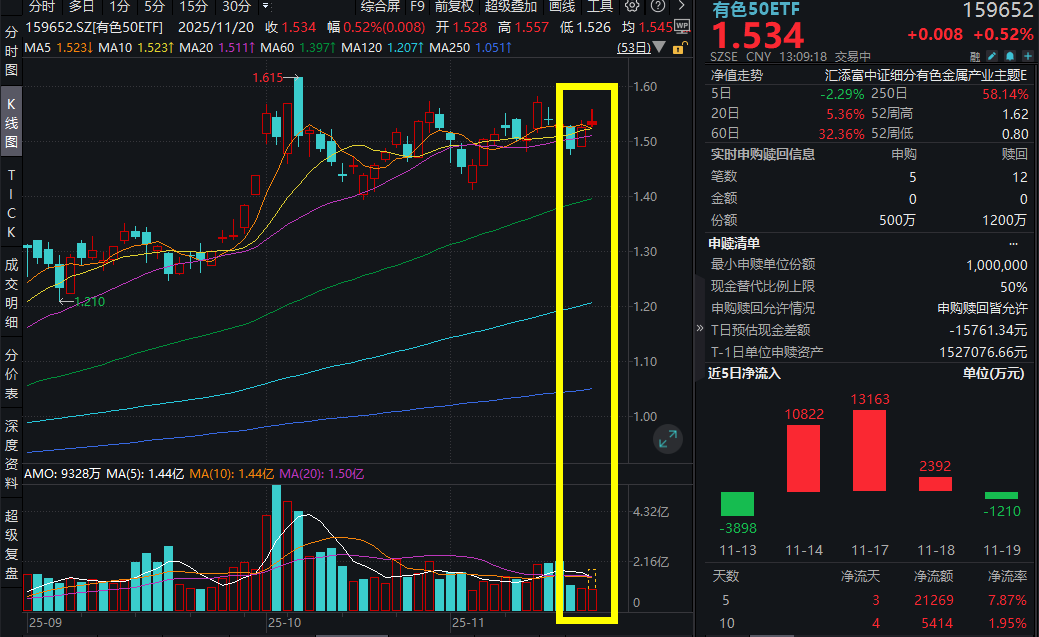
碳酸锂期货大涨超3%,盛新锂能获百亿长单!有色50ETF(159652)爆量上涨!有色年内涨幅领跑大市,2026年将如何演绎?
Xin Lang Cai Jing· 2025-11-20 05:38
Group 1: Market Overview - The A-share market showed slight recovery on November 20, with the non-ferrous sector opening high and fluctuating, as evidenced by the significant trading volume of the Non-Ferrous 50 ETF (159652) which rose by 0.52% and reached a trading volume of over 90 million yuan [1] - The Non-Ferrous 50 ETF index components mostly surged, with Zhongkuang Resources rising over 5%, while other stocks like Northern Rare Earth and Huayou Cobalt also saw gains exceeding 1% [3] Group 2: Lithium Market Dynamics - On November 19, lithium carbonate futures prices broke through 100,000 yuan/ton, indicating a clear recovery in spot lithium carbonate prices. Ganfeng Lithium's chairman stated that if demand growth exceeds 30% to 40% next year, prices could potentially exceed 150,000 yuan/ton or even 200,000 yuan/ton due to supply constraints [2] Group 3: Supply Chain and Pricing Trends - The supply chain for non-ferrous metals is facing disruptions, with several large mines experiencing operational issues, which highlights the vulnerability of global non-ferrous resource supply [6] - The copper market is expected to see average prices reach 4.55 USD per pound by 2026 due to supply concerns stemming from accidents at major mines [5] Group 4: Investment Opportunities in Non-Ferrous Metals - The non-ferrous metals sector has outperformed other industries this year, with a year-to-date increase of 79% for the CITIC non-ferrous metals index, significantly leading other sectors [5] - The Non-Ferrous 50 ETF (159652) is highlighted for its high "gold-copper content" of 46%, making it a leading choice among similar investment products [12] Group 5: Future Outlook and Strategic Considerations - The geopolitical landscape and resource security concerns are expected to drive demand for strategic commodities, with a notable increase in green demand for copper and aluminum anticipated by 2030 [8] - The ongoing industrialization in emerging economies and the reshaping of trade patterns are likely to provide new growth opportunities for commodity demand, particularly in countries involved in the Belt and Road Initiative [9]





俄油崩到36美元!印度怂了中国抄底,普京开始反击,中亚趁机掀桌
Sou Hu Cai Jing· 2025-11-19 12:05
Core Insights - The international oil market is experiencing significant volatility, with Russian oil prices dropping to a low of $36 per barrel, the lowest since March 2023, indicating a severe impact on Russia's economy due to sanctions and reduced demand [1][3][7] Group 1: Oil Market Dynamics - India has reduced its oil purchases from Russia, with major refiners announcing they will not accept shipments after November 21, fearing U.S. sanctions [2][3] - In contrast, China has increased its oil imports from Russia, doubling the volume in August and securing additional shipments, focusing on higher-quality ESPO crude oil, which is more cost-effective in refining compared to the Ural crude purchased by India [5][7] Group 2: Economic Implications for Russia and Ukraine - Russia's economy heavily relies on energy exports, with one-third of its maritime crude oil currently unsold, leading to financial strain [7][10] - Ukraine is in urgent need of financial support, with the EU estimating it will require at least $83 billion by 2026, primarily for military expenses [9][10] Group 3: Geopolitical Shifts in Central Asia - Central Asian countries, led by Uzbekistan, are seeking to form a "Central Asian Community" to enhance regional cooperation and reduce reliance on external powers, taking advantage of Russia's weakened position [11][12][14] - The initiative aims to address regional issues such as water scarcity and infrastructure development, although political unity remains a challenge due to differing national interests [12][14] Group 4: Broader International Relations - The interplay between Russian sanctions, EU financial commitments to Ukraine, and Central Asian countries' strategic realignments illustrates the complex dynamics of international relations, where interests often outweigh alliances [16][17]

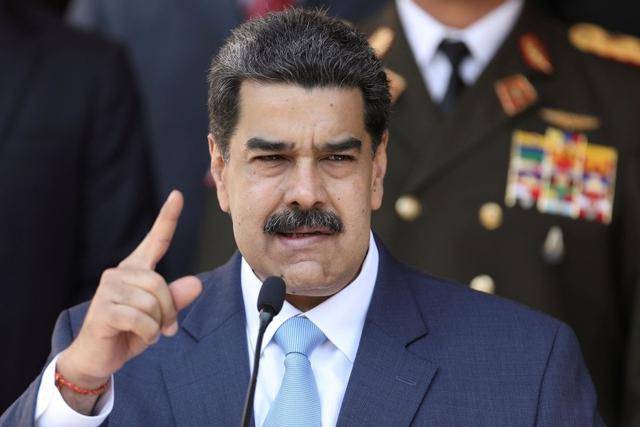
马杜罗认怂?美媒:只要特朗普放他一马,3000亿桶石油美国拿大头
Sou Hu Cai Jing· 2025-11-18 15:45
Core Viewpoint - Maduro's recent overture to the U.S. involves offering Venezuela's vast oil reserves and gold in exchange for non-interference, indicating a significant geopolitical gamble rather than a straightforward diplomatic transaction [1][3][25]. Group 1: Venezuela's Offer - Maduro has proposed a deal allowing U.S. companies to operate in Venezuela's oil fields and gold mines, suggesting a shift in allegiance from China to the U.S. if the U.S. ceases efforts for regime change [3][5]. - The offer includes transferring oil sales from China to the U.S., emphasizing resource exchange for political survival [3][5]. Group 2: Economic Context - Venezuela's economy is in dire straits, characterized by hyperinflation, severe shortages, and a devalued currency, pushing Maduro to leverage the country's natural resources as a bargaining chip [5][8]. - The country holds approximately 300 billion barrels of oil, accounting for about one-fifth of global reserves, making it a significant player in the energy market [7][8]. Group 3: U.S. Response - The initial U.S. reaction was skepticism, with the Trump administration rejecting the proposal due to distrust in Maduro's reliability and a strategic goal to remove him from power [10][22]. - Despite public rejection, U.S. military presence in the Caribbean has increased, indicating a readiness to respond to any potential threats from Venezuela [12][14]. Group 4: Military Preparations - In response to U.S. actions, Maduro has ramped up military readiness, conducting large-scale drills and acquiring defense systems from Russia, which complicates any potential U.S. military intervention [17][20]. - The Venezuelan government is mobilizing civilian militias, aiming to train one million individuals as part of a national defense strategy, thereby increasing the cost of U.S. intervention [20][22]. Group 5: Geopolitical Implications - The situation reflects a complex geopolitical game where both parties are wary of each other yet recognize the necessity of negotiation, with Maduro betting on U.S. interest in stability over regime change [25][32]. - The dynamics illustrate the challenges faced by smaller nations in the context of great power competition, where resource control becomes a critical factor in international relations [30][32].
冻结的俄罗斯资产:欧盟的“烫手山芋”与地缘政治豪赌
Sou Hu Cai Jing· 2025-11-18 04:08
Core Viewpoint - The European Union is in a dilemma regarding the confiscation of frozen Russian assets, with concerns about legal implications and geopolitical consequences while attempting to use these assets to provide €140 billion in loans to Ukraine [1][10]. Group 1: Legal Challenges - The proposal to utilize Russian assets for Ukrainian loans has sparked legal concerns, with questions about its legality and lack of precedent [3]. - The European Bank for Reconstruction and Development faces a complex accounting issue, holding both debts to the Russian Central Bank and cash assets that could be used for Ukraine [3]. - There are fears that if sanctions are lifted, Russia could demand repayment of the loans, raising questions about who would cover the €140 billion owed [3][12]. Group 2: Financial Retaliation - In response to Western financial sanctions, Russia has enacted laws to freeze €20 billion to €40 billion of funds held by European banks in Russia [5]. - The Russian Central Bank is minimizing capital flow restrictions, presenting a dual strategy of openness while retaining the ability to retaliate [5]. Group 3: Geopolitical Dynamics - The U.S. has a vested interest in the conflict, with a significant portion of military aid to Ukraine returning to American defense industries, indicating a profit motive behind the geopolitical situation [7]. - The EU's support for Ukraine has shifted from a strategic investment to a strategic burden, complicating the political landscape [9]. - Internal divisions within the EU reflect differing views on how to handle relations with Russia and the legality of using Russian assets for Ukraine [11]. Group 4: Future Risks - The European Bank for Reconstruction and Development's CEO highlighted three major risks: legal challenges, reputational damage, and potential retaliation from Russia [12]. - A loss of trust from global investors could lead to reduced investment in the Eurozone, impacting financing for defense, green transition, and digital transformation [13][14]. - The situation remains precarious, with potential for escalation if the proposed plans are implemented [15][16].

揭开西方法治假面!安世半导体事件背后透露了什么?
Bei Jing Ri Bao Ke Hu Duan· 2025-11-10 07:56
Core Viewpoint - The takeover of Nexperia by the Dutch government highlights the hypocrisy of Western legal and contractual principles, revealing the geopolitical motivations behind such actions [1][6]. Group 1: Impact on Global Supply Chain - Nexperia holds a 9.4% share of the global automotive chip market, with 40% of Europe's automotive chips relying on its supply, indicating its critical role in the industry [2]. - The Dutch government's unilateral actions, including invoking a 70-year-old law for the takeover, disrupt the established norms of international investment and trade [2][3]. Group 2: Political and Economic Ramifications - The incident reflects the increasing politicization and securitization of international trade relations, with Western nations using security as a pretext for regulatory actions [3][5]. - The actions taken by the Dutch government are seen as influenced by U.S. export control policies, which aim to restrict Chinese companies' access to critical technologies [3][5]. Group 3: Legal and Contractual Integrity - The behavior of the Dutch government is viewed as a blatant challenge to international legal order, undermining the principles of contract and law that are supposed to govern global trade [6]. - The incident raises concerns about the reliability of the Netherlands as a business environment, questioning the commitment to contractual integrity and the rule of law [2][6]. Group 4: Strategic Implications for Europe - The event underscores the need for Europe to avoid falling into the "security trap" set by the U.S. and to adhere to the principles of law and multilateralism to protect its own interests [4][5]. - The EU's so-called "strategic autonomy" is called into question, as its policies towards China appear heavily influenced by U.S. pressures, undermining its independent decision-making [5].
中金2026年展望 | 大宗商品:秩序新章的三重奏
中金点睛· 2025-11-09 23:37
Core Viewpoint - The article discusses the restructuring of global trade patterns accelerated by the 2025 U.S. tariff policy, leading to a reconfiguration of global industrial division and macro order, which may significantly increase asset volatility and economic uncertainty [2][8]. Group 1: Geopolitical and Supply Challenges - Geopolitical tensions and resource protectionism are expected to further challenge the already fragile supply elasticity in energy and metal markets, with a decade-long down cycle in upstream investments leading to unstable existing supplies and insufficient incremental supplies [5][16]. - The ongoing geopolitical risks and resource protectionism are likely to increase macro uncertainties, further challenging the supply elasticity in energy and metal markets [5][23]. Group 2: Demand Dynamics and Energy Transition - The focus on strategic security is shifting demand-side attention towards energy transition and reserve construction, indicating that energy transition remains a significant trend and reserve building is essential for strategic commodities [5][36]. - The global energy system has seen a new round of investment expansion since 2021, with a significant shift towards renewable energy and related sectors, reflecting a steady advancement in energy transition [36][39]. Group 3: Emerging Demand and Industrialization - Emerging demand is gaining momentum, driven by AI narratives and the ongoing electrification trend, which is expected to provide sustained demand growth for commodities like copper [6][48]. - The restructuring of trade patterns and industrial division is likely to support the industrialization processes in emerging economies, with significant demand potential from countries along the Belt and Road Initiative [6][56]. Group 4: Commodity Market Outlook for 2026 - The article anticipates that geopolitical tensions, resource security demands, and emerging demand growth will form a "triple play" for the commodity market as it enters a new chapter [2][8]. - The supply-demand balance in the commodity market is expected to improve marginally in 2026, with a focus on micro-level differences and fundamental changes in various commodities [58][60]. Group 5: Specific Commodity Insights - The copper market is projected to face a supply gap due to insufficient upstream investment and increasing demand from electrification, with prices expected to remain elevated [68]. - The oil market may experience a shift from surplus to a more balanced state, with potential upward price adjustments driven by geopolitical risks and supply constraints [64][65]. - Agricultural commodities are expected to see a gradual recovery, influenced by trade policies, weather risks, and the growth of biofuels [70][71].
特朗普出手截胡!中企谈妥百亿钨矿遭美企夺走,哈为何“转向”?
Sou Hu Cai Jing· 2025-11-09 05:04
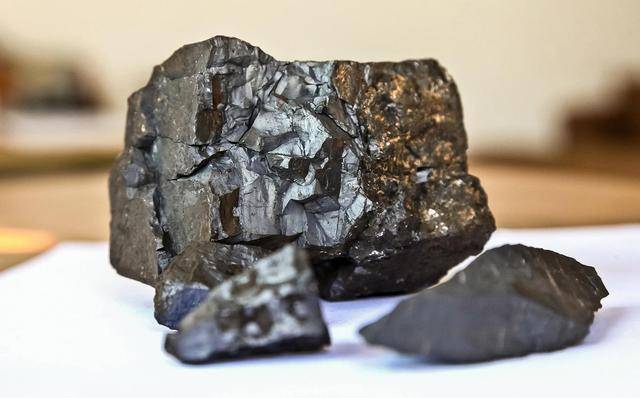
Core Viewpoint - The competition for tungsten resources between the U.S. and China has intensified, with Kazakhstan unexpectedly granting development rights of a valuable tungsten mine to U.S. company Cove Capital LLC, undermining years of negotiations by Chinese firms [1][3]. Group 1: Geopolitical Dynamics - The tungsten mine in Kazakhstan is not just a commercial transaction but a geopolitical struggle, with the U.S. government intervening to secure the deal [3][5]. - The U.S. offered Kazakhstan a package including technology transfer, financial loans, and a $4.2 billion railway infrastructure contract, employing a "carrot and stick" strategy to sway Kazakhstan's decision [5][7]. - The deal resulted in Cove Capital LLC acquiring a 70% stake, while Kazakhstan's state-owned enterprise retained only 30%, highlighting the political nature of the transaction rather than market forces [7][11]. Group 2: Importance of Tungsten - Tungsten, despite its low profile, is critical for various industries, including military applications, due to its high melting point and hardness, making it essential for manufacturing armor-piercing ammunition and aerospace components [9][11]. - The U.S. has classified tungsten as a "critical strategic material," yet it currently produces almost none domestically and relies heavily on China for processing [9][11]. Group 3: China's Resource Strategy - China controls 80% of global tungsten production and has a complete processing chain, but its high-grade tungsten resources are depleting, necessitating overseas resource acquisition to maintain its global influence [9][11]. - The loss of the Kazakhstan tungsten mine represents a significant setback for China, emphasizing the need for a more nuanced approach to resource diplomacy that includes political sensitivity and strategic flexibility [18][21]. Group 4: Kazakhstan's Diplomatic Maneuvering - Kazakhstan's decision to pivot towards the U.S. reflects its "multi-vector diplomacy," aiming to balance influences from China, Russia, and the West [12][14]. - The introduction of U.S. investment is not merely financial but also serves to counterbalance Chinese influence and expand Kazakhstan's diplomatic options [14][16]. Group 5: Future Implications - The competition for tungsten is indicative of a broader shift in global resource competition, moving from capital-driven to strategic control, where resource ownership equates to future industrial power [20][21]. - The situation serves as a wake-up call for Chinese companies, highlighting the necessity to adopt a comprehensive strategy that integrates funding, technology, localization, and diplomatic engagement in resource acquisition [18][21].
贸易战6天狂赚百亿,亚洲行收割了近万亿,川普如此捞钱还能走多远
Sou Hu Cai Jing· 2025-11-08 12:41
Core Insights - The article discusses the intertwining of power and money in American politics, particularly through the actions of Trump, highlighting significant financial maneuvers and investments during his presidency [1][12]. Group 1: Tariff Policies and Financial Gains - In early 2025, Trump announced a new round of tariffs on Chinese goods, which led to market volatility and significant financial gains for his inner circle, including a reported $5.7 billion profit for his son-in-law Kushner [3][5]. - The tariff policies are described as a mechanism for wealth transfer, benefiting Trump's family and allies while negatively impacting ordinary American consumers [5][12]. Group 2: International Investments and Economic Impact - During his 2025 Asia trip, Trump secured investment commitments of $550 billion from Japan and $350 billion from South Korea, framing the trip as a "super investment conference" [5][7]. - Trump's overseas ventures, particularly in the Middle East, resulted in a 650% increase in income from international licensing and partnerships, indicating a strong link between political actions and business opportunities [7][9]. Group 3: Cryptocurrency and New Economic Ventures - The article notes Trump's shift towards promoting cryptocurrency and NFTs, which have become significant sources of income for his family, with plans for a Bitcoin company to go public [9][12]. - The intertwining of political actions with emerging economic sectors like digital assets reflects a broader trend of capitalizing on new financial opportunities [9][12]. Group 4: Systemic Issues and Long-term Implications - The article suggests that the current system allows for the monetization of political power, leading to a deepening divide between the wealthy and the general populace, with potential long-term risks for American democracy [12][16]. - The transformation of political finance into a more overt system of wealth accumulation raises concerns about the erosion of trust in institutions and the implications for global governance [12][16].
金价陷入震荡期,该如何布局?
Guo Ji Jin Rong Bao· 2025-11-04 13:17
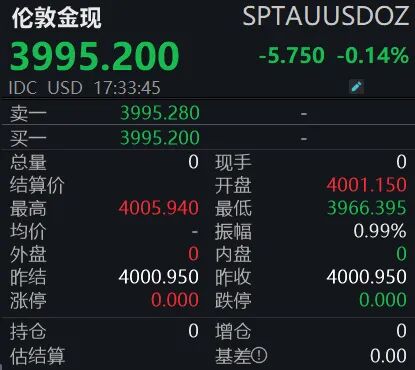
Core Viewpoint - International gold prices continue to decline, with London gold slightly down by 0.14% to $3995.2 per ounce, reaching a low of $3966.395 during the session [1][2]. Price Movements - As of the latest report, London gold is priced at $3995.2 per ounce, down by $5.75 or 0.14% from the previous close of $4000.95 [2]. - COMEX gold futures also show a slight decline of 0.29%, trading at $4002.5 per ounce, with a session low of $3975 [4]. Market Analysis - Analysts suggest that the recent pullback in gold prices is a normal correction following a significant rise, with the current retracement still within a reasonable range [4]. - Factors such as the cooling expectations of Federal Reserve rate cuts and a strengthening dollar are exerting downward pressure on gold prices, with key technical support levels being breached [4]. - Despite the current decline, fundamental factors supporting a bullish outlook for gold remain unchanged, including ongoing U.S. debt issues, government shutdown concerns, and continued geopolitical tensions [4]. Future Outlook - Analysts predict a volatile but generally upward trend for gold prices, with short-term movements heavily influenced by Federal Reserve policy and U.S. economic data [4]. - Resistance levels are identified between $4050 and $4100 per ounce, while support is seen around $3800 per ounce [4]. - Investment strategies suggest cautious positioning, with recommendations for light long positions in the short term and potential short positions if key technical levels are breached [5][6].
一场控制权争夺,撕裂全球半导体命脉
Tai Mei Ti A P P· 2025-11-04 02:25
Core Viewpoint - The control struggle over Nexperia, a semiconductor company, has led to a significant supply chain crisis affecting global automotive production, highlighting the geopolitical tensions between the Netherlands and China [1][10]. Group 1: Supply Chain Impact - Nexperia's production capacity has been severely disrupted, with a 30% reduction in parking space and one-third of packaging equipment idle due to wafer supply interruptions from its Dutch headquarters [1]. - Major automotive manufacturers, including Volkswagen and BMW, have halted production lines due to critical chip shortages, with the European automotive industry warning of a potential 15% reduction in production capacity if the crisis continues [7][11]. - The crisis has led to a tenfold increase in the price of basic chips, with costs exceeding 3 yuan per unit, directly impacting global automotive production plans [5][7]. Group 2: Historical Context and Acquisition - Nexperia's origins trace back to the 1920s, evolving through various ownerships, including a significant acquisition by a Chinese consortium in 2016 for $2.75 billion, which was seen as a strategic move to fill gaps in China's automotive semiconductor market [2][3]. - The acquisition by Wingtech Technology in 2019 for 34 billion yuan transformed Nexperia into a key player in the automotive semiconductor sector, significantly increasing its revenue and market share [3][4]. Group 3: Legal and Political Dynamics - The Dutch government invoked a 1952 law to freeze Nexperia's assets and remove its Chinese CEO, citing concerns over financial resource misuse and technology transfer risks [4][5]. - The legality of the Dutch court's decision has been questioned, with Wingtech asserting its rights as the 100% controlling shareholder, while the timing of the Dutch intervention aligns with U.S. pressures on Chinese management [5][6]. - The geopolitical context reveals that the Netherlands is aligning with U.S. semiconductor restrictions, reflecting broader strategic concerns about China's technological advancements [10][11]. Group 4: Future Implications and Lessons - The crisis underscores the vulnerabilities of global supply chains, particularly the reliance on a single region for critical components, prompting discussions about regional redundancy in production [13][14]. - The situation serves as a cautionary tale for Chinese companies regarding the importance of political risk assessment in overseas acquisitions, emphasizing the need for a more integrated operational approach to mitigate geopolitical risks [14][16]. - The ongoing conflict illustrates the potential for political actions to disrupt established business contracts, raising concerns about the future of international investments and the sanctity of contracts [14][15].
