移动互联网

Search documents
十年前没人敢选的专业,居然翻红了
虎嗅APP· 2025-06-28 03:41
Core Viewpoint - The article discusses the evolving landscape of academic majors in China, highlighting how previously unpopular fields can become desirable due to changing societal needs and technological advancements [4][5]. Group 1: Changing Perceptions of Majors - Certain majors that were once considered "dead-end" or "trap" professions may gain popularity as industries evolve and new opportunities arise [4][5]. - The article emphasizes that the perception of a major's value is often influenced by societal trends and technological developments, making it difficult to predict which fields will thrive [4][5]. Group 2: Individual Experiences - The article features interviews with graduates from "revived majors," showcasing their educational and career paths as reflections of changing industry demands [5]. - For instance, a graduate who transitioned from economics to microelectronics found that the demand for chip engineers surged due to the rise of mobile internet and IoT technologies [13][14]. - Another graduate in archaeology noted a resurgence in interest in cultural heritage, leading to increased enrollment and job opportunities in the field [18][21]. Group 3: Industry Trends - The microelectronics industry experienced a boom from 2014 to 2020, driven by technological advancements, but is now facing oversupply as the market shifts towards software-driven innovations [13][14]. - The materials science sector has seen a growing demand due to the intersection with AI and clean energy technologies, with companies reporting profit increases of 10% to 30% annually [27][28]. - The legal profession is highlighted as increasingly competitive, with a significant portion of opportunities concentrated among a small number of practitioners, emphasizing the need for prospective students to understand the industry's dynamics [37].


AI应用爆发前夜,唱吧陈华呼吁:别傻坚持,用户2周不喊哇塞,请立刻放弃
3 6 Ke· 2025-06-27 01:30
Core Insights - The founder of Changba, Chen Hua, expresses anxiety about the upcoming opportunities in AI applications, likening the current situation to the pre-explosion phase of mobile internet around 2011 [2][3] - Chen believes that the AI wave represents a rewriting of the script compared to the mobile internet era, with distinct differences in commercialization paths and driving factors [3][4] Group 1: Historical Context and Development - Changba was founded in 2011 and launched its app in May 2012, quickly becoming a leader in mobile karaoke [2] - The company has evolved through various stages, including significant product launches and brand upgrades, with a new AI ToC app expected in 2025 [2] Group 2: Comparison of AI and Mobile Internet - Both AI and mobile internet share similar industry development cycles, with significant breakthroughs occurring years after initial technology releases [3][4] - The commercialization paths differ: mobile internet saw a To C explosion first, while AI applications are primarily To B at this stage [4][5] Group 3: Driving Factors and Commercialization - The mobile internet was driven by hardware revolutions, while AI is propelled by breakthroughs in underlying technologies [5][6] - AI applications focus on efficiency and cost-saving for businesses, contrasting with the user-scale monetization seen in mobile internet [7][8] Group 4: Competitive Landscape - The competitive landscape for mobile internet allowed early startups to create platforms, whereas AI applications face a more closed ecosystem dominated by large companies [9][10] - Despite challenges, Chen sees promising opportunities in To B efficiency tools and high-frequency To C tools in vertical fields [11][12] Group 5: Future Opportunities and Challenges - Chen emphasizes the importance of user feedback within two weeks of product launch as a critical measure of success [13][75] - The AI application landscape is still maturing, with many startups struggling to find viable paths due to competition and market saturation [14][36] Group 6: Investment and Market Dynamics - The investment landscape for AI applications is shifting, with a preference for dollar funds over RMB funds due to the latter's complexity [79] - The government is more focused on strategic investments in foundational technologies rather than direct AI application ventures [80]

BOSS直聘发新股募资,掘金增量市场
YOUNG财经 漾财经· 2025-06-26 11:19
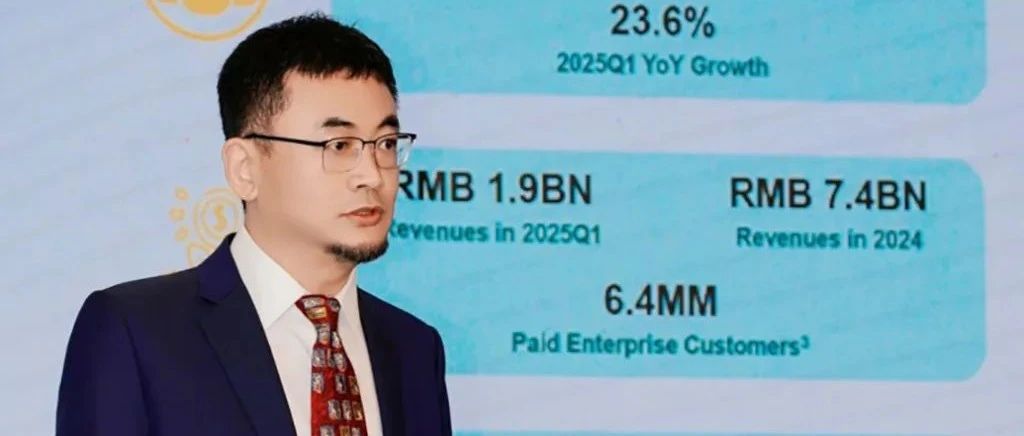
Core Viewpoint - BOSS Zhipin is leveraging incremental market opportunities to maintain growth despite a challenging recruitment platform environment, focusing on blue-collar workers, third-tier cities, and small businesses [2][3][4]. Group 1: Financial Performance - In Q1 2025, BOSS Zhipin achieved revenue of 1.923 billion yuan, a year-on-year increase of 12.9%, with online recruitment services for corporate clients accounting for over 98% of this revenue [5]. - The platform's total paid corporate clients reached 6.4 million, a year-on-year increase of 12.3%, while the average monthly active users grew by 23.6% to 57.6 million [5]. - The company reported a net profit of 512 million yuan in Q1, a significant year-on-year increase of 111.9%, with adjusted net profit rising by 43.9% to 764 million yuan [8]. Group 2: Future Outlook - Despite strong performance, BOSS Zhipin's revenue growth is entering a declining phase, with Q2 2025 revenue expected to be between 2.05 billion and 2.08 billion yuan, indicating a growth rate of only 6.9% to 8.5% [11][12]. - Management has prioritized ensuring stable profit growth over accelerating business expansion, focusing on cost optimization and efficiency improvements [13]. Group 3: Market Strategy - BOSS Zhipin has shifted its strategic focus from first-tier cities to second and third-tier cities, with blue-collar users contributing 34.8% of the platform's user base in 2024, up from 29.8% in 2021 [16][17]. - The company aims to enhance the user experience for blue-collar and lower-tier city users, simplifying service processes and content [17][18]. - The recruitment market's evolving dynamics necessitate a balance between revenue growth and social responsibility, emphasizing the need for transparency and efficiency in the recruitment process [18].

于超对话祥峰投资夏志进:很多人对AI短期乐观长期悲观,我可能相反
Xin Lang Cai Jing· 2025-06-25 16:38
Group 1 - The World Economic Forum's 2025 New Champions Annual Meeting was held in Tianjin, China, from June 24 to 26, focusing on the differences and similarities between investment in the AI era and the mobile internet era [1] - Investors and entrepreneurs are currently feeling a sense of urgency to capitalize on AI opportunities, similar to the mobile internet boom, but the technical barriers for AI startups are significantly higher [1] - The AI era requires innovation not only in product and business models but also substantial investment in underlying technologies [1] Group 2 - Different levels of AI startups have varying key performance indicators; consumer-facing applications may still focus on user growth, while lower-tier AI companies prioritize technical advantages and customer recognition [2] - The feedback cycle for foundational technologies in AI is longer, making direct customer feedback more critical than broad user metrics [2] - AI is beginning to empower industries, particularly in materials and healthcare, where it can significantly accelerate research and development processes [2] Group 3 - AI technology can potentially reduce the time and cost of drug development, which traditionally required 10 years and $1 billion, to possibly just one or two years and significantly lower costs [3] - The materials industry may also see transformative changes due to AI, moving away from serendipitous discoveries to more targeted and rapid material development [3] - There is a long-term optimistic outlook for humanoid robots, with expectations that they will become prevalent in various industries over the next 5 to 10 years, despite short-term skepticism [3]
2025Q1中国移动互联网流量季度报告
艾瑞咨询· 2025-06-24 16:14
User Changes - In Q1 2025, the average number of monthly independent devices in China's mobile internet increased by 2.6% year-on-year, indicating a stabilization in market demand and a shift towards intensified competition in a saturated market [1][5] - User stickiness continues to decline, with the effective daily usage time per device at 268.0 minutes, down 3.9% year-on-year, and usage frequency at 63.4 times, down 5.1% year-on-year [1][11] Industry Changes - E-commerce sector saw peak traffic of 1.216 billion in Q1, driven by upgraded gifting features in social consumption, with platforms like Taobao and JD introducing gifting services [2] - The food delivery market is experiencing fierce competition, with JD's entry and Meituan's expansion, leading to a multi-player competitive landscape [2][26] - The social network sector is expanding, with Xiaohongshu benefiting from internationalization and a surge of users from TikTok [2] - The AI sector is leading with a 46.5% year-on-year increase in monthly active devices, driven by practical applications in various verticals [2][44] APP Changes - The top three apps with over 100 million monthly active users in March 2025 are Personal Income Tax, WiFi Master Key, and Xianyu, while the top three apps with over 50 million monthly active users are Huawei Health, Doubao, and Anjuke [3][84][85] - Z-generation users favor Boss Zhipin, Honor of Kings, and Peace Elite, while the maternal and infant group prefers Meitu Xiuxiu, Xiaohongshu, and Xianyu [3][86][88] Mobile Internet Traffic Trends - Q1 2025 saw a slight increase in mobile internet traffic, indicating a transition to deeper competition in a saturated market [4][5] User Engagement Trends - Users are increasingly focused on entertainment content, with short videos accounting for 29.1% of usage time, while communication and information aggregation are declining [14][18] - Communication apps lead in usage frequency, with short videos following closely, and female users showing higher engagement than male users [18] Smart Screen Trends - By Q1 2025, the number of smart screen devices reached 339 million, with daily usage time increasing year-on-year [21] E-commerce Overview - The e-commerce sector's user scale and stickiness are steadily improving, with peak traffic in Q1 nearing last November's levels [32] - JD's app leads the industry with a 3.4% year-on-year growth rate, while Taobao and Pinduoduo see slight declines in active user numbers [35] AI Industry Overview - The AI sector is experiencing explosive growth, with a 46.5% year-on-year increase in monthly active devices, focusing on vertical applications [44][49] Social Network Overview - The social network sector continues to expand, with Q1 traffic surpassing 900 million, and Weibo and Xiaohongshu leading in user scale [65][67] Video Service Overview - The video service sector shows stable growth, with aggregation video and game live streaming as key growth drivers [71][75]


从虎扑到喜马拉雅,古典互联网正在消亡?
36氪· 2025-06-19 09:10
Core Viewpoint - The article discusses the decline of classical internet platforms, highlighting recent acquisitions of companies like Hupu and Ximalaya, which reflect a significant drop in their market valuations compared to their peak years [4][5][7]. Summary by Sections Recent Acquisitions - Xunlei acquired Hupu for 500 million, while Tencent Music purchased Ximalaya for 2.9 billion, both indicating a trend of established internet companies selling at lower valuations than in their prime [4]. - Hupu and Ximalaya, both over ten years old and once dominant in their niches, are now struggling to maintain their user bases and market positions [4][5]. Historical Context - The closure of platforms like Tianya Forum and the struggles of others like Renren and Douban illustrate the broader decline of classical internet communities [5][9]. - Hupu's valuation dropped from approximately 7.7 billion in 2019 to 500 million in 2023, reflecting a significant loss in user engagement and market value [8]. Financial Performance - Ximalaya's peak valuation was around 5 billion in 2021, but it faced challenges in maintaining growth and profitability, leading to its eventual acquisition by Tencent [7][15]. - Hupu's financial instability is evident from its failed IPO attempts due to high accounts receivable and fluctuating profits, with net profits varying significantly from 2013 to 2015 [14]. Market Dynamics - The rise of mobile internet and social media platforms has shifted user attention away from traditional content communities, leading to a decline in user engagement and content quality [18][19]. - Both Hupu and Ximalaya rely heavily on advertising and subscription models, making them vulnerable to market fluctuations and changes in user behavior [21][22]. Future Prospects - Despite the decline of classical internet platforms, there are still opportunities for niche content platforms to thrive, as seen with companies like Bilibili and Xiaohongshu, which have successfully adapted their business models [26][29]. - The article suggests that while the classical internet era is fading, community-driven platforms still hold potential for growth if they can balance content quality with monetization strategies [31].

49天毁掉12亿美元,前HP CTO揭秘HP当年错失移动时代的真相
3 6 Ke· 2025-06-18 07:44
Core Insights - The article discusses the failure of HP's WebOS project, which was acquired from Palm for $1.2 billion, and how it was abruptly terminated just 49 days after the launch of the TouchPad tablet [1][2][3] Group 1: Acquisition and Initial Optimism - HP acquired Palm in 2010, believing that WebOS had the potential to be a leading mobile platform due to its advanced multitasking capabilities and elegant UI design [4][5] - The acquisition was seen as a strategic move to secure a foothold in the mobile computing market, which was shifting away from traditional PCs [4][5] Group 2: Leadership Changes and Strategic Shift - Following the acquisition, HP's CEO Mark Hurd resigned, and Leo Apotheker took over, who had a radically different vision for the company, focusing on software and services rather than hardware [7][8] - Apotheker viewed WebOS as a burden and aimed to pivot HP away from its traditional hardware business, which included the TouchPad [7][8] Group 3: Project Collapse and Decision-Making Failures - The TouchPad was launched on July 1, 2011, but failed to gain traction, selling only 25,000 units out of 270,000 shipped, while Apple sold 9 million iPads in the same period [10][11] - Just 49 days after the launch, HP announced the cessation of all WebOS device development, a decision made without adequate time to address the product's issues or build a developer ecosystem [11][12] Group 4: Aftermath and Reflection - The abrupt termination of the WebOS project led to significant internal backlash, with team members blaming leadership for the failure [12][13] - The article emphasizes the importance of having the right leadership and decision-making frameworks in place to avoid similar failures in the future [18][20][21] - Despite the failure of WebOS, the underlying technology was later repurposed by LG for smart TVs, indicating its potential value if managed correctly [23]

当科技秩序崛起
Hu Xiu· 2025-06-16 05:46
Group 1: Technology's Influence on Society - The emergence of technology as a powerful force is reshaping individual lives and societal structures, creating a new order [7][10] - The mobile internet era began with the launch of the first iPhone in 2007, fundamentally changing how humans interact with information and each other [5][6] - Technology is no longer subservient to religion or politics; it has become the source of a new order that influences future living conditions [10] Group 2: The Role of Tech Leaders - Tech leaders are increasingly seen as modern-day prophets, creating a belief system around their products and visions, akin to a religion [11][12] - Steve Jobs is highlighted as a pioneer in this transformation, marketing technology as a means of changing the world rather than just a tool [12][13] - Elon Musk exemplifies the merging of technology and political narrative, positioning himself as a savior figure through his various ventures [18] Group 3: Political Implications of Technology - The authority of governments over currency issuance is being challenged by tech initiatives like Meta's Libra and Sam Altman's Worldcoin, which propose alternative systems [14][16][17] - The collaboration between tech leaders and political figures, such as Trump and Musk, signifies a new era where technology and politics intertwine to address societal issues [19][20] - Musk's influence extends to significant political matters, raising concerns about the legitimacy and accountability of tech leaders in political roles [21]



吴世春:市面上90%的 AI服务,都是“伪AI”
创业家· 2025-06-15 09:25
Core Viewpoint - The AI large model battlefield has concluded with a few winners, specifically Alibaba's Qianwen 3, DeepSeek, ByteDance's Doubao, and Tencent's Yuanbao, which are considered the first tier [1]. AI Development Stage - The current stage of AI development is comparable to the mobile internet in 2011, indicating a potential for explosive application opportunities [2]. - Many current AI offerings are deemed "pseudo AI," suggesting that AI has not yet fully integrated into work and business practices [2][6]. Data as the Key Resource - The true "gold mine" for AI lies in private data accumulated from specific work scenarios, as opposed to publicly available data [7][10]. - Companies that have unique private data can train small models to enhance customer experience and offer better products and services [13]. Market Outlook - Approximately 90% of AI services in the market are considered pseudo AI, merely adding an AI suffix to existing projects without genuine integration [14].

WWDC上登场的新平台,能让苹果游戏业务再次腾飞吗?
3 6 Ke· 2025-06-12 00:20
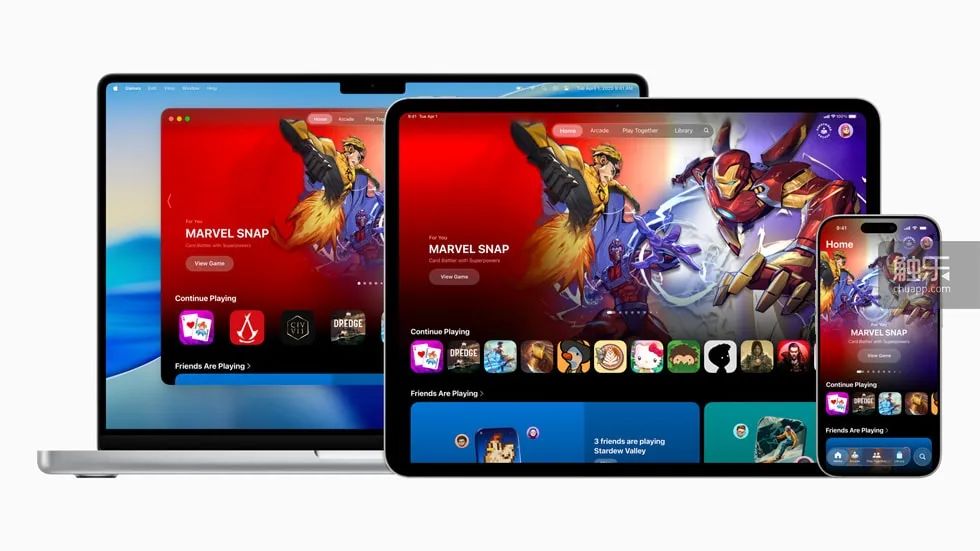
Core Viewpoint - Apple has launched a new gaming platform called "Apple Games" during the WWDC, aiming to integrate its gaming business across devices like iPhone, iPad, Mac, and Apple TV, providing a unified gaming experience [1][3][4]. Group 1: Historical Context - Apple's history in the gaming industry dates back to the mid-1990s with the launch of the Pippin gaming console, which failed due to high pricing and lack of content [5][7]. - Over the years, Apple has been perceived as lacking a strong gaming focus, despite significant revenue from gaming applications on the App Store [3][4]. - The introduction of the App Store in 2008 marked a turning point, making Apple a major player in mobile gaming distribution, yet it did not invest heavily in game development [9][10]. Group 2: Previous Attempts and Challenges - Apple's previous ventures, such as Game Center and Apple Arcade, did not achieve expected success, often due to insufficient support and a lack of focus on core gaming content [11][12][15]. - The company has faced challenges in establishing a strong gaming community and ecosystem, often prioritizing other business areas over gaming [16][18]. Group 3: Recent Developments - The introduction of Apple Silicon chips has improved the performance of Apple devices, potentially enhancing gaming experiences [22]. - Apple is investing in VR and AR technologies, with the Vision Pro headset being a significant step towards integrating gaming into these platforms [23][26]. - The acquisition of the independent game studio RAC7 signals Apple's intent to develop exclusive content and strengthen its gaming ecosystem [26][28]. Group 4: Future Outlook - The launch of Apple Games is seen as a strategic move to enhance user experience and engagement in gaming, leveraging Apple's vast user base and resources [21][30]. - The company is expected to face challenges in changing its approach to gaming, including respecting developer feedback and potentially lowering its revenue share from games [33]. - Overall, Apple has the potential to significantly impact the gaming industry if it successfully integrates its gaming strategy with its existing ecosystem [31][34].