贸易协定

Search documents
2025年第三季经济与投资策略观点:利率下调 预期与稳健经济前景
Sou Hu Cai Jing· 2025-09-15 04:43
Group 1: Global Economic Outlook - Global economic activity remains robust despite ongoing policy uncertainties, with a projected growth rate of 2.5% for this year and 2.6% for 2026, both above market consensus levels [1][4] - The peak of policy uncertainty has passed, yet market expectations for economic growth remain pessimistic, particularly regarding the timing of potential interest rate cuts by the Federal Reserve [1][5] - The resilient U.S. economy, characterized by strong growth and high inflation, contradicts market expectations for immediate rate cuts, which may be delayed until 2026 [1][5] Group 2: Regional Economic Insights - The U.S. labor market remains strong, supporting consumer spending, while inflation risks persist due to delayed impacts from tariff disputes [2][5] - The Eurozone is experiencing solid growth, bolstered by trade agreements and supportive monetary and fiscal policies, although this may signal the end of the European Central Bank's easing cycle [2][5] - The UK faces constraints on growth, with GDP expected to remain below 1%, and inflation potentially exceeding 4% in the coming months [2][5] Group 3: Emerging Markets and Currency Trends - China's manufacturing exports have benefited from delayed tariff increases, leading to steady economic growth, although recent data indicates a mild slowdown [3][4] - Emerging markets may see improved prospects if the U.S. dollar continues to depreciate, providing central banks with room to lower interest rates and stimulate domestic demand [3][6] - A depreciating dollar could create deflationary effects in other regions, facilitating monetary easing and boosting internal demand [6]
阿联酋-新西兰全面经济伙伴关系协定正式生效
Shang Wu Bu Wang Zhan· 2025-09-06 17:51
Core Points - The Comprehensive Economic Partnership Agreement (CEPA) between the UAE and New Zealand has officially come into effect, marking the first trade agreement between New Zealand and a Middle Eastern country [2] - The agreement aims to eliminate or reduce tariffs on most goods, with New Zealand offering 100% tariff-free imports to the UAE, while the UAE provides tariff exemptions on 98.5% of New Zealand's goods [2] - The target is to increase bilateral trade to $5 billion by 2032, significantly exceeding the current average levels [2] - The agreement covers key sectors such as food, energy, education, and advanced technology, promoting private sector collaboration [2] - This achievement is part of the UAE's CEPA strategy, which aims to reach a total trade volume of $1 trillion and an economic size of $800 billion by 2031 [2]
肯上半年对美国出口额创历史新高
Shang Wu Bu Wang Zhan· 2025-09-05 17:34
Core Insights - Kenya's exports to the United States reached 52.59 billion shillings in the first half of the year, marking a significant increase of 27.4% compared to the same period last year [1] Export Performance - Notable growth was observed in specific product categories, including: - Men's knitted underwear, with an export value of over 4.4 billion shillings, experiencing a remarkable growth of 682% [1] - Knitted T-shirts, with an export value of 3.5 billion shillings, showing a growth of 229% [1] - Coffee, with an export value of 3.4 billion shillings, increasing by 65.2% [1] Trade Agreement Context - The growth in exports coincides with the impending expiration of the African Growth and Opportunity Act, as Kenya seeks to establish a new trade agreement with the U.S. [1] - If the act is not extended, products that previously enjoyed zero tariffs may face a 10% tariff, posing a significant risk to Kenya's textile industry [1]
欧盟推进与南方共同市场贸易协定
Shang Wu Bu Wang Zhan· 2025-09-05 17:28
Core Points - The European Union is seeking to sign new trade agreements with countries like India, Indonesia, and Thailand amid escalating tariff tensions with the United States [1] - The EU is accelerating the push for a trade agreement with the Southern Common Market (Mercosur), which will gradually eliminate a 35% tariff on European cars and tariffs on automotive parts, machinery, chemicals, textiles, and other industrial goods [1] - The European Commission estimates that this agreement could save EU exporters over 40 billion euros annually [1] - The agreement aims to strengthen the EU's presence in a region where China has become a significant industrial supplier and raw material buyer for Mercosur [1]
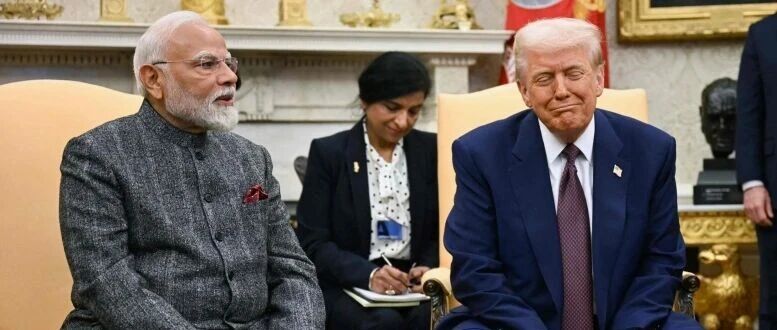
印度再次在WTO硬刚美国,特朗普称美印贸易“完全是一边倒灾难”
第一财经· 2025-09-05 09:54
Core Viewpoint - India is actively seeking to challenge the 50% tariffs imposed by the U.S. on copper products through the WTO, asserting that these measures are essentially safeguard measures rather than national security actions [4][6][10]. Group 1: U.S.-India Trade Relations - The U.S. began imposing a 50% tariff on certain copper products from July 30, effective from August 1 indefinitely [8]. - India exported copper products worth $360 million to the U.S. in the 2025 fiscal year, while its copper imports for the 2024-2025 fiscal year totaled $14.45 billion, indicating a significant trade imbalance [9]. - The U.S. tariffs are seen as a response to India's previous retaliatory measures against U.S. tariffs on steel and aluminum [6][10]. Group 2: WTO Consultations - India has requested consultations with the U.S. through the WTO, emphasizing its significant export interests affected by the U.S. tariffs [9]. - The Indian government has previously indicated its intention to impose retaliatory tariffs on U.S. products, which could amount to $1.91 billion in response to U.S. safeguard measures [10]. - India has also expressed concerns over the U.S. tariffs on automobiles and parts, which could impact $2.89 billion worth of Indian exports [10]. Group 3: Ongoing Negotiations - Despite the imposition of tariffs, India and the U.S. are engaged in negotiations for a bilateral trade agreement, with five rounds of talks completed since March [12]. - The next round of negotiations has been postponed due to the recent tariff imposition, with no new date set [13]. - India aims to resolve the tariff issue as a key condition for reaching a proposed trade agreement, while the U.S. is pushing for greater market access in sensitive sectors like agriculture [14]. Group 4: Trade Statistics - In the period from April to July, India's exports to the U.S. grew by 21.64% to $33.53 billion, while imports increased by 12.33% to $17.41 billion [15]. - The U.S. accounted for approximately 20% of India's total exports in 2024-2025, while India represented about 2.5% of U.S. imports [15].

贵金属有色金属产业日报-20250905
Dong Ya Qi Huo· 2025-09-05 09:21
Report Industry Investment Rating - Not provided in the content Core Viewpoints - **Precious Metals**: Affected by weak US employment data, the ADP employment in August only increased by 54,000, strengthening the expectation of the Fed to cut interest rates in September. Multiple factors jointly support the strong operation of gold prices [3]. - **Copper**: The market focus is on the Fed's interest - rate cut expectation, personnel adjustment, independence issues, and bond - market risks. Copper prices may remain strong in the short term due to relatively tight supply and the stimulus of US economic pressure on the Fed's interest - rate cut expectation [17]. - **Aluminum**: In the short term, aluminum fluctuates with an upward bias, but there is pressure above. To break through the 21,000 pressure level, the peak - season expectations need to be fulfilled, demand should improve significantly, and inventory should start to decline. Alumina has insufficient upward drive in the short term, and its price is approaching the 2,880 yuan cost line. Cast aluminum alloy is more resilient due to cost support [37][38][39]. - **Zinc**: In the short term, zinc shows a pattern of being strong overseas and weak domestically. Observe macro and consumption factors, and it will mainly fluctuate [68]. - **Nickel**: Currently, the nickel ore price has a slight decline, other nickel products are basically stable, and the MHP benchmark price has an upward trend. Stainless - steel inventory has decreased for several weeks, and demand sentiment has improved in the peak season. Sulfuric - nickel prices are stable. Pay continuous attention to the impact of interest - rate cut expectations and the US dollar trend [83]. - **Tin**: In the short term, tin prices have an upward driving force due to tight supply, despite certain demand pressure [98]. - **Lithium Carbonate**: The current market is in an oscillating adjustment stage. If the conversion of orders to actual transactions is less than expected, the market may remain weakly oscillating; if the receiving demand is gradually released, prices may be supported [110]. - **Silicon Industry Chain**: In the short term, industrial silicon prices are expected to be flat in September. In the medium - to - long term, they have an upward expectation. Polysilicon is in a "wide - range oscillation" state, and short - term price fluctuations due to news stimuli should be vigilant [119]. Summary by Related Catalogs Precious Metals - **Price Influencing Factors**: Weak US employment data, the signing of the US - Japan trade agreement, investigations into the Fed's independence, and the expansion of the US trade deficit support the strong operation of gold prices [3]. - **Market Data**: Various data on SHFE and COMEX gold and silver prices, inventory, and long - term fund positions are presented [4][12][16]. Copper - **Price Movement**: Copper prices rose due to multiple factors but fell on Wednesday. In the short term, they may remain strong due to supply and demand factors [17]. - **Market Data**: Include copper futures and spot prices, import and export data, inventory data, etc. For example, the latest price of Shanghai copper futures' main contract is 80,140 yuan/ton, with a daily increase of 0.46% [18][23][33]. Aluminum - **Price Outlook**: Aluminum prices are expected to be oscillating with an upward bias in the short term, while alumina prices are under pressure. Cast aluminum alloy is relatively resilient [37][38][39]. - **Market Data**: Provide data on aluminum, alumina, and aluminum alloy futures and spot prices, inventory, and basis [40][54][63]. Zinc - **Price Trend**: In the short term, zinc prices show an overseas - strong and domestic - weak pattern and will mainly fluctuate [68]. - **Market Data**: Include zinc futures and spot prices, inventory data, etc. For example, the latest price of Shanghai zinc futures' main contract is 22,155 yuan/ton, with a daily increase of 0.16% [69][74][79]. Nickel - **Market Situation**: Nickel ore prices decline slightly, other nickel products are stable, and the MHP benchmark price rises. Stainless - steel demand improves in the peak season, and sulfuric - nickel prices are stable [83]. - **Market Data**: Present data on nickel and stainless - steel futures prices, inventory, and downstream profit margins [84][93]. Tin - **Price Driving Force**: Tin prices are driven up by tight supply in the short term [98]. - **Market Data**: Include tin futures and spot prices, inventory data, etc. For example, the latest price of Shanghai tin futures' main contract is 272,460 yuan/ton, with a daily increase of 0.16% [99][104][106]. Lithium Carbonate - **Market Trend**: The market is in an oscillating adjustment stage. The future trend depends on downstream receiving demand [110]. - **Market Data**: Provide data on lithium carbonate futures and spot prices, inventory, and price differences [111][113][117]. Silicon Industry Chain - **Price Outlook**: Industrial silicon prices are expected to be flat in September and have an upward expectation in the medium - to - long term. Polysilicon remains in a "wide - range oscillation" state [119]. - **Market Data**: Include industrial silicon and polysilicon spot and futures prices, inventory, and production data [120][121][140].
美日协定即15%关税+80亿订单 沪金震荡
Jin Tou Wang· 2025-09-05 02:59
Group 1 - The U.S. has signed a trade agreement with Japan, implementing a 15% baseline tariff on nearly all Japanese goods exported to the U.S. [3] - The new tariff framework aims to reduce the U.S. trade deficit with Japan and improve overall trade balance [3] - Japan will increase its procurement of U.S. rice by 75% and commit to purchasing $8 billion worth of U.S. agricultural products annually [3] Group 2 - Japan will allow U.S. manufactured passenger cars to be sold in its market without additional testing, adhering to U.S. safety certification standards [3] - The agreement includes commitments for Japan to purchase U.S. manufactured commercial aircraft and defense equipment [3] - Key sectors for market access include manufacturing, aerospace, agriculture, food, energy, automotive, and industrial products [3] Group 3 - Gold futures are currently trading at approximately 815.10 yuan per gram, with a slight decline of 0.12% [1] - The trading range for gold futures shows a high of 817.76 yuan per gram and a low of 811.36 yuan per gram [1] - Key resistance levels for gold futures are identified between 823 yuan per gram and 860 yuan per gram, while support levels are between 781 yuan per gram and 850 yuan per gram [4]
白宫:美国将对几乎所有日本输美商品征收15%基准关税-美股-金融界
Jin Rong Jie· 2025-09-05 00:23
Group 1 - The White House announced that President Trump signed an executive order to officially implement the US-Japan trade agreement [1] - Under the agreement, the US will impose a 15% baseline tariff on nearly all Japanese goods exported to the US, with differentiated tariff treatment for specific sectors including automobiles, aerospace products, generic drugs, and natural resources that cannot be sourced or produced domestically [1] - Japan will provide breakthrough market access opportunities for US manufacturers in key sectors such as aerospace, agriculture, food, energy, automobiles, and industrial products [1] Group 2 - Japan aims to increase its procurement of US rice by 75% under the "minimum market access" rice plan, with an annual total procurement of $8 billion for US agricultural products including corn, soybeans, fertilizers, and bioethanol [1] - The Japanese government will facilitate the sale of US-manufactured passenger cars in Japan without additional testing, provided they meet US safety certification standards [1] - Japan will also procure US-made commercial aircraft and US defense equipment [1]
白宫:美国将对几乎所有日本输美商品征收15%的基准关税
Xin Lang Cai Jing· 2025-09-04 20:27
Core Viewpoint - The White House announced that President Trump signed an executive order to implement a US-Japan trade agreement, which includes a 15% baseline tariff on nearly all Japanese goods imported to the US, aimed at reducing the trade deficit and enhancing trade balance [1] Group 1: Tariff Structure - The new tariff framework will impose a 15% baseline tariff on almost all Japanese imports to the US [1] - Specific sectors such as automobiles, aerospace products, generic drugs, and natural resources that cannot be sourced or produced domestically in the US will have differentiated tariff treatments [1] Group 2: Market Access and Agricultural Procurement - Japan will provide breakthrough market access opportunities for US manufacturers in key sectors including aerospace, agriculture, food, energy, automobiles, and industrial products [1] - Under the "minimum market access" rice plan, Japan aims to increase its procurement of US rice by 75% [1] - Japan will also commit to purchasing $8 billion worth of US agricultural products annually, including corn, soybeans, fertilizers, and bioethanol [1] Group 3: Automotive and Defense Procurement - Japan will facilitate the sale of US-manufactured passenger vehicles in its market without requiring additional testing, provided they meet US safety certification standards [1] - The Japanese government will also procure US-made commercial aircraft and defense equipment [1]
印度再次在WTO硬刚美国,特朗普称美印贸易“完全是一边倒灾难”
Di Yi Cai Jing· 2025-09-04 09:46
Core Viewpoint - India is challenging the U.S. tariffs on copper, asserting that these measures are essentially safeguards rather than security measures, and is seeking consultations with the WTO [1][2]. Group 1: U.S. Tariffs and India's Response - The U.S. imposed a 50% tariff on certain copper products starting August 1, which India claims affects its significant export interests [4]. - India exported copper products worth $360 million to the U.S. in the fiscal year 2025, while its copper imports for the fiscal year 2024-2025 amounted to $14.45 billion, indicating a net import status [4]. - India has previously reserved the right to impose retaliatory tariffs on U.S. products in response to U.S. tariffs on steel, aluminum, and automotive parts [2][5]. Group 2: Ongoing Trade Negotiations - Despite the imposition of tariffs, India and the U.S. are engaged in negotiations for a bilateral trade agreement, having completed five rounds since March [6]. - The next round of negotiations was postponed due to the U.S. tariffs, with India emphasizing the need to resolve the tariff issue as a key to reaching an agreement [7]. - The U.S. has pressured India to open its markets in politically sensitive areas like agriculture and dairy, which India is reluctant to accept due to domestic concerns [8]. Group 3: Trade Statistics and Future Goals - In the period from April to July, India's exports to the U.S. grew by 21.64% to $33.53 billion, while imports increased by 12.33% to $17.41 billion [9]. - The U.S. accounted for approximately 20% of India's total exports in 2024-2025, while India's exports represented about 2.5% of U.S. imports [9]. - The goal of both countries is to increase bilateral trade from the current $191 billion to $500 billion by 2030 [8].