
数字化转型

Search documents
酒店RWA新模型,让消费者变投资者,2万份权益发行锁定4000万流水
Sou Hu Cai Jing· 2026-01-11 14:53
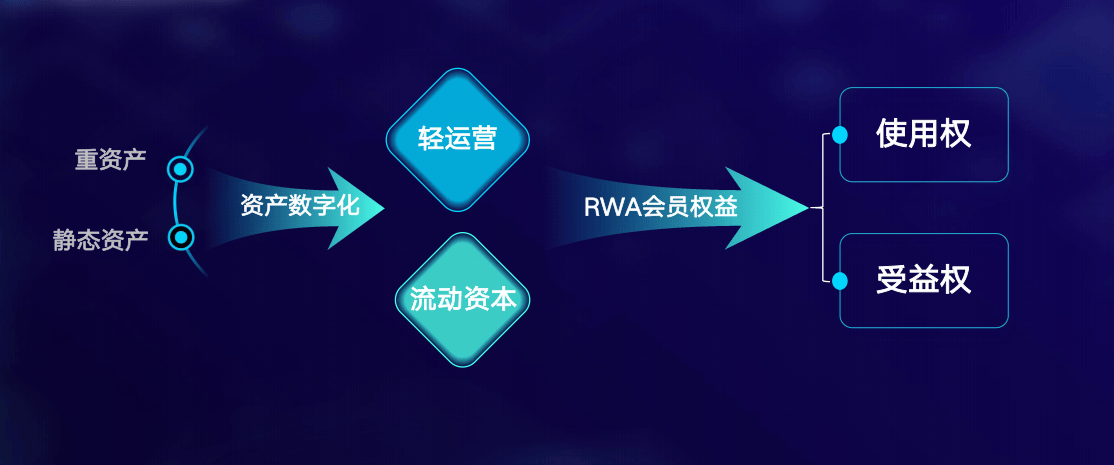
Application Scenarios - The solution is applicable to traditional hotel industry, especially for hotels facing issues like high asset investment, serious capital lock-up, poor liquidity, and a single membership system [1] - It aims to digitize and tokenize future revenue rights of hotels, achieving asset lightweighting, rapid capital recovery, and flexible circulation of user rights [1] Core Algorithms and Mechanisms - The asset packaging and issuance mechanism involves bundling hotel operational costs and revenues for a certain period (e.g., 5 years) into an "asset package" [3] - Limited digital rights certificates (NFG) are issued based on blockchain, with each certificate corresponding to a fixed amount (e.g., 2000 yuan per certificate), representing usage and benefit rights [5] - The profit-sharing rules and calculation model include a service fee of 10% on room rates for users using NFG rights [6] - Each NFG certificate's value is calculated as total hotel revenue divided by total issued NFG certificates, exemplified by a total revenue of 63.5 million yuan divided by 20,000 certificates, resulting in 3,175 yuan per certificate [6] - The annualized return calculation formula is provided, showing an example of an 11.75% annualized rate based on the increase in certificate value over 5 years [6] Problem Resolution - For hotels, the solution allows for the packaging of future revenues, enabling quick capital recovery (e.g., issuing 20,000 certificates can recover 40 million yuan) [10] - It reduces asset lock-up pressure, shifting towards "light asset operation" [10] - The design binds user rights to enhance repurchase and loyalty [10] - For users/investors, it offers low-threshold ownership of hotel asset shares (e.g., 2000 yuan per share) [10] - It combines consumption rights with investment returns, allowing for the transfer and appreciation of rights, breaking the traditional prepaid card "funds lock-up" dilemma [10] Design Rationale - The design is based on a trusted blockchain infrastructure (Tencent Cloud TBaaS), ensuring rights confirmation, transaction transparency, and immutability [11] - It digitizes asset revenue rights, aligning with policy advocacy for "digital transformation" and enhancing asset liquidity [11] - The dual rights design (usage rights + benefit rights) meets consumer needs while possessing investment attributes, expanding the user base [11] - The tradable rights resolve the rigidity of traditional membership cards, forming a secondary market and activating the ecosystem [11] Example Illustration - A hotel issues 5-year NFG rights, with each share priced at 2000 yuan, totaling 20,000 shares [12] - The hotel can recover 40 million yuan upfront for operational upgrades, while users become "co-investors," sharing in the hotel's profits [12] - Users can utilize their rights for 10 nights, with the hotel charging a 10% service fee on room rates, while also holding a benefit right to share in hotel operating profits [12]

苏黎世保险董事长及总经理回应每经:看好中国市场前景
Sou Hu Cai Jing· 2026-01-11 12:49
Core Insights - Zurich Insurance Group has completed the acquisition of AIG's global personal travel insurance and Travel Guard emergency assistance services, marking a significant shift in the global travel insurance market and enhancing service capabilities through integrated global rescue networks [1][4]. Group 1: Acquisition Details - The acquisition was initiated in June 2024 and completed in October 2025, reflecting the growing demand for global travel protection solutions and Zurich's strategic positioning in the market [4]. - Personal travel insurance is one of the fastest-growing segments in the global insurance market, and this acquisition allows Zurich to expand its market share and become one of the largest travel insurance companies globally [4]. - The integration of Travel Guard with Zurich's previously acquired CoverMore Group enhances the company's ability to provide consistent, professional, multilingual service experiences to customers worldwide [4]. Group 2: Strategic Plans in China - Zurich Insurance has begun localizing its travel insurance business in China, launching promotional efforts on social media platforms like Xiaohongshu and Douyin [3][7]. - The acquisition allows Zurich to offer well-known travel insurance products in China, such as "万国游踪" and "乐悠游," and aims to provide higher quality and more responsive international travel protection services [5]. - The company plans to introduce embedded insurance, deepen partnerships, and leverage technology for rapid policy issuance and claims processing, while also incorporating green elements to support sustainable travel [5][6]. Group 3: Market Potential and Future Outlook - Zurich Insurance has reported steady growth in the Chinese market, with premium income exceeding 1 billion yuan and a solvency ratio of 272.71% as of the end of 2024 [9]. - The company aims to continue its "global vision, local cultivation" strategy, focusing on niche markets and new customer segments to drive growth [9]. - Future opportunities in the Chinese insurance market include increased demand for liability insurance, cybersecurity insurance, and travel insurance, driven by digital transformation and heightened awareness of health and safety [11][12].


2026年市场展望与薪酬报告——中国大陆-任仕达
Sou Hu Cai Jing· 2026-01-11 07:08
Core Insights - The 2026 talent market in mainland China is characterized by a blend of "new" and "stable," with simultaneous challenges of "employment difficulty" and "recruitment difficulty" driven by factors such as industrial upgrades, human resource distribution, and demographic changes [8][9][19] - The demand for "immediate-use" and "composite" talents is urgent, particularly in fields like AI, 5G, and industrial internet, which are driving the development of Industry 5.0 [9][10] - The employment model is shifting towards a hybrid approach of "fixed employment + flexible supplementation," focusing on core functions for long-term positions while adapting to short-term needs [21] Job Demand and Employment Models - Companies are adopting a cautious and steady recruitment strategy, focusing on emerging sectors and revenue-driven areas [9][10] - The competition for high-level technical talents in advanced manufacturing, AIGC, and carbon neutrality is intense, while the demand for sales roles remains strong [9][10] - The hybrid employment model has become a strategic standard, balancing "strategic certainty" with "environmental uncertainty" [21] Salary Trends - Overall salary growth is moderate, with traditional manufacturing sectors seeing increases of 1%-2%, while healthcare and AI sectors may exceed 10% for core positions [2][24] - The expectation for year-end bonuses has shifted towards differentiated incentives, with flexible working hours and paid learning leave becoming more attractive [26][30] - The salary increase expectations are becoming more rational, with 59% of respondents targeting a 5%-15% increase when changing jobs [30][32] Talent Mobility - The talent market is entering a "low-initiative, high-observation" phase, with 43% of respondents willing to change jobs only for better opportunities [10][33] - Job stability and attractive compensation remain core demands, with non-monetary benefits gaining importance [10][30] - The confidence to switch jobs varies significantly across different sectors, with sales and IT roles showing higher confidence due to their demand and skill applicability [33] AI Impact and Skills Adaptation - AI is deeply restructuring the workplace, leading to challenges in skill adaptation, with 55% of workers feeling that AI training does not match job requirements [12][36] - Companies need to enhance AI applications and build flexible talent systems through partnerships with educational institutions and robust training frameworks [12][13][38] Strategic Recommendations - Companies should strengthen AI applications and provide timely training to enhance employee skills and maintain competitiveness [12][13] - Building organizational resilience and talent flexibility is crucial, with a focus on long-term strategic investments in talent development [13][14] - Establishing a new collaborative system that integrates human resources, AI, and robotics is essential for fostering trust and engagement in the workplace [15][19]

构建高效企业管理体系,推动企业可持续发展!
Sou Hu Cai Jing· 2026-01-11 06:12
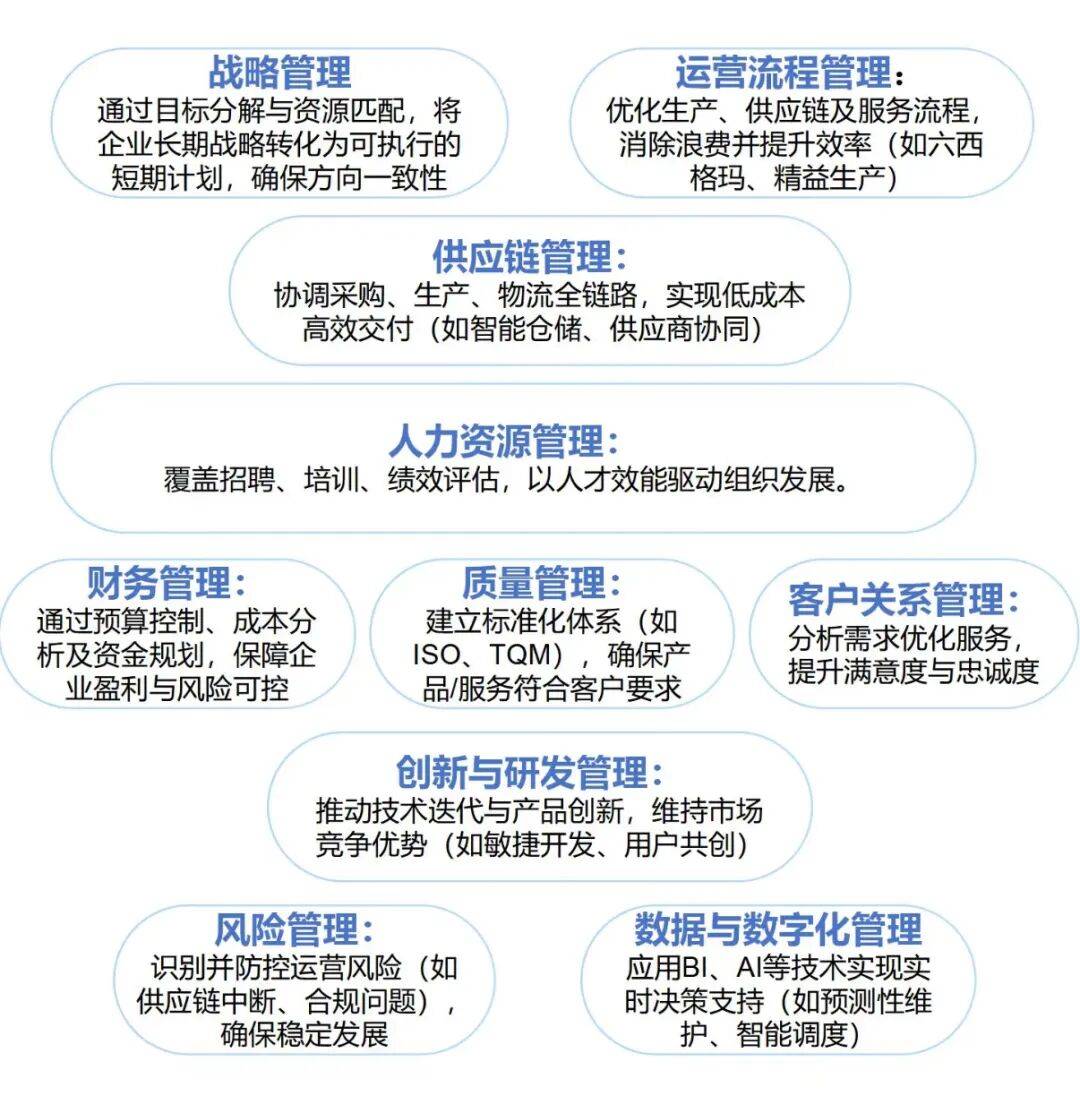
Group 1 - Establishing an efficient corporate management system is crucial for sustainable development and growth, optimizing resource allocation, enhancing operational efficiency, and enabling flexibility in market response [1] - Clear strategic goals should be set, aligning long-term and short-term objectives with the company's vision, mission, and core values, following the SMART criteria [1] - A flat management structure can accelerate decision-making and improve information flow, while flexible team configurations promote resource sharing and collaborative innovation [1] Group 2 - Advanced management systems such as ERP and CRM can enhance efficiency in supply chain, financial, and production management, as well as improve customer service quality and loyalty [3] - Implementing an Office Automation (OA) system can optimize daily office processes and increase work efficiency [4] - A scientific recruitment process and evaluation system are essential for attracting and retaining top talent [4] Group 3 - Continuous training and development opportunities help employees enhance their skills and realize personal value, while a fair and transparent performance evaluation and incentive mechanism can boost employee motivation and creativity [5] - Lean management practices focus on waste elimination and process optimization to improve product and service quality [5][6] - The PDCA cycle (Plan, Do, Check, Act) is a method for ongoing improvement [6] Group 4 - Establishing risk management mechanisms and response strategies ensures quick action during risk events [8] - Compliance management is necessary to ensure operations meet legal requirements, avoiding legal risks and reputational damage [9] Group 5 - Digital transformation is driven by data, utilizing big data and AI to enhance decision-making accuracy [10] - Cloud computing can reduce IT costs and improve system flexibility, while IoT technology enables remote monitoring and smart control [11] - A comprehensive digital transformation strategy is essential for innovating business, operational, and service models [12]
今年经济大省向哪拼?广东、江苏、河南等各有侧重
Sou Hu Cai Jing· 2026-01-11 05:06
Group 1: Economic Focus of Major Provinces - Major provinces in China are prioritizing economic development themes for 2026, with a focus on manufacturing, artificial intelligence, agriculture, and cultural tourism [1][4][10] - Henan province emphasizes high-quality development in manufacturing, aiming to implement significant infrastructure projects and align with national industrial policies [4][5] - Jiangsu province is concentrating on artificial intelligence, with local governments holding meetings to enhance AI integration in various industries [6][7][8] Group 2: Specific Initiatives and Goals - Henan plans to implement over 150 digital transformation projects with an investment of more than 19 billion yuan in the first quarter of 2026 [5] - Zhejiang province's government meeting focused on setting economic indicators for the first quarter without specifying numerical targets, aiming for stability and growth in the service sector [5] - Guangdong's leadership is prioritizing low-altitude economy and biomedicine, with a goal to significantly contribute to the province's economic growth [10][11] Group 3: Agricultural and Cultural Tourism Development - Shandong province is focusing on enhancing agricultural production and water conservancy to ensure food security, with a grain output target of over 1.14 billion jin in 2025 [13] - Sichuan province is promoting cultural tourism and consumption, emphasizing the development of modern regional centers and the integration of tourism with local resources [14]

中船集团沪东中华自主研发中国新一代船舶产品发布
Zhong Guo Xin Wen Wang· 2026-01-11 01:38
Core Viewpoint - The launch of the SPDM3.0 platform by China Shipbuilding Group's Shanghai Dongxin Software Engineering Co., Ltd. marks a significant advancement in the digital transformation of the shipbuilding industry, enhancing technological self-reliance and contributing to the construction of a digital China [1][2]. Group 1: Platform Development - The SPDM3.0 platform is a result of continuous innovation since its inception in 2010, with previous versions SPDM1.0 and SPDM2.0 released in 2014 and 2024 respectively, showcasing an accelerated pace of development [1]. - SPDM3.0 integrates the entire ship design core business chain, enabling comprehensive lifecycle management of design documents and data, from drafting to archiving, through intelligent control [1]. Group 2: Functional Capabilities - The platform offers tools and services for business integration, facilitating the creation of a connected ecosystem for enterprises [2]. - SPDM3.0 ensures high performance and flexibility through technologies such as distributed caching, high-performance RPC communication, and parallel computing, providing robust operational support for business applications [2]. Group 3: Security and Autonomy - The platform emphasizes security and autonomy, implementing protective measures across access control, data transmission, and storage, ensuring compliance and confidentiality [2]. - SPDM3.0 supports domestic hardware and software environments, allowing for smooth migration to localized platforms with minimal development, thus promoting self-sufficiency in shipbuilding industrial software [2].
李忠军在江宁区调研时强调
Nan Jing Ri Bao· 2026-01-11 01:06
Group 1 - The Deputy Mayor emphasizes the importance of innovation-driven development and the construction of strong industrial clusters in Jiangning District to stimulate high-quality growth [1] - ZTE Corporation, a leader in the global digital economy and smart manufacturing, has established significant bases in Nanjing, including a research institute and an intelligent manufacturing base [1] - The Deputy Mayor acknowledges ZTE's achievements in digital transformation and encourages the company to continue leveraging its innovative capabilities for the development of Nanjing's industrial strength [1] Group 2 - Mindray Bio-Medical Electronics Co., Ltd. has increased its investment in Nanjing, constructing a base covering approximately 220,000 square meters [2] - The Deputy Mayor encourages Mindray to utilize Nanjing's educational resources to enhance its role as an industry leader and to attract more upstream and downstream enterprises [2] - QuanFeng Technology Co., Ltd., a global leader in electric tools and outdoor garden equipment, is urged to increase R&D investment and expand production capacity to create new growth points [2]
下周关注丨多个产业大会将召开,这些投资机会最靠谱
Di Yi Cai Jing· 2026-01-11 00:51
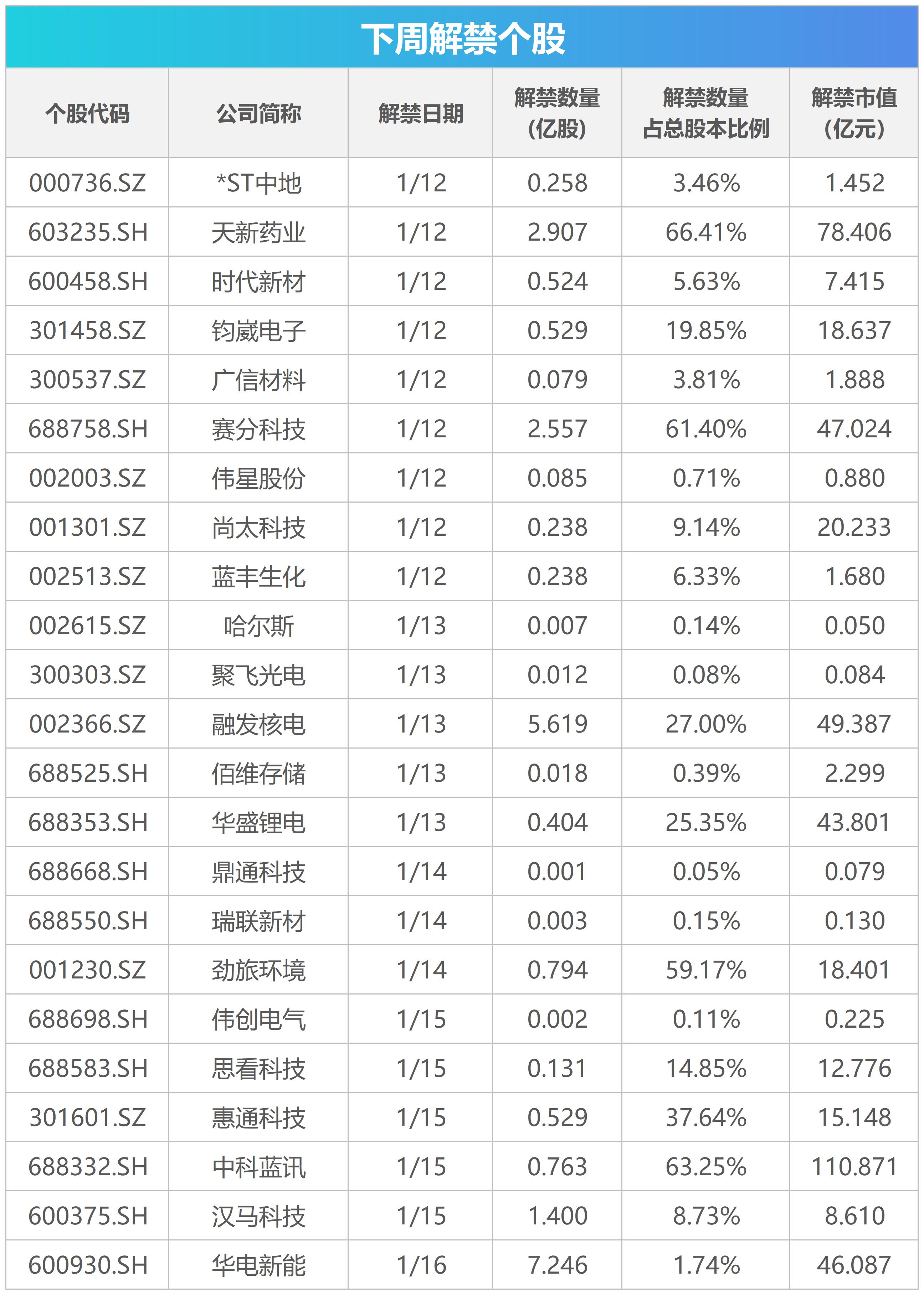
Group 1: Economic Data Releases - China will release its trade balance for December 2025 on January 14, with total goods trade value reaching 41.21 trillion yuan, a year-on-year increase of 3.6% for the first 11 months of 2025 [2] - In November 2025, China's goods trade showed a recovery with a total value of 3.9 trillion yuan, growing by 4.1%, including exports of 2.35 trillion yuan (up 5.7%) and imports of 1.55 trillion yuan (up 1.7%) [2] - The U.S. will announce its December 2025 CPI data on January 13, with November 2025 CPI showing a year-on-year increase of 2.7% and core CPI at 2.6% [4] Group 2: Financial Environment - November 2025 financial data in China indicated that M2 and social financing growth rates remained high, supporting a favorable monetary environment for economic recovery [3] - It is expected that China's monetary policy will continue to maintain a moderately loose stance in 2026, complemented by fiscal policy efforts [3] Group 3: Industry Conferences - The second China eVTOL Innovation Development Conference is scheduled for January 15-16, 2026, in Shanghai, focusing on "Innovation Leading, Smartly Opening the New Business Era of eVTOL" [5] - The fifth AIGC China Developer Conference will be held on January 17, 2026, in Beijing, themed "Ecology, Support, Domestic, Trend" [5] - The fourth China Petroleum and Chemical Industry Digital Transformation and Intelligent Development Conference will take place from January 13-15, 2026, in Beijing [5] Group 4: Stock Market Developments - Over 480 billion yuan in market value of restricted stocks will be unlocked in the A-share market from January 12-16, 2026, with 23 stocks facing unlocks [6] - Among these, Zhongke Lanyun has a restricted stock unlock value exceeding 10 billion yuan [6]
多场景K歌系统行业研究报告
艾瑞咨询· 2026-01-11 00:05
Industry Development Environment - The macroeconomic stability and rising consumer spending in China have solidified the foundation for entertainment consumption, with GDP increasing from 70.3 trillion yuan to 134.9 trillion yuan from 2015 to 2024, and per capita disposable income rising from 22,000 yuan to 41,000 yuan, a 100% increase [9][11] - The music industry has shown steady recovery, with its total scale increasing from 301.8 billion yuan to 492.9 billion yuan during the same period, providing a rich content reserve for the karaoke system industry [17] - Leading karaoke system companies are increasing R&D investments, with an average of over 100 patent applications per year from 2015 to 2024, marking a shift towards intelligent technology [22] - The "two-in-one" copyright licensing mechanism has been established, ensuring legal compliance in the use of song libraries [26][29] Industry Development Status - The karaoke system industry in China is in an ecological integration phase, evolving from a closed entertainment scene to an open ecosystem, with a market size projected to reach 1.45 billion yuan in 2024 and exceed 3 billion yuan by 2028 [2] - Traditional commercial entertainment is declining, while home, in-car, and outdoor entertainment are rapidly rising, with in-car and outdoor segments expected to become the main growth drivers [2] Industry Development Trends - The industry is transitioning from hardware dependence to cloud-network integration, enabling light asset operations [3] - The deep integration of digitalization and AI is transforming operational intelligence, immersive experiences, and data-driven decision-making [4][66] - The shift from traditional closed operations to open scene-based services is creating a comprehensive karaoke entertainment coverage [5][69] Industry Structure and Competition - The karaoke system industry has a clear structure with various participants, including content providers, hardware manufacturers, and service providers [33] - Entry barriers are high due to qualifications, technology, and ecosystem constraints, which strengthen the industry's entry threshold [36] - Competition is driven by policy, market demand, technology, and maturity, shaping the industry's differentiated competitiveness [39] Business Model and Market Size - The industry has developed a four-wheel-driven business model, including hardware sales, content licensing, operational maintenance, and value-added services, with the latter expected to become a core growth engine [42] - The market size is projected to reach 1.45 billion yuan in 2024, driven by multi-scenario expansion, with significant growth expected in the coming years [45] - Revenue from software and hardware services is expected to reach 960 million yuan in 2024, while value-added services are projected to grow to 440 million yuan [48] Segment Analysis - The traditional commercial entertainment segment is recovering slowly, with a projected size of 690 million yuan by 2028 [55] - The in-car entertainment segment is experiencing explosive growth, with a projected size of 1.1 billion yuan by 2028 [57] - The outdoor entertainment segment is rapidly rising, expected to reach 580 million yuan by 2028 [59] - The home entertainment segment is steadily growing, projected to reach 640 million yuan by 2028 [61] Future Outlook - The karaoke system industry is expected to continue evolving towards intelligent, ecological, and refined directions, driven by technological advancements and changing consumer preferences [66][69]

隐形冠军是怎样炼成的?
Xin Lang Cai Jing· 2026-01-10 23:42
Core Viewpoint - The transformation of Duoscreen Technology from a traditional window and door manufacturer to a leading player in the industry is driven by digitalization and automation, significantly improving production efficiency and product quality [1][2]. Group 1: Digital Transformation - Duoscreen Technology has established a fully domestic digital intelligent glass production line, automating the entire process from cutting to delivery, thereby connecting the online ordering system to after-sales service [2]. - The company has replaced manual cutting methods with intelligent cutting and edging machines, achieving a cutting precision of approximately 0.1 millimeters [2]. - Each glass product is equipped with a unique QR code for traceability, allowing for easy access to order information and production records, enhancing the reliability of data [2]. Group 2: Operational Efficiency - Following the digital transformation, Duoscreen Technology has reduced labor costs by 80% while doubling production efficiency [2]. - The product qualification rate has improved from 90% to 99.5%, indicating a significant enhancement in quality [2]. Group 3: Government Support - The company has benefited from government initiatives such as smart manufacturing subsidies and digital transformation policy guidance, which have helped lower trial and error costs and encouraged the adoption of advanced technologies [3]. Group 4: Future Plans - Duoscreen Technology aims to fully integrate data across all processes within three years, creating a smart decision-making system that connects every aspect of production and service [3].