
自动驾驶

Search documents
【行业深度】洞察2025:中国激光雷达行业竞争格局及市场份额(附市场集中度、企业竞争力评价等)
Qian Zhan Wang· 2026-01-20 07:21
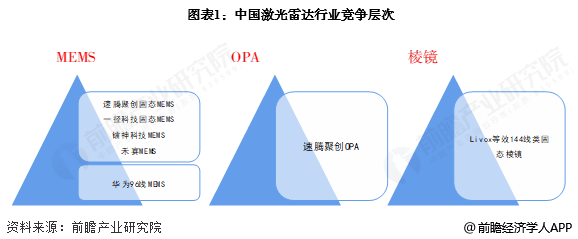
Core Insights - The Chinese LiDAR industry is experiencing rapid growth, with a market size projected to reach 13.96 billion yuan in 2024, indicating a high market concentration with a CR5 of 40.6% [10] Group 1: Industry Competition Landscape - The main companies producing LiDAR in China include Suteng Juchuang, Yijing Technology, Hesai Technology, Raysun Intelligent, and Livox, with different technological approaches such as OPA and MEMS [1] - The leading revenue-generating companies in the LiDAR sector for the first three quarters of 2025 are Hesai Technology, followed by Suteng Juchuang with a revenue of 1.19 billion yuan [8] Group 2: Regional Distribution of Companies - The majority of LiDAR companies in China are concentrated in the southeastern coastal regions, particularly in Guangdong with over 500 companies and Jiangsu with more than 400 companies as of November 2025 [2] - Representative companies are also distributed in regions such as Shanghai, Beijing, Anhui, and Hubei, with a notable presence in Shaanxi [5] Group 3: Competitive Dynamics - The LiDAR industry is characterized by a high level of competition, especially in the mid to low-end product segments where many competitors exist and product differentiation is minimal [14] - The bargaining power of upstream suppliers, particularly for core components, is strong, while the bargaining power of downstream consumers in sectors like surveying and automotive is relatively weak [14] - The threat of new entrants is low due to the technical intensity of the LiDAR industry, which is crucial for the development of autonomous driving and smart manufacturing [14]


花旗:对文远知行开启90天上行催化剂观察
Zhi Tong Cai Jing· 2026-01-20 06:56
Core Viewpoint - Citigroup has set a target price of HKD 39.6 for WeRide (00800) and rated it as "Buy" based on several factors [1] Group 1: Investment Outlook - Citigroup has initiated a 90-day upward catalyst observation for WeRide, considering potential developments in the autonomous driving sector [1] - The potential financing round for Waymo in the first quarter of this year implies a valuation of 280 times the sales for 2025, which could lead to a reassessment of WeRide's valuation [1] - Investor confidence is increasing regarding WeRide's possible entry into the Hong Kong Stock Connect (southbound) in June this year [1] Group 2: Industry Dynamics - The competitive landscape in the technology sector between China and the U.S. may prompt China to adopt more proactive policies regarding ADAS (Advanced Driver Assistance Systems) and autonomous taxi services [1] - The light asset business of WeRide is showing positive development [1]
叙事性成主要上涨动力 巴克莱重申特斯拉(TSLA.US)“中性”评级
智通财经网· 2026-01-20 06:40
Group 1 - Barclays maintains a "neutral" rating on Tesla (TSLA.US), stating that fundamentals are currently a "secondary factor" for the stock [1] - Analysts believe that Tesla's stock performance in 2025 will be narrative-driven, with fundamentals seemingly overlooked [1] - CEO Elon Musk emphasizes that Tesla is fundamentally an AI company, focusing on autonomous driving and robotics as key future developments [1] Group 2 - Tesla is preparing to expand its Texas Gigafactory, planning to build a dedicated facility for the mass production of its humanoid robot, Optimus, aiming for an annual production capacity of 10 million units [1] - The Robotaxi fleet is expected to double in size next month, according to Musk [1] - Tesla's fourth-quarter delivery forecast shows a mean expectation of 422,850 vehicles, reflecting a 15% year-over-year decline, which is more pessimistic than the market consensus of 440,000 vehicles [1] Group 3 - The projected total deliveries for Tesla in 2025 are expected to drop to around 1.64 million units, an 8% year-over-year decline, marking the second consecutive year of sales contraction following 1.789 million units in 2024 [1] - Tesla has publicly stated that it does not endorse any analyst information, advice, or conclusions, presenting only the aggregated consensus data [1] Group 4 - Tesla's unusual decision to publicly share a lower consensus forecast appears aimed at managing market expectations ahead of the official delivery and production report set for early January 2026 [2] - Gary Black, co-founder of Future Fund Advisors, describes this move as "very unusual" and estimates that actual delivery numbers are likely around 420,000 vehicles [2]

特斯拉将于3月31日结束FSD免费转移服务
Xin Lang Cai Jing· 2026-01-20 06:27
Core Points - Tesla announced that its free transfer service for the Full Self-Driving (FSD) system will end on March 31 [1][2] - Customers must order new vehicles by March 31 to qualify for the free FSD transfer service [1][2] - Starting from April 2025, customers who have paid for FSD on previous vehicles can transfer the service to their new Tesla vehicles for free [1][2] - Customers opting for the free FSD transfer can take delivery of their vehicles after March 31, provided they placed their orders before the deadline [1][2] - Tesla CEO Elon Musk announced that the company will stop offering the $99 monthly FSD subscription service after February 14, requiring a one-time payment of $8,000 instead [1][2] - This decision has raised questions regarding its motivations, with speculation linking it to Musk's multi-billion dollar compensation plan, which includes achieving 10 million FSD subscriptions as one of the targets [1][2]
中国一口气申报20万颗卫星,将如何利好汽车业?
Zhong Guo Qi Che Bao Wang· 2026-01-20 02:40
Core Viewpoint - China's telecom companies have submitted applications for 203,000 low Earth orbit (LEO) satellite frequency resources to the International Telecommunication Union (ITU), leading to a significant rise in related A-share sectors, indicating a potential new industrial opportunity in the market [3]. Group 1: Industry Dynamics - The competition for LEO orbital and frequency resources is intense due to their scarcity and irreproducibility. Current technology allows for the safe deployment of only about 100,000 to 175,000 LEO satellites, while global applications have already exceeded this threshold [5]. - SpaceX currently leads in satellite deployment with over 9,000 satellites in orbit, accounting for 60% of global LEO satellites. The company plans to reduce the orbital height of 4,400 satellites, further constraining resources for other nations [6]. - The ITU's "first come, first served" allocation rule emphasizes the need for early applications to secure development opportunities. China's recent applications are seen as a necessary step to lock in reasonable space for future aerospace development [5][6]. Group 2: Impact on Automotive Industry - The automotive industry is rapidly transitioning into the era of intelligent connectivity and autonomous driving, where high-speed communication and precise positioning are crucial. LEO satellites are essential for overcoming the limitations of traditional ground communication networks, especially in remote areas [7]. - Many smart connected vehicles are already equipped with satellite internet and phone functionalities, allowing users to communicate even when ground networks are unavailable [7]. - The demand for high-precision positioning in autonomous driving is increasing, with traditional GPS accuracy being insufficient. A complete domestic "star chain" could achieve centimeter-level positioning accuracy, enhancing travel safety [8]. Group 3: Safety and Insurance Innovations - Satellite technology can significantly enhance vehicle lifecycle management by providing real-time data on driver behavior and vehicle status, enabling timely identification of potential safety hazards [9]. - In the insurance sector, satellite positioning combined with big data analysis can reshape pricing models, allowing for more accurate risk assessments based on actual driving behavior, which could lead to fairer insurance rates [10]. Group 4: Future Prospects - The development of a comprehensive satellite network is expected to facilitate seamless communication across various environments, enhancing the integration of vehicles with smart home systems and improving user experience [11]. - The integration of satellite technology with artificial intelligence and big data is anticipated to revolutionize autonomous driving, improving decision-making capabilities and overall safety [11]. - Experts believe that the "space dividend" from satellite technology presents a unique opportunity for China's automotive industry to transition from traditional manufacturing to intelligent mobility solutions, potentially giving it a competitive edge in the global market [12].
大行评级|花旗:对文远知行开启90天上行催化剂观察,目标价39.6港元
Ge Long Hui· 2026-01-20 02:16
Group 1 - Citi has initiated a 90-day upward catalyst observation for WeRide, considering factors such as Waymo's potential financing round in Q1 this year, which implies a valuation of 280 times the 2025 sales ratio, possibly leading to a reassessment of WeRide's valuation [1] - Investor confidence in WeRide potentially entering the Hong Kong Stock Connect (southbound) in June this year has increased [1] - The competition in the technology sector between China and the US may prompt China to implement more proactive ADAS/autonomous driving rental policies [1] Group 2 - The light asset business of WeRide is developing well [1] - Citi has set a target price of HKD 39.6 for WeRide, with a rating of "Buy/High Risk" [1]
未知机构:美国自动驾驶法案允许无方向盘车辆上路美国众议院1月13日关于SE-20260120
未知机构· 2026-01-20 02:15
Summary of Key Points from the Document Industry Involved - The document discusses the **autonomous driving industry** in the United States, specifically focusing on the implications of new legislation for self-driving vehicles. Core Insights and Arguments - The **SELF DRIVE Act** hearing held by the U.S. House of Representatives on January 13 has received bipartisan support for significantly increasing the exemption cap for autonomous vehicles to **90,000 units per year** [1] - This legislative progress is viewed as a critical step in removing regulatory barriers for the large-scale commercial deployment of **Robotaxi services** [1] - The new regulations are expected to directly accelerate the production process of vehicles without steering wheels, such as **Tesla's Cybercab**, and significantly shorten the timeline for commercialization across the industry [1] Other Important but Potentially Overlooked Content - The establishment of **federal priority** in the legislation indicates a shift towards a more unified regulatory framework for autonomous vehicles, which could enhance investor confidence and attract more capital into the sector [1]
奔驰,叫停L3智驾研发
半导体行业观察· 2026-01-20 02:02
Core Viewpoint - Mercedes-Benz is focusing on refining its autonomous driving solutions within regulatory constraints rather than pushing for full automation too early [1][3] Group 1: Drive Pilot System - Mercedes-Benz has paused its Drive Pilot autonomous driving assistance system project due to rising costs, limited availability, and changes in the supplier landscape [1] - Drive Pilot is the first and currently the only L3 certified autonomous driving product in the U.S., allowing for "hands-free, eyes-free" driving under specific conditions [1] - The system was initially planned for the 2023 EQS electric sedan and S-Class flagship models, but the upcoming S-Class will not feature it [1] - The application of Drive Pilot is limited to specific highway segments in California and Nevada, only during clear weather and at speeds up to 40 miles per hour [1] - Drivers must purchase necessary hardware and pay an annual subscription fee of $2,500 to activate the service, making it costly and limiting its scalability [1] Group 2: Supplier Issues - The Drive Pilot system relies on a range of sensors provided by Luminar, a lidar manufacturer that has since declared bankruptcy [2] - Mercedes-Benz terminated its supply agreement with Luminar last year due to the latter's failure to meet contract terms, which restricts further expansion of the Drive Pilot system [2] - The absence of this critical sensor component will gradually reduce the potential benefits of continuing the Drive Pilot project [2] Group 3: New Development Focus - Mercedes-Benz is shifting its R&D focus to MB.Drive Assist Pro, an upgraded version of its existing driving assistance technology, defined as L2++ level [2] - Unlike Drive Pilot, MB.Drive Assist Pro requires driver attention but can handle a wider range of driving environments, including urban and highway conditions [2] - The new system integrates 10 cameras, 5 radar sensors, and 12 ultrasonic sensors, utilizing an NVIDIA-based computing platform, demonstrating reliable performance in various traffic conditions during tests on the upcoming CLA model [2] Group 4: Future Outlook - Although MB.Drive Assist Pro does not achieve the fully autonomous capabilities promised by Drive Pilot, Mercedes-Benz views it as a bridge to a globally deployable system in the future [3] - The company aims to avoid offering systems that provide minimal benefits to customers, with plans to introduce a more beneficial system within the next two to three years [3]
资金风向标 | 两融余额较上一日减少83.62亿元 汽车行业获融资净买入额居首
Sou Hu Cai Jing· 2026-01-20 01:52
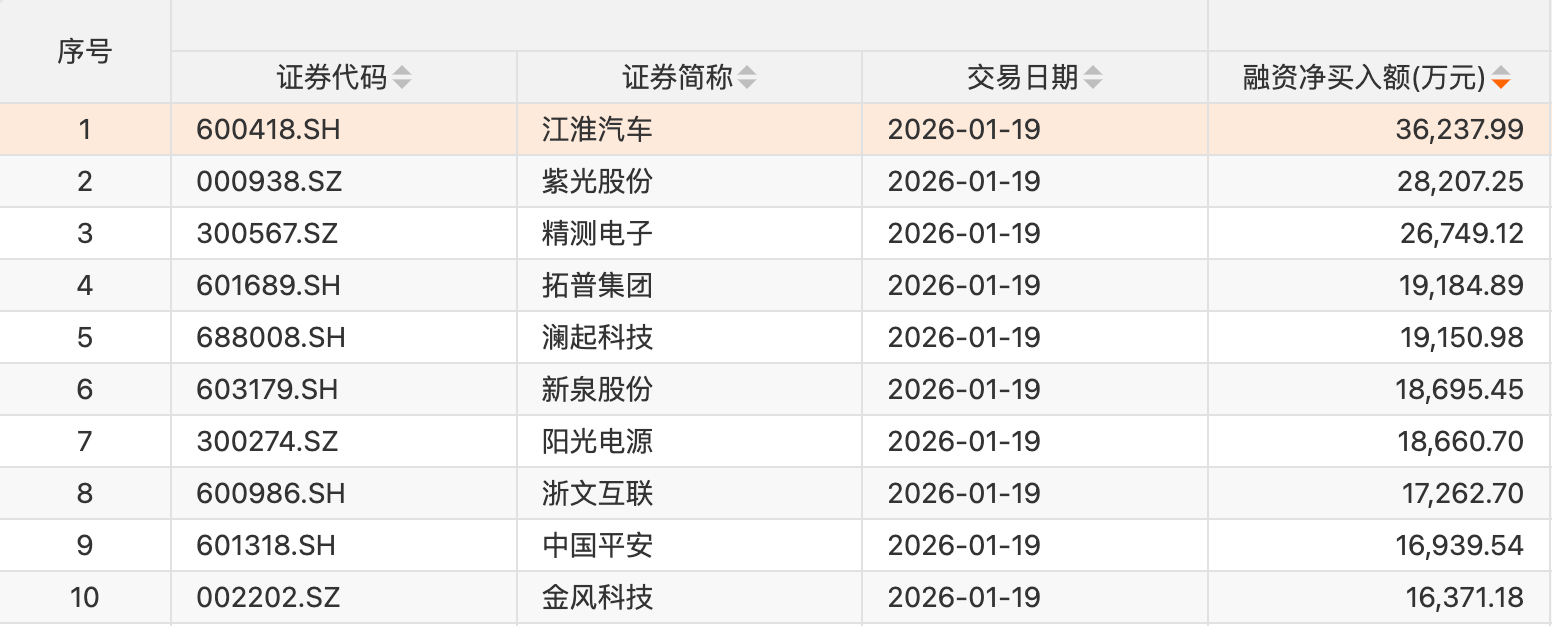
Group 1 - As of January 19, the margin trading balance of A-shares is 27,231.75 billion yuan, a decrease of 83.62 billion yuan from the previous trading day, accounting for 2.63% of the A-share circulating market value [1] - The margin trading turnover on the same day is 2,683.76 billion yuan, down by 681.14 billion yuan from the previous trading day, representing 9.82% of the A-share transaction volume [1] - Among the 31 primary industries, 10 industries received net financing inflows, with the automotive industry leading at a net inflow of 758 million yuan [1] Group 2 - A total of 33 stocks received net financing inflows exceeding 100 million yuan, with Jianghuai Automobile leading at a net inflow of 362 million yuan [1] - Other notable stocks with significant net financing inflows include Unisplendour, Jingce Electronics, Top Group, Lanke Technology, New Spring Shares, Sungrow Power Supply, Zhejiang Wenhu Interconnect, China Ping An, and Goldwind Technology [1] - According to a report from Industrial Securities, in 2026, the automotive sector is expected to undergo a value reassessment due to advancements in high-level assisted driving and breakthroughs in robotics technology [2] - The robotics sector is gradually entering a large-scale production phase, with investment opportunities shifting from divergence to convergence [2] - The report suggests focusing on two main lines: technological changes in autonomous driving and robotics, and the industrial chain opportunities arising from large-scale implementation [2]





大和:现代汽车第四季度盈利可能不及预期
Xin Lang Cai Jing· 2026-01-20 00:45
大和资本分析师Joon Lee和Thomas Y. Kwon在一份报告中写道,由于年度信息技术服务费的增幅低于预 期,现代汽车第四季度盈利可能不及预期。他们表示,尽管新的系统集成和IT外包项目可能带来收入增 长,但这家韩国现代汽车集团旗下的移动软件子公司在中期的利润率扩张空间可能有限。他们补充说, 其母公司汽车集团与英伟达的合作及其在自动驾驶和机器人技术方面的努力带来了新的商机,这种期望 在近几个月提振了现代汽车的股价,但该股似乎已经脱离了基本面。 ...