资产配置

Search documents
银行理财市场呈现回暖迹象
Zheng Quan Ri Bao· 2025-11-20 16:03
Group 1 - The bank wealth management market shows significant signs of recovery, with an increase in the number of newly issued wealth management products and a rise in performance benchmarks, indicating a positive trend of "volume and price rising together" [1] - In the week from November 10 to November 16, a total of 573 new bank wealth management products were issued, an increase of 41 from the previous week. Open-ended products accounted for 166 new issues with an average performance benchmark of 2.02%, up 0.08 percentage points, while closed-end products saw 407 new issues with an average benchmark of 2.38%, a slight increase of 0.02 percentage points [1] - The increase in the issuance of bank wealth management products and the rise in average performance benchmarks are driven by two main factors: the continuous decline in deposit rates and the demand for fund reallocation from residents as high-interest deposits mature [1] Group 2 - Experts are optimistic about the growth trend of bank wealth management scale in the fourth quarter, expecting a moderate growth pattern due to the ongoing decline in deposit rates and the release of residents' asset allocation needs [2] - The issuance scale of "fixed income plus" products is expected to gradually increase as the equity market recovers, while pure fixed income products may see a downward trend in overall yields due to structural pressures from the macro interest rate environment [2] - The bank wealth management industry is anticipated to exhibit a "steady but slow" growth characteristic in the fourth quarter, with the growth rate potentially slowing down despite the supportive factors of declining deposit rates and asset reallocation [2] Group 3 - To balance scale expansion and stable returns, a framework of "fixed income base + diversified enhancement" is recommended, controlling product volatility risk while appropriately increasing equity allocations to enhance yield [3] - It is essential to refine product stratification to design differentiated products that meet the varying risk preferences and liquidity needs of different investor groups [3] - Strengthening duration management and liquidity reserves is crucial to effectively prevent large-scale redemption risks caused by market fluctuations [3] Group 4 - Wealth management companies should enhance their investment research capabilities and asset allocation skills, establishing a comprehensive research system covering bonds, equities, and commodities, and flexibly adjusting stock-bond ratios based on economic cycles [4] - Differentiated products should be developed under the "fixed income plus" strategy, targeting conservative clients with short-duration bonds and low-volatility equity assets, while offering aggressive clients products linked to derivatives for enhanced returns [4] - A comprehensive risk management system is necessary to assess the stability of returns under extreme conditions, leveraging digital transformation to improve research efficiency and client matching accuracy [4]
瑞银财富管理胡俊礼:资产配置的核心在于稳健达到长期回报
2 1 Shi Ji Jing Ji Bao Dao· 2025-11-20 13:02
Core Insights - The core viewpoint emphasizes that asset allocation should focus on achieving long-term returns rather than maximizing short-term gains, highlighting the importance of diversification in investments [1]. Group 1: Asset Allocation Strategies - The investment strategy suggests a balanced approach where a client seeking a 6%-7% long-term annual return could allocate 50% to stocks and 50% to bonds, while those aiming for 8%-9% returns might invest entirely in global stocks [1]. - For clients open to alternative assets, a 20%-40% allocation to private equity, private debt, and real estate is recommended to enhance long-term returns [1]. Group 2: Market Opportunities - The report identifies opportunities in Chinese stocks, high-yield domestic stocks, Singaporean stocks, and Indian stocks, particularly noting a 30% increase in Chinese overseas stocks this year with potential for double-digit growth in the next 12 months [1]. - Asian local bonds are projected to yield 3%-4%, with an expected annual currency appreciation of 2%-3%, making them attractive from a total return perspective [1]. Group 3: Investment Recommendations - Investors are advised to separate their wealth into liquid and growth portions, with the liquid part allocated to safer assets like fixed deposits, money market funds, and bonds, while the growth portion can be invested in higher-risk assets like stocks and private equity [3]. - Institutions should focus on long-term return goals and diversify investments across stocks and bonds to mitigate risks during market downturns, while also incorporating themes like artificial intelligence and advanced manufacturing for potential excess returns [3].

汇丰中国王颖:多元化配置另类资产,重塑投资策略
2 1 Shi Ji Jing Ji Bao Dao· 2025-11-20 13:02
随着投资渠道越来越丰富,王颖提到,今年汇丰对12个国家和地区的大众富裕投资者(可投资资产在10 万-200万美元)进行的调查显示,投资者在财富管理上出现更多的变化。 21世纪经济报道记者 张晓慧 深圳报道 王颖也谈到,当下另类投资呈现出一些新的趋势:首先是原有投资者将更多流动性资金重新投入到私募 股权;其次,随着私募债逐渐走向成熟,传统银行与私募信贷机构达成更多合作,成为私募信贷基金的 代销者。 11月20日,2025湾区财富大会在深圳会展中心举办,大会由21世纪经济报道、深圳金博会运营发展有限 公司联合主办。 此外,"随着AI工具技术壁垒的降低,人工智能初创企业成长很快,相对来说,这些年轻企业更愿意在 较长时间内维持私有化状态。"王颖谈到,人工智能将成为未来几年风投的核心推动力之一,AI基础设 施、全球数据中心都表现出较快发展的态势。 来自深圳、香港等地的大湾区顶尖金融机构齐聚深圳,聚焦全球资产配置、跨境财富管理等前沿议题进 行探讨,汇丰中国财富管理及金融服务方案部负责人王颖就"高净值人群的战略配置,另类投资的尝 试"进行主题演讲。 与此同时,王颖也建议,尽管另类投资能够让资源配置更加多元化,但是投资人也要 ...
金价“过山车”背后:就业数据暗藏玄机,黄金成生活“救命稻草”?
Sou Hu Cai Jing· 2025-11-20 10:54
Group 1 - The recent U.S. employment data indicates a significant decline in private sector jobs, averaging a decrease of 2,500 jobs per week in the first four weeks of November, compared to an increase of 14,000 jobs in the first half of October, signaling a shift from growth to contraction in the job market [2] - Weak employment data suggests a decrease in economic vitality, leading to increased market expectations for the Federal Reserve to lower interest rates, which typically supports gold prices as a hedge against inflation and a safe-haven asset [2] - Following the employment report, gold prices rebounded, reflecting the market's direct response to the anticipated policy shift [2] Group 2 - Gold's significance extends beyond investment; it serves as a "safety net" for individuals facing financial difficulties, as illustrated by a couple who turned to their gold jewelry for emergency cash to manage their living expenses and debts [3] - The value of gold is highlighted as not just a symbol of wealth but also as a crucial asset that can be liquidated in times of need, providing financial security during market volatility [3][4] - The narrative emphasizes that while gold prices may fluctuate, its intrinsic value remains constant, serving as a reliable resource in challenging times [3][4] Group 3 - Recommendations suggest that individuals should consider allocating a portion of their investments to gold (such as gold bars or ETFs) to combat inflation and diversify risk [5] - In urgent situations, converting idle gold jewelry into cash can help avoid falling into debt traps, showcasing gold's role as a last line of defense against financial uncertainty [5] - The enduring nature of gold as a hard currency reinforces its position as a critical asset for individuals to mitigate risks in an unpredictable market [5]


一则寓言 藏着A股市场被忽视的投资真相
Zhong Guo Zheng Quan Bao· 2025-11-20 09:20
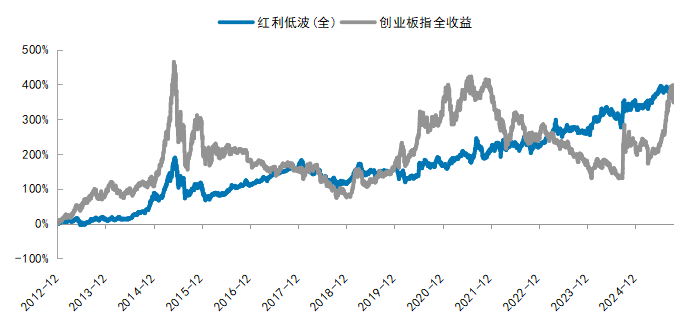
Core Viewpoint - The increasing demand for wealth management among residents highlights the importance of asset allocation, which can help investors balance returns and risks, respond rationally to market fluctuations, and achieve long-term investment goals [2] Group 1: Investment Strategies - The comparison between the "dividend low-volatility index" and the "growth enterprise board index" illustrates a long-term alignment in returns, emphasizing the value of different investment styles over time [9][10] - Dividend investment is often perceived as lacking growth potential, yet its stability and consistent returns can be advantageous in the long run [14][15] - The disciplined approach of dividend indices, focusing on sustainable dividend payments and valuation safety, provides a unique advantage in the A-share market [16] Group 2: Growth vs. Dividend Investment - Growth investments, while capturing market trends, often come with high volatility and uncertainty, making them challenging for many investors [21][22] - The essence of dividend strategies lies in their suitability for ordinary investors, prioritizing stability and disciplined investment over speculative gains [24] - The long-term performance of dividend strategies does not necessarily indicate superiority over growth investments; rather, it reflects a better fit for certain investment profiles [24] Group 3: Investor Mindset - The choice between being a "shooting star" or a "constant star" in investment reflects different approaches to wealth accumulation, with dividend strategies offering a more stable path to long-term returns [25][27] - The wisdom of slow and steady investment, as opposed to chasing rapid gains, is emphasized as a more sustainable approach to wealth management [26]

田轩:2026年资产配置A股优先,人民币或迎升值窗口
和讯· 2025-11-20 08:45
Group 1 - The past five years have been unusual for the capital market, with significant regulatory frameworks established, including the new "National Nine Articles" and the implementation of the registration system, highlighting challenges such as the execution of delisting mechanisms and the quality of listed companies [2][3] - The main reform focus for the next five years should be on enhancing institutional inclusiveness and coordinating market functions, particularly improving the registration system to support high-quality technology and innovation enterprises [3][9] - A-shares are prioritized for asset allocation in 2026, with a focus on high-quality growth sectors such as technology, green energy, and consumer leaders, which are expected to benefit from policy support and profit recovery [3][15] Group 2 - The Science and Technology Innovation Board (STAR Market) can further optimize its issuance pricing mechanism and enhance resource allocation efficiency, supporting unprofitable frontier technology companies through innovative regulatory frameworks [10][11] - The expected IPO rhythm for the coming year is anticipated to remain stable, with a focus on supporting technology innovation enterprises aligned with national strategies, while reinforcing delisting mechanisms to ensure market quality [11][12] - External factors such as geopolitical conflicts and trade tensions may impact China's capital market, but a potential easing of U.S. monetary policy could provide a window for attracting foreign capital [12][14] Group 3 - In a low-interest-rate environment, the priority for asset allocation in 2026 is A-shares, followed by gold, bonds, and currency assets, with a focus on high-quality growth sectors [15][16] - Key investment opportunities in 2026 include artificial intelligence, renewable energy, and innovative pharmaceuticals, driven by policy support and market demand, with a recommendation to focus on leading companies with strong technology barriers [16][17] - Gold is expected to maintain an upward trend due to its dual attributes of inflation hedging and safe-haven demand, making it a valuable component of long-term asset portfolios [17][18]

一则寓言,藏着A股市场被忽视的投资真相
Zhong Guo Zheng Quan Bao· 2025-11-20 08:44
Core Viewpoint - The increasing demand for wealth management among residents highlights the importance of asset allocation, which helps investors balance returns and risks while achieving long-term investment goals [1] Group 1: Investment Styles - The long-term cumulative return comparison between the dividend low-volatility index and the ChiNext index shows a convergence in performance over time, indicating a significant shift in market dynamics [2][4] - Dividend investing is often perceived as slow and lacking growth narratives, but this "slow" nature is actually a foundation for long-term stability and performance [6][8] - Growth investing, characterized by rapid changes and high volatility, often leads to significant risks and uncertainties, making it challenging for investors to maintain positions during market fluctuations [12][13] Group 2: Investment Strategies - The essence of dividend strategies lies not in being superior to growth strategies, but in their suitability for ordinary investors who prefer stability over speculation [14][15] - Dividend investment focuses on disciplined approaches, emphasizing the importance of reinvesting dividends and maintaining a steady investment rhythm, which can lead to substantial long-term gains [15][16] - The choice between being a "shooting star" or a "constant star" in investing reflects the different approaches to wealth accumulation, with dividend strategies offering a more stable path for long-term investors [16][18]
金价V型反转,市场静待非农数据及议息会议决议,黄金ETF华夏(518850)配置机遇备受关注
Sou Hu Cai Jing· 2025-11-20 06:01
Core Viewpoint - On November 20, COMEX gold futures experienced volatility, initially reaching $4,109 before dropping to $4,034 and then rebounding to around $4,068, indicating a lack of sustainable bullish factors in the market [1] Market Performance - As of November 19, the largest gold ETF, SPDR Gold Trust, saw an increase in holdings by 2.29 tons, bringing the total to 1,043.72 tons, ending a two-day outflow trend [1] - Gold-related ETFs showed mixed performance, with Huaxia Gold ETF (518850) down 0.53% and Gold Stock ETF (159562) down 0.66%, while Non-ferrous Metals ETF (516650) rose by 0.17% [1] Market Sentiment - Everbright Futures noted a decrease in market bets on a Federal Reserve rate cut in December, contributing to instability in U.S. stocks and subsequent fluctuations in gold prices [1] - The overall market sentiment suggests that gold prices may struggle to break free from high volatility and could trend weaker in the short term [1] Investment Strategy - Given the unclear future trajectory of gold prices, the recommendation is to adopt a wait-and-see approach or consider opportunistic buying on dips from an asset allocation perspective [1]
再现爆款!
中国基金报· 2025-11-19 16:27
Core Viewpoint - The newly established fund, E Fund Ruiyi Ying'an 6-Month Holding Mixed Fund of Funds (FOF), has raised over 5.8 billion yuan, marking it as the largest new fund in the fourth quarter and the fourth public FOF of the year to exceed 5 billion yuan in fundraising [2][5]. Fund Information - The fund was officially established on November 18, 2015, with a total subscription of 24,688 accounts and a fundraising scale of 58.48 billion units [5]. - The fund is managed by E Fund Management Co., Ltd. and is custodied by China Merchants Bank, known as the "King of Retail" [2][6]. Fund Characteristics - The fund is positioned as a low-volatility product, with equity assets accounting for 5% to 30% of the total assets. Investments in Hong Kong Stock Connect stocks are limited to 50% of equity assets, while investments in Hong Kong Stock Connect ETFs can be up to 15% [7]. - The fund aims for long-term stable asset appreciation through a diversified asset allocation strategy, primarily focusing on fixed-income assets while dynamically adjusting asset allocation based on market conditions [7]. Market Trends - The public FOF issuance has shown signs of recovery this year, with 68 new public FOFs established, raising nearly 68 billion yuan, surpassing the total of the previous two years [10]. - Several "explosive" products have emerged this year, including the Huatai-PB Yingtai Stable 3-Month Holding FOF, which raised nearly 5.6 billion yuan in just one day [10][11]. Investment Strategy - The "TREE Long-term Profit Plan" by China Merchants Bank includes products with clear return and drawdown targets, aiming to achieve investment goals through strict management [11]. - The favorable performance of the equity market this year has contributed to the overall recovery of FOF performance, making these products attractive to investors in a low-interest-rate environment [11].


逆势上涨,风格再次切换
Ge Long Hui· 2025-11-19 14:16
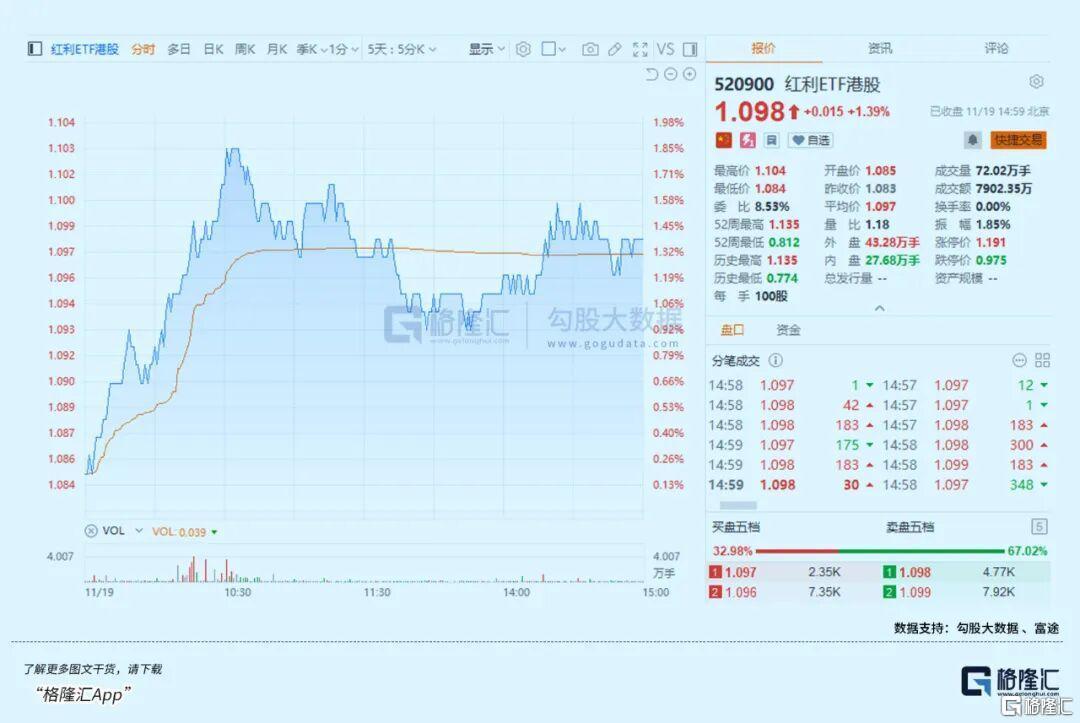
Group 1 - Energy metals lead the market, with traditional dividend assets like oil, chemicals, and banks showing strength, particularly the "three oil giants" which have boosted the Hong Kong stock market's dividend ETF, Guangfa (520900), by 1.39% [1] - Since the fourth quarter, technology stocks have entered a valuation adjustment phase, while market funds have shifted towards dividend assets, indicating a style switch [3] - The "technology" and "dividend" sectors have alternated in performance, highlighting the importance for investors to understand and adapt to these style changes rather than betting on a single style [4] Group 2 - A stable asset allocation strategy is crucial for investment safety, with successful investors often choosing robust leaders as a ballast in their portfolios [5] - In China, key sectors such as energy, utilities, communications, and finance have benefited significantly from the country's rapid economic growth since 2000, with state-owned enterprises playing a vital role [6] - China Petroleum and Chemical Corporation (Sinopec) has seen its revenue grow from 360 billion yuan in 2000 to over 3 trillion yuan in 2024, a 7.5-fold increase, while maintaining stable net profits [6] Group 3 - Sinopec has distributed over 650 billion yuan in cash dividends since its listing in 2001, with a dividend yield consistently above 5% for the past decade [7] - China National Petroleum Corporation (CNPC) has also performed well, distributing 320 billion yuan in dividends from 2020 to 2024 while maintaining over 50% of domestic crude oil supply [7] - China Shenhua Energy, a leading coal enterprise, has seen its revenue grow nearly tenfold since its listing in 2007, with cumulative dividends exceeding 700 billion yuan and a dividend yield reaching 6.8% in 2024 [8] Group 4 - The trend of style switching in the A-share market is becoming more evident, with both "technology" and "dividend" sectors coexisting as viable investment options [9] - The performance of high-dividend indices has shown resilience during market downturns, with the Smart High Dividend Index demonstrating significant cumulative gains since 2017 [12] - The National Hong Kong Stock Connect Central Enterprise Dividend Index has also shown strong performance, with a cumulative increase of 119% since its inception [19] Group 5 - The high dividend ETF (159207) has consistently achieved positive returns from 2020 to 2024, with a cumulative increase of 111.54% over the past five years [15][17] - Hong Kong stocks often exhibit higher dividend yields compared to their A-share counterparts, making them attractive for investors seeking high-yield assets [17] - The top sectors in the National Hong Kong Stock Connect Central Enterprise Dividend Index include oil and petrochemicals, telecommunications, and transportation, with significant weight in leading state-owned enterprises [18] Group 6 - The cyclical nature of technology and high-dividend assets is a consistent pattern, with both sectors expected to grow in the context of China's stable economic growth and technological advancements [21] - Finding a balance in investment strategies across different market environments is essential for achieving long-term stable returns [21]