服务消费

Search documents
永赢基金:2025年即将过半,下半年权益市场如何展望
Zheng Quan Zhi Xing· 2025-06-24 07:25
Group 1: Global Economic and Political Landscape - The current period is marked by a restructuring of the global political and economic landscape, coinciding with China's economic transformation and upgrading [1] - The joint statement from the China-U.S. Geneva Economic and Trade Talks in May indicates a temporary easing of bilateral trade relations, but deep-seated strategic competition is expected to persist, particularly in high-tech sectors [1] - China's "dual circulation" development strategy is being accelerated to address external challenges and stimulate domestic demand [1] Group 2: Monetary and Fiscal Policy Outlook - A significant turning point is anticipated in the global macro policy environment in the second half of 2025, with expectations of interest rate cuts from the Federal Reserve and European Central Bank [2] - China's fiscal policy will continue to play a crucial role in counter-cyclical adjustments, with plans for more robust fiscal measures, including increased special bond issuance and targeted support for housing and land reserves [3] - The People's Bank of China is expected to implement a moderately loose monetary policy, with potential further reductions in reserve requirements and loan prime rates [3] Group 3: Investment Opportunities and Market Dynamics - Structural investment opportunities in the second half of the year are expected to focus on technology, new consumption, stable dividend assets, and central government leverage [5] - The technology sector, particularly in areas like AI, semiconductors, and military applications, is highlighted as a key area for investment due to ongoing U.S.-China strategic competition [5] - The capital market is projected to exhibit resilience and vitality, with a focus on high-quality development and opportunities in autonomous innovation, consumption upgrades, and energy transition [6]
经济日报金观平:相关监管规则还未能完全适配服务消费的发展
news flash· 2025-06-23 01:00
经济日报文章称,服务消费既是衡量居民生活品质的重要指标,也是观察经济内在活力的关键窗口。现 行的消费权益保障制度更加注重商品消费,相关监管规则还未能完全适配服务消费的发展。监管主体分 散、服务标准缺失、取证技术滞后,服务消费权益保障力度不足已成为制约服务消费潜力释放的瓶颈。 构建"服务友好型"权益保障体系,需要充分考量服务消费特性,紧密跟踪新业态新趋势,提前预判可能 存在的消费风险,在保障服务质量的前提下放宽准入、减少限制、鼓励创新、优化监管,推动服务消费 向多样化、高品质、高标准提升,更好满足人民群众的消费需求。 ...
经济日报金观平:抓住机遇扩大服务消费
Jing Ji Ri Bao· 2025-06-22 21:59
Core Viewpoint - Service consumption is becoming a crucial engine for driving domestic demand and promoting high-quality economic development in China, with a notable increase in its share of overall consumption [1][2]. Group 1: Service Consumption Trends - Service consumption is a key indicator of residents' quality of life and a window into the internal vitality of the economy, encompassing various sectors such as dining, accommodation, home services, elderly care, entertainment, education, and healthcare [2]. - The shift from survival-oriented to development-oriented and enjoyment-oriented consumption is accelerating, indicating a growing demand for diverse and higher-quality services [2][3]. - In 2022, China's service retail sales grew by 6.2% year-on-year, outpacing goods retail sales by 3 percentage points, highlighting the increasing importance of service consumption in driving domestic demand [3]. Group 2: Opportunities and Challenges - With China's per capita GDP exceeding $13,000, the country is entering a rapid growth phase for service consumption, with significant potential for expansion compared to developed nations where service industry value added to GDP has consistently remained above 60% [3]. - The existing consumer rights protection system is more focused on goods consumption, leading to challenges in adapting regulatory frameworks to the evolving service consumption landscape [3][4]. - The characteristics of service consumption, such as simultaneous supply and demand, difficulty in quantifying service outcomes, and irreversible service processes, complicate consumer rights protection and regulatory oversight [4]. Group 3: Recommendations for Improvement - To build a "service-friendly" rights protection system, it is essential to consider the unique characteristics of service consumption, closely monitor new trends, and anticipate potential consumer risks [4]. - Encouraging innovation while optimizing regulation can help elevate service consumption to be more diverse, high-quality, and standardized, ultimately better meeting the consumption needs of the populace [4].
夏日经济“热”力十足 助燃服务消费再升级
Zheng Quan Ri Bao Zhi Sheng· 2025-06-22 17:12
Group 1 - The core viewpoint of the articles highlights the significant growth and transformation of consumer demand in China, particularly in the service sector, driven by rising incomes and changing consumer preferences [1][2][6] - The summer economy is thriving, with various regions hosting events and activities that attract tourists, such as the 25th Luyi Lobster Festival and unique experiences in cities like Guangzhou and Guilin [1][2] - The service retail sector has shown a year-on-year growth of 5.2% from January to May, outpacing the growth of goods retail, indicating a shift towards higher quality and diverse consumer experiences [2][6] Group 2 - Emerging consumption patterns are evident, with a notable rise in "emotional consumption" among younger consumers, who are willing to spend on experiences like concerts and travel [2][3] - The demand for travel is increasing, with a 70% rise in the number of travelers for the summer of 2025 compared to the previous year, and a projected 80% increase in gross merchandise volume [2][3] - Small and lesser-known destinations are gaining popularity, with 80% of the top tourist spots being in third-tier cities or below, reflecting a shift in travel preferences among younger demographics [3] Group 3 - The service supply capacity is improving, with new consumption formats emerging, such as "night tours" and "event-based travel," which extend the consumption chain and enhance value [4][5] - Local governments are actively promoting cultural and tourism integration to stimulate consumption, with initiatives like Guangdong's consumer subsidy activities and support for sports events [5][6] - Financial support for service consumption is being emphasized, with the People's Bank of China establishing a 500 billion yuan fund to encourage financial institutions to support sectors like hospitality and entertainment [7][8] Group 4 - The capital market is increasingly supporting service consumption growth through consumption-themed funds and REITs, with a total fundraising of 22.9 billion yuan from nine listed consumption REITs [8] - The potential for service consumption growth remains high, as it currently accounts for only 46% of household consumption in China, compared to about 60% in developed countries, indicating room for expansion [8][9]
业界期待更多政策工具提振消费,提升居民收入应提高“三个比重”
Di Yi Cai Jing· 2025-06-22 14:49
Group 1: Economic Outlook - Experts believe that the foreign trade environment remains uncertain in the second half of the year, emphasizing the need to expand domestic demand as the core policy direction to cultivate more growth momentum and endogenous power [1][5] - The cumulative GDP growth rate for the first half of the year is likely to reach around 5.2%, supported by consumption [1][5] Group 2: Consumption Policies - Suggestions include optimizing holiday arrangements, such as increasing holidays in the second half of the year and implementing paid leave systems to boost service consumption recovery [2][6] - The government has allocated a total of 162 billion yuan in central funds to support the "old-for-new" consumption policy, with an additional 138 billion yuan expected to be distributed in the third and fourth quarters [6] Group 3: Income and Consumption Dynamics - Improving residents' disposable income is crucial for transforming consumption into a new economic engine, with a focus on increasing the proportions of fiscal spending on public services, residents' consumption in total demand, and disposable income in the national economy [9][10] - Wage income constitutes a significant portion of residents' disposable income, and enhancing wage growth is essential for sustained income improvement [9][10] Group 4: Service Consumption Potential - The service retail sector showed a growth rate of 5.0% in the first quarter, indicating the potential for service consumption to be a key driver for boosting overall consumption [11] - The Ministry of Commerce has proposed 48 measures to enhance service consumption, covering various sectors such as dining, tourism, and new business models [11] Group 5: Productive Service Industry - The productive service industry is identified as a key area for development, with a focus on nurturing leading enterprises similar to Huawei and Apple [12][13] - The productive service sector is projected to grow from 27% in previous years to 31% in 2024, highlighting its importance in the modern economy [12][13]


补贴战只是表象!流量饥渴下的618:巨头告别单兵作战,服务消费成新战场
Hua Xia Shi Bao· 2025-06-19 16:55
Core Viewpoint - The 618 shopping festival this year has shown strong consumer growth, driven by multiple subsidies and a longer promotional period, with total online transaction volume reaching nearly 2 trillion yuan, a year-on-year increase of approximately 9.8% [3][4]. Group 1: Sales Performance - JD reported over 2.2 billion orders during the 618 festival, with daily active users on its main app reaching a historical high [2]. - Tmall announced that 453 brands achieved over 100 million yuan in sales, marking a 24% year-on-year growth [2]. - The sales of home appliances and 3C products were significantly boosted, with JD reporting a 50% increase in sales volume for mobile phones priced between 4,000 to 6,000 yuan and a 151% increase in AI laptop sales [4]. Group 2: Subsidy Impact - The combination of national subsidies, platform subsidies, and merchant subsidies has stimulated consumer growth, leading to better performance compared to previous years [3]. - The national subsidy program has been pivotal, with 1,620 billion yuan allocated to support consumption upgrades, and an additional 1,380 billion yuan planned for later this year [5]. Group 3: Marketing Strategies - E-commerce giants are actively seeking external traffic sources, with JD partnering with the Jiangsu Sports Industry Group to enhance brand visibility [6]. - Tmall has signed a strategic cooperation agreement with Xiaohongshu to drive traffic to its platform through content marketing [7]. Group 4: New Growth Areas - E-commerce platforms are exploring new growth avenues beyond traditional sales, with JD entering the travel and home service markets, reporting over 100 million yuan in transactions for its home service offerings [8]. - The online retail market has shown a 7.7% year-on-year growth, with service consumption leading the way, particularly in online entertainment and travel [8]. Group 5: Competition Landscape - The competition among e-commerce platforms is intensifying, with a focus on service quality and delivery capabilities, as well as price competitiveness [10]. - The entry of JD and Alibaba into the food delivery market has garnered significant attention, with JD's food delivery service achieving over 25 million daily orders shortly after launch [9].



2025年下半年消费品投资策略
2025-06-19 09:46
2025 年下半年消费品投资策略 20250618 摘要 城镇化率成熟及居民消费时间受限是服务消费增长的制约因素,但鼓励 带薪休假等政策及年轻人就业偏好或将推动服务消费提升。 连续下跌四年的资产已充分反映悲观预期,一旦出现乐观因素,股价弹 性较大。2025 年上半年医药、社会服务等行业表现良好,房地产股票 指数和白酒板块存在修复绝对收益空间。 医药行业经历四年调整后表现火爆,创新药及相关产业链标的值得关注。 恒瑞医药、康缘药业和首药控股等公司具备增长潜力。 传媒领域首推潮玩方向,如泡泡玛特,预计 2025 年净利润可观,需求 端表现强劲,但需关注供应链问题及黄牛囤货对消费者长期购买热情的 影响。 下半年汽车行业需求受以旧换新政策和财政补贴影响,中高端市场关注 理想汽车和江淮汽车,中低端市场聚焦比亚迪、吉利等龙头企业。零部 件领域关注福耀玻璃、双环等公司。 纺织服装行业内需复苏是重要做多线索,下半年低基数窗口开启,推荐 高性能运动户外、折扣零售、睡眠经济、母婴消费以及国潮学院风 IP 高 端服饰等五个方向。 家电行业以旧换新政策打破悲观预期,内需市场延续高增长,出口方面 新兴市场弥补北美市场缺口。推荐海尔智家, ...
九华旅游(603199):深度报告:一体化文旅平台夯实基本盘,稀缺资产驱动长期成长
Guohai Securities· 2025-06-18 15:05
Investment Rating - The report assigns an "Accumulate" rating for Jiuhua Tourism (603199) [1] Core Views - Jiuhua Tourism has a stable flow in its main tourism business, benefiting from the scarcity of scenic resources and strong anti-cyclical characteristics [7] - The company has a clear project reserve and a quantifiable long-term growth momentum [8] - The company is expected to achieve revenue growth of 18% in 2025, 15% in 2026, and 10% in 2027, with net profit growth of 23%, 21%, and 17% respectively [10] Summary by Sections Company Overview - Jiuhua Tourism is based on the core scenic area of Jiuhua Mountain, a national 5A-level Buddhist site, forming a comprehensive tourism service system including cable cars, hotels, passenger transport, and travel agencies [9][12] - The company has a stable and diverse revenue structure, with significant visitor loyalty due to the cultural heritage of Jiuhua Mountain [17] Financial Performance - The core profit source, the cable car business, is expected to maintain a gross margin above 85% from 2023 to 2024, contributing approximately 38.33% of the company's revenue in 2024 [9] - The hotel business, while currently weaker with a gross margin of 16% in 2023, is expected to improve due to location advantages and operational efficiency [9] - Revenue has shown strong recovery post-pandemic, with a 118% year-on-year increase in 2023 and a 25% increase compared to pre-pandemic levels in 2019 [25] Growth Drivers - The opening of the Chihuang High-speed Railway in April 2024 is expected to significantly enhance accessibility to Jiuhua Mountain, boosting overall attractiveness [9] - The Lion Peak cable car project is anticipated to start operations in 2026, potentially contributing an average annual revenue of 1.11 billion yuan and a net profit of 0.5 billion yuan over the next 15 years [60][63] Investment Projections - The company plans to raise up to 500 million yuan through a private placement to fund key projects, including the Lion Peak cable car and hotel renovations [75] - Earnings per share (EPS) is projected to rise to 1.53 yuan in 2025 and 1.94 yuan in 2026, reflecting a significant improvement in profitability [75]

特稿|罗志恒:大力发展服务消费——现状、症结与对策建议
Di Yi Cai Jing· 2025-06-18 01:33
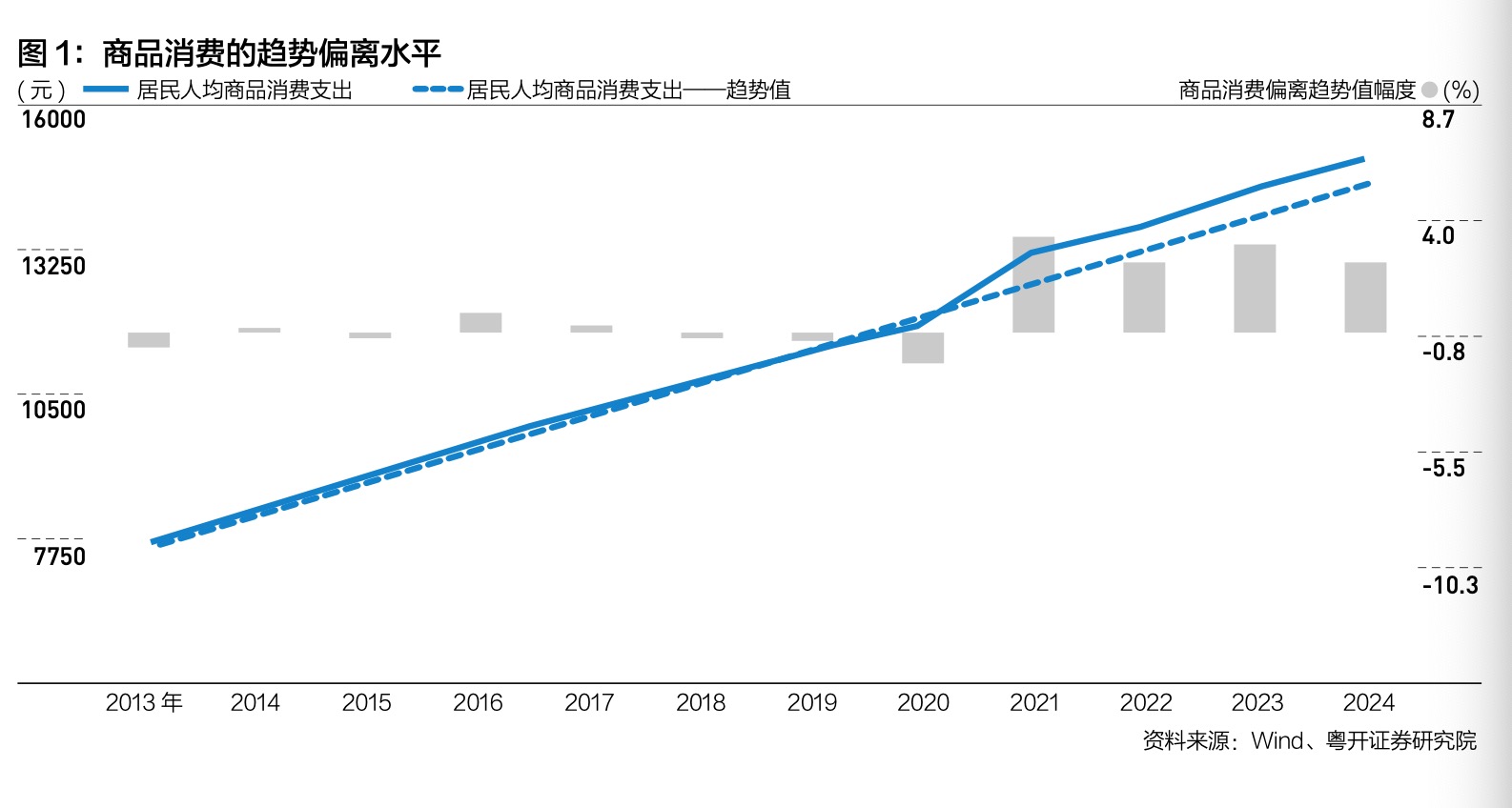
Core Viewpoint - The development of service consumption in China faces several constraints, including unstable income expectations, limited leisure time for residents, insufficient urbanization of the floating population, and inadequate supply. Measures are necessary to address these issues [1]. Group 1: Importance and Characteristics of Service Consumption - Service consumption is a significant component of total demand and a key focus for boosting consumption, with strong employment absorption capacity [1]. - Service consumption has distinct characteristics compared to goods consumption, including higher income elasticity, synchronous supply and demand, dependence on leisure time, and reliance on population concentration [2][3]. - The importance of service consumption is increasingly recognized in the current macroeconomic context, as it relates to stable growth, employment, and social welfare [4]. Group 2: Current Status of Service Consumption - From 2013 to 2024, per capita service consumption in China increased from 5,000 yuan to 13,000 yuan, with its share of total consumption rising from 39.7% to 46.1%. However, it has not yet returned to pre-2020 trend levels [5]. - China's service consumption level is lagging behind its development stage, with a significant gap compared to developed countries. In 2023, service consumption accounted for 66% in the US and around 60% in Japan, France, and the UK, compared to China's lower levels [8]. - Housing services constitute the largest share of service consumption, accounting for 34.6% in 2023, with self-owned housing being the primary source of this service [14]. - The share of transportation, communication, and education services has declined since 2019, indicating limited growth in these areas [17]. - Restaurant services have seen a notable increase, reaching 15.7% of service consumption in 2023, while medical services slightly increased to 14.9% [20]. Group 3: Constraints on Service Consumption - Service consumption is more sensitive to changes in income, with higher income elasticity compared to goods consumption, leading to a slower recovery post-2020 [21]. - The social security system's support for service consumption is inadequate, with significant disparities in pension benefits between urban and rural residents [22]. - Long working hours limit leisure time, with an average of 48.6 hours per week in 2023, significantly higher than the OECD average [22]. - Urbanization of the floating population remains a challenge, affecting their service consumption due to limited access to education and other services [23]. - There are supply shortages in certain service sectors, such as elderly care, where the number of registered beds is lower than in developed countries [23]. Group 4: Policy Recommendations to Boost Service Consumption - Policies should shift towards stimulating service consumption, including service consumption subsidies and consumption vouchers [24]. - Reforming the social security system to enhance pension benefits could reduce precautionary savings and release service consumption potential [24]. - Improving leisure time through optimized work and holiday policies can directly boost service consumption [24]. - Addressing educational access for the children of the floating population can significantly enhance service consumption [25]. - Public investment should focus on improving service supply quality, particularly in healthcare, education, and elderly care [25]. - The regulatory environment for service industries should be optimized to enhance market access and service quality [26].
时报观察丨社零与消费贷走势分化 服务消费供给应扩大
证券时报· 2025-06-18 00:07
本周公布的5月宏观经济数据显示出经济运行韧性足、结构持续改善,特别是当月社会消费品零售总额同比增 长6.4%,达到2024年初以来的最高水平,增速比上月加快1.3个百分点,远超市场预期。 强劲的消费增速反映出消费品以旧换新补贴和自5月中旬以来的"618"预热对消费的拉动效能显著。但与当月 社零高增速形成反差的是,近日公布的5月居民部门短期贷款却延续了4月的减少态势。其中,消费贷款余额5 月环比仅微增不到10亿元,同比减少近390亿元。 实际上,今年以来,社零增速的向上修复与同期消费贷余额就呈现出分化走势。一方面,社零的改善"国补"政 策功不可没,与"国补"政策相关的家电、通讯器材等零售额领跑其他品类;有机构测算,5月家电、汽车和通 讯器材类合计拉动社零增长超2个百分点。 另一方面,补贴政策在释放潜在消费需求的同时,消费者的消费观念也悄然生变。一些现象级的潮玩、演唱 会、体育赛事消费被人津津乐道。只不过,消费的回暖与消费贷余额的攀升不再同步发生,2024年1月金融机 构消费贷余额接近10.4万亿元高点后,就震荡下行。这也说明依靠金融杠杆提振消费更多是"锦上添花",借贷 消费本质上是以未来收入作为担保的超前消费行 ...